
Airline booking is full of surprises most of them expensive. We answer the questions that actually cost you money: what hidden fees to expect, when seat selection is worth it, how baggage policies really work, and what your cancellation rights actually are.
What Are Airline Hidden Fees and How Much Do They Really Cost
Airline hidden fees are charges beyond the base ticket price that appear during checkout or at the airport. They include seat selection, baggage, change fees, and “fuel surcharges” most are optional, though some are mandatory. A single round-trip domestic ticket can easily gain $100–200 in extra charges if you’re not careful.
The largest culprits vary by carrier. Major U.S. carriers (United, American, Delta, Southwest) all charge for checked baggage, though Southwest includes two free bags with all tickets. Seat selection fees range from free (for basic economy seats) to $15–25 per flight for premium locations. Change and cancellation fees have been mostly eliminated by legacy carriers in recent years, but they’re still common internationally and with budget airlines.
The fastest way to avoid them: Book directly with the airline, read the full fare breakdown before clicking “confirm,” and know your airline’s specific policy they vary wildly.
How Much Do Airlines Charge for Seat Selection?
Seat selection fees are optional you get a random seat free but airlines price them to tempt you into upgrades. Based on commonly observed pricing as of August 2026, basic economy seats are free; preferred seats (extra legroom, aisle, or exit row) typically run $10–25 per flight depending on route length and airline.
When to pay for a seat:
- You’re tall or have mobility issues: Exit row and extra-legroom seats are genuinely different. If you fly more than once a year, this is worth the $50–100 per round-trip.
- It’s a long flight (4+ hours): Aisle seats and extra legroom matter more on transcontinental or international routes.
- You’re traveling with a young child: Bulkhead rows (front of cabin) let you lay a car seat or bassinet on the wall; worth paying $15–20.
- You’re flying a budget carrier on a narrow-body plane: Every inch counts. Legacy carriers’ standard seats are usually roomier.
When not to pay:
- It’s a short domestic flight (under 3 hours): Random assignment is fine. Save the $30.
- You’re checking baggage anyway: You can usually request your preferred seat at the gate for free when you check in.
- You’re elite frequent-flyer status: Most loyalty programs include free seat selection; check before buying.
The pattern we’ve observed: Paying for a seat is worth it if you value comfort enough to spend $100+ annually on flights, or if you have a specific need (aisle, extra legroom). Otherwise, pocket the cash.
What’s the Difference Between Baggage Policies Across Airlines?
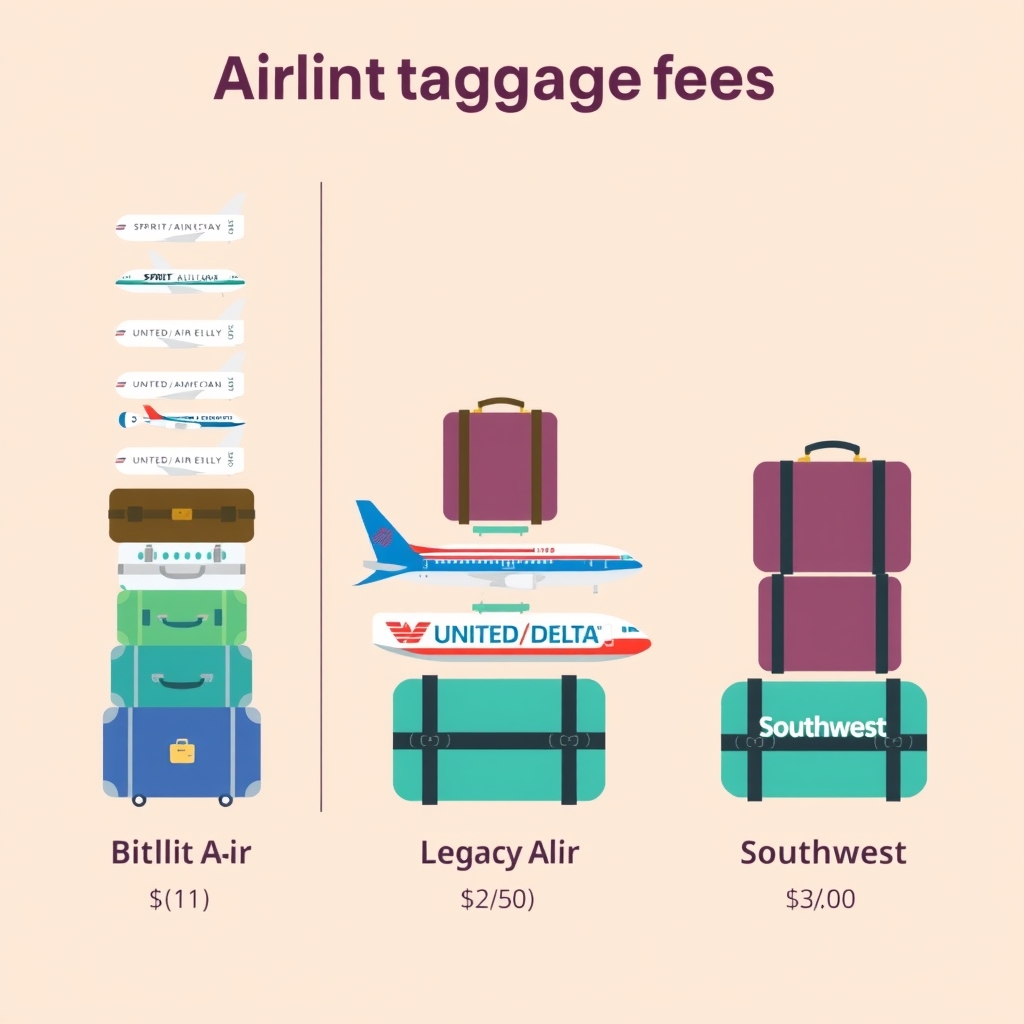
Baggage fees are the most predictable hidden cost. Here’s how major carriers compare, based on their commonly observed terms as of August 2026 always verify current policies directly on the airline website before booking:
| Carrier | 1st Checked Bag | 2nd Checked Bag | Carry-On | Notes |
|---|---|---|---|---|
| Southwest | Free | Free | Free | No seat fees; straightforward pricing |
| United | ~$38 | ~$75+ | Free | Premium cabins may include checked baggage |
| American Airlines | ~$40 | ~$75+ | Free | First bag may be free with eligible status or benefits |
| Delta Air Lines | ~$40 | ~$75+ | Free | First bag may be free with eligible status or benefits |
| JetBlue | ~$45 | ~$65+ | Free | Seat selection varies by fare |
| Spirit / Frontier | ~$35 | ~$50+ | ~$30–40 | Ultra-low-cost carriers charge separately for many extras |
| Alaska Airlines | ~$35 | ~$50+ | Free | First bag may be free with certain cards or eligible benefits |
Key insight: Southwest is usually cheapest if you check bags (two free), while legacy carriers are often cheaper if you don’t. Budget airlines like Spirit look cheap until you add your bag.
When Should You Buy Baggage Upfront vs. at Check-In?
Buying baggage fees during ticket purchase is always cheaper than paying at the airport. Purchasing upfront typically costs $35–45 per bag; paying at check-in jumps to $50–75. If you know you’re checking a bag, buy it with your ticket.
Exception: Some airlines don’t charge for a bag if you have elite status or a co-branded credit card. If you have either, skip the baggage purchase and save the fee entirely.
How Do Airline Cancellation Policies Actually Work Now?
Cancellation policies changed dramatically in 2023–2024, and terms vary significantly by carrier and ticket type. Here’s the landscape as of August 2026:
Full credits (non-refundable tickets): Most major U.S. carriers now allow free cancellation and rebooking on any other flight at no change fee. You don’t get a cash refund, but you can use the ticket value for any future booking.
Refundable tickets: These explicitly allow a cash refund if you cancel. They cost more upfront but give you flexibility.
Basic economy: Often less flexible. Some carriers restrict free changes to basic economy seats only, or charge $75–100 to change to a different time or date.
International flights: Rules vary by airline and country. European carriers and many international airlines still charge change fees ($50–200+). Always check the airline’s terms before booking.
When the airline cancels: You’re entitled to a refund to your original payment method, or a free rebooking on any available flight. This is mandatory and non-negotiable.
The single most important step: Read the cancellation policy in the “fare rules” section before you click “buy.” Don’t assume all airline tickets are the same; a basic economy ticket on United might be less flexible than a regular ticket on Southwest. Spend 30 seconds comparing your options before checkout.
What’s the Difference Between “Non-Refundable” and “Refundable” Fares?
A non-refundable ticket means you won’t get cash back if you cancel but you can almost always use the full ticket value for a future flight with no change fee (as of 2026). A refundable ticket means you can get a cash refund to your original payment method if you cancel.
In our observation, non-refundable fares tend to run 10–20% cheaper than refundable equivalents on the same route. Refundable fares cost more but give you the option to get your cash back instead of being forced to rebook.
When to buy non-refundable: You’re confident about your travel dates and don’t need the flexibility. Save the difference and take the risk.
When to buy refundable: Your plans might change, or you’re booking far enough out (3+ months) that conditions might shift. The extra cost buys peace of mind.
How Far in Advance Should You Book to Get the Best Price?
Price timing is a common myth. Airlines don’t follow a predictable schedule prices depend on demand, fuel costs, and how many seats are left on a flight. The pattern we’ve observed suggests:
- Domestic flights: Book 1–3 months out. Prices are usually stable in this window and cheaper than booking 1–2 weeks before.
- International flights: Book 2–3 months out for the best range of prices and availability.
- Last-minute flights: Only get cheap if the flight has lots of empty seats (unpopular route, off-peak day). Don’t count on it.
- Peak seasons (holidays, summer): Prices are high no matter when you book. Booking early secures your date and price, but doesn’t guarantee a discount.
The real trick: Set a price alert on Google Flights, Kayak, or the airline website for your route 3 months out. Book when you see a price you can live with, not when you think the “perfect” price will appear.
Should You Buy Travel Insurance for Flight Cancellations?
Travel insurance covers trip cancellations for reasons you choose (illness, injury, family emergency), whereas airline cancellation policies cover reasons the airline cancels (mechanical issues, weather, crew scheduling). They protect different things.
Buy travel insurance if:
- You’re booking an expensive international ticket ($800+) and your plans might change.
- You have health conditions that could force you to cancel.
- You’re traveling with small children or elderly relatives where medical emergencies are more likely.
- The trip is critical and you can’t reschedule (a wedding, conference, funeral).
Skip it if:
- You’re booking a cheap domestic flight under $300.
- You can absorb the loss if you cancel.
- You have no major life changes on the horizon in the next month.
Travel insurance typically adds a noticeable cost to your total trip in our experience, quotes often fall somewhere in the 5–10% of trip cost range, though this varies by provider and coverage level. It generally covers trip cancellation, medical emergencies, and lost baggage. Read the exclusions carefully pre-existing conditions and weather events are often excluded or require an upgrade.
Can You Avoid Change or Cancellation Fees on Flights You’ve Already Booked?
Yes but only within the timeframe allowed by your airline. Most carriers allow free changes and cancellations up to 24 hours before departure (for domestic flights) or up to 7 days before departure (for international flights). After that window, change fees may apply or cancellation may not be allowed.
To request a change:
- Go to the airline’s website and find your booking (use your confirmation number and email).
- Select “change flight” or “manage booking.”
- Choose a new flight (same route or different, depending on the airline’s rules).
- Pay any fare difference if the new flight costs more.
If the new flight costs less, most carriers credit the difference to a future booking (not cash). Budget airlines sometimes charge a change fee on top of a fare difference.
What Fees Apply if You Miss Your Flight?
If you miss your flight, you’ve paid for a seat that went empty. Most airlines won’t refund the full ticket, but they’ll usually let you rebook on a later flight.
- No-show fee: Not charged by most U.S. carriers as of 2026, though you forfeit the original ticket value if you don’t rebook.
- Rebooking: You can usually rebook on another flight of the same airline at no change fee, though you may pay a fare difference if the new flight costs more.
- Exception: If the airline caused the miss (e.g., oversold the flight and removed you at the gate), you’re entitled to a refund.
If you’re worried you’ll miss a flight, contact the airline before your flight leaves. Most will move you to the next available departure with no penalty.
Are Fuel Surcharges Real Fees or Just Price Gouging?
Fuel surcharges are real they’re a separate line item added to your ticket to reflect current jet fuel costs. They’re most common on international flights and with airlines that separate them from base fares for pricing clarity.
You can’t avoid them, and they’re genuinely based on oil prices, not profit maximization. They typically add $10–50 to a round-trip ticket depending on route length and current fuel costs. Check whether they’re included in the quoted ticket price or added separately before you book.
What’s the Cheapest Way to Get a Better Seat Without Paying?
You get a random seat free when you book. To upgrade without paying fees:
- Check in 24 hours before departure: Early check-in sometimes lets you choose from available seats at no cost.
- Ask at the gate: If the flight is undersold or you’re traveling with young children, gate agents sometimes hand out free seat upgrades.
- Join the airline’s loyalty program: Elite members get free seat selection and upgrades.
- Get a co-branded credit card: Most offer free seat selection as a benefit.
- Fly during off-peak times: Fewer people fly on Tuesday–Thursday, so better seats stay available longer.
The fastest free upgrade is elite status if you fly 4+ times a year with the same airline, the status perks (seat selection, baggage, lounge access) are worth joining the loyalty program.
How Do Airline Prices Vary by Website (Kayak, Google Flights, Airline Direct)?
Prices are identical across all booking websites airlines use the same global distribution system (GDS) that feeds prices to Kayak, Expedia, Google Flights, and the airline’s own website. A ticket that costs $450 on United.com costs $450 on Kayak.
Where sites differ:
- Customer support: Booking directly with the airline usually means you contact them if something goes wrong. Third-party sites (Kayak, Expedia) are middlemen and can be slower to help.
- Hidden fees: Third-party sites sometimes add a processing fee or hide fees in small print. Always click through to the final price summary.
- Loyalty points: Booking directly usually earns airline miles; third-party sites sometimes don’t credit miles as quickly.
Our recommendation: Use Google Flights or Kayak to compare and find the best price, then click through to the airline’s website to complete the booking. You get the price comparison benefit plus direct airline support.
FAQ
Can you get a refund for a flight if the price drops after you book? No. Airfare is non-refundable based on price changes. Once you buy a ticket, that’s your price locked in. If the fare drops, you can rebook at the lower price and use the difference as a credit toward a future flight (not a cash refund), though change fees may apply.
Do budget airlines (Spirit, Frontier, Allegiant) charge for everything? Essentially, yes. Budget carriers charge separately for seats, bags, carry-ons, boarding passes, and even water. Their base fares look cheap until you add fees. For a family or multi-bag trip, they’re often more expensive than legacy carriers like Southwest or United by the time you reach checkout.
Is it worth paying for a connecting flight to save on the total ticket? Rarely. A connecting flight adds 2–4 hours to your trip and increases the risk of missing a connection (and having to rebook). A direct flight is usually worth paying an extra $50–100 unless you’re on a tight budget or the connecting flight saves significantly.
Can you negotiate airline fees over the phone? Sometimes. If you’re a frequent flyer, have elite status, or had a problem with the airline, customer service agents have discretion to waive or reduce fees. Call the airline directly and ask politely the worst they can say is no. Most baggage and seat fees cannot be negotiated, but change and cancellation fees sometimes can be.
Are airline prices cheaper on specific days of the week? Saturday and Sunday flights are usually more expensive than Tuesday–Thursday flights because leisure travelers book weekends. If your schedule allows, flying mid-week (Tue–Thu) typically saves money compared to weekend fares the exact gap varies by route and season. The day you book doesn’t affect price only the day you fly does.
What happens if the airline overbooks your flight? If the flight is overbooked and the airline needs volunteers to give up their seat, you can negotiate compensation (usually a travel voucher, hotel, and rebooking). If you’re involuntarily bumped, you’re legally entitled to compensation under U.S. Department of Transportation rules currently up to $775 for domestic flights depending on the delay length. The airline must rebook you on the next available flight at no cost.
Conclusion
Airline fees are manageable, but only if you know what you’re looking at. The biggest money-savers are simple: avoid basic economy if you check bags, book your seat upfront only if you value comfort, and read the cancellation policy before clicking buy. Set price alerts instead of guessing, and always book directly with the airline to avoid third-party processing fees. A round-trip flight that looks like $250 can easily become $450 with fees so read the fine print, know your airline’s specific policies, and decide which fees are worth paying before you check out.