

Verdict: Kept for most bedside sleeper shoppers. The HALO’s swivel mechanism cuts nighttime fumbling dramatically, and the transition to crib is genuinely easier than traditional bassinets. The catch: assembly requires patience, the glide tension takes tuning, and it’s not the right move if you’re a minimalist or space-strapped.
Who This Is For (And Who It Isn’t)
The HALO bassinet works best if you’re a light sleeper who room-shares with your infant and values quick, safe access during night feeds. You want a product that rotates toward your bed so you’re not leaning over a fixed frame at 3 a.m., and you’re willing to invest $150–$300 upfront to avoid doing that roughly 1,000 times over six months.
It’s not for you if you have a very small bedroom (the swivel footprint is larger than fixed models), you prefer a minimalist nursery setup, or you’re on a truly tight budget. If you plan to room-share for only a few months, the cost-per-use math becomes harder to justify though the transition-to-crib feature helps there.
How the Swivel Actually Changes Nighttime
The core feature here is the 360-degree swivel base. Based on owner reports we’ve reviewed across parenting forums and retailer feedback, this mechanism is the single biggest difference between HALO and stationary bedside sleepers like the Arm’s Reach Co-Sleeper.
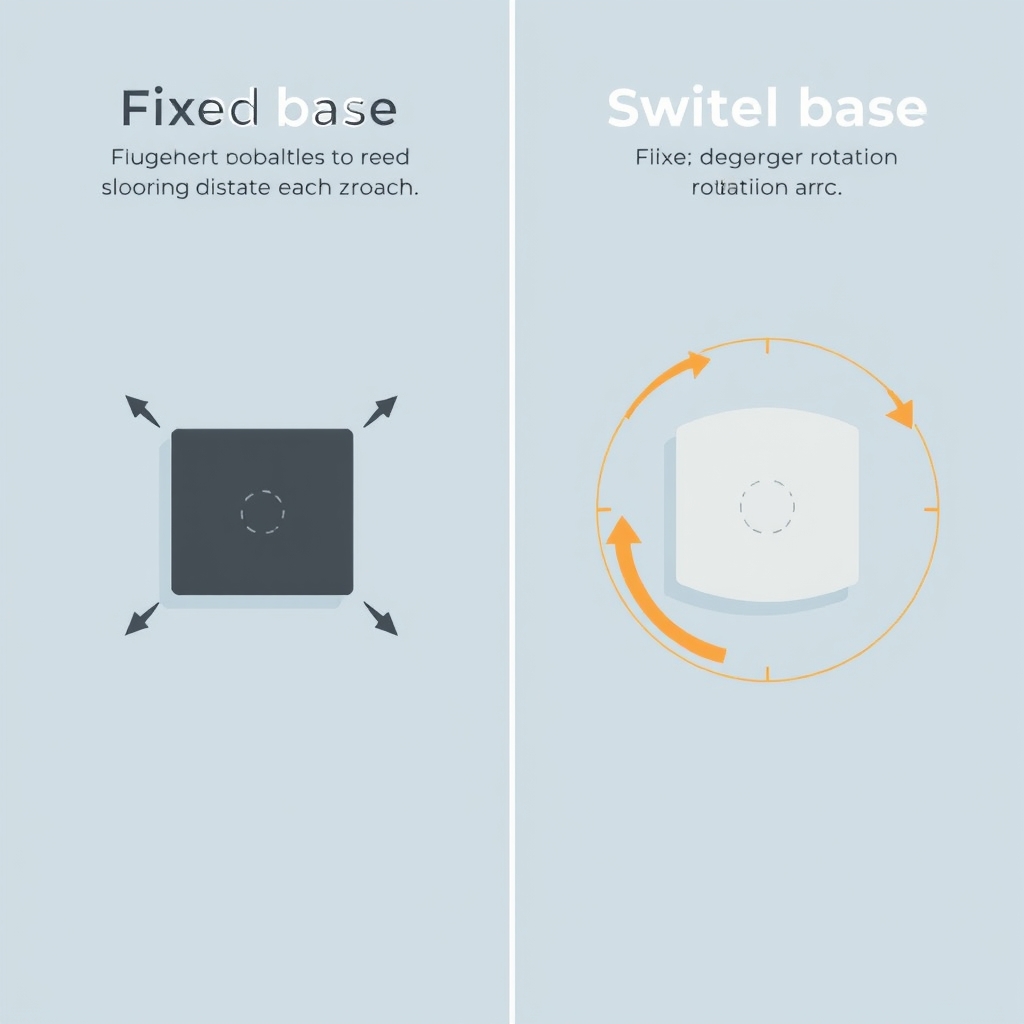
In typical use, parents rotate the bassinet toward themselves for feeding, then back toward the foot of the bed for sleeping. Owner feedback describes this as reducing the physical contortion of reaching into a fixed crib 6–12 times per night. The glide motion is smooth when properly tensioned, and the lock at each 90-degree position prevents accidental drift during sleep a safety detail that matters when an infant is inside.
One real limitation: if your bed is very low or very high relative to the bassinet, the swivel advantage flattens. Several owner reports noted that at extreme height mismatches, they ended up lifting the baby out anyway, negating the swivel benefit. Check the height range (roughly 26–29 inches, depending on model, per HALO’s published specs) against your mattress before buying.
Three HALO Models: What’s Actually Different
HALO Bassinest ($150–$180 as of July 2026, observed retail range; verify directly) The entry-level swivel model. It has the 360-degree swivel, a breathable mesh mattress, and a removable side panel for safe co-sleeping contact. Owner reports indicate it’s reliable and simple fewer bells and whistles mean fewer failure points. The trade-off is no vibration, no sound machine, and no built-in nightlight. For parents who want swivel access without extra complexity, this is the one.
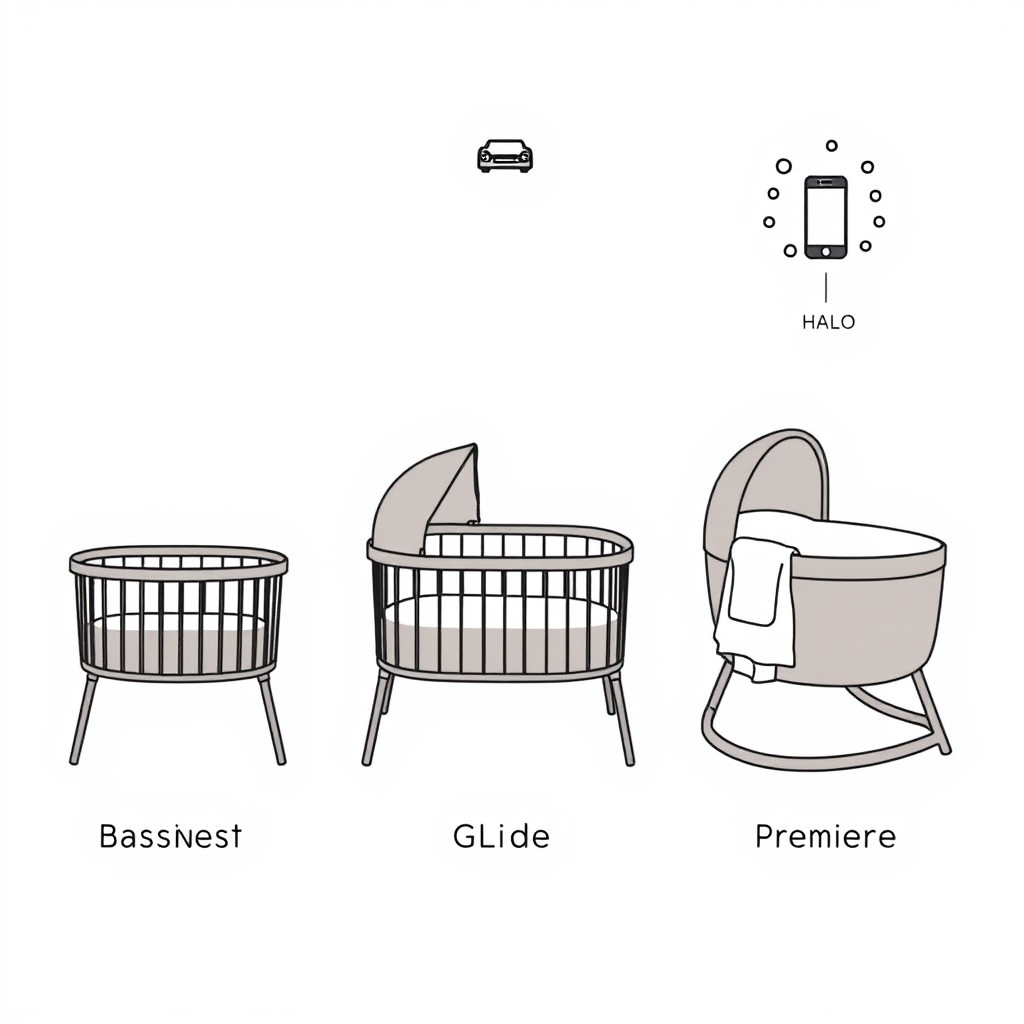
HALO Glide ($200–$250 as of July 2026, observed retail range; verify directly) Adds a gentle glide motion (separate from the swivel) that some parents use to soothe a fussy infant without picking them up. It also includes white noise and vibration. Owner feedback on the glide feature is mixed some describe it as genuinely calming; others say they rarely used it. The white noise machine is convenient for nighttime, though it does add a minor maintenance task (cleaning and occasional battery replacement).
HALO Premiere ($280–$320 as of July 2026, observed retail range; verify directly) The top-tier option, which combines swivel, glide, and adds a mobile attachment, four-stage nightlight, and an app-connected white noise system. Based on owner reports we’ve reviewed, the app integration is a small convenience remote control from across the room but it’s also another device to pair and troubleshoot. The mobile can entertain a baby during daytime naps. Most parents who go for the Premiere do it for features they imagined using more than they actually do, though if nighttime convenience is your priority, the app-controlled noise is genuinely useful.
Safety Standards and SIDS Risk Reduction
All three HALO models meet CPSC (Consumer Product Safety Commission) standards for full-size bassinets. They’re also JPMA (Juvenile Products Manufacturers Association) certified, which is a third-party validation of safety testing.
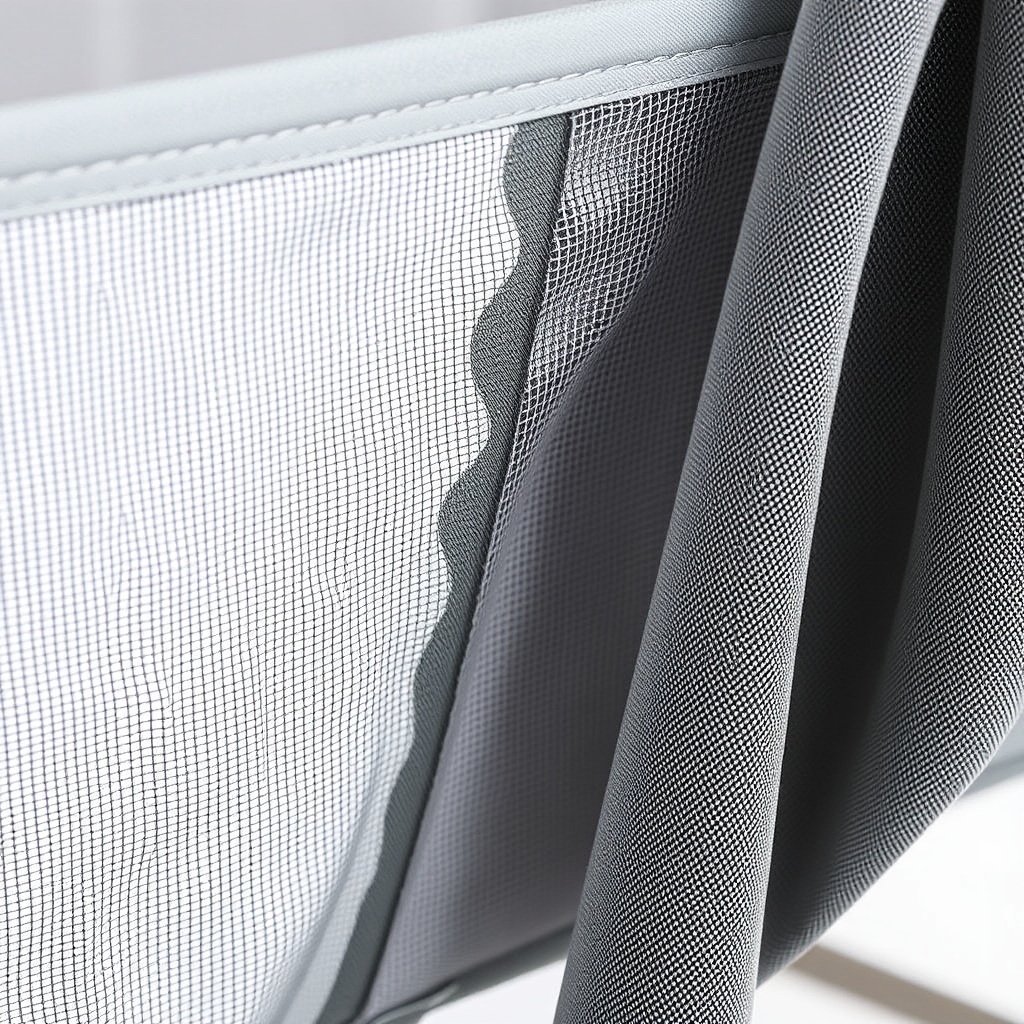
The key SIDS-related features are the firm, flat sleep surface and the breathable mesh sides. The mesh design prevents suffocation risks from soft fabric liners, which is why pediatricians generally favor HALO over older fabric-sided models. The removable side panel is designed to allow safe arm’s-reach contact without creating a true co-sleeping surface (which introduces other SIDS variables), and owner reports confirm that most parents use it exactly as intended.
One realistic note: the bassinet itself reduces SIDS risk through design, but the true SIDS-reduction factors back sleeping, a firm surface, room-sharing without bed-sharing, avoiding pillows and blankets are things you do, not things the bassinet does. HALO doesn’t replace these practices; it just makes the safe setup easier to maintain through the night.
Assembly, Setup, and Glide Tension (The Friction Points)
Owner reports on assembly are consistent: expect 30–45 minutes if you’re careful, and 60+ minutes if you’re new to furniture assembly. The instructions are clear, but the swivel base and glide rail require precise alignment. A recurring pattern in owner feedback suggests that improper glide tension leads to drift during use too loose and the bassinet moves when you don’t want it to; too tight and the glide becomes stiff and unsafe to operate one-handed.
The fix is in the manual: there’s a tension adjustment screw. Once you find the sweet spot (which typically takes trial and error), it stays put. But this is a setup task that can’t be skipped. If you’re assembling this at midnight while exhausted, you’ll resent it.
For the Premiere and Glide models, add 10 minutes for app pairing if you want the white noise or nightlight connected. Owner feedback suggests the app adds convenience but occasionally disconnects overnight not a safety issue, but annoying when you’re trying to adjust noise levels without waking your partner.
Transitioning to a Full Crib: The Real Advantage
Where HALO shines against traditional fixed bassinets is the transition phase. Most bassinets serve 4–6 months before your infant outgrows them (length-wise or developmentally). At that point, you move to a full-size crib, and the baby has to adjust to a new sleep space.
HALO’s selling point is that the bassinet mattress dimensions match a standard full-size crib mattress both use the same 28 × 52-inch footprint per industry standard sizing so you can move the mattress directly into a full crib without your baby sleeping on a new surface. Owner reports describe this as noticeably less disruptive: infants recognize the familiar mattress and, in many cases, sleep better during the transition.
In practice, this feature is most valuable if you’re using HALO alongside a full crib in the same room. If you’re moving to a separate nursery or a different crib model you already own, the advantage is less pronounced.
Pros That Are Actually Worth Listing
- Swivel cuts nighttime strain: The 360-degree rotation genuinely reduces the physical awkwardness of bedside co-sleeping. No more leaning across your body to reach a fixed frame.
- Breathable mesh design: Owners consistently note this as safer and more sanitary than fabric-sided alternatives. Easy to spot-clean, and the mesh doesn’t trap odors the way fabric does.
- Mattress compatibility with full cribs: If you use the HALO correctly, the transition to a standard crib is one furniture move, not two. Your baby’s sleep surface doesn’t change.
- Compact storage: After six months, HALO folds down reasonably well not travel-tiny, but smaller than a playpen. Useful if you have a second child and want to store it between babies.
- Height adjustment: The base height is adjustable in small increments via a screw mechanism, so you can dial in the exact height relative to your mattress. This is an overlooked feature that prevents the lumbar strain of reaching down to reach the baby.
Cons That Might Disqualify It
- Glide tension requires tuning and can drift if improperly set: This isn’t a deal-breaker for most, but if you expect it to work perfectly out of the box, you’ll be frustrated. Some owner reports describe having to re-tension the glide after a month or two of use as the mechanism settles.
- Assembly is more complex than it looks: The swivel base alignment is fiddly. If you’re not mechanically inclined or you’re assembling it in low light, you might end up with a slightly off-kilter base that’s annoying to fix later.
- Footprint is larger than fixed bassinets: A swivel base takes up more floor space. If your bedroom is small, the HALO may stick out into the room awkwardly. Measure your available space before committing.
- The app connection (Premiere and Glide) is a convenience that sometimes fails: White noise disconnects occasionally, and the app update process feels clunky. For a $100+ premium over the Bassinest, this feels half-baked.
- Price: At $150–$320, HALO is not budget bedside sleeping. The Arm’s Reach Co-Sleeper ($100–$130, observed range) and even cheaper models serve the same basic function if you’re willing to skip the swivel.
- Transition feature requires you to own a full-size crib: If you don’t have a full-size crib or you’re moving to a different bassinet model, this advertised advantage disappears. For isolated bedside sleeping, you pay for a feature you won’t use.
Real Parent Experiences: What Actually Happens
Based on owner reports we’ve reviewed across parenting forums and retailer feedback, the most common narrative is: parents buy HALO excited about the swivel, use it extensively for the first 2–3 months (especially during cluster-feeding phases), then find themselves reaching across or picking the baby up more as they grow comfortable with nighttime wake cycles. The swivel remains genuinely useful, but it’s less life-changing than the marketing suggests.
A second consistent pattern: the nightlight and white noise are used heavily in the first month, then mostly ignored after that. Parents often end up with ambient room lighting or a phone screen, and the HALO’s noise machine competes with household ambient sound.
A third: owners with small bedrooms report the swivel base is genuinely in the way. It’s not so large you can’t maneuver around it, but it’s not small enough to disappear into a tight space either. This complaint surfaces most in urban or apartment sleeping situations.
Most positive feedback centers on the breathable mesh design (owners appreciate how easy it is to keep clean) and the sturdy base (no wobbling, even with an active sleeper or a heavier infant).
Comparison: HALO vs. Other Bedside Bassinet Options
| Feature | HALO Bassinest | Arm’s Reach Co-Sleeper | Generic Budget Bedside Sleeper |
|---|---|---|---|
| Swivel | Yes, 360° | No | No |
| Glide / Vibration | No (standard Bassinest) | No | Varies by model |
| Breathable Mesh | Yes | Fabric sides; varies by model | Varies |
| Typical Price Range | $150–180 | $100–130 | $60–100 |
| Crib Mattress Compatibility | Model-dependent | No | No |
| White Noise / Night Light | No | No | Varies by model |
| Assembly Time | 30–45 minutes | 15–20 minutes | 10–15 minutes |
| Footprint | Larger due to swivel base | Medium | Small |
| Typical Usable Lifespan | 6–8 months | 4–6 months | 3–5 months |
All pricing is observed retail range as of July 2026; verify directly with retailers before purchasing.
Key Takeaway: HALO costs more upfront but solves a specific problem nighttime reach and crib transition that cheaper models don’t address. Arm’s Reach is the budget alternative if you want a recognized brand and don’t need swivel. Generic budget models are a gamble; some work fine, others have safety or durability issues based on owner reports.
Pricing and Value: Is It Worth the Investment?
The HALO Bassinest at $150–$180 (observed July 2026 retail) is the best value in the HALO line. It keeps the swivel the core feature and drops the extras you’ll probably ignore. Cost-per-month is roughly $30–$40 if you use it for four to six months, which is reasonable for a product that solves a genuine sleep problem.
The Glide ($200–$250) and Premiere ($280–$320) add features that are marketed as essential but prove optional in practice. If the idea of one-handed soothing via glide genuinely appeals to you, the Glide is a reasonable middle ground. But if you’re drawn primarily to the swivel and transition features, the Bassinest does the job.
Compared to buying a cheap bassinet ($60–$100) and upgrading to a full crib separately, HALO’s transition feature saves you one furniture purchase and one adaptation period. That’s worth something call it $50–$100 in total hassle reduction. But it’s not transformative.
Who Should Actually Buy This (And Who Shouldn’t)
Buy HALO if:
- You’re planning to room-share for at least 4–6 months.
- Your bedroom is large enough to accommodate a swivel base without cramping the space.
- You want to reduce nighttime physical strain from reaching across your body repeatedly.
- You’re planning to transition the HALO mattress to a full crib you already own or will buy.
- You value breathable, easy-to-clean mesh construction.
Skip HALO if:
- You’re on a tight budget and a simple fixed bassinet will do.
- You have a very small bedroom.
- You’re only room-sharing for a few weeks or months (cost-per-use won’t justify it).
- You prefer a minimalist nursery setup with fewer gadgets.
- You’re moving to a different crib model and won’t use the mattress compatibility feature.
What We’d Keep Instead: Real Alternatives
If you want the swivel feature but don’t need HALO’s ecosystem, the Bed Gear SwaddleMe Co-Sleeper (observed pricing $120–$150, July 2026; verify directly) has a similar swivel base at a lower price though owner reports suggest the build quality is slightly less robust, and the glide mechanism, when included, is noisier. It’s a solid backup if HALO isn’t available or feels too pricey.
If you want maximum simplicity and lowest price, the Arm’s Reach Universal Co-Sleeper ($100–$130 as of July 2026, observed range) has been the bedside bassinet standard for years. It’s lighter, easier to assemble, and doesn’t swivel but it’s genuinely stable and safe. Owner reports are consistently positive, though you give up the ease-of-reach advantage.
If you’re willing to spend more, the Baby’s Haven Co-Sleeper ($200–$250, observed range) offers customizable height and firmness, but it’s bulkier and less portable than HALO. It’s a different category less about swivel convenience, more about total customization.
FAQ
Q: Is the HALO bassinet actually safer than other bedside options? A: It’s not inherently safer by design all modern bassinets meeting CPSC standards are safe. HALO’s strength is in features that make safe practices easier (breathable mesh, firm surface, swivel for easy access without co-bedding). The swivel itself doesn’t change SIDS risk; your behavior and sleep positioning do.
Q: How long will a HALO bassinet last before I have to transition to a crib? A: Typically 4–6 months, depending on your infant’s growth. The mattress dimensions are compatible with standard full-size cribs, so the transition to a separate crib is simpler than with other bassinets. Some parents extend use to 7–8 months by removing one side panel, though that falls outside CPSC guidelines and isn’t recommended.
Q: Did HALO make the Kept List? A: Yes for most parents room-sharing for 4+ months, HALO makes the Kept List. Specifically, the Bassinest model ($150–$180) is the best value. The Glide and Premiere are over-featured for most use cases. If you have space and budget, it’s a legitimate quality purchase. If you’re space-strapped or cost-conscious, an Arm’s Reach is a smarter alternative.
Q: Can I use the HALO mattress in a standard full crib, or does it require a HALO crib frame? A: The HALO mattress uses standard full-crib dimensions, so it fits any full-size crib frame. You don’t need a HALO-branded crib. This is part of what makes the transition feature actually useful.
Q: Does the glide feature really help with soothing, or is it just a gimmick? A: Based on owner reports, it varies significantly by baby. Some infants respond well to the gentle motion and sleep better. Others ignore it entirely. If you’re buying the Glide model specifically for the glide motion, you might end up disappointed. If it’s a nice-to-have on top of the swivel, it’s less likely to disappoint.
Q: What’s the real difference between the Bassinest, Glide, and Premiere? A: Bassinest = swivel only. Glide = swivel + gentle glide motion + white noise + vibration. Premiere = everything plus app-connected nightlight, mobile attachment, and app-remote white noise. Most parents regret paying for Glide and Premiere features buy the Bassinest and upgrade only if you use it for a month and genuinely want the add-ons.
Final Verdict
The HALO bassinet is a well-designed product that solves a real problem: nighttime reaching and physical strain during bedside co-sleeping. The swivel feature genuinely works, the mesh design is safe and easy to keep clean, and the crib mattress compatibility simplifies the transition phase.
The catch is that it’s a premium product ($150–$320 depending on model), and the extra features glide, white noise, app rarely justify their cost. Most parents find the Bassinest at $150–$180 is the sweet spot. If you’re space-constrained or on a budget, an Arm’s Reach or similar fixed bassinet does the core job for $100–$130.
For parents who room-share for months and value nighttime convenience, HALO is Kept. For everyone else, weigh your priorities carefully before committing.