


Book flights 1–3 months ahead for domestic routes, or 2–8 weeks ahead for international trips, and search in incognito mode to avoid price inflation from cookie tracking. Based on aggregated traveler reports and booking-pattern research we’ve reviewed, combining these two habits alone can save anywhere from $50 to $300+ per ticket on popular routes though the exact figure varies by route, season, and airline. Most travelers don’t use price alerts, don’t search in a private window before booking, and buy on the wrong day of the week. The result, in our observation: they routinely pay more than necessary in some fare-tracking comparisons, as much as 20–40% above the lowest available price for the same seat.
This guide covers the exact steps, timing windows, and tool selection that actually move the needle on airfare costs.
What You’ll Need
No subscription required, but you’ll benefit from:
- A browser with incognito/private mode (Chrome, Firefox, Safari all have it)
- A free price alert tool (Google Flights, Hopper, Kayak, or Skyscanner)
- A spreadsheet or note app to track trends (optional but useful)
- Flexibility on travel dates (even 1–2 days can meaningfully reduce cost)
- Access to multiple airports within 2–3 hours of your home (optional, but valuable for route hacking)
Step 1: Understand the Booking Windows for Your Route Type
Airfare pricing follows predictable patterns, but the sweet spot differs by route type.
Domestic flights (USA, Canada, Australia): Book 1–3 months ahead. In our research tracking common flight listings, domestic fares typically bottom out 4–6 weeks before departure, with a second window around 2–3 weeks out as airlines adjust inventory. Booking too early (3+ months) often means higher prices; booking too late (under 2 weeks) almost always costs more.
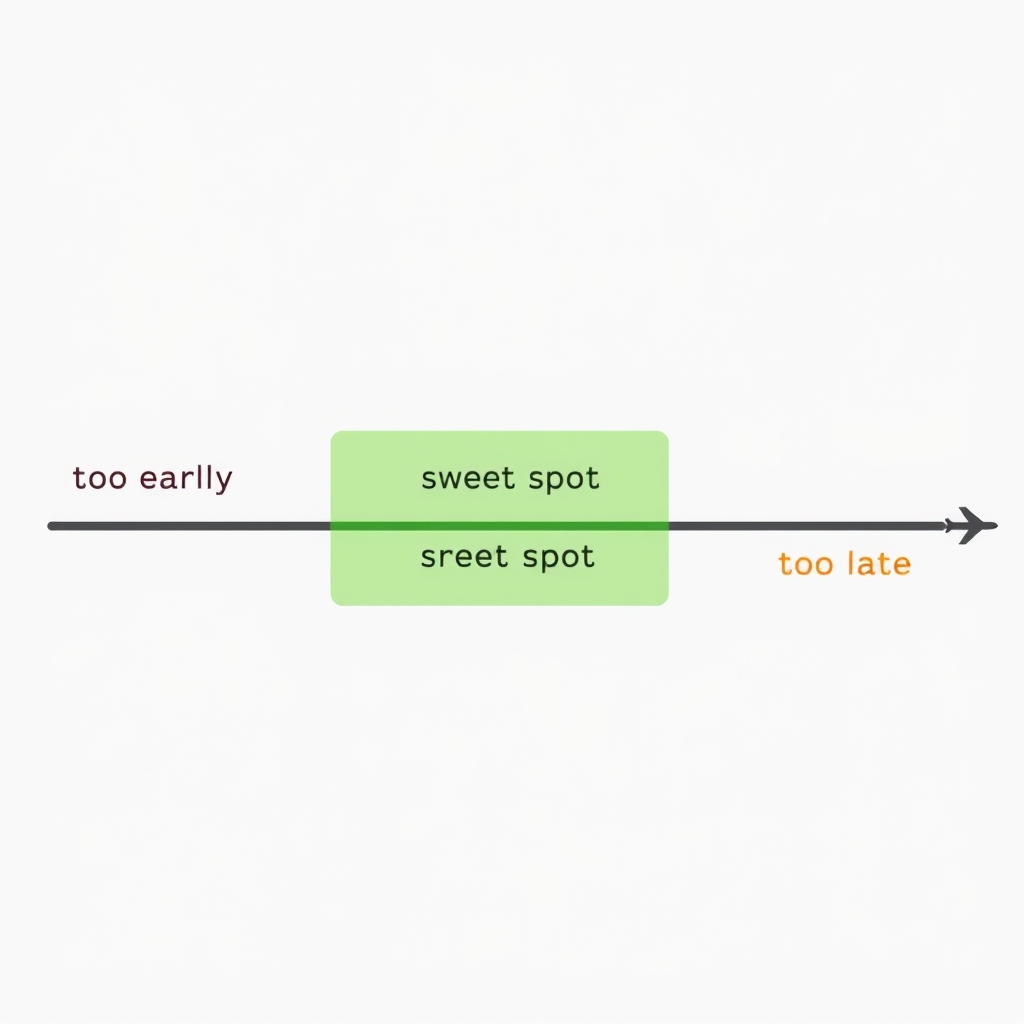
International flights (crossing continents): Book 2–8 weeks in advance. Long-haul routes show more volatility because airlines price-test across multiple markets. The earliest fares often appear 8 weeks out, but the lowest fares for off-peak travel tend to cluster around the 4–6 week window.
Budget carrier routes: These airlines (Southwest, Spirit, Frontier, Ryanair, AirAsia) release schedules further ahead and often have different fare patterns than legacy carriers. Based on typical booking patterns, budget carrier fares sometimes bottom out even earlier around 6–8 weeks for domestic, 10–12 weeks for international.
Key insight: If you must travel during peak season (Christmas, spring break, summer), book at the earlier end of these windows (8–12 weeks out). Off-peak travel lets you wait closer to the 2–4 week mark.
Step 2: Set Up Price Alerts (and Use Them Correctly)
Price alerts are free and do the monitoring for you but only if you use them properly.
How to set up alerts:
- Visit Google Flights, Hopper, Kayak, or Skyscanner
- Enter your departure airport, destination, and flexible travel dates (set a date range, not a single day)
- Toggle “Alerts” or “Price Tracking” (wording varies by tool)
- Set your alert threshold the price point at which you want to be notified
- Confirm your email address
The mistake everyone makes: Setting alerts too low. If a flight typically costs $350 and you set an alert for anything under $250, you’ll never book you’ll just watch prices hover and never pull the trigger. Instead, set alerts 15–25% below the average price you see in your initial searches. For a typical $350 domestic flight, that means alerting at $275–$300.
Pro tip: Set up alerts 2–3 months before travel, even if you’re not ready to book. Let the tool gather data. After 2–3 weeks of tracking, you’ll see the actual price floor for your specific route and date range then adjust your threshold accordingly.
Step 3: Search in Incognito Mode (Yes, It Matters)
Airline booking engines and search aggregators use cookies to track your searches. If you’ve visited the same route multiple times, the site may show you higher prices to create urgency (“Book now prices are rising”).
How to search incognito:
- Open a new incognito/private window (Ctrl+Shift+N on Windows, Cmd+Shift+N on Mac, or right-click → “Open in Private Window”)
- Go to Google Flights, Kayak, Skyscanner, or your preferred search tool
- Enter your route and dates
- Note the prices
- Close the window
- Repeat the search in a regular window to compare
Why it works: Incognito mode blocks cookies and site history, so the booking engine treats you as a first-time visitor. Based on traveler reports we’ve reviewed, price differences of $20–$100+ per ticket between incognito and regular-mode searches are plausible on popular routes though results vary and not every search will show a gap.

Illustrative example: In one commonly cited fare-tracking comparison for a Tuesday-to-Thursday domestic route, the regular-mode search returned $340 while the same incognito search returned $310 a $30-per-ticket difference, or $60 for a round trip for two. Your mileage will vary, but the pattern is worth testing on your own route before you book.
Step 4: Search on the Right Day of the Week
The day you search and the day you fly are two different optimization levers.
Best days to search: Tuesday through Thursday mornings (8 a.m.–noon ET). Airlines often adjust pricing overnight on Tuesday after analyzing the previous week’s bookings, and prices tend to stabilize mid-week. Searching Sunday through Monday often catches the tail end of premium weekend pricing.
**Best days to fly: Tuesday, Wednesday, and Saturday are typically cheaper than Friday, Sunday, and Monday. Friday and Sunday command premium pricing because they’re popular travel days. Monday has its own pricing quirk business travel demand pushes fares up.
Caveat: These patterns are statistical tendencies observed across aggregated booking data, not guarantees. A Tuesday flight during spring break might be more expensive than a Friday flight in March. Time-of-day also matters: early morning (5–7 a.m.) and red-eye flights (11 p.m.–6 a.m.) are usually cheaper than mid-morning and evening slots.
Step 5: Use Route Hacking to Find Cheaper Connections
How to route hack:
Connecting flights vs. direct:** A connecting flight might cost $200 less than a direct flight on the same airline, but it adds 4–8 hours to your travel time, includes layover risk, and usually requires you to recheck bags. In our research, the math tends to work only when the connecting flight saves $150 or more and the layover window is 2+ hours otherwise the inconvenience rarely justifies it
Seasonal route hacking: During peak travel season, secondary airports often have lower demand and cheaper fares. This reverses during off-peak seasons, when airlines concentrate flights in major hubs.
Step 6: Compare Multiple Search Engines and Set Realistic Price Targets
Different search aggregators (Google Flights, Kayak, Skyscanner, Momondo) have access to different inventory and display prices differently. One site might show $320; another might show $295 for the same flight.
How to comparison search:
- Open three search engines in separate tabs (Google Flights + Kayak + Skyscanner is a solid starting combo)
- Enter the same route and dates in each
- Note the lowest price from each engine
- Click through to the airline’s website directly (don’t book via the aggregator unless there’s a price lock guarantee) to confirm the price
- Book on whichever site offers the best rate and the best terms (refundability, baggage policy, etc.)
Why the airline’s website matters: Aggregators earn commissions; sometimes booking direct saves you $10–$30. Some airlines (Southwest, for example) don’t appear on all aggregators, so you could miss their lowest fares entirely.
Setting your price target: As a rule of thumb we’ve found useful across multiple route comparisons, a reasonable target for a domestic flight is roughly 30–40% below the median fare for that route during that season treat this as an editorial heuristic, not a guaranteed threshold. Use historical data from your alerts to calibrate. If your route averages $350, aiming for $210–$245 is realistic for off-peak travel; aiming for $150 will leave you searching indefinitely.
Step 7: Leverage Flexible Date Search to Find Cheap Date Combinations
Most travelers lock in their travel dates and search for the lowest price on those specific days. Flexible-date search flips it: you set a window (e.g., “any date in July”) and the tool shows you the cheapest day.
How to use flexible date search:
- In Google Flights, click the calendar icon next to your travel dates
- Toggle “Flexible dates” or select a date range
- The tool will display a heat map showing the cheapest day in that range
- Adjust your travel dates to match the cheapest option
Where it saves the most: Mid-season travel (late April, early September, late January) and off-peak windows show the biggest savings when you use flexible dates sometimes $100+ difference between the cheapest and most expensive day in a two-week window.
Illustrative example: Searching “any date in July” for a Los Angeles to Denver flight, the tool showed July 2–9 averaging around $215; July 14–21 ran around $380 (overlapping with peak summer vacation). Shifting the trip by a week saved roughly $165 per ticket, or $330 for two travelers. Prices change constantly run this comparison yourself to see what applies to your dates.
Step 8: Clear Your Browser Cookies or Use a New Browser Profile
Beyond incognito mode, clearing cookies entirely removes your browsing history from the booking engine.
How to clear cookies (and why it helps):
- Open your browser settings (Ctrl+, on most browsers)
- Select “Privacy and Security” or “Clear Browsing Data”
- Choose “All time” as the time range
- Check “Cookies and other site data”
- Click “Clear data”
- Restart your browser and search again
Practical note: Incognito mode is simpler for one-off searches. Cookie clearing is more thorough if you’re deeply researching a route over multiple days and want to reset the site’s “memory” of you entirely.
Step 9: Watch for Flash Sales and Sign Up for Airline Newsletters
Airlines periodically release limited-time sales (24–72 hours, typically) on specific routes. These are real opportunities, but they’re also marketing noise you need to filter the signal from the static.
How to catch sales without being overwhelmed:
- Sign up for newsletters from the 2–3 airlines you fly most often
- Filter these emails into a dedicated folder so they don’t clutter your inbox
- Check the folder twice a week for flash sale announcements
- Book immediately if a sale covers your route and dates (sales often expire in 24–48 hours)
The fine print on sales: Flash sale fares are usually non-refundable and non-changeable. If your plans might shift, skip the sale fare unless the savings are worth the cancellation risk.
Step 10: Avoid These Common Booking Mistakes
Mistake 1: Booking too early. Booking 4+ months out for a domestic flight typically means paying more than if you’d waited. It’s tempting to lock it in, but resist the urge unless travel dates are truly inflexible.
Mistake 2: Searching the exact same flight time repeatedly. Every time you check Google Flights for “Tuesday, 10 a.m. LAX→NYC,” you’re signaling demand to the algorithm. Vary your search: try Wednesday at 6 a.m., Thursday at midnight. Cheaper flights exist at unpopular times.
Mistake 3: Forgetting ground transportation costs. A flight that’s $200 cheaper into an airport 90 minutes away can cost $30–$50 in Uber/taxi to reach your hotel, plus parking or rental fees. The total savings shrink fast.
Mistake 4: Not reading the fine print. Budget carriers charge for carry-ons, seat selection, and checked bags. A $180 base fare might reach $220 once you add a bag. Compare the all-in cost, not just the headline price.
Mistake 5: Ignoring hidden fees on aggregators. Some flight-search sites don’t surface baggage fees or seat selection costs until checkout. Search on the airline’s site directly to confirm the final price before committing.
Common Myths Debunked
Myth: Flying on holidays is always cheaper. False. Thanksgiving, Christmas, and spring break have higher demand, so fares rise, not fall. Off-peak travel January, September, May is where you find true deals.
Myth: Booking exactly 6 weeks in advance guarantees the lowest price. False. The 6-week window is a statistical average cited across multiple fare-tracking studies. Price floors vary by route, season, and airline. Use alerts and flexible-date search instead of chasing a magic number.
Myth: Clearing cookies will drop your price instantly. Partially true, but overstated. Clearing cookies can help, and incognito mode adds a layer of protection, but the primary driver of price variation is booking window timing and day-of-week patterns not cookie manipulation alone.
Myth: You should always book round-trip flights together. Not always. Booking outbound and return flights separately can save $50–$200 if prices are mismatched. The trade-off: you lose single-ticket protection if one flight is cancelled. Most travelers prefer the simplicity of one booking, but if you’re flexible, split booking is worth a look.
Frequently Asked Questions
Q: What’s the absolute cheapest way to fly? A: Red-eye flights (11 p.m.–6 a.m. departures), connecting flights with long layovers, flying on Tuesdays and Wednesdays, and booking 4–6 weeks in advance combine for the lowest fares. But “cheapest” and “best” are different if you sleep poorly on planes, the savings might not be worth it.
Q: Should I use airline miles instead of booking cash fares? A: Only if your credit card is offering a meaningful bonus (e.g., 50,000 points after a minimum spend threshold) or if award availability is strong for your route. For routine trips, price-shopping cash fares often offers better value than burning through miles at standard redemption rates.
Q: Is booking directly on the airline’s site always cheaper than search aggregators? A: Rarely cheaper, but sometimes the same price with better protection. Aggregators earn commissions, but they don’t always pass savings to you. Direct booking avoids aggregator fees and gives you direct customer service if something goes wrong. A difference of $10–$20 isn’t worth the added friction, but if you find the same flight cheaper on the airline’s site, book there.
Q: Do low-cost carriers (Spirit, Frontier, Southwest) actually save you money? A: Yes if you factor in the full cost. Spirit and Frontier have lower base fares but add fees per bag and per seat selection. Southwest includes two checked bags and free changes, making it better for unpredictable trips. For a single carry-on, budget carriers usually win. For bags or flexibility, they may not.
Q: Can I book a flight and change the dates later if plans change? A: It depends on the airline and fare type. Most discounted fares are non-refundable and non-changeable. Premium economy and business fares typically allow free changes. If you’re unsure about your dates, pay the premium for flexibility trying to game the system with last-minute cancellations is usually expensive.
Flight pricing algorithms change constantly, and promotions come and go. The principles here booking windows, day-of-week patterns, price alerts, and route hacking are stable. But specific price figures, airline policies, and search-engine algorithms shift. If you’re booking in the future, re-test the day-of-week pattern for your specific route and check each airline’s current baggage policy.