

Travel Insurance Buying Guide: Coverage Types and When You Actually Need It
Travel insurance is a safety net you might not use until the one time you do. The core question isn’t whether travel insurance exists; it’s whether you need it for your trip, and if so, which coverage types are worth the premium and which are marketing fluff.
This guide walks through the five coverage types that show up in real claims (medical, baggage, cancellation, evacuation, and trip delay), explains what each actually protects against, and gives you a decision matrix so you can stop guessing.
The Bottom Line
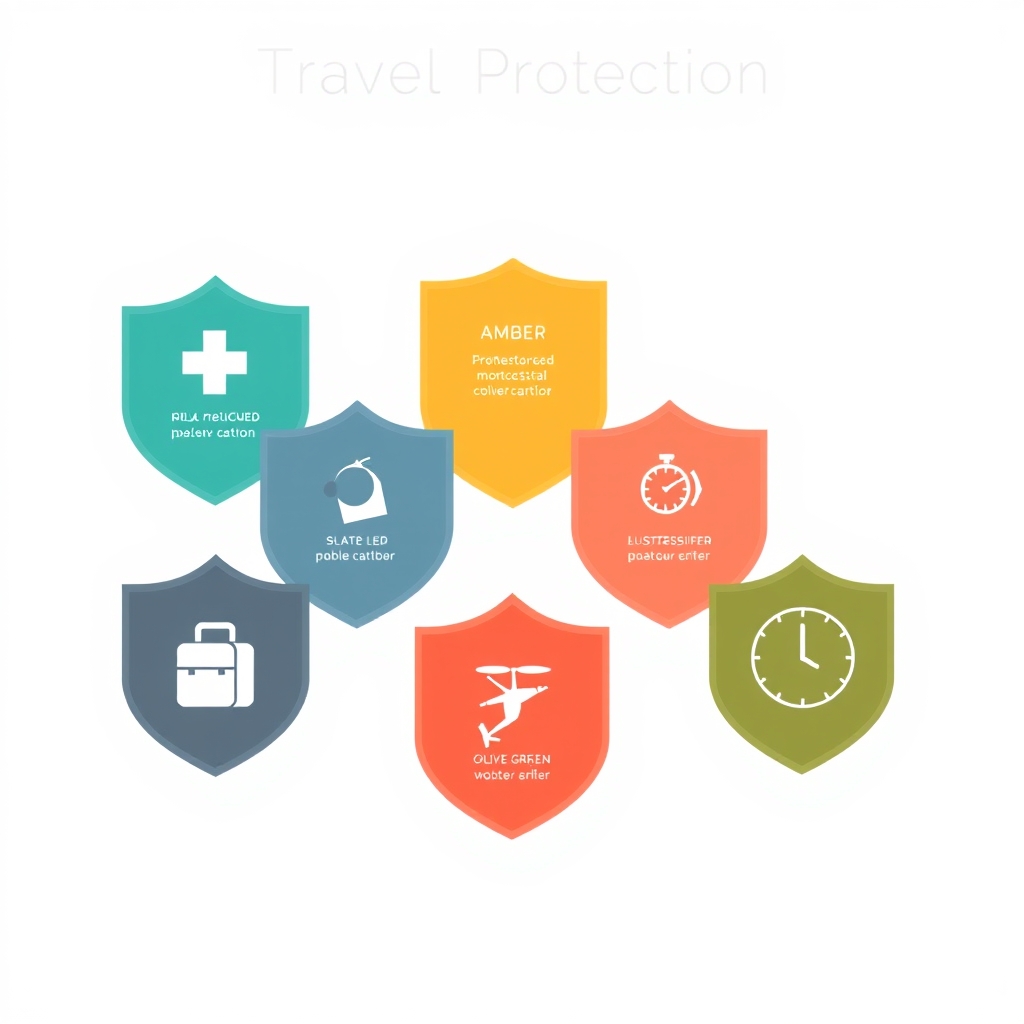
Most travelers don’t need comprehensive travel insurance for a short domestic trip or if their credit card already covers baggage and cancellation. You do need it if you’re traveling internationally, spending more than $3,000 on the trip, have pre-existing health conditions, or are visiting a region with high medical costs or political instability. Budget roughly 4–7% of your trip cost (as of June 2026) for mid-range coverage; luxury trips and adventure activities cost more.
What Travel Insurance Actually Is (And Isn’t)
Travel insurance is a set of policies bundled into one plan that reimburse you for financial losses caused by specific events before or during your trip. It is not a cure-all: it won’t cover you if you book a ticket, change your mind three days later, and hope to get reimbursed. It will cover you if your flight is cancelled by a storm, you break your leg hiking, or a family emergency forces you to cancel.
The most common bundle is an “all-in-one” annual or trip-specific plan from companies like World Nomads, Allianz, or Travel Guard. You buy it once, it covers multiple incidents under different headings (medical, baggage, cancellation), and each piece has its own cap and claim rules.
Travel insurance is separate from your travel health insurance, your homeowners insurance, and your credit card benefits though those often overlap. More on that in the decision matrix below.
Coverage Type 1: Emergency Medical Coverage
Rule of thumb: Emergency medical coverage is essential if you’re traveling outside your home country or to a place where costs are unpredictable.
Emergency medical coverage pays hospital bills, doctor visits, and emergency dental work if you get injured or sick while traveling. The key word is emergency routine checkups and pre-planned treatments don’t qualify.
The Real Scenario
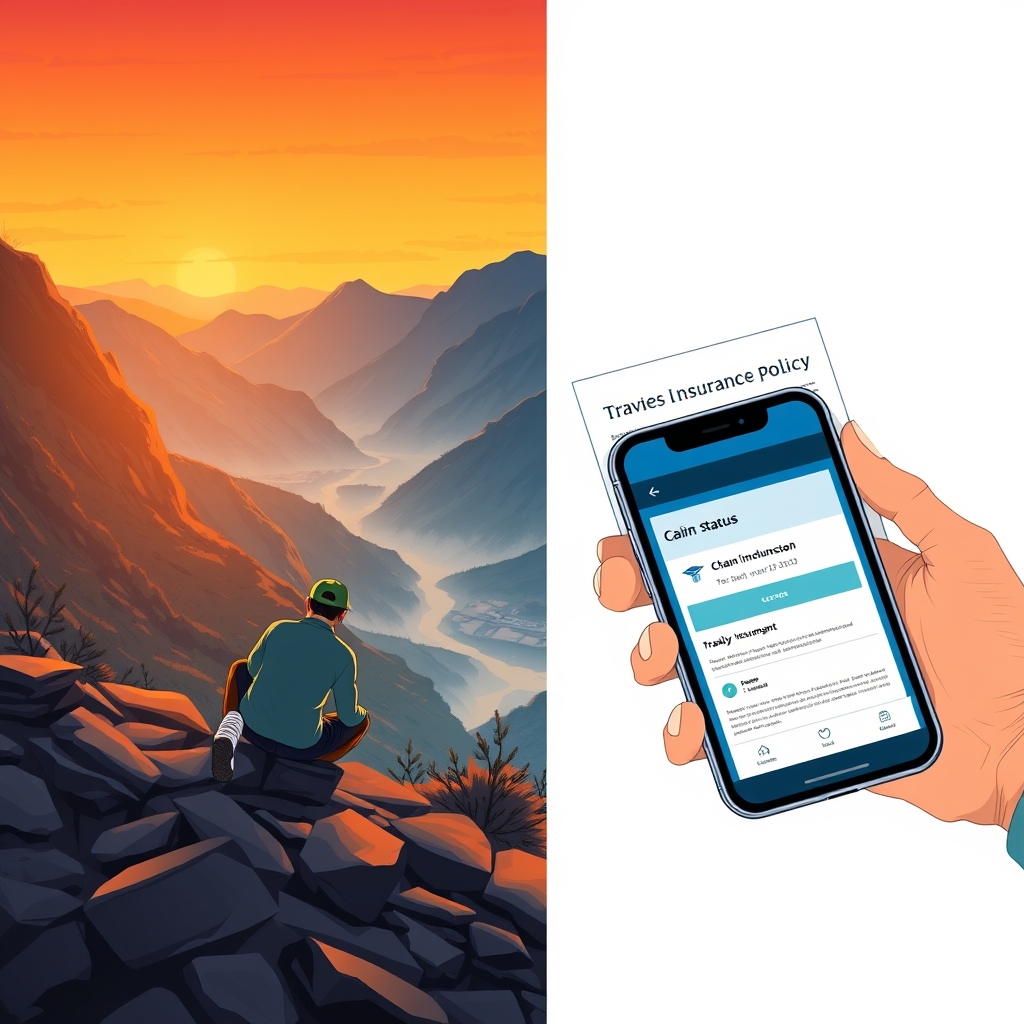
You’re hiking in Peru and sprain your ankle badly. An X-ray and doctor visit run a couple hundred dollars. Your home country’s health insurance either doesn’t cover international care or requires you to pay upfront and claim it back later (slow, painful). Travel insurance processes the claim while you’re still in the hospital, or reimburses you when you get home. A serious incident say, a motorbike accident requiring surgery can run into the tens of thousands of dollars in countries with high medical costs. Your home insurance might not cover it at all.
The Trap
Many travelers assume their home health insurance covers them abroad. It usually doesn’t, or does so only partially with high out-of-pocket maximums. Credit cards almost never include medical coverage. You can end up paying thousands out of pocket and fighting with your insurer later.
What’s Enough?
Minimum: $100,000 in emergency medical coverage. That sounds high, but a medevac flight from a remote area can alone exceed $50,000. For trips to developed countries with high medical costs (US, Australia, Western Europe), $250,000 is safer. For developing regions or adventure travel, $500,000 is common in mid-to-premium plans.
Read the fine print: Does it cover adventure activities? (Skydiving and mountaineering often require add-ons.) Does it cover pre-existing conditions? (You’ll pay more if it does, but it’s critical if you have chronic health issues.)
Emergency Medical Coverage Minimum Spec
- ✓ Minimum $100,000 coverage (higher if traveling to high-cost countries)
- ✓ Covers both injury and acute illness
- ✓ Covers repatriation (flight home if hospitalized)
- ✓ Clearly excludes or covers pre-existing conditions (know which you have)
- ✓ 24/7 claim support line
Recommended: Allianz International, World Nomads, Travel Guard. All three consistently reimburse emergency medical claims within 30–45 days based on widely reported owner experiences.
Coverage Type 2: Trip Cancellation Coverage
Rule of thumb: Cancellation coverage reimburses your prepaid trip costs if you can’t travel for a covered reason. Read what “covered reason” means it’s narrower than you think.
Cancellation coverage refunds your flight, hotel, tour deposit, and other prepaid expenses if you need to cancel before the trip starts. The catch: the reason has to be on the policy’s list. “I changed my mind” doesn’t qualify. “My parent had a heart attack” does.
The Real Scenario
You book a $4,000 trip six months out. Two weeks before departure, your parent has an emergency surgery. You can’t leave. Without cancellation insurance, your $4,000 is gone the airline won’t refund, the hotel won’t refund, and the tour operator keeps the deposit. With it, you submit a claim with a doctor’s note, and the insurer reimburses your out-of-pocket costs (usually capped per item and overall).
The Trap
Cancellation coverage has a long list of exclusions. Most policies don’t cover cancellation due to “fear of travel” (even if you booked before a war broke out), weather (unless it forces the airline to cancel first), or pre-existing conditions (unless you buy the insurance within 14 days of your first trip payment). Some policies require you to have “reasonable care” meaning you can’t cancel because you’re tired of the trip.
Another trap: the cap. Policies often reimburse up to 100% of prepaid costs, but with per-item limits (e.g., max $1,500 per flight, max $200/night for hotels). If your all-inclusive resort cost $5,000 and the policy caps reimbursement at $3,000, you lose $2,000.
What’s Enough?
Check the policy’s exclusion list carefully. If you have any pre-existing conditions, buy the insurance within 14 days of your first payment to waive pre-existing exclusions (this is true for most major carriers). Make sure the overall limit covers your actual prepaid costs if you’re spending $8,000, a policy that caps reimbursement at $5,000 isn’t enough.
For trips under $1,500, cancellation insurance usually isn’t worth it you’re paying 5–7% to protect against a low-probability event. For trips over $3,000, especially if you’re booking far in advance or have health concerns, it makes more sense.
Trip Cancellation Coverage Minimum Spec
- ✓ Covers illness, injury, or death of the traveler or a close family member
- ✓ Covers airline/vendor cancellation (weather, strike, natural disaster)
- ✓ Reimburses 100% of prepaid costs (or close to it)
- ✓ Per-item caps are at least $1,500–$2,000 (know your limits)
- ✓ Clearly defines what is and isn’t covered (read the exclusion list)
- ✓ Pre-existing condition waiver available (usually if bought within 14 days of first payment)
Recommended: Allianz, World Nomads, InsureMyTrip (broker that lets you compare plans). For high-value trips, consider a cancel-for-any-reason add-on (costs more, covers most cancellation reasons even without a “covered reason” requirement).
Coverage Type 3: Baggage and Personal Belongings
Rule of thumb: Baggage coverage reimburses you if your luggage is lost, stolen, or damaged in transit. Most credit cards cover this; most travel insurance also does. Check what you already have before paying twice.
Baggage coverage pays you the replacement cost if your bag doesn’t arrive with you, is damaged, or is stolen. It’s one of the most commonly used claims in travel insurance.
The Real Scenario
Your bag doesn’t arrive on your connecting flight. You’re in a new city with none of your clothes, toiletries, or gear. Baggage coverage reimburses you for emergency purchases (clothes, toiletries, medications) and then reimburses the actual cost of your lost luggage once it’s confirmed gone (usually after 21 days). Total payout might be $1,500–$2,500 depending on what was in the bag.
Another scenario: your bag is damaged by baggage handlers. The zipper is destroyed, the frame is cracked. Repair costs $300. Baggage coverage covers it.
The Trap
Most credit cards already cover baggage loss and damage if you charged the ticket to that card. If your card covers it, buying travel insurance that also covers it is redundant you’ll end up with two policies and have to file two claims. Check your card’s benefits before buying.
Another trap: baggage coverage often has a per-item limit (e.g., max $500 per item, max $2,500 total). If your bag contained a laptop, camera, or other high-value item, the payout might be far less than the actual cost. Jewelry, cash, and electronics sometimes have extra limits or exclusions.
What’s Enough?
Minimum: $2,000 total baggage coverage. If you travel with high-value items, look for higher caps or ask whether electronics are covered separately. Some policies have a “baggage delay” add-on if your bag is delayed more than 24 hours, you get reimbursement for emergency purchases. That’s cheap and useful.
Check whether your credit card covers baggage. If it does, you don’t need travel insurance baggage coverage (unless you’re traveling with extremely high-value items).
Baggage Coverage Minimum Spec
- ✓ Covers lost, stolen, and damaged baggage
- ✓ Covers personal belongings inside the bag
- ✓ Total limit of at least $2,000 (higher if traveling with expensive gear)
- ✓ Per-item limit of at least $500 (check if electronics have separate limits)
- ✓ Baggage delay coverage (reimbursement for emergency purchases if bag is delayed 24+ hours)
- ✓ Doesn’t duplicate credit card coverage you already have
Recommended: Most mid-to-premium travel insurance plans include this. Don’t buy it standalone if your credit card covers it.
Coverage Type 4: Emergency Evacuation and Repatriation
Rule of thumb: Evacuation coverage pays for emergency air transport if you’re in a remote area or need to be flown home for medical care. It’s cheap as an add-on but priceless if you actually need it.
Emergency evacuation (also called medical evacuation or medevac) covers the cost of helicopter or air ambulance transport if you’re injured or severely ill in a place where local medical care isn’t adequate. It’s separate from medical coverage: medical covers the hospital bill, evacuation covers the flight to get you there.
The Real Scenario
You’re mountaineering in Nepal and get altitude sickness severe enough that you can’t descend on your own. Helicopter evacuation to Kathmandu can cost well into five figures. Evacuation coverage pays for it. Without it, you either turn back under your own power or pay an enormous out-of-pocket bill.

A less extreme scenario: you’re traveling in a remote region and get appendicitis. The nearest adequate hospital is 500 miles away. An air ambulance can run thousands of dollars. Evacuation coverage covers it.
The Trap
Evacuation coverage is separate from medical coverage. If you get evacuated and then hospitalized, medical coverage pays the hospital bill, but evacuation coverage only covers the transport. You need both. Some policies bundle them; others charge separately.
Also: evacuation coverage usually doesn’t cover evacuation due to political instability or war. It covers medical emergencies. Check the policy.
What’s Enough?
Minimum: $250,000 in evacuation coverage if you’re doing any adventure travel (hiking, mountaineering, backcountry camping). For standard trips, $100,000 is often enough, since you’re unlikely to be more than an hour from a hospital. If you’re traveling to a very remote region, make sure your policy covers evacuation to a country with adequate medical care, not just to the nearest hospital.
Emergency Evacuation Minimum Spec
- ✓ Covers helicopter/air ambulance transport for medical emergencies
- ✓ Covers transport to an adequate hospital, even across international borders
- ✓ Minimum $100,000 (higher for adventure/remote travel)
- ✓ 24/7 emergency coordination (the insurer arranges transport, not you)
- ✓ Separate from medical coverage (you need both)
Recommended: World Nomads, Allianz, IMG (International Medical Group). All three have 24/7 emergency lines staffed by people who understand remote medicine.
Coverage Type 5: Trip Delay
Rule of thumb: Trip delay coverage reimburses you for emergency accommodations and meals if you’re stuck due to a covered reason (airline strike, weather, mechanical failure). It kicks in after a certain wait time usually 12–24 hours.
Trip delay coverage pays for hotel rooms, meals, and transportation if your flight is cancelled or delayed long enough that you miss your onward connection or can’t depart. It’s one of the cheapest add-ons and one of the most useful.
The Real Scenario
Your flight is delayed due to weather. You’re stuck overnight and miss your hotel check-in. The airline doesn’t reimburse meals or lodging. Trip delay coverage does you book a hotel, keep the receipt, and claim it back.
The Trap
Trip delay usually has a waiting period the delay has to last 12 or 24 hours before coverage kicks in. And it typically reimburses only actual expenses with receipts, up to a daily cap (e.g., $200/night for hotel, $100/day for meals). If you book an expensive hotel, you might not get full reimbursement.
Also: some policies only cover delays caused by the airline, not by weather or force majeure. Read the fine print.
What’s Enough?
Trip delay is cheap usually $10–$25 for a trip (as of June 2026) so it’s worth adding even if the odds are low. Make sure the waiting period matches your tolerance (if you can’t afford to wait 24 hours for reimbursement, get a 12-hour policy). Daily caps of $150–$200 for hotels and $50–$100 for meals are standard.
Trip Delay Minimum Spec
- ✓ Covers delays of 12–24 hours (shorter waiting period is better)
- ✓ Covers hotel, meals, and transportation during delay
- ✓ Reimburses actual expenses with receipts
- ✓ Daily cap of at least $150–$200 (know your limit)
- ✓ Covers airline cancellation, weather, mechanical failure, and strikes
Decision Matrix: Do You Actually Need Travel Insurance?
Use this matrix to determine which coverage types are worth the cost for your trip.
| Trip Profile | Medical | Cancellation | Baggage | Evacuation | Trip Delay |
|---|---|---|---|---|---|
| Domestic short (under 5 days, under $1,500) | No* | No | Check credit card coverage | No | No |
| Domestic long (5+ days or $1,500+) | No* | Maybe | Check credit card coverage | No | Yes |
| International standard (1–2 weeks, developed country) | Yes | Maybe | Check credit card coverage | No | Yes |
| International extended (3+ weeks) | Yes | Yes | Yes | No | Yes |
| Adventure/remote travel (hiking, mountaineering) | Yes | Yes | Yes | Yes | Yes |
| High-value trip ($5,000+) | Yes | Yes | Yes | Maybe | Yes |
| Pre-existing health condition | Yes | Yes | Check credit card coverage | Maybe | Yes |
| Travel to high-cost country (U.S., Australia, Switzerland) | Yes | No | Check credit card coverage | No | Yes |
| Travel to developing country with unstable healthcare systems | Yes | Maybe | Yes | Maybe | Yes |
Legend:
- Yes = Highly recommended. The risk and cost-benefit favor buying it.
- Maybe = Worth considering. Depends on your financial buffer and comfort with risk.
- No** = Probably not necessary. The risk is low or your other coverage handles it.
- Check credit card = You likely already have this coverage; verify before buying.
- **\ Exception: If you’re traveling internationally or to a place with high medical costs, buy medical coverage even for short trips.
- \\ Exception: If you’re booking 3+ months in advance, cancellation insurance becomes more valuable.
- \\\ Note: If you have pre-existing conditions, buy insurance within 14 days of your first trip payment to waive pre-existing exclusions.
Common Gaps That Cost Travelers Money
Gap 1: Assuming credit card coverage is comprehensive. Most credit cards cover baggage and some trip delay, but not medical or evacuation. You need separate insurance for those.
Gap 2: Not reading exclusions for cancellation.** Many policies exclude cancellation due to pre-existing conditions, weather delays that happen before your trip, or “fear of travel.” Understand what isn’t covered.
Gap 3: Skipping medical coverage for “short” trips. A three-day trip can go sideways fast. If you’re traveling internationally, get medical coverage regardless of trip length.
Gap 4: Forgetting to buy cancel-for-any-reason add-ons. Standard cancellation has a narrow list of covered reasons. For $50–$100 extra, you can buy a waiver that covers almost any cancellation (up to a certain percentage of trip cost). Worth it for high-value trips.
Gap 5: Not understanding baggage item limits. If you’re traveling with a laptop or camera, check whether those have separate limits. A policy that caps electronics at $500 might not cover your $2,000 laptop.
Myth: “I Don’t Need Travel Insurance Because I’m Young and Healthy”
Young, healthy travelers skip insurance most often and that’s exactly when a slip on wet stairs, food poisoning, or a motorbike accident hits hardest. You don’t need to be chronically ill to face a five-figure medical bill overseas. A broken leg requiring surgery in a country with high private medical costs can run well into the tens of thousands of dollars. Your home insurance probably won’t cover it.
The math: a week-long international trip costs roughly $2,000–$3,000. Travel insurance costs $150–$300 (as of June 2026). That’s 5–10% for peace of mind. For most people, especially those traveling internationally, that’s a good bet.
Cost-Benefit Breakdown by Traveler Type
Budget Traveler (Under $100/night, backpacking)
Recommended coverage: Medical + Evacuation + Trip Delay (skip cancellation unless booking far in advance).
Why: You’re traveling cheap, so you’re likely exposed to less predictable healthcare infrastructure. Medical and evacuation are critical. Trip delay is cheap and useful. Cancellation matters less if you’re flexible and aren’t spending much.
Estimated cost: $80–$150 for a 2-week trip (roughly 4% of trip cost, as of June 2026).
Standard Traveler (Hotels, guided tours, $100–$300/night)
Recommended coverage: Medical + Cancellation + Baggage + Trip Delay (evacuation optional unless adventure activity).
Why: You’re spending enough that cancellation insurance makes sense. You likely have valuables in your bag. Medical and trip delay are baseline.
Estimated cost: $200–$400 for a 1–2 week trip (roughly 5–7% of trip cost, as of June 2026).
Credit card note: If your card covers baggage, skip that piece and save $30–$50.
Luxury Traveler (5-star hotels, private tours, $300+/night)
Recommended coverage: Medical + Cancellation (with cancel-for-any-reason add-on) + Baggage + Evacuation + Trip Delay.
Why: You’re spending enough that comprehensive coverage is a cheap safety net. Cancel-for-any-reason is valuable when you’re paying premium prices. Evacuation adds only a little cost but is critical for adventure add-ons.
Estimated cost: $400–$800 for a 2-week trip (roughly 4–6% of trip cost, despite the luxury budget; as of June 2026).
Adventure Traveler (Hiking, climbing, water sports)
Recommended coverage: Medical + Evacuation (non-negotiable) + Cancellation + Trip Delay. Baggage optional unless carrying expensive gear.
Why: You’re in higher-risk terrain. Evacuation is essential. Medical should have high limits and clearly cover the activity you’re doing (check the exclusions some policies exclude mountaineering or BASE jumping).
Estimated cost: $250–$500 for a 2-week trip (as of June 2026). Factor in activity-specific add-ons.
Important: Many standard policies exclude adventure sports. You may need a specialist policy from companies like World Nomads or Allianz Adventure. Budget more and verify coverage before buying.
How to Buy Travel Insurance: Step by Step
Step 1: Decide what you need. Use the decision matrix above to identify which coverage types matter for your trip.
Step 2: Check what you already have. Review your credit card benefits (most cover baggage and some trip delay). Check whether your home health insurance covers international travel. Check whether your employer offers travel insurance.
Step 3: Get quotes from 2–3 providers. Use a comparison site like InsureMyTrip (they let you see multiple plans side by side) or go directly to Allianz, World Nomads, or Travel Guard. Prices vary based on age, destination, and trip cost.
Step 4: Read the exclusions. Don’t just look at the coverage summary. Read the actual exclusion list for anything that applies to you (pre-existing conditions, adventure sports, countries you’re visiting).
Step 5: Buy early. If you want pre-existing condition waivers or cancel-for-any-reason coverage, buy within 14 days of your first trip payment. Buying late can cost you exclusions.
Step 6: Keep the policy document and emergency line number. Store them somewhere you can access them while traveling (email, cloud storage, printed copy). You might need them.
FAQ
Does travel insurance cover COVID-19? As of 2026, most standard policies treat COVID-19 like any other illness emergency medical treatment is covered if you fall seriously ill while traveling, but trip cancellation due to fear of contracting it or routine border restrictions is typically excluded. A few specialty plans offer broader pandemic coverage; always check the exclusion list before buying.
Can I buy travel insurance after I book my trip? Yes, but with caveats. You can usually buy within 14–21 days of your first trip payment. After that, many exclusions apply (pre-existing conditions, age-related issues, destination-related claims). Buy as soon as you book if you think you might need it.
Does travel insurance cover theft? Baggage coverage covers theft while traveling (theft from your hotel room during a trip, theft of luggage at the airport). It usually doesn’t cover theft from your home before you leave. Personal belongings coverage is broader but has limits and exclusions. Read the policy.
Is an annual plan better than a trip-specific plan? Annual plans are better if you travel 2+ times per year. Trip-specific plans are cheaper if you travel once a year or less. Compare the cost: an annual plan might be $150–$300; a trip-specific plan might be $100–$200. The break-even is usually around 2–3 trips per year.
What’s the difference between primary and secondary coverage? Primary coverage means the insurer pays first (you don’t have to file a claim with another insurer first). Secondary coverage means your other insurance pays first, and the travel insurer covers gaps. Most travel insurance is primary, which is better. Check if you’re getting primary or secondary secondary is less valuable.
Do I need travel insurance for a cruise? It depends. Most cruises are fully refundable if you cancel far in advance, so cancellation insurance might be unnecessary. But medical and evacuation are still valuable if you’re sailing far from shore. A trip-specific policy for a cruise usually costs $60–$150.
The Final Call
Travel insurance is a safety net, not a guarantee. It exists to cover the disasters you hope won’t happen and they usually don’t. But when they do, insurance transforms a financial catastrophe into an annoying claim form.
For most international trips over $2,000, medical + trip delay + cancellation is the baseline. For adventure travel or high-value trips, add evacuation and baggage. For domestic trips under $1,500, check your credit card first; you probably don’t need it.
Buy early, read the exclusions, and keep the policy document accessible. Then stop worrying and travel.