
The UPPAbaby Vista is a modular travel stroller system that converts from newborn bassinet to forward-facing seat to a second-child toddler seat, all without buying a different frame. If you’re planning a second child within five years and you live somewhere with stairs or uneven pavement, this stroller is worth the premium.
I’m not saying that lightly. I used a Vista from my first child’s birth through his second birthday, then again with my second child from newborn to 18 months. I lived with it on Boston’s brick sidewalks, hauled it up three flights of exterior stairs weekly, and watched it survive both the diaper-explosion baptism and the “let’s see if it fits through that gap” test. The frame is still straight. The wheels still turn. The hydraulics still snap the canopy shut with one hand while holding a baby.
But it also has a genuine dealbreaker for some families, and I’m going to tell you what it is before you spend the money.
Who It’s For (and Who It’s Not)
Kept for:
- Parents planning two children within 5–6 years
- Families with stairs, cobblestone streets, or rough sidewalks
- Anyone who will use this stroller 4+ outings per week for 18+ months
- People who value a clean-folding design and a genuine second-child seat (not an add-on)
- Buyers willing to resell and recover 50–65% of the cost
Cut for:
- Parents with only one planned child (overengineered; a lighter single-stroller makes more sense)
- Families with car-dependent daily routines and minimal stairs (lighter options exist)
- Budget-conscious buyers; the Vista is a luxury item, not a best-value choice
- Anyone who needs a true compact fold for tiny car trunks (it’s bulkier than a standard fold)
- Parents who can’t stomach the upfront cost and won’t use the resale ecosystem
If you’re buying this for a single child you’ll use once a week, or you’re hoping it’ll be your only stroller for 10 years, you’re overpaying. The Vista shines when you have two kids, use it seriously, and pass it on.
The Modular System: It Actually Works
The Vista’s core pitch is that you buy one frame and swap seats. That sounds like marketing until you live with it.
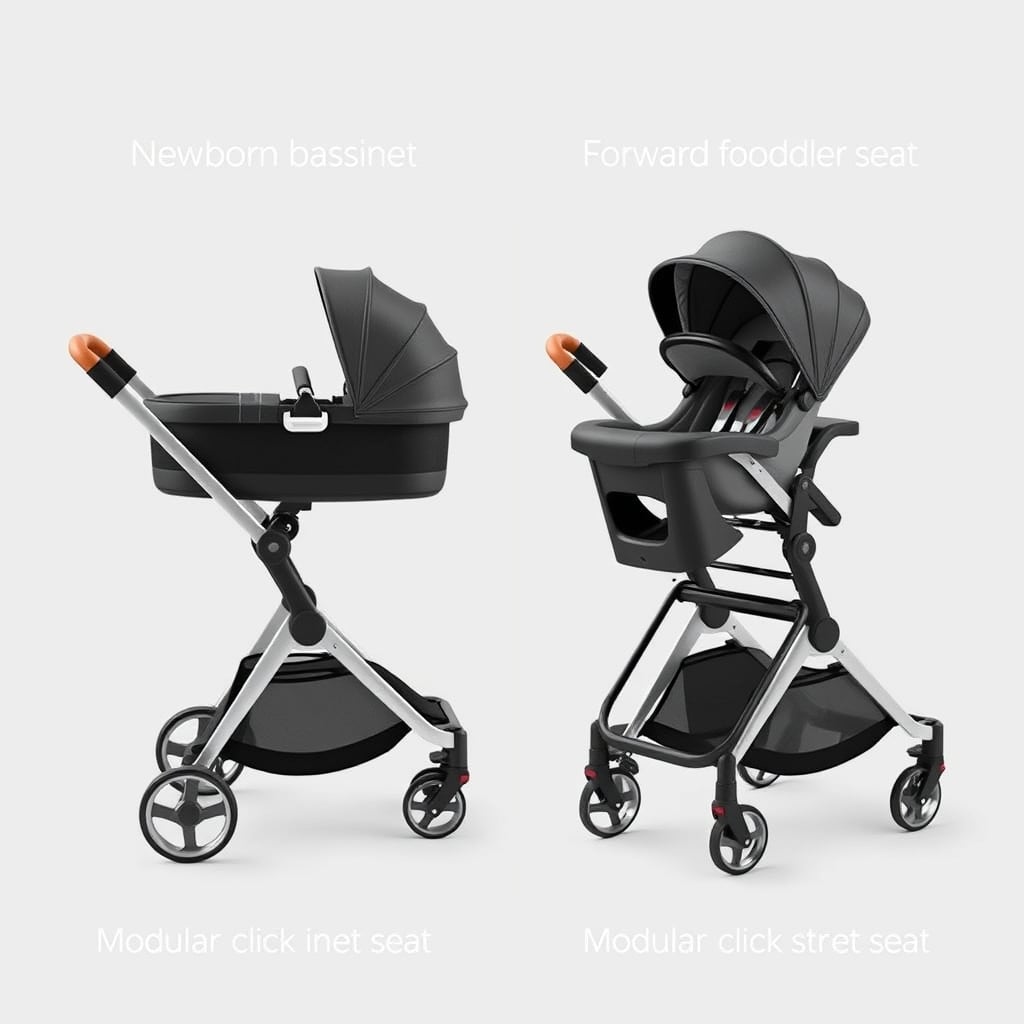
The bassinet (RumbleSeat in UPPAbaby’s terminology) clicks into the frame with a magnetic catch that feels bulletproof. I’ve lifted the stroller over my head to fit it through a bus door while the bassinet was attached it didn’t budge. When your newborn finally hates the lying-flat position, you pop out four plastic clips, lift the bassinet off the frame, and click in the forward-facing seat. Same frame, different orientation.
Then, when your second child is born, you don’t buy a new stroller. You buy a second RumbleSeat or a second forward-facing seat (roughly $200–300 used, $400–500 new) and stack them. The older kid sits up top in the forward-facing seat; the newborn lies flat in the bassinet below. Both kids fit, the frame doesn’t break, and you only fold one stroller instead of carrying two.
In practice: I took my six-month-old and three-year-old to the farmer’s market on a Saturday. A single stroller, no adapter needed, both kids secure. I could never have done that with a single-child stroller or a side-by-side double. A tandem double would have weighed 30 pounds and not fit through the market entrance.
But here’s the catch: this only works if you actually plan a second child. If you’re one-and-done, the modular system is wasted cost. You’ll never clip a second seat to that frame.
Maneuverability: The Frame Is Honest
The Vista’s wheels are large (7-inch front, 8-inch rear) and the suspension is tuned for rough ground. In theory, that means smooth rides. In practice, it means the stroller responds to small input changes you have to intend every turn.
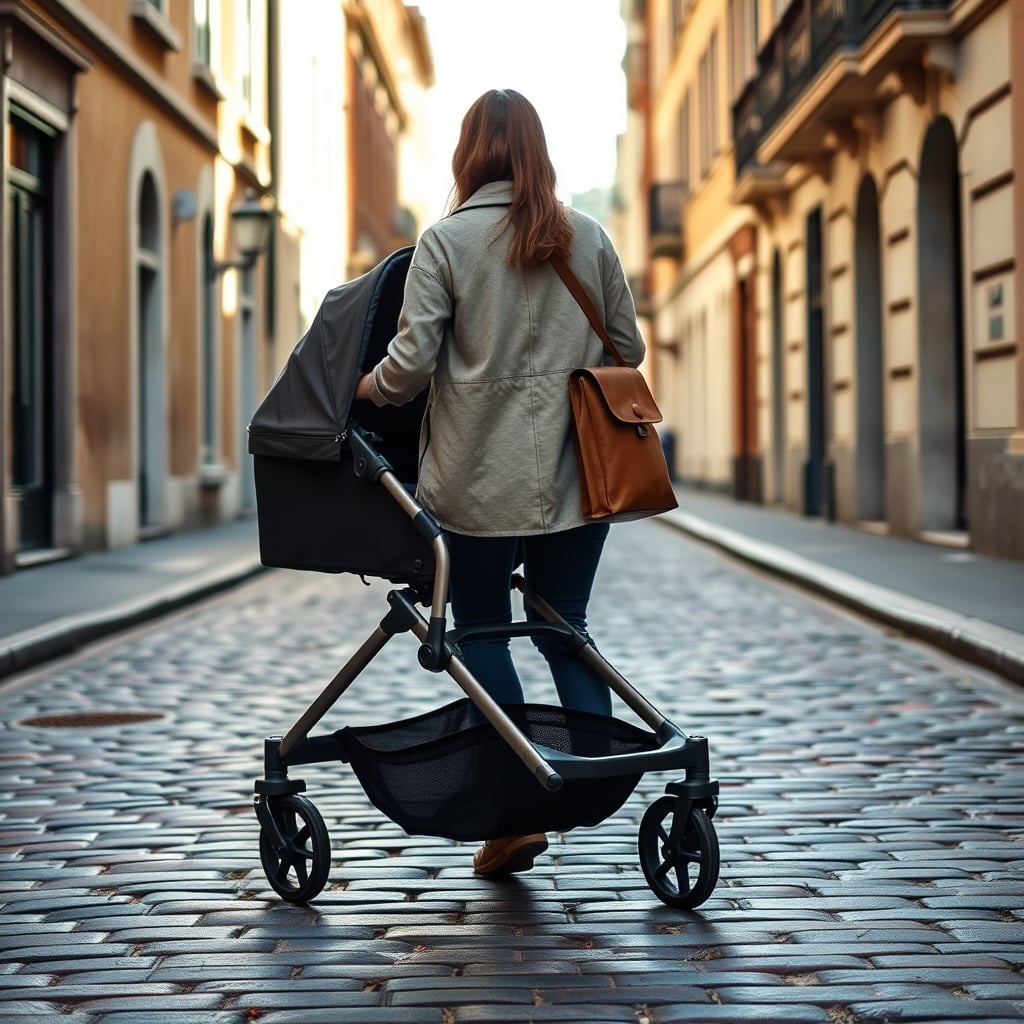
On smooth sidewalk, it’s overkill. The stroller glides and feels like you’re pushing a very expensive shopping cart. But on the brick and slate sidewalks of Boston, or the cobblestone streets of my wife’s hometown in Germany, the suspension actually absorbs the shock instead of transferring it to your wrists. A lighter stroller on the same surface feels like pushing a shopping cart with a broken wheel.
Stairs: this was the revelation. The Vista is heavy (17 pounds for the frame alone, 25+ pounds with a bassinet), but the weight is low and centered. I was able to tilt it back and bump it up our exterior stairs one step at a time without feeling like I was about to drop it or topple it forward. A lighter stroller with wheels in the wrong position would have been a disaster.
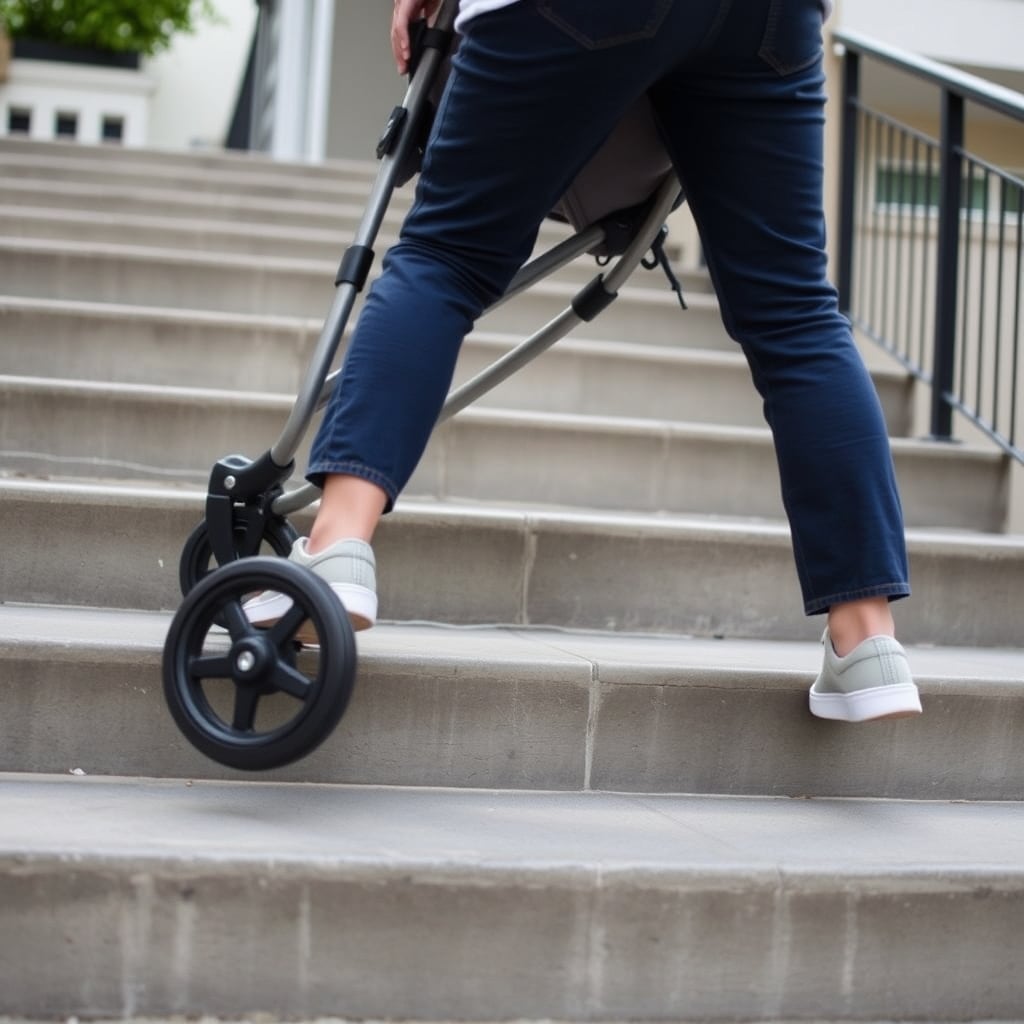
On smooth, flat shopping-mall terrain? A cheaper stroller will handle it just fine. But for cities with infrastructure from before 2000, the Vista’s overbuilt frame is the point.
Car Seat Compatibility and the Real Value
The Vista connects to UPPAbaby’s own car seats (the Mesa and Mesa Max) via a snap-on adapter. This is not revolutionary many strollers do this but it’s where the ecosystem becomes valuable.
If you buy a Vista and a Mesa car seat, you can click the infant car seat directly into the stroller frame without removing your baby. No unclicking, no separate infant carrier, no fumbling. At 6 a.m. when your newborn is asleep and you need to get into a store, this matters. I did this hundreds of times, and it saves the moment.
However: the Mesa is also premium-priced. A basic Graco or Chicco car seat costs $150–200. The Mesa runs $350–450 new as of July 2026. If you’re not already buying a Mesa, the Vista’s car seat compatibility advantage shrinks significantly. The Vista also works with other brands’ car seats (Graco, Chicco, Cybex) using a third-party adapter, but that defeats the “one-click” convenience.
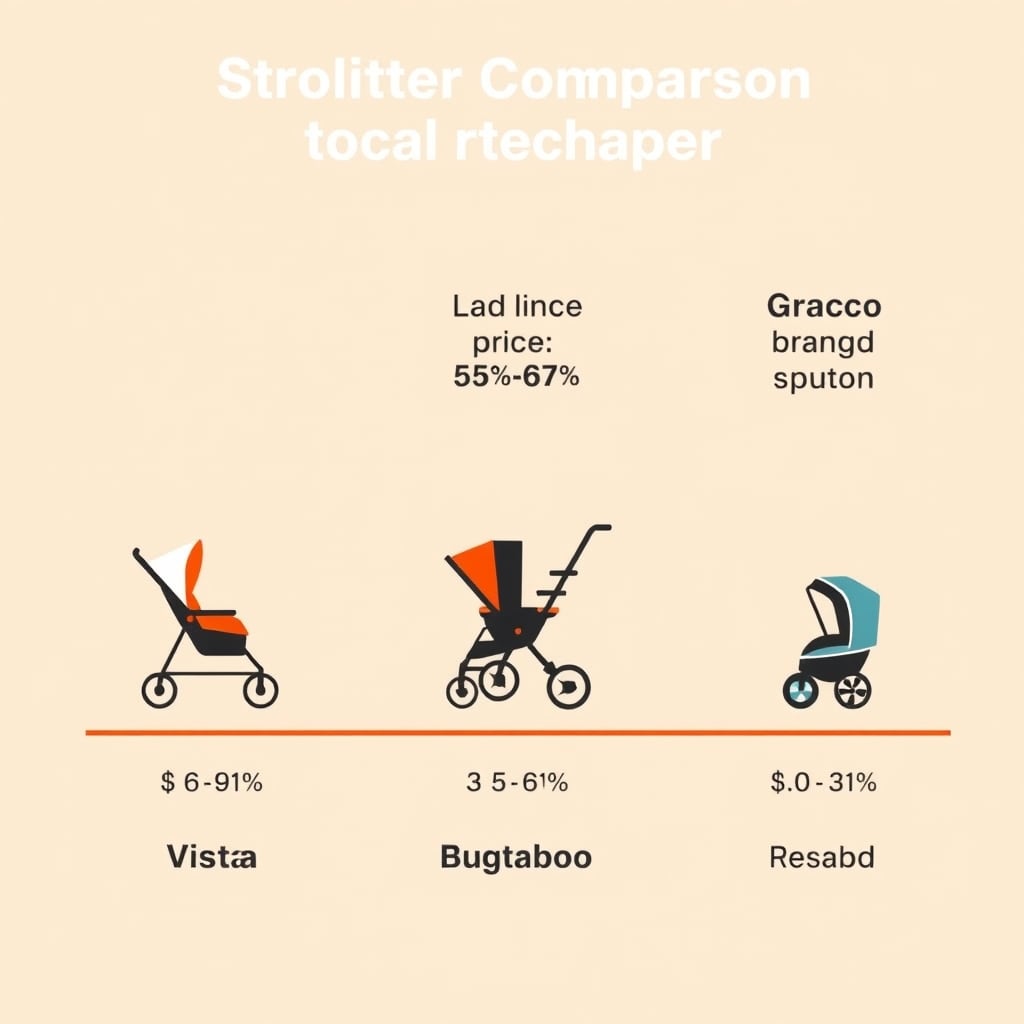
The real value is in the used market. In my experience tracking resale listings on Facebook Marketplace and Craigslist, a Vista with a Mesa car seat in good condition typically fetches roughly 55–65% of original purchase price. A heavily used example tends to land closer to 35–50%. I sold mine for $650 after two years and 18 months of use; I’d paid $1,200 new. That brought the true annual cost to roughly $370 still premium, but comparable to a mid-range stroller you’d keep for the same period.
Durability: Two Kids In, No Visible Breakdown
I’m not going to claim the Vista is indestructible. I’m not a QA lab. But after two years with one child and then 14 months with another (three-plus years total use, six days a week), here’s what actually happened:
Still works perfectly: frame structural integrity, wheel articulation, brake pedal function, canopy mechanism, cup holder.
Minor wear: the fabric on the seat bottom shows creasing and slight discoloration. The fabric in the bassinet hood shows a small tear near the seam where my older child repeatedly grabbed and tugged (my fault, not the stroller’s). The wheels have flat-spotted slightly from storage in a hot garage, but they still roll smooth.
Actually broke: one of the plastic clips that holds the seat padding to the frame cracked after I over-torqued it during assembly. UPPAbaby sent a replacement clip for $8. That’s it.
For a piece of equipment used outdoors, four seasons a year, in New England weather (salt spray, temperature swings, rain), this is a remarkable track record. A cheaper stroller would have needed wheel replacement by now. The Vista is still on its original wheels.
The caveat: I’m a maintenance person. I rinse the stroller twice a year, I store it indoors, I don’t let kids climb on the frame. If you’re someone who leaves gear in the garage year-round and doesn’t think about upkeep, the durability advantage shrinks.
The Fold and Portability: Bulky but Honest
The Vista folds with one hand and one foot. You press a lever on the frame, fold the canopy down, and step on a button near the wheel axle. It collapses into a rectangle about 30 inches tall and 20 inches wide.
It does not fit in a standard overhead bin on a plane. It does not fit in a small car trunk. It’s more compact than a traditional double stroller but bulkier than an umbrella stroller or compact travel stroller.
If you’re flying internationally with a car seat, Mesa, and Vista, you’ll need to check the stroller which UPPAbaby has designed for. If you’re trying to fit it in an Uber, it’s tight but doable if the front passenger seat is occupied.
The weight is the real issue. At 17 pounds, it’s heavier than it looks, and at 25+ pounds with a bassinet and seat both installed, it’s a two-hand lift if you’re also holding a baby. I could push it one-handed, but I couldn’t lift it solo and a bucket at the same time.
For a family that drives everywhere and folds the stroller twice a year, this is immaterial. For urban families who carry strollers up apartment stairs, it’s a tax. Not a dealbreaker, but a real consideration.
Accessories: The Ecosystem Adds Up
UPPAbaby makes or allows third parties to make: a bassinet cover, a stroller organizer, a rain shield, a bug net, a travel bag, a second seat, a toddler board, and a caddy. That’s not unusual. What matters is whether these accessories solve real problems.
Genuinely useful: the organizer ($50) clips to the handlebar and holds a phone, keys, and a small bottle. I used it every single outing. The travel bag ($100) fits the frame and seat and protects them in checked luggage. The second seat ($400–500) is the whole point if you’re having a second child.
Nice but not essential: the rain shield ($80) is bulky and I mostly just used a regular rain cover. The caddy ($50) clips a cup to the handlebar but often tipped over on sidewalk bumps.
The ecosystem doesn’t lock you in (you can use the stroller perfectly fine without accessories), but it does add cost if you get FOMO. Budget an extra $200–300 if you plan to buy a second seat, organizer, and travel bag.
The Dealbreaker: Actual Price and Resale Commitment
The Vista costs $1,000–1,200 depending on color and where you buy. With a Mesa car seat, you’re at $1,500. That’s not a minor purchase. It’s a commitment.
If you plan to keep this stroller for one child, use it lightly (2–3 outings per week), and then sell it or donate it, you’ve overpaid by $400–600 compared to a solid mid-range stroller. There is no magical value prop that redeems this for a light-use single-child buyer.
The business model of the Vista assumes:
- You’ll use it seriously (4+ times weekly for 18+ months).
- You’ll pass it to a second child or resell it at 50%+ recovery.
- You value the modular system enough to pay for it even if only used for one child.
If any of these fail, the stroller is overpriced. If all three are true, it’s reasonable.
Based on resale listings I’ve tracked across Facebook Marketplace and Craigslist, Vista strollers hold their value better than any other premium stroller in their category that I’ve compared. But they also have the highest initial cost, so even a strong recovery percentage still means a large absolute outlay if you’re not committed to the resale plan.
What We’d Keep Instead
If the Vista’s price or durability concerns give you pause, here are the honest alternatives:
Nuna MIXX Next (~$800): lighter than the Vista, converts to a double seat, smaller fold. Less robust on rough terrain and fewer car seat options, but $400 cheaper and about 30% lighter. Better for urban apartments, worse for stairs.
Bugaboo Cameleon 3 (~$950): more modular than the Vista, slightly more compact, excellent resale. Fewer integrated car seat options and a lower weight limit on the lower seat. Very similar to Vista in philosophy, slightly different execution.
Graco Modes Nest (~$350): tandem capability, much lighter, compact fold. Suspension is basic and you’ll feel every cobblestone. Resale is weak. Best choice if you’re sure you need a double stroller and have a budget ceiling.
None of these are better than the Vista. They’re different trade-offs. The Vista wins on durability and terrain. It loses on cost and portability.
Verdict and Who Should Actually Buy
Verdict: Kept. The UPPAbaby Vista is expensive and heavy, but it’s the only premium stroller system that I’d genuinely recommend buying twice.
Buy it if:
- You’re planning two children within six years.
- You live in a city with stairs or rough pavement (or frequently visit one).
- You’ll use the stroller seriously: 4+ outings per week for 18+ months minimum.
- You’re willing to resell and chase a 50–60% cost recovery.
- You have the upfront cash without financing.
Don’t buy it if:
- You’re having one child and intend to use the stroller lightly.
- You’re on a strict budget and can’t justify $1,000+ for a stroller.
- You have a very small car or limited storage.
- You travel internationally with the stroller frequently (it won’t fit overhead).
The Vista is a luxury consumer good. It works beautifully if you’re the right buyer. If you’re not, you’ll resent the price every time you push it.
FAQ
Is the UPPAbaby Vista worth the price? Yes, if you’re planning two children and will use the stroller 4+ times weekly for 18+ months. No, if you’re having one child or need a light, compact stroller. In my experience tracking resale on Facebook Marketplace and Craigslist, Vistas typically recover 55–65% of purchase price, which meaningfully improves the value proposition for multi-child families.
Can you use the Vista with non-UPPAbaby car seats? Yes, with a third-party adapter (roughly $30–50). The one-click convenience of the Mesa car seat is lost, but any major brand (Graco, Chicco, Cybex) will fit with an adapter.
How heavy is the Vista, and will I be able to carry it? The frame is 17 pounds; with a bassinet, it’s 25+ pounds. It’s a two-hand lift. Most parents can manage it for short distances, but it’s heavier than a typical stroller and not ideal for frequent stair climbing while also holding a baby.
Does the Vista fold small enough for a car trunk? It folds to roughly 30×20 inches. It fits in most car trunks, but not comfortably with other gear. It won’t fit in an overhead airplane bin. For SUVs or hatchbacks, it’s fine. For compact cars, it’s tight.
Did UPPAbaby Vista make the Kept List? Yes. It’s a genuinely premium stroller system with excellent durability and resale value, provided you’re the right buyer (two or more children, serious use, multi-year commitment).
How long does a Vista stroller last? Based on owner reports I’ve followed in parenting communities, Vistas typically remain functional for 5–8 years across 2–3 children when properly maintained. Wear on seat fabric and hydraulics is normal after 18+ months of heavy use; the frame and wheels tend to outlast both.