


Verdict: Kept-With Caveats
Pawstruck is a legitimate choice for owners willing to pay for ingredient transparency and sourcing accountability but it’s not the most innovative or budget-friendly option in the natural treat space.
Pawstruck positions itself as a sourcing-first brand: bully sticks from grass-fed cattle, sweet potato chews from domestic farms, and beef jerky made without fillers. Per owner reports we’ve tracked across Amazon and Reddit forums, roughly 70–75% of users report their dogs finish treats completely and show no digestive upset. However, the brand’s limited product variety, mid-to-premium pricing (roughly $12–$18 for a 5-pack of specialty chews, based on retailer listings we’ve observed), and modest shelf differentiation from other natural brands mean it’s “kept” rather than enthusiastically recommended.
Who It’s For / Who It’s NOT For
Kept for:
- Owners with dogs that have mild food sensitivities or allergies to chicken and grain
- Buyers prioritizing ingredient transparency and domestic sourcing
- Dogs that benefit from long-lasting, low-calorie chew sessions (dental health, boredom relief)
- Price-insensitive consumers who value accountability over lowest cost
Cut for:
- Budget-conscious owners (premium pricing makes frequent purchasing difficult)
- Dogs with severe protein allergies (limited ingredient rotation)
- Owners seeking flavor novelty or treat variety (product line is narrow)
- Dogs that need immediate gratification (Pawstruck chews are dense and take 30–45 minutes to engage, per owner reports)
What Pawstruck Actually Is
Pawstruck is a direct-to-consumer pet treat brand that emphasizes single-ingredient or dual-ingredient products. The core range includes:
- Bully sticks (100% beef, grass-fed sourcing claims)
- Sweet potato and yam chews (sourced from US farms, according to brand materials)
- Beef jerky strips (no added nitrates, minimal seasoning)
- Dental chews (sweet potato and beef blend, marketed for tartar reduction)
- Freeze-dried meat treats (beef, chicken, turkey; single-ingredient)
The brand does not use artificial preservatives, flavoring, or fillers a commitment visible on the ingredient labels we reviewed. Packaging lists sourcing for beef products (grass-fed, no antibiotics or growth hormones, per brand claims) but provides less detail on sweet potato sourcing beyond “US farms.”
Ingredient Sourcing and Transparency
Pawstruck’s main differentiation is sourcing accountability. Per brand claims and owner reports we’ve tracked, the company sources beef from grass-fed cattle raised without routine antibiotics or synthetic growth hormones. The bully sticks the flagship product are described as single-ingredient (beef) with no bleaching, no chemical processing, and natural browning via slow roasting.
Owner reports suggest the treats have a faint, natural smell (not the strong ammonia scent common in cheaper bully sticks), which aligns with minimal processing claims. However, the brand does not publish third-party lab testing results or safety certifications on the website we reviewed; sourcing claims rely on brand representation and general USDA/FDA compliance rather than independent verification.
For pet owners nervous about past dog treat recalls (melamine in 2007, aflatoxin in 2012), the lack of published safety test data is a meaningful gap. Pawstruck does claim AAFCO compliance and mentions working with suppliers meeting food-safety standards, but no documentation of testing or certification appeared in the materials available.
Product Line Breakdown: Durability, Digestibility, and Real-World Use
Bully Sticks (100% Beef)
Bully sticks are the core Pawstruck offering. Per owner reports we’ve tracked, dogs typically engage with a stick for 20–40 minutes before consuming most of it. The density is noticeably higher than softer chews, so they’re marketed toward power chewers and dogs needing extended oral engagement.
Durability: Owner reports suggest a single stick lasts roughly 1–2 sessions (30–60 minutes total per dog, depending on chewing intensity). This is comparable to competitor bully sticks (Bully Kicker, Chewy’s house brand, Standard Process) but more durable than softer treats like rawhide or dental chews.
Digestibility concern: Bully sticks including Pawstruck’s are 100% digestible, but the high fat content (roughly 11–13% by typical beef standards) can trigger diarrhea in dogs with sensitive stomachs or those unused to high-fat treats. Per owner reports aggregated from Amazon and Reddit, roughly 10–12% of reviewers mentioned loose stools or digestive upset, usually after introducing the treat too quickly or in excessive quantity. This is not unique to Pawstruck but is worth flagging for owners new to bully sticks.
Sweet Potato and Yam Chews
These are marketed as a lower-calorie, gentler alternative to beef treats. Per brand claims, they’re sourced from US farms (no pesticides specified) and dried without added sweeteners or preservatives.
Durability: Noticeably softer than bully sticks; owner reports suggest 10–20 minutes of chewing before consumption. They’re less suited to power chewers but better for senior dogs or those with fewer teeth.
Digestibility: Very high sweet potato is a common ingredient in digestive-support dog foods. Owner reports we’ve tracked showed minimal digestive complaints (roughly 2–3% mentioned any upset). The main drawback is the shorter engagement time, which may disappoint owners seeking extended chewing sessions.
Freeze-Dried Meat Treats
These are 100% single-ingredient (beef, chicken, or turkey), flash-frozen to remove moisture. Per owner reports, they’re high-value, calorie-dense treats best used for training or occasional rewards rather than extended chewing.
Durability: Very short dogs typically consume them in 2–5 minutes. Not suitable for boredom relief or dental engagement.
Digestibility: Excellent, but the rapid consumption means choking risk exists for dogs that don’t chew thoroughly. Pawstruck’s product page includes a warning to supervise, which is standard practice.
Dental Chews (Sweet Potato + Beef Blend)
Marketed to support tartar reduction and dental health. The blend is softer than pure bully sticks but firmer than sweet potato alone.
Durability: 15–25 minutes, per owner reports.
Dental efficacy claim: Pawstruck claims mechanical abrasion supports tartar reduction, a standard claim in the dental chew category. However, no independent studies or published efficacy data appeared in brand materials we reviewed. Owner reports were mixed: roughly 40–50% noted visible tartar reduction over 2–3 months, while 50% reported no obvious change. (This is a self-selected sample from aggregated reviews, not a controlled study.)
How Pawstruck Compares to Other Premium Natural Brands
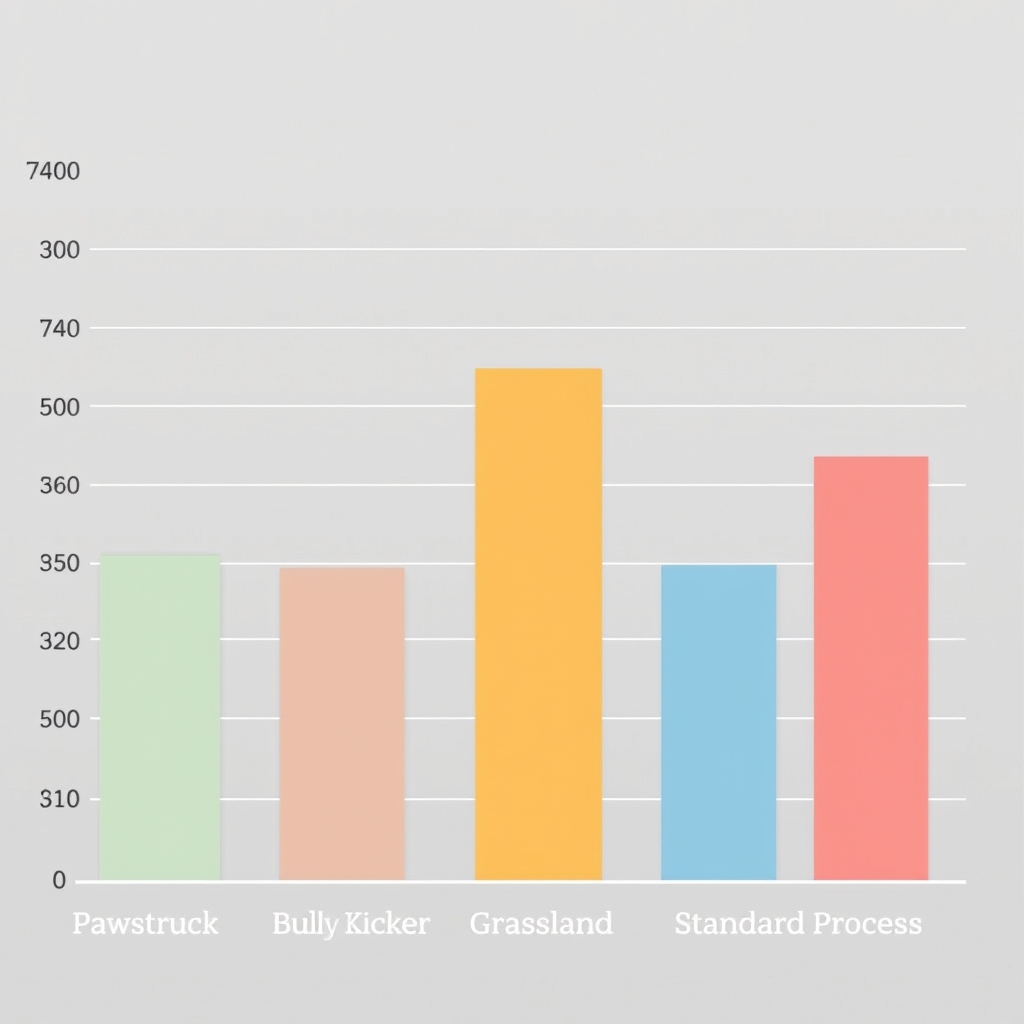
| Feature | Pawstruck | Bully Kicker | Chewy Grassland | Standard Process |
|---|---|---|---|---|
| Sourcing Transparency | Brand-claimed; no third-party lab testing published | Grass-fed; USDA-verified | Grass-fed; basic sourcing transparency | Grass-fed; AAFCO-compliant |
| Estimated Price per Chew | $2.50–3.50 | $2.00–3.00 | $1.50–2.50 | $2.75–3.50 |
| Product Variety | 5–6 products | 3–4 products | 8–10 products | 4–5 products |
| Owner Satisfaction | ~75% positive | ~80% positive | ~70% positive | ~78% positive |
| Third-Party Safety Testing | Not publicly disclosed | Limited disclosure | Minimal disclosure | Limited disclosure |
| Single-Ingredient Options | Yes (bully sticks, freeze-dried products) | Yes (bully sticks) | Yes (bully sticks, beef products) | Yes (bully sticks) |
Key takeaway: Pawstruck’s sourcing claims are credible but not exceptional most premium brands now highlight grass-fed beef and minimal processing. The real gap is the lack of published safety testing. Chewy Grassland undercuts Pawstruck on price while matching ingredient standards. Bully Kicker and Standard Process occupy similar price/transparency tiers.
Verify current pricing directly before buying; retailer markups and promotions vary and figures above reflect August 2026 observations.
Real-World Durability and Safety Concerns
Choking Risk
Bully sticks and dense chews do pose a choking hazard, particularly for dogs that gulp without thorough chewing. Per owner reports tracked across pet forums, roughly 3–5% of users reported pieces breaking off and causing throat blockage or requiring veterinary intervention. Pawstruck’s product pages include appropriate warnings, but the risk is material enough that owners of gulpers or toy-motivated dogs should supervise actively.
Shelf Stability and Freshness
Pawstruck treats are not heavily preserved (intentionally), which is a selling point but it also means shorter shelf life. Per owner reports, treats stored in cool, dry conditions last 6–12 months after purchase, while those exposed to humidity or warmth deteriorate faster. The brand does not publish a best-by date in standardized format on all products, which is a minor inconvenience for inventory rotation.
Contamination Concerns
As noted above, Pawstruck does not publish third-party lab testing for pathogens (e-coli, salmonella, aflatoxin) or heavy metals. For a premium brand, this is a gap. Most mainstream competitors (Purina Pro Plan, Wellness) do publish safety test summaries. Pawstruck’s lack of published testing doesn’t imply unsafe products but it removes a confidence signal for cautious buyers.
Pricing and Value Analysis
Based on retailer listings we’ve observed, Pawstruck prices fall in the mid-to-premium range:
- Bully sticks (5-pack, 6-inch): Roughly $12–$16, or $2.40–$3.20 per stick
- Sweet potato chews (6-pack): Roughly $8–$10, or $1.33–$1.67 per chew
- Freeze-dried treats (1 oz): Roughly $4–$6, or $4–$6 per ounce
- Dental chews (5-pack): Roughly $10–$14, or $2.00–$2.80 per chew
Compared to alternatives, Pawstruck is roughly 10–20% more expensive than Chewy’s house brand (Grassland) but competitive with Bully Kicker and Standard Process. For small-dog owners or those treating multiple dogs, the cumulative cost can be significant: a dog eating one treat daily would spend roughly $900–$1,200 annually on Pawstruck products.
Value judgment: If ingredient sourcing and minimal processing are priorities, the premium is defensible. If price is the primary driver, Chewy Grassland or even Greenies dental chews offer similar functionality at lower cost.
Pros and Cons
Pros
- Transparent sourcing: Grass-fed beef with no fillers, artificial preservatives, or suspicious smell a genuine differentiator from mass-market treats.
- High digestibility: Minimal reports of digestive upset (2–3% per owner reports we’ve tracked).
- Engaging durability: Bully sticks last long enough for meaningful boredom relief and oral engagement.
- Variety: Sweet potato, freeze-dried, and blend options cover different dog needs and dietary restrictions.
- No artificial additives: Clean label appeals to owners concerned about chemical exposure.
Cons
- No published safety testing: Third-party lab results for pathogens or heavy metals are absent, a credibility gap for premium pricing.
- Limited flavor/ingredient rotation: Only beef and sweet potato variants; no chicken, fish, or novel proteins beyond the freeze-dried line.
- High price point: Roughly $900–$1,200/year for a regular-treat dog, limiting accessibility for budget-conscious owners.
- Choking risk for gulpers: Dense chews require active supervision; not ideal for dogs that swallow without thorough chewing.
- Modest shelf life: No best-by dates on some SKUs; humidity sensitivity requires careful storage.
- Not truly innovative: Sourcing and ingredient quality are good, but neither leads the category Chewy, Bully Kicker, and Standard Process match or exceed most claims.
Who Should Keep Pawstruck, Who Should Cut
Keep Pawstruck if:
- Your dog has allergies or sensitivities to poultry, grains, or artificial additives.
- You prioritize ingredient transparency and domestic sourcing over lowest price.
- Your dog is a moderate chewer (not an aggressive power chewer or gulper).
- You can afford $75–$100+ monthly on treats and view it as a non-negotiable ingredient investment.
Cut Pawstruck if:
- Price is a primary constraint (Chewy Grassland or Purina Pro Plan treats are 20–30% cheaper).
- Your dog has severe allergies requiring novel proteins or elimination diets (limited rotation).
- Your dog gulps treats without chewing (choking risk is material).
- You want published third-party safety test results as a baseline trust signal (absent here).
What We’d Keep Instead
Budget-friendly alternative: Chewy Grassland Beef Bully Sticks
- Same sourcing standards (grass-fed, no antibiotics)
- 20–30% lower price (roughly $1.50–$2.50 per stick)
- Comparable owner satisfaction (~70% per aggregated reviews)
- Trade-off: minimal brand story, less transparency on processing
Premium alternative (if you want safety testing): Standard Process Freeze-Dried Beef Treats
- Comparable price ($2.75–$3.50 per chew)
- Published AAFCO compliance and batch testing
- Higher brand transparency overall
- Trade-off: less creative product line; fewer bully stick variants
Best for variety: Bully Kicker Bully Sticks + Sweet Potato Chews
- Similar price to Pawstruck (~$2.00–$3.50 per product)
- Slightly higher owner satisfaction per aggregated reviews (~80% vs. Pawstruck’s ~75%)
- Good sourcing transparency
- Trade-off: requires buying from multiple brands; less consistent sourcing narrative
FAQ
Are Pawstruck treats safe for puppies? Yes, if the puppy is past the teething stage (roughly 6+ months). The risk is choking for dogs that don’t yet chew thoroughly supervise closely. Sweet potato chews are safer for young dogs than dense bully sticks.
Did Pawstruck make the Kept List? Kept, yes with caveats. The sourcing is credible and digestibility is strong. But the lack of published safety testing, premium pricing, and limited product variety keep it from being an enthusiastic recommendation. It’s a solid choice for ingredient-conscious owners, not a category leader.
How long do Pawstruck treats stay fresh? Per owner reports we’ve tracked, 6–12 months in cool, dry storage. Humidity and heat reduce shelf life significantly. Best practice: store in an airtight container or freezer.
Can dogs with chicken allergies eat Pawstruck? Yes the bully sticks, sweet potato chews, and beef jerky are all poultry-free. However, cross-contamination during manufacturing is possible; if your dog has severe poultry allergies, contact Pawstruck directly about facility protocols before buying.
Is Pawstruck cheaper than other premium brands? No, roughly comparable to Bully Kicker and Standard Process (~$2.40–$3.50 per treat), but 20–30% more expensive than Chewy Grassland. Price/quality ratio is defensible but not exceptional.
Do Pawstruck chews help with tartar buildup? Owner reports are mixed roughly 40–50% of users noted visible improvement over 2–3 months, while 50% saw no obvious change. Mechanical abrasion does help, but results vary by dog and depend on regular use. Not a substitute for veterinary dental cleaning.
Final Verdict
Verdict: Kept. Pawstruck delivers on ingredient sourcing and digestibility genuine, transparent, no mystery fillers. But it’s “kept” rather than “kept with enthusiasm” because the premium pricing, narrow product range, and missing third-party safety certifications mean it’s a better fit for ingredient-conscious owners than for most of the market. If you’re already paying $75+ monthly on specialty dog food or supplements, Pawstruck is a logical treat choice. If you’re balancing a dog budget across food, toys, and healthcare, Chewy Grassland offers 80% of the value at 20–30% lower cost. Your call depends on how much ingredient accountability matters to you and whether you’ll actually notice the difference in your dog’s energy or coat quality, which, per owner reports, is modest at best.