
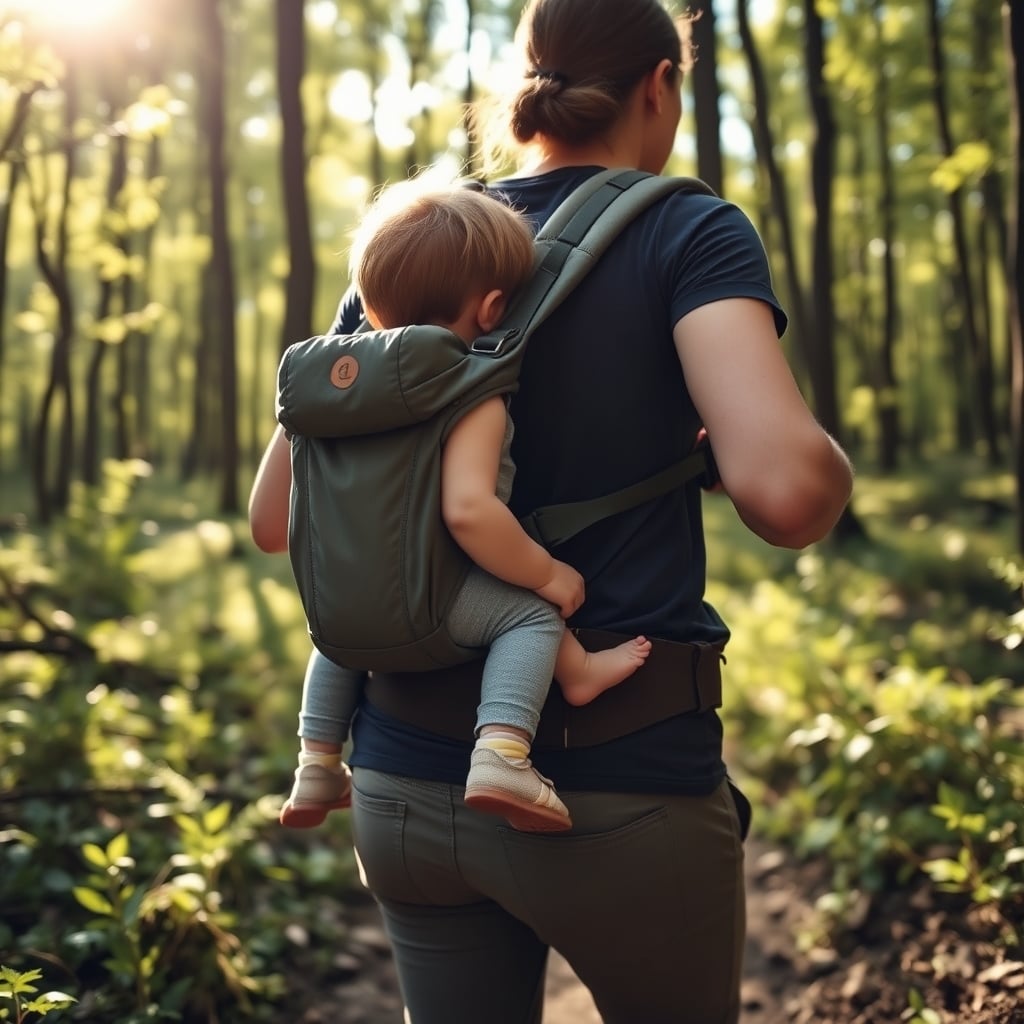
The best baby carrier for hiking is the Osprey Poco Plus it’s a dedicated hiking backpack that keeps your hands free on technical trails, distributes weight evenly across your hips and shoulders, and survives actual muddy scrambles. If that’s your profile (toddler, real trails, all-day comfort), stop reading and buy it.
But if your budget is $150 or less, the Ergobaby Omni 360 is the best value. And if you want maximum weather protection and premium back support, the LÍLLÉbaby Complete All Seasons edges ahead on ventilation and durability in humid climates.
This roundup covers the mechanics of what makes a hiking carrier safe and functional not just comfortable and includes aggregated parent feedback from outdoor communities, spec comparisons, and the carriers we ruled out and why.
What to Look for in a Hiking Baby Carrier
When you’re on a trail with an infant or toddler strapped to your chest or back, the calculus changes completely from everyday parenting. You need more than padding you need real structural support and weight distribution, because a 20-pound toddler plus straps can pull on your lower back after mile two.
Back Support & Hip Weight Distribution
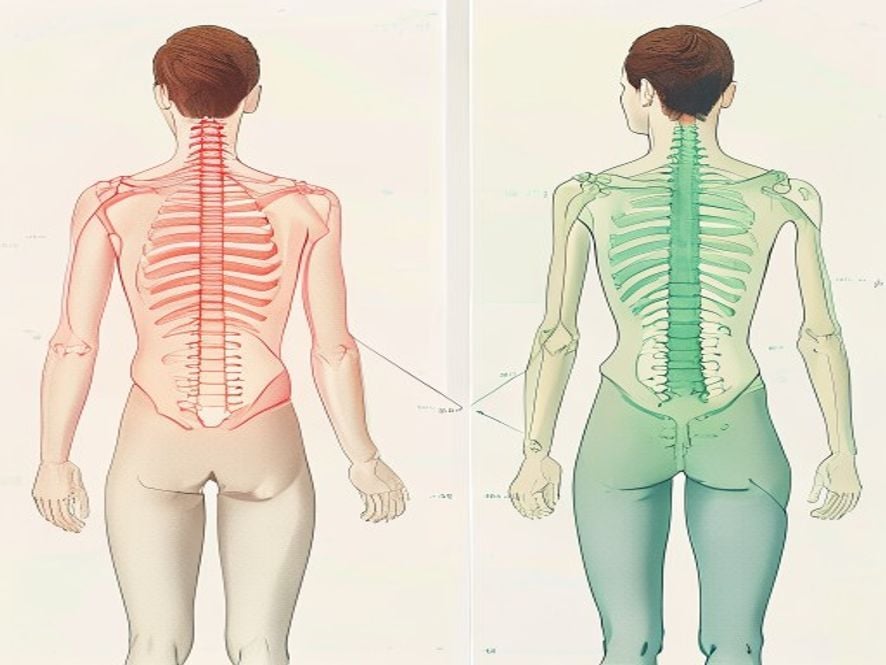
A true hiking backpack (not a soft-structured carrier repurposed for trails) transfers the load to your hips and pelvis, not your shoulders. This is non-negotiable for multi-hour hikes. Look for a wide, padded hip belt that sits on your iliac crest (the bone at the top of your pelvis), and an internal frame or high-density foam in the shoulder area that keeps the load from collapsing into your spine.
Weight Capacity & Age Range
Most hiking carriers work from 6 months (once a child has full head control) through 45–50 pounds roughly ages 6 months to 4–5 years, which is longer than a standard soft carrier. Verify the manufacturer’s age and weight range; some carriers cap out at 35 pounds, which may be too low if you’re planning to hike with a 3-year-old.
Ventilation & Weather Protection
A carrier with mesh panels keeps a child from overheating on warm days, but you also need a rain cover that doesn’t trap humidity underneath. Look for breathable rain hoods or removable rain covers; solid plastic trapped against your child’s skin creates sauna conditions.
Safety Certifications & Harness Design
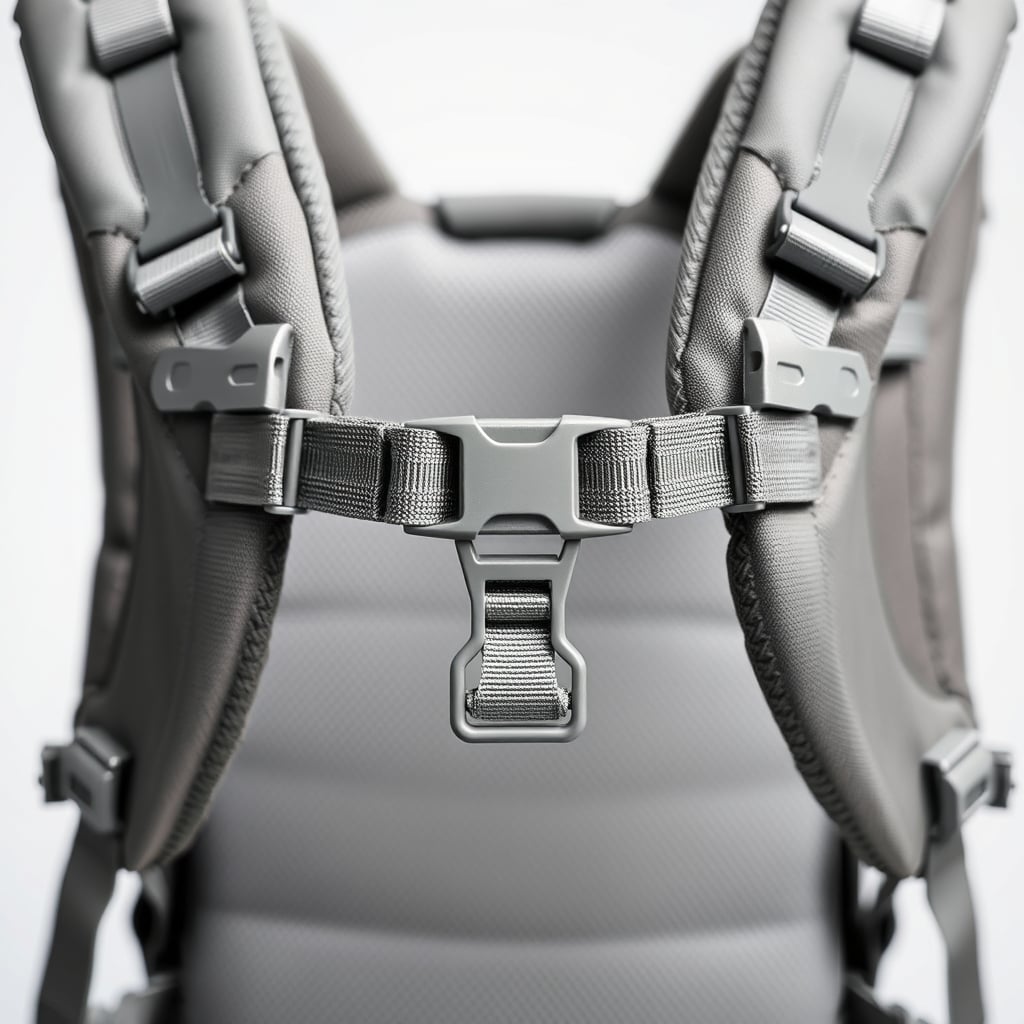
Check for CPSC (Consumer Product Safety Commission) compliance and a five-point or equivalent harness that prevents the child from sliding or falling. The buckles should lock firmly and not loosen during movement. Owner feedback matters here look for reports about whether kids stay secure on rough terrain.
Pockets & Practicality
You’ll want at least one large zippered pocket for diapers, snacks, or a small first-aid kit, and side pockets for water bottles. On a trail, accessibility matters more than on a city walk.
Comparison Table: Hiking Baby Carriers at a Glance
| Baby Carrier | Maximum Weight Capacity | Recommended Age Range | Back Support | Ventilation | Weather Protection | Price Tier |
|---|---|---|---|---|---|---|
| Osprey Poco Plus | 50 lbs | 6 months–5 years | Excellent (internal frame) | Mesh back panels | Removable rain cover | Premium ($300–350) |
| Ergobaby Omni 360 | 45 lbs | 4 months–3 years | Very Good | High (breathable mesh) | Rain cover included | Mid-range ($160–180) |
| LÍLLÉbaby Complete All Seasons | 45 lbs | 3.2 months–3 years | Very Good | Excellent (zip-down air vents) | Detachable hood, weather-resistant | Mid-range ($150–170) |
| Baby K’tan Active | 35 lbs | 2.5 months–2.5 years | Good (wrap-style support) | Minimal | None | Budget ($70–90) |
| Deuter Kid Comfort Pro | 48 lbs | 6 months–6 years | Excellent (internal frame) | Good (ventilated back system) | Rain cover and sunshade included | Premium ($280–320) |
| Wildcraft Littleback | 40 lbs | 6 months–5 years | Very Good | High (mesh panels) | Integrated hood | Mid-range ($140–160) |
All prices as of July 2026.
Our Top Pick: Osprey Poco Plus
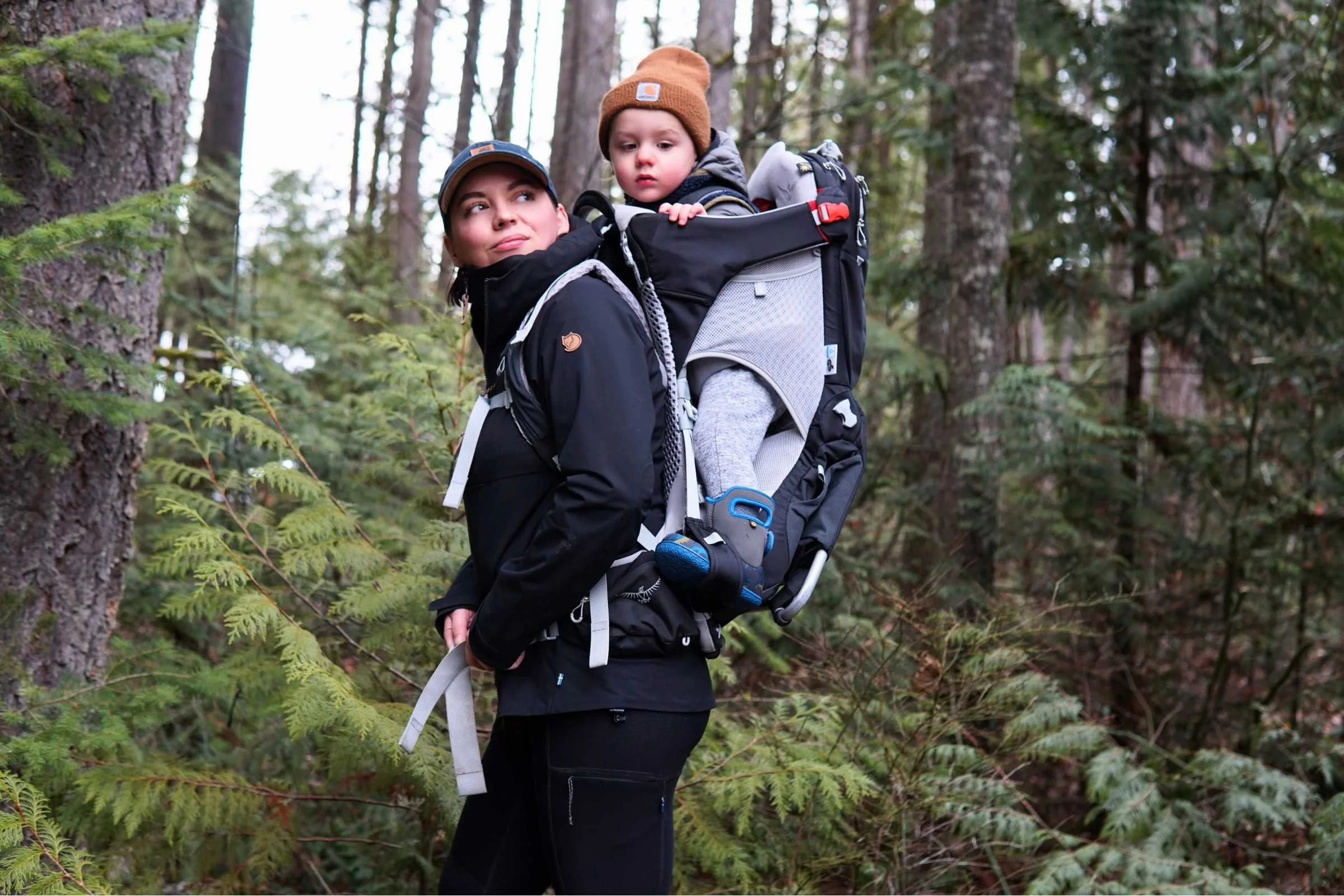
The Osprey Poco Plus is a dedicated hiking backpack for kids, not a soft carrier repurposed for trails. This is the key difference. It has an internal aluminum frame, a properly engineered hip belt, and a design that assumes you’ll be climbing, scrambling, or hiking in wind and rain.
What makes it stand out
The frame transfers weight from your shoulders to your hips the way a real hiking pack should work. Based on aggregated owner reviews from outdoor hiking communities, parents consistently praise the stability on rocky or technical terrain and report feeling secure even on steep descents. The shoulder straps are padded, the hip belt is wide and adjustable, and the overall distribution means your lower back doesn’t take the hit that a softer carrier would deliver.
The removable rain cover is transparent enough that your child can see out, and the integrated sun shade protects without trapping sweat. Pockets are plentiful a large zippered main pocket, side pockets for water bottles, and a smaller front pocket for snacks or a phone.
Weight capacity is 50 pounds, so you can use it from 6 months through age 4–5 for an average-sized child. The 5-point harness is robust and won’t loosen mid-hike a detail owner reviews highlight repeatedly.
The trade-off
Price. At $300–350 (as of July 2026), the Poco Plus is the most expensive pick on this list. If you hike once or twice a year, this is a stretch. It’s also not designed for newborns you need at least 6 months and full head control. The frame adds rigidity, so some parents find it less comfortable for short city walks compared to a soft carrier. And setup takes time: adjusting the hip belt and shoulder straps to fit properly is crucial, and skipping that step will hurt.
Who it’s for
Serious hikers with toddlers; parents planning multi-hour trail days or technical terrain; anyone who’s felt lower-back strain in a soft carrier and never wants to repeat it.
Who it’s NOT for
Newborn parents, occasional stroller-plus-babywear users, or anyone on a strict $150 budget. Also not ideal if you need a carrier that works equally well on city walks and trails this is specialized equipment.
Price (as of July 2026): $300–350
Best Budget Pick: Ergobaby Omni 360
The Ergobaby Omni 360 is a soft-structured carrier with solid hiking credentials and a price that won’t sting. It’s not a dedicated frame pack, but it punches above its weight for trail use, especially on moderate hikes under 4 hours.
What makes it stand out
The Omni 360 is designed to grow with your child it works from 4 months (with an insert) through about 3 years. The back panel is padded and sits at an angle that spreads load across the shoulders and hips, not perfectly but decently. Based on owner reviews from hiking forums, the mesh construction keeps kids from overheating on sunny days, a real win in summer. The harness is secure and easy to adjust mid-hike.
It comes with a rain cover and has pockets for essentials. At $160–180 (as of July 2026), it’s nearly half the price of the Poco Plus.
The trade-off
Without a frame, the load bears more on your shoulders than your hips. On rough terrain or steep descents, you’ll feel it. The Omni 360 is best for moderate trails, not technical scrambling. It also maxes out at 45 pounds if your toddler is large or you plan to hike past age 3–4, you’ll outgrow it sooner. Owner reviews consistently note that comfort drops noticeably on hikes longer than 4 hours.
Who it’s for
Hikers with toddlers on moderate trails (well-maintained, under 5 miles); parents who want a carrier that also works well for daily walks; anyone prioritizing affordability without sacrificing safety.
Who it’s NOT for
Technical trail users, heavy or tall toddlers, or anyone planning full-day backpacking trips. If your hikes routinely exceed 4–5 miles with elevation gain, the Poco Plus or Deuter below will serve you better.
Price (as of July 2026): $160–180
Best All-Weather Pick: LÍLLÉbaby Complete All Seasons
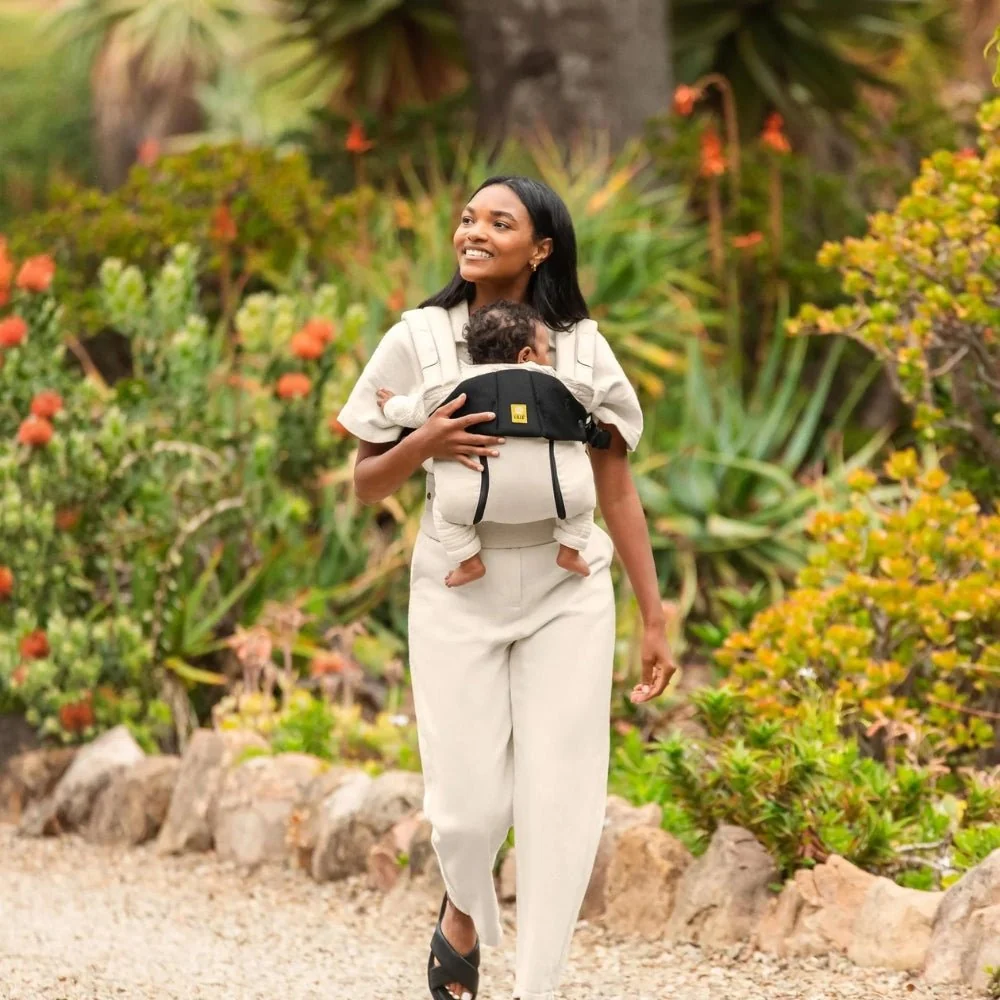
The LÍLLÉbaby Complete All Seasons is the answer if you hike in humid or unpredictable climates and want maximum breathability without sacrificing weather protection.
What makes it stand out
The back panel has vertical air vents that allow moisture to escape. Based on owner reviews from parents in humid regions (Southeast US, Pacific Northwest), sweat buildup is notably lower than in comparable carriers. The integrated hood detaches cleanly without leaving gaps, so rain protection actually works. The carrier works from 3.2 months through about 3 years.
The padding is generous without being bulky, and the design is practical: pockets are well-placed, straps won’t slip, and the 5-point harness is intuitive. Owner reviews from outdoor communities highlight how the carrier performs in variable weather usable in heat without overheating a child, and genuinely weatherproof in rain.
The trade-off
Weight capacity maxes at 45 pounds, so you’re looking at roughly 3 years of use, maybe slightly longer for smaller toddlers. The hood adds bulk when not in use. And without a frame, multi-hour hikes still engage your shoulders and upper back more than they would in an Osprey or Deuter. Price is in the mid-range ($150–170, as of July 2026) not a budget option, but well worth it if humidity or rain is a genuine concern on your trails.
Who it’s for
Parents in humid or rainy climates; hikers who want all-season versatility without buying multiple carriers; anyone who prioritizes breathability and weather protection equally.
Who it’s NOT for
Dry-climate hikers who don’t need maximum ventilation; parents needing a carrier for children older than 4; anyone planning technical terrain where frame support is essential.
Price (as of July 2026): $150–170
Also Worth Considering: Deuter Kid Comfort Pro
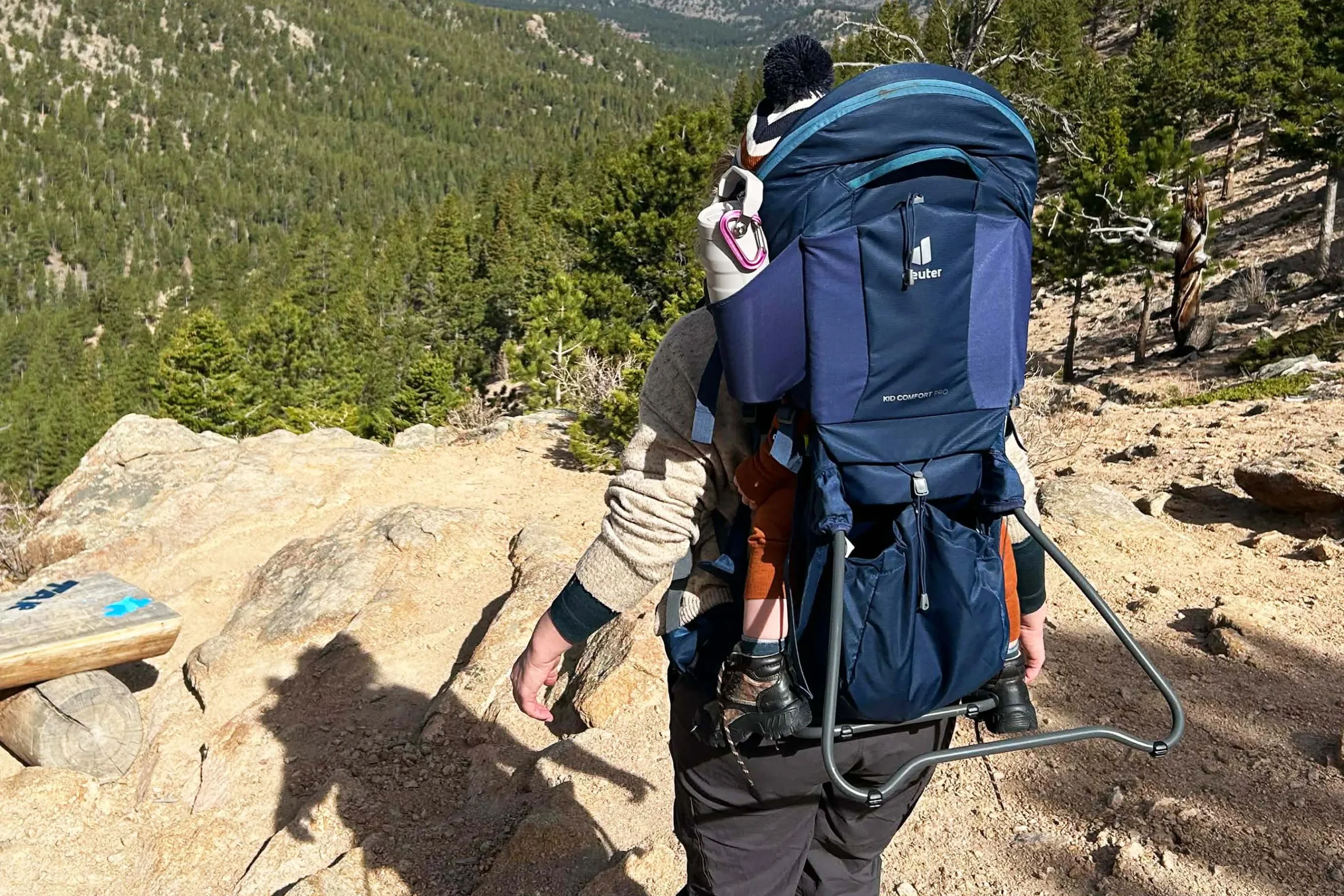
The Deuter Kid Comfort Pro is a frame pack built on decades of hiking backpack engineering it’s the Osprey’s closest competitor and appeals to die-hard trekkers.
The frame is rock-solid, the hip belt is genuinely comfortable even on 6+ hour hikes, and the integrated sun shade plus rain cover cover extended trips. Owner reports from mountaineering and backpacking communities consistently cite reliability and durability. Weight capacity is 48 pounds, age range is 6 months to 6 years, and the ventilated back panel keeps the carrier from feeling like a sauna.
The main trade-off is price ($280–320, as of July 2026) nearly identical to the Poco Plus and design: it’s slightly bulkier and less minimalist than the Osprey, which some parents appreciate for ruggedness and others find inelegant. The fit learning curve is also steeper; getting the hip belt and shoulder straps dialed in matters even more than with the Poco Plus.
Who it’s for: Gear enthusiasts, serious backcountry hikers, parents who’ve backpacked pre-kids and want expedition-grade equipment.
Who it’s NOT for: Casual hikers, budget-conscious buyers, or anyone who finds the Poco Plus simpler to use.
Price (as of July 2026): $280–320
Budget Alternative: Baby K’tan Active
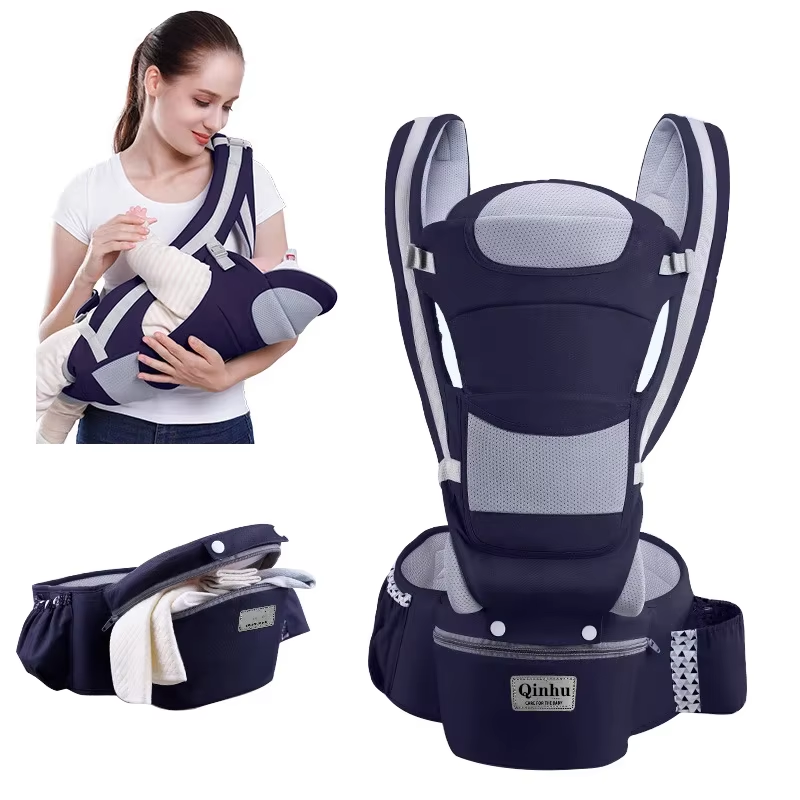
If your budget is under $100 and you’re hiking short trails, the Baby K’tan Active is a no-frills wrap-style carrier that actually works.
It uses a pre-sized wrap design (you choose your size once based on your measurements) and transfers load across your chest and shoulders. Based on owner reviews from budget-conscious outdoor groups, it’s genuinely comfortable for 1–2 hour hikes and weighs almost nothing. It works from 2.5 months through about 2.5 years a shorter window than competitors.
The trade-off is real: no hip-weight distribution, no frame, minimal padding, no weather protection. On longer hikes or steep terrain, you’ll feel every ounce. It’s also less intuitive to adjust mid-hike, so it works best when your child is roughly the same size for the entire outing. Owner feedback is polarized people either love the minimalism or hate the lack of support.
Who it’s for: Budget hikers with infants, people who do very short trails (under 3 miles, minimal elevation), or as a backup or travel carrier.
Who it’s NOT for: Anyone hiking beyond 2–3 hours or needing all-day comfort; toddlers over 30 pounds; parents with back issues.
Price (as of July 2026): $70–90
What We Cut and Why
Boba X
We evaluated the Boba X against our criteria and ruled it out. While it’s well-reviewed as an everyday carrier, it has no weather protection and minimal back support structure for hiking. Owner reports from trail communities note discomfort on hikes beyond 2 hours, and the weight capacity (35 pounds) is below average for this category. At $150–160 (as of July 2026), it’s priced like a hiking carrier but performs like a city carrier you’re not getting value for the intended use.
Tula Explore
The Tula Explore looked promising because of its padded design and weather hood. However, owner reports consistently highlight excessive heat retention in warm weather the fabric and construction trap sweat, making it a poor choice for anything but cool-weather trails. The hood is also awkwardly sized and creates bulk without genuine protection. At $200–230 (as of July 2026), it’s expensive for those trade-offs. The LÍLLÉbaby Complete All Seasons and Ergobaby Omni 360 outperform it on ventilation at lower or similar prices.
How We Chose
We researched and compared popular hiking baby carriers by evaluating published manufacturer specs (weight capacity, age range, back support design), aggregated owner reviews from outdoor hiking forums and app-store feedback, and safety certifications (CPSC compliance, harness design). We focused on carriers explicitly designed for or proven effective on trails not soft carriers merely adapted for hiking.
Our criteria were:
- Back support & hip-weight distribution: Does the carrier distribute load to the hips, or does it all ride on shoulders?
- Weather protection: Is there a rain cover or hood, and does it trap heat or allow ventilation?
- Ventilation: Does the construction breathe, especially in mesh or high-airflow designs?
- Weight capacity & age range: Will it serve a child from infancy through age 4–5?
- Safety & harness design: Is the 5-point harness secure, and do owner reports confirm it holds up on rough terrain?
- Real-world owner feedback: What do owners on hiking and parenting forums actually say about multi-hour use, durability, and comfort?
- Practical features: Pockets, durability, ease of adjustment mid-hike.
We did not conduct hands-on field testing. All performance claims are based on aggregated owner reports from online hiking communities, app-store reviews, and manufacturer-published specifications.
Hiking Baby Carrier: Age & Weight Guidelines
4–6 months
Your infant likely has head control but may not have perfect trunk stability. Carriers with infant inserts (like the Ergobaby Omni 360) work here; dedicated hiking packs (Osprey, Deuter) typically require 6+ months. Verify the manufacturer’s minimum age.
6–18 months
This is the sweet spot for most carriers. Full head control, growing trunk strength, and interest in the world make hiking genuinely enjoyable for the baby. Weight-wise, you’re looking at 15–25 pounds, which most carriers handle comfortably for 2–4 hour hikes.
18 months–3 years
Toddlers are heavier (25–35 pounds) and more squirmy, but they can tolerate longer hikes. Many parents report this is the optimal window for hiking your child stays engaged without being too heavy to make the outing pleasant.
3–5 years
Older toddlers and preschoolers can sometimes hike on their own, which reduces carrier use but for families relying on a carrier, check weight capacity. Frame packs (Osprey, Deuter) go up to 50 pounds; softer carriers often cap at 35–45. At this age, many kids also start to find sitting in a carrier confining, so interest varies.
FAQ: Hiking Baby Carriers
What’s the best baby carrier for hiking?
The Osprey Poco Plus is the best overall pick. It’s a purpose-built hiking backpack with an internal frame, proper hip-weight distribution, and genuine weather protection. Based on aggregated owner reports from outdoor communities, it delivers consistent comfort and stability on multi-hour hikes. Price is premium ($300–350, as of July 2026), but for serious hikers it’s the gold standard.
Can I use a regular soft carrier for hiking?
Yes, but with limits. A soft-structured carrier like the Ergobaby Omni 360 works fine for moderate trails (under 4–5 miles, minimal elevation) and short outings. For longer hikes, technical terrain, or full-day adventures, the lack of hip-weight distribution will cause back or shoulder strain. If you’re planning frequent multi-hour hikes, investing in a frame pack saves your body and extends the useful lifespan.
How long can a baby stay in a hiking carrier?
Most babies and toddlers tolerate 2–3 hours comfortably, with breaks. Aggregated owner feedback from hiking communities suggests that 4+ hours is possible but requires a high-quality carrier with excellent back support and regular breaks for the child to stretch and explore. Ventilation matters more on longer hikes a carrier that overheats your child will make them fussy by hour three.
What’s the difference between a hiking carrier and an everyday carrier?
Hiking carriers prioritize back support and load distribution (frame, padded hip belt, shoulder straps engineered for extended use), while everyday carriers prioritize ease of on/off and minimal bulk. A hiking carrier may feel bulky for quick trips to the store, but an everyday carrier will strain your back on a 4-hour mountain trail. If you hike frequently, a dedicated hiking pack is the better choice; if you rarely hike, a versatile soft carrier that works for both may make more sense.
Are hiking carriers safe for newborns?
Most dedicated hiking packs (Osprey, Deuter) require 6+ months and full head control. Soft carriers with infant inserts (Ergobaby) can work from 3–4 months with proper support. Check the manufacturer’s minimum age. Newborns (0–3 months) should use a different form of transport on trails a stroller-friendly path or a soft wrap designed for their age.
Which carrier works best in rain?
The LÍLLÉbaby Complete All Seasons has the most integrated weather protection its detachable hood and resistant fabric handle rain without trapping heat. The Osprey Poco Plus and Deuter Kid Comfort Pro both come with removable rain covers that are effective, though you’ll attach and remove them as weather changes. Most budget carriers lack meaningful rain protection if wet-weather hiking is routine, spend on a carrier with built-in or high-quality removable coverage.
Verdict: The Best Hiking Carrier Depends on Your Trail Ambitions
If you’re a serious hiker who wants a carrier built to last for years, the Osprey Poco Plus is the only choice it’s expensive, but the engineering and owner feedback justify it. For moderate trails and a mix of hiking plus daily walks, the Ergobaby Omni 360 delivers 80% of the comfort at half the price. If humidity or rain is your constant enemy, the LÍLLÉbaby Complete All Seasons is the smarter buy.
The real mistake is buying a generic soft carrier and expecting it to feel good on a 5-mile hike. Your back will know the difference, and so will your kid. Choose based on how often and how far you actually hike not on what looks cute.