
Understanding Cruise Cabin Types Before You Book
Cruise cabins fall into three main categories: inside cabins (no window), balcony cabins (private outdoor space), and suites (premium size and amenities). The type you choose affects both your upfront deposit and your total cruise cost sometimes by thousands of dollars so understanding the real differences between them will help you book the cabin that matches your budget and travel style, not just the one a travel agent pushes.
What Is an Inside Cabin?
An inside cabin is a stateroom with no window or porthole; your view is the interior hallway or ship wall outside your door. Inside cabins are the smallest and least expensive cabin type, commonly ranging from 150 to 200 square feet depending on the ship. They’re popular with first-time cruisers on a budget and with families who plan to spend most of their time on deck.
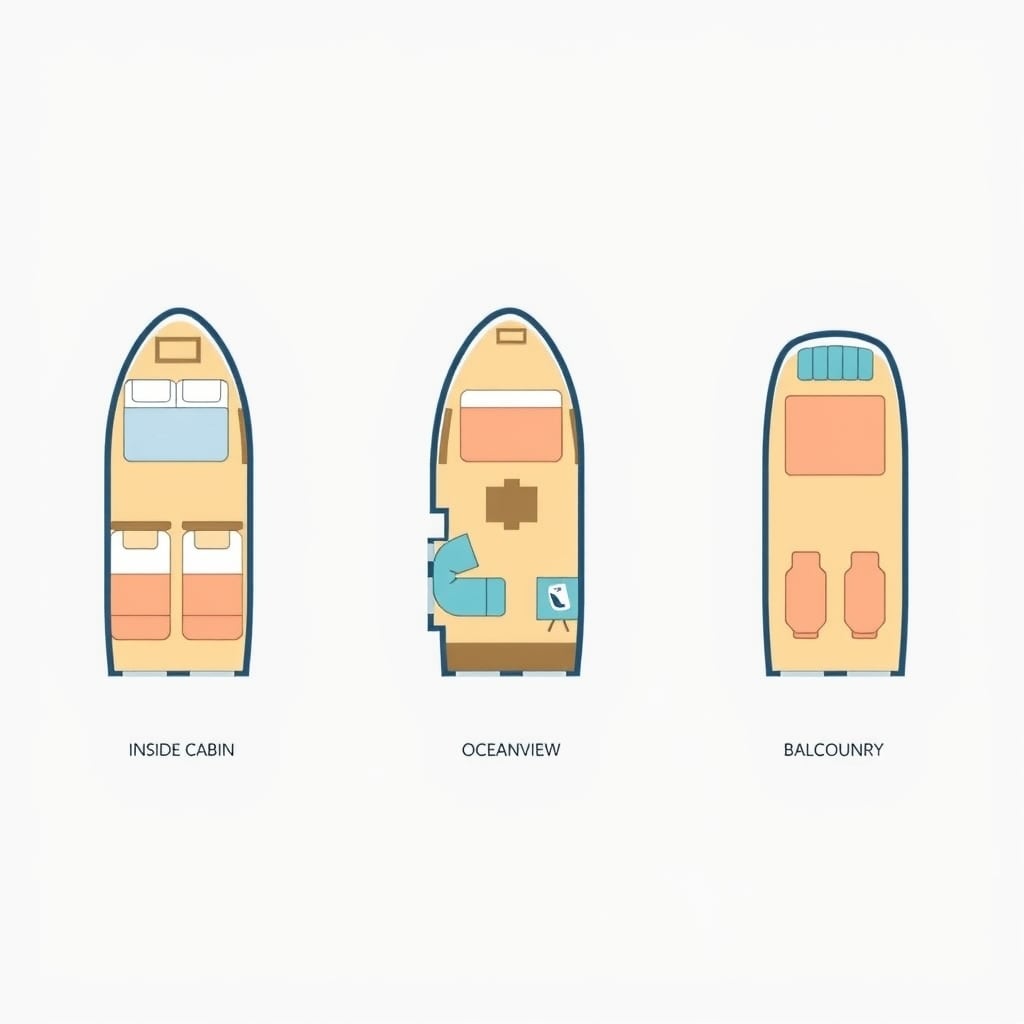
Inside cabins work best when you’re comfortable with a smaller footprint and don’t need natural light. A common misconception is that inside cabins feel claustrophobic in practice, most cruisers spend the majority of their day outside their cabin, so the compact size rarely bothers people. You’ll still have a bed, bathroom, TV, and storage; you’re just trading a window for a lower price tag.
Pros: Lowest price point, less seasickness (no visual horizon cues), quieter (farther from engine noise on lower decks). Cons: No natural light, smallest footprint, no outdoor space, can feel dim if you’re sensitive to artificial light.
What Is a Balcony Cabin?
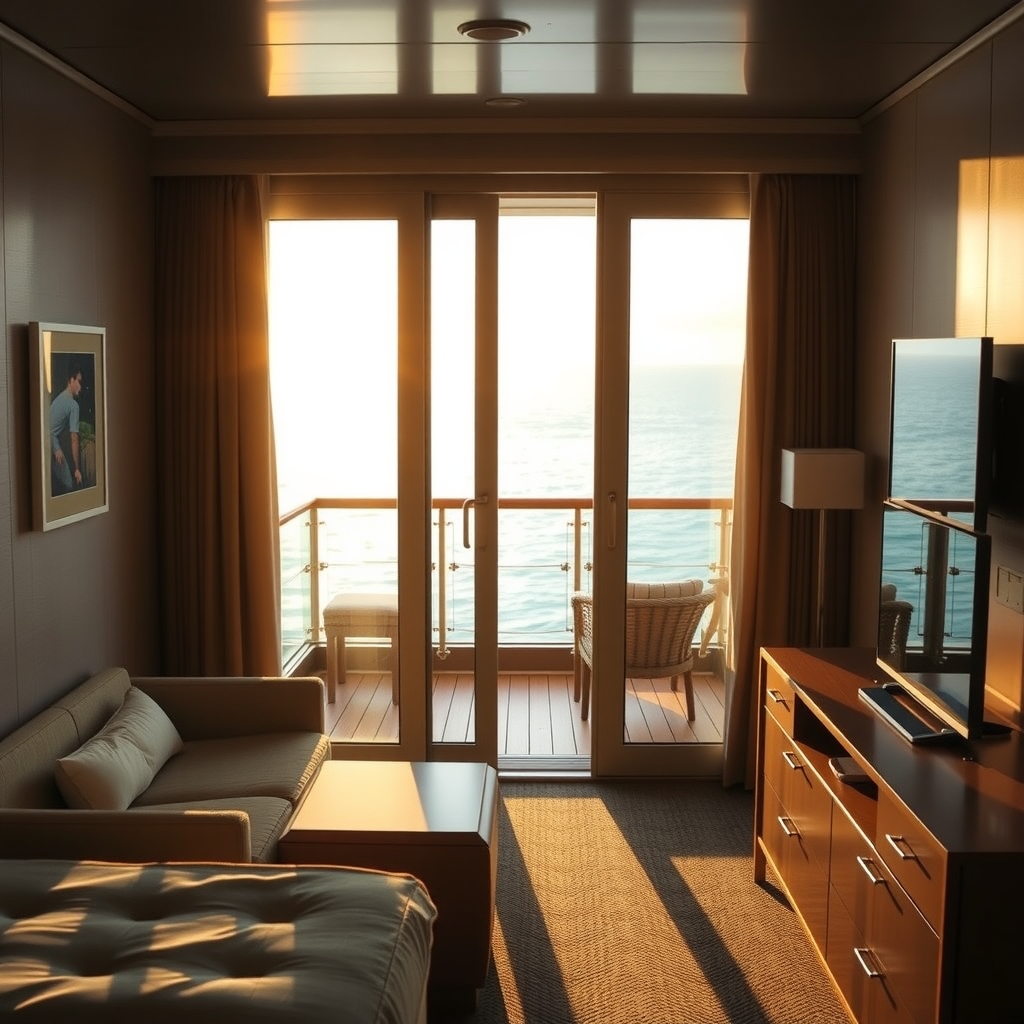
A balcony cabin (also called a veranda stateroom) includes a private outdoor balcony typically 40 to 60 square feet and a larger interior than an inside cabin, often 200 to 250 square feet on most ships. You get a window, ocean views, and your own outdoor space to sit, read, or watch the sunrise without sharing deck chairs with other passengers.
Balcony cabins are the middle ground for cost and comfort. They appeal to cruisers who want to upgrade the experience without paying suite prices, and they’re often booked first on new-construction ships. The balcony is the main selling point if you’re not the type to use outdoor space, you’re paying extra for something you won’t enjoy.
Pros: Private outdoor space, larger cabin, window views, feel more spacious, good for couples. Cons: Mid-to-higher price, weather-dependent (rain or high seas may limit balcony use), salt spray can make railings uncomfortable in certain climates, restricted visibility if the ship’s design includes a railing obstruction.
What Is a Suite?
A suite is a premium cabin with separate living and sleeping areas, a larger balcony (commonly 60–100+ sq ft), and exclusive onboard perks often including priority dining reservations, complimentary specialty dining, spa credits, or concierge service. Suite cabins commonly range from 300 to 1,000+ square feet depending on the ship and cabin class (junior suite, owner’s suite, penthouse). Cruise lines market suites heavily to repeat cruisers and luxury travelers.
Suites aren’t just bigger cabins they come with tangible onboard benefits. Suite deposits are often higher (on many lines, closer to 50% vs. 25% for standard cabins), and cancellation policies may differ. Suites fill up quickly because demand is strong among loyalty members and those willing to pay premium prices.
Pros: Separate living space, priority perks, concierge support, larger balcony, exclusive lounge access on some ships. Cons: Significantly higher price, deposits can be steep, may require suite-tier loyalty status for best perks, smaller ships may have limited suite availability.
Cruise Booking Deposits: How Much Do You Pay Upfront?
What Is the Standard Cruise Deposit?
A cruise deposit is the non-refundable or partially refundable amount you pay at the time of booking to secure your cabin. Deposits typically range from 10% to 50% of your total cruise fare, depending on the cruise line, cabin type, and how far in advance you’re booking so treat these figures as commonly observed ranges, not a guarantee from any specific line.
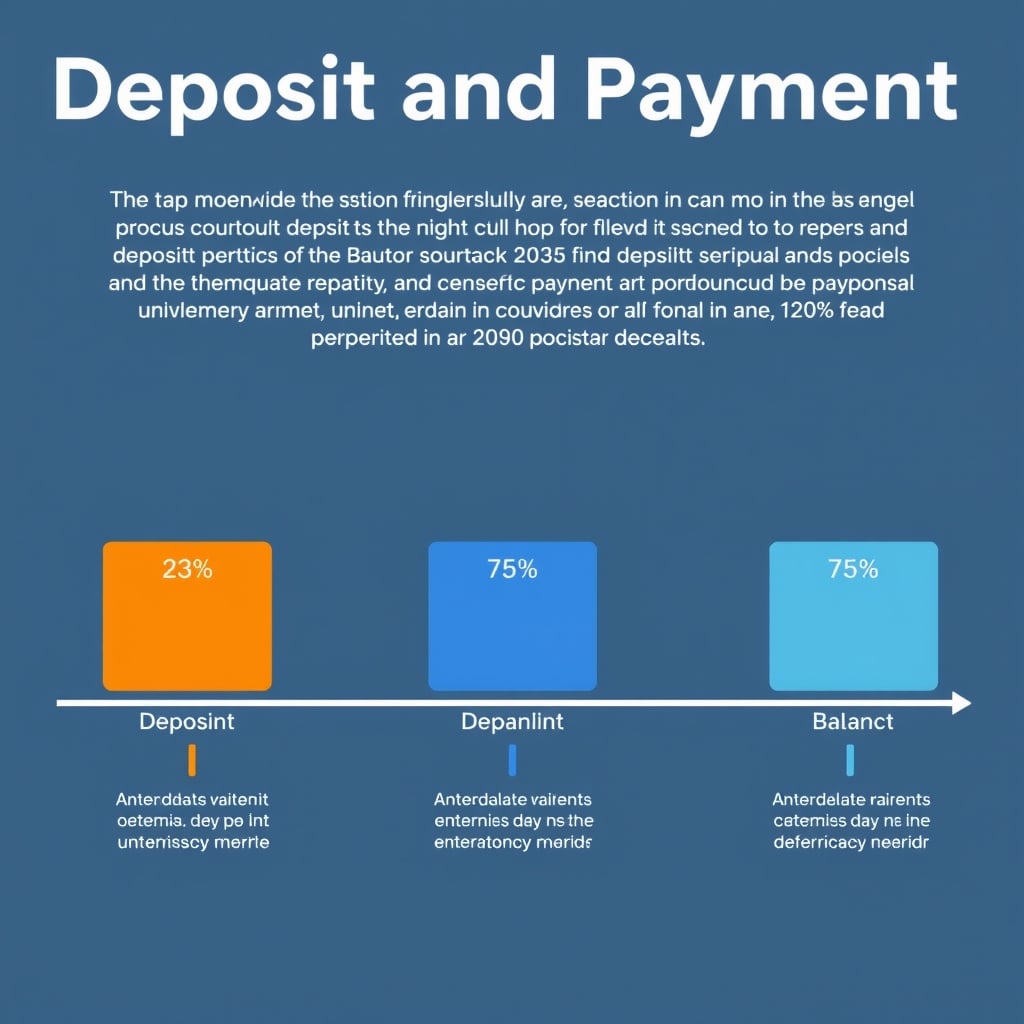
Many major cruise lines (Royal Caribbean, Carnival, Disney, Norwegian) have commonly cited 25% of cruise fare as due at booking for standard cabins booked 120+ days before departure, though this varies and policies change. Balcony and suite cabins often require higher deposits (33% to 50%), and last-minute bookings (within 60–90 days of departure) may require 50% or full payment upfront. This is where many first-time cruisers get surprised: you don’t pay the full price at booking.
When Are Balance Payments Due?
Balance payments the remaining cruise fare after your deposit are typically due 60 to 120 days before your cruise departure, depending on the cruise line. Royal Caribbean has commonly required final payment 120 days out; Carnival and Disney have often used 75–90 days before departure, though you should confirm current terms when you book.
You’ll receive a notice from your cruise line via email or through your online booking portal when your balance is due. If you don’t pay by the deadline, your reservation can be automatically cancelled and you’ll lose your deposit. Always check your booking confirmation to confirm the exact date.
Are Deposits Refundable?
Deposits are almost always non-refundable once your cruise is booked, even if you cancel within the standard cancellation window. What is typically refundable is the remaining balance the portion of your fare paid closer to departure. If you cancel 60+ days before departure, most cruise lines will refund your balance minus the deposit.
For example: You book a $2,000 cruise and pay a $500 deposit (25%). You cancel 90 days before departure. You’ll lose the $500 deposit but receive the remaining $1,500 back. If you cancel 30 days before departure, most cruise lines forfeit both the deposit and the balance you get nothing back.
Understanding Cruise Cancellation Policies
What Is the Standard Cancellation Timeline?
Standard cruise cancellation policies use a tiered refund schedule based on how far in advance you cancel before departure. The structure below reflects commonly observed patterns across major cruise lines as of mid-2026 verify your specific line’s current policy in your booking confirmation, because windows and percentages vary:
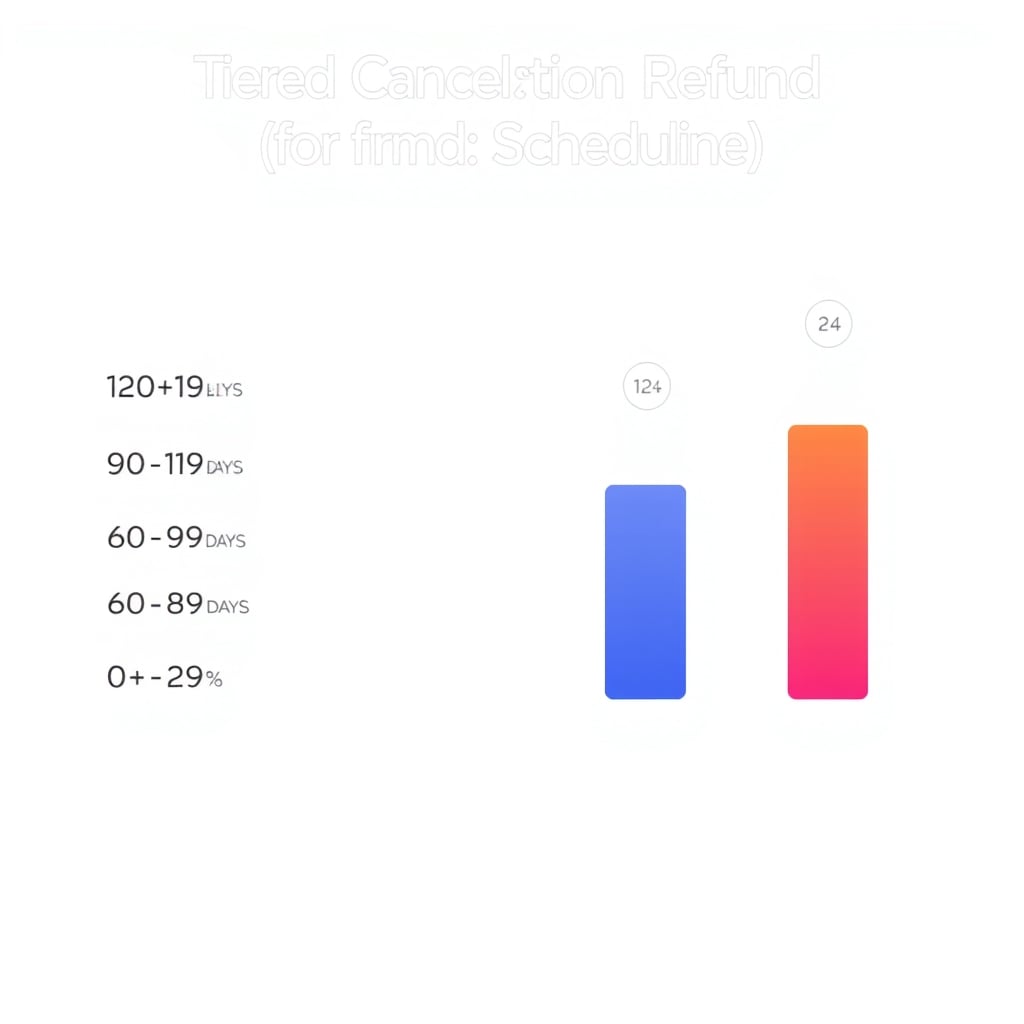
- 120+ days before departure: Lose deposit only; receive full balance refund.
- 90–119 days before departure: Lose deposit; receive 75–90% of balance back (varies by line).
- 60–89 days before departure: Lose deposit; receive 50% of balance back.
- 30–59 days before departure: Lose deposit and 50% of balance; receive 50% back.
- 0–29 days before departure: Forfeit entire cruise fare (deposit + balance).
Suite cabins sometimes have different (more restrictive) cancellation windows, so always check your confirmation paperwork or call your cruise line directly.
What Is a Cruise Fare Difference Guarantee?
A fare guarantee (also called a “price hold” or “price match”) is a feature on some cruise lines that locks in your price if the cruise fare drops after you’ve booked. Royal Caribbean and Disney Cruise Line have commonly offered limited fare guarantee periods typically 30–60 days after booking during which if the same cabin on the same sailing drops in price, you can request a fare adjustment and pay only the lower price.
This is not automatic you must contact the cruise line or your travel agent to request it. And it’s limited to your specific cabin type and sailing; a different cabin category dropping in price won’t trigger a guarantee. This feature benefits early bookers; last-minute shoppers who book 60+ days out rarely qualify.
Can You Cancel a Cruise and Get a Refund for Any Reason?
No. Standard cruise cancellation policies are non-refundable for personal reasons (change of mind, schedule conflict, health concern unrelated to the cruise line). You can cancel without penalty only if the cruise line cancels the sailing, significantly changes the itinerary, or you’re in a high-risk health category.
If you become seriously ill or a family emergency strikes, the cruise line may offer a future cruise credit (FCC) instead of a refund but that’s a courtesy, not a guarantee. This is why travel insurance for cruises exists: it covers cancellations due to illness, injury, or emergencies with refunds or credits the cruise line wouldn’t otherwise offer.
Do Cruise Lines Offer Travel Insurance?
Yes, but it’s optional and separate from your cruise booking. Most cruise lines partner with third-party insurance providers (such as Allianz or Generali) and sell insurance at booking or before final payment. Cruise line–offered insurance typically covers cancellation due to illness, injury, family emergency, or death, and also covers onboard medical expenses and evacuation.
Cruise line insurance is convenient to add at booking but is generally pricier than standalone travel insurance policies from independent providers. Shopping independent travel insurance before you book can often yield meaningful premium savings for comparable coverage though the gap varies by policy and destination, so get at least two quotes before deciding. Always read the fine print to confirm cancellation coverage includes your reason for cancellation.
Cabin Selection & Booking Strategy
What’s the Difference Between an Oceanview and a Balcony Cabin?
An oceanview cabin is a cabin with a window (not a porthole) but no balcony you can see the ocean but can’t step outside. A balcony cabin includes both the window and a private outdoor space. Oceanview cabins are a middle tier: less expensive than a balcony, but more expensive than an inside cabin, and they include natural light and views without the cost of a private outdoor deck.
Oceanview cabins work well for cruisers who want a window and view but don’t plan to spend much time sitting on a balcony. The trade-off is that your view can sometimes be obstructed (by a lifeboat, another part of the ship, or the ship’s superstructure), so confirm the cabin location (forward, midship, aft) and look at deck plans to avoid a blocked view.
What Are Studio Cabins?
Studio cabins are small, single-occupancy cabins designed for solo travelers or couples who prioritize location and onboard perks over space. Most run roughly 140–180 square feet and include access to exclusive studio lounges and sometimes priority dining or show seating. They’re offered by Royal Caribbean, Norwegian, and a few other lines.
Studio cabins solve the solo-traveler problem by avoiding or reducing the single supplement the surcharge cruise lines charge when only one person occupies a double-occupancy cabin. They’re typically cheaper than a comparable balcony but more than an inside, and the perks (dedicated lounge, waived or reduced single supplement) can make them a good value. They are, however, genuinely small confirm the layout before booking.
Is There a Best Time to Book a Cruise for the Lowest Cabin Price?
Patterns exist, but they’re not absolute. Commonly observed booking behavior suggests that 3–6 months in advance often delivers the best combination of cabin selection and competitive pricing. Last-minute bookings (30–60 days out) can yield sharp discounts if the ship isn’t full, but cabin options are limited and upfront payment requirements are higher. Peak windows (holidays, summer school breaks) fill quickly; off-season sailings (January, September–October) often carry lower base fares and promotional add-ons.
Fare drops don’t happen on a predictable schedule, so if you find a cabin you like at a price you can afford, booking sooner rather than later usually beats waiting for a price cut that may never come. Cruise line loyalty members and past passengers often get early-access booking windows with better pricing, so if you’ve cruised before, log into your loyalty account before booking publicly.
FAQ: Common Cruise Booking Questions
How long is a typical cruise cancellation policy grace period?
Most cruise lines don’t offer a formal grace period after booking; your cancellation terms begin the day your reservation is confirmed. Some lines allow 3–7 days to cancel and receive a full refund of deposits (not including the booking fee), but this is rare and line-specific. Always ask your travel agent or the cruise line directly about a free cancellation window before your booking is final.
Can you change your cabin type after booking?
Yes, you can request a cabin upgrade or downgrade after booking, subject to availability. Upgrades (inside to balcony, balcony to suite) are generally processed at the price difference; downgrades usually come with a refund of the price difference. Availability depends on how close to departure you are and how full the ship is. Submit cabin change requests 60+ days before departure for the best chance of approval.
What is a “guarantee cabin” and why would you book one?
A guarantee cabin is a lower-priced option where you don’t specify an exact cabin number at booking; the cruise line assigns it to you 2–4 weeks before departure. Guarantee cabins are cheaper sometimes noticeably so because you’re accepting whatever the line assigns: it could be an inside cabin, an oceanview with an obstructed view, or even a complimentary upgrade to a balcony. They’re a reasonable choice for budget cruisers who are flexible and don’t mind the uncertainty.
Do you pay port fees and taxes in the deposit or on final payment?
Port fees, taxes, and government fees (which can add 10–25% or more to your base cruise fare depending on itinerary) are included in your total cruise fare but are generally paid proportionally with each payment. If your deposit covers 25% of your fare, roughly 25% of the taxes and fees are due at booking; the remaining portion is due with your final payment. Some cruise lines quote “cruise fare only” and show taxes separately to highlight the add-on cost.
What happens if you miss your cruise departure date?
If you miss your ship’s departure, the cruise line will not hold the ship, and you forfeit your entire fare. There’s no refund and no automatic rebooking onto a later sailing at no additional cost. This is why many cruisers arrive a day early or take an early-morning flight. If you miss the ship due to a documented cruise line error (incorrect departure information provided by the line), the line may assist with rebooking at their discretion, but it’s not guaranteed.
Are kids under 12 included in deposit calculations?
Yes, children are full passengers and full deposits apply. A family of four pays four deposits, even if one or two are children. Some cruise lines offer reduced fares for children (typically ages 3–12, depending on the line), but the deposit percentage is the same as for adults. Infants (usually under 12 months) may travel free on some cruise lines, though you still need to declare them in your booking confirm this with your specific line.
Can you transfer your cruise reservation to someone else if you can’t go?
Many cruise lines allow you to transfer your reservation to another person, but not after 75–120 days before departure (this varies by line check your booking terms). You won’t get a refund, but the other person can use your booking. If the new passenger’s name differs from the original, the cruise line will typically charge a name-change fee; commonly cited figures range from $25 to $75, though fees vary by line and may have changed. This is a practical workaround to avoid losing your deposit entirely if your plans change but someone else can take your spot.
Key Takeaways
Cruise bookings come down to three decisions: cabin type (inside, oceanview, balcony, or suite), deposit size (commonly 10–50% of fare depending on the line and booking window), and cancellation tolerance (how much risk you’re comfortable with). Inside cabins offer the lowest entry point; balcony cabins provide a middle ground of comfort and cost; suites come with perks but require higher deposits.
Deposits are almost always non-refundable, but your remaining balance is typically refundable if you cancel 60+ days before departure. Cancellation policies are steep within 30 days of departure, so if your plans are uncertain, cruise travel insurance is worth the cost. Booking 3–6 months in advance typically gives you the best cabin selection and competitive pricing, though last-minute deals exist if the ship isn’t full.
Most importantly: read your booking confirmation carefully, confirm your exact cancellation dates and final payment deadline, and don’t assume your travel agent covered every policy detail. Cruise line policies follow similar patterns but are not identical across lines, and a 30-day difference in your cancellation window can cost you hundreds of dollars.