

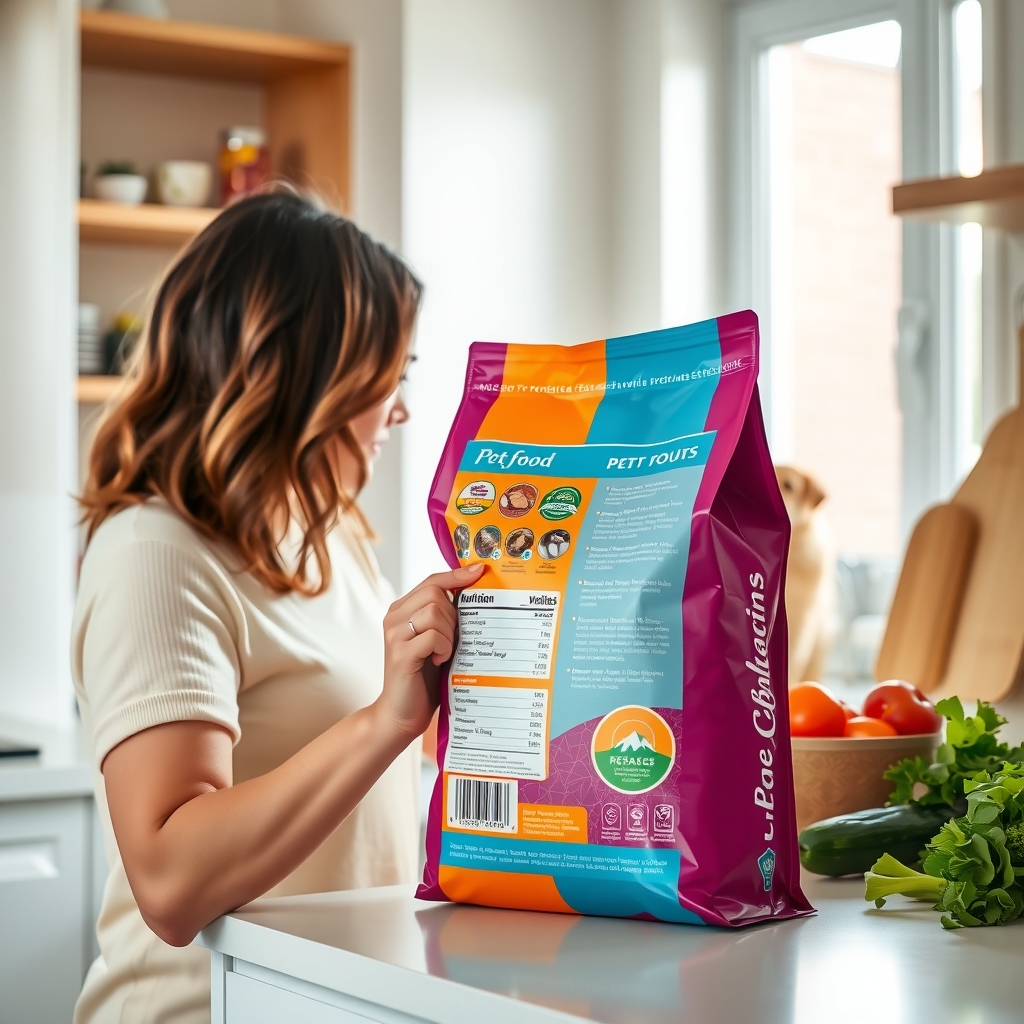
What AAFCO Standards Actually Are
AACO stands for the Association of American Feed Control Officials wait, let’s be precise: AAFCO stands for the Association of American Feed Control Officials, and it’s a nonprofit organization that sets the nutritional standards and labeling guidelines for pet food in the United States. AAFCO doesn’t manufacture or test pet food itself instead, it creates the rules that pet food companies must follow to make legal claims about nutrition and life stages on their labels.
Think of AAFCO like the FDA is for human food: it defines what “complete and balanced” means, which nutrients must be included at minimum levels, and what terms like “puppy formula” or “senior diet” are actually allowed to claim. If you see an AAFCO statement on a bag of kibble, it means the manufacturer has done the homework to prove that food meets those baseline standards.
Why AAFCO Standards Matter for Your Pet
Pet nutrition isn’t a free-for-all. Before AAFCO standards existed, some pet food brands made wild claims “brain-boosting,” “scientifically proven to extend life” with no real evidence behind them. AAFCO doesn’t guarantee a food is premium or the best, but it does guarantee minimum levels of protein, fat, fiber, and vitamins so your pet isn’t accidentally fed something nutritionally incomplete.
For dogs and cats, getting the right balance of nutrients at different life stages matters. A growing puppy needs more calories and calcium than an adult dog; a senior cat might need different fat and calorie levels to avoid weight gain. AAFCO profiles define those differences so brands can legally claim they’re appropriate for each stage.
What Does an AAFCO Statement Actually Say?
The Standard AAFCO Claim You’ll See on Labels
Most pet food bags have a simple statement like: “[Brand Name] is formulated to meet AAFCO Cat Food Nutrient Profiles for adult maintenance.” or “AAFCO approved for all life stages.”
That statement tells you three things: (1) the food was designed for a specific pet type (dog or cat), (2) it targets a specific life stage (puppy, adult, senior, or “all life stages”), and (3) the company has either tested the food or formulated it to match published nutrient minimums.
The statement doesn’t mean AAFCO tested the food or gave it a gold star. AAFCO sets the bar; the company meets it.
Nutrient Profiles: The Math Behind the Label
An AAFCO nutrient profile is a published list of minimum (and sometimes maximum) levels for protein, fat, fiber, vitamins, and minerals. For example, adult dog food must contain at least 18% crude protein; puppy food must contain at least 22%. Cat food is higher across the board because cats are obligate carnivores and need more protein and certain amino acids.
Each profile also sets minimums for key nutrients like:
- Protein measured as “crude protein” (the method used, not the quality)
- Fat mostly measured as “crude fat”
- Fiber a maximum, because too much can block nutrient absorption
- Calcium and phosphorus must be in a specific ratio for bone health
- Taurine for cats, an essential amino acid AAFCO requires
- Vitamins and minerals including A, D, E, thiamine, and zinc
The word “crude” is important: it’s a lab measurement method, not a quality judgment. Crude protein can come from high-quality muscle meat or from lower-quality sources like meat meal or feathers the number alone doesn’t tell you.
How Manufacturers Prove Compliance: Testing vs. Formulation
Two Legal Paths to AAFCO Compliance
Pet food companies can meet AAFCO standards in two ways:
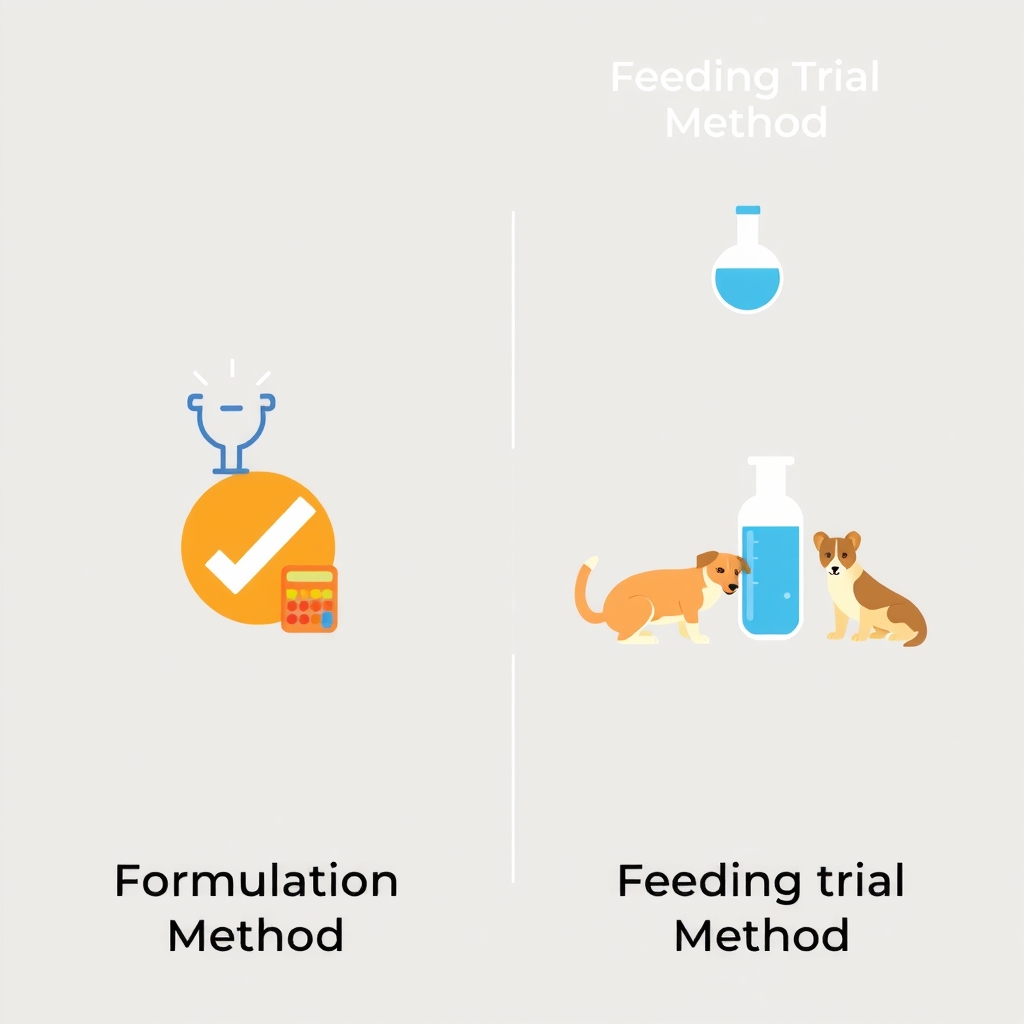
Formulation Method: The company has a nutritionist calculate the recipe so it should hit AAFCO targets based on ingredient databases. This is the cheaper route and is perfectly legal. Many good foods use formulation only.
Feeding Trial Method: The company actually feeds the food to real dogs or cats in a controlled setting, then tests their blood and body condition. This is more expensive and provides real-world evidence, but it’s not always a sign of a “better” food it just means the company paid for the extra verification. Some premium brands do feeding trials; some don’t need to because their formulation is solid.
The AAFCO statement won’t tell you which method was used. If you want to know, you can contact the manufacturer directly.
Common Myth: AAFCO Statement = Independent Testing
Here’s the truth: AAFCO doesn’t test pet food. The association sets the rules; the company either hires a lab to test or uses calculations to prove compliance. An AAFCO statement is a legal claim made by the manufacturer, not a government approval like you might see on human food.
This doesn’t mean the food is risky formulation-based compliance is legitimate and common in the industry. But it does mean you shouldn’t interpret an AAFCO statement as a government thumbs-up or an independent seal of approval. It’s more like the difference between a restaurant saying “our recipes meet food code standards” (true and useful) versus “the health department inspected us” (more direct proof).
Life-Stage Claims: What They Actually Mean
The AAFCO-Approved Life Stages
AAFCO recognizes these official categories:
- Growth for puppies and kittens up to 1 year
- Gestation/Lactation for pregnant or nursing mothers
- Adult Maintenance for adult pets (roughly 1–7 years depending on breed)
- Senior AAFCO doesn’t officially define this stage, so “senior” labels vary widely; some brands lower calories, some change fiber ratios
- All Life Stages formulated to meet the highest nutrient levels (growth stage), so it’s safe for puppies, adults, and pregnant females
If a bag says “adult maintenance,” it’s designed for a healthy adult pet. If it says “all life stages,” it can legally be fed to a puppy or a pregnant dog. A “senior” formula is a marketing term AAFCO doesn’t regulate it, so check the nutrients yourself or ask the vet.
Why Some Brands Don’t Use Official Stages
You’ll see labels like “small breed formula,” “weight management,” or “sensitive digestion.” These are not official AAFCO life stages they’re marketing categories. A weight-management food still needs to meet adult maintenance nutrient profiles; it’s just calorie-adjusted. There’s nothing wrong with this approach, but AAFCO doesn’t guarantee these formulas are better for small breeds or digestive issues. You have to evaluate the actual recipe and ingredients yourself.
How to Read the Guaranteed Analysis on a Label
The back of every pet food bag has a Guaranteed Analysis box showing minimum protein, fat, fiber, and ash (a proxy for minerals). This is where you’ll see the actual percentages:
| Component | Typical Adult Dog | What It Means |
|---|---|---|
| Protein (min.) | 18% | At least 18% protein by weight |
| Fat (min.) | 5% | At least 5% fat; provides energy and supports absorption of fat-soluble vitamins |
| Fiber (max.) | 4% | Not more than 4%; excessive fiber can reduce nutrient availability |
| Ash (max.) | 8% | Represents total mineral content; a higher ash level does not necessarily mean lower meat content |
The catch: These are minimums (or maximums for fiber and ash), not quality markers. A 22% protein kibble could have more protein than a 20% kibble, but the source matters a high-quality meat-based protein absorbs differently than one from a grain source.
Also, the Guaranteed Analysis is measured “as fed” (with moisture included). Most kibbles are about 10% moisture, so the numbers are lower than if you looked at dry matter. If you want to compare wet food to kibble, you’d need to do the math to account for moisture most pet sites have calculators for this.
Common Beginner Mistakes
Mistake #1: Assuming AAFCO means “high quality.”
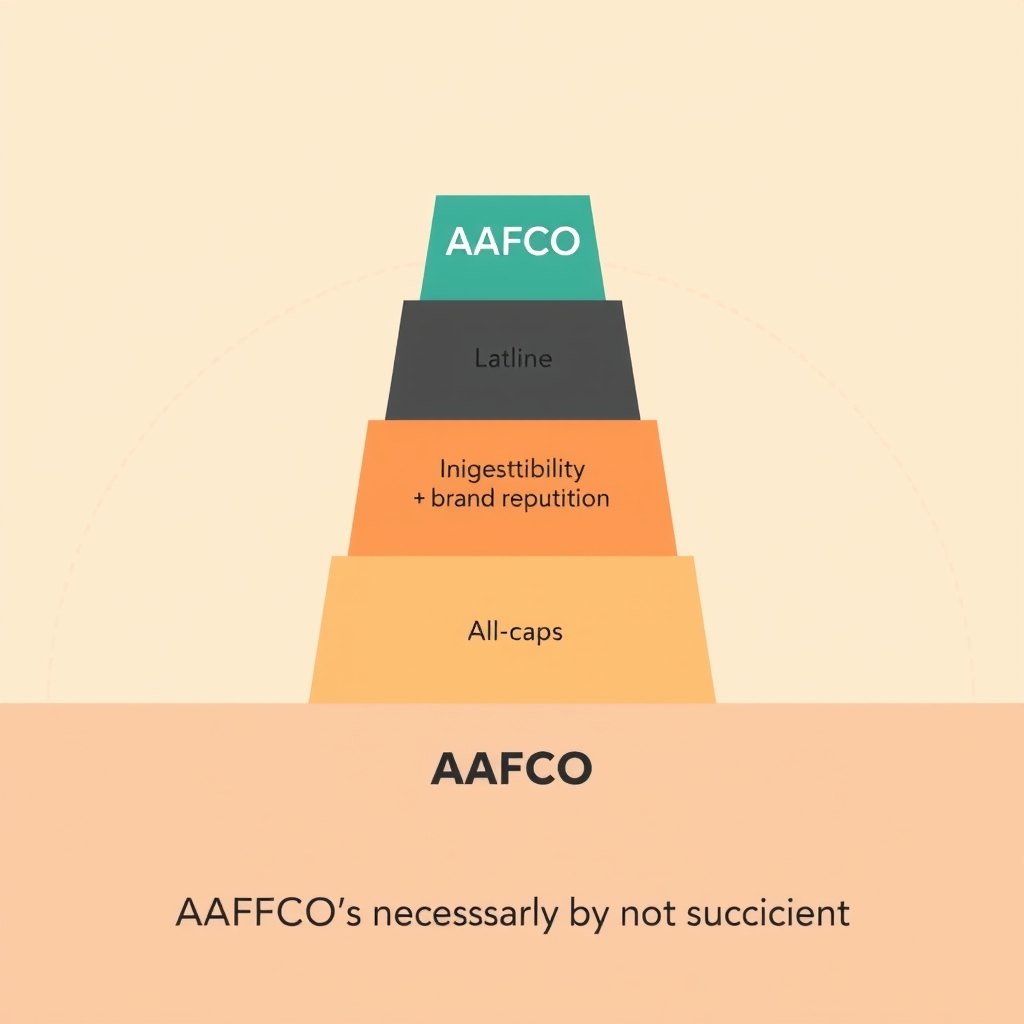
No. AAFCO sets a baseline the food won’t hurt your pet, but it doesn’t guarantee premium ingredients, digestibility, or suitability for your specific dog. A $15/bag generic kibble can meet AAFCO; so can a $60/bag grain-free formula. AAFCO compliance is necessary, not sufficient.
Mistake #2: Trusting ingredient order more than nutrient analysis.
Labels must list ingredients by weight, and “chicken” can include moisture, while “chicken meal” is dried chicken (more concentrated protein). A food that lists “chicken meal” second might actually have more meat protein than one listing “chicken” first, even though it sounds like less. Look at the Guaranteed Analysis percentage, not just the ingredient list order.
Mistake #3: Ignoring “by-products” and “meal.”
Meat by-products and meal aren’t inherently bad they’re just cheaper protein sources. Chicken meal is a legitimate protein; “meat by-product” is less transparent but not a red flag on its own. The Guaranteed Analysis number is more telling than the ingredient name.
Mistake #4: Assuming “senior” formulas are necessary.
Since AAFCO doesn’t regulate “senior,” these formulas vary wildly. Some lower calories (useful for weight management); others just add joint supplements or fiber. Your vet is a better guide than a “senior” label for an aging pet.
Mistake #5: Thinking one AAFCO profile fits all dogs.
An adult Great Dane and a Chihuahua both meet AAFCO adult maintenance, but they have very different caloric needs. AAFCO sets minimums; your vet or a pet nutritionist helps you choose the right amount and type within that range.
How to Use AAFCO Compliance in Your Pet Food Decision
Start with the AAFCO Statement
- Check it’s there. If a bag has no AAFCO statement, the manufacturer is claiming it’s not formulated to be complete and balanced it’s a treat, supplement, or test product. That’s fine for occasional meals, but not as a main diet.
- Match the life stage. If your dog is a puppy, look for “growth” or “all life stages.” If your dog is an adult, “adult maintenance” is what you want. Don’t assume “senior” without reading the nutrient levels.
- Check the Guaranteed Analysis. At minimum, look at protein and fat. If your vet recommends a higher protein diet (for muscle loss or certain health issues), pick a food showing that percentage.
- Ask the manufacturer. If you want to know whether the food was tested or formulated, or if it has specific ingredients, email or call the brand. Reputable companies answer these questions.
Use AAFCO as a Baseline, Not the Final Word
AAFCO compliance is a filter it narrows your options to foods that meet nutritional minimums. From there, you compare ingredients, price, your dog’s health, and vet recommendations. A food that meets AAFCO and your budget and keeps your dog’s coat shiny is the right choice, regardless of whether it was tested by feeding trial or formulated on paper.
FAQ
Is AAFCO certification the same as FDA approval?
No. AAFCO is a nonprofit organization that sets standards; the FDA enforces pet food regulations. An AAFCO statement means the company says the food meets those standards. The FDA doesn’t pre-approve pet food like it does drugs, but it can pull a food off shelves if it’s unsafe or mislabeled.
Can a food be safe to feed but not meet AAFCO standards?
Technically yes, but it shouldn’t be your pet’s main diet. If a food isn’t claiming to be complete and balanced (no AAFCO statement), it’s meant as a supplement or treat. Feeding it as a main diet over time could leave your pet deficient in key nutrients.
Do I need to feed a “senior” formula to my older dog?
Not necessarily. “Senior” is a marketing term, not an AAFCO standard. If your older dog is overweight, a lower-calorie food (whether labeled senior or not) might help. If your dog is thriving on its current diet, stick with what’s working. Your vet’s advice beats a label claim.
What does it mean if a food says “exceeds AAFCO standards”?
It means the food has higher levels of certain nutrients than the minimum required. This could be a good thing (more antioxidants) or just marketing exceeding a minimum doesn’t always mean the food is “better,” especially if the extra nutrients aren’t utilized by your pet’s body. Read the actual percentages and ask your vet if the extra is useful.
Can I tell if a food was AAFCO-tested by feeding trial just from the label?
No. The AAFCO statement doesn’t specify the method. Contact the manufacturer to ask whether the food was fed to animals in a controlled trial or formulated using nutrient databases.
Is AAFCO changing or updating standards soon?
AAFCO updates its standards periodically to reflect new nutritional science, but changes are slow. The current nutrient profiles have been stable for years. If you want the latest guidance on pet nutrition, your vet and board-certified veterinary nutritionists are more current than AAFCO labels alone.
Where to Start
AAFCO compliance is the right first filter but it takes thirty seconds to apply once you know what to look for.
- Pick a food that has an AAFCO statement matching your pet’s life stage.
- Look at the Guaranteed Analysis and compare protein and fat percentages to your vet’s recommendation.
- Read the ingredient list and ask yourself if you recognize most of the items.
- If the price fits your budget and your pet thrives on it (healthy coat, normal digestion, stable weight), you’re done.
- If your pet has a health condition or dietary restriction, ask your vet or a board-certified veterinary nutritionist for a recommendation AAFCO compliance alone won’t address specific needs.
For a detailed comparison of specific pet food brands and how they stack up on ingredients and price, check out our Best Dog Food and Best Cat Food guides to see which foods align with your priorities.
Remember: AAFCO is a useful baseline, not a guarantee of premium quality or suitability for your pet. It’s one input in your decision, not the whole answer.