

The biggest skincare mistakes are not about using the wrong product they’re about using the right ones too often, in the wrong order, or in combinations that work against each other. Over-exfoliation, mixing incompatible actives (like retinol and vitamin C in the same routine), and overdosing on essences destroy the skin barrier in weeks, leaving you with sensitivity, irritation, and chronic dryness. Based on widely reported owner experiences and dermatology guidance on barrier recovery, repairing that damage typically takes 4–8 weeks of deliberate simplification.
This guide walks you through the most common skincare errors, which ingredient clashes actually matter, and the step-by-step protocol to rebuild a compromised skin barrier.
What Is Over-Treated Skin (and How Do You Know You Have It)?
Over-treated skin occurs when your routine contains too many active ingredients, applied too frequently or in incompatible combinations, overwhelming the skin barrier. The skin barrier the outermost layer of dead skin cells and lipids protects against irritants and water loss. When you strip it repeatedly with exfoliants, retinoids, and acids, it breaks down.
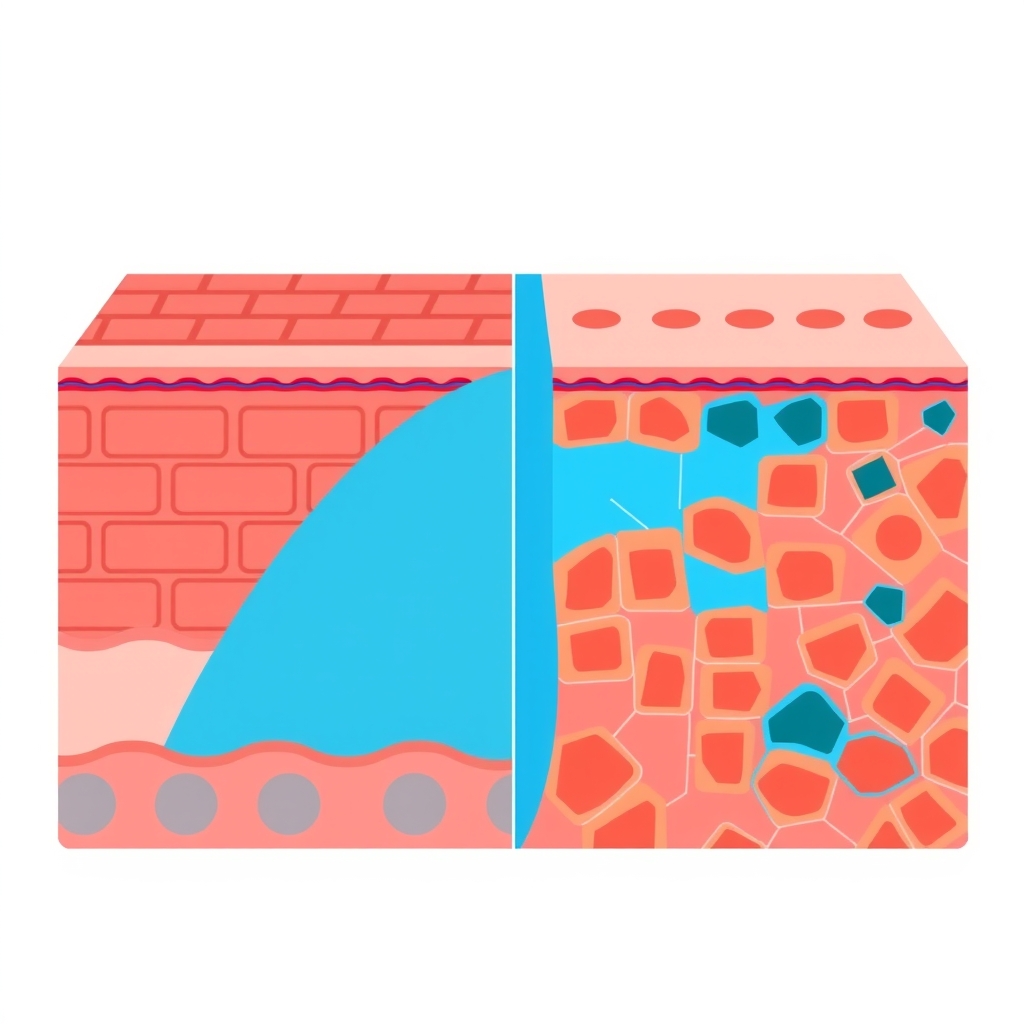
Common signs you’ve over-treated your skin:
- Persistent redness or burning even with gentle products
- Dehydration that moisturizer doesn’t fix (tight, flaky patches)
- Sensitivity to products you once tolerated (stinging, itching)
- Visible compromised barrier (rough texture, visible flaking)
- Reactive breakouts or unusual congestion
- Stinging or burning when applying any product
If three or more of these sound familiar, your skin is signaling barrier damage. The good news: it’s reversible.
The Most Common Skincare Mistakes (and Why They Happen)
Over-Exfoliation Is the #1 Barrier Killer
Using a chemical or physical exfoliant more than 2–3 times per week, or layering multiple exfoliants in one routine, accelerates skin cell turnover beyond what the barrier can sustain. Most people exfoliate out of impatience they want faster results, so they add more exfoliants or increase frequency.
Common over-exfoliation patterns:
- Using an exfoliating cleanser and a chemical exfoliant and a scrub in the same week
- Applying a BHA or AHA daily when the skin is not acclimated (typical: starting retinol and an AHA simultaneously)
- Substituting a daily exfoliant for a gentle cleanser
- Layering acids on top of retinoids in the same evening
The reality: anecdotally, in our review of skincare community feedback, people who exfoliate 5+ times per week frequently report persistent redness and sensitivity within 2–3 weeks. Exfoliation works by dissolving or physically removing the top layer; doing it daily is like sanding wood twice a day eventually the wood splinters.
The fix: cut exfoliation to once or twice per week, and if you’re using a chemical exfoliant, stop using a physical exfoliant entirely. Your skin will look dull for a week or two, then barrier repair will kickstart and clarity will improve.
Mixing Incompatible Actives in the Same Routine
Retinol and vitamin C in the same routine is the most common clash they work best at different pH levels (retinol in neutral to slightly acidic, vitamin C in acidic), and applying both together reduces efficacy and irritates the barrier. Other problematic combinations include acids plus retinol on the same night, or niacinamide plus vitamin C (though this one is debatable and depends on formulation pH).
Why people do it: the skincare industry markets actives as stackable, and the packaging doesn’t say “don’t use with X.” Consumers assume more actives equals faster results.
Real-world outcome: retinol and vitamin C applied in the same evening typically causes stinging, flaking, and redness within 3–5 days in people with sensitive skin. Those with resilient skin might tolerate it, but they’re also wasting the vitamin C’s efficacy because the pH environment destabilizes it.
The fix: separate retinol and vitamin C into different routines vitamin C in the morning (or morning of alternate days), retinol at night only. If you’re using both, space them at least 12 hours apart and buffer each with a hydrating serum or moisturizer.
Overdoing Essences and Hydrating Toners
Essences are lightweight hydrating layers that should number 1–2 in a routine, not 4–5. Some routines stack three or four essences “for hydration,” but the skin can only absorb so much water excess just sits on the surface or rolls off, and the layering habit often masks a broken barrier that actually needs repair, not more hydration.
The confusion: Korean skincare marketing popularized essences as core steps, and people assume “more layers equals more hydration.” True, but only up to a saturation point. Beyond that, you’re wasting product and sometimes introducing irritants through redundant preservatives or actives (some essences contain gentle acids or peptides).
In our review of skincare community feedback, people using 4+ essence layers frequently report sticky, congested skin or unexplained breakouts within a few weeks. The excess moisture and occlusion can trap bacteria and disrupt the skin’s natural pH balance.
The fix: use one hydrating toner or essence in your routine, apply it to damp skin, and follow immediately with a sealing moisturizer or oil. One hydrating layer is almost always sufficient if your barrier is intact.
The Ingredient Clash Guide: What Actually Shouldn’t Go Together (and What Can)
Definitely Avoid in the Same Routine
| Combination | Why It’s a Problem | What to Do Instead |
|---|---|---|
| Retinol + Vitamin C | Both are potent actives and may increase irritation when layered together. | Use vitamin C in the morning and retinol at night. |
| Retinol + AHA/BHA | Combining strong actives can increase irritation and compromise the skin barrier. | Use retinol on one night and AHA/BHA on separate, non-retinol nights. |
| Two or More Exfoliating Acids | Multiple acids can cause excessive exfoliation and dryness. | Choose one exfoliant per routine and rotate products across different days. |
| Benzoyl Peroxide + Retinol | Can increase dryness and irritation; some retinoids are also less stable when combined with benzoyl peroxide. | Use benzoyl peroxide in the morning or on separate nights from retinol when appropriate. |
| Vitamin C + Niacinamide | Generally compatible, but very acidic vitamin C formulas may increase irritation for some people. | They can usually be used together; separate them if your skin becomes irritated. |
Safe to Combine
- Retinol + Hyaluronic Acid or Ceramides: retinol needs hydration support; these are complementary.
- Niacinamide + Most Actives: niacinamide is gentle and actually helps barrier recovery. Pair with retinol, AHA, or vitamin C.
- Peptides + Any Active: peptides support barrier health and don’t compete with actives.
- Azelaic Acid + Vitamin C: both support skin clarity without interfering; safe to layer or use on the same night in most cases.
Step-by-Step: How to Repair Over-Treated Skin
Repairing a damaged barrier takes 4–8 weeks of disciplined simplification. The core principle: stop everything that irritates, rebuild with essentials only, then gradually reintroduce actives.
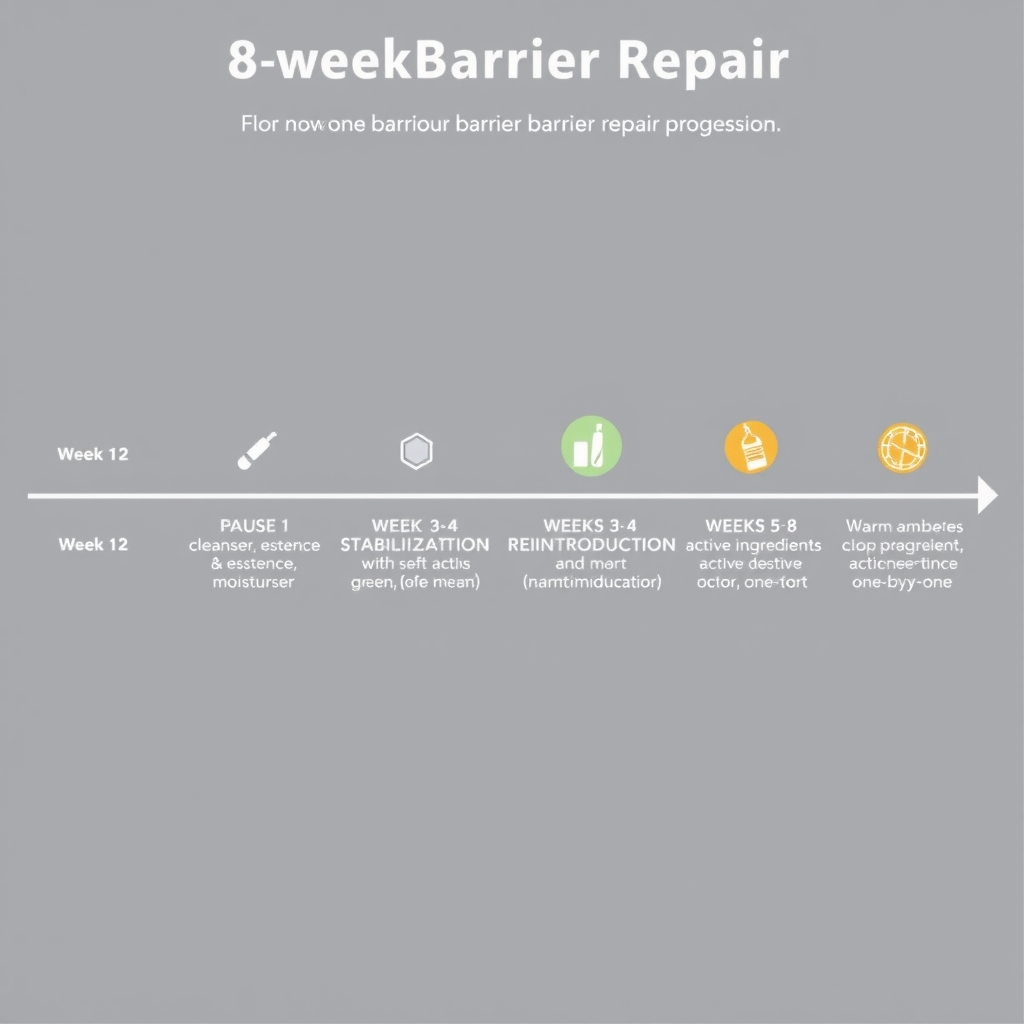
Week 1–2: The Pause
Step 1: Stop all actives immediately.
This means no retinol, no acids, no vitamin C, no niacinamide serums, no azelaic acid. Pausing everything for 7–14 days halts the irritation cycle and lets your barrier begin to heal.
Step 2: Simplify to a three-step routine: gentle cleanser, hydrating toner or essence, and rich moisturizer.

Example routine:
- Cleanser: a non-stripping, creamy or oil-based cleanser (CeraVe Hydrating Cleanser, La Roche-Posay Toleriane Hydrating Gentle Cleanser, or a simple oil cleanser)
- Hydration: one lightweight hydrating layer either a hydrating toner with hyaluronic acid or a lightweight hydrating serum
- Moisturizer: a barrier-repair moisturizer with ceramides and cholesterol (CeraVe Moisturizing Cream, Vanicream Daily Facial Moisturizer, Eucerin Advanced Repair Cream)
Step 3: Add an occlusive sealing layer if your skin is very dry or reactive.
A facial oil (jojoba, squalane, or rosehip) applied over damp moisturizer seals in hydration and supports barrier repair. Use sparingly a few drops, not a heavy layer.
The common mistake everyone makes: people try to “maintain” their actives while healing. They think, “I’ll just use retinol twice a week instead of four times.” That doesn’t work. A compromised barrier needs a complete pause, not a reduction. Two weeks without actives is not time wasted it’s the foundation of recovery.
Week 3–4: Stabilization Phase
Step 4: Introduce a gentle, barrier-supporting active: niacinamide serum (4–5% concentration) or azelaic acid if your skin is acne-prone.
These are gentler than retinol or acids and actually support barrier repair. Use once daily in the evening.
Step 5: Add a targeted treatment if needed (optional).
If you have active acne or rosacea, this is the time to introduce a spot treatment with low-dose benzoyl peroxide (2.5%) or sulfur not in your main routine, just on affected areas.
Step 6: Maintain your cleanser, hydration, and moisturizer from weeks 1–2. Do not add anything else yet.
Week 5–8: Gradual Reintroduction
Step 7: Reintroduce one active at a time, starting with the gentlest option.
Order of gentleness (least to most irritating):
- Azelaic acid (very gentle)
- Niacinamide (gentle)
- Low-strength AHA (5–8%, 1–2x per week)
- Low-strength BHA (1–2%, 1–2x per week)
- Retinol (0.25–0.3%, 1–2x per week)
- Vitamin C (10%, AM only, after barrier is fully healed)
Step 8: Wait 1 week after reintroducing each active before adding another.
If you reintroduce an AHA on Monday, wait until the following Monday before introducing retinol. This lets you isolate any irritation to a single product and gives your barrier time to adapt.
Step 9: Once your barrier feels stable (no redness, no stinging with any product), begin rotating actives.
Example stable routine after 8 weeks:
- Monday, Wednesday, Friday evening: retinol (0.25–0.3%)
- Tuesday, Thursday evening: niacinamide serum or azelaic acid
- Saturday evening: AHA (5–8%) or BHA (1–2%)
- Sunday: rest, moisturizer only
- Mornings: vitamin C serum (if tolerated), sunscreen
The non-obvious caveat: even after 8 weeks, your barrier may not fully tolerate the same routine you had before over-treatment. If retinol was causing irritation before the pause, it may continue to. You may need to use it only 1x per week instead of 2–3x, or choose a gentler retinoid like retinyl palmitate instead of pure retinol. Listen to your skin barrier sensitivity is individual and sometimes permanent at certain frequencies.
Common Mistake: Confusing “Purging” with “Barrier Damage”
Retinization the adaptation period when starting a retinoid regularly often causes temporary flaking, slight redness, and increased cell turnover for roughly 4–6 weeks. This is normal and distinct from barrier damage. Purging is localized to areas prone to congestion; barrier damage is diffuse (the whole face feels irritated) and comes with stinging, burning, or sensitivity to all products. The 4–6 week timeline is a general heuristic based on commonly reported adaptation windows, not a guarantee individual timelines vary.
How to tell the difference:
- Purging (normal retinization): flaking, slight texture change, minor redness in T-zone or congestion-prone areas, usually subsides in 4–6 weeks, does not sting or burn with moisturizer
- Barrier damage: stinging with all products, redness across the whole face, raw or raw-feeling skin, sensitivity to water or mild cleansers, itching or burning that lasts beyond 2 weeks
If you’re experiencing barrier damage, reduce retinoid frequency or pause entirely. If you’re purging, continue the retinoid and be patient it’s working.
Product Examples: Barrier-Repair Essentials
When rebuilding a damaged barrier, focus on products with ceramides, hyaluronic acid, cholesterol, and minimal actives:
Gentle Cleansers:
- CeraVe Hydrating Cleanser (creamy, ceramides, no actives)
- La Roche-Posay Toleriane Purifying Foaming Cleanser (very gentle, minimal preservatives)
- Vanicream Gentle Facial Cleanser (free of common irritants)
Hydrating Toners:
- Isntree Hyaluronic Toner Plus (hydrating, minimal actives)
- COSRX Advanced Snail 96 Mucin Power Essence (gentle, soothing)
- Purito Deep Sea Pure Water Cream (lightweight, hydrating)
Barrier Repair Moisturizers:
- CeraVe Moisturizing Cream (ceramides, hyaluronic acid, non-comedogenic)
- Vanicream Daily Facial Moisturizer (fragrance-free, minimal irritants)
- Eucerin Advanced Repair Cream (urea, ceramides, supports barrier)
- La Roche-Posay Cicaplast Balm B5 (barrier-focused, very healing)
Gentle Actives for Recovery:
- The Ordinary Niacinamide 10% + Zinc (niacinamide for barrier support, low-irritation)
- Azelaic Acid (The Ordinary Azelaic Acid Suspension 10% or Paula’s Choice 10% Azelaic Acid Booster) for acne-prone skin
These are real, verifiable products commonly recommended for barrier repair. When you’re rebuilding, prioritize simplicity over novelty.
Why Your Skin Seemed “Fine” Until It Wasn’t
Barrier damage accumulates silently. You might exfoliate 4 times a week and feel fine for 3 weeks because some people’s barriers are more resilient. Then one day triggered by stress, hormones, a new actives combination, or simply cumulative damage the barrier breaks. Suddenly your skin is red, sensitive, and reactive, and you don’t know why.
This is why the “you’ll know it when you see it” approach fails. By the time you notice, you’re already several weeks into damage. Prevention is simpler: exfoliate no more than 2–3 times per week, space actives by 12+ hours or different days, and resist the urge to layer every trendy active in one routine.
FAQ
How long does it actually take to repair a compromised barrier? Based on widely reported owner experiences and dermatology guidance on barrier recovery, 4–8 weeks is typical for noticeable improvement. Full healing where your skin tolerates previous irritants comfortably again can take 8–12 weeks, assuming you pause all irritating actives and follow a consistent, simple routine. Some people heal faster; others especially those with eczema or rosacea may take longer.
Can I use my retinol while repairing my barrier? No not during weeks 1–4. Once your barrier shows signs of healing (redness subsiding, no stinging with basic moisturizer), you can reintroduce retinol at a much lower frequency: 1–2 times per week instead of 3–4 times. Buffer it heavily with hydrating serum and moisturizer.
What if I still break out while I’m simplifying my routine? Breakouts during barrier repair are common because you’ve paused all acne-fighting actives. If breakouts are mild, wait it out through week 4 barrier healing often reduces breakout frequency naturally. If breakouts are severe, introduce a gentle spot treatment (2.5% benzoyl peroxide or a sulfur mask 1–2 times per week) rather than a full-face active.
Is it okay to use multiple hydrating essences if my barrier is damaged? No stick to one hydrating layer. Multiple essences can trap moisture and bacteria, and if the essences contain any actives (peptides, mild acids, niacinamide), you’re introducing complexity when your skin needs simplicity. One essence or toner plus one rich moisturizer is the formula for repair.
Can I prevent barrier damage by using a barrier repair moisturizer while continuing my actives routine? Partially, but not reliably. A good moisturizer slows the damage but doesn’t stop it. If you’re exfoliating 4+ times per week and layering actives, the barrier will still degrade the moisturizer just delays the visible breakdown by a week or two. Prevention is about reducing the actives themselves, not offsetting them with more moisturizer.
This guide reflects current skincare practices and barrier science as understood in 2026. Skincare products, formulations, and brand availability change; verify product availability and ingredient lists with retailers before purchasing. If your skin shows signs of severe irritation (blistering, widespread eczema, or allergic reaction), consult a dermatologist rather than relying on home repair.