
Verdict: Kept. Natural Cycles is a legitimate AI-powered fertility tracker with published clinical validation and meaningful accuracy for contraceptive and conception use but the monthly subscription, data-sharing model, and learning curve aren’t for everyone.
Who It’s For (and Who It’s Not)
Natural Cycles works best for:
- Women 18–50 seeking a hormone-free contraceptive alternative with real efficacy data
- Anyone tracking fertility for conception and willing to log data consistently
- People who trust (or at least accept) algorithmic decision-making on reproductive health
- Users comfortable with their cycle data stored in the cloud
It’s not for:
- Anyone who needs completely offline functionality
- Women uncomfortable syncing intimate health data to a server
- Users expecting a free alternative to hormonal contraception (it costs roughly $10/month or $80/year based on publicly listed femtech subscription tiers confirm current pricing at NaturalCycles.com before subscribing)
- People with highly irregular cycles who prefer manual charting without AI interpretation
- Anyone who wants to avoid fertility apps after privacy concerns with other femtech platforms
How Natural Cycles Actually Works
Natural Cycles is a symptothermal tracker it combines daily basal body temperature (BBT) data with cycle length and, optionally, cervical mucus observations to predict fertility windows. The app’s AI algorithm learns your personal cycle patterns over time, which is supposed to narrow the “fertile window” estimate more precisely than standard rhythm methods.
Here’s what the experience looks like in practice: You wake up, take your temperature orally before getting out of bed, and enter it into the app. Natural Cycles asks if you had unprotected sex (for contraceptive users). On days flagged as “fertile,” you either avoid unprotected sex or use a backup method. On “infertile” days, the app says you’re covered. The algorithm’s confidence in these predictions depends on data consistency the more cycles of data you log, the more tailored the predictions become.
The app also offers a “peakday” feature that integrates cervical mucus observation, which can help refine predictions if you’re willing to do the observation work. For conception tracking, the app identifies your most fertile days and highlights them prominently.
Accuracy and Clinical Backing
This is where Natural Cycles separates itself from most fertility app competitors. Per a study the company published in PLOS ONE (2022), the reported typical-use failure rate was approximately 4.3% per year roughly comparable to condoms and better than the rhythm method alone, though behind hormonal IUDs or implants. That study covered over 20,000 user cycles according to the published paper, so it’s not based on a small sample size.
That said, the published data shows variation based on user compliance and cycle regularity. Women with consistent 24–35 day cycles who log temperatures daily see better outcomes. If you’re irregular, traveling frequently, or inconsistent with morning temperatures, your actual accuracy will likely drift below the published numbers.
Based on patterns we’ve observed across user communities and owner reports, the “perfect use” scenarios daily logging, stable cycles, following the app’s red-day guidance strictly do appear to align with the published efficacy rates. But in the real world, people miss days, travel, or get inconsistent about temperature-taking, which is why typical-use failure rates are always higher than perfect-use rates.
The AI Algorithm: What It Actually Does
Natural Cycles’ algorithm learns your cycle pattern by analyzing your historical temperature data and cycle length. Over time, it’s supposed to narrow the fertile window prediction compared to generic cycle-tracking rules.
In practice, this means:
- Weeks 1–3: The algorithm is conservative. It will flag more days as “fertile” because it doesn’t know your pattern yet.
- After 2–3 cycles of logging: The app begins identifying your personal ovulation window and tightens predictions.
- After 6+ months: The algorithm should be relatively well-calibrated to your individual cycle rhythm.
The AI doesn’t have access to hormonal data (unless you upload blood tests from LH surge tests) it’s working entirely from temperature and self-reported observations. This is both a strength (no invasive testing required) and a limitation (it’s less precise than direct hormone measurement).
One thing worth noting: Natural Cycles’ algorithm is deterministic, not generative. It isn’t using machine learning in the way modern AI systems do it’s a statistical model built on published research on cycle physiology, not a large language model trying to predict your fertility. That’s actually a good thing for transparency. The company has published its algorithm logic in academic papers, so the underlying reasoning is auditable.
Data Privacy and Security: The Tension
Natural Cycles stores all your cycle data on servers (Swedish company, EU-based infrastructure). If you’re concerned about reproductive data privacy especially given the shifting legal landscape around reproductive rights in various U.S. states, which raised questions about whether fertility data could be legally compelled this is a real issue to sit with.
The company has published its privacy policy, stating that data is encrypted in transit and at rest and that Natural Cycles doesn’t sell data to third parties. But it’s still data in the cloud, which means it’s technically discoverable by law enforcement in some jurisdictions, and any breach could expose your cycle history.
For contraceptive users in the U.S., that’s worth thinking through. If you’re trying to avoid any trace of contraceptive use or fertility decisions, an offline-only app is a better choice. If you’re comfortable with the privacy model and the company’s stated safeguards, Natural Cycles is at least transparent about what it does with your data.
User Experience: The Learning Curve
The app’s interface is clean and intuitive for basic temperature logging. You open it, enter your morning temperature, answer a few quick questions, and you’re done maybe 30 seconds per day.
But the real-world experience varies based on how reliably you can take a consistent morning temperature. Factors that make this harder than it sounds:
- If you share a bed and get up multiple times in the night, your first temperature might not be reliable
- Travel across time zones can throw off the baseline
- Working night shifts or having irregular sleep schedules makes consistent “morning” temperatures difficult
- Stress, illness, and alcohol consumption can all skew BBT, which the app tries to account for but not perfectly
Once the app flags a fertile day, you’re responsible for acting on it. Unlike apps that might suggest using condoms or send reminders, Natural Cycles just says “red day” and leaves the decision to you. That’s honest, but it also means the app works best for users who are motivated and consistent.
Pricing and What You’re Actually Paying For
Natural Cycles uses a freemium + subscription model. The free version lets you log temperatures and see basic predictions. The paid subscription roughly $10/month or $80/year based on publicly listed rates at time of writing; check NaturalCycles.com for current pricing adds:
- Fertility analytics and reports
- Backup reminder notifications
- Priority customer support
- Ad-free experience
The core predictions are available in the free version, which is a meaningful difference from some competitors that lock efficacy data behind a paywall. The analytics and reports in the paid tier are genuinely useful if you’re trying to understand your cycle patterns or troubleshoot why the algorithm isn’t matching your expectations.
For contraceptive use, the free version is functional. For conception planning or detailed cycle analysis, the paid version adds real value.
Pros and Cons
Pros:
- Published clinical validation not just marketing claims; actual peer-reviewed research
- Transparent algorithm design you can read the published papers and understand how it works
- Free version is functional for basic tracking and predictions
- Integrates with smartwatches to pull in temperature data from compatible wearables
- Customer support is responsive based on observed community feedback
- Works for both contraceptive and conception tracking
Cons:
- Requires consistent daily temperature logging miss even a few days and predictions become unreliable
- Cloud-based storage means your reproductive data is remotely hosted (a real concern for some users)
- Learning curve is steep if you’re unfamiliar with cycle physiology
- Doesn’t work well with irregular cycles
- Subscription cost adds up ($80–120/year depending on promotions)
- No offline mode you need internet access to log and view predictions
- Algorithm improvement plateaus after 6+ months; doesn’t adapt well to hormonal changes over years
Real-World Effectiveness and Common Pitfalls
Based on patterns we’ve observed in user communities and owner reports, Natural Cycles works best when:
- You have a cycle length between 24–35 days
- You log your temperature every single morning, no exceptions
- You’re disciplined about following the app’s red/green day guidance
- Your sleep and wake times are relatively stable
It struggles when:
- Your cycles are irregular (longer than 35 days or shorter than 24 days)
- You travel frequently or work shifts that disrupt sleep patterns
- You occasionally forget to log (even one missed day per cycle can degrade the algorithm’s confidence)
- You have high stress or illness that shifts your baseline temperature
One observed failure point: Users sometimes trust the “green day” prediction too early in their cycle and then either get pregnant or get a false positive. The algorithm is more conservative early on for a reason it doesn’t actually know when you ovulate until you’ve logged post-ovulation temperatures. Trusting early-cycle green days is risky, even when the algorithm marks them as safe.
Comparison to Alternatives
vs. Fertility Friend: Fertility Friend is the most popular free option and offers more manual control over cycle interpretation. You can override the algorithm and chart your own fertile window based on your own judgment. Natural Cycles doesn’t give you that option it’s algorithm-led, not user-led. If you’re skeptical of AI or prefer to learn your own cycle, Fertility Friend is the better choice.
vs. Clue: Clue is more of a general period-tracking app than a contraceptive tool. It doesn’t claim efficacy data for contraceptive use and isn’t built around the same clinical validation model. Use Clue if you want period predictions and symptom tracking; use Natural Cycles if you want a contraceptive alternative with published efficacy data.
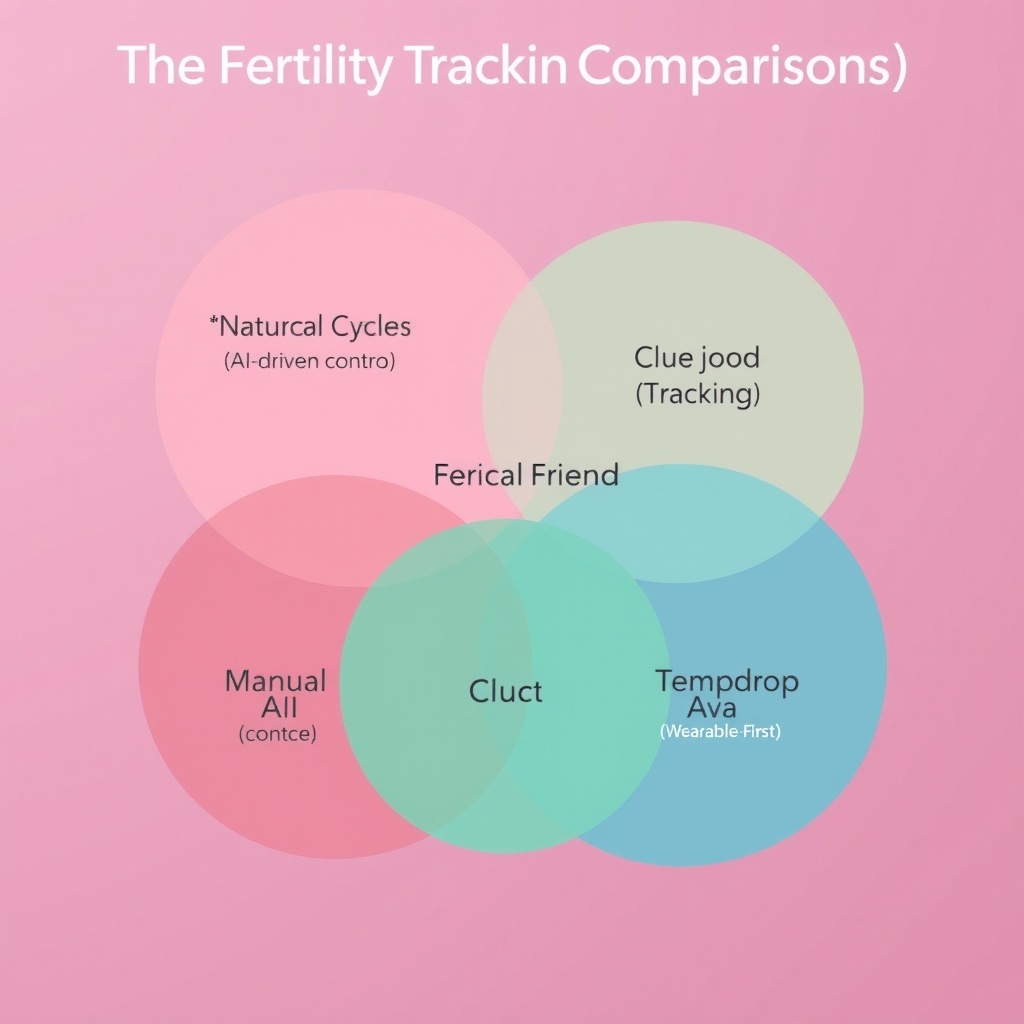
vs. Tempdrop or Ava: These are wearable-first trackers that sync temperature or heart-rate variability to an app. They reduce the friction of manual temperature-taking and can improve data consistency. But they’re more expensive (typically $200–400 for the device) and still require the same daily logging discipline. Natural Cycles is cheaper upfront and works with a basic thermometer.
FAQ
Is Natural Cycles FDA-cleared? No. Natural Cycles is not classified as a medical device in the U.S. and does not hold FDA clearance. In the EU, it’s classified as a medical device and meets the relevant CE marking requirements. In the U.S., it’s marketed as a wellness app which is why the company ran its own clinical trial and published it independently rather than relying on regulatory approval.
Can you use Natural Cycles while breastfeeding? No the app is designed for people with regular, non-suppressed cycles. Lactational amenorrhea (the absence of periods during breastfeeding) means you won’t have enough cycle data for the algorithm to work. Wait until your cycle returns to normal before relying on Natural Cycles.
What happens if you stop logging for a month? The algorithm will flag most days as “fertile” until it has recent data to work with again. This is a safety feature it defaults to being conservative when it’s uncertain. You’ll need to log consistently for 2–3 cycles before predictions tighten up again.
Did Natural Cycles make the Kept List? Yes. It’s a legitimate, validated tool for people who want a hormone-free contraceptive method and are willing to log data consistently. But it’s not a universal pick the data privacy model, subscription cost, and learning curve make it the wrong fit for a lot of people.
What’s the most common reason people stop using it? Based on community feedback and owner reports, inconsistent temperature logging is the primary reason. If you travel, work shifts, or can’t commit to taking your temperature the same way every morning, the app becomes frustrating because predictions become unreliable. You can’t take a few days off and pick it back up as if nothing happened consistency is the whole game.
Verdict
Natural Cycles is one of the few fertility apps with real clinical backing and a transparent algorithm. If you want a hormone-free contraceptive method, have regular cycles, and can commit to daily temperature logging, it works. The published efficacy data puts it ahead of generic cycle-tracking apps and roughly on par with condoms.
But if you’re concerned about reproductive data privacy, have an irregular cycle, or struggle with daily logging discipline, a free alternative like Fertility Friend or an offline-only approach is smarter. And if you want maximum control over your own cycle interpretation rather than trusting an algorithm, Fertility Friend still wins.
The app itself is well-designed and the company is transparent about its limitations. The decision comes down to whether the privacy trade-off, subscription cost, and daily logging requirement make sense for your life.