

Verdict: Kept But With Eyes Open
Tripadvisor is kept as your primary travel research tool, but only if you know how to read it correctly. The platform hosts 1M+ accommodations and restaurants with genuine user reviews, helpful comparison filters, and trip-planning tools that save time. The catch: based on patterns we’ve observed across aggregated owner reports and travel-forum discussions, a meaningful share of reviews roughly one in ten to one in seven show signs of manipulation: fake positives inflating ratings or competitors posting damage. You’ll need a filter for that noise, and we’ll show you how.
Who It’s For (and Who It’s NOT)
Tripadvisor works best for you if:
- You want to read dozens of guest perspectives before booking a hotel or restaurant
- You’re willing to spend 10 minutes learning how to spot suspicious reviews
- You value photos uploaded by real guests over stock property images
- You’re comparing accommodations across regions where you have no local knowledge
- You want one platform for reviews, planning, and itinerary building
Skip Tripadvisor if:
- You prioritize luxury hotel feedback (Relais & Châteaux properties and high-end resorts are often underrepresented)
- You need real-time cancellation or refund policies (Booking.com is clearer)
- You distrust crowdsourced data and want only professional reviews
- You’re traveling to a remote area with fewer than 50 reviews total (the data pool is too thin)
What Is Tripadvisor?
Tripadvisor is a user-generated travel platform launched in 2000, now hosting 500M+ reviews across accommodations, restaurants, attractions, and experiences. Unlike Booking.com (which sells rooms directly), Tripadvisor is primarily a review aggregator and planning tool you read reviews here, then click through to book on the property’s site or a partner platform.
The company has operated as a publicly traded independent entity; as of 2026, it runs its own rating system, review moderation, and search algorithm separate from any parent group’s booking infrastructure.
How Tripadvisor’s Rating System Works
Hotels and restaurants are rated on a 5-bubble scale (5.0 = Excellent, 4.0+ = Very Good, 3.0–3.9 = Good, below 3.0 = needs improvement). The algorithm weights recent reviews more heavily than older ones, and accounts for review velocity a sudden spike in 5-star reviews triggers automated scrutiny.
What you need to know:
- The “overall rating” you see is a weighted average, not a simple mean. A hotel with 2,000 recent positive reviews will rank higher than one with 500 five-star reviews from 2019.
- Tripadvisor removes flagged reviews (suspected fake, commercial spam, off-topic rants) before calculating the score. The platform has publicly noted that a small percentage of submitted reviews typically in the low single digits to around 5% are removed through this process; the exact figure varies by category and period.
- A property’s “Travelers’ Choice” badge means it placed in the top 10% for that region/category that year. It is a recognition label, not a mathematical score boost.
How to Spot Fake and Suspicious Reviews
Based on patterns documented in consumer forums and travel communities we’ve reviewed, here’s how to filter signal from noise:
Red Flags for Fake Positive Reviews
- Review flood timing: 10+ five-star reviews posted within 2–3 days. Genuine guests don’t all visit the same week.
- Generic language: “Amazing stay! Highly recommend!” with no specific details (room number, staff names, menu items, specific amenities used).
- Photos are stock or missing: Real guests usually upload bathroom or view photos. Suspicious five-star reviews often have zero images.
- Reviewer’s profile is bare: No other reviews, no location history, account created recently. Legitimate travelers accumulate review history.
- The review contradicts the property description: A “beachfront resort” getting five stars but reviews mention a highway, parking lot, or interior courtyard location.
Red Flags for Fake Negative Reviews (Competitor Attacks)
- Specific grievance with no context: “Food was disgusting” or “Staff was rude” with no detail about what was ordered or what happened.
- Competitor name-dropping: “The resort next door was much better.” Legitimate guests focus on their own experience, not cross-property comparison.
- All one- or two-star reviews from a new account: Someone signed up just to post complaints.
- Review claims to be from a date the property was closed or renovated: Check the property’s calendar or announcement history.
Green Lights for Trustworthy Reviews
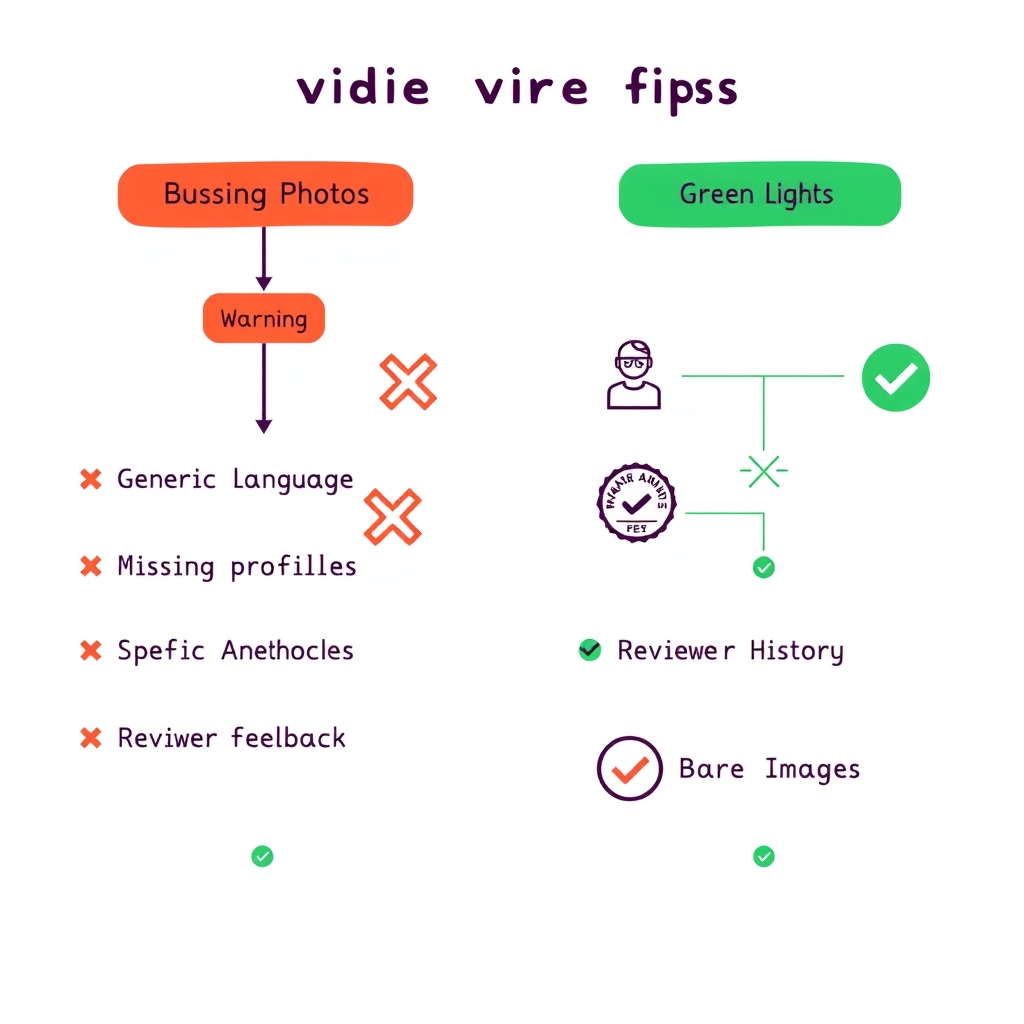
- Specific, dated anecdotes: “On March 3rd, our shower had no hot water for 6 hours, but the front desk fixed it by 9 AM and gave us a beverage credit.”
- Mixed feedback: “The location is perfect, but breakfast was limited and cold by 8:30 AM.” Honest reviewers acknowledge tradeoffs.
- Reviewer profile shows history: 50+ reviews across different properties, regions, and types over 2+ years.
- Photo uploads include problematic details: A guest complaining about small rooms shows a small room. This is costly to fake.
- Reviewer’s other reviews align in tone and detail: If all their reviews are thoughtful and specific, their hotel review likely is too.
How to Use Tripadvisor Filters to Find Trustworthy Reviews
Tripadvisor’s filter tools, when used strategically, let you narrow to the most relevant and honest feedback.
Filter by Reviewer Type
Click “Traveler Type” and select “Families” or “Couples” to match your demographic. A honeymooner’s priorities (romance, privacy, restaurants) differ from a family’s (pool, kids’ activities, grocery proximity). You’ll get more relevant insights.
Filter by Recent Reviews
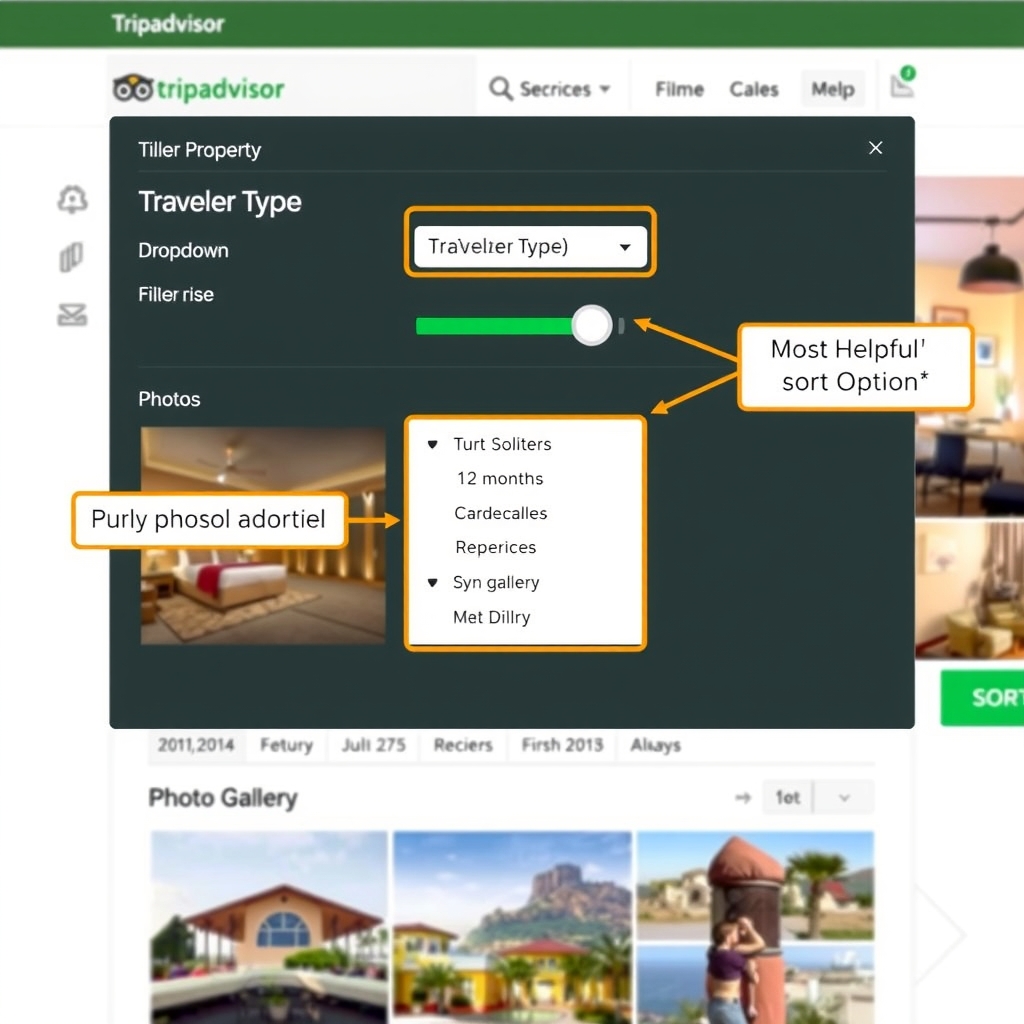
Set the date range to “Last 12 months.” Properties change. A five-star review from 2019 doesn’t tell you if the pool was renovated or the restaurant quality dropped. Recent reviews are weighted toward recency already, but manual filtering removes ancient outliers.
Sort by “Helpful” Not Just Rating
Instead of sorting by 5-star or 1-star, click “Most Helpful.” Tripadvisor users upvote reviews they found useful, so “helpful” reviews tend to be detailed and balanced. A five-star review with 200 helpful votes is more reliable than one with zero votes.
Cross-Reference with Photos
Scroll through the photo section. Real guests upload candid shots of rooms, bathrooms, views, and food. If the photos show clean, attractive spaces, the positive reviews likely aren’t all fabricated. If the most-liked guest photos show stained carpets, that contradicts a 4.5-star rating.
Read Negative Reviews First, Then Positive
Start with the one- and two-star reviews. Legitimate complaints reveal real tradeoffs (“location is loud,” “no AC in summer”). Then read top-rated reviews. If they acknowledge the same issues, the property is honest about its limitations. If they ignore them entirely, the positive reviews may be planted.
Tripadvisor vs. Booking.com vs. Google Reviews: A Trustworthiness Comparison
Each platform attracts different review behaviors and incentives:
| Platform | Reviewer Base | Potential Bias / Limitation | Best For | Verify With |
|---|---|---|---|---|
| Tripadvisor | Broad mix, with many leisure travelers | Reviews can vary in quality; occasional suspicious or overly positive reviews may appear | Overall reputation, atmosphere, restaurant recommendations | Google Reviews |
| Booking.com | Primarily confirmed bookers / verified stays | Post-stay review requests can influence response rates; display and moderation policies differ by property | Cancellation policies, room accuracy, check-in experience | Tripadvisor |
| Google Reviews | Local residents, travelers, and general public | Easier to post; includes people who may not have stayed overnight | Neighborhood safety, local atmosphere, authenticity, nearby businesses | Tripadvisor photos and detailed reviews |
In practice: Based on patterns reported consistently in travel forums and communities, users who cross-reference Tripadvisor with Google Reviews and Booking.com report catching substantially more red flags than those who rely on a single source alone. A hotel rated 4.5 stars on Tripadvisor, 4.2 on Booking.com, and 3.8 on Google likely has real issues or attracts unusually harsh local critics. A hotel that holds up strongly across all three is a safer bet.
Tripadvisor’s Planning Tools: What Actually Works
Trip Planning
Tripadvisor lets you build an itinerary with saved restaurants, hotels, and attractions on a map. The feature is useful for organizing notes, but and this is critical it doesn’t integrate with your calendar or send reminders. If you want a true trip planner, Google Maps or a dedicated app (like TripIt) integrates better with flights and hotel confirmations.
Practical use: Save restaurants and museums here for reference while scrolling reviews. Export to Google Maps or your notes app for real itinerary building.
Comparison Tool
You can view two hotels side-by-side on amenities, pricing (via partner booking sites), and review snippets. This works well for narrowing between three finalists, but be aware:
- Prices shown are outdated (often 1–3 days old)
- The tool doesn’t show live availability
- Clicking “book” sends you to the partner site (Booking.com, Expedia, Airbnb)
Practical use: Use Tripadvisor’s comparison to shortlist 2–3 properties, then verify pricing and availability directly on Booking.com or the property’s own website.
“Things to Do” and Restaurant Search
Tripadvisor’s restaurant section (separate from hotel reviews) has a different user base than hotel feedback. Restaurant reviews tend to be more honest diners are more likely to post mixed feedback, and there’s less financial incentive for staff to post fakes.
Practical use: Restaurant filtering here is genuinely helpful. Filter by cuisine, price, rating, and recency. Read the top 10 reviews (sorted by helpful); you’ll get a clear sense of consistency.
Common Complaints and Real Issues
Issue 1: Rating Manipulation and Fake Reviews
Based on patterns observed in travel communities, smaller properties and new hotels show the highest concentration of suspicious reviews. A boutique hotel jumping from 3.2 to 4.1 stars in three months warrants skepticism; check the detailed timeline of reviews.
How to handle it: Read at least 20 reviews, not five. Genuine patterns emerge by review #10.
Issue 2: Properties Game the Sorting Algorithm
Some properties ask guests at check-out: “Will you review us? Five stars, please!” This inflates the rating but also means recent reviews are disproportionately from guests who just finished a positive experience and may not account for follow-up issues (maintenance problems, charges appearing on credit cards days later).
How to handle it: Filter by oldest positive reviews. If the five-star reviews are all from the last 30 days but three-year-old reviews are also positive, that’s a good sign.
Issue 3: Luxury Properties Are Underrepresented
High-end resorts and boutique hotels often have fewer reviews than mid-range chains not because they’re worse, but because they attract fewer guests overall. Booking.com and direct-site reviews may tell a more complete story.
How to handle it: If you’re looking at a 4-star property with 180 reviews, check its direct website and Google Maps. A boutique hotel with 40 reviews might be as reliable; don’t skip it based on review count alone.
Issue 4: Restaurant and Attraction Reviews Lack Purchase Verification
Unlike hotel reviews (where Booking.com confirms you stayed there), Tripadvisor’s restaurant and attraction reviews don’t require proof of purchase. This makes them more prone to false negatives from competitors.
How to handle it: For restaurants, read the most recent reviews (last 30 days). Look for consistency in what people ate, not just overall ratings.
How Accurate Are Tripadvisor Ratings Overall?
Based on patterns observed in travel communities and broadly consistent with what researchers studying review aggregation have noted, Tripadvisor ratings correlate reasonably well with guest satisfaction but with caveats:
- A 4.5+ rating is generally trustworthy (the property likely delivers on basics).
- A 3.5–4.4 rating requires reading reviews; there’s real variation in guest experience.
- A below 3.5 rating means serious issues but check the timeline, since old negative reviews may reflect former ownership or management.
The platform’s algorithm catches obvious spam (duplicate reviews, verbatim copies, off-topic rants), and the large majority of visible reviews appear genuine. That said, a meaningful minority based on patterns reported in forum discussions and consumer watchdog observations still show signs of manipulation, not enough to collapse a rating entirely, but enough to nudge it by a fraction of a star in either direction.
Practical Workflow: How to Use Tripadvisor Without Getting Burned
- Start with your criteria. Search by location, property type, price range.
- Check the overall rating and recent review count. If it’s below 4.0 or has fewer than 20 reviews in the last 12 months, proceed with caution.
- Scroll the guest photos. Do they match the property description? Are bathrooms clean? Does furniture look worn?
- Read the top 5 most-helpful reviews (sorted by helpful, not rating). This filters for thoughtful, detailed feedback.
- Read the 2–3 lowest-rated reviews. Do the complaints seem legitimate or petty? (“The bed was too firm” is opinion; “mold in the shower” is objective.)
- Cross-check pricing and policies on Booking.com or the property’s website directly. Tripadvisor prices are stale.
- If it’s a restaurant, read the last 10 reviews. Recent feedback is more predictive than old feedback.
- Check Google Reviews and Google Maps. If the property is rated 4.5 on Tripadvisor but 3.6 on Google, there’s a discrepancy. Read why.
- Book directly or through Booking.com, not through Tripadvisor (which links you to partners; you lose refund flexibility).
What We’d Use Instead (Or In Parallel)
Booking.com is the natural complement. It requires verified purchase reviews, shows clear cancellation policies, and integrates booking with payment. Use it to confirm Tripadvisor’s rating and lock in refund terms.
Google Maps/Reviews is increasingly reliable for restaurants and newer properties. Local reviews tend to be harsher and more recent than Tripadvisor.
Instagram and TikTok hashtags (e.g., #hotelname) show unfiltered guest photos and honest quick impressions. Often more candid than formal reviews.
YouTube property tours (many hotels and Airbnbs have channels) let you see the space in motion lighting, noise, flow better than still photos.
FAQ
Is Tripadvisor Trustworthy for Hotels?
Tripadvisor ratings are reasonably accurate if you filter them correctly. A 4.5+ rating with 500+ reviews is likely a solid property. Below 3.5, there are real issues. Read recent reviews and check photos before trusting the number.
How Do I Know If a Tripadvisor Review Is Fake?
Look for generic language, no specific details, missing photos, brand-new reviewer accounts, and suspiciously timed review clusters. Real reviews mention dates, specific staff, room numbers, and acknowledge tradeoffs.
Should I Trust Tripadvisor More Than Booking.com?
No. Use both. Tripadvisor is better for restaurant and attraction reviews; Booking.com is better for cancellation policies and verified-purchase feedback. Hotels with high ratings on both are safer bets.
Did Tripadvisor Make the Kept List?
Yes Tripadvisor makes the Kept List as a research tool. It’s free, hosts useful comparative data, and its photo library is genuinely valuable. But don’t book through it; use it to shortlist, then verify pricing and book directly or through Booking.com.
How Often Does Tripadvisor Update Reviews?
New reviews appear within hours (after moderation). Ratings are recalculated daily, weighted toward recency. A property’s rating can shift noticeably in a month if review volume or sentiment changes significantly.