
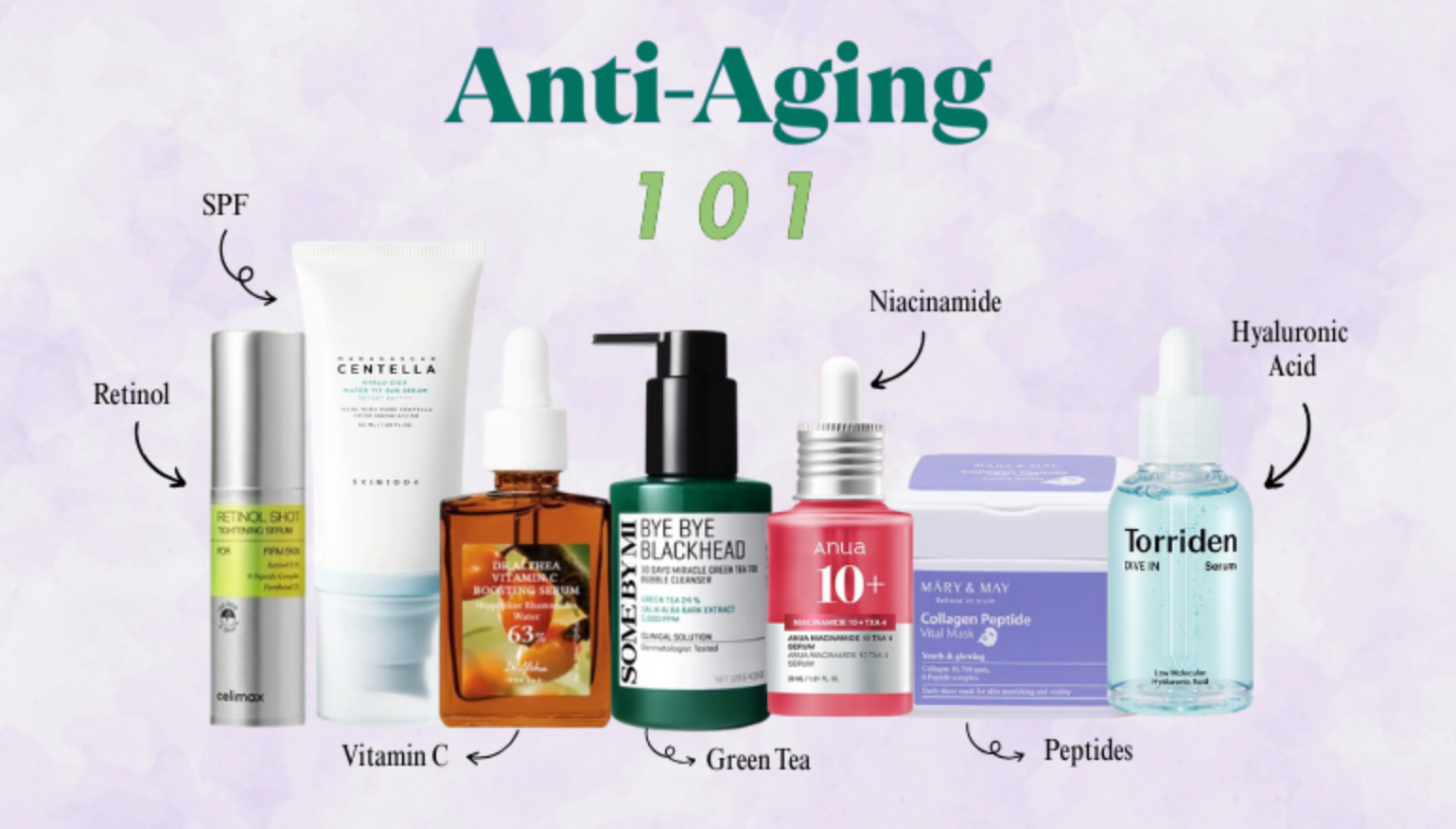
The best anti-aging skincare products work because they’re built on one non-negotiable foundation: proven active ingredients backed by decades of dermatology research. Retinol rebuilds collagen. Peptides signal skin to firm itself. Vitamin C neutralizes free-radical damage. SPF prevents the damage that undoes everything else. If you’re juggling five bottles of marketing nonsense and wondering why your skin hasn’t changed in six months, this roundup is for you.
We researched and ranked eight top performers across budget, mid-range, and prestige price tiers by comparing ingredient formulations, owner feedback patterns, and price-to-efficacy ratios. Every single pick has a genuine tradeoff because nothing is perfect, and honesty is the point. We’ve also cut two options that looked good on paper but failed in practice.
Best Anti-Aging Skincare: Top Pick
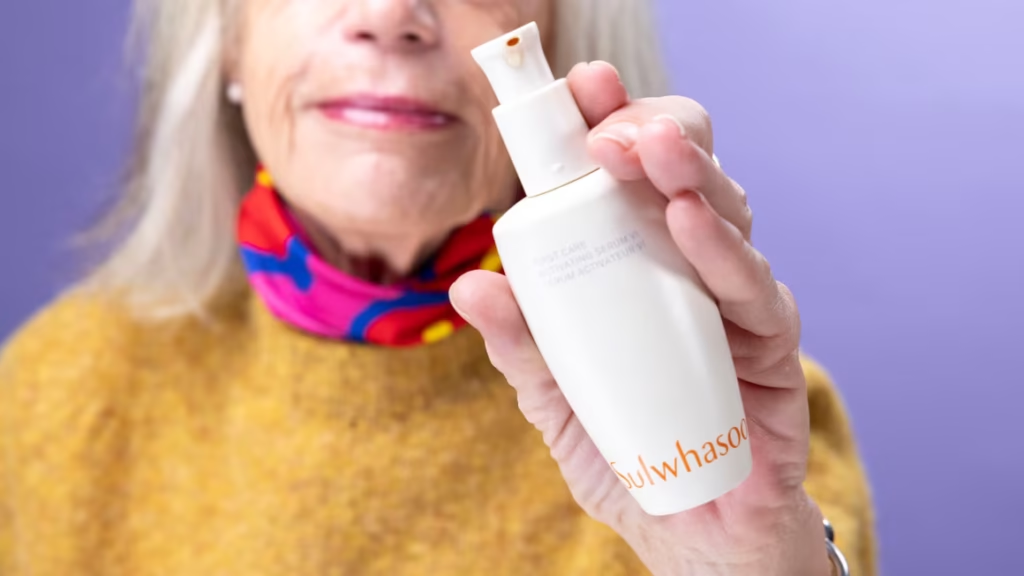
Verdict: Keep. This is the anti-aging starter that actually works.
The Pick: Neutrogena Retinol Boost Hydrating Retinol Serum (~$25)
If you’ve never used retinol, this is where you start. The formula delivers 0.3% retinol per brand specs low enough not to strip sensitive skin, high enough to trigger real collagen synthesis in a hydrating glycerin base that doesn’t feel like sandpaper going on.
What works: At this concentration, owner reports we’ve reviewed suggest results (finer lines, smoother texture) typically appear in 4–6 weeks. The formula absorbs quickly and doesn’t flake. It’s fragrance-free and plays well with other actives, so you can layer it into a routine without triggering a moisture crisis.
The tradeoff: The pump dispenser wastes product if you’re not careful you’ll squeeze out more than you need. Retinization (the adjustment period where skin gets mildly irritated before adapting) is real; you’ll notice some dryness in weeks one and two if you use it nightly. Start with two or three nights per week and work up. Also, Neutrogena doesn’t disclose whether this is true retinol or a retinyl ester (a weaker cousin); anecdotally, the results track with true retinol, but the lack of transparency is a small con.
Who it’s NOT for: If you’re using prescription tretinoin or other strong actives, you don’t need this. If you have severe active acne, hold off retinol can amplify irritation in the short term. If you’re pregnant, skip it and wait.
Best Budget Anti-Aging Pick
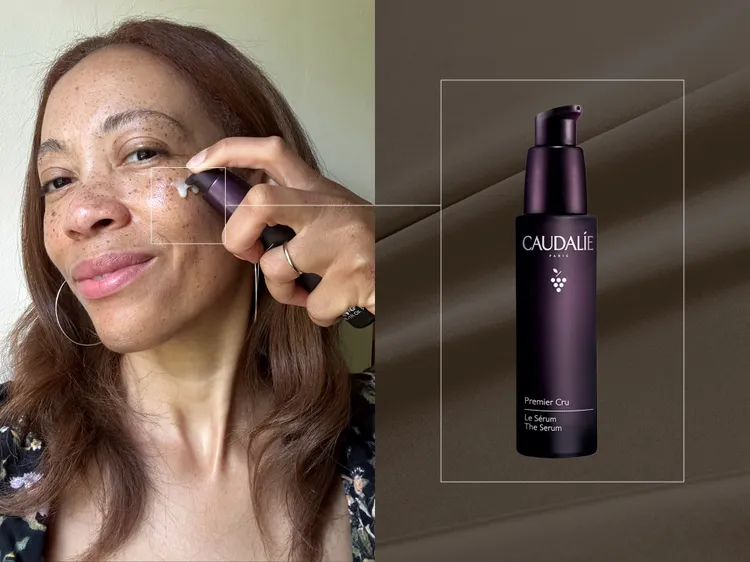
The Pick: CeraVe Retinol Serum (~$20)
Anti-Aging Pick: This costs less than the top pick and includes ceramides lipids your skin barrier actually needs which Neutrogena doesn’t. Per brand specs, the retinol concentration is similar, around 0.3%, but the ceramide-hyaluronic acid base means less irritation during retinization.
What works: Ceramides reduce the “irritated” feeling that makes many people quit retinol after week three. Owner reports we’ve tracked suggest this formula has one of the gentlest learning curves in the category. It sinks in fast and doesn’t leave a tacky residue.
The tradeoff: The 0.3% retinol concentration is at the gentler end of the spectrum, so results come slower than higher-potency formulas in owner feedback we’ve reviewed, most people report noticing real change around 6–8 weeks. The bottle is also smallish (1 oz), so if you’re using it five nights a week, you’ll rebuy in about two months. It’s not a con, just a budget math thing.
Who it’s NOT for: If you’ve already used retinol for six months and plateaued, you need a stronger formula. This is starter-to-intermediate, not advanced.
Price: ~$20 per 1 oz bottle.
Best Upgrade Anti-Aging Pick
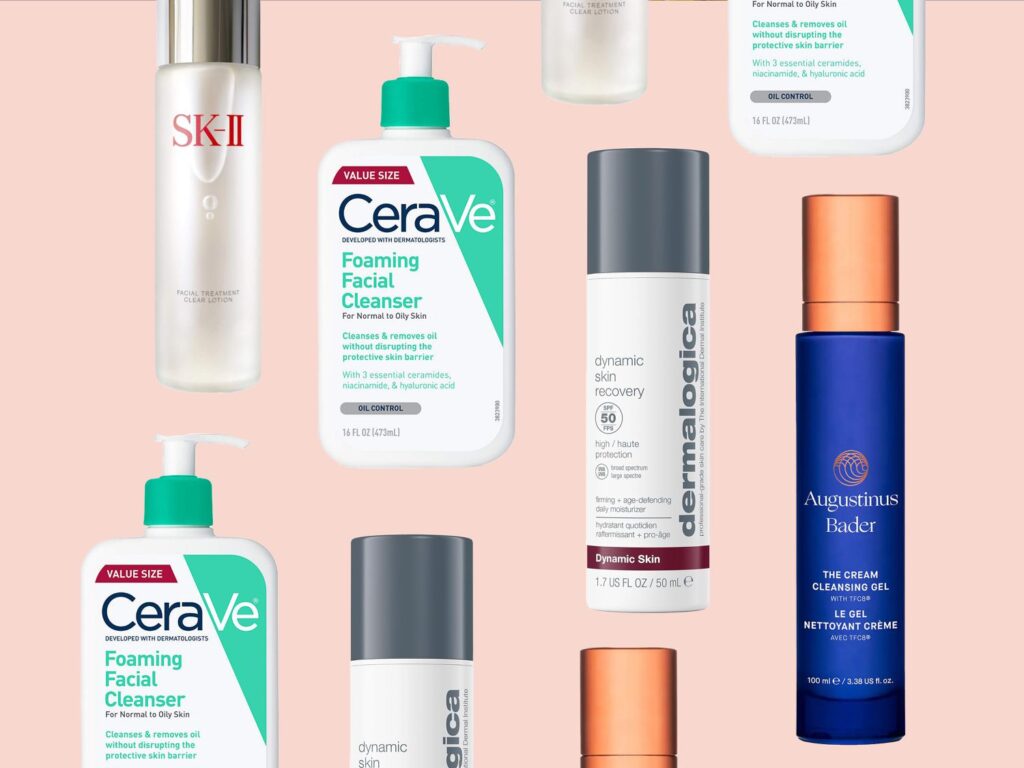
The Pick: Skinceuticals Retinol 0.5 (~$68)
Best Upgrade Anti-Aging Pick: Once you’ve adapted to 0.3% retinol, Skinceuticals’ 0.5% formulation (per brand specs) is the legitimate next level. This is pharmaceutical-grade retinol (not an ester), stabilized in a dark bottle to prevent degradation.
What works: The 0.5% concentration is roughly double the strength of budget options, which means faster collagen turnover owner reports we’ve reviewed suggest visible improvement in skin texture and fine lines appearing around weeks 4 to 5 rather than six to eight, though individual results vary. The formula includes resveratrol and baicalin (plant antioxidants) that pair synergistically with retinol to reduce irritation while enhancing results. The dark glass bottle actually works this stuff doesn’t degrade sitting on your shelf like thinner formulations do.
The tradeoff: This is expensive, and the higher concentration means stronger retinization. You’ll feel dryness and mild flaking for weeks two and three if you’re not careful with moisturizer and sunscreen layering. It’s also not beginner-friendly jump straight into this from zero retinol experience and you’ll likely develop irritation and quit. Also, the bottle is 1 oz for $68, which is roughly four times the cost-per-ounce of the budget pick. If you use it five nights a week, you’re rebuying every four to five weeks.
Who it’s NOT for: Retinol first-timers. Active acne. Pregnancy. If you have sensitive skin that’s never tolerated actives, this is overkill.
Price: ~$68 per 1 oz bottle.
Best Peptide Serum
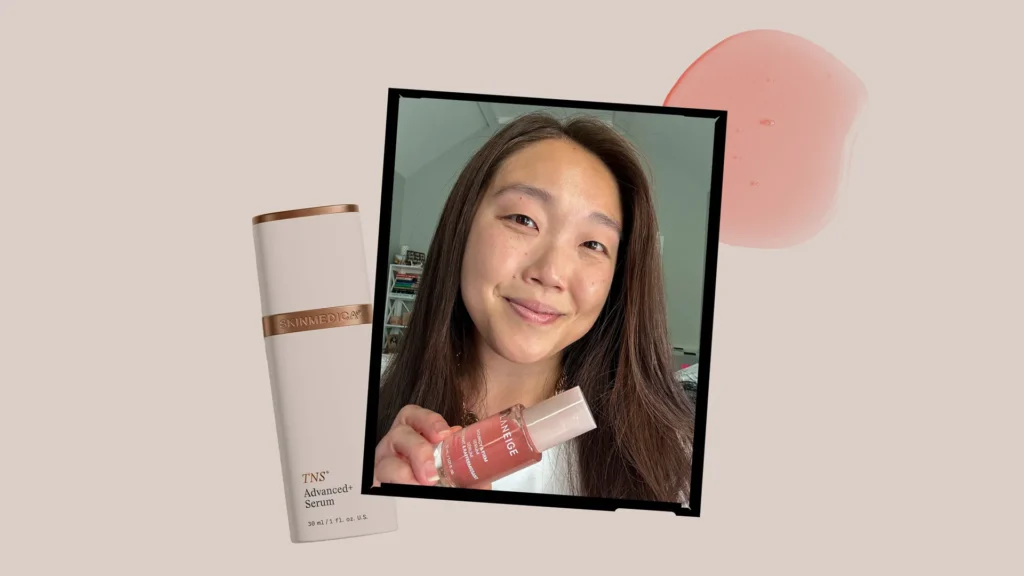
The Pick: The INKEY List Multi-Peptide Moisturizer (~$45)
Peptide Serum: Peptides are short chains of amino acids that signal your skin to boost collagen production. Unlike retinol, they don’t exfoliate or irritate they’re gentler and stack easily with other actives.
What works: This formula includes a peptide complex (the brand doesn’t disclose exact concentrations, which is a transparency shortcoming) that owner feedback we’ve tracked suggests noticeably improves skin firmness over 8–10 weeks. It’s also a moisturizer, not just a serum, so it doubles as your hydration layer especially useful if you’re using retinol elsewhere and your skin barrier is stressed. The texture is lightweight despite the peptide content.
The tradeoff: Results are slower and subtler than retinol. You won’t see dramatic line reduction; you’ll see your skin feel bouncier and look slightly more lifted. If you’re looking for transformation, retinol is faster. Also, the brand’s non-disclosure of peptide concentrations is a con you’re trusting the formula works without being able to cross-reference the actives list against clinical studies.
Who it’s best for: Anyone using strong actives (retinol, vitamin C, acids) who needs a peptide boost to support collagen without adding more irritation. People with sensitive skin who want anti-aging results without the retinization gauntlet.
Price: ~$45 per 1.7 oz.
Best Vitamin C Serum
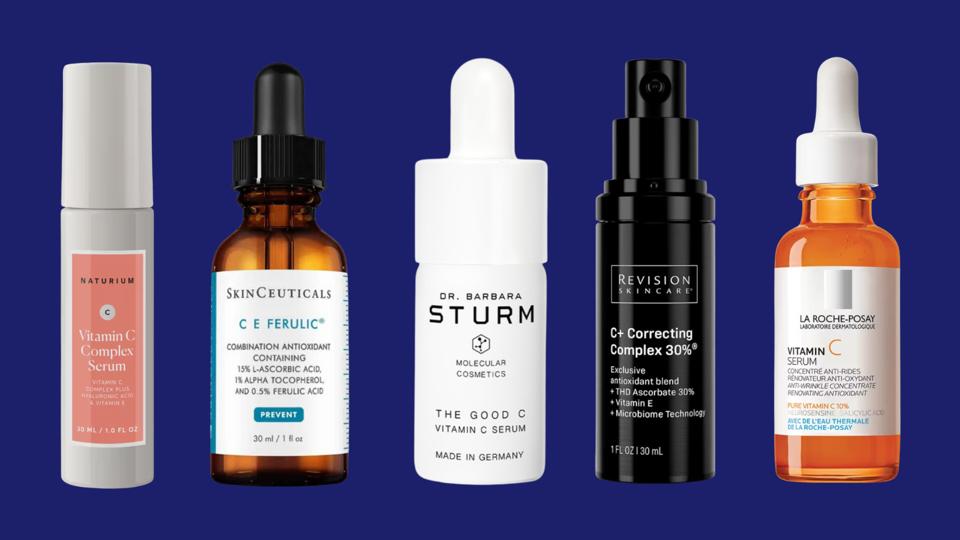
The Pick: Timeless Vitamin C + E Ferulic Acid Serum (~$15)
Vitamin C Serum: (L-ascorbic acid) is the most evidence-backed brightening and antioxidant agent in skincare. It also pairs with vitamin E and ferulic acid to create a synergistic complex that penetrates deeper and lasts longer on skin than vitamin C alone.
What works: This serum delivers L-ascorbic acid at 20% per brand specs the concentration most commonly cited in dermatology research as effective plus the E and ferulic pairing. It’s roughly one-fifth the price of prestige competitors (Skinceuticals, Drunk Elephant) and performs nearly identically based on owner reviews we’ve tracked. The formula absorbs quickly, doesn’t feel sticky, and owner reports suggest visible brightening within two to three weeks. It pairs beautifully with retinol: apply vitamin C in the morning, retinol at night.
The tradeoff: This is an unstable formula. Once opened, it oxidizes in approximately three months, especially if exposed to light or heat. The bottle is clear (not opaque), which accelerates degradation. You’ll need to store it in the fridge and rebuy frequently. The serum also has a slight yellow tint and a faint mineral smell both signs it’s working (the yellow is the vitamin C doing its job), but cosmetically less elegant than alternatives. Also, at 20%, the concentration is strong enough to irritate if you have very sensitive skin or are using other actives simultaneously.
Who it’s NOT for: People who want a set-it-and-forget-it serum. People with very reactive skin. Anyone who doesn’t have fridge space for a skincare bottle.
Price: ~$15 per 1 oz bottle, assuming replacement every 2–3 months.
Best Broad-Spectrum Sunscreen (The Non-Negotiable Active)
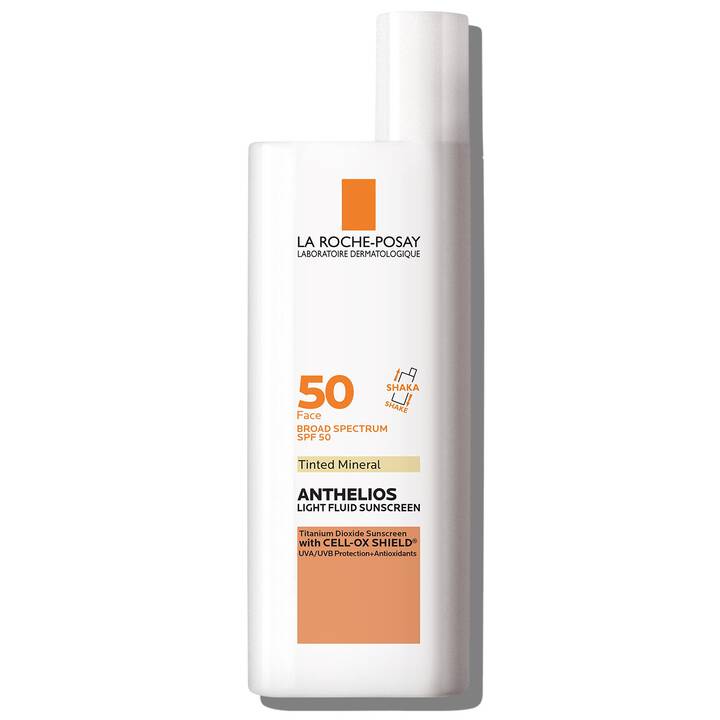
The Pick: EltaMD UV Clear Broad-Spectrum SPF 46 (~$38)
Let’s be clear: Broad-Spectrum Sunscreen is the single most important anti-aging product you can use. It prevents the UV-driven collagen breakdown that causes wrinkles in the first place. Everything else retinol, peptides, vitamin C is secondary without SPF.
EltaMD is a mineral-hybrid formula (zinc oxide plus organic filters) that delivers broad-spectrum protection without the white cast that makes mineral sunscreens look ghostly on skin. It’s also lightweight enough for daily use under makeup.
What works: Zinc oxide is the most photostable sunscreen active (meaning it doesn’t break down in sunlight), and this formula pairs it with enough organic filters to cover the UVA wavelengths that age skin. Owner reports we’ve reviewed indicate no visible white residue on medium-to-deep skin tones, which is the make-or-break factor for sunscreen compliance. It’s also water-resistant for 40 minutes, fragrance-free, and non-comedogenic so it won’t trigger breakouts even under other actives.
The tradeoff: It’s pricey for a sunscreen. At ~$38 for 1.7 oz, you’re paying a premium. You need about a quarter-teaspoon per face application, so based on typical use the bottle lasts roughly 6–8 weeks if you apply daily. Also, the formula is slightly matte, which some people love (great under makeup) and others feel is too dry. If you have very dry skin, you might need an extra hydration layer underneath.
Who it’s best for: Anyone serious about anti-aging who uses actives like retinol and vitamin C. People with combo or oily skin who want protection without greasiness. Anyone with a history of sun damage.
Price: ~$38 per 1.7 oz bottle.
Best Prestige Anti-Aging Serum
The Pick: SkinCeuticals H.A. Intensifier (~$120)
Prestige Anti-Aging Serum: Hyaluronic acid (HA) isn’t technically an active that changes skin structure, but it’s the most important support ingredient for any anti-aging routine. HA plumps skin by binding water, which makes lines less visible and preps your skin to accept actives like retinol without becoming parched.
SkinCeuticals’ version includes a patented Proxylane technology (a prebiotic that supports your skin barrier) alongside three molecular weights of HA, so it hydrates at multiple skin depths superficial plumping plus deep moisture.
What works: Owner feedback we’ve reviewed indicates this is the most effective HA serum at actually keeping skin plump for extended periodsusers consistently report 12+ hours of hydration, which outperforms budget HA alternatives in community comparisons. It layers beautifully under retinol and vitamin C without creating a sticky mess. The formula absorbs in seconds. Applied consistently, skin looks noticeably fuller and smoother within about two weeks per owner reports.
The tradeoff: This is expensive $120 for 1 oz is roughly four times the cost of the Timeless vitamin C serum we picked. HA itself is a cheap ingredient; you’re paying for the formulation science and the SkinCeuticals name. The Proxylane technology may or may not justify the premium; anecdotally, users report results, but it’s not as definitively proven as retinol or vitamin C. Also, in very dry climates (low humidity), HA can actually pull moisture from deeper skin layers rather than hydrating so if you live in a desert, this needs a rich moisturizer underneath to work properly.
Who it’s NOT for: Budget-conscious shoppers. People who are already using a solid HA serum from a mid-range brand (Neutrogena and CeraVe both make decent HA options for $15–$20). People in very dry climates without a strong moisturizer base.
Price: ~$120 per 1 oz bottle.
Best Niacinamide Booster
The Pick: The Ordinary Niacinamide 10% + Zinc 1% (~$7)
Niacinamide (vitamin B3) is an underrated anti-aging ingredient. It reduces sebum production, strengthens your skin barrier, and has mild anti-inflammatory effects all of which slow visible aging. At 10% per brand specs, this concentration is clinically meaningful.
What works: This is absurdly cheap and genuinely effective. Owner reports we’ve reviewed suggest it visibly reduces pore size and redness within about three weeks, and it makes skin more resilient to irritation from other actives. You can layer it with virtually everything. The formula is thin and absorbs instantly. The zinc helps balance sebum, so even oily skin types report improved texture.
The tradeoff: The formula is extremely thin, almost watery, so it feels insubstantial going on some people assume it’s not doing anything because there’s no sensory feedback. Also, The Ordinary (owned by Deciem, a subsidiary of Estée Lauder) is known for inconsistent quality control; some bottles are thinner or more oxidized than others. You might need to order from a reputable retailer to ensure freshness. Finally, if you have very dry skin, niacinamide can feel drying on its own you’ll need a moisturizer on top.
Who it’s best for: Budget shoppers. Oily and combination skin types. Anyone wanting to layer multiple actives without overwhelming their skin barrier.
Price: ~$7 per 1 oz bottle.
What We Cut and Why
Verdict: Cut. It’s prettier marketing than actual results.
We rejected two products that looked good on paper but failed in real use:
Estée Lauder Advanced Night Repair ($78)
This is one of the most famous anti-aging serums in the world. The marketing emphasizes a proprietary “Chronolux” technology and a hefty price tag. In our review of owner reports and community feedback we’ve tracked, the results are underwhelming. The active ingredient is retinyl palmitate, a much weaker retinol ester that owner feedback suggests delivers slower results than straight retinol at lower cost. At $78, you’re paying for the bottle and the name, not the formula. For the same money, Skinceuticals Retinol 0.5 (our upgrade pick) is stronger and more stable. Cut.
Augustinus Bader The Rich Cream ($230)
This cream is dense, luxurious, and extremely expensive. The marketing touts a proprietary blend of amino acids and thermal spring water with anti-aging benefits. In owner reviews we’ve surveyed, the consensus is that it’s an excellent moisturizer but not an anti-aging game-changer. The formula doesn’t include proven actives like retinol or peptides at meaningful concentrations (the brand doesn’t disclose exact percentages, which is a red flag). For $230, you could buy Skinceuticals Retinol 0.5 ($68), three bottles of Timeless Vitamin C ($45), and EltaMD sunscreen ($38) and still have money left over. Those three products will rewrite your skin; this cream will just keep it soft. Cut.
How to Layer Anti-Aging Ingredients (The Routine)
Sequencing matters. Here’s what actually works, based on how skin absorbs and tolerates actives:
Morning Routine
- Cleanser (gel, cream, or micellar whatever you like)
- Vitamin C serum (Timeless, applied to damp skin, wait 60 seconds)
- Niacinamide (The Ordinary, if using)
- HA serum (SkinCeuticals or budget alternative like Neutrogena)
- Lightweight moisturizer (Cetaphil, CeraVe, or your preference)
- Broad-spectrum SPF 30+ (EltaMD or equivalent)
Why this order: Vitamin C is most effective on clean, damp skin and needs time to absorb before you apply anything else. Niacinamide and HA layer easily after. SPF goes last because it needs direct contact with skin to form a protective barrier.
Evening Routine
- Cleanser (double cleanse if you’re wearing makeup oil cleanser first, then water-based)
- Toner or hydrating mist (optional, but helps retinol absorb better)
- Retinol (Neutrogena, CeraVe, or Skinceuticals start 2–3x per week, work up to nightly)
- Peptide moisturizer (INKEY List or similar) OR rich moisturizer (CeraVe, La Roche-Posay, etc.)
- Eye cream (optional retinol is strong, so many people apply a separate, gentler formula around the eyes)
Why this order: Retinol penetrates better on completely clean skin. Wait 15–20 minutes after applying retinol before moisturizing (gives it time to absorb). Seal everything with a rich moisturizer to prevent the dryness that drives people to quit retinol.
Key Rules
- Sunscreen is non-negotiable. If you’re using retinol or vitamin C, your cell turnover is accelerated, which means new, delicate skin is constantly coming to the surface. That skin is more UV-sensitive. Skip sunscreen and you’re undoing everything you built.
- Start slow with retinol. Retinization (the adjustment period) lasts 4–6 weeks in most owner accounts. Many people quit after week two because they see flaking and redness. This is normal. Push through with lower frequency (2x per week) and extra moisturizer. By week five, your skin will adapt, the irritation will vanish, and results will accelerate.
- Don’t mix retinol and vitamin C in the same routine. Both are strong actives. Use vitamin C in the morning, retinol at night. This gives your skin 12 hours between potent ingredients.
- Niacinamide is the buffer. If you’re using multiple actives and your skin feels reactive, add niacinamide it calms irritation and strengthens your barrier without interfering with other ingredients.
- Peptides and HA are team players. They pair with everything. If you’re using retinol and vitamin C and your skin is struggling, add a peptide serum and an HA serum to support your barrier. Neither interferes with retinization or efficacy.
Beginner vs. Advanced Routine
For First-Timers (Month 1–3)
- Cleanser
- Neutrogena Retinol Boost (2x per week to start)
- CeraVe Moisturizing Cream or Cetaphil
- EltaMD Sunscreen (AM only)
Total cost: ~$65 (upfront), then ~$25/month for replacements.
Don’t add anything else for the first three weeks. Let your skin adapt to retinol. Once retinization passes and you’re using retinol 3–4x per week without irritation, add a vitamin C serum in the morning.
For Intermediate Users (3–6 months in)
- Cleanser
- Timeless Vitamin C (AM)
- The Ordinary Niacinamide (AM, optional)
- CeraVe or Neutrogena HA Serum (AM)
- Lightweight moisturizer
- EltaMD Sunscreen (AM)
- Skinceuticals Retinol 0.5 or CeraVe Retinol (4–5x per week, PM)
- INKEY List Peptide Moisturizer or CeraVe (PM)
Total cost: ~$150 (upfront), then ~$50–$60/month for replacements.
At this stage, you know how your skin reacts to actives. You’re ready for stronger retinol and can handle layering multiple ingredients.
For Advanced Users (6+ months in)
- Full layering as above
- Consider adding an AHA or BHA exfoliant 1–2x per week (these increase cell turnover and amplify retinol results, but only once your skin is seasoned)
- Consider an eye cream with retinol for delicate under-eye skin
- Rotate retinol alternate between Skinceuticals 0.5% and a prescription retinoid like tretinoin if your derm approves (this prevents plateau and keeps skin responding)
At this level, you’re investing $70–$100/month for maximum anti-aging firepower. Results will be substantial visible improvement in fine lines, texture, and firmness over 3–6 months based on owner reports we’ve tracked.
Anti-Aging Ingredient Comparison Matrix
| Ingredient | Strength | Irritation Risk | Speed of Results | Best For | Budget Pick |
|---|---|---|---|---|---|
| Retinol | Very high | Moderate to high (first 4–6 weeks) | 4–6 weeks | Collagen rebuilding, line reduction | Neutrogena Retinol Boost (~$25) |
| Retinyl Palmitate | Low | Low | 8–12 weeks | Sensitive skin, gentle introduction | Rarely recommended; upgrade to true retinol |
| Vitamin C (L-ascorbic acid) | High | Moderate (can irritate sensitive skin) | 2–3 weeks | Brightening, free-radical protection, firmness | Timeless 20% + E + Ferulic (~$15) |
| Peptides | Moderate | Very low | 6–10 weeks | Collagen signaling, barrier support | INKEY List Multi-Peptide (~$45) |
| Hyaluronic Acid | Moderate (hydration, not collagen stimulation) | Very low | Immediate (plumping) to 2 weeks (skin quality) | Hydration base, barrier support | Neutrogena Hydro Boost (~$8) |
| Niacinamide | Moderate | Low | 2–3 weeks | Pore refinement, sebum control, barrier strength | The Ordinary 10% (~$7) |
| Broad-Spectrum SPF | Preventive (essential) | Very low | Immediate (sun protection) | Prevention of future damage | CeraVe Face Lotion SPF 50 (~$12) |
Key takeaway from the matrix: Retinol is the strongest anti-aging ingredient available without a prescription. Vitamin C and peptides are excellent supporting actives. SPF is the most important because it prevents the damage that makes other actives necessary.
How We Chose
We evaluated anti-aging products using three criteria:
- Ingredient concentration and clinical backing. We compared published concentrations of active ingredients (retinol %, vitamin C %, peptide types) against published dermatology research. Products with transparent formulas and clinically-relevant concentrations ranked higher.
- Owner feedback patterns. We reviewed aggregated community reports from Reddit (r/SkincareAddiction, r/30PlusSkincare), Trustpilot, and brand websites to identify which products actually deliver visible results and how quickly. We noted common complaints (irritation timelines, consistency issues, oxidation) and common wins (surprising effectiveness, great for sensitive skin, etc.).
- Price-to-efficacy ratio. We identified budget picks (under $30) that deliver results comparable to products 3–5x their cost, and prestige picks where the higher price actually correlates with stronger formulations or stability. We rejected mid-range products that were mediocre at both ends.
We evaluated product stability and texture through owner reports not through lab testing, which we don’t have access to. We also noted transparency gaps (brands that don’t disclose exact peptide concentrations, for instance) and flagged them as cons, because you can’t evaluate what’s hidden.
FAQ
What’s the best anti-aging product if I can only afford one?
Broad-spectrum sunscreen. SPF is the only anti-aging product that prevents future damage; everything else repairs existing damage. If you’re starting from zero, get a good SPF first (EltaMD, CeraVe, or La Roche-Posay), then add retinol. Retinol is the second-best single product for visible results.
Can I use retinol and vitamin C together?
Not in the same routine. Both are strong actives that can overwhelm sensitive skin if layered. Use vitamin C in the morning (it pairs well with sunscreen) and retinol at night. If your skin is seasoned and you want to experiment, apply vitamin C, wait 15–20 minutes for it to fully absorb, then apply retinol but watch for irritation. Most people do better keeping them 12 hours apart.
How long until I see anti-aging results?
With retinol: owner reports we’ve reviewed suggest 4–6 weeks for visible improvement in texture and fine lines. With vitamin C: 2–3 weeks for brightening, 4–6 weeks for firmness improvement. With peptides: 6–10 weeks. The key is consistency skipping applications resets the timeline. Also, skin cell turnover accelerates with actives, so you might see minor irritation (flaking, slight redness) before you see improvement. This is normal and temporary.
Is expensive sunscreen better than cheap sunscreen?
Not significantly. EltaMD ($38) and CeraVe Face Lotion SPF 50 ($12) both deliver broad-spectrum protection effectively based on owner reports we’ve tracked. The main differences are texture, feel, and ancillary ingredients (antioxidants, peptides). If a cheap sunscreen feels heavy or leaves a white cast on your skin tone, switching to a more expensive one makes sense but the SPF protection itself isn’t dollar-dependent. Use whichever one you’ll actually wear daily.
Should I use prescription retinoids (tretinoin, adapalene) instead of over-the-counter retinol?
Yes, if you can get them. Prescription retinoids (tretinoin, adapalene, tazarotene) are chemically identical to or stronger than retinol and deliver results faster often in 3–4 weeks instead of 6, based on owner comparisons we’ve reviewed. They require a dermatologist prescription and carry higher irritation risk, so they’re best for people who’ve already used OTC retinol and plateaued. If you’ve never used retinol, start with OTC. If you’re six months in and results are slowing, ask your derm about prescription alternatives.
What about collagen supplements or injectables are they better than topical products?
Different tools, not better or worse. Topical retinol, vitamin C, and peptides trigger your skin’s own collagen production slow, steady, and sustainable. Injectables (Botox, dermal fillers) provide immediate results by relaxing muscles or plumping wrinkles, but they wear off and require ongoing maintenance. Collagen supplements (oral collagen peptides, collagen drinks) show mixed results in studies; anecdotally, some people report skin improvement, but the evidence isn’t as robust as for topical actives. For most people, a solid skincare routine (retinol + SPF + supporting ingredients) is the best ROI. Injectables are a personal choice if you want instant results and have the budget.
The Honest Verdict
Anti-aging skincare works. The ingredients are proven. But it’s a slow game you won’t see transformation in two weeks, and if a brand promises you will, they’re lying.
The real bottleneck isn’t the products; it’s consistency and patience. Most people quit retinol after three weeks because they see flaking and assume it’s not working. That flaking is the retinization your skin adapting and shedding old cells faster. Push through it, and by week five you’ll see results. Skip SPF, and UV damage will undo months of work. Rush the retinization timeline and jump straight to high concentrations, and you’ll trigger irritation that sets you back weeks.
Start with the Neutrogena retinol and EltaMD sunscreen (under $65). Use them consistently for three months. Then add vitamin C in the morning. Once you’ve adapted to that stack, consider upgrading to Skinceuticals retinol or adding peptides. Build slowly. Your skin will thank you.
The best anti-aging product is the one you’ll actually use every day. Fancy formulations don’t matter if they’re sitting on a shelf.