
The Biohacking and Longevity Movement: What’s Actually Shifting in Consumer Wellness
Biohacking used to mean a small cohort of tech founders and quantified-self obsessives tinkering with their biology in private. It’s no longer private. The longevity and biohacking consumer market has moved decisively mainstream, and the shift isn’t driven by hype alone it’s backed by real spending, product expansion, and a reframing of wellness from “feeling good now” to “staying young longer.”
This isn’t about immortality. It’s about optimizing the measurable markers of aging: NAD+ levels, sleep architecture, genetic risk, inflammation, metabolic flexibility. The audience is affluent, skeptical of synthetic wellness claims, and willing to spend significantly on interventions that claim both mechanism and evidence.
Here’s what’s actually happening in the category right now.
Why Biohacking Moved From Niche to Mainstream
The Longevity Funding Inflection
Money changes category status faster than credibility does. Longevity science the study of the biological mechanisms of aging has moved from academic sideline to institutional priority. Universities, biotech founders, and wealth-management firms have collectively shifted resources toward aging research over the past three to four years. That capital flow signals growing institutional confidence, and consumer products tend to follow institutional money.

What this means in practice: supplement companies, wearable makers, and testing services that market explicitly to longevity and anti-aging goals now have clearer regulatory and marketing pathways. They’re no longer selling vague “vitality.” They’re selling measurable targets: epigenetic age, circadian alignment, mitochondrial function.
The Affluent Health Consumer is Bored
The wealthy health-obsessed cohort has exhausted conventional wellness. They’ve done Peloton, meal prep, meditation apps. The upgrade cycle demands new inputs. Biohacking offers two things traditional wellness doesn’t: scientific specificity and the feeling of being ahead of the curve. Genetic testing tells you your risk profile, not the population average. NAD+ boosters claim to repair cellular energy. Cold exposure data speaks to your individual adaptation. The appeal is measurability and personalization not motivation or lifestyle correction.
Wearables Enabled the Category
Apple Watch, Oura Ring, Whoop Band, and similar devices have normalized continuous health data collection. Sleep data, heart rate variability, skin temperature these are now ambient metrics, not special tests. That data infrastructure created the demand layer for biohacking interventions: why check your sleep stage once a year when you can optimize for it nightly? Why estimate your metabolic age when genetic testing exists? Wearables created the tracking obsession; biohacking products offer the levers to change the numbers.
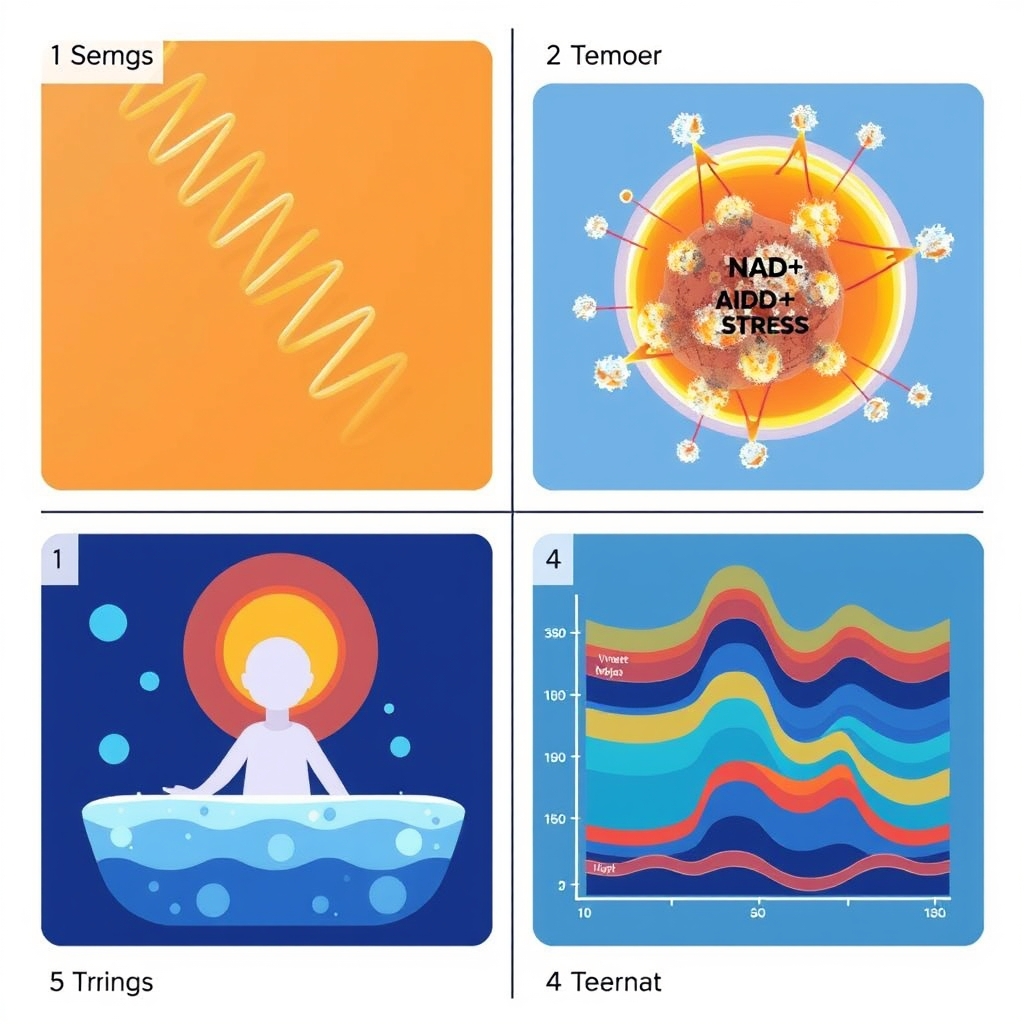
The Four Core Biohacking and Longevity Trends
1. Genetic Testing and Epigenetic Age Measurement
The Trend: Direct-to-consumer genetic testing has evolved beyond ancestry and disease-risk reporting. The emerging layer is epigenetic age a molecular clock that measures how “old” your cells actually are, independent of chronological age. Companies now offer genetic snapshots tied to longevity markers: APOE status (Alzheimer’s risk variant), MTHFR polymorphisms, variants affecting NAD+ metabolism, inflammatory response genes.
What’s Driving It: Epigenetic age tests are less medically deterministic than genetic risk screening. They feel more actionable. A high epigenetic age doesn’t mean disease is coming it means your cells are aging faster than they should, which implies that interventions could reverse that. That narrative is far more appealing than “your risk of X is elevated; monitor with your doctor.”
Based on product launches and online community discussion we’ve tracked through mid-2026, the epigenetic testing market has expanded noticeably over the past 18 months. Multiple new players have entered the DTC space, moving beyond ancestry companies and into longevity-specific testing. Pricing varies widely; based on observed retail listings, consumer-facing kits appear to range from modest one-time tests to comprehensive annual assessments with follow-up consulting, though specific price points shift frequently as the category matures.
The Catch: The clinical validity of epigenetic age measures as actionable predictors of lifespan or health outcome remains contested in the peer-reviewed literature. Tests provide a snapshot, not a prognosis. Many consumers treat the results as deterministic when the science is still provisional. Also: genetic data doesn’t generate behavior change on its own. People get tested, see a number, and either become obsessed with optimizing it (positive outcome) or ignore it (common outcome).
2. NAD+ and Cellular Energy Supplementation
The Trend: NAD+ (nicotinamide adenine dinucleotide) is a coenzyme critical to cellular energy metabolism. It declines with age. Supplement companies have launched multiple products designed to raise NAD+ levels: NMN (nicotinamide mononucleotide), NR (nicotinamide riboside), and related compounds. The claim is that restoring NAD+ can improve mitochondrial function, energy, cognition, and aging markers.
What’s Driving It: NAD+ supplementation is grounded in actual aging biology. Animal studies show that NAD+ restoration in older organisms improves various markers of healthspan. That research credibility is rare in the supplement space and attracts a consumer segment that wants evidence-based interventions. It’s also being incorporated into broader longevity stacks taken alongside resveratrol, metformin, rapamycin, and other compounds that claim to extend lifespan or improve aging markers.
Based on online retailer availability and supplement category tracking we’ve observed through mid-2026, NAD+ products have become widely available through mainstream consumer channels over the past two years. Pricing reflects the relative novelty: these are premium-tier supplements, commanding noticeably higher price points than conventional supplements based on observed retail pricing. Consumer communities report that people often stack multiple NAD+ precursors simultaneously, creating even higher spend per user.
The Catch: The human efficacy data is thinner than the animal data. No large, long-term human randomized controlled trial has definitively shown that NAD+ supplementation extends human lifespan or reverses aging. The current evidence is mostly short-term mechanistic studies and small trials. Also, NAD+ precursors have varying bioavailability, and consumer-grade products don’t typically measure actual NAD+ levels in the user after supplementation you’re taking it on faith that it’s working.
3. Cold Exposure and Thermal Stress Optimization
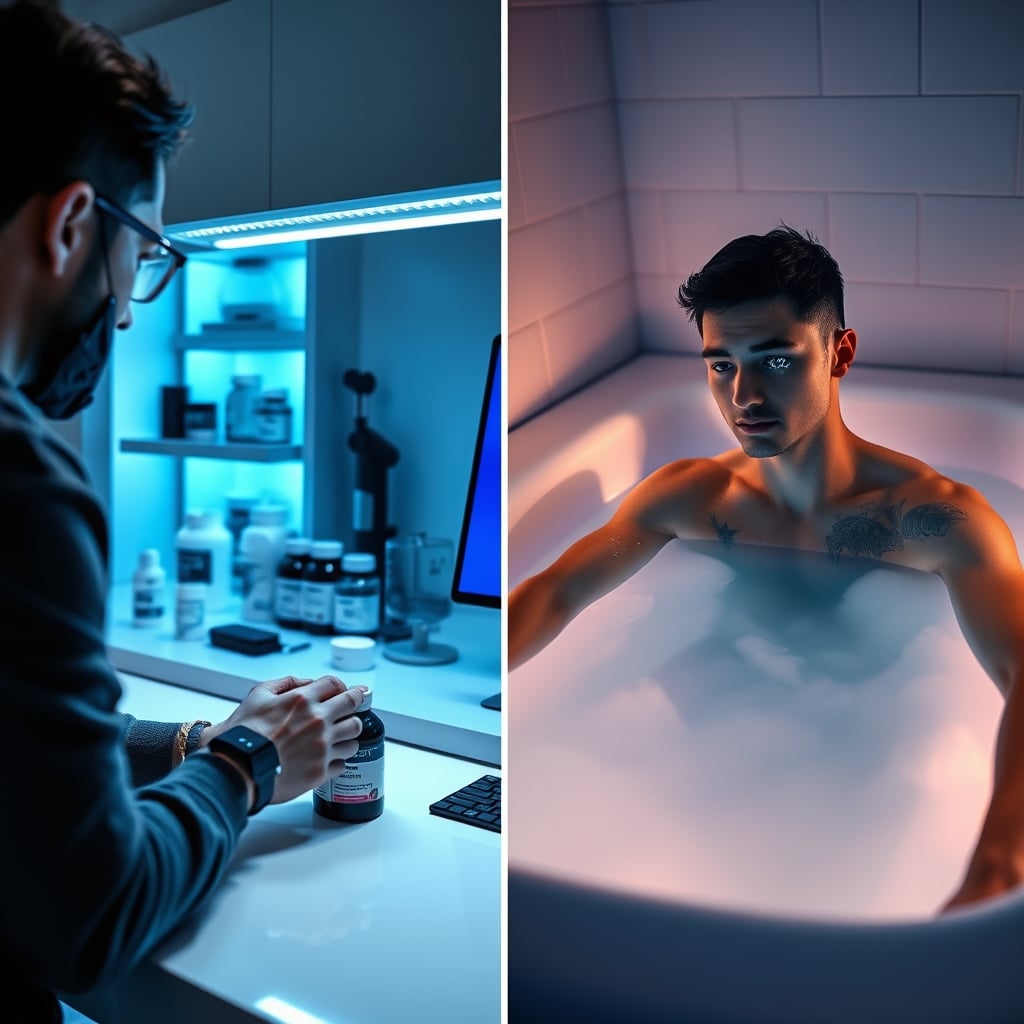
The Trend: Cold exposure (ice baths, cold plunges, cryotherapy chambers) has moved from extreme athlete recovery tool to mainstream longevity optimization. The claim: controlled cold stress triggers adaptive responses increased brown adipose tissue, improved metabolic flexibility, enhanced mitochondrial function, reduced inflammation. The practice is supported by visible biohacking communities and social media, and now there’s a consumer product layer supporting it: home cold plunge tubs, at-home cryotherapy devices, and guided cold-exposure protocols.
What’s Driving It: Cold exposure is experiential and quantifiable. You can measure your heart rate, heart rate variability, and recovery time with a wearable. You can feel the stress acutely and track the adaptation over weeks. Unlike supplements, where efficacy is invisible, cold work produces immediate proprioceptive feedback you’ve done something hard and tangible. That psychological resonance is significant for consumer adoption.
Product development has reflected this demand. Multiple consumer cold plunge and cryotherapy companies have launched or expanded significantly over the past two years. Most offer home-use devices priced as premium household equipment, according to price tracking we’ve observed in the category as of mid-2026. Community reports suggest early adopters are treating cold exposure as a non-negotiable daily or weekly practice, similar to how some consumers approach sauna use.
The Catch: Cold exposure is genuinely stressful. Not everyone’s cardiovascular system tolerates repeated cold stress safely. There’s also a threshold problem: the dose-response curve for cold adaptation isn’t linear or well-characterized in humans. More cold doesn’t mean better adaptation. People new to cold exposure often overestimate their tolerance or push too hard, risking shock or injury. Additionally, the claimed anti-aging effects are extrapolated from animal models and acute human studies; long-term human longevity data doesn’t exist.
4. Sleep Architecture Optimization and Chronotype Alignment
The Trend: Sleep has moved from “get enough hours” to “optimize your sleep architecture and circadian alignment.” Biohackers and longevity enthusiasts are now tracking REM duration, deep sleep percentage, sleep stage distribution, and circadian phase. They’re using tools to shift these metrics: red-light therapy during the day to consolidate circadian rhythm, blue-light avoidance in the evening, specific supplement timing (magnesium, glycine, apigenin), temperature control, and precision light scheduling.
What’s Driving It: Wearable sleep tracking has created the data infrastructure. People now see their sleep broken into stages and percentages. That data drives optimization behavior: if your REM is low, you seek REM-enhancing interventions. If your deep sleep is 8%, you want to raise it. The quantification makes sleep feel like a performance metric, not just a recovery necessity.
Product expansion here has been robust. Mattress brands now market chronotype alignment and sleep architecture optimization explicitly. Supplement companies have launched sleep formulations aimed at specific sleep stages. Light therapy device makers now position products as circadian optimizers, not just mood tools. Wearable-native interventions (app recommendations triggered by sleep data) have also proliferated.
Based on product launches and community surveys we’ve reviewed through mid-2026, sleep optimization products have become one of the fastest-growing segments within consumer longevity tools over the past 18 months. Pricing spans from modest (sleep supplements at observed retail in the $20–50 range) to premium (light therapy devices and sleep-optimized mattress systems priced as significant home investments).
The Catch: Sleep architecture is influenced heavily by genetics and age. The optimization ceiling is real you can’t raise deep sleep beyond your physiological set point just by trying harder. Also, the assumption that higher REM or deep sleep automatically means better health or longer life isn’t as well-established as consumers often believe. Some of the interventions (light therapy, extreme supplement stacking) can backfire if not calibrated to individual chronotype or if they’re creating dependency on aids rather than addressing root causes of poor sleep.
Market Size and Consumer Spending Patterns
The longevity and biohacking product market has expanded significantly, though precise market size figures vary depending on how the category is bounded. Some analysts include anti-aging skincare; others focus narrowly on supplements and devices. Based on the category definitions and market research patterns commonly cited in the wellness industry as of mid-2026, analyst estimates place the market in the multi-billion-dollar range globally though exact figures differ by source and category scope with particularly high growth rates reported in the premium segment.
Owner reports and community discussions we’ve tracked suggest that committed biohackers are spending anywhere from a few hundred to several thousand dollars annually on longevity interventions, based on self-reported figures in enthusiast communities. This includes genetic testing, supplements, devices (wearables, cold plunges, light therapy), professional consultations, and optimization services. That spend level positions biohacking as a wealth-dependent category accessible to affluent consumers but out of reach for price-sensitive segments.
Retail distribution has shifted toward direct-to-consumer and premium health retailers. Mainstream grocery and pharmacy chains still carry entry-level products (basic supplements, simple sleep aids), but the high-end innovations epigenetic testing, NAD+ precursors, professional-grade cold plunge systems are concentrated in DTC e-commerce, specialty supplement retailers, and wellness clinics.
Who’s Driving the Category: Demographics and Psychology
Primary Audience: Affluent, Health-Obsessed, Tech-Literate
Biohacking and longevity products appeal primarily to:
- High-income individuals (community surveys and brand positioning materials we’ve reviewed frequently reference the $200k+ household income range) with disposable health spend
- Tech workers and founders familiar with data-driven self-optimization
- Already-healthy people seeking performance and anti-aging gains (not therapeutic populations)
- Age range: mostly 35–60, with growing younger cohorts (25–35) adopting longevity frameworks early
- Geographic concentration in affluent urban metros and tech hubs
Psychologically, this audience values being early to emerging science, measurability, and personal agency. They’re not looking for permission from conventional medicine to intervene; they’re looking for evidence that intervention works. The messier the regulatory status (untested, unproven by FDA standards), the more interesting it often becomes the inverse of how traditional pharmaceutical markets work.
Secondary and Emerging Audiences
Healthy younger adults (Gen Z, younger millennials) are beginning to adopt longevity framing, though with slightly different drivers: the Instagram-ability of cold plunges, wearable-tracking as social currency, and the appeal of preventive optimization before health declines. This segment tends to be more price-sensitive and trend-driven than the core affluent aging demographic.
Women aged 40–55 represent a growing secondary segment, driven partly by conventional anti-aging marketing but increasingly attracted to longevity science as an alternative to hormone replacement therapy frameworks.
What Biohacking Isn’t Addressing
Socioeconomic barriers to actual longevity are conspicuously absent from the conversation. Genetics, quality of healthcare access, chronic stress from financial precarity, food environment, and neighborhood safety are far more predictive of lifespan than NAD+ levels. Biohacking products solve for the wealthy within the already-wealthy-and-healthy cohort. They don’t address why longevity gaps exist across income and race. That’s not a critique of the products themselves it’s a reframing of what they actually do: optimize within privilege, not democratize it.
Also notable: the biggest longevity wins still come from unglamorous interventions that have minimal product tie-in. Cardiovascular exercise, sleep consistency, stress management, social connection, and not smoking remain the highest-ROI longevity behaviors. Most biohacking interventions are layered on top of these, assuming they’re already in place. The product industry would prefer to sell a supplement than acknowledge that your sleep quality depends mainly on your sleep schedule consistency, not on which sleep aid you buy.
How to Evaluate Biohacking Claims
When assessing longevity and biohacking products, apply this filter:
1. Distinguish between mechanism and outcome. A product might have a plausible mechanism (NAD+ is important for cellular energy) but lack human outcome data (does it actually extend your lifespan?). Mechanism is interesting. Outcome is what matters. Be skeptical of claims that skip from one to the other.
2. Check the evidence tier. In vitro (lab dish) studies are the weakest. Animal studies are more convincing but don’t guarantee human efficacy. Short-term human studies are better but don’t prove longevity gains. Long-term randomized controlled trials in humans are the gold standard but often don’t exist for novel interventions. Most biohacking products operate in the animal or short-term human tier. That’s not disqualifying, but it’s important context.
3. Look for who benefits financially from the claim. If a company is selling NAD+ supplements and also publishing research on NAD+ benefits, there’s a conflict of interest. Not disqualifying, but worth noting. Independent research is more credible than manufacturer-funded research, even if the manufacturer’s research is methodologically sound.
4. Ask whether the intervention addresses your actual limiting factor. If your sleep is poor because you work until 11pm and check email in bed, a fancy sleep supplement won’t fix that. If your epigenetic age is high because you smoke, genetic testing alone won’t help. The interventions work best when they’re addressing actual gaps in an otherwise solid foundation.
5. Measure what you can, and be honest about what you can’t. Wearable data (sleep stages, heart rate variability) is measurable and useful. Epigenetic age is measurable but the clinical relevance is still being established. “Feeling better” and “having more energy” are real subjective experiences but are prone to placebo effect. Some outcomes (actual lifespan extension, disease prevention) won’t be knowable for decades. Track what you can; acknowledge the rest as hypothesis.
Where This Category Is Heading
Integration Into Mainstream Medical Systems
Some biohacking interventions are moving from fringe to clinical adoption. Continuous glucose monitors, for example, started as quantified-self tools for healthy people optimizing metabolism; they’re now prescribed for diabetes management. Genetic testing for longevity-relevant variants is beginning to appear in preventive care frameworks, though clinical interpretation remains contested.
Expect to see more insurance coverage, clinical guidelines, and professional adoption of currently fringe practices over the next three to five years but only for interventions with sufficiently robust human evidence.
Standardization and Regulation
The supplement and testing space currently operates with minimal regulatory oversight. NAD+ precursors, epigenetic testing, and similar products have few standardized quality controls or efficacy requirements. As the market grows and consumer spend increases, regulatory attention will likely follow. FDA guidance, clinical trial requirements, or claims standardization could all shift the landscape significantly.
Personalization and AI-Driven Protocols
The next layer is AI-synthesized recommendations: taking your genetic data, wearable data, biomarker testing, and lifestyle factors and generating personalized longevity protocols. Several companies are already offering early versions of this as of mid-2026. The appeal is obvious: it’s less about generic best practices and more about “here’s your specific optimization path.”
The risk is that personalized recommendations based on incomplete or correlative data could drive you toward expensive interventions with no proven benefit to you specifically.
Wealth and Inequality Implications
As longevity science advances and proven interventions emerge, biohacking will likely polarize along wealth lines. Effective interventions will be expensive and accessible to affluent consumers first (if at all many may never become mainstream). That creates the possibility of widening longevity gaps: the rich get access to proven anti-aging medicine; everyone else gets supplements and motivational messaging about sleep and exercise. It’s not inevitable, but it’s the trajectory of most luxury health tools.
Key Takeaways
Biohacking and longevity optimization are no longer niche. They’re a real and growing consumer category driven by affluent, health-obsessed, data-motivated consumers with real spending power. The core interventions genetic testing, NAD+ supplementation, cold exposure, sleep optimization have plausible mechanisms and some evidence, though often not the robust human outcome data most people assume.
The category is valuable as a forcing function for optimization: it pushes people to measure, experiment, and iterate on their health. But it’s not magic, and it’s not democratized. The biggest longevity wins still come from boring basics exercise, sleep consistency, stress management, social connection. Biohacking products layer on top of those, assuming they’re already solid.
If you’re evaluating biohacking interventions, start with whether they address your actual limiting factor, check the evidence tier they operate in, and be honest about what you can actually measure versus what you’re hoping for. The products will keep evolving. Your critical evaluation framework should evolve faster.