
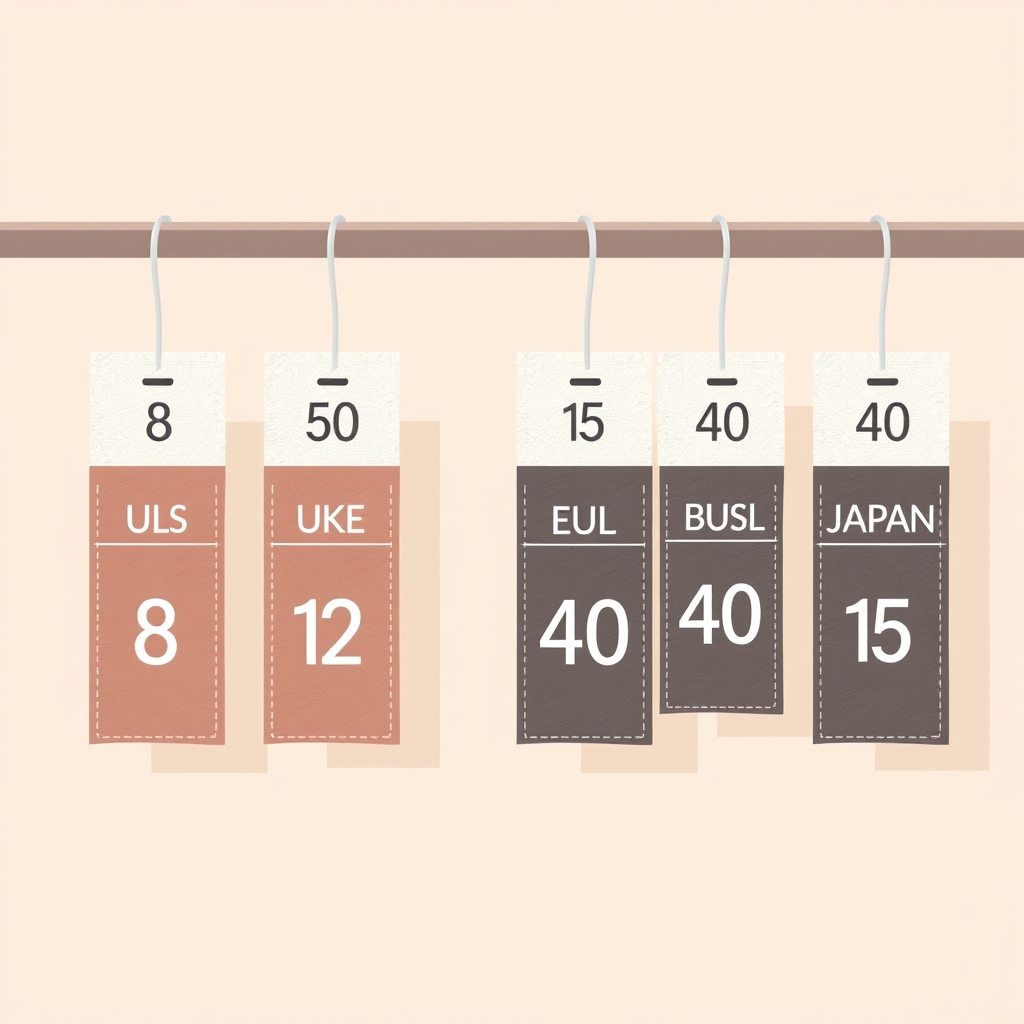
International clothing sizes are not interchangeable: a US size 8 is roughly a UK 12, EU 40, and a Japanese 13. Always check brand-specific fit notes before ordering, measure yourself once, and compare your measurements to the brand’s sizing chart rather than trusting the label alone. Most fit issues come from ignoring fit descriptions (“runs small,” “cuts narrow”) or ordering from brands you’ve never worn.
Why Clothing Sizes Vary Across Countries
Clothing sizes are not standardized globally because there is no international body that governs them. Each country developed its own sizing system based on average body measurements of its population at a particular point in time, and those standards have never been unified. The US uses small-to-large and number-based sizing; the EU uses even numbers starting from 32; the UK starts at size 6 and goes up; Japan sizes for a smaller average frame. On top of that, different brands interpret these standards differently some run generous, some run tight, and some cut their shoulders narrow while their waist sits loose.
This fragmentation means you can genuinely wear three different sizes in three different countries. The good news: once you know your body measurements and the brand’s actual sizing, fit becomes predictable.
International Sizing Standards Explained
US Sizing
US women’s sizing runs from 0–20+ and uses even numbers (2, 4, 6, 8, 10, 12…). US men’s sizing is based on chest measurement in inches (S, M, L, XL, or 36, 38, 40…). US sizing tends to reflect a larger average body frame than European sizing, so a US 8 is usually roomier than the equivalent measurement in an EU size.
EU Sizing
EU sizing for women starts at 32 and goes up in increments of 2 (32, 34, 36, 38, 40, 42…). The number roughly corresponds to bust measurement in centimeters, though not perfectly. EU sizes are narrower in the shoulders and generally smaller overall than US sizing, which is why many US shoppers size up when buying European brands. EU men’s sizing also starts at smaller chest measurements than US sizing.
UK Sizing
UK women’s sizing uses 6, 8, 10, 12, 14, 16, 18, 20, and so on. UK sizes fall somewhere between US and EU sizing tighter than US but roomier than continental Europe. UK men’s sizing mirrors the system but is labeled with chest sizes (36, 38, 40, 42…) in inches.
Asian Sizing (Japan, South Korea, China)
Asian sizing typically runs much smaller and narrower than Western sizing. A Japanese size 9 is roughly equivalent to a US 4–6. South Korean sizing is similar, though some Korean brands have begun to expand sizing for international audiences. Chinese sizing varies widely depending on whether the brand is domestic or international, so always check the chart. Asian brands often cut tighter in the bust and narrower in the shoulders.
Conversion Chart (Women’s)
| US | UK | EU | Japan |
|---|---|---|---|
| 0 | 4 | 32 | 5 |
| 2 | 6 | 34 | 7 |
| 4 | 8 | 36 | 9 |
| 6 | 10 | 38 | 11 |
| 8 | 12 | 40 | 13 |
| 10 | 14 | 42 | 15 |
| 12 | 16 | 44 | 17 |
| 14 | 18 | 46 | 19 |
| 16 | 20 | 48 | 21 |
Note: This chart is a general heuristic compiled from widely published brand size guides. Real-world fit varies by brand, garment type, and production run. Always measure yourself and compare against the specific brand’s chart before ordering expect ±1 size of variance, especially for Asian sizing systems.
How to Measure Yourself Correctly
Your body measurements are more reliable than any size label. Measure yourself once (in inches or centimeters, depending on the brand), write them down, and keep them handy when shopping internationally.
Essential Measurements
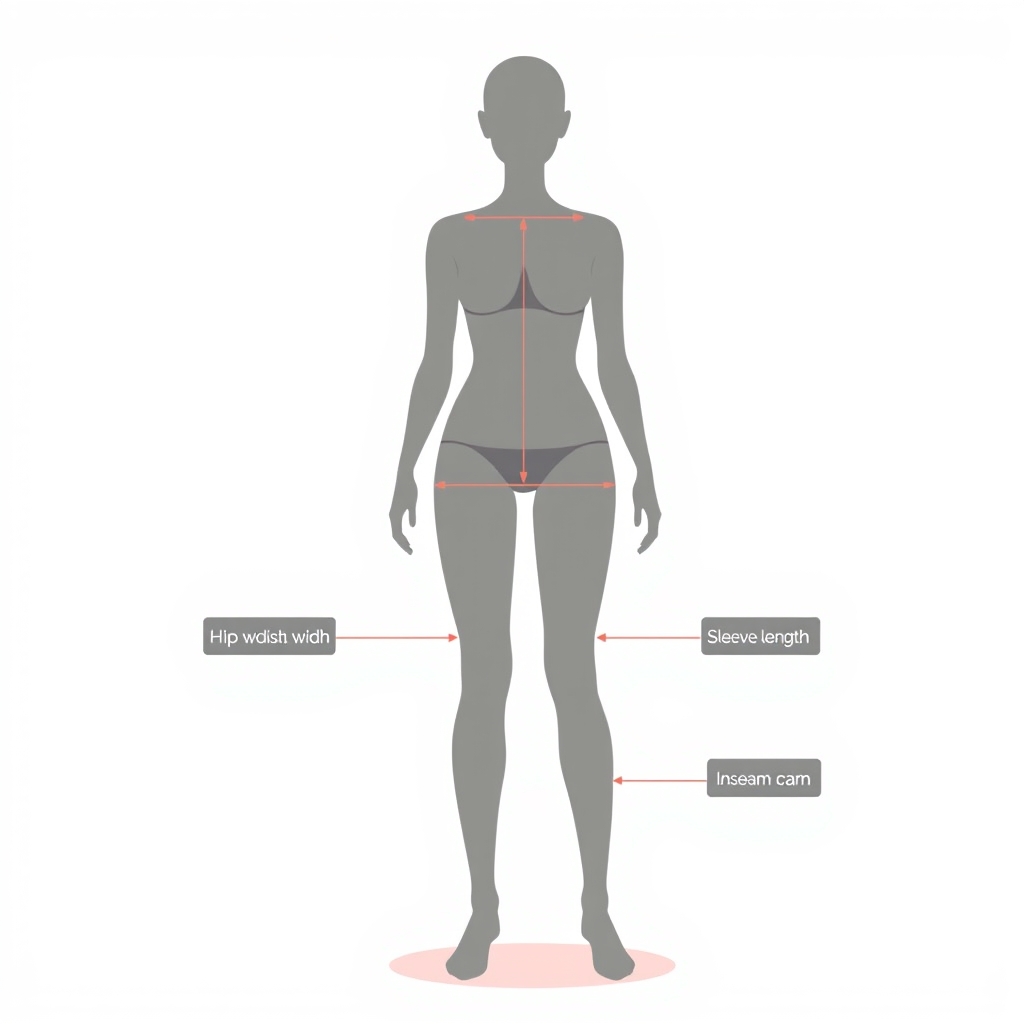
Bust: Stand straight, wear an unpadded bra, and measure around the fullest part of your chest. The tape should be snug but not tight; it should lie flat against your back.
Waist: Measure around your natural waist (the narrowest part, usually just above your hip bone), not your pants waist. Snug but not tight.
Hip: Measure around the fullest part of your hips and buttocks. Stand with your feet together.
Shoulder width: Measure across the back from the outer edge of one shoulder bone to the other. This matters especially for dresses, jackets, and tops.
Sleeve length: Measure from the center of your back, across the shoulder, and down to your wrist with your arm bent slightly. This matters for jackets and long sleeves.
Inseam: Stand in bare feet with your legs straight, and measure from your crotch to your ankle bone. Use this for pants and skirts.
Length from shoulder: Measure from the top of your shoulder (where the shoulder seam sits) straight down to where you want the garment to end (hip, knee, etc.).
Write these down in both inches and centimeters so you can shop both US and EU brands without confusion. When you find a brand that fits well, you can usually order the same size repeatedly.
Understanding Size Charts and Fit Descriptions
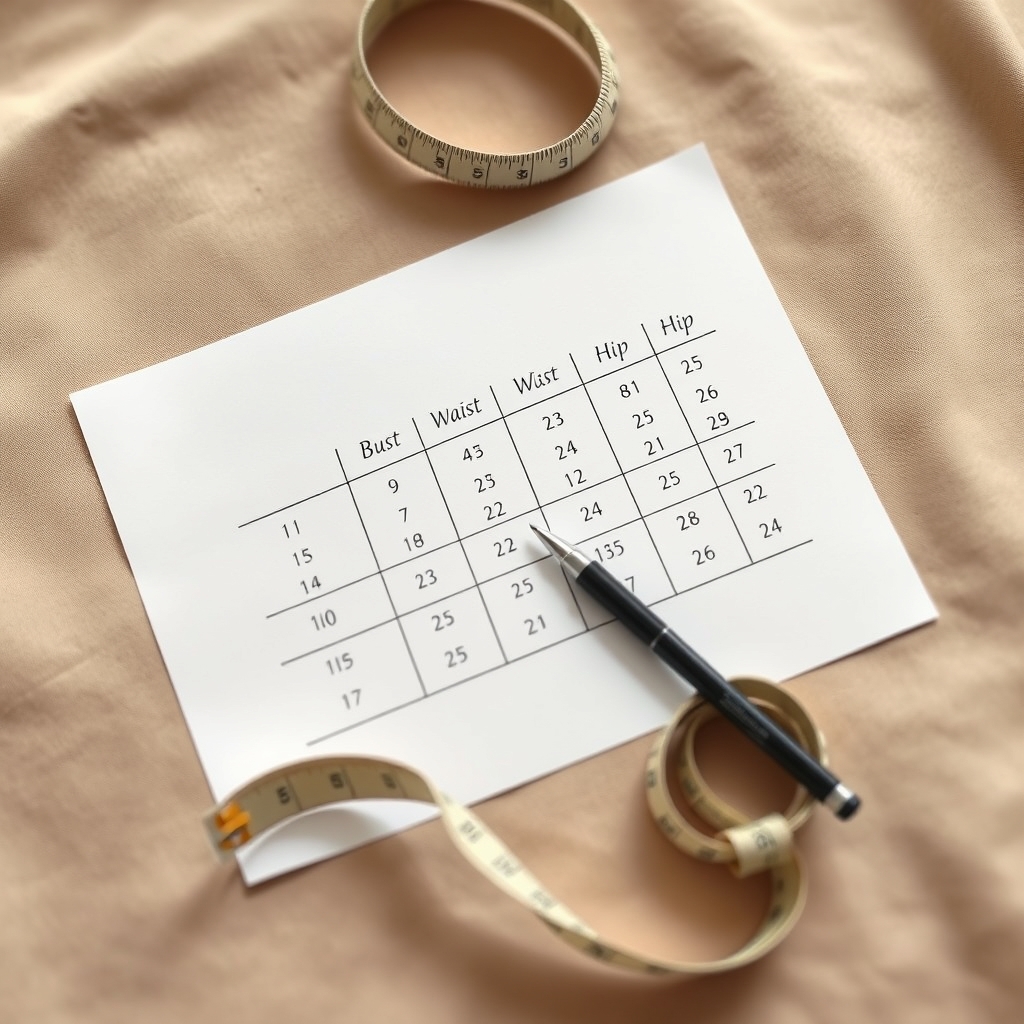
Every reputable brand publishes a size chart showing the actual measurements of each size. This chart is more truthful than the size label. Ignore the label; compare your measurements to the chart.
How to Read a Size Chart
Look for rows labeled with sizes (6, 8, 10, etc.) and columns for measurements (bust, waist, hip, length). Cross-reference your bust measurement with the chart if your bust is 37 inches and size 8 shows 37–38 inches, that is your size, regardless of what you normally wear.
If you fall between two sizes, check the fit description (see below). If the brand “runs small,” size up. If it “runs large,” size down. If you are exactly between two sizes in the bust and your natural waist is also between two sizes, pick the size that matches your hip the hip is the hardest measurement to alter after purchase.
Common Fit Descriptions and What They Mean
Runs small: The actual garment measurements are smaller than the labeled size suggests. If size 8 “runs small,” its actual bust measurement might be 36 inches instead of the expected 37–38 inches. Size up by one size if you fall near the top of the size 8 range.
Runs large: The garment is roomy for the size label. Size down if you are between two sizes.
Cuts narrow: The shoulders or chest are fitted relative to the length and hips. Look at the shoulder width and bust measurements; they may be tight compared to the hip. This pattern is common in many European brands. If you have broad shoulders, size up or look for brands known to cut wider.
Cuts loose: The opposite plenty of room through the torso. Useful to know if you prefer a relaxed fit, but a loose cut can overwhelm a petite frame.
True to size: The brand’s measurements align with the standard for that country. Still worth comparing your measurements to the chart rather than assuming.
15+ Popular Brands and Their Fit Quirks
Brand fit tends to be consistent within a brand line, so once you know how a brand fits you, you can usually order confidently. The observations below are based on aggregated owner reports and community sizing feedback, not individual testing treat them as a starting point and always verify against the brand’s current size chart, since production runs can shift.
US and Global Brands
J.Crew: Runs slightly small in tops, based on widespread owner feedback. The brand is commonly described as cutting with a fitted waist and narrower shoulders; shoppers who report a straighter silhouette often find it less flattering. Many size up in blouses.
Gap: Generally reported as true to size, sometimes slightly generous. Fit is consistent across the brand, which makes it reliable for basics.
Banana Republic: Reported as true to size with a professional, tailored cut. Shoulders are described as narrower than casual brands. A reasonable starting point for work wear.
Madewell: Reported as true to size, sometimes slightly generous in denim. Fit consistency is a common compliment across owner reviews.
Everlane: Reported as true to size with a modern silhouette that skews slightly loose through the torso. Denim is described as true to size but narrow in the leg.
Uniqlo: Reported as true to size but cut for a smaller average frame than US brands. If you typically wear US 6–8, starting with a Uniqlo M or size 8 is a common recommendation. Fit is minimalist with limited shaping.
European Brands
Zara: Widely reported as running small, with most shoppers sizing up by one size. Shoulders are described as narrow; if you have broad shoulders, sizing up two sizes is a common workaround. Fit can be less forgiving than other brands, this is a consistent con in owner reviews.
H&M: Reported as running small to true to size depending on the collection. Fit can vary meaningfully between H&M lines, so checking the size chart per item is more reliable than a blanket rule.
COS: Reported as true to size to slightly small, with modern proportions that run somewhat loose through the torso but narrower in the shoulders. European sizing applies: a US 6 is roughly a COS EU 34.
Arket: Reported as true to size with higher production consistency than fast fashion. Arket uses EU sizing in EU markets and US sizing in the US, check the chart for your region.
Reiss: Reported as true to size with a tailored, slightly formal fit. Commonly recommended for dresses and structured pieces.
Asian and International Brands
MUJI: Japanese brand, widely reported as running small. Most US shoppers report wearing S or M. Basic, minimalist cut with minimal shaping.
Reformation: Reported as running small to true to size depending on silhouette. The brand is commonly described as cutting for an hourglass shape; shoppers who are pear-shaped or straight often report the fit less flattering and size up, especially in dresses. Reading reviews filtered by body type is useful here.
Ganni: Danish brand, reported as running small and cutting narrow in both shoulders and waist. If between sizes, sizing up is the common recommendation. Popular for statement pieces; less consistent for basics.
& Other Stories: Reported as running slightly small. Swedish brand with a modern cut; shoulders can be narrow. Reading fit notes and reviews is recommended before ordering.
Common Sizing Mistakes and How to Avoid Them
Mistake 1: Assuming Your Size Converts Directly
No. A US 8 in one brand is not a US 8 in another brand. Always measure yourself and check the chart for each brand. This single habit eliminates most fit problems.
Mistake 2: Ignoring the Fit Description
If you read “runs small” and order your usual size, you will be disappointed. Spending 10 seconds reading the fit notes prevents most returns. They exist because previous customers flagged the issue.
Mistake 3: Ordering Without Checking Shoulder Width
You can let out a waist seam or hem a length, but you cannot widen shoulders. If the shoulder measurement in the size chart is too narrow for you, size up or choose a different brand. This prevents costly tailoring or returns.
Mistake 4: Buying Trendy Cuts Without a Fit Track Record
If a brand is new to you and the item is an unusual silhouette (off-shoulder, cropped, oversized), filter customer reviews by your body type or size before ordering, or buy from a retailer with free returns. New silhouettes sometimes fit worse than a brand’s staples.
Mistake 5: Forgetting That International Brands May Change Sizing
EU and Asian brands sometimes adjust sizing when they expand to the US market, or a new production facility cuts slightly differently. If you have ordered from a brand before, do not assume the sizing has stayed the same. Always check the current chart.
Mistake 6: Not Accounting for Fabric and Season
Winter sweaters often fit larger than summer shells in the same size, because they are meant to layer. Synthetic fabrics may fit more snugly than natural fabrics in the same size. If you love a sweater but it is a winter knit, be aware that the brand’s linen version in the same size may not match.
FAQ
Should I always size up when ordering from European brands?
Not always, but often. EU sizing runs smaller and narrower than US sizing on average, so many US shoppers size up by one size when buying EU brands. Always check the specific brand’s size chart; some EU brands size more generously for international markets. Measurement comparison is more reliable than a blanket rule.
What is the most common reason for online fit issues?
Ignoring the brand’s fit description or size chart. Most shoppers order their usual size without measuring themselves or reading fit notes. Spending 2 minutes on the size chart and fit notes resolves the majority of returns.
Can I return international orders if they don’t fit?
Yes, but return shipping to an overseas warehouse can be costly. Buying from retailers that offer free returns ASOS, Shopbop, Nordstrom is the lower-risk approach when ordering from an international brand for the first time. Always confirm the return policy before purchasing.
If I am between two sizes, which should I order?
Order the size that matches your widest measurement usually the hip. Hips are harder to tailor than waist or length. Read the fit description first: if the brand runs large, the smaller size may be the safer choice.
Do petite or tall people need different sizing?
For length, yes. Most brands assume an average height of around 5’4″–5’8″ for women. If you are under 5’3″ or over 5’9″, pay close attention to the “length” row on the size chart. Some brands offer petite or tall lines (Uniqlo Petite, Banana Republic Petite, ASOS TALL). For bust, waist, hip, and shoulder measurements, standard sizing applies height does not change shoulder width.
What do I do if no size fits too big in the hips, too small in the bust?
Try a different brand or silhouette before considering tailoring. Some brands cut for specific body shapes; the right brand often fits better than altering the wrong one. If a brand cuts for a curvy shape, it may gap at the shoulders on a straight body; if it cuts straight, it may be tight on an hourglass.
How often should I re-measure myself?
Once every 1–2 years, or whenever your weight or fitness routine changes noticeably. Body measurements shift with age, hormones, and lifestyle. If a brand that fit you perfectly no longer fits, re-measure before assuming a production change factory sizing is usually more consistent than people expect.
Final Recommendations
The best approach to international sizing: measure yourself once, keep your measurements written down in both inches and centimeters, and compare them to the brand’s size chart every time you shop a new brand or new market. Fit descriptions runs small, cuts narrow, true to size are the most useful data point you have before the item arrives. Read them.
If you are ordering from a new brand for the first time and the item is not a basic, buy from a retailer with free returns (ASOS, Shopbop, Nordstrom) so you can try two sizes without penalty.
Once you find a brand that fits your body consistently, you can usually order confidently within that brand. The moment you are buying from a new brand, new silhouette, or international market, slow down and verify with the chart.
For deeper guidance on finding the right fit for specific occasions work wear, casual, evening see our guides on finding well-fitting jeans by body type, getting the right bra fit, and understanding when tailoring is worth the cost.