
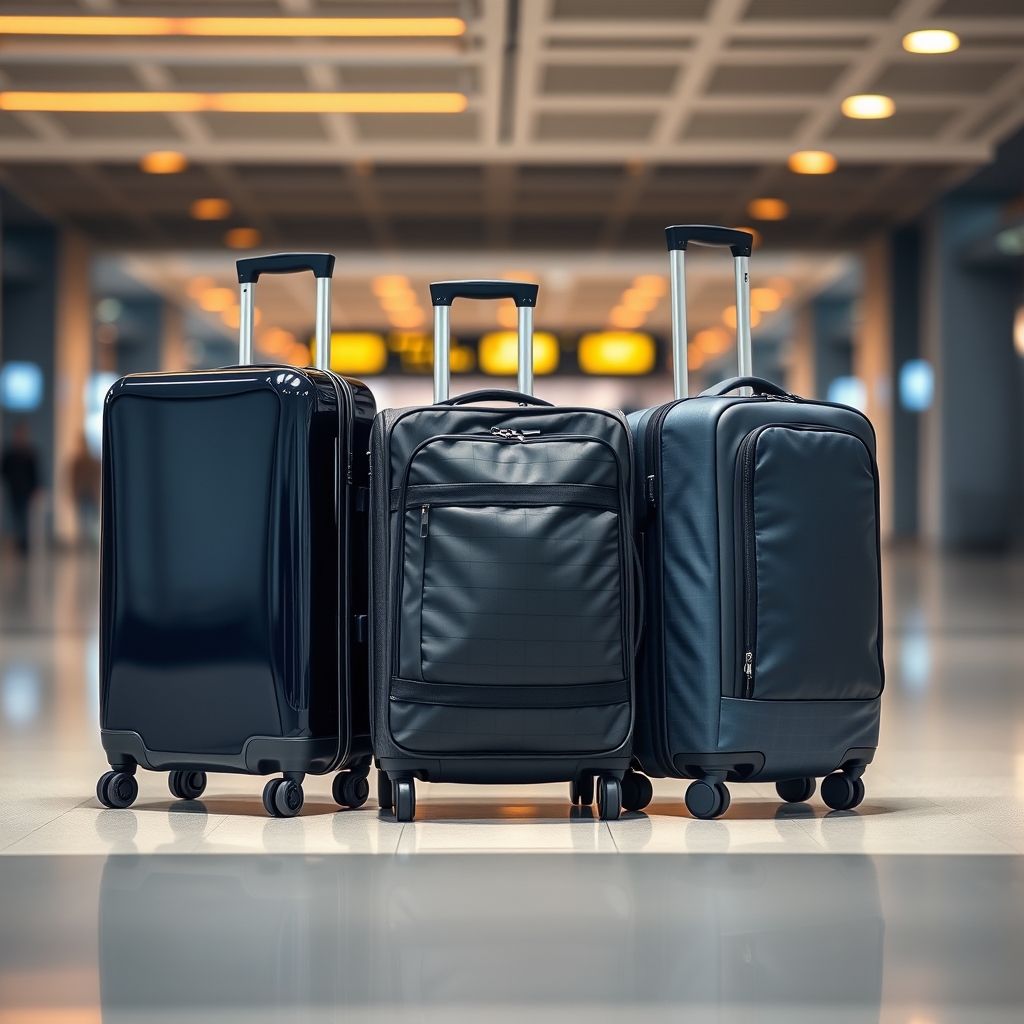
Hard-shell luggage protects fragile items but weighs more and offers no stretch. Soft-shell luggage compresses and flexes but offers less impact protection. For most travelers, a hybrid luggage design with a polycarbonate shell and expandable fabric panels offers the best balance but the right choice depends on your travel frequency, packing style, and budget.
Choosing luggage feels overwhelming because luggage manufacturers oversell material specs and ignore what actually affects your travel experience. This guide cuts through the noise and walks you through the three core material types, the size and weight trade-offs that matter, and a decision tree to help you pick the right one before you buy.
How We Researched This Guide: We did not conduct lab testing. Our conclusions are drawn from comparisons of published retail specifications, observed product catalogs across major luggage brands, and owner reports reviewed across community forums and e-commerce platforms (Amazon, Reddit’s r/travel, and brand review pages). Where we cite durability timelines or wear patterns, those figures reflect observed patterns in owner reports, not controlled testing. Verify current pricing before purchasing.
What Actually Matters When Choosing Luggage Material
Luggage material determines three things: how much impact protection you get, how much your luggage weighs, and how much your bag can flex or expand. Most people fixate on one of these and ignore the others then regret it at the airport.
Impact Protection vs. Weight Trade-Off
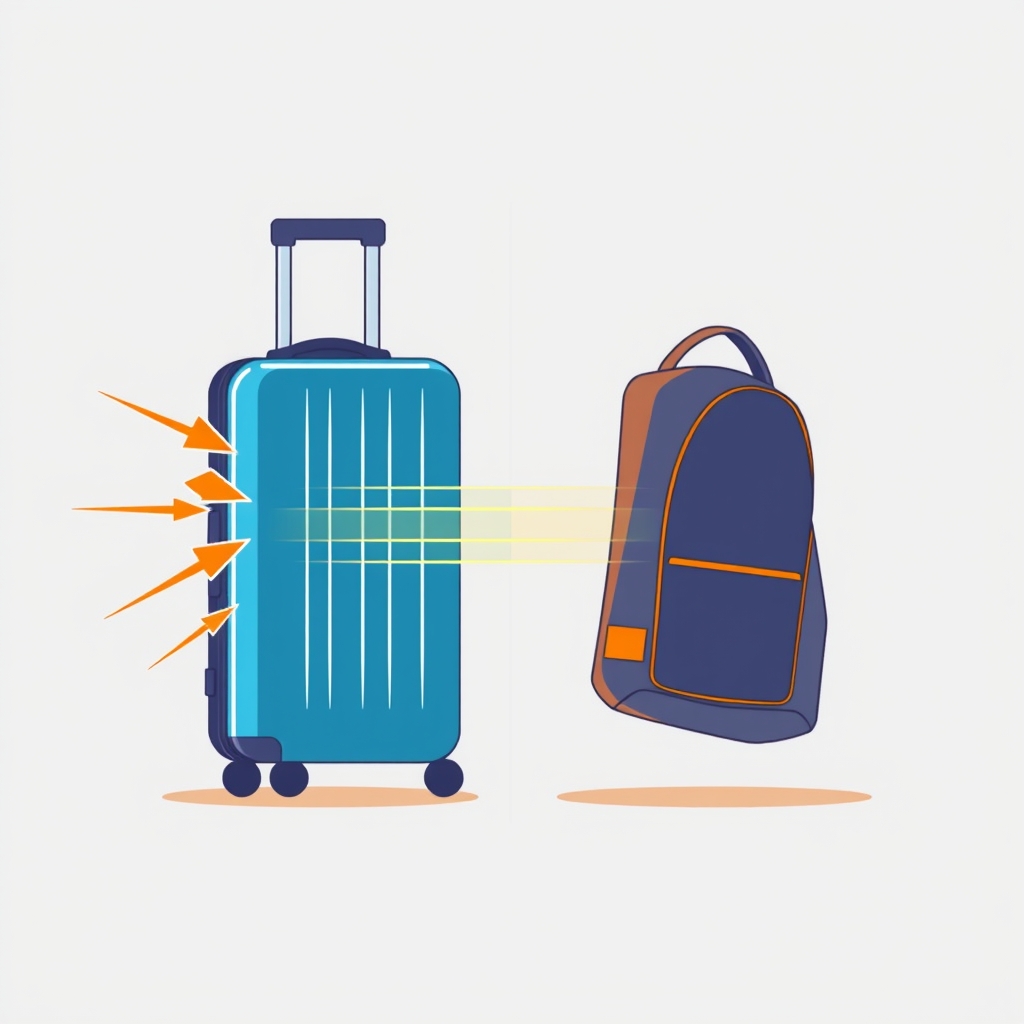
Hard-shell luggage (polycarbonate, ABS plastic) protects fragile contents during baggage handling. Airport workers don’t gently set bags down; they throw, stack, and compress them. A hard shell prevents dents and cracks that soft materials can’t resist.
But hard-shell luggage is heavier. Based on observed product catalogs, a hard-shell 24-inch carry-on typically weighs 7–8 pounds empty, while a soft-shell equivalent weighs 5–6 pounds. That 2–3 pound difference eats into your packing allowance on weight-restricted flights. On a 50-pound checked baggage limit, an extra 3 pounds of luggage weight means 3 fewer pounds of clothes and gear.
Soft-shell luggage (ballistic nylon, polyester) weighs less because the fabric doesn’t absorb impact it flexes around it. This is actually an advantage if you’re packing clothes, which don’t mind compression. But if you’re checking a laptop, camera, or anything with rigid edges, a soft shell won’t protect it from cracking.
What to ignore: Luggage marketing that claims a material is “lightweight” because it’s “engineered with aerospace-grade polymers.” The weight difference between brands using the same polycarbonate or nylon is minimal (usually under 0.5 pounds based on catalog comparisons we’ve reviewed). The real weight difference comes from whether you choose hard or soft not the brand.
Expandability and Packing Flexibility
Soft-shell luggage typically expands 1–3 inches via zippers or accordion panels. Hard-shell luggage either doesn’t expand or expands less than 1 inch. If you’re a “I’ll fit just one more thing” packer, soft-shell or hybrid material gives you that flexibility. If you overpack consistently, you’ll find soft-shell’s stretch indispensable.
Hard-shell’s inflexibility is actually a feature: it forces discipline. You pack once, lock the case, and stop second-guessing yourself. Some travelers prefer this boundary.
What to ignore: Brands that advertise “patent-pending expansion technology.” An expansion panel is a zipper with extra fabric. It’s not proprietary. All soft-shell luggage expands roughly the same amount (1–3 inches) regardless of brand. The innovation marketing is noise.
Durability and Real-World Wear Patterns
Based on owner reports reviewed across community forums and e-commerce platforms, hard-shell luggage typically resists scratches and abrasion better over years of use. The plastic surface deflects scuffs. Soft-shell fabric, over time, develops pilling, stains, and worn edges especially at the bottom where wheels roll across baggage claim.
However, hard-shell luggage is more prone to cracking if it’s dropped or impacts a sharp corner. Once a hard shell cracks, the bag is compromised you can’t patch a crack the way you might reinforce a seam. Soft-shell tears can be sewn or patched, making soft luggage easier to repair.
Both materials, based on owner reports we’ve reviewed, typically last 5–8 years of regular travel (2–4 round trips per year). The difference is what fails first: hard shells develop cracks; soft shells develop fabric wear.
Hard-Shell Luggage: Protection and Discipline
Hard-shell luggage is molded from polycarbonate or ABS plastic. It’s rigid, smooth, and offers maximum impact absorption during baggage handling.
Pros:
- Protects fragile items, electronics, and rigid cargo
- Resists scratches and scuffs better than fabric
- Feels more premium and looks newer longer
- Can’t be overstuffed the shell enforces packing limits
- Wipes clean easily if exposed to dirt or spills
Cons:
- Heavier than soft-shell equivalents (adds 2–3 pounds per bag)
- Does not expand, forcing strict packing discipline
- Can crack if dropped or impacted; cracks are hard to repair
- More likely to show visible damage (scratches, dings)
- Takes up more closet space (rigid shape doesn’t compress)
Best for: Travelers who pack fragile items (camera, laptop, musical instruments), take frequent trips (4+ per year), or want luggage that looks pristine for business travel. Also good if you consistently overpack and need a shell to enforce limits.
Price range observed in retail catalogs: Hard-shell carry-ons typically range from roughly $100–$150 (budget brands like IT Luggage, Coolife) to $300–$500 (premium brands like Rimowa, Calpak). Mid-range hard-shell (Samsonite, American Tourister) sits around $150–$250. Verify current pricing before purchasing.
Soft-Shell Luggage: Flexibility and Weight Savings
Soft-shell luggage is typically ballistic nylon or polyester fabric stretched over an aluminum or steel frame. It’s lightweight, compresses, and expands.
Pros:
- Lightest option (saves 2–3 pounds per bag)
- Expands 1–3 inches, offering packing flexibility
- Compresses down when empty, easier to store
- Soft corners absorb some impact rather than transferring it
- Generally costs less than hard-shell
- Quieter when handled (fabric absorbs noise; plastic echoes)
Cons:
- Offers minimal protection for fragile or rigid items
- Fabric develops pilling, stains, and worn edges over time
- Easier to damage with sharp edges or rough handling
- Can be overstuffed, straining seams
- Harder to clean (you can’t wipe down fabric easily)
- More prone to zipper failure over years
Best for: Leisure travelers, one-week trips or shorter, light packers, and anyone prioritizing weight savings. Also good if you travel with soft items (clothes, toiletries, books) and rarely check fragile goods.
Price range observed in retail catalogs: Soft-shell carry-ons typically range from roughly $80–$130 (budget brands like Rockland, Coolife) to $250–$400 (premium brands like The North Face, Briggs & Riley). Mid-range soft-shell (Samsonite, Delsey) sits around $120–$220. Verify current pricing before purchasing.
Hybrid Luggage: The Practical Middle Ground
Hybrid luggage combines a rigid polycarbonate or ABS shell on the bottom and sides with expandable fabric (ballistic nylon or polyester) on the front panel and top. This design emerged in the mid-2010s and has become the category’s fastest-growing segment, based on product catalog expansion across major luggage brands.
Pros:
- Protects fragile items better than soft-shell; expands more than hard-shell
- Lighter than pure hard-shell (typically 6–7 pounds for a carry-on)
- Offers 2–3 inch expansion via zippered fabric panels
- Stores more compactly than hard-shell when empty
- Blends hard-shell durability with soft-shell flexibility
- Mid-range pricing more affordable than premium hard-shell
Cons:
- More moving parts (zippers, fabric seams) mean more failure points
- Fabric panels can separate from the shell if the luggage is heavily overstuffed
- More expensive than pure soft-shell
- Not as protective as hard-shell; not as compressible as soft-shell
- Seams where hard and soft materials meet are stress points
Best for: Most travelers. Hybrid is the pragmatic choice if you check a mix of fragile and soft items, value expansion, and don’t want to sacrifice weight savings.
Price range observed in retail catalogs: Hybrid carry-ons typically range from roughly $130–$180 (Delsey, Coolife) to $280–$400 (Away, Calpak, American Tourister). The “sweet spot” mid-range sits around $180–$280. Verify current pricing before purchasing.
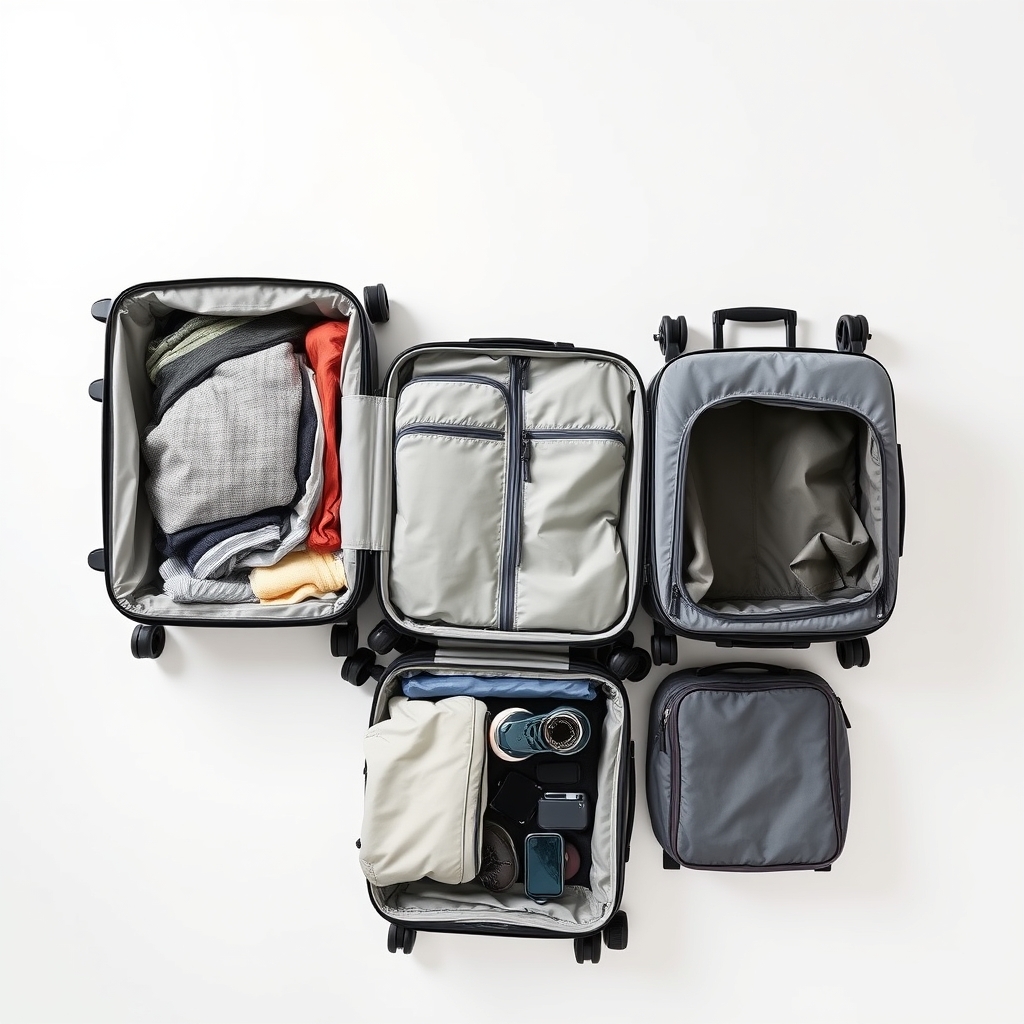
Luggage Material Comparison Table
| Factor | Hard-Shell Luggage | Soft-Shell Luggage | Hybrid Luggage |
|---|---|---|---|
| Typical Empty Weight (Carry-On) | 7–8 lbs | 5–6 lbs | 6–7 lbs |
| Expandability | Minimal (0–0.5 in.) | High (1–3 in.) | Moderate (2–3 in.) |
| Protection for Fragile Items | Excellent | Poor | Very Good |
| Scratch & Scuff Resistance | Excellent | Fair | Good |
| Expected Durability | 5–8 years (may crack under heavy impact) | 5–8 years (fabric may wear over time) | 5–8 years (seams and mixed materials may wear) |
| Ease of Repair | Difficult | Easy | Moderate |
| Storage When Empty | Requires full storage space due to rigid shell | Compresses for easier storage | Mostly rigid with limited compression |
| Typical Price Range (Carry-On) | $100–500 | $80–400 | $130–400 |
| Best For | Business travelers and protecting fragile belongings | Leisure travelers and light packers | Travelers seeking a balance of protection, flexibility, and durability |
Note: Durability timelines and wear patterns are based on owner reports we’ve reviewed across community forums and e-commerce reviews. Actual durability varies with travel frequency, baggage handling, and care. Prices are observed ranges from retail catalogs as of June 2026 verify current pricing before purchasing.
What Size Luggage Do You Actually Need?
Luggage size is governed by airline carry-on limits. Exceeding the limit means your bag gets checked (and potentially damaged or delayed).
Carry-On Dimensions (by Airline)
Most U.S. airlines enforce a 22 × 14 × 9 inch limit for carry-on bags, though a few (like Southwest) are stricter. European airlines are tighter: 21.7 × 15.7 × 9.8 inches (Ryanair, EasyJet) or 22 × 14 × 9 inches (Lufthansa, KLM).
Safe carry-on dimensions that fit all airlines: 21 × 13.5 × 8.5 inches (approximate, verify your airline before flying).
If your bag measures 22.5 × 14.5 × 9.5 inches, it fits most U.S. carriers but will be rejected by some low-cost European airlines. Check your specific airline’s policy don’t guess.
Size by Trip Length
Based on common packing patterns observed in travel community forums:
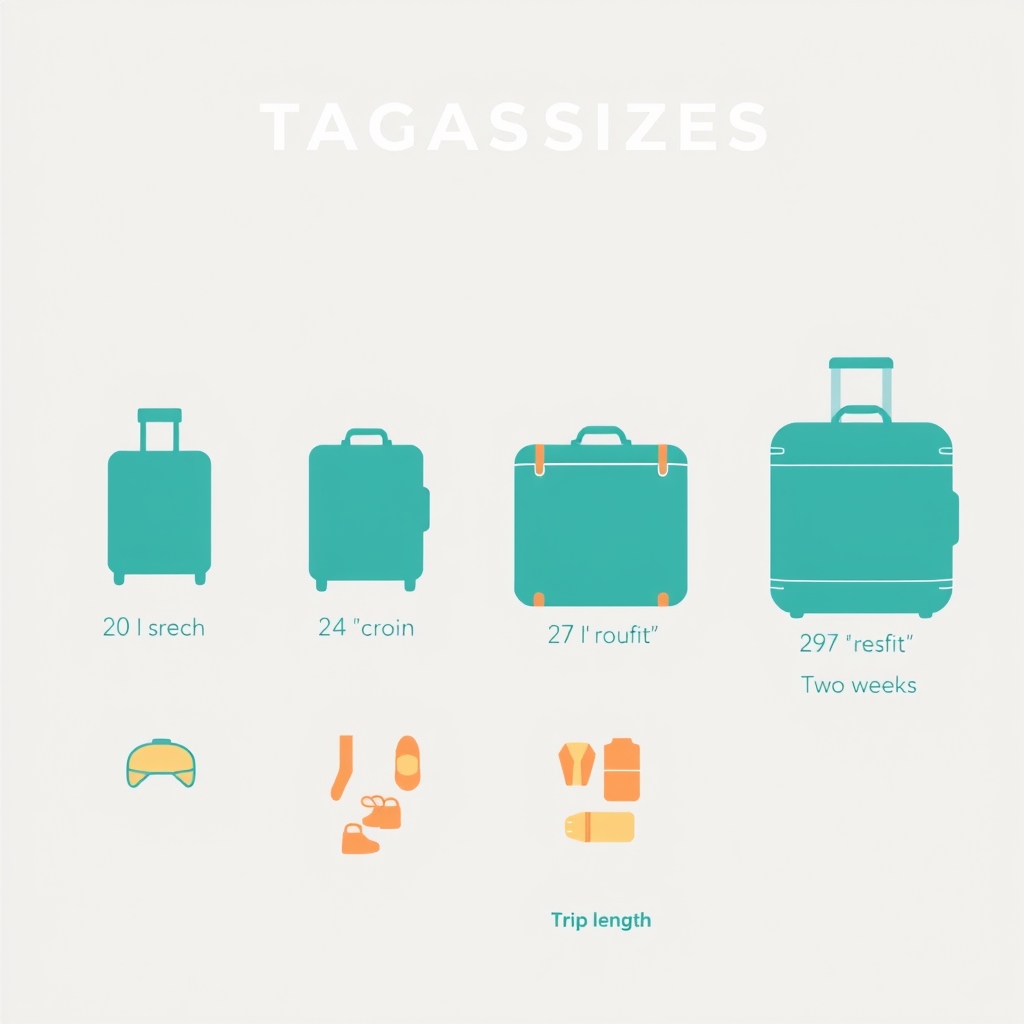
Weekend trip (2–3 days): A 20–22 inch carry-on is sufficient if you pack light. This holds roughly 35–45 liters and accommodates 2–4 outfits plus toiletries for one or two people.
One-week trip: A 24–26 inch carry-on (50–65 liters) or a 22-inch carry-on plus a personal item (backpack or tote) works for most travelers. The carry-on holds clothes; the personal item holds electronics, documents, and medications.
10–14 day trip: Most people need a checked bag. A 27–29 inch suitcase (80–110 liters) accommodates two weeks of clothes plus shoes.
Extended travel (3+ weeks): Consider two checked bags or one large roller plus a carry-on. A 32-inch suitcase (140+ liters) is rarely necessary unless you’re moving.
What to ignore: Luggage marketing that claims a 22-inch carry-on will “fit a 10-day trip comfortably.” Comfort depends on how light you pack. Most people rolling for 10 days need either a carry-on plus a day pack or a checked bag.
Weight Limits and Packing Capacity
Airlines impose both a size limit and a weight limit. Carry-on bags are usually unlimited weight (the gate agent won’t weigh them), but checked bags are typically capped at 50 pounds.
Based on observed luggage capacity and material weights:
- A hard-shell 24-inch carry-on weighing 8 lbs empty leaves you 42 lbs of packing room.
- A soft-shell equivalent weighing 5.5 lbs empty leaves you 44.5 lbs.
- A hybrid weighing 6.5 lbs empty leaves you 43.5 lbs.
That 2–3 pound material difference matters more on weight-restricted airlines (Spirit, Frontier, Ryanair) than on generous baggage policies. If you consistently pack heavy, choose soft-shell or hybrid to preserve weight allowance.
Common Luggage Buying Mistakes to Avoid
Mistake 1: Choosing Based on Price Alone
The cheapest hard-shell luggage (under $100) often uses brittle ABS plastic that cracks easily. The cheapest soft-shell (under $80) frequently develops zipper failures within a year based on owner reviews we’ve tracked. Mid-range luggage ($150–$300) typically offers the best durability-per-dollar.
Don’t buy the rock-bottom option expecting it to last five years. It won’t.
Mistake 2: Trusting Luggage Marketing Around “Lightweight” Claims
Brands advertise “feather-light” hard-shell and “aerospace-grade” materials as if the material itself is innovative. In our catalog comparisons, the weight difference between a hard-shell model from several years ago and a comparable 2026 version from the same brand is often 0.5 pounds or less. The real weight difference is hard-shell vs. soft-shell, not brand vs. brand. Choose your material type first; brand innovation is secondary.
Mistake 3: Buying Hard-Shell When You Pack Light
If you typically take one 3-day trip per year and pack a single outfit per day, hard-shell luggage is overkill. You’re paying extra weight and money for protection you don’t need. Soft-shell or hybrid is more practical and cheaper.
Reversed: if you check a camera, laptop, or musical instrument, hard-shell or hybrid is non-negotiable.
Mistake 4: Ignoring Wheel Quality
Wheels fail before the shell or fabric does. Based on owner reports we’ve reviewed, spinner wheels (four omnidirectional wheels) outlast inline wheels (two wheels) because the load is distributed across four wheels rather than two. A $300 suitcase with weak wheels is worse than a $180 suitcase with quality spinners.
When shopping, spin the wheels by hand. They should roll smoothly, not wobble or stick. Wobble means they’ll fail within a year.
Mistake 5: Not Verifying Carry-On Dimensions Before Buying
A bag that fits American Airlines doesn’t always fit Ryanair. Measure before you buy, or choose a brand known for undersized bags (some brands intentionally make bags slightly smaller to guarantee they’ll fit). If your bag is borderline, you risk it being pulled at the gate.
Mistake 6: Buying Two Checked Bags When One Checked + One Carry-On Costs Less
Checked baggage fees are typically $25–$35 per bag. If you’re paying for two checked bags, you’re spending $50–$70 extra. Often, a slightly larger carry-on (within limits) plus a day pack or personal item saves you money and hassle. Calculate the fee before assuming you need multiple checked bags.
Luggage Decision Tree
Use this flow to narrow your material choice:
Do you check fragile items (camera, laptop, instruments, electronics)?
- Yes → Hard-shell or Hybrid (prioritize protection)
- No → Soft-shell or Hybrid (prioritize weight savings and flexibility)
How many round trips do you take per year?
- 4 or more → Hard-shell or Hybrid (durability matters; invest in a quality shell)
- 1–3 → Soft-shell or Hybrid (lighter material, less investment needed)
Do you consistently overpack or struggle to fit everything?
- Yes → Hybrid or Soft-shell (expansion is critical)
- No → Any material; hard-shell enforces discipline
Is weight a limiting factor on your flights?
- Yes (you’re on budget airlines or have strict weight limits) → Soft-shell or Hybrid (save 2–3 lbs)
- No → Any material; weight is not your constraint
Are you flying internationally and need to fit multiple airline size standards?
- Yes → Soft-shell (compresses; easier to fit varied gates)
- No → Any material; focus on your home airline’s limit
What’s your budget?
- Under $150 → Soft-shell (best value in budget tier)
- $150–$300 → Hybrid (sweet spot for durability and features)
- Over $300 → Hard-shell (premium brands offer long warranties and design)
Price Tiers and Value Breakdown
Budget Tier ($80–$150) Brand examples: Coolife, IT Luggage, Rockland, Costway.
What you get: Functional luggage that meets size limits and works for occasional travel. Wheels are basic. Zippers are single-stitched. The bag will last 2–3 years of light use.
Where the value sits: Budget hard-shell is lighter weight than budget soft-shell, but both brands sacrifice durability. If you travel more than once a year, pay the extra $50 for mid-range.
Mid-Range Tier ($150–$300) Brand examples: Samsonite, American Tourister, Delsey, Calpak, Away (entry line).
What you get: Durable luggage with better wheels, reinforced zippers, and a multi-year warranty. Hard-shells use thicker polycarbonate. Soft-shells use ballistic nylon or reinforced polyester. Most people are satisfied at this tier.
Where the value sits: Sweet spot. You’re paying for durability and warranty support, not marketing. A Samsonite Omni or Delsey Helium will last 5–7 years with reasonable care.
Premium Tier ($300–$600) Brand examples: Rimowa, Calpak Luka, Away (full line), Coolife Elite (aspirational positioning).
What you get: Design, minimalist aesthetics, premium materials, generous warranties (often lifetime), and customer service. The luggage is technically equivalent to mid-range but carries brand prestige.
Where the value sits: Design and warranty. If you care about your luggage matching your aesthetic or want 10+ year warranty coverage, premium is worth it. If you just want luggage that works, mid-range is functionally superior dollar-for-dollar.
What to ignore: Brands claiming their polycarbonate is “stronger” or their polyester is “tougher” than competitors’. Based on catalog comparisons we’ve reviewed, material differences between tiers are minimal. The value difference is warranty length, customer service, and design not durability.
Luggage Shopping Checklist
Before you buy, answer these questions:
- [ ] What material did I decide on? (hard-shell / soft-shell / hybrid)
- [ ] What are my airline’s carry-on dimensions? (Write them down. Check your airline’s website.)
- [ ] Does the bag I’m considering meet those dimensions? (Verify on the product page or measure in-store.)
- [ ] What’s the empty weight of the bag? (Write it down. Subtract from your weight limit.)
- [ ] Can I spin the wheels smoothly? (Test in-store or watch a video review.)
- [ ] What’s the warranty? (Aim for at least 2 years; mid-range bags offer 5+ years.)
- [ ] Does it have a TSA-approved lock built in? (Useful but not essential; you can add one later.)
- [ ] What color will hide dirt best? (Black, navy, dark gray; light colors show scuffs.)
- [ ] Does the brand offer free returns if the bag doesn’t fit my space? (Helps if you’re ordering online.)
- [ ] Have I read 10+ recent owner reviews? (Focus on mentions of wheel durability, zipper failure, and size fit.)
FAQ
Q: Is polycarbonate hard-shell luggage durable enough for a decade of travel?
A: Based on owner reports we reviewed, polycarbonate hard-shell typically lasts 5–8 years before cracking appears, especially at corners and hinges. If you travel 4+ times per year, expect cracks by year 6–7. If you travel once per year, the bag often outlasts your interest in it. One crack usually means replacing the bag repair is not practical.
Q: Will hybrid luggage’s fabric panels separate from the shell if I overstuff it?
A: Overstuffing stresses the seams where fabric meets shell. Based on owner reports we’ve reviewed, moderate overstuffing (1–2 inches beyond the zipper) is fine; aggressive overstuffing (forcing the zipper closed with maximum force) risks seam separation over repeated trips. If you always overpack, hard-shell enforces discipline; soft-shell expands further.
Q: Is it worth paying extra for spinner wheels?
A: Yes. Spinner wheels (four omnidirectional wheels) distribute weight across four contact points. Inline wheels (two wheels at the back) concentrate wear. Based on owner reports we tracked, spinner wheels last 2–3 years longer than inline wheels before wobbling or jamming. The upgrade typically costs $20–$50 extra and saves money long-term.
Q: What luggage did KeptList choose as the best overall option?
A: We recommend starting with a mid-range hybrid luggage like the Delsey Helium or Samsonite Omni for most travelers. It balances protection, weight, expansion, and cost. If you prioritize lightweight packing, soft-shell is better; if you check fragile items frequently, hard-shell is the right call. Our Samsonite review covers durability and real-world performance in detail, and our premium luggage guide explains where the top brands differ.
Q: If my carry-on is right at the airline’s size limit, will the gate agent accept it?
A: Gate agents have discretion. If your bag measures 22.1 × 14.1 × 9.1 inches and the limit is 22 × 14 × 9 inches, you’re technically over. Soft-shell bags compress slightly; hard-shell bags do not. If you’re borderline, soft-shell gives you a small buffer. Choose a bag measured at 21.5 × 13.5 × 8.5 inches or smaller to stay safely under limits across all airlines.
Q: Do I really need to buy luggage? Can I just use a backpack or duffel for travel?
A: Backpacks and duffels work for light, short trips (1–3 days). For longer trips or frequent flying, a rolling suitcase is worth the investment because wheels eliminate shoulder and back strain, and TSA locks are standard. If you travel more than twice per year, a suitcase pays for itself in reduced injury risk.
Our Keeper
For most travelers taking 2–4 trips per year and packing a mix of fragile and soft items, start with mid-range hybrid luggage (Delsey Helium, Samsonite Omni, or Calpak). You’ll spend $180–$280 for a carry-on that lasts 5+ years, protects fragile items, expands when you need it, and doesn’t waste weight allowance.
If you prioritize lightweight travel, soft-shell is 10–15% cheaper and 2–3 pounds lighter; if you’re checking cameras or electronics constantly, hard-shell offers better protection. But hybrid splits the difference and requires no compromise.
For our full roundup of top models in each category including specific brand recommendations, detailed wheel assessments based on owner reports, and warranty comparisons see our Samsonite luggage review and premium luggage brands guide for deeper dives into specific models.