
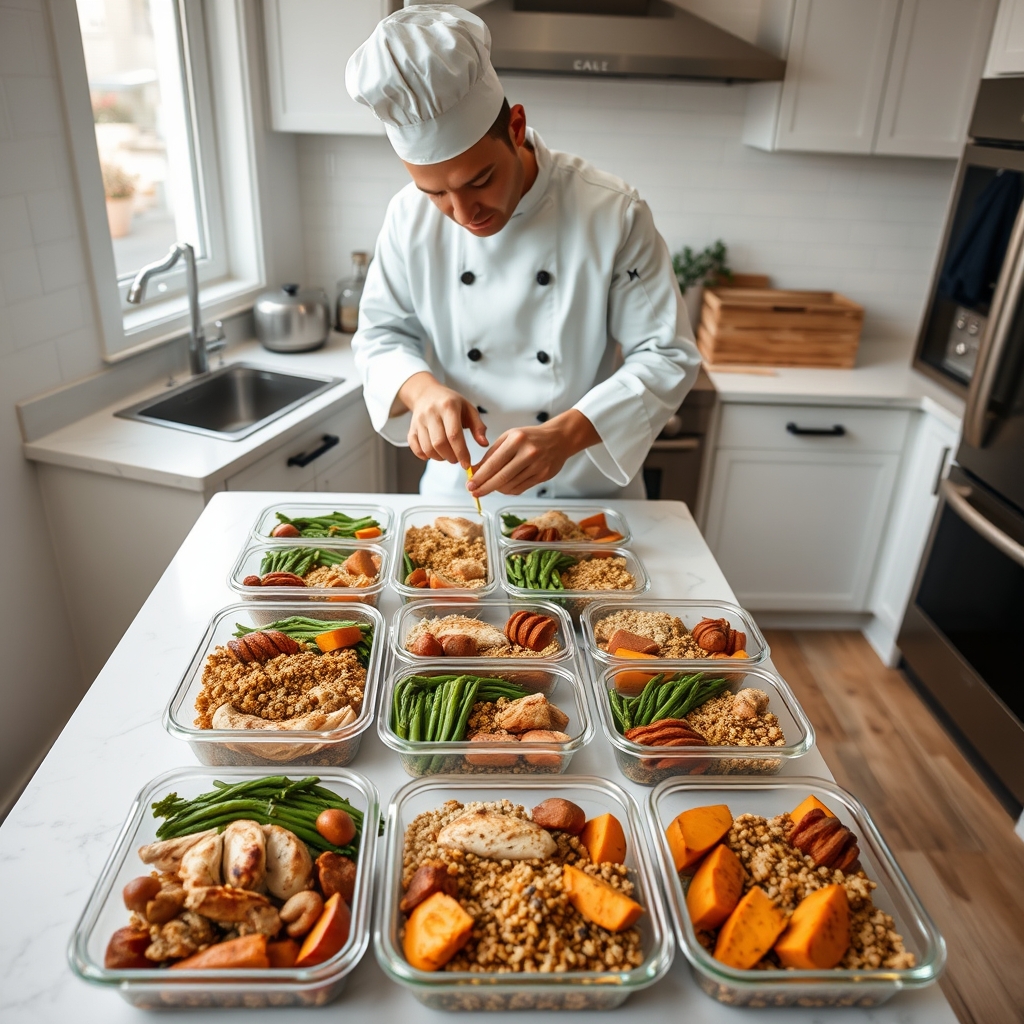
Mark Chen is a personal chef who has worked with competitive runners, CrossFit athletes, and recreational fitness enthusiasts for the past eight years. He holds a food handler certification, a professional culinary diploma from a culinary institute, and has completed a sports nutrition fundamentals course through the International Society of Sports Nutrition (ISSN). More than that, though, he’s spent thousands of hours in kitchens figuring out what actually works when someone has 90 minutes a week to meal prep but wants to eat well and train hard.
When I asked what most people get wrong about nutrition timing, Mark didn’t hedge: “They think meal timing is more important than total calorie and macro intake. You can eat perfectly at the wrong time and still underperform. Get the total number right first. Timing is the polish.” That single insight rewired how I think about talking to readers about fitness nutrition. It’s not magic; it’s math plus consistency plus not hating your food.
I wanted to know how a real chef not a supplement brand, not a fitness influencer thinks about building sustainable meal plans for people who actually have jobs and families. So I asked him 20 questions. Here’s what he actually said.
Who Are You Training For, and What Changed Your Approach?
Riley Chen: You work with a mix of athletes competitive, recreational, desk workers who run on weekends. Do you menu-plan differently for each?
Mark: Completely different. A competitive runner burning 3,500 calories a day needs volume and carbs; a desk worker doing three gym sessions a week needs protein density and satiety. The biggest shift in my practice was realizing I don’t coach athletes. I coach people who train. That distinction means everything. A competitive athlete has a coach managing periodization. My clients? They’re managing kids’ schedules and Slack messages. I build for compliance, not for perfection.
With competitive folks, I align meal prep to their training block high carbs on heavy weeks, more flexibility on recovery weeks. With recreational athletes, I anchor everything to three non-negotiables: hit protein, stay in a calorie range they don’t hate, don’t eat the same thing five days in a row and give up.
Riley Chen: How much variation do you actually need?
Mark: More than people think, less than they want. I typically rotate four main proteins, three carb bases, and four vegetable combos per week. That gives you 48 unique-feeling meals from the same 11 ingredients. It’s not boring, it’s not chaotic, and the grocery list is manageable.
On Nutrition Timing What Actually Matters
Riley Chen: Let’s go straight at this: timing windows, meal frequency, pre-workout windows. What’s real and what’s marketing?
Mark: Okay. Pre-workout meal? Real. You want something in your stomach 60–90 minutes before you train carbs plus a small amount of protein. Doesn’t have to be fancy. Toast with peanut butter, a banana, some applesauce. Competitive athletes care about timing to the hour. Most people? As long as they’re not training fasted or on a full stomach, they’re in the window that matters.
Post-workout is where the pattern matters more than the timing. You want protein and carbs within a few hours. Two hours, four hours less important than getting it done that day. Your total daily intake is doing 95% of the work. Meal frequency? Total protein intake beats meal frequency every time. In my experience, someone hitting 120g protein in two meals will out-perform someone hitting 120g scattered across six small meals, assuming total calories are equal.
Riley Chen: So if someone’s been told they have to eat within 30 minutes of the gym?
Mark: That’s marketing talking to people who already know they’re undereating. If you’re eating enough total protein and calories, whether that post-workout shake happens at 20 minutes or 90 minutes is noise. Focus on the signal: Are you eating enough?
Building a Macro-Balanced Week: The Framework
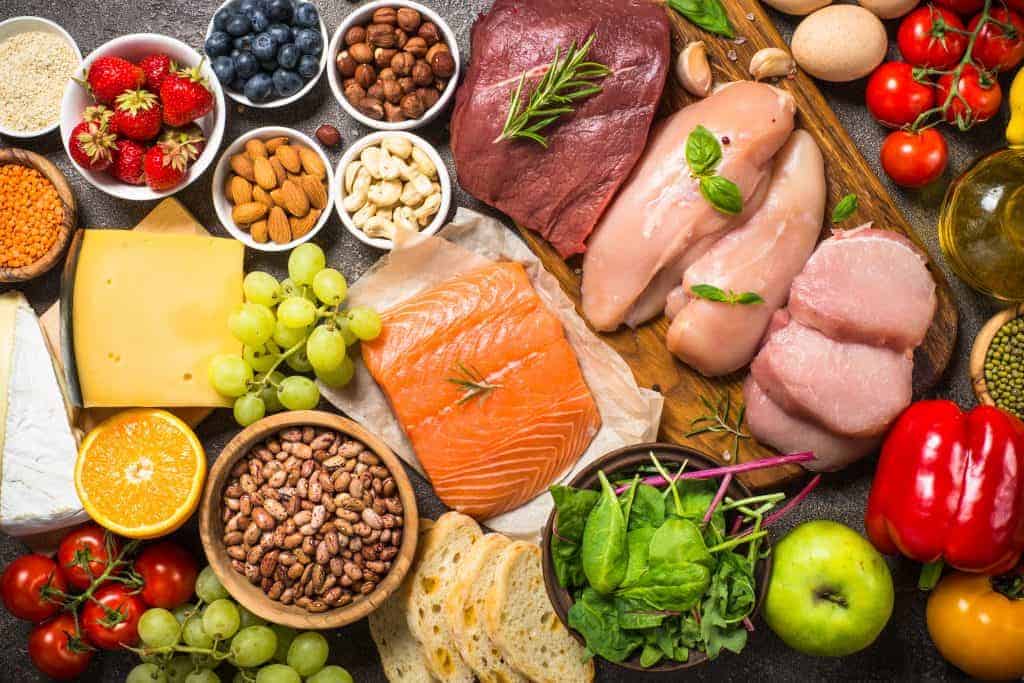
Riley Chen: The Framework walk me through how you actually build a week’s menu for someone training four times a week, trying to stay lean but not obsessive about it.
Mark: Start with three fixed anchors:
- Total daily calories. I typically land in the 1,900–2,200 range for a desk worker training four times a week that’s a real-client estimate, not a formula, and some people run higher or lower. I trial it for two weeks and adjust.
- Protein target. I use roughly 0.8g per pound of bodyweight on training days, 0.65g on rest days. For someone at 160 pounds, that’s about 130g on a workout day, 100g on rest days. Most clients come in under this number, so it’s the first lever I pull.
- Carb timing around training. Carbs go higher on training days roughly 50–55% of total calories and lower on rest days, around 35–40%. That’s observational from years of watching what keeps clients energy-stable and recovery-solid, not a hard clinical number.
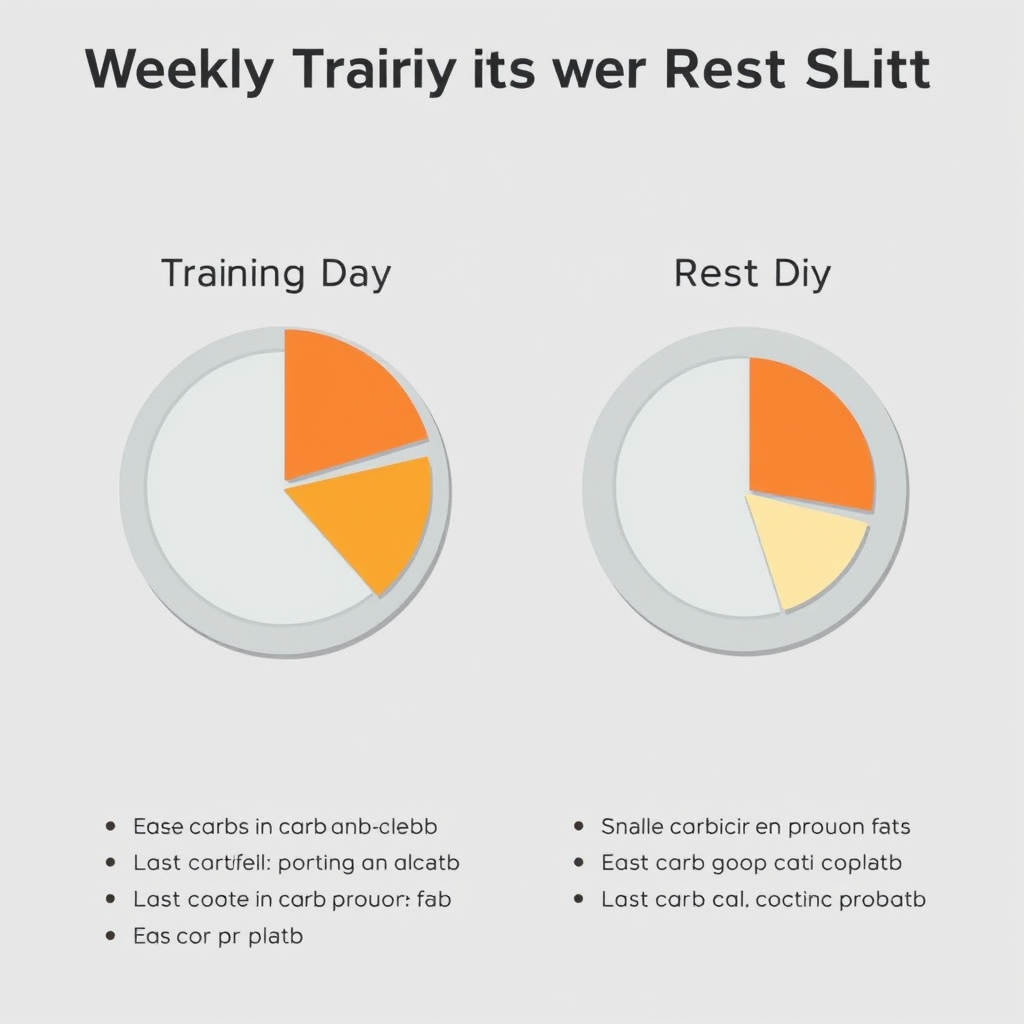
From there, I build backwards. If someone’s at 2,000 calories with 130g protein on a training day, that’s 520 calories from protein. Carbs are around 55%, so 1,100 calories from carbs, leaving 380 for fat. That’s roughly 275g carbs, 42g fat. Not exact I round to whole numbers but that’s the skeleton.
Riley Chen: Does everyone need that carb/fat split?
Mark: No. Some people feel better with slightly more fat, slightly fewer carbs. But in my experience, most people training in a moderate deficit respond well to carb-forward days on training days and a bit more fat flexibility on rest days. It’s a starting place, not a rule.
The Actual Batch-Cooking System
Riley Chen: You’ve told me you do most meal prep work on Sunday and Wednesday. Why split it?
Mark: Because people quit when food gets boring or tired. Sunday, I prep proteins grill four chicken breasts, pan-sear a salmon side, roast ground turkey. I make two hot grain bowls (usually rice and quinoa mix), two starch sides (roasted sweet potato, pasta salad), and raw veggies with dips. That covers Monday through Wednesday, maybe Thursday breakfast.
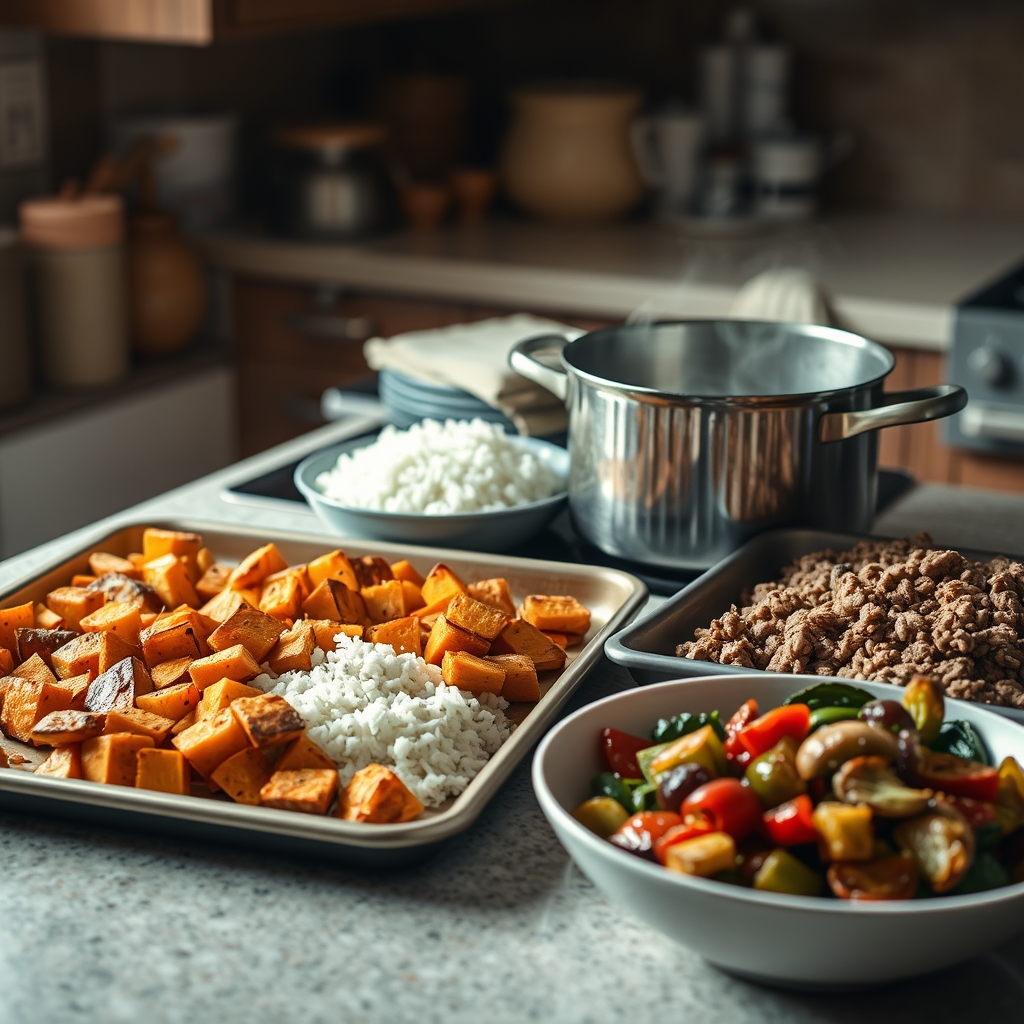
Wednesday, I do the same structure but with different proteins and carbs. Different seasonings, different vegetables. That rotation kills the “meal prep is boring” myth because it actually isn’t you’re eating structure, not variety monotony.
Riley Chen: How long does a session actually take?
Mark: A serious Sunday session? 90 minutes to two hours. Includes shopping, prepping, cooking, and portioning. Wednesday is faster maybe 60 minutes because you’re not also doing inventory and shopping. For someone working with a personal chef, those are the billable hours. For someone doing it themselves, it’s their time investment.
Riley Chen: Is batch cooking cheaper than eating out?
Mark: Dramatically. A week of my meal prep five days of lunch and dinner comes to roughly $50–70, depending on protein prices that week. A gym person eating out? Easily $70–90 a week in salads, bowls, or sandwiches. Over a year, that’s a meaningful difference easily $1,000 or more. It’s not tiny.
Protein: The Hardest Variable

Riley Chen: The Hardest Variable Most people undershoot protein. Why is that so common?
Mark: Because protein is the least palatable macro. People like carbs and fats more they’re easier to eat, they taste better, they hit reward centers harder. Protein is satiating, which is great for fat loss, but it doesn’t feel good on day one. You have to want to hit it.
My system is to anchor every meal to a protein portion first, then build around it. If lunch is “six ounces of grilled chicken,” I portion that out, then add carbs and veggies to taste. Most people do it backwards they fill a plate with rice, add some chicken, and end up with 25g protein when they needed 40g.
Riley Chen: What’s the cheapest way to hit protein targets?
Mark: Chicken thighs not breasts ground turkey, eggs, Greek yogurt, and canned tuna. Thighs have more fat, which means more flavor, so you don’t get tired of them. Ground turkey is cheaper per pound than ground beef. Eggs are absurdly cost-effective roughly 25g protein per three eggs at around $0.50 per serving depending on where you shop. Greek yogurt lands in the same ballpark. Canned tuna is shelf-stable and protein-dense.
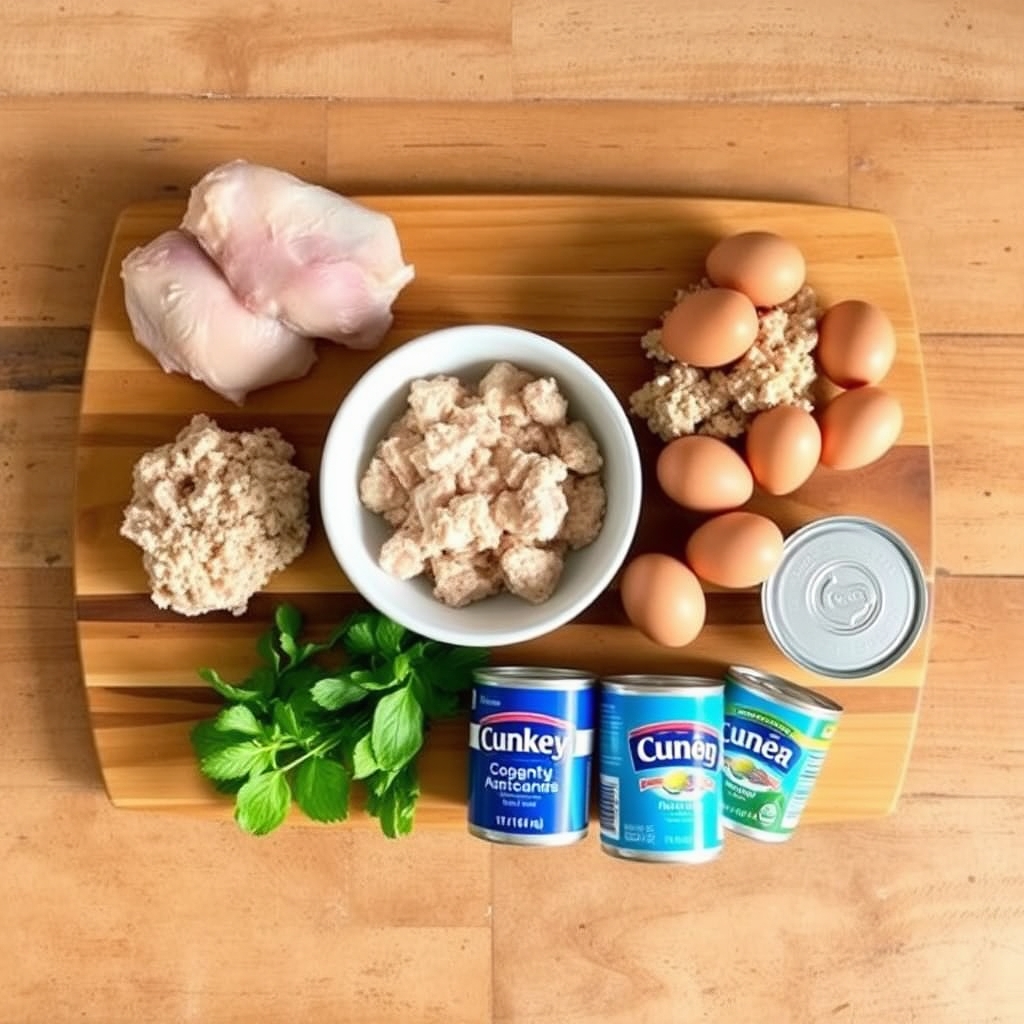
If I’m building a week for someone on a budget say $200 for the full week of meals protein sources run heavy on those four. You use beef or fish as a special rotation, not a staple.
On Carbs, Fiber, and Digestion During Training
Riley Chen: You mentioned fiber with carbs. Most meal-prep content just says “rice and broccoli” but fiber can cause issues if you’re training hard.
Mark: Exactly. This is where generic advice breaks down. If someone’s doing CrossFit at 6 a.m., they don’t want five grams of fiber in their pre-workout meal. They want white rice, toast, or a banana. Fiber is great, but timing matters here pre-workout, less is more.
Post-workout? Fiber’s fine. A whole-grain carb source, veggies, whatever. During training? Stick to simple carbs and lower fiber. It’s not a daily rule; it’s a meal-timing rule.
For overall fiber intake, I target 30–40g daily for most clients, spread across non-training meals. Most people I see are at 15–20g, so that’s a lever. But I’m not hitting that on a training day in one meal. I’m spreading it across the other meals.
Budget Constraints: Real Numbers
Riley Chen: What’s realistic if someone says “I have $150 a week for meal prep”?
Mark: That’s roughly $21 per day, so five lunches and five dinners. You can do it. You’re anchoring to cheaper proteins chicken thighs, ground turkey, eggs and buying in bulk. Rice, pasta, and frozen vegetables are your friends. You skip the grass-fed beef and wild salmon. You’re not poor-eating; you’re smart-eating.
At that price point, I’d build a week like this:
- Protein base: 4 lb chicken thighs (~$12), 2 lb ground turkey (~$8), 18 eggs (~$4). Total: $24.
- Carbs: 10 lb potatoes (~$6), 5 lb rice (~$3), pasta (~$2). Total: $11.
- Vegetables: Frozen broccoli, carrots, peas (~$12).
- Dairy and odds: Greek yogurt, cheese (~$8).
That lands around $55–60 in proteins and whole foods. You have $90–95 left for the week maybe some bread, oats, cooking oil, spices. It’s tight but doable, and it’s better food than a person eating $150 worth of takeout.
Riley Chen: Does that change at higher budgets?
Mark: At $300 a week, you’re adding grass-fed beef, wild fish, organic produce, and some convenience items pre-cooked grains, better cheeses. At $500, you’re adding things like bone broth, specialty proteins, and high-quality oils. The macro framework doesn’t change; you’re just upgrading ingredient quality and convenience. The core system works at every price point.
Sample Meal: The Baseline Framework
Riley Chen: Give me a real lunch and a real dinner.
Mark:
Lunch: Grain Bowl
- 6 oz grilled chicken thigh (seasoned with salt, pepper, garlic powder)
- 1 cup cooked white rice
- 1 cup roasted broccoli and bell peppers (tossed in olive oil)
- 2 tbsp tahini dressing (tahini, lemon juice, water, salt)
- Cherry tomatoes on the side
Rough macros: ~45g protein, ~65g carbs, ~12g fat. Approximately 550 calories. You can scale this add rice for more volume, swap chicken for ground turkey, change the vegetable. It’s a system, not a recipe.
Dinner: Sheet Pan Protein
- 7 oz ground turkey (browned with onion, garlic, salt, pepper)
- 1.5 cups sweet potato (roasted)
- 2 cups mixed roasted vegetables (zucchini, carrots, Brussels sprouts)
- 1 tbsp olive oil for cooking
- Hot sauce for flavor
Rough macros: ~42g protein, ~70g carbs, ~8g fat. Approximately 580 calories.
Both of those scale up or down. Cook double the ground turkey and freeze half. Prep roasted vegetables in bulk Sunday and portion them into containers. The structure is: one protein, one starch, one vegetable, one fat source, one seasoning element. That’s your template.
Macro Balancing Without Apps
Riley Chen: Some people balk at tracking. How do you eyeball macros?
Mark: Honestly? Apps are fine if someone will use them for two weeks to calibrate. But for maintenance, I use the plate model:
- One-third of the plate: protein (your fist-sized portion)
- One-third of the plate: carbs (your cupped-hand portion)
- One-sixth of the plate: fat (thumb-sized or less of added oil/butter)
- One-sixth of the plate: vegetables (fill freely)
That rough visual gets you into a macro zone that works for most people roughly 30% protein, 40% carbs, 30% fat which aligns with what I prescribe. It’s not precise, but it doesn’t need to be. Precision over-promises; pattern recognition actually delivers.
Riley Chen: And if someone is trying to lose fat?
Mark: Same plate, but you reduce the carb portion to a cupped hand half-full, add a bit more vegetables, keep protein the same (satiating) and fat the same (hormonal health). That shift alone creates a calorie deficit without counting in my experience, most people drop 300–500 calories a day from that simple visual change. Over a month, that’s real.
Seasonal Eating and Meal Prep Rotation
Riley Chen: Does your system change by season?
Mark: Absolutely. In summer, I’m using fresh vegetables, lighter carbs (more white rice, less pasta), and grilled proteins. Winter, I’m roasting root vegetables, using heartier grains, and doing more braised or slow-cooked proteins. Spring and fall are transitions lots of berries and greens in spring, squash and hearty greens in fall.
The macros stay consistent, but the feel changes. That’s the secret to long-term compliance. If someone’s eating the same thing year-round, they quit. Seasonal rotation keeps it fresh without reworking the entire system.
Riley Chen: Does produce cost change with season?
Mark: Dramatically. Broccoli and carrots are cheap year-round. Berries are cheap in summer, expensive in winter. Squash is cheap in fall, expensive in spring. I plan around what’s cheap that week. If Brussels sprouts are on sale, they’re dinner for four nights. It’s not rigid; it’s responsive.
Equipment: What You Actually Need
Riley Chen: A lot of meal-prep marketing sells you a $200 set of containers and a fancy blender. What’s real?
Mark: You need three things: a large cutting board, a good knife, and half-sheet pans. That’s roughly $80 total. Everything else is optional.
I’d add:
- Glass storage containers with lids buy a set of 10 for $25–30 and they last five years.
- A rice cooker $30, and it frees you to do other prep work.
- A large stainless-steel pot (for grains, soups) $40.
- A sheet pan set (at least two) $30.
That’s around $155 in equipment and you’re fully functional. A food processor is nice but not necessary. A fancy blender is marketing. A scale is useful for portion consistency but optional.
Riley Chen: What about instant pots or air fryers?
Mark: Instant pots save time on certain proteins tougher cuts of beef, dried beans. But a Dutch oven does the same thing, slower. Air fryers are great for reheating and are faster than an oven, but a regular oven works. Neither is essential. They’re convenience buys, not foundational. Buy them when you’re stable with the routine, not before.
Storage and Food Safety
Riley Chen: How long can food actually sit in the fridge?
Mark: Cooked proteins keep for three to four days. Cooked grains keep for four to five days. Cooked vegetables keep for three to four days. Raw vegetables (depending on type) keep for five to seven days. The conservative rule: if it smells off or looks discolored, don’t eat it.
I prep Sunday for Monday–Wednesday and Wednesday for Thursday–Friday, with the assumption that food made Sunday goes in the fridge Sunday and is eaten by Wednesday. Same with Wednesday prep eaten by Saturday. Anything beyond that gets frozen. If someone’s only eating four days a week, I’ll prep Sunday and Thursday instead of Sunday and Wednesday.
Riley Chen: Freezing?
Mark: Most cooked meals freeze well. Portion them into containers, let them cool, and freeze immediately. They keep for one to two months. When you want them, thaw in the fridge overnight or eat them cold (depending on the meal). Ground turkey, chicken, and rice all freeze and thaw without losing quality. Vegetables lose some texture but are fine nutritionally.
Supplements and Whole Food
Riley Chen: Do your clients need protein powder?
Mark: No. It’s convenient, not essential. If someone’s on a very tight budget or extremely high protein target, it helps. Greek yogurt, eggs, and canned tuna hit the same target cheaper and with more satiety. Protein powder is a time-saver and a taste preference, not a necessity. I see people who use it as a crutch instead of eating real food, and they never feel as good.
Creatine monohydrate is the one supplement I actually recommend it’s cheap, well-studied, and works. 5g daily, year-round. Everything else is either too expensive for the effect or marketing.
Riley Chen: What about multivitamins?
Mark: If someone’s eating real food with variety colorful vegetables, whole grains, some fruit they probably don’t need one. If they’re eating chicken and rice monotonously, sure, a basic multivitamin is insurance. But the food is always the first move.
Common Mistakes in Meal Prep
Riley Chen: What do you see most often?
Mark:
- Too much volume, not enough flavor. Someone eats 1,500 calories of unseasoned chicken and rice and wonders why they hate it. Season aggressively. Hot sauce, lemon, garlic powder, vinegar calorie-free flavor.
- Forgetting about adherence. The perfect macro plan that someone hates is worse than a mediocre plan they’ll actually eat. I prioritize “will you eat this for a week” over “is this textbook optimal.”
- Trying to be too fancy. Meal prep is not cooking school. It’s protein, carbs, vegetables, salt, pepper. Some lemon or soy sauce. That’s the system. People try to make teriyaki bowls and Thai curries and burn out after week one.
- Not accounting for work schedule. Someone plans meals for a hypothetical routine and then faces Tuesday with no time. I build prep systems that assume chaos. More frozen options, more grab-and-go, simpler recipes.
- Treating it as a diet. Meal prep is infrastructure. A diet is restrictive. Meal prep should make eating well the default, not the hard choice.
What Happens When Life Gets Chaotic
Riley Chen: You work with busy people. What’s the fallback?
Mark: I have a “chaos protocol.” If someone misses their meal prep Sunday, I give them a list of 15-minute backup meals: rotisserie chicken, bagged salad, canned beans, eggs, plain Greek yogurt, berries, nuts, whole-grain bread. They can throw together 45g protein and 60g carbs in about eight minutes. It’s not ideal long-term, but it keeps them from nosediving into takeout and losing the entire week.
I also prep frozen components. If someone doesn’t cook their grains and proteins Sunday, I’ll have them freeze rice and ground turkey in portions. Then Wednesday or whenever they find time, they’re thawing and plating, not starting from scratch.
The goal isn’t perfection. It’s consistency over the month. One chaotic week doesn’t undo three weeks of solid eating. But a month of chaos? That derails everything. Prep systems need resilience.
Downloadable Meal Prep Template
Mark provided me with his actual meal-planning template the one he uses when working with new clients. It’s simple: a week grid, slots for breakfast/lunch/dinner, columns for calories and macros, a shopping list generator, and a Sunday/Wednesday batch-cooking checklist.
You can use it as a starting point. Fill in your total calorie target, protein target, and carb preference. Then list proteins you like, carb bases you’ll eat, and vegetables that don’t bore you. The template handles the portioning math.
[Download Meal Prep Template → link to downloadable PDF/Google Sheet would go here]
FAQ: What You Need to Know
How do I know if my macros are actually right for me?
Eat at that macro level for two weeks and track your energy, appetite, and body composition trend. If you’re hungry all day, you probably need more protein or fat. If you’re sluggish, you might need more carbs on training days. Adjust by 5–10% and try again. Your macros aren’t fixed; they’re a starting hypothesis.
Can I meal prep if I eat vegetarian or vegan?
Completely. The system doesn’t change; the protein sources do. For vegetarian: eggs, Greek yogurt, cottage cheese, chickpeas, lentils, tofu. For vegan: tofu, tempeh, lentils, chickpeas, hemp seeds, pea protein powder. You’ll likely need slightly higher total volume to hit the same protein target, but the framework is identical. Buy dried lentils in bulk they’re cheap and shelf-stable.
What if I hate cooking?
Start with a rotisserie chicken, bagged salad, canned beans, white rice, and frozen vegetables. That’s a full meal you assemble, not cook. Do that for two weeks. Once you’re comfortable with the portioning rhythm, graduate to cooking proteins in bulk. You don’t have to enjoy cooking to meal-prep effectively; you just have to show up.
How much should I expect to spend on meal prep if I hire a personal chef?
Mark’s rate runs $25–$35 per hour, depending on location and the complexity of dietary needs. A two-hour Sunday session is $50–$70. Over four weeks, that’s $200–$280. Most clients view it as a long-term investment money that prevents food waste, eating out, and skipped meals.
Should I count macros forever?
No. Count for 2–4 weeks to calibrate your portions and understand what hitting your targets actually looks like on a plate. Then use the visual plate model to maintain. You’re training your eye, not your apps. Once you know what 150g protein looks like across a day, you don’t need a scale anymore.
What This Means for Your Actual Eating
Mark’s approach isn’t about perfect adherence or crushing macros obsessively. It’s about making eating well the default by removing friction. You prep two hours on Sunday and Wednesday so that Monday through Friday require zero decision-making. Your lunch is already made. Your protein is cooked. Your vegetables are roasted. You’re not “meal prepping” you’re just eating what’s in your fridge.
The nutrition timing stuff is real, but it’s second-order. Get your total calories and protein right, eat around your training, and season aggressively so you actually want to eat the food. Everything else is optimization.
Start with one change: pick a protein, a carb, and a vegetable. Cook all three in bulk. Portion into containers. Eat from those containers for lunch Monday through Friday. That’s the system. Everything else builds from there.
Mark’s frameworks are based on practices he’s refined over eight years; the budget estimates, equipment recommendations, and storage guidelines reflect current retail observations and his client feedback as of this interview date. Food prices and equipment costs vary by region and retailer.
Recommended Equipment (Not Required)
| Item | Why It Matters | Rough Cost |
|---|---|---|
| Large Cutting Board (18″ × 24″) | Provides ample workspace and speeds up meal prep. | $20–$30 |
| Chef’s Knife (8″ Blade) | A sharp, quality knife is safer, faster, and more precise. | $35–$60 |
| Half-Sheet Pans (At Least 2) | Ideal for batch-roasting vegetables, proteins, and meal prep. | ~$30 (for two) |
| Rice Cooker | Cooks grains automatically, freeing up stovetop space. | $25–$40 |
| Glass Storage Containers (10-Pack) | Durable, reusable, and dishwasher-safe for meal storage. | $25–$35 |
| Large Stainless-Steel Pot | Essential for cooking grains, soups, stews, and pasta. | $30–$50 |
| Food Scale (Optional) | Helpful for portion control and recipe accuracy, but not essential. | $15–$30 |
Start with the top three. Add the others as your routine stabilizes.