

Dr. Michael Breus holds a PhD in clinical psychology with a specialty in sleep medicine and is a diplomate of the American Board of Sleep Medicine. He’s published research on chronobiology and sleep architecture, and runs a clinical sleep practice. Here’s what he said that actually changed how we think about sleep optimization: your circadian rhythm isn’t a switch you flip at bedtime it’s a 24-hour biological system that gets stronger or weaker depending on what you do during the day. The implication is that most sleep advice gets the timing wrong.
The Circadian Rhythm Isn’t a Bedtime Thing-It Starts When You Wake Up
The single most useful insight from our conversation: your circadian rhythm is entrained (synchronized) primarily by light exposure timing, not by your bedtime routine. Most sleep advice focuses on what you do at night. Dr. Breus emphasized that the morning is where the real leverage lives.
Q: When people say “circadian rhythm,” what are they actually talking about?
Dr. Breus: “Your circadian rhythm is a roughly 24-hour biological cycle that regulates sleep-wake timing, hormone release, body temperature, and cognitive performance. It’s controlled by a neural cluster in the hypothalamus called the suprachiasmatic nucleus the SCN. That nucleus responds most strongly to light, particularly to blue wavelengths in the morning and early afternoon. If you get bright light exposure between 6 and 8:30 a.m., you’re sending a signal: ‘This is morning. Prepare for wakefulness.’ That signal propagates through your entire body via melatonin suppression, cortisol rise, and body temperature elevation. Miss that window, and your rhythm drifts later.”
Q: How much light are we talking about? Can a lamp work, or does it have to be sunlight?
Dr. Breus: “Natural sunlight is around 10,000 lux. A typical office light is roughly 300–500 lux. A bedside lamp is maybe 50–100 lux. For circadian entrainment getting your rhythm to lock onto a consistent schedule you need at least 2,500–3,000 lux, and ideally closer to 5,000 lux or more. A 10-minute walk outside in the morning does more for your circadian alignment than two hours under artificial light. If outdoor light isn’t possible you live far north, it’s winter, your schedule doesn’t allow it then a 10,000-lux light box used for 20–30 minutes in the early morning is evidence-based. But sunlight is free and more complete, because it contains the full spectrum.”
This is the insight most people miss: you can’t out-sleep-hygiene a weak circadian rhythm. A consistent bedtime means almost nothing if your morning light exposure is random.
Sleep Architecture: Why the Timing of REM and NREM Matters
Q: Let’s break down what actually happens inside a night of sleep. What’s the architecture?
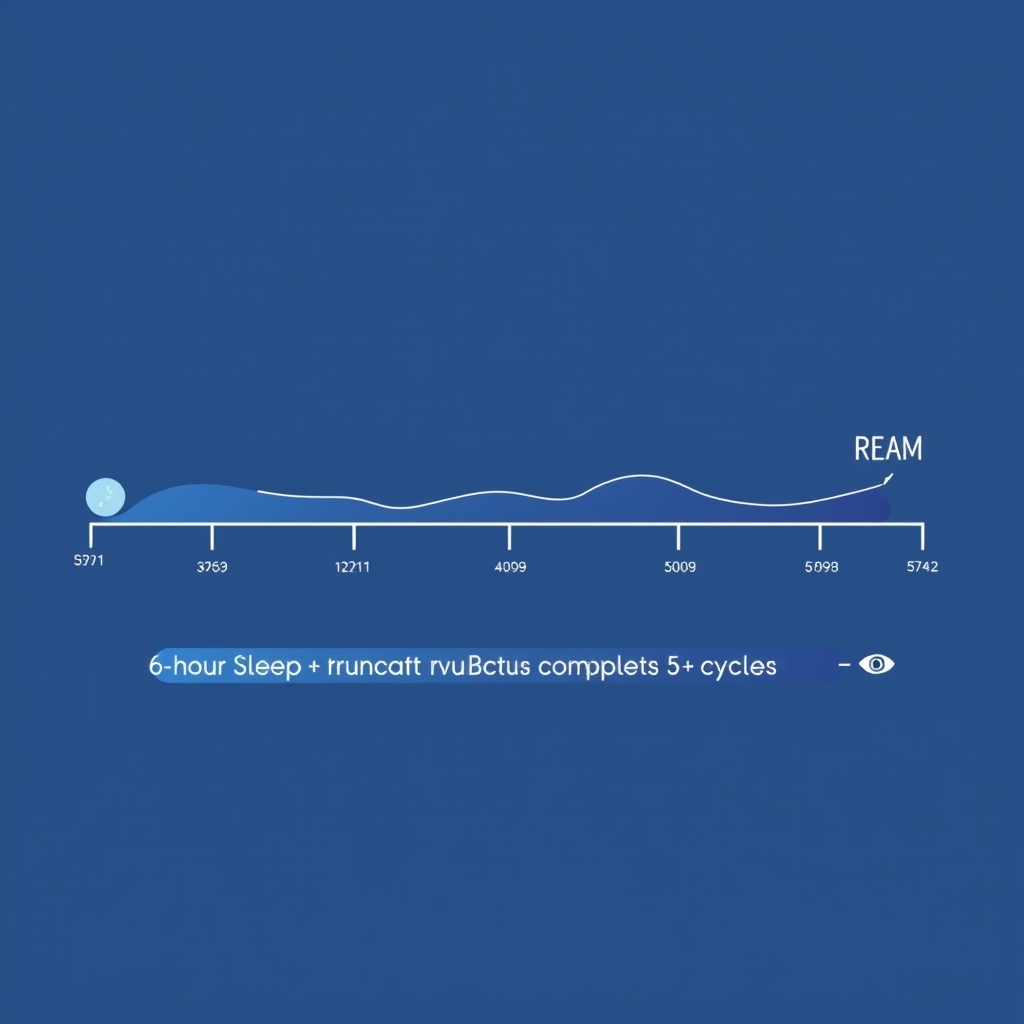
Dr. Breus: “A typical night is divided into roughly 90-minute cycles. Each cycle has two main components: NREM non-REM and REM. NREM has three stages. Stage 1 is the lightest that drifting-off phase, maybe 5 minutes. Stage 2 is when you’re asleep but not deeply maybe 45 minutes. That’s where sleep spindles happen, brief bursts of brain activity that consolidate memory. Stage 3 is deep sleep, or slow-wave sleep another 15–20 minutes on average. That’s the restorative phase where growth hormone peaks, immune function ramps up, and metabolic waste clearance happens.
After NREM, you flip to REM rapid eye movement sleep. That’s where vivid dreams happen, and it’s critical for emotional processing, memory consolidation, and learning. Early in the night, NREM dominates. You spend maybe 5 minutes in REM in your first cycle, but 30–45 minutes in REM in your fifth cycle. That’s why sleep timing matters. If you sleep 6 hours, you’re getting maybe three full cycles. You’re probably missing the last two cycles, which are heavy in REM. If you sleep 7.5 or 8 hours, you get 5–5.5 cycles. That’s the difference between consolidating emotional memory and not.”
Q: How long is a normal sleep cycle the complete NREM-plus-REM block?
Dr. Breus: “About 90 minutes on average, but there’s individual variation. Some people run closer to 80 minutes, others 100. It’s partly genetic. The point is: if you’re interrupted or your sleep is fragmented, you’re breaking that cycle. Your brain doesn’t get to complete the REM phase. Over time, that builds up a REM sleep debt, which shows up as poor emotional regulation, slower learning, and in some people, mood issues.”
This matters for shift workers and travelers. A 4-hour nap won’t give you a complete REM phase if you’re on your fourth cycle. A 90-minute nap done right can hit a full cycle and actually help.
Light Exposure Timing: The Circadian Anchor
Q: You mentioned the window between 6 and 8:30 a.m. What happens if someone’s schedule doesn’t allow outdoor light until 10 a.m.?
Dr. Breus: “The SCN is still sensitive to light at 10 a.m., but the phase-shifting effect is weaker. You’ll still get entrainment, just a bit softer. The real problem is consistency. If you get bright light at 10 a.m. one day and 2 p.m. the next, your circadian rhythm will be noisy it’ll drift. The rhythm is more about regularity than the exact hour. That said, earlier is genuinely better. 6–8:30 a.m. is the ‘golden window’ because that’s when the SCN is most sensitive. There’s also an evening window about 8 p.m. to 10 p.m. where light exposure will delay your rhythm, pushing bedtime later. If you’re on a late schedule and want to stay late, evening light helps. But if you’re trying to sleep at 10 p.m. and you’re on your phone with full brightness until 10:30, you’re actively resetting your clock backward.”
Q: What about blue light glasses or red light?
Dr. Breus: “Blue light glasses, if they actually block blue wavelengths, can help prevent circadian disruption in the evening. But they’re not a substitute for morning light. Red light has roughly zero effect on the SCN it doesn’t entrain the rhythm. Some people use red light for recovery or sleep onset cues, and there’s some evidence it can be calming, but it’s not a circadian tool. If you’re trying to shift your rhythm, you need bright light ideally 5,000+ lux, and ideally blue-enriched, which natural sunlight is.”
Temperature, Caffeine, and Alcohol: The Forgotten Levers
Q: How important is room temperature for sleep quality?
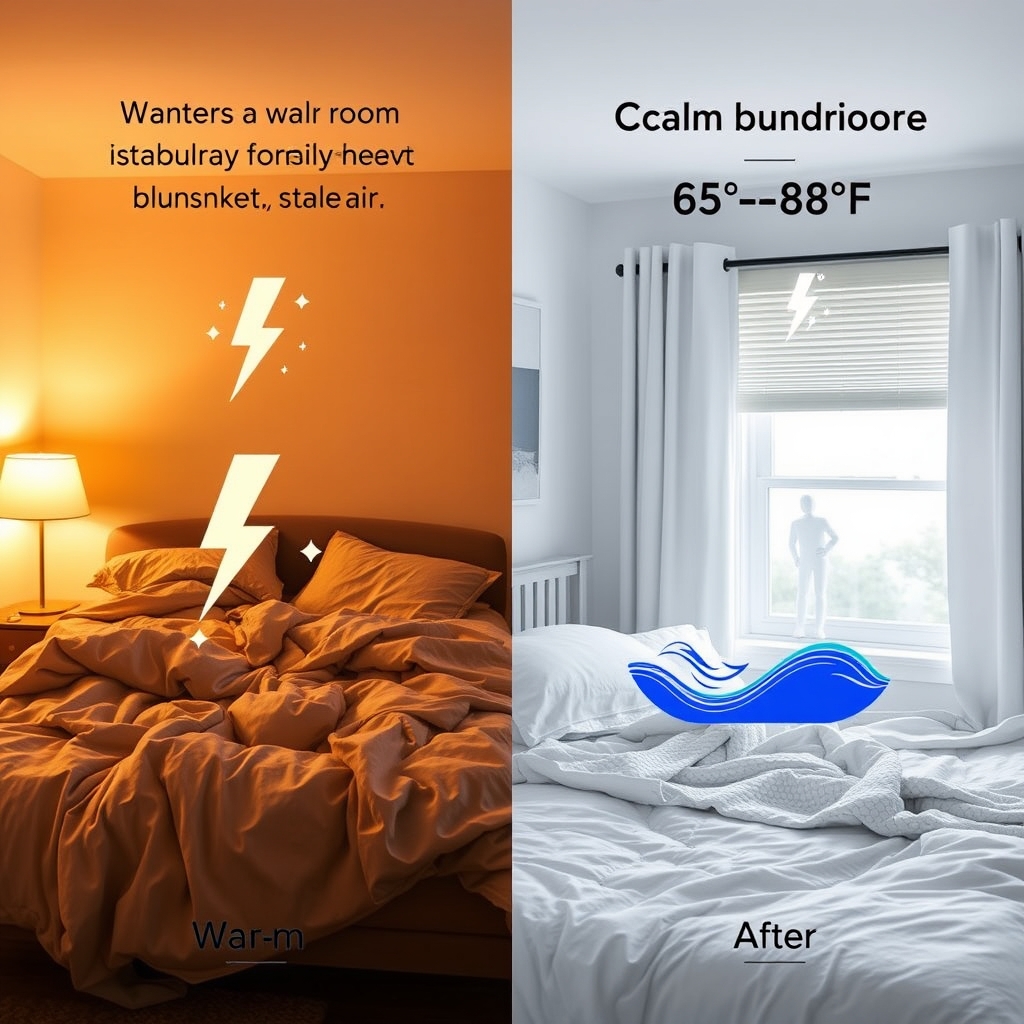
Dr. Breus: “Very. Your core body temperature drops by roughly 2–3 degrees Fahrenheit as you fall asleep. A cool room accelerates that process. The ideal range is around 65–68 degrees Fahrenheit for most people, but there’s individual variation. The mechanism is that your body needs to dissipate heat to trigger the sleep response. If the room is 75 degrees, your body has to work harder to cool down, which disrupts the transition into sleep and fragments REM sleep particularly. What’s interesting is that people often do the opposite they pile on blankets and make the room warm and then they’re surprised sleep is choppy. A cool room plus a warm blanket is the winning combination.”
Q: What about caffeine timing? How long does it actually stay in your system?
Dr. Breus: “Caffeine has a half-life of roughly 5–6 hours on average. That means if you drink 200 mg of coffee at noon, you’ve got around 100 mg in your bloodstream at 5 or 6 p.m., and about 50 mg at 10 or 11 p.m. Even 50 mg can suppress melatonin and delay sleep onset by 20–30 minutes, depending on sensitivity. The cutoff I usually recommend is no caffeine after 2 p.m. if your bedtime is 10 p.m. Some people are fast metabolizers and can handle a cup at 3 p.m. Others are slow metabolizers and should cut off at 1 p.m. You can get a sense of your own sensitivity by tracking sleep quality against caffeine timing for a week or two.”
Q: And alcohol-what’s the actual mechanism there?
Dr. Breus: “Alcohol is a sedative, so it does help you fall asleep faster. But it fragments sleep architecture, particularly REM. Alcohol suppresses REM sleep in the first half of the night, and then there’s a REM rebound in the second half, which disrupts sleep continuity. You might sleep eight hours but wake up feeling wrecked because the sleep was fragmented. The effect is dose-dependent one drink might have a minimal impact, three drinks is a significant one. Tolerance builds over weeks, so chronic drinkers stop noticing the effect, but it doesn’t disappear. If sleep quality is a priority, alcohol closer than 3–4 hours before bedtime is counterproductive.”
Jet Lag and Shift Work: Practical Circadian Management
Q: How should someone approach a long flight eastbound versus westbound? Are they different?
Dr. Breus: “Yes, significantly. Eastbound flights are harder because you’re compressing your day you’re ‘springing forward,’ and your circadian rhythm naturally resists that. Most people’s circadian rhythm is actually slightly longer than 24 hours, closer to 24.2 hours on average. So delaying is easier than advancing. Westbound ‘falling back’ aligns with your natural rhythm. For eastbound, I recommend shifting your light exposure before you travel. Three to five days before the flight, start shifting your light exposure earlier and melatonin use a bit earlier. For westbound, shift it later. The rule is: light exposure in the direction you’re traveling. If you’re going east, get bright light in the morning and avoid evening light. If you’re going west, get light in the evening and avoid morning light. On the plane, set your watch to the destination time immediately, eat and sleep according to that schedule, and manage light exposure accordingly.”
Q: How much melatonin should someone actually take for jet lag, and when?
Dr. Breus: “This is where people usually get it wrong. Most people use melatonin as a sedative take a big dose at bedtime and hope for sleep. That’s not how it works circadianly. Melatonin’s primary function is signaling to your body that it’s time to sleep, not forcing sleep. The dose is much smaller than most people use. 0.5 mg to 3 mg is the effective range for circadian entrainment. Doses above 5 mg don’t work better you’re just wasting it. Timing is critical. You want to take it 30 minutes to one hour before your desired bedtime in the destination timezone. It takes about 20–30 minutes to take effect. Taking a 10 mg melatonin at midnight because you want to sleep is treating it like a sleeping pill, not a circadian drug. The data supports 0.5–3 mg taken at the right time.”
Q: What about shift workers on a rotating schedule? Can circadian rhythm optimization help there, or is it just rough?
Dr. Breus: “It’s rough, but there are evidence-based mitigations. First, if you have any control over shift rotation, forward-rotating shifts day to evening to night, rather than the reverse are easier on the circadian rhythm. That aligns with the natural lengthening of the circadian day. Second, strategic light exposure: if you’re working a night shift, bright light during your work hours and darkness before your sleep hours helps anchor your rhythm to that schedule. Sleep in a dark room blackout curtains are non-negotiable. Third, melatonin at the beginning of your desired sleep window, and caffeine timing adjusted to your work schedule, not a clock schedule. Some shift workers benefit from napping before a night shift a 20-minute nap to boost alertness, not to build sleep debt. But the honest answer is: rotating shifts genuinely disrupt the circadian system, and no amount of optimization fully solves that. The best you can do is reduce the damage.”
Supplements, Tracking, and When to See a Sleep Doctor
Q: Beyond melatonin, are there other supplements with evidence for sleep?
Dr. Breus: “Magnesium has some evidence, particularly for people who are magnesium-deficient which is common. Studies suggest 200–400 mg of bioavailable magnesium can improve sleep quality, particularly deep sleep. Glycine, an amino acid, has a handful of decent studies showing modest improvements in sleep onset and quality, typically 3–5 grams at bedtime. L-theanine, which is in green tea, can reduce caffeine jitters and has some evidence for relaxation, but it’s mild. Valerian root and passionflower have traditional use and some older evidence, but modern studies are mixed. Ashwagandha has evidence for anxiety reduction, which can help sleep indirectly. Here’s the thing: none of these are substitutes for light exposure, temperature control, and circadian consistency. They’re add-ons. If someone’s circadian rhythm is all over the place, a melatonin supplement won’t fix it. But if the foundations are solid and sleep is still choppy, one of these might help.”
Q: Is sleep tracking valuable, or does obsessing over numbers hurt?
Dr. Breus: “Both. Wearables and apps can be useful for spotting patterns if you notice that caffeine after 3 p.m. consistently worsens your sleep, that’s actionable. But sleep tracking has a dark side. The devices often overestimate sleep duration and underestimate how long it takes to fall asleep, which creates anxiety. People start obsessing over sleep scores and feeling worse if they miss an ‘optimal’ window. I recommend tracking for a week or two to identify patterns, then backing off. The most important metric is subjective: How do you feel the next day? If you’re alert and functional, your sleep is probably fine, even if a device says you only hit 85 minutes of deep sleep.”
Q: When is it time to see a sleep specialist?
Dr. Breus: “If you’re consistently sleeping less than 6.5 hours despite trying standard sleep hygiene, if you snore loudly or have witnessed apnea events, if you have excessive daytime sleepiness, or if you have irregular sleep that doesn’t respond to circadian optimization over 4–6 weeks, see a specialist. Sleep apnea, periodic limb movement disorder, and narcolepsy require diagnosis and treatment. Self-optimization can’t substitute for that. Most people can fix sleep with light, temperature, consistency, and caffeine timing. If those don’t work, something else is probably going on.”
What This Means If You’re Buying Sleep Products
After this conversation, here’s what actually matters:
- Light exposure comes before everything else. If you’re investing in a sleep product, a 10,000-lux light box for morning use beats a $300 mattress pad if your circadian rhythm is chaotic. Sunlight is free and better.
- Temperature control is non-negotiable. A cool room (65–68°F) matters more than a premium pillow. Blackout curtains matter more than a weighted blanket.
- Melatonin supplements work, but most people use them wrong. 0.5–3 mg taken 30–60 minutes before your desired bedtime, not a 10 mg mega-dose at the last minute.
- Magnesium might help, but only if you actually have a deficiency. It’s worth trying, but it’s not a shortcut if your circadian rhythm is unstable.
- Sleep trackers are useful for pattern-spotting, not for optimization chasing. Track for two weeks, identify correlations, then stop. The anxiety of chasing a sleep score will hurt you more than the data will help.
FAQ
What’s the difference between circadian rhythm and sleep debt?
Circadian rhythm is the 24-hour biological cycle that times wakefulness and sleep. Sleep debt is cumulative it’s what happens when you consistently get fewer than 7–9 hours. You can have a strong circadian rhythm (consistent sleep-wake schedule) and still have sleep debt (not enough hours). Both matter.
Can you shift your circadian rhythm quickly, like in one day?
No. A single night of bright light exposure or one dose of melatonin creates a phase shift of maybe 30 minutes to one hour. Real circadian entrainment takes 3–5 days, which is why jet lag takes a week to fully resolve. For critical early morning performance, strategic light and caffeine timing can help acutely, but the rhythm itself shifts slowly.
Is 6 hours of sleep ever enough if the sleep quality is high?
For most people, no. Six hours is roughly 4 complete cycles, which means you’re missing REM-heavy cycles 4 and 5. Some people with shorter natural sleep needs (around 10% of the population) can function on 6 hours, but they’re rare. If you consistently feel okay on 6 hours, you’re either in that rare group or you’re operating with unnoticed sleep debt. The honest answer: try a week of 8 hours and see how you feel.
Does exercise timing affect sleep?
Yes. Intense exercise within 3 hours of bedtime elevates core body temperature and cortisol, which can delay sleep onset. Exercise earlier in the day morning or early afternoon actually strengthens circadian rhythm alignment and improves sleep quality. Moderate activity is fine in the evening.
What’s the deal with “catching up” on sleep on weekends?
One night of extended sleep (10–11 hours) won’t fully repair sleep debt from a week of 6-hour nights, and it disrupts your circadian rhythm. A better approach: consistent sleep timing, even on weekends. If you must catch up, add one extra hour on Saturday and Sunday, but keep your wake time consistent.