
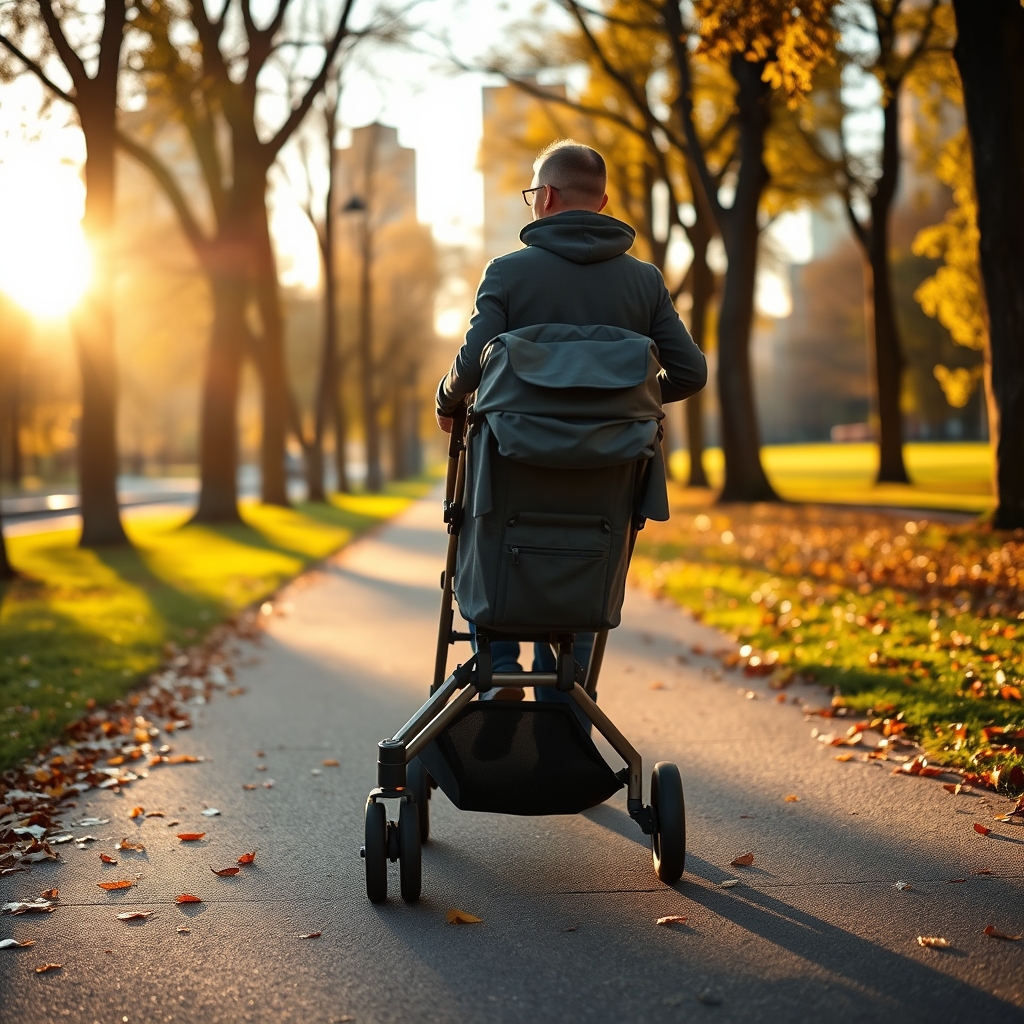
For most people, the “best” stroller comes down to three things: your primary use case (jogging, travel, everyday errands, or mixed terrain), the stroller’s weight and folding footprint, and age-appropriate seat depth and harness fit. If you’re an active parent, a jogging stroller beats a standard model. If you fly or take transit often, lightweight and compact wins. If you do mixed use, an all-terrain stroller splits the difference but costs more and weighs more than a jogging-only model.
What Actually Matters When Choosing a Stroller
Specification sheets lie. A stroller with the highest weight limit and most cup holders isn’t the right choice if it doesn’t fold into your car or jog smoothly. Here are the criteria that actually change your buying decision.
1. Your Real Primary Use
Your lifestyle determines everything else. Are you running three times a week, traveling monthly, doing mixed terrain on weekends, or mostly pushing on pavement for errands? A jogging stroller optimized for smooth pushing and single-hand steering is terrible for stairs and small car trunks. A lightweight travel stroller sacrifices suspension and safety harness robustness. An all-terrain model costs $600–$1,200 as of June 2026 (commonly reported retail ranges) but handles everything slowly, and heavy.
Before you look at wheels or fabric, list your three most common scenarios. If 60% of your use is running, jogging stroller. If it’s air travel and city walking, lightweight and compact. If it’s genuinely mixed (forest trails on Sunday, shopping on Tuesday, running on Friday), all-terrain is worth the trade-off.
2. Folding Size and Weight
This is where marketing spec sheets fool you. A stroller that weighs 18 lbs. is “lighter,” but if the folded footprint is 36″ × 28″ × 18″, it won’t fit your Honda Civic’s trunk. A 22 lb. model that collapses to 32″ × 20″ × 12″ goes in a car overhead bin. Weight and compactness move independently.
Measure your car trunk, your closet, your airplane overhead bin, and your apartment entryway before buying. Based on owner reports we’ve reviewed, “it should fit” purchases fail at home and returning a $400 stroller to a retailer is a hassle. If you travel by plane more than once a year, prioritize folded dimensions over absolute weight. If you drive everywhere, weight matters more than footprint.
3. Wheel Type and Suspension
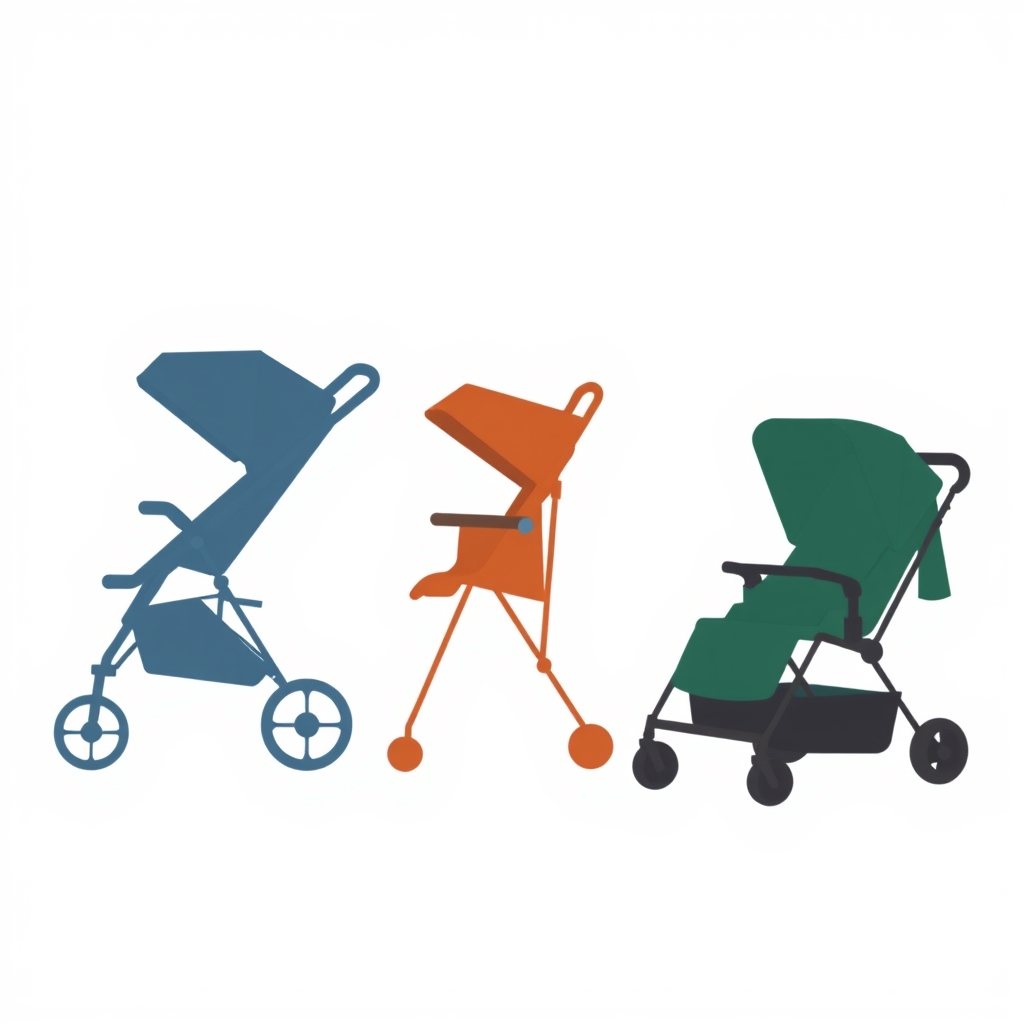
This one actually does show up on spec sheets, and you should care. Here’s what each type trades off:
Jogging strollers have large pneumatic (air-filled) tires typically 16″ to 20″ and a hand brake or foot brake for controlled descents. The single front wheel swivels and locks. Suspension absorbs road shock. Result: smooth ride at speed, but slower to push casually and harder to steer in tight spaces. Common on jogging strollers from brands like BOB Gear, Thule, and Burley.
Lightweight travel strollers use smaller, fixed wheels (6″ to 8″) often plastic or compact rubber and no suspension. Result: folds small, weighs less, steers tight. You feel every sidewalk crack, and they’re not safe for rough terrain. Common on UPPAbaby Minu, Babyzen YOYO, and similar compact models.
All-terrain strollers use larger rubber or foam-core tires (10″ to 12″), sometimes with light suspension, and fixed or lockable front wheels. Result: handles grass, dirt, and roots without tipping, but heavier and bulkier than jogging strollers. Common on Bugaboo, iCandy, and high-end mountain-category models.
Ignore the “wheel count” spec (three or four wheels is a comfort choice, not a safety hierarchy). Pay attention to pneumatic vs. solid rubber and whether the front wheel locks that’s the real usability difference.
4. Seat Depth, Harness, and Age Fit
A stroller that fits a 6-month-old newborn often doesn’t fit a 3-year-old comfortably, and vice versa. Seat depth (how far back the seat reclines and how much legroom) and harness adjustment range are the hidden factors that force early replacement.
Newborn use requires a bassinet insert or a recline to near-flat (for lumbar support on short necks). Many jogging strollers recline only 45°, which is fine for 4+ months but not newborn-safe. All-terrain and travel strollers vary widely. Check the recline depth in degrees, not just “fully reclines” 50° is not the same as 120°.
For older toddlers (18+ months), seat depth matters. A toddler whose feet touch the canopy frame or whose legs dangle off the seat edge is cramped, and you’ll have a cranky passenger. Measure the seat base to the foot rest longer is better for tall toddlers, but it adds weight and cost.
Harness type: five-point harnesses (shoulder, lap, and crotch straps) are standard and safe. Avoid three-point or lap-only designs for jogging or rough terrain. Make sure the harness adjusts without re-threading (click-adjust systems are faster). If you plan to use the stroller from newborn to age 4, test the recline and harness range in person don’t guess from a photo.
5. Storage and Canopy Coverage
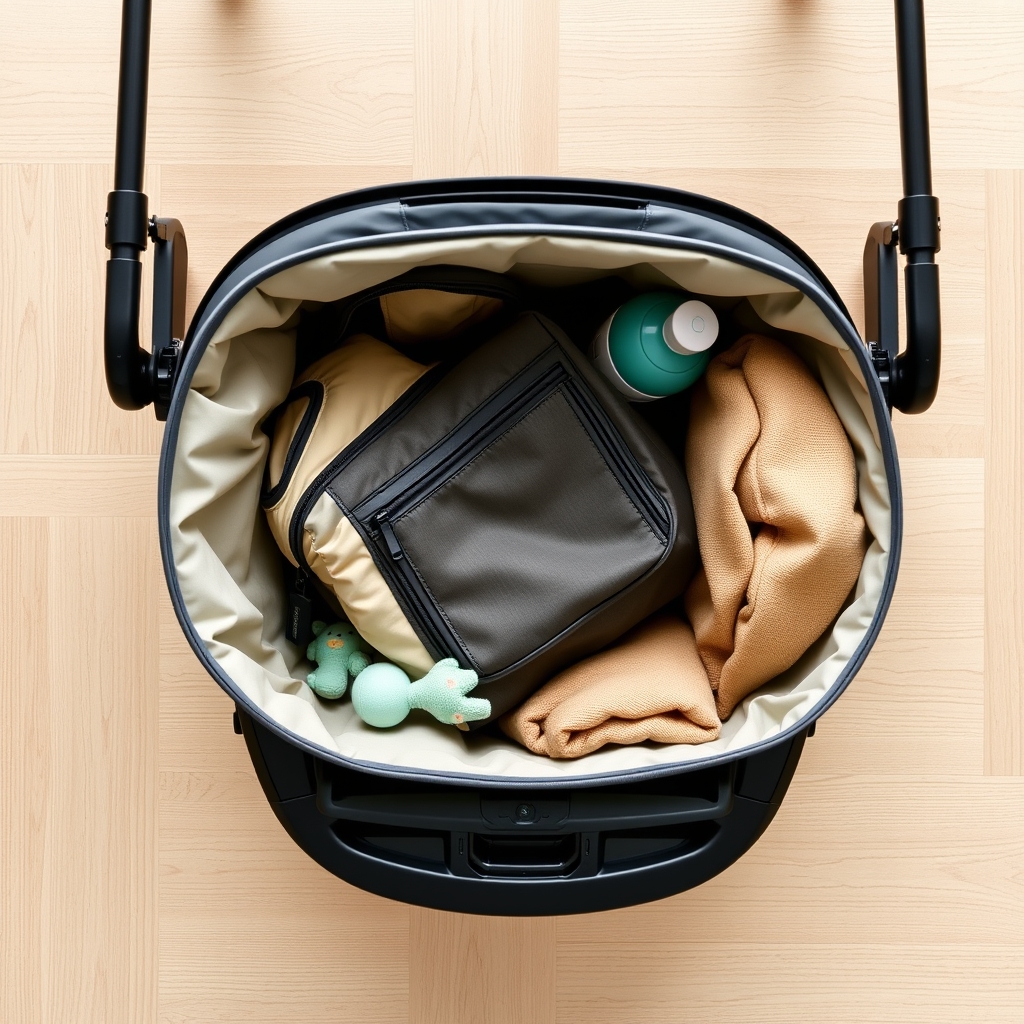
Undercarriage basket size varies by 40–60% between similar-priced models. A 3-liter basket fits a diaper bag if you pack carefully. A 6-liter basket lets you grocery shop. If you leave the house for more than two hours regularly, undersized storage is annoying.
Canopy coverage how much sun the fabric blocks matters more than you’d think. A canopy that covers only the seat leaves a toddler’s legs exposed to UV. Look for models with 50+ UPF fabric and a canopy that extends to the footrest without gaps. Peek-a-boo windows (transparent panels) are nice but not essential.
Storage and canopy are the least controversial specs, so you can trust the manufacturer’s numbers here. That said, based on owner reports we’ve reviewed, baskets feel smaller once you add a diaper bag and a couple of toys. Plan for 20–30% less usable space than advertised.
6. Durability and Warranty
Based on owner reports we’ve reviewed, stroller lifespan depends more on use pattern than price. A $1,200 all-terrain stroller used on pavement and stairs daily may fail after 2–3 years; a $400 jogging stroller used on roads 3× weekly can last 5+ years. Hinges, wheel bearings, and brake cables wear faster on rough terrain and high mileage.
Check the warranty: one year is bare minimum, two years is good, and three years is excellent. Some brands (BOB Gear, Thule) offer longer coverage on pneumatic wheels and brake systems. Frame and upholstery defects are usually one-year coverage only, which is standard.
Don’t assume a higher price equals longer lifespan. A lightweight travel stroller is designed to last 2–3 years of heavy use before the plastic hinges get loose that’s the trade-off for weight and cost. An all-terrain model is engineered for 5+ years if you maintain it (clean bearings, check wheel pressure). Choose durability tier to match your ownership timeline. If you plan to pass the stroller to another child, all-terrain is worth the premium. If this is your only child and you’re done in three years, lightweight is smarter.
Price Tiers: What You Actually Get
As of June 2026, commonly reported retail pricing runs roughly as follows. These ranges reflect typical online and big-box pricing; boutique retailers often charge 10–20% more.
| Tier | Typical Price Range | Primary Use | What You Get | Trade-Offs |
|---|---|---|---|---|
| Budget | $250–$450 | Everyday use, light travel | Decent sun canopy, reasonable storage, basic safety harness | Heavier (often 20+ lbs), smaller wheels, little or no suspension, limited recline |
| Mid-Range | $450–$800 | Jogging + everyday use or lightweight travel | Pneumatic tires (jogging models) or compact fold (travel models), quality harness, comfortable recline, typically a 2-year warranty | Jogging strollers are bulky; travel strollers aren’t ideal for rough terrain |
| Premium | $800–$1,500+ | All-terrain, mixed use, luxury travel systems | Large air-filled tires, advanced suspension, deep recline, premium harness, 3+ year warranty, modular seat/bassinet options | Heavy (25–30 lbs), expensive, may offer more features than casual users need |
Value sits in the mid-range for most people. A $600 jogging stroller (BOB Gear Wayfarer, Thule Urban Glide, Burley Kazoo) outperforms a $350 budget model by a meaningful margin on speed, smoothness, and usability without the premium all-terrain price tag. A $500 lightweight travel stroller (UPPAbaby Minu, Babyzen YOYO2) is more pleasant than a $250 folding buggy, and the difference in fold size is dramatic.
Based on owner patterns we’ve reviewed, people who buy the cheapest option often upgrade within 18 months. Spending an extra $200–$300 upfront tends to prevent that regret.
By Use Case: Jogging, Travel, All-Terrain, and Everyday
Jogging Stroller
A jogging stroller is a suspension-equipped stroller with a pneumatic front wheel (16″–20″) and a hand or foot brake, designed to roll smoothly on pavement at 6–10 mph without jolting the rider.
What it’s good for: Running, walking on trails, rough sidewalks, long distances. The ride is smooth, the push is effortless at speed, and the hand brake lets you control descents safely.
What it’s not: Compact, lightweight, or agile in tight spaces. Most weigh 22–28 lbs and fold into a large bundle. They’re frustrating on stairs and difficult to steer one-handed in crowded stores.
Must-have features:
- Pneumatic (air-filled) tires, preferably 18″–20″
- Lockable or swivel-lock front wheel
- Hand or foot brake (hand is faster for joggers)
- Recline to at least 60° for post-run rest
- Five-point harness with click-adjust
Common brands: BOB Gear (Wayfarer, Revolution), Thule Urban Glide, Burley Kazoo, Chariot CX.
Budget picks: BOB Gear Wayfarer Pro (typically $500–$700) is the consensus entry jogging stroller light suspension, stable, durable, and widely available. Thule Urban Glide 3 (typically $600–$800) is heavier but smoother on rough roads.
Lightweight Travel Stroller
A lightweight travel stroller is a compact, foldable buggy weighing under 15 lbs, with small fixed wheels and no suspension, designed to fit in car trunks and airplane overhead bins.
What it’s good for: City walking, shopping, airport terminals, and overhead-bin or backpack carry. Folds to the size of a small suitcase. Easy to carry up stairs.
What it’s not: Rough terrain, longer walks, or infants under 3 months (most don’t recline flat). The ride is bumpy on uneven pavement, and the small wheels catch on cracks.
Must-have features:
- Folded footprint under 32″ × 22″ (verify before buying)
- Weight under 15 lbs
- Recline at least 45° (60°+ is better)
- One-hand fold or close-to-one-hand
- Decent sun canopy (50+ UPF)
Common brands: UPPAbaby Minu, Babyzen YOYO2, GB Pockit, Cybex Libelle, Summer Infant 3D Lite.
Budget picks: UPPAbaby Minu (typically $400–$550) is the most popular mid-range travel stroller compact, light, good recline, real suspension in the wheels. Babyzen YOYO2 (typically $400–$600) is even more compact and stylish, though slightly less padded.
All-Terrain Stroller
An all-terrain stroller uses large rubber or foam tires (10″–14″), a suspension system, and a lockable front wheel, designed to handle grass, dirt, roots, and mixed pavement without tipping or losing control.
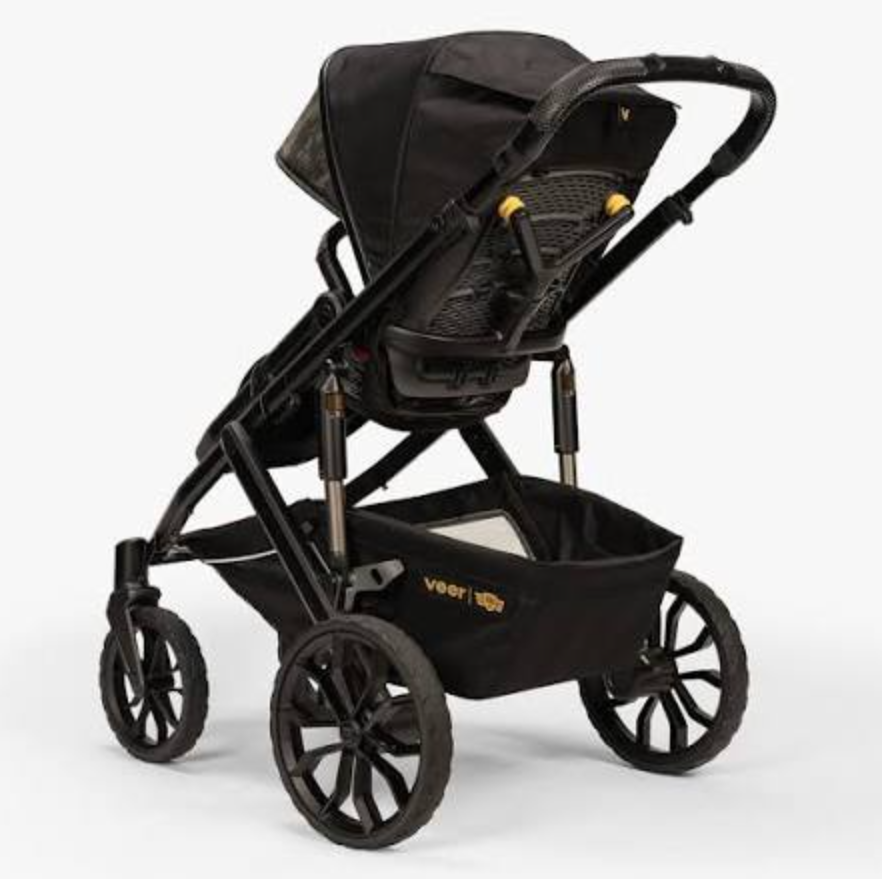
What it’s good for: Forest walks, park exploration, gravel trails, rough sidewalks, mixed use. Feels stable and planted in rough conditions. Large baskets for longer outings.
What it’s not: Lightweight, compact, or quick on pavement. Most weigh 25–30 lbs and fold into large bundles. Think of it as the SUV of strollers: capable, comfortable, and heavy.
Must-have features:
- Tires 10″ or larger, pneumatic or high-quality foam-core (check if they require an air pump)
- Suspension (usually spring or elastomer-based)
- Lockable or dual-position front wheel
- Deep seat recline (90°+)
- Five-point harness with padding
- Generous undercarriage basket (6+ liters)
Common brands: Bugaboo (Fox, Cameleon), iCandy (Core, Raspberry), Nuna Mixx Next, UPPAbaby Vista, Mountain Buggy Urban Jungle.
Budget picks: Nuna Mixx Next (typically $700–$950) offers excellent suspension and modularity for less than a Bugaboo. Mountain Buggy Urban Jungle (typically $900–$1,200) is purpose-built for rough terrain and lighter than most competitors in this category.
Everyday/Standard Stroller
An everyday stroller is a mid-weight (18–22 lbs), upright buggy with medium-sized wheels (8″–12″) and basic suspension, built for pavement, shopping, and daycare drop-off.
What it’s good for: Most people’s actual use. Pushes smoothly on sidewalks, folds reasonably for car storage, good storage basket, comfortable for naps.
What it’s not: Jogging (wheels don’t lock), serious rough terrain (tires aren’t large enough), or ultra-compact travel.
Must-have features:
- Wheels 8″–12″, fixed or lockable front
- Recline 60°+
- Decent sun canopy
- One-hand fold or two-step fold
- Five-point harness
Common brands: UPPAbaby Vista (the category gold standard), Graco Modes, Chicco Bravo, Cybex Melio.
Budget picks: UPPAbaby Vista (typically $650–$850) is expensive but modular (converts from bassinet to seat), lasts for multiple children, and holds value on resale. Graco Modes (typically $400–$600) is lighter and more flexible without the premium price.
Common Mistakes to Avoid
1. Buying on Spec Sheet Alone
A stroller with a 50 lb. weight limit sounds safer than one rated 45 lbs. It isn’t. Weight limits are legally conservative estimates and rarely reached in real life. What matters: Does the seat actually recline enough for your child’s age? Does it fold into your car? Does the brake feel solid? Buy in person if you can, or use the return policy generously (30 days minimum).
2. Assuming “Lightweight” Means Light Enough
A stroller marketed as “lightweight” at 18 lbs. feels significantly heavier than a 12 lb. travel stroller when you’re lifting it in and out of a car trunk 10 times a day. If weight is your main concern, test the actual stroller you’re buying, not just the category.
3. Ignoring Recline Depth for Older Toddlers
You focus on newborn recline (need: flat or near-flat) but forget that a 2-year-old who can’t nap in a semi-reclined seat will be cranky. Look at both extremes: minimum recline (usually 45°) and maximum recline (should be 100°+). If a stroller reclines only to 60°, your toddler may never take a comfortable nap in it.
4. Choosing a Jogging Stroller for Casual Walking
Jogging strollers are fantastic for running but slow and awkward for everyday shopping. If your real use is 80% walking and 20% jogging, a lightweight all-terrain or everyday stroller with a good recline will make you happier. Buy jogging strollers only if you genuinely jog or trail-walk regularly.
5. Underestimating the Hassle of Folding
A two-step fold sounds simple until you’re doing it one-handed in a crowded parking lot while holding your toddler. Test the fold in person. Ideally, it should fold without needing to remove the seat, adjust latches, or apply tool leverage.
6. Buying a Single Stroller When You Need Flexibility
If your needs genuinely span jogging, travel, and rough terrain, you will not find a stroller that excels at all three. You will either overpay for a premium all-terrain that’s too heavy for frequent flying, or compromise on all fronts. Consider a lightweight stroller for travel and a jogging or all-terrain stroller for active use instead of one “do-everything” model.
FAQ
Q: Can I use a jogging stroller for a newborn?
Yes, but only if it reclines to near-flat (90°+) and you use a bassinet insert or car seat adapter. Most jogging strollers have a recline limit around 45–60°, which is not safe for newborns. Check the spec before buying if you need newborn support. If you do, an all-terrain stroller with a reversible seat may be a better choice jogging strollers aren’t optimized for infant lounging.
Q: How much should I spend on a stroller?
Based on owner patterns we’ve reviewed, the sweet spot for value is $500–$800 as of June 2026. A $350 stroller often requires upgrading within 2 years; a $1,200 model over-engineers for most people’s actual use. Spend more only if you plan to pass it to multiple children or use it on rough terrain regularly.
Q: Do I need a stroller that converts from bassinet to seat?
It depends on your timeline and budget. A modular stroller (like UPPAbaby Vista) costs more upfront but lasts from birth to 4 years and holds resale value. A single-seat stroller is cheaper but may feel cramped for older toddlers. If you’re planning two or more children, modularity pays off. For a single child, it’s optional.
Q: Should I buy a stroller online or in a store?
Ideally, test in a store and buy online (often cheaper). If you can’t test in person, buy from a retailer with a full return policy (30+ days). Weight and folding size matter far more than photos suggest. Testing prevents costly returns.
Q: How do I know if pneumatic tires will be a hassle?
Pneumatic tires need occasional air top-ups (every 6–12 months of regular use) and can puncture on thorns or sharp debris. If you walk mostly on smooth pavement, solid rubber or foam-core tires are fine and lower-maintenance. If you do regular rough-terrain pushing, pneumatic is worth the minor upkeep because the ride quality difference is large.
Q: What’s the difference between a jogging stroller and an all-terrain stroller?
A jogging stroller is optimized for speed and smooth pavement (with a single swivel front wheel, pneumatic tires, hand brake). An all-terrain stroller is optimized for rough, uneven ground (with a lockable front wheel, suspension, and larger tires). Jogging strollers are lighter and faster; all-terrain strollers are more stable and versatile. Choose based on your terrain, not trend.
Our Keeper
For most people, the best stroller is one that matches your actual lifestyle not the fanciest or most expensive model.
If you jog or trail-walk regularly: BOB Gear Wayfarer Pro (typically $500–$700) is the consensus choice. It’s light for a jogging stroller, stable, and durable. Check that the front wheel locks smoothly and the hand brake feels solid before buying.
If you travel by plane or live in a city: UPPAbaby Minu (typically $400–$550) is the most practical compact option. It folds to a reasonable size, has real suspension, and lasts longer than budget travel strollers.
If you want all-terrain flexibility and modularity: Nuna Mixx Next (typically $700–$950) offers excellent value compared to premium brands. It handles rough terrain, converts from bassinet to seat, and is lighter than comparable all-terrain models.
If you want the “just right” everyday stroller: UPPAbaby Vista (typically $650–$850) is expensive but modular, holds resale value, and genuinely lasts for multiple children. It’s the stroller people upgrade to, not from.
For a deeper dive into specific models, brand comparisons, and detailed reviews, see our jogging stroller reviews, travel stroller comparisons, and all-terrain stroller buying guide on KeptList.