

Quick Answer: What You Need to Know Right Now
Supplements can interfere with how medications work sometimes reducing their effect, sometimes amplifying it dangerously. The safest approach is to disclose every supplement you take to your doctor or pharmacist before starting any new medication, and to space doses of supplements and medications several hours apart when possible. A pharmacist can cross-check interactions faster than you can, and it’s free.
Do Supplements Really Interact With Medications?
Yes and it happens more often than most people realize. Supplements contain active compounds (vitamins, minerals, herbs, amino acids) that your body absorbs and processes just like pharmaceutical drugs do. When a supplement and a medication share the same absorption pathway or target the same enzyme in your liver, they can compete for processing, amplify each other’s effects, or block one another entirely.
The problem is visibility: supplements are sold over-the-counter and don’t go through the same pre-approval testing as medications. That means interaction data is often incomplete, and you won’t find a warning label that says “Don’t take with metformin.” You have to ask.
Which Supplements Are Most Likely to Cause Interactions?
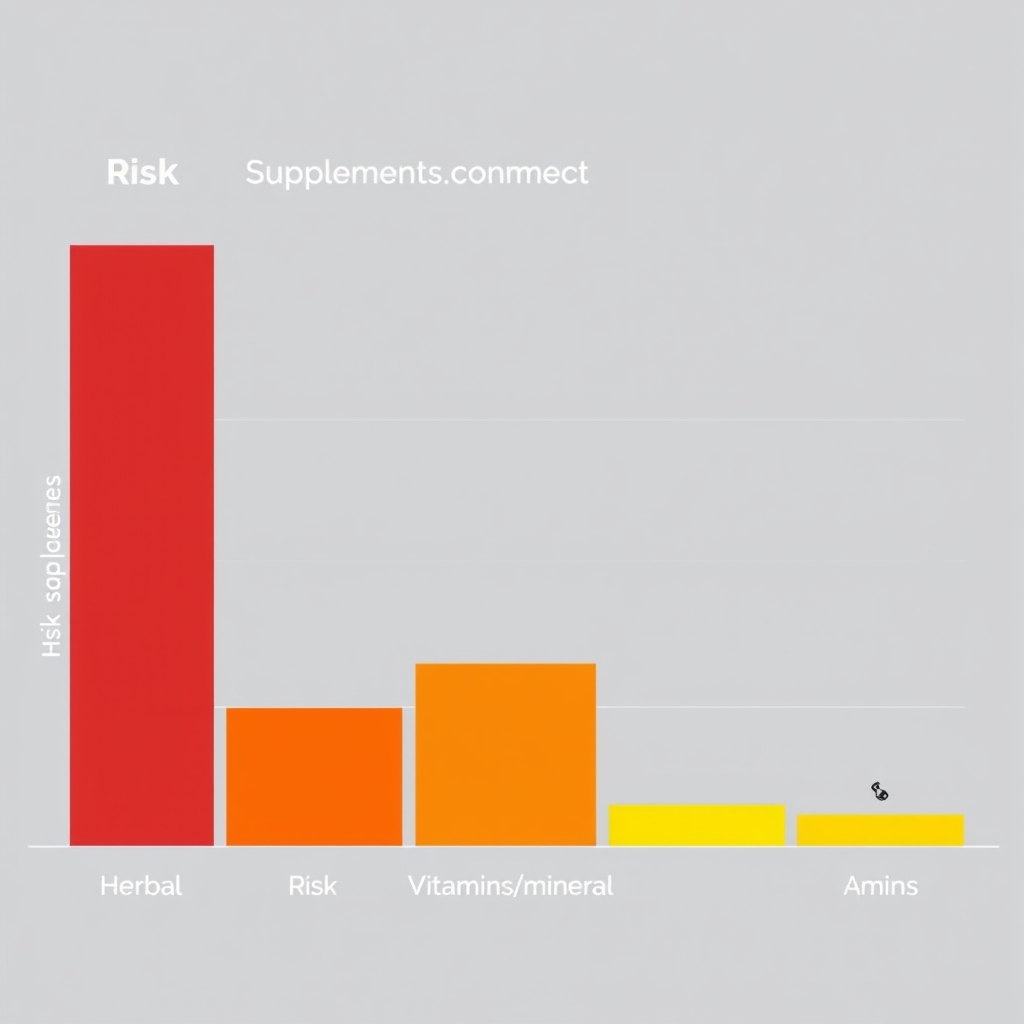
Herbal Supplements (Highest Risk)
St. John’s Wort is the most problematic. It speeds up the metabolism of dozens of drugs including birth control pills, blood thinners, and antidepressants potentially rendering them ineffective. This is one of the most widely documented herb-drug interactions; if you take any prescription, avoid St. John’s Wort without explicit approval from your prescriber.
Ginkgo biloba and garlic supplements both thin the blood. Combined with anticoagulants like warfarin or aspirin, they increase bleeding risk. The same applies to ginger, turmeric, and feverfew in high doses.
Kava can cause liver damage and intensifies sedatives. Ephedra (ma huang) and other stimulant herbs raise blood pressure and heart rate dangerously alongside decongestants or stimulant medications.
If you take an herbal supplement daily, treat it as a medication and disclose it.
Vitamin & Mineral Supplements (Moderate Risk)
Iron supplements reduce the absorption of certain antibiotics (tetracyclines, fluoroquinolones), thyroid medication (levothyroxine), and bisphosphonates (osteoporosis drugs). Spacing doses 2–4 hours apart helps, but your prescriber may recommend a different timing altogether.
Calcium has the same spacing issue with those same medication classes, plus statins (cholesterol drugs).
Vitamin K directly opposes blood thinners like warfarin. If you take warfarin, do not change your vitamin K intake (in food or supplements) without telling your doctor. Consistency matters more than the absolute amount.
Magnesium and zinc can impair absorption of fluoroquinolone and tetracycline antibiotics. Spacing helps take the supplement at least 2 hours after the antibiotic.
Vitamin D in very high doses can interact with heart medications and diuretics. Commonly cited general guidance suggests doses under 2,000 IU daily carry lower interaction risk, but this threshold varies by individual check with your doctor before exceeding it, especially if you take cardiovascular medications.
Protein & Amino Acid Supplements (Low but Real Risk)
Phenylalanine (in some protein powders or branched-chain amino acid blends) can raise blood pressure and should be avoided if you take stimulants or certain antidepressants.
Arginine can lower blood pressure and interact with blood pressure medications or erectile dysfunction drugs, potentially causing dangerous drops in pressure.
When Should You Space Out Supplements and Medications?
The safest general rule: take supplements and medications at least 2–4 hours apart. This is especially important for:
- Iron, calcium, and magnesium supplements with antibiotics or thyroid medication
- Ginkgo, garlic, ginger with blood thinners
- St. John’s Wort with any prescription (ideally avoid it)
- Vitamin K with warfarin (consistency, not spacing, is key here)
If a medication is taken twice daily and a supplement is taken once daily, take them at opposite ends of the day. Your pharmacist can help you map out a safe schedule.
How Do I Check for Interactions?
You have three solid options:
1. Ask your pharmacist (fastest, free). When you fill a prescription, hand the pharmacist a written list of every supplement you take, including doses. They have software that cross-checks everything in seconds. This is the gold standard they have access to more comprehensive databases than consumer apps.
2. Use the NIH’s Dietary Supplement Label Database. The National Institutes of Health maintains a public database of supplement ingredients and known interactions. Search by supplement name, then cross-reference with your medications.
3. Check Medscape’s Drug Interaction Checker. Available free online, it lets you enter multiple medications and supplements and flags potential interactions. It’s not perfect (some interactions are unknown), but it’s a reasonable second layer.
Do not rely solely on the supplement’s product label manufacturers often don’t list interactions, either because they’re unknown or because they want to avoid alarming consumers.
What If My Supplement and Medication Interact?
You have options; don’t panic.
Option 1: Switch the supplement. If you take vitamin D and a blood pressure drug, a different brand of vitamin D won’t help the compound is the same. But if you take a multivitamin that contains iron and also take levothyroxine, you could switch to an iron-free multivitamin and take iron separately on a different schedule.
Option 2: Adjust timing. Spacing doses 2–4 hours apart often eliminates absorption conflicts. Your doctor or pharmacist can advise on the best schedule for your specific medications.
Option 3: Change the medication or supplement dose. Sometimes your doctor can switch you to a different medication in the same class (e.g., a different antibiotic), or reduce your supplement dose to a level that doesn’t pose a risk.
Option 4: Stop the supplement. If the medication is critical and the interaction is serious, the supplement may need to go. Many supplements are nice-to-have, not essential. Your health outcomes with the medication usually matter more.
How Do I Talk to My Doctor or Pharmacist About Supplements?
Here’s what to say and bring:
Before the appointment:
- Write down every supplement you take: name, dose, frequency, and how long you’ve been taking it.
- Include vitamins, minerals, herbs, protein powders, pre-workout drinks, and wellness shots anything you ingest for health.
- Bring the bottles if you have them; labels often show the exact compound form and dose.
At the appointment:
- Say: “I take these supplements daily, and I want to make sure they’re safe with [new medication].” Hand over your list.
- If your doctor seems dismissive, ask: “Can we run this through the pharmacy interaction checker together?”
- If they say “it’s fine” without checking, politely push: “I’d feel better if we could verify it in your system. Can you have the pharmacist take a look?”
Red flags to report:
- Any change in how a medication makes you feel after you start a new supplement.
- Unusual bleeding, bruising, or bleeding gums (possible blood thinner interaction).
- New dizziness, fatigue, or mood changes.
- Loss of effectiveness of a medication you’ve been stable on.
Your pharmacist is often faster and more thorough than your doctor on this don’t skip them.
Frequently Asked Questions
Can I take supplements with food to avoid interactions? Not reliably. Some interactions happen in the stomach; others in the liver or intestines. Spacing doses by time (not meals) is safer. Food can actually improve absorption of fat-soluble vitamins (A, D, E, K), which is good but it won’t prevent interactions with medications.
Is it safe to take a multivitamin with medications? It depends on the multivitamin’s contents and your specific medications. A basic multivitamin with standard doses of common vitamins is usually low-risk, but one with high iron, high calcium, or added herbs (like echinacea or elderberry) could cause problems. Show your prescriber the label, or ask your pharmacist to scan the barcode. Don’t assume “multivitamin” is generic and safe.
What if I’ve been taking a supplement and a medication together with no problems? No problems so far doesn’t guarantee none exist. Some interactions take weeks or months to show up (like vitamin K slowly reducing warfarin’s effectiveness). Others are rare but serious (like sudden bleeding). If you’ve been stable, that’s good but don’t skip telling your doctor. They may want to monitor you differently or adjust doses based on the interaction risk.
Can supplements interfere with birth control? Yes. St. John’s Wort is the most widely flagged culprit it is documented to accelerate the metabolism of hormonal contraceptives, potentially reducing their effectiveness. Some other herbs (like chasteberry or dong quai) may have weak estrogenic effects, though the risk is considered low. If you use hormonal contraception and take any herbal supplement, mention it to your prescriber or pharmacist.
Do I need to stop supplements before surgery? Often yes. Ginkgo, garlic, ginger, and vitamin E all thin the blood and increase surgical bleeding risk. Many surgical teams ask patients to stop herbal supplements in the weeks before a procedure the exact window varies, so ask your surgeon explicitly rather than guessing. Vitamins and minerals are usually fine to continue, but confirm with your surgical team. Do not make this decision on your own.
What’s the difference between a “harmful” interaction and a “minor” one? A harmful interaction reduces effectiveness of a critical medication (like blood thinners or diabetes drugs) or causes serious side effects (severe bleeding, organ damage, heart rhythm problems). A minor interaction might cause mild nausea, reduce absorption slightly, or require dose timing changes but poses no safety risk if managed. Your pharmacist can tell you which category any flagged interaction falls into.
The Bottom Line
Supplement-medication interactions are real and common, but they’re almost entirely preventable if you disclose upfront. The 30-second fix: write down every supplement you take, hand the list to your pharmacist when you fill a prescription, and follow their timing recommendations. Your pharmacist has better tools than you do and won’t judge they see this every day. If something feels off after you start a new medication or supplement, call your pharmacy immediately rather than waiting for an appointment. Yes, it’s safe to take supplements with medications. No, not the way the bottle tells you. Do this instead takes thirty seconds.