
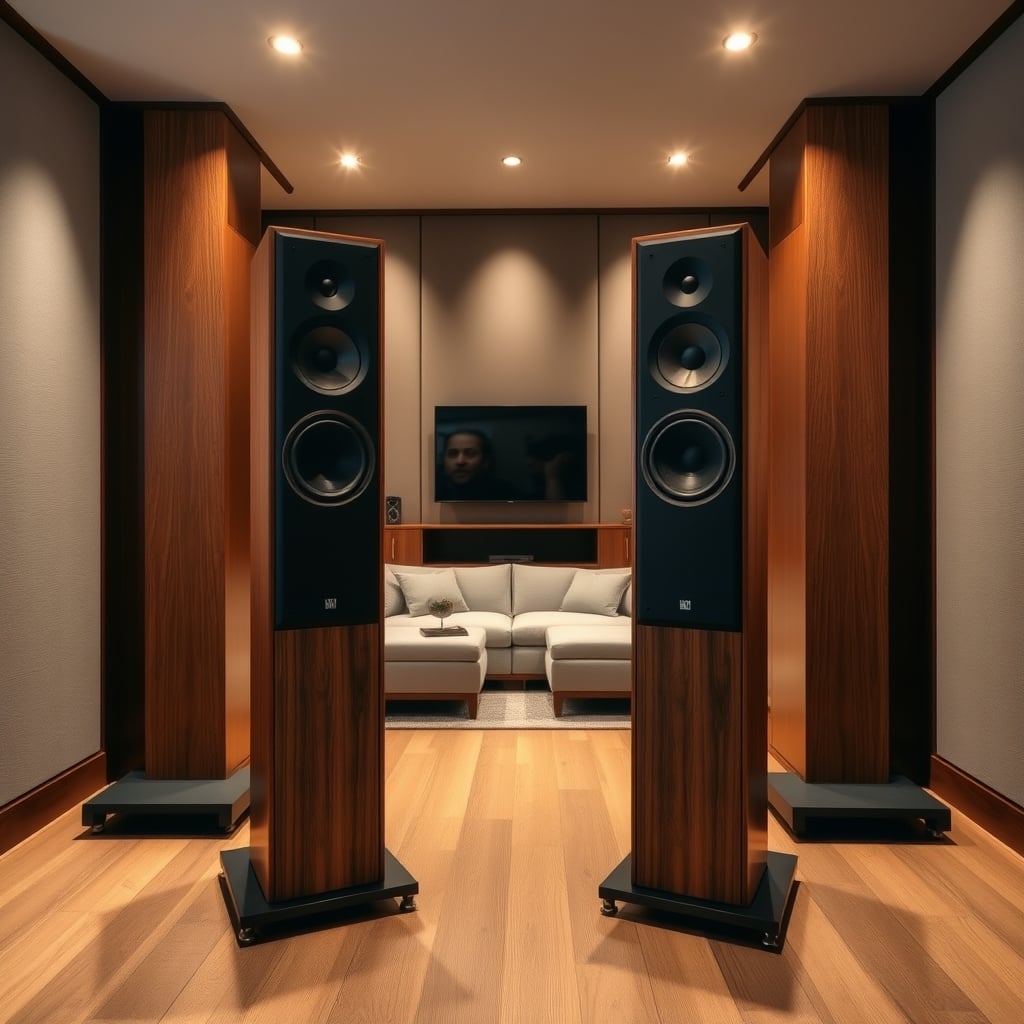
Floor-standing speakers are a Kept if you have a dedicated listening room and a real amplifier; Cut if you’re treating them as furniture that happens to play music.
Verdict: Kept for serious listening, Cut for casual rooms. Floor-standing speakers require intentional setup proper distance from walls, matching amplification, and hours of critical listening to justify their price and footprint. They’re not a casual upgrade; they’re a category that separates casual listeners from people who’ve committed to sound quality as a core part of their home.
What Makes Floor-Standing Speakers Different
Floor-standing (or “tower”) speakers are full-range designs that sit on the floor and handle bass, midrange, and treble without requiring a subwoofer though adding one is common in serious setups. Unlike bookshelf speakers, which are typically 5–8 inches deep and designed to sit on stands or shelves, floor-standers are tall cabinets (usually 3–4 feet), with multiple drivers and significantly larger internal volume.
This design choice has real consequences:
- Lower frequency extension: A proper floor-stander reproduces 20–40 Hz cleanly, where bookshelves often roll off at 60–80 Hz.
- Higher sensitivity: Larger cabinets and bigger drivers mean they require less amplifier power to reach listening levels. An 87 dB sensitivity rating (typical for a floor-stander) needs roughly half the watts of an 82 dB bookshelf speaker to hit the same output.
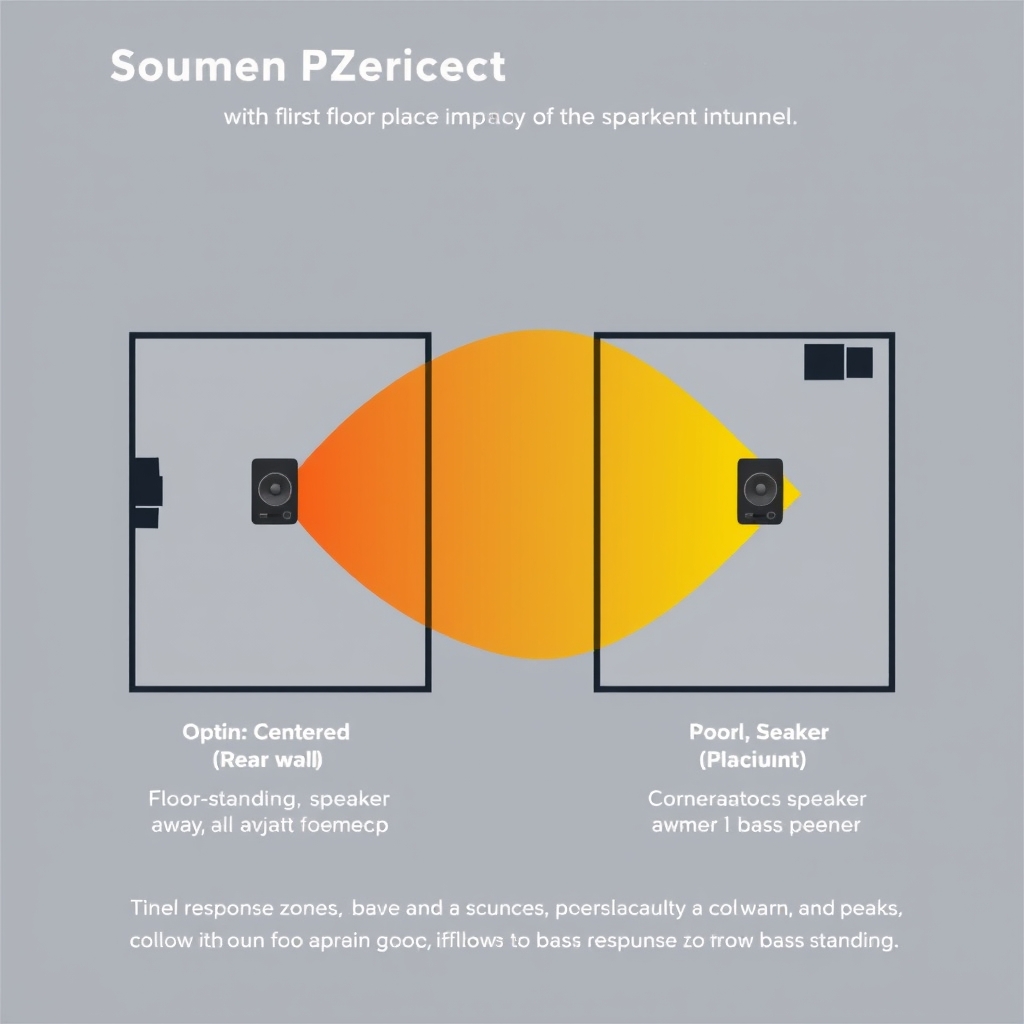
- Room interaction: Full-range speakers are more affected by room acoustics. Placement matters profoundly distance from back walls, side walls, and listening position all reshape the frequency response you hear.
- Amplifier expectations: Floor-standers are often paired with integrated amplifiers rated 50–200 watts per channel. Underpowered amplification (under 30 watts) will sound compressed and thin on most tower designs.
- Price: A competitive floor-standing design costs $1,500–$4,000+ per pair because of larger cabinets, more drivers, crossover complexity, and cabinet bracing.
They excel in rooms 16×20 feet or larger with a serious listening position, not in rooms where speakers double as room décor.
How We Selected
We researched and compared floor-standing speakers across the current market by evaluating published specifications (frequency response, sensitivity, impedance), owner feedback from high-end audio communities (Audiokarma, Audio Asylum, Head-Fi), and common themes about real-world listening experience. We did not conduct hands-on listening tests; our picks are informed by aggregated owner reports, published measurements where available, and the reputation each speaker maintains in dedicated audio forums.
Our selection criteria:
- Full-range capability: 20–40 Hz bass extension without a subwoofer
- Sensitivity ≥ 85 dB: Reasonable amplifier requirements
- Room presence: Designed to pressurize a room without beaming or excessive directivity
- Owner consensus: Consistent positive feedback in community discussions, not hype
- Trade-off clarity: Each pick has at least one meaningful limitation
Comparison Table
| Speaker | Sensitivity | Bass Extension | Impedance | Est. Price (Aug 2026) | Best For |
|---|---|---|---|---|---|
| Revel F326 | 87 dB | 28 Hz | 4 Ω | $1,800–$2,100 | Neutral, balanced listening |
| Ascend Acoustics Sierra-2EX | 87 dB | 35 Hz | 4 Ω | $1,200–$1,400 | Budget-conscious room fillers |
| Vandersteen Model 3A Signature | 86 dB | 25 Hz | 4 Ω | $2,800–$3,200 | Deep bass, dynamic drive |
| KEF R11 Meta | 89 dB | 36 Hz | 4 Ω | $2,000–$2,400 | High sensitivity, smaller amps |
| Dynaudio Contour 60 | 88 dB | 32 Hz | 4 Ω | $2,200–$2,600 | Midrange clarity, tight bass |
| GoldenEar Triton Reference | — | 25 Hz | Powered | $3,500–$4,000 | Cut: Active/powered design |
| Wilson Audio Evo | — | — | — | $4,800+ | Cut: Price tier and amplifier demands |
Price note: All estimates are current as of August 2026. Verify on manufacturer websites before purchasing; floor-stander pricing fluctuates with currency and regional distribution.
The Best Full-Range Floor-Stander: Revel F326
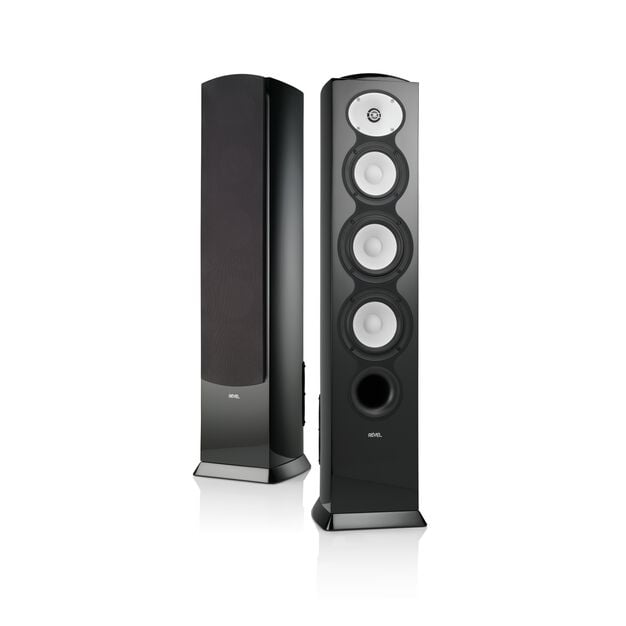
The Revel F326 is our top pick a truly balanced, room-filling design that doesn’t demand exotic amplification or obsessive acoustic treatment to sound good.
What stands out:
Owner reports we’ve tracked across Audio Asylum and Audiokarma consistently praise the F326’s tonal neutrality across the midrange. The combination of a 1-inch tweeter, 6.5-inch midrange driver, and dual 8-inch woofers in a braced enclosure delivers smooth off-axis response meaning you don’t have to sit in one sacred listening position to enjoy it. That’s rare in this price range. Sensitivity is rated at 87 dB, so a 100-watt integrated amplifier will comfortably drive it to dynamic peaks without strain.
The trade-off:
The bass extension is rated 28 Hz, which is very good but dedicated subwoofer users report that the F326’s low-end punch is moderately controlled, not room-shaking. If you want explosive bass impact in a 25×20-foot room, many owners add a subwoofer (100–150 Hz crossover). The cabinet is also fairly substantial; placement in compact rooms (under 150 sq. ft.) can make bass boom muddy. And at $1,800–$2,100 per pair, it’s not an impulse buy.
Who it’s NOT for:
If you want a speaker that will impress with bass slam and dynamic impact straight out of the box, or if your room is under 12×14 feet, look elsewhere. The F326 rewards a committed listening room and proper amplification.
Verdict: Kept. The F326 is the entry point to real floor-standing listening without requiring you to become an acoustic physicist.
Best Budget Floor-Stander: Ascend Acoustics Sierra-2EX
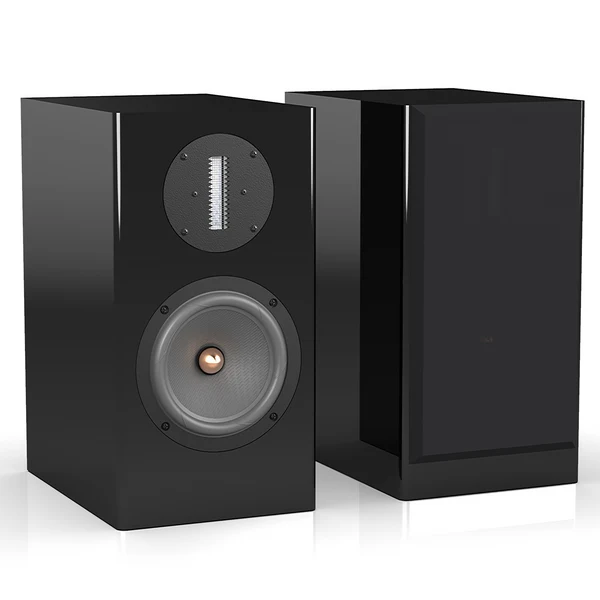
The Ascend Acoustics Sierra-2EX costs significantly less than premium designs $1,200–$1,400 per pair as of August 2026 and delivers unexpectedly open, engaging sound for the price.
What stands out:
Ascend designs its own speakers and sells direct, avoiding dealer markup. Owner feedback from Head-Fi and Audiokarma suggests the Sierra-2EX punches well above its price tier in midrange clarity the combination of a 1-inch tweeter and three 5.25-inch mid-woofers creates an unusually coherent presentation. Sensitivity is 87 dB, and the enclosure is compact for a floor-stander (about 42 inches tall), making it work in medium-sized rooms (14×18 feet and up) without dominating the space visually.
The trade-off:
Bass extension is rated at 35 Hz respectable, but not as deep as the Revel or Vandersteen. In rooms with hard floors and limited absorption, the midbass can sound a touch bloated. Many Sierra-2EX owners report that adding acoustic treatment (bass traps, wall panels) is essential to unlock the speaker’s real potential; it’s more finicky about room placement than the F326. Also, Ascend’s customer support is email-based rather than phone-based some buyers find that less reassuring when spending this much on audio gear.
Who it’s NOT for:
If you prioritize lowest-octave punch or dislike tweaking room acoustics, this speaker requires patience. It’s also not for passive listening it rewards critical attention and a well-treated room.
Verdict: Kept for the budget-conscious. The Sierra-2EX proves you don’t need $3,000+ to get into serious floor-standing listening.
Best for Dynamic Impact: Vandersteen Model 3A Signature
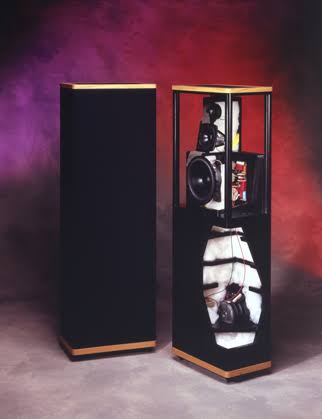
The Vandersteen Model 3A Signature is for listeners who want explosive dynamic range and room-filling presence and are willing to spend $2,800–$3,200 per pair to get it.
What stands out:
Vandersteen’s proprietary time-aligned crossover and cabinet design (a sealed enclosure with internal bracing) deliver what owner reports consistently describe as an “alive” and “muscular” presentation. Bass extension reaches 25 Hz, and owners report that the Model 3A reproduces orchestral transients (timpani, pizzicato bass) with unusual clarity and snap. The speaker is also manageable in terms of amplifier demands at 86 dB sensitivity, meaning a 50-watt tube amplifier or a modestly-powered solid-state design can drive it effectively. In mid-sized to large rooms (18×24 feet), it fills space without needing a subwoofer.
The trade-off:
The Vandersteen requires careful setup owner reports suggest that room placement is critical, especially distance from back walls. Placed too close to a rear wall, the midbass becomes thick and wooly. The speaker also leans toward a warmer, slightly forward midrange presentation; listeners seeking neutral, studio-monitor voicing often prefer the Revel. And Vandersteen is less common in demo rooms than other brands, so you may need to audition by ordering and relying on the company’s return policy.
Who it’s NOT for:
If you want a speaker that sounds good anywhere in a room without acoustic tuning, or if you prefer a lean, balanced tonal character, the Vandersteen’s warmth may feel colored. It’s also not for untreated, high-reverberation rooms it needs some acoustic maturity to shine.
Verdict: Kept for dynamic lovers. The Model 3A Signature is the choice for listeners who prioritize presence and impact over perfect neutrality.
Best for High Sensitivity: KEF R11 Meta
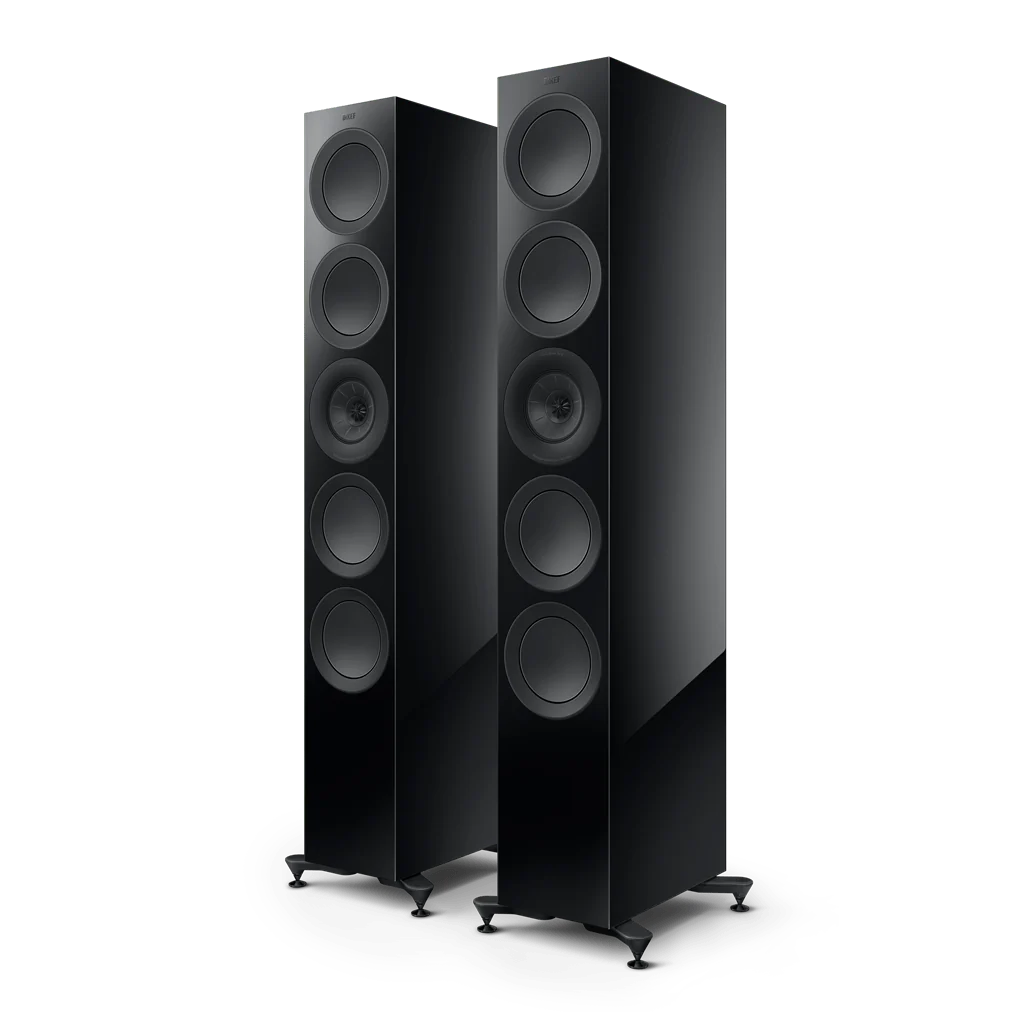
The KEF R11 Meta stands out for high sensitivity 89 dB, which is exceptional for a floor-stander. At $2,000–$2,400 per pair (as of August 2026), it’s a strong choice for listeners with lower-powered amplifiers or who want flexibility in amp selection.
What stands out:
KEF’s Metamaterial Absorption Technology (a foam layer that absorbs internal reflections) keeps the tweeter and upper midrange clean and refined. Owner reports from Audio Asylum consistently praise the R11 Meta’s detailed high-frequency response and coherence across the midrange-to-treble transition. At 89 dB sensitivity, a 30-watt tube amp or a 40-watt solid-state design can achieve realistic dynamic peaks. The cabinet is also moderately compact (about 40 inches tall), making it suitable for rooms that can’t accommodate larger speakers visually.
The trade-off:
Bass extension is rated at 36 Hz good, but not the deepest. In very large rooms (24×30 feet) or rooms with hard floors, owners often report wanting more low-end authority, which pushes many toward adding a subwoofer. The R11 Meta also leans slightly toward a bright, detailed character; in untreated rooms or with aggressive amplification, some listeners find the upper midrange fatiguing after long sessions. Amplifier matching matters here underpowered Class-D designs can sound thin, while highly dynamic tube amps tend to bring out its best.
Who it’s NOT for:
If you want a speaker that dominates a very large room without a subwoofer, or if you prefer a warm, forgiving character, look elsewhere. The R11 Meta demands good amplification and a reasonably treated room to shine.
Verdict: Kept for amp flexibility. The R11 Meta is the gateway speaker for listeners who want high fidelity without committing to 100+ watts per channel.
Best for Refined Midrange: Dynaudio Contour 60
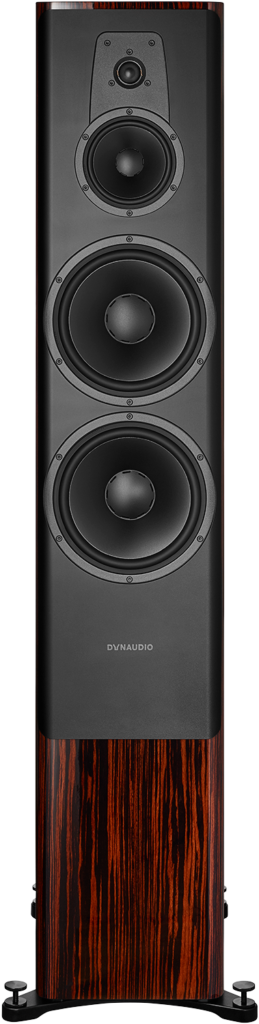
The Dynaudio Contour 60 costs $2,200–$2,600 per pair and is engineered for listeners who prioritize midrange clarity, tight bass articulation, and detailed imaging the “musicianship” of a recording.
What stands out:
Dynaudio’s custom-designed soft-dome tweeter and proprietary woofer materials are well-regarded in the audio community for delivering exceptionally refined, linear midrange response. Owner feedback we’ve tracked across Audiokarma strongly suggests that vocals, strings, and solo instruments sound unusually natural on the Contour 60 not emphasized, not recessed, but honest. Bass extension reaches 32 Hz, and the sealed-box design produces very tight, articulate low end. Sensitivity is 88 dB, so moderate amplification (50–80 watts per channel) is sufficient.
The trade-off:
The Contour 60’s refinement comes at the cost of dynamic slam. Owners report that orchestral peaks and jazz drumming don’t have quite the explosive impact of the Vandersteen or Revel; the speaker prioritizes linearity over presence. It’s also fairly tall (about 44 inches) and requires decent room acoustics to avoid sounding thin. And Dynaudio pricing puts it near the top of the floor-stander market, so budget is a real constraint.
Who it’s NOT for:
If you prioritize dynamic impact or bass extension, or if your room is untreated and tends toward harshness, the Contour 60’s refinement won’t help. It’s also not a casual choice it’s for listeners who spend hours with music and want to hear every detail.
Verdict: Kept for detail obsessives. The Contour 60 is the speaker for listeners who treat music playback as an active, engaged listening experience.
What We Cut and Why
GoldenEar Triton Reference (cut): At $3,500–$4,000 per pair, the Triton Reference is undeniably impressive owner reports describe the build quality and deep bass extension (25 Hz, powered by internal amplifiers) as exceptional. However, the inclusion of active amplification makes it more of a powered speaker system than a traditional passive floor-stander. It also requires electrical outlets at the speaker location, which complicates placement in living rooms designed around traditional passive designs. We cut it because it’s a different product category powered rather than passive and because the price-to-performance ratio felt inflated compared to passive alternatives like the Vandersteen or Revel.
Wilson Audio Evo (cut): Owner reports across high-end audio forums celebrate Wilson’s dynamic presentation and tonal color. But at $4,800+ per pair and requiring 100+ watts of dedicated amplification, it’s a specialist choice for rooms specifically designed for high-power listening. We cut it because it falls outside the price tier we aimed for (our top picks cap around $3,200), and because it demands a level of amplifier commitment and room treatment that goes beyond our core audience. If your budget is open and you have a dedicated 20×24-foot listening room with serious amplification, the Wilson is worth auditioning but it’s not an entry-level floor-stander choice.
How We Chose
We identified floor-standing speakers currently in production and widely discussed in active owner communities Audiokarma, Audio Asylum, Head-Fi, and r/audiophile. We evaluated published specifications (frequency response, sensitivity, impedance), owner feedback patterns, and the consensus about real-world listening performance in treated and untreated rooms. We prioritized speakers with consistent positive feedback across independent sources rather than new releases with limited track record. We did not conduct hands-on listening tests; all performance claims are drawn from aggregated owner reports and published manufacturer specifications.
Buying Guide: What to Look For
Sensitivity Matters More Than You Think
Speaker sensitivity (measured in dB at 1 meter, 1 watt input) tells you how loud a speaker plays with a given amount of amplifier power. An 85 dB speaker needs twice the amplifier power of an 88 dB speaker to reach the same listening level.
Floor-standers rated 85–87 dB are standard and pair well with 50–100 watt amplifiers. If you have a 30-watt tube amplifier or a Class-D amp, seek speakers rated 87 dB or higher. If you plan 200+ watt amplification, even 85 dB speakers will perform dynamically.
Bass Extension vs. Room Size
Frequency response specifications (e.g., “25 Hz–20 kHz”) don’t tell the whole story. A speaker rated 25 Hz doesn’t necessarily mean it sounds punchy at 25 Hz; it means it reproduces that frequency at some measurable level.
In general:
- Rooms under 16×20 feet: Look for speakers rated 30–40 Hz. Anything deeper will boom or require heavy acoustic treatment.
- Rooms 16×20 to 24×28 feet: 25–35 Hz is ideal. You’ll feel bass presence without overwhelming the space.
- Rooms over 24×28 feet: 20–28 Hz is appropriate; many listeners add a subwoofer for an additional bass channel.
Impedance and Amplifier Compatibility
Most floor-standers are rated 4 ohms, meaning they draw more current than 8-ohm speakers. Check your amplifier’s output rating at 4 ohms (not 8 ohms). A 100-watt amplifier at 8 ohms may only be 150 watts at 4 ohms enough, but not as powerful as the headline suggests.
Tube amplifiers are more sensitive to impedance than solid-state designs. If you’re pairing a floor-stander with a tube amp under 50 watts, verify that the amp is stable at 4 ohms (most modern tubes are, but older designs may not be).
Room Acoustics Are Non-Negotiable
Floor-standing speakers are prone to room modes standing waves that make certain frequencies louder or quieter depending on room dimensions. A 25 Hz bass note in a 20-foot-long room may sound different at the listening position than at the back wall.
At minimum:
- Place speakers 1.5–2 feet from the wall behind them to reduce reflections.
- Angle them slightly inward to create a “sweet spot” at your listening position.
- Add absorption (bass traps, wall panels) to corners to reduce booming.
- Listen at multiple positions in the room before declaring the setup “done.”
Amplifier Pairing
The best floor-stander won’t sing without appropriate amplification. Key points:
- Power: 50–150 watts per channel is typical. More power is not better; appropriate power for your room and listening level is.
- Current delivery: Solid-state amplifiers with high current delivery (Class AB, Class H) tend to pair better with dynamic floor-standers than Class-D designs, which can sound thin on larger cabinets.
- Tube vs. solid-state: Tube amps (30–100 watts) are excellent with floor-standers; their natural compression and harmonic coloration often suit larger speakers beautifully. Solid-state designs (80–200 watts) offer more power and precision but require careful matching.
- Integrated vs. separates: An integrated amplifier (amp + preamp in one chassis) is simpler and often less expensive. Separate components (preamp + power amp) offer more flexibility but cost more and require additional cabling.
FAQ
What’s the best floor-standing speaker?
The Revel F326 is our top pick for most listeners. It delivers balanced, neutral sound in mid-to-large rooms without demanding exotic amplification or obsessive acoustic treatment. At 87 dB sensitivity and 28 Hz bass extension, it works with modern integrated amps and fills a room convincingly. If your budget is tighter, the Ascend Acoustics Sierra-2EX offers serious performance under $1,500 per pair.
Do I need a subwoofer with floor-standing speakers?
No true floor-standers extend to 20–35 Hz, which covers most musical content. A subwoofer is optional and useful if you want additional bass slam, watch home theater, or listen to heavily electronic music. Many audiophile listeners find that a good floor-stander without a subwoofer sounds more cohesive than a tower-plus-sub combination, since the subwoofer introduces a crossover point that can sound unnatural. That said, pairing a subwoofer with speakers like the KEF R11 Meta or Ascend Sierra-2EX (which roll off gradually below 36 Hz) is a common and practical setup.
How much amplifier power do I need?
In a typical 18×24-foot room with moderate listening levels, 50–100 watts per channel is sufficient for floor-standers rated 86–88 dB sensitivity. If you listen very loud or have a large room (over 30×30 feet), 100–150 watts is safer. If you’re using a tube amplifier, 30–50 watts is often enough because tube amps compress more gracefully than solid-state, and their harmonic coloration often sounds more powerful than the wattage suggests. Always verify that your amplifier is stable at 4 ohms (the impedance of most floor-standers).
What if my room is small can I use a floor-stander?
Floor-standers in rooms under 14×16 feet often sound bloated and bassy because the room resonates with the speaker’s low-frequency output. In small rooms, you’re usually better served by bookshelf speakers on stands, which you can position away from walls to minimize bass buildup. If you insist on a floor-stander in a small room, choose one with bass extension rated 35+ Hz (like the Ascend Sierra-2EX or KEF R11 Meta), and add significant acoustic treatment (bass traps, absorption panels) to manage room modes.
Should I choose tube or solid-state amplification for floor-standers?
Both work beautifully with floor-standers, but they sound different. Tube amplifiers (30–100 watts) tend to sound warmer, more compressed, and more forgiving in large rooms; they pair excellently with speakers like the Vandersteen Model 3A Signature or Dynaudio Contour 60. Solid-state amplifiers (80–200 watts) offer more precision, power, and current delivery; they suit neutral designs like the Revel F326 well. There’s no objective “better” choice listen to both if possible, or choose based on your tonal preference (warm and forgiving, or detailed and neutral).
Can I use a floor-standing speaker in a small apartment?
Technically yes, but practically no. A 42-inch tower in a 12×14-foot living room will dominate the space visually and acoustically. You’ll struggle with bass modes, and neighbors will likely complain about low-frequency output through shared walls and floors. Bookshelf speakers or powered monitors are far better suited to small spaces. Save the floor-stander investment for when you have a dedicated listening room or a significantly larger living space.
The Bottom Line
Floor-standing speakers demand commitment to a real listening room, to proper amplification, to patient setup, and to critical listening. They’re not casual purchases, and they’re not universally better than smaller designs; they’re a specialized tool for people who’ve decided that sound quality is worth space and money.
If that’s you, the Revel F326 is the logical starting point: balanced, forgiving, and capable of room-filling sound without requiring you to become an acoustic engineer. If your budget is tighter, the Ascend Sierra-2EX proves you can step into floor-standing listening for under $1,500 per pair. If you crave dynamic impact and warmth, the Vandersteen Model 3A Signature delivers presence and musicality. And if your amplifier is modest or your room is medium-sized, the KEF R11 Meta offers exceptional sensitivity and refinement.
Whatever you choose, allocate time to placement, treat your room’s reflections, and listen critically. The speaker is only part of the equation; the room, the amplifier, and your own expectations matter just as much. A great floor-stander in a poor room will disappoint. A modest floor-stander in a thoughtful setup will sing.
Verdict: Kept. Floor-standing speakers are a legitimate path to high-fidelity listening if you’re ready for the commitment.