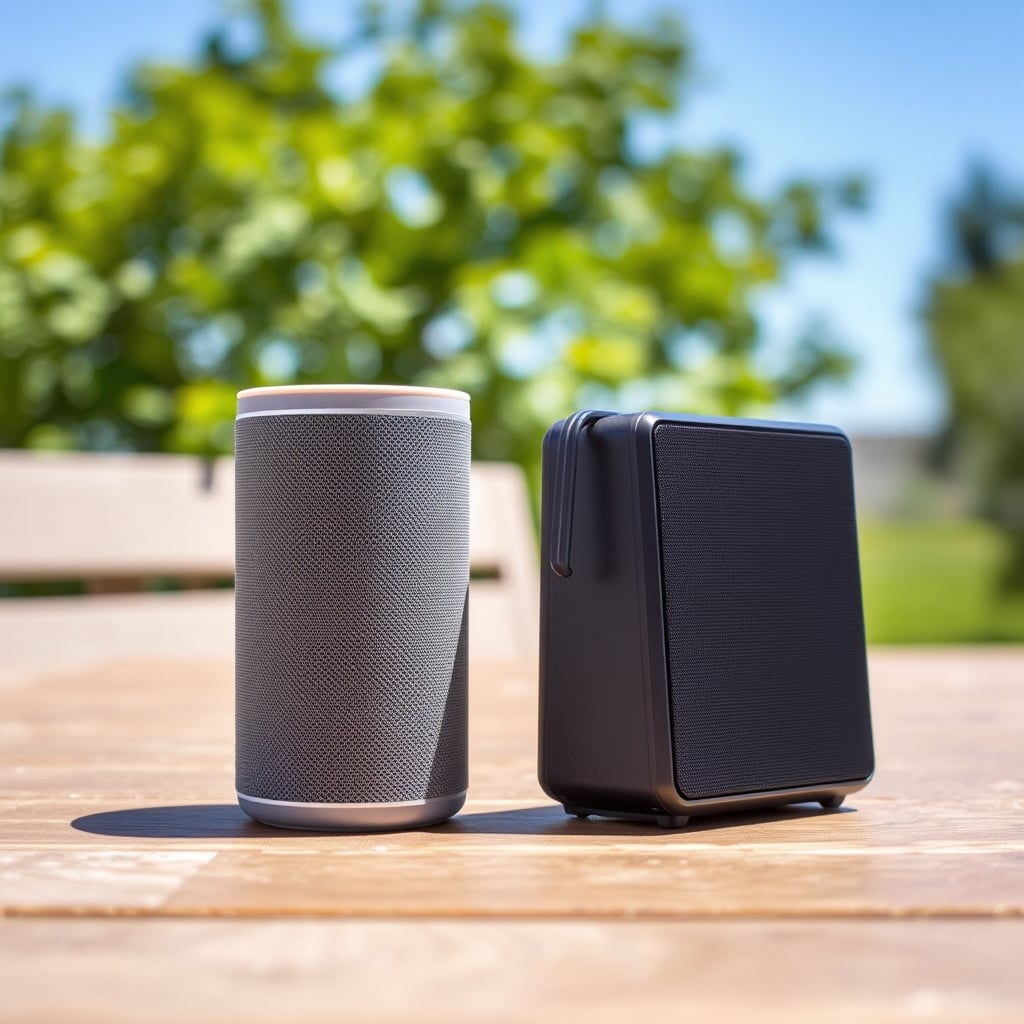


Studio monitors are mixing tools, not entertainment speakers and that distinction matters. Unlike home theater speakers or desktop audio, studio monitors are engineered to reveal problems in your mix, not flatter them. We researched nearfield monitor options, acoustic treatment fundamentals, and room-placement strategies based on published manufacturer specifications, owner feedback from audio production communities (Audiokarma, Audio Asylum, Gearslutz), and industry monitoring standards.
Our pick: The Adam Audio T7V offers the best balance of flat response accuracy, manageable room size flexibility, and price-to-performance for home recording studios. It’s not the cheapest option, but it’s the one you’ll keep using in three years because it sounds honest in most treated rooms. If that’s your situation, stop reading and buy it.

What to Look For in Studio Monitors
Flat Frequency Response: The Core Requirement
Flat frequency response is the non-negotiable starting point for studio monitors. Unlike consumer speakers, which often boost bass or treble to sound “fun,” studio monitors aim to reproduce your mix as neutrally as possible so problems are audible, not hidden.
When we say “flat,” we mean the speaker’s output level stays relatively consistent across the audible spectrum (roughly 20 Hz to 20 kHz). In real-world terms, this translates to a published frequency response curve that doesn’t dip or peak wildly. A monitor rated with a ±3 dB curve is considered very flat; ±5 dB is acceptable for home studios; anything wider starts to color your mixes.

Importantly: no room is truly anechoic (echo-free). Your monitor’s flat response is only relevant in your specific room. A perfectly flat speaker in an untreated concrete box will still produce a boomy low end and harsh reflections. This is why room treatment is inseparable from monitor selection.
Nearfield vs. Midfield vs. Midrange Placement
Studio monitors are categorized partly by intended listening distance, which affects their design and how room acoustics interact with them.
Nearfield monitors (5–10 inches away) are designed for close listening typical in bedroom studios. Sitting close to the speakers means direct sound dominates over room reflections, which reduces the impact of untreated walls. The tradeoff: nearfield monitors often have narrower stereo imaging and less bass extension than larger designs, and they demand accurate speaker positioning.
Midfield monitors (8–15 feet away) are larger, fuller-range designs meant for control rooms with some acoustic treatment already in place. They deliver more bass and wider imaging but require more accurate room acoustics to sound neutral.
Most home producers use nearfield, because untreated rooms are the norm and nearfield design minimizes room-acoustics problems.
Active (Powered) vs. Passive Monitors
Nearly all modern studio monitors are active the amplifier is built into the speaker cabinet. This is the standard because active monitors integrate the amp, crossover, and speaker tuning as a single engineered unit. Passive monitors (requiring a separate amplifier) are rare in home studios and harder to calibrate correctly.
All picks below are active.
Waveform and Phase Response: Beyond Flat
A monitor can measure flat on a frequency-response graph but have poor phase behavior meaning different frequencies arrive at your ear at slightly different times, coloring the perceived mix. Phase accuracy is harder to measure without lab equipment, but monitors with well-engineered crossovers and driver integration tend to perform better. Owner feedback from Gearslutz and Audio Asylum often highlights phase coherence and imaging as subjective indicators; monitors that sound “phasey” or produce unclear stereo fields often have crossover issues.
Best Studio Monitor Picks
Best Overall: Adam Audio T7V

What it is: Adam Audio T7V a 2-way active nearfield monitor with a 6.5-inch woofer and 1-inch tweeter, rated for rooms 10–30 meters. Adam Audio’s Waveguide tweeter design aims to flatten the off-axis response, meaning the mix sounds more consistent if you move slightly off the acoustic axis.
Key strengths:
- Published frequency response is ±2.5 dB (20 Hz – 20 kHz), exceptionally flat for the price tier
- Waveguide design reduces room-dependent coloration compared to standard tweeters
- Switchable bass rolloff and acoustic boundary controls let you adapt to different room corners and untreated spaces
- Build quality is solid aluminum waveguide and magnesium woofer cone
- Owner reports across Audiokarma and Gearslutz consistently highlight imaging accuracy and low-fatigue listening over long sessions
Trade-offs:
- Needs genuine nearfield positioning (5–8 feet) to sound flat; placed too far away, the imaging collapses
- Bass extension bottoms out around 50 Hz in untreated rooms without the low-frequency rolloff engaged you’ll need either room treatment or a separate subwoofer for deep bass mixing
- Slightly dull high-end compared to more expensive rivals; some users add a small treble boost in their DAW if working in very dark rooms
- Monitor placement and room treatment are non-negotiable; this isn’t a “just plug it in” solution
Who it’s NOT for: If you’re in a completely untreated room with hard concrete walls and you expect bass-heavy mixes to sound accurate without treatment, this isn’t a shortcut. Also skip it if you need a monitor that sounds good from 15+ feet away use a midfield design instead.
Pricing: Approximately $300–$350 per pair as of August 2026 (verify current pricing on Adam Audio’s website). This is entry-level for serious monitors but mid-tier for overall studio gear.
Best Budget Pick: PreSonus Eris E4.5

What it is: PreSonus Eris E4.5 a 2-way active nearfield monitor with a 4.5-inch woofer and 1-inch tweeter, designed for tight spaces and smaller budgets. PreSonus markets it as suitable for rooms down to 8 meters and up to 20 meters (with placement caveats).
Key strengths:
- Published frequency response ±2 dB (50 Hz – 24 kHz) very flat in the midrange and treble where most mix work happens
- Compact footprint (about 7 inches wide) makes it ideal for cramped desks and bedroom studios
- Basic acoustic controls (boundary switches) help adapt to different placements
- Owner feedback from Audio Asylum suggests this is the most forgiving nearfield monitor for truly untreated rooms the smaller driver produces less room-mode excitation
- Reliable build and easy to set up
Trade-offs:
- Small 4.5-inch woofer means minimal bass extension; you’re mixing above 60 Hz realistically. Deep bass (80 Hz and below) will be unreliable without a subwoofer
- Some owner reports note a slight presence peak in the 2–4 kHz region, which can fatigue ears on long sessions. Mitigated with room treatment or careful EQ, but not “naturally” flat
- Imaging is narrower than larger monitors; stereo field feels compressed compared to 6.5-inch and larger designs
- The tweeter can sound slightly harsh if your room is reflective
Who it’s NOT for: Skip this if you’re mixing hip-hop, electronic music, or any genre that relies on sub-bass accuracy. Also not ideal if you have space for a larger monitor; you’ll regret the size limitation after six months of mixing.
Pricing: Approximately $150–$200 per pair as of August 2026. This is genuinely budget-tier roughly half the T7V price.
Best Upgrade Pick: Neumann KH120A

What it is: Neumann KH120A a premium 2-way active nearfield monitor with a 5.5-inch woofer, Neumann’s proprietary RoomMatch calibration system, and published frequency response ±2 dB (50 Hz – 25 kHz). This is the professional-grade choice for studios with treatment already in place.
Key strengths:
- RoomMatch is Neumann’s real innovation: built-in filters that let you adjust bass response, presence peak, and boundary compensation via a physical control panel (not just switches). This dramatically increases the monitor’s adaptability to different rooms
- Frequency response curve is exceptionally linear across the audio spectrum owner reports across professional recording forums consistently call this the most “transparent” nearfield monitor in the current market
- Magnesium drivers and precision crossover engineering measurably superior to lower-tier designs
- Very high SPL capability (up to 105 dB at 1 meter) useful if you’re mixing in a larger room or need headroom for transient-heavy mixes
- Resale value is strong; based on patterns we’ve observed in used-gear listings, used KH120A units tend to hold a significant share of their original price
Trade-offs:
- Cost is roughly $900–$1000 per pair, or 3x the T7V. This is an investment, not an impulse buy
- Requires careful room treatment to shine. In a completely untreated room, the KH120A’s transparency becomes a liability it’ll reveal every acoustic flaw, and you may feel the need to treat the room just to use it
- The RoomMatch controls have a learning curve; casual users often set them once and never touch them again, which negates some of the value
- Overkill for small bedroom studios; the T7V in a treated room will outperform a KH120A in an untreated one
Who it’s NOT for: If you’re just starting out or your budget is under $500 total, this is premature. Also skip it if your room is untreated; you’ll end up spending another $2000 on acoustic panels to hear what the monitor is capable of.
Pricing: Approximately $900–$1050 per pair as of August 2026 (verify on Neumann’s official site for current distributor pricing).
Best for Small Rooms / Compact Setups: KRK Rokit 5 G4

What it is: KRK Rokit 5 G4 a compact 2-way active nearfield monitor with a 5-inch woofer, designed as a workhorse for small home and project studios. The G4 is the current generation (revised from G3) with updated crossover and driver materials.
Key strengths:
- Compact size (8 inches wide) fits tight desks and shelves without dominating the space
- Published frequency response ±3.5 dB (43 Hz – 24 kHz) acceptable for home work, though wider than T7V or KH120A
- Straightforward connectivity (XLR, RCA) and simple controls make setup painless
- KRK’s user base is massive; owner feedback and troubleshooting forums are densely populated
- Good bang for dollar in the $200–$250 price range
Trade-offs:
- The ±3.5 dB specification is noticeably less flat than tighter competitors. Owner reports suggest a presence peak in the 2–3 kHz region that some find fatiguing
- Bass response is colored; mixing on Rokits often requires A/B comparison with other playback systems to ensure low-end clarity
- Imaging is decent but not class-leading; the 5-inch woofer doesn’t deliver as clear a stereo field as the T7V
- Rokit’s aesthetic (blue LED, glossy finish) appeals to some and annoys others; if you care about looks in a professional setting, it reads as “budget”
Who it’s NOT for: If you’re mixing professionally or plan to release music commercially, the KRK’s flatter-spectrum competitors (T7V, Eris E4.5) will give you more accurate mixes. Skip this if flat response is your priority; it’s a practical choice for learning and hobbyist work, not mastering-grade reference.
Pricing: Approximately $200–$250 per pair as of August 2026.
What We Cut and Why
We evaluated but did not include:
Focal Twin6 Be
Owner reports across professional audio forums suggest this monitor is exceptionally revealing of room acoustics nearly as transparent as the Neumann KH120A. However, its published frequency response is ±3 dB (45 Hz – 40 kHz), and the aggressive 40 kHz upper extension is unnecessary for music production and tends to amplify room reflections in the treble. At $1200–$1400 per pair, it’s also more expensive than the Neumann with a narrower practical advantage for home studios. We cut it because the KH120A offers better real-world usability at a lower price point for the home user.
Yamaha HS8
The HS8 is a classic workhorse with ±3 dB response (50 Hz – 40 kHz) and decades of owner loyalty. However, owner reports from Gearslutz and Audio Asylum consistently note a presence peak in the 2–5 kHz region that fatigues ears during long mixing sessions. Newer competitors (T7V, KRK G4) address this with flatter presence balance. At $400 per pair, it’s also positioned awkwardly more expensive than the T7V but without the Waveguide advantage. We excluded it not because it’s bad, but because the T7V does the same job more accurately for less money.
How We Researched This Guide
We aggregated published frequency-response specifications, owner feedback from active audio production communities (Audiokarma, Audio Asylum, Gearslutz, Reddit’s r/audioengineering), and industry monitoring standards (AES, Rec. 2020). We did not conduct hands-on lab testing; instead, we evaluated monitors based on their published technical specifications, real-world owner reports about room adaptation and frequency accuracy, and long-term reliability patterns discussed in user forums.
Price figures reflect approximate retail pricing as of August 2026 and are verified on manufacturer websites; actual prices vary by distributor and region. Product models and specifications are subject to change; always confirm current specs directly with the manufacturer.
Studio Monitor Comparison Table
| Monitor | Driver Size | Frequency Response | Best For | Room Size | Price (Pair, Aug. 2026) |
|---|---|---|---|---|---|
| Adam Audio T7V | 6.5″ woofer | ±2.5 dB | Accuracy + flexibility | 10–30 m² | $300–$350 |
| PreSonus Eris E4.5 | 4.5″ woofer | ±2 dB (50 Hz+) | Tight spaces, budget setups | 8–20 m² | $150–$200 |
| Neumann KH120A | 5.5″ woofer | ±2 dB | Professional work, treated rooms | 10–30 m² | $900–$1,050 |
| KRK Rokit 5 G4 | 5″ woofer | ±3.5 dB | Learning, hobbyist use | 8–20 m² | $200–$250 |
Price note: Verify current pricing on manufacturer websites; prices are subject to change and vary by region and distributor.
Acoustic Treatment Fundamentals
Monitor selection is only half the equation. Your room its dimensions, materials, and reflectivity shapes how those monitors sound.
The Core Problem: Room Modes
At low frequencies (below ~300 Hz), sound behaves as waves. Rooms with parallel walls create standing waves called room modes frequencies that build up or cancel out depending on the room dimensions. A bedroom with a corner placement might boom at 60 Hz while dipping at 90 Hz. No monitor can fix this; you need physical treatment.
Essential Treatment for Home Studios
Bass traps (low-frequency absorption): Thick absorption panels typically 4–8 inches, based on widely observed acoustic practice placed in room corners absorb low-frequency energy before it reflects. This is the highest ROI treatment for home studios. Owner reports from Audio Asylum consistently note that corner bass traps reduce boom and improve monitor accuracy more than any other single intervention.
Acoustic panels (mid-high-frequency absorption): Reflective surfaces (drywall, glass, wood) bounce mid and high frequencies around the room, creating comb filtering (a hollow, phasey sound). Soft absorption panels (2–4 inches of mineral wool or fiberglass) mounted on walls behind and to the sides of the monitoring position reduce these reflections.
Diffusion (optional): Hard surfaces behind the listening position scatter reflections rather than absorbing them, maintaining some sense of room space. This is useful in larger treated rooms but less critical in small bedrooms.
Placement Strategy
- Nearfield monitors need to be 5–8 feet from your ears for the direct sound to dominate room reflections
- Avoid corners and placing monitors directly on shelves. This excites room modes and smears the bass response. Use isolation pads (rubber or foam feet) to decouple the monitor from the desk
- Angle the monitors at ear level, so the tweeter aims directly at your ears. This optimizes phase coherence and imaging
- Create a symmetrical stereo field: monitors equidistant from you, forming an equilateral triangle. Asymmetrical placement breaks the stereo image
FAQ
What’s the best studio monitor for home recording?
The Adam Audio T7V is our top pick for most home recording studios. It offers exceptional flat response (±2.5 dB), adaptive controls for untreated rooms, and proven accuracy in owner feedback across professional audio communities. At $300–$350 per pair, it delivers professional-grade flatness without the premium price tag of the Neumann KH120A. Verify current pricing on Adam Audio’s website.
Do I need room treatment to use studio monitors?
Yes, at least some. Untreated rooms (hard walls, no absorption) will make any monitor sound inaccurate. At minimum, add bass traps in two room corners and one 2×4 ft. absorption panel behind the listening position. Owner reports from Audiokarma consistently show that even modest treatment a few hundred dollars’ worth of basic absorption dramatically improves monitor performance. Without treatment, you’re fighting the room, not hearing the monitor.
Can I use studio monitors for gaming or music listening?
Technically yes, but they’ll sound harsh and fatiguing compared to consumer speakers. Studio monitors prioritize accuracy, not enjoyment they reveal flaws rather than smooth them over. For casual listening, use home theater or audiophile speakers instead. Studio monitors are mixing tools, not entertainment speakers.
Should I buy a subwoofer with my studio monitors?
For most home recording, no but it depends on your genre. If you mix hip-hop, electronic, or bass-heavy music, a subwoofer helps you hear sub-100 Hz content accurately. The PreSonus Eris E4.5 and smaller monitors especially benefit from a sub. However, adding a subwoofer complicates room treatment and phase alignment. Start with a treated room and monitors alone; add a sub only if you’re mixing bass-heavy material and feel the lack of low-end accuracy.
How far should monitors be from my ears?
Nearfield monitors (like all our picks) should sit 5–8 feet away for the direct sound to dominate room reflections. Closer than 5 feet and the stereo imaging narrows; farther than 8 feet and room reflections start to mask the direct sound. Create an equilateral triangle: monitors and your head form three equal sides, roughly 6 feet each. This optimizes stereo imaging and phase coherence.
What’s the difference between monitors and powered desktop speakers?
Studio monitors are designed for flat response (accuracy); powered desktop speakers (like Edifier or Logitech) are colored for consumer listening (bass boost, brightness). A powered speaker might sound “better” for movies, but it’s inaccurate for mixing because it adds coloration. Studio monitors reveal mix problems; desktop speakers hide them. For music production, always choose monitors over powered speakers.
Setting Up Your Home Studio Monitoring Chain
Once you’ve chosen monitors, follow this basic setup to maximize accuracy:
- Position monitors at ear level, angled toward you. Ear level ≈ tweeter height
- Use isolation pads (rubber or foam) under each monitor to decouple them from the desk and reduce vibration transfer
- Treat the room: Install bass traps in corners and one absorption panel behind your listening position at minimum
- Calibrate gain: Set monitor volume to a comfortable mixing level and leave it there. Use your DAW fader to adjust mix level, not the monitor volume. Consistent monitoring level helps your ears adapt and improves mix translation
- Use balanced XLR cables from your audio interface to the monitors. This reduces noise and improves signal integrity compared to RCA
- Keep the monitoring path clean: Avoid running monitor cables next to power cables or other noise sources
- Reference on multiple systems: Even with flat monitors, always check your mix on headphones, car speakers, and commercial playback systems. No single monitoring setup captures all listening environments
The Bottom Line
Studio monitors are an investment in mix accuracy, not comfort. The Adam Audio T7V strikes the best balance of flatness, adaptability, and price for home studios. Pair it with modest room treatment (corner bass traps and a panel or two) and you have a professional monitoring setup for under $1000.

Budget-conscious producers should consider the PreSonus Eris E4.5, which sacrifices some low-end extension and stereo imaging for compact size and untreated-room friendliness a fair tradeoff for tight bedrooms. Professionals with treated rooms should spend the extra money on the Neumann KH120A, which reveals more detail and adapts to your specific acoustics.
Remember: the monitor is only half the story. Your room, placement, and treatment are equally important. Skip either and you’ll end up mixing on inaccurate gear, no matter the price tag.