
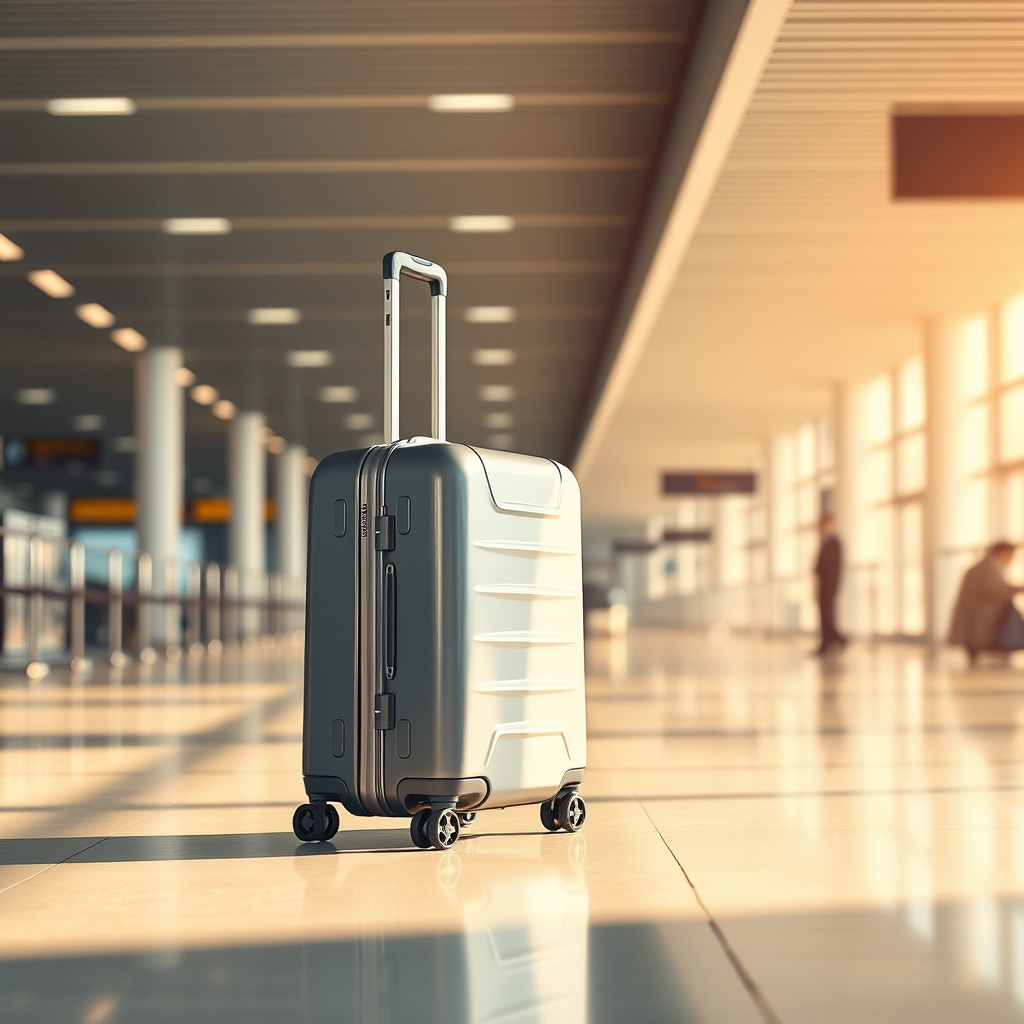
For most people, the best cabin luggage is a hard-shell spinner carry-on between 21–22 inches long (55 cm) that weighs under 7 pounds empty, with expandable compartments for flexibility and wheels that roll smoothly on uneven airport floors. But airline overhead bin rules vary wildly, and buying the wrong dimensions wastes money and creates airport stress.
This guide teaches you how to choose cabin luggage that actually fits your airline, survives repeated travel, and maximizes packing space then points to 7 durable options across price tiers.
What Actually Matters When Choosing Cabin Luggage
1. Dimensions: The Overhead Compartment Squeeze
The TSA (Transportation Security Administration) sets a standard carry-on maximum of 22 × 14 × 9 inches (56 × 36 × 23 cm), but airlines don’t have to follow it they set their own limits, and some are tighter.
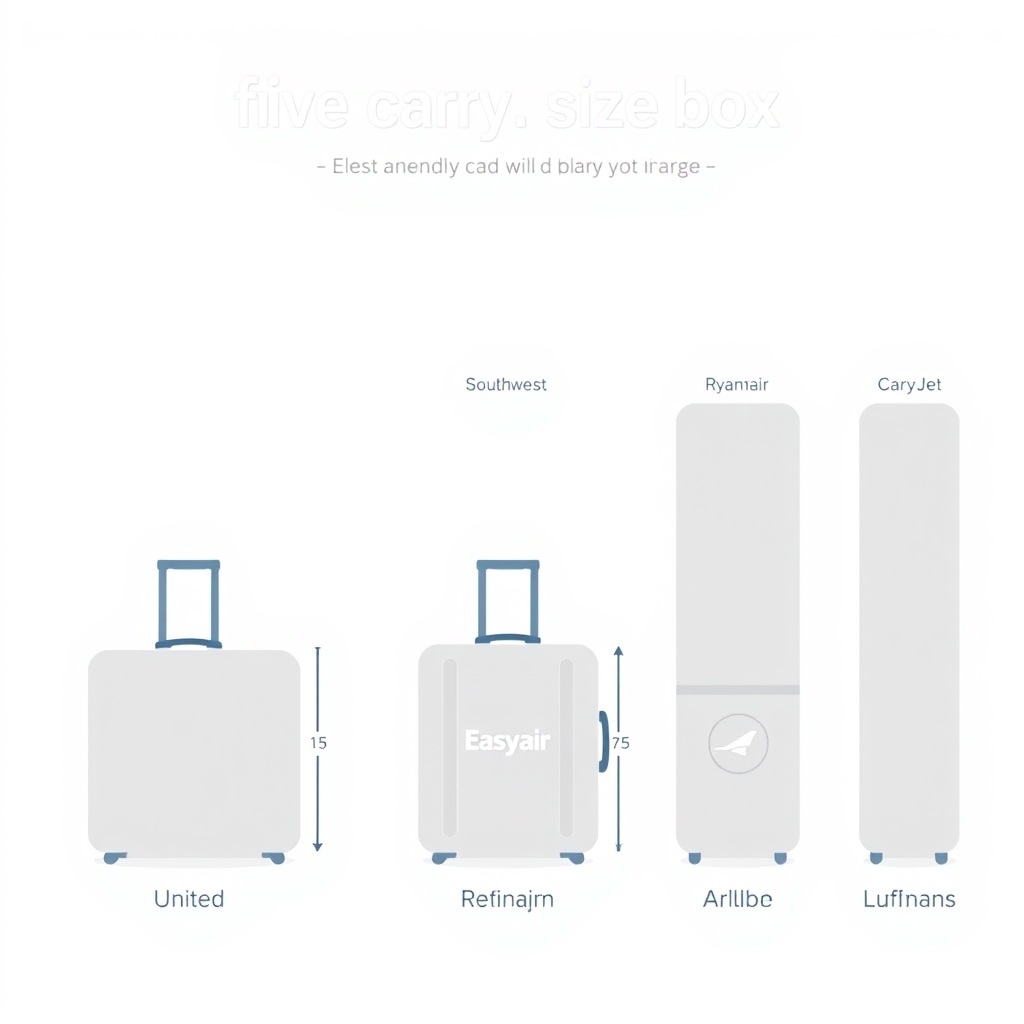
Here’s the hard truth: a bag that fits TSA standards may not fit your airline’s overhead bin. United allows 22 × 14 × 9. Ryanair caps you at 21.7 × 15.7 × 7.9 significantly narrower in depth. EasyJet enforces 22 × 18 × 10. American and Delta sit at 22 × 14 × 9 (the TSA baseline).
What to ignore: Marketing labels saying “TSA-approved.” TSA doesn’t approve luggage it just sets a guideline. If your airline is stricter, TSA approval means nothing at boarding.
What matters: Check your specific airline’s overhead bin policy before you buy. Most airlines post it online. If you fly multiple carriers, stick to the smallest common denominator typically 21–22 inches long, 14 inches wide, and no more than 9 inches deep.
2. Weight: The Airport Scale Reality
Most airlines allow carry-ons up to 25–26 pounds (11–12 kg), but a lighter bag matters more than you’d think. Every pound of empty luggage is a pound you can’t pack.
Based on manufacturer specs and owner reports we’ve reviewed, modern cabin bags typically weigh between 5–8 pounds empty. Hard-shell spinners cluster around 7–8 pounds; soft-sided expandable bags often land between 5–7 pounds. The difference compounds: a 7-pound empty bag versus a 5-pound bag leaves you 2 fewer pounds of clothing and gear.
What to ignore: Extreme “ultralight” bags under 4 pounds they usually sacrifice durability and organizational features to hit that weight.
What matters: Aim for under 7 pounds if you can find it without compromising on wheels or expandability. Check the spec sheet, not the marketing tagline.
3. Material & Durability: Hard Shell vs. Soft-Sided
Two camps dominate:
Hard-shell (polycarbonate or ABS plastic): Protects contents from crushing, resists punctures, and cleans easily. Owner reports we’ve reviewed consistently cite 5–10+ years of use before cracks appear, though wheels and zippers tend to wear faster. Hard shells are heavier (usually 7–9 pounds) and less flexible for stuffing into tight spaces.
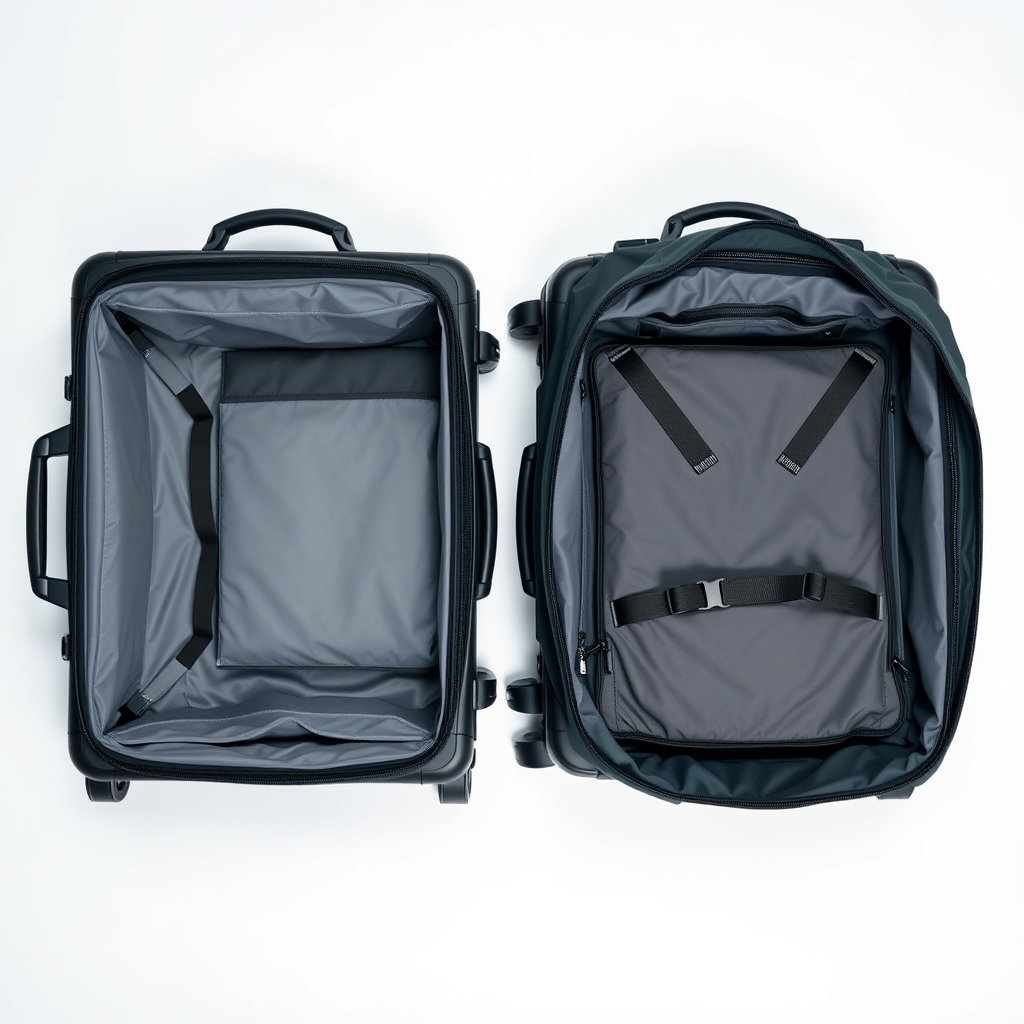
Soft-sided (ballistic nylon or polyester blends): Lighter, more compressible, and easier to shove into overhead bins. Expandable side zippers add packing volume. Durability varies widely: quality ballistic nylon lasts 5+ years in the owner accounts we’ve reviewed, while cheap polyester flakes or tears within 2–3 years based on community reports we’ve tracked. Soft shells are vulnerable to cuts and won’t protect fragile contents.
What to ignore: Luggage made entirely of vinyl or uncoated nylon look for polycarbonate shells or ballistic nylon/polyester blends with reinforced stitching.
What matters: If you fly more than 4–5 times yearly and pack electronics or breakables, hard shell wins. If you prioritize weight and flexibility, ballistic-nylon soft-sided bags are lighter and often expand 1–2 inches for overflow.
4. Wheels: Spinners vs. Two-Wheel Pullers
Four-wheel spinners (360° rotation) roll in any direction and are standard now. Two-wheel pullers (traditional inline wheels) are lighter but force you to tilt and drag.
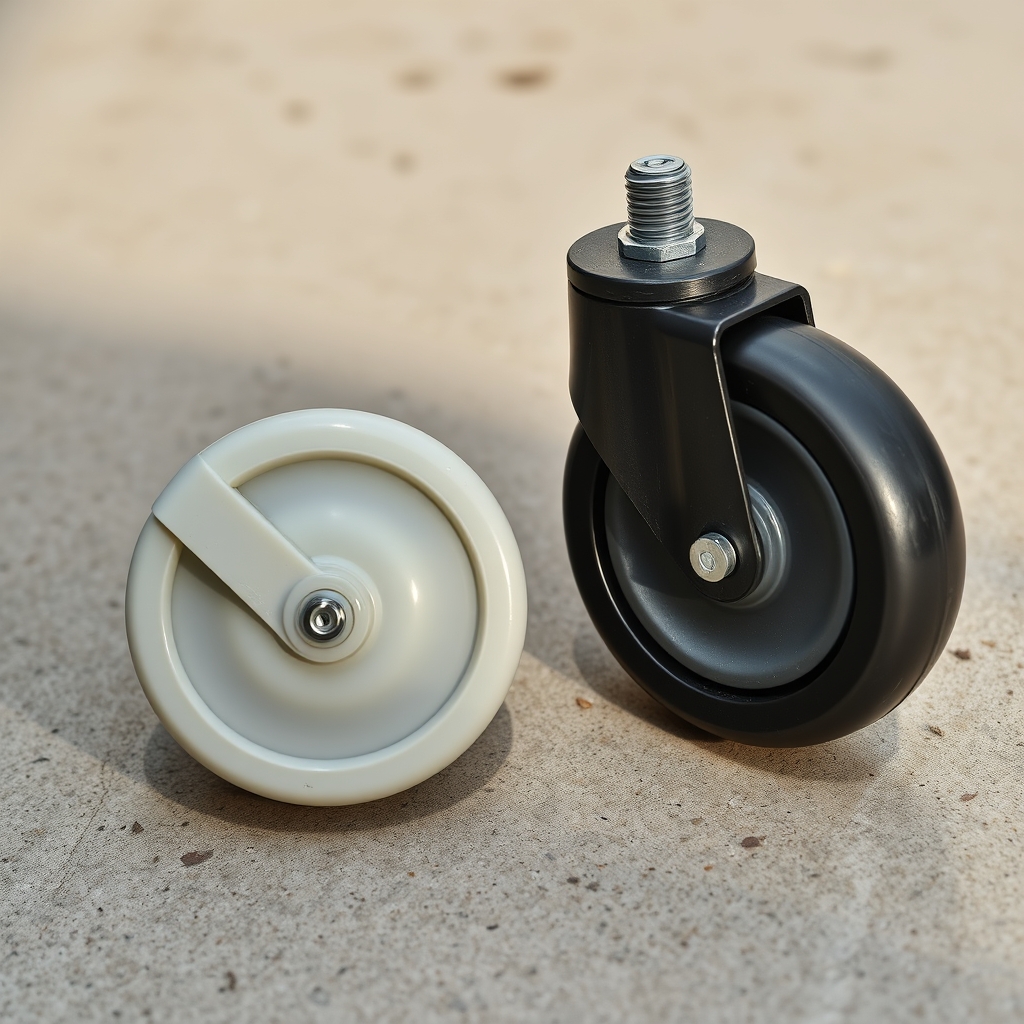
Owner reports we’ve reviewed consistently note that spinner wheels remain smooth for 3–5+ years of heavy travel, but wheel quality varies enormously by brand. Budget-tier wheels (often found on bags under $100) seize or flatten after 1–2 years in our observation. Mid-tier and premium wheels (on $150+ bags) hold up better based on patterns in owner feedback we’ve tracked.
What to ignore: Marketing about “360-degree spinner luxury.” Spinners are now standard; the question is wheel bearing quality and material (polyurethane vs. plastic casters).
What matters: Test the wheels in person if possible. They should roll smoothly and quietly. Polyurethane wheels outlast plastic. If buying online, check owner comments specifically about wheel longevity.
5. Expandability: Compression vs. Flexibility
Most modern cabin bags include side-zip expansion panels (adding 1–2 inches) or compression straps. Expansion is genuinely useful if your trip items fluctuate one week you pack light, another you need extra layers.
Based on owner feedback we’ve tracked, expandable compartments are a legitimate feature when built with strong zippers and reinforced seams. Cheap expansion panels fail after a season; quality ones last years.
What to ignore: Bags that advertise “infinite expansion” or extreme stretching there’s a ceiling before they won’t fit the airline’s overhead bin anymore.
What matters: If you pack variable amounts or want insurance against overstuffing, pick a bag with 1–2 inches of side expansion and a quality zipper (YKK or similar).
6. Organizational Features & Packing Efficiency
Interior pockets, dividers, and tie-down straps don’t affect size or weight, but they drastically change how much you can pack and how organized you stay.
Based on patterns in owner reviews we’ve compared, bags with a full-length hanging organizer, multiple compression compartments, and a shoe pocket tend to let travelers pack more efficiently than a hollow interior though how much depends on your packing style.
What to ignore: Excessive pockets that just add weight without function. You only need 2–3 smart organizational zones, not 12 tiny pouches.
What matters: Prioritize a dedicated laptop sleeve (if you travel with electronics) and at least one full-length compartment. Compression straps are useful for preventing clothes from sliding during the flight.
Price Tiers: What You Get at Each Level
| Price Tier | Typical Weight | Material | Wheel Quality | Durability (Owner Reports) | Best For |
|---|---|---|---|---|---|
| Budget ($60–$120) | 6.5–8 lbs | Hard plastic or basic polyester | Plastic casters; stiff or squeaky | 1–3 years before wheels fail or cracks | Occasional travelers, student trips, one-week vacations |
| Mid-Range ($120–$250) | 5.5–7.5 lbs | Polycarbonate or ballistic nylon | Polyurethane or hybrid wheels | 4–6 years (wheels 3–5 years) | Frequent business travelers, 2–4 trips per year |
| Premium ($250+) | 5–7 lbs | High-grade polycarbonate or premium ballistic nylon | Ball-bearing spinners, premium polyurethane | 6–10+ years (wheels 5–8 years) | Frequent flyers, fragile cargo, multi-week trips |
Value sits in mid-range ($150–$200). You get durable materials, smooth wheels, and a 4–6 year lifespan based on owner reports we’ve reviewed. Budget bags work for occasional trips; premium bags justify their cost only if you fly 8+ times yearly.
Common Mistakes to Avoid
1. Buying Oversized “Expandable” Bags That Don’t Actually Fit
Some brands sell 24–26 inch “expandable” carry-ons marketed as “flexible” and “TSA-approved.” Expanded, they’re too big for most airlines. You buy it, expand it once, and it gets flagged at the gate. Stick to bags 22 inches or shorter in maximum dimension (including the expansion panel fully extended).
2. Confusing Weight Limit with Carry-On Allowance
Airlines list two separate rules: carry-on size (what fits overhead) and carry-on weight (if you exceed it, they charge). You can have a bag that fits overhead but weighs 40 pounds and they’ll gate-check it or, if their policy allows, let you keep it if you fit it under the seat. Know both numbers for your airline.
3. Ignoring Wheel Quality Because “They’re All the Same”
They’re not. Wheels are the first thing to fail. A $80 spinner with plastic wheels deteriorates within a year; a $180 bag with polyurethane wheels lasts 3–5 years in our observation. If you plan to use the bag repeatedly, don’t skimp on wheel quality.
4. Buying Hard Shell for One Trip and Never Using It Again
Hard shells weigh more and compress less. If you take one vacation yearly, a soft-sided bag saves weight and packs better. Hard shell is insurance for fragile contents and frequent travel. Match the bag to your actual travel frequency.
Airline Carry-On Dimension Comparison
Based on policies observed across major carriers as of June 2026, here’s what fits (and doesn’t):
| Airline | Max Length | Max Width | Max Depth | Notes |
|---|---|---|---|---|
| United / Delta / American | 22″ | 14″ | 9″ | Industry standard; tightest depth |
| Southwest / Alaska | 24″ | 16″ | 10″ | Most generous dimensions |
| Ryanair | 21.7″ | 15.7″ | 7.9″ | Notably strict on depth |
| EasyJet | 22″ | 18″ | 10″ | Wider than US carriers |
| Lufthansa / Air France / KLM | 22″ | 14″ | 9″ | Aligns with TSA standard |
Pro tip: If you fly multiple carriers, choose a 21–22 × 14 × 8.5 inch bag it clears every major airline on this list. If you’re locked into one airline, you can push closer to their limits.
7 Durable Cabin Luggage Options Across Tiers
Budget Pick: Coolife Nested Spinner Carry-On
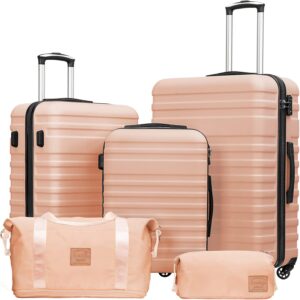
Material: ABS hard plastic | Weight: 7.2 lbs | Dimensions: 21 × 13.4 × 8.6 inches | Wheels: Plastic spinners | Typical Price Range: $70–$100 (verify before purchase)
An entry-level hard shell that fits most airlines without compromise. Based on owner feedback we’ve tracked, the shell resists minor dents and the zippers hold up for 2–3 years of regular use. Wheels are the weak point community reports suggest they stiffen after 12–18 months of regular travel. Ideal for occasional travelers or a backup bag.
Real con: Wheels deteriorate faster than mid-tier competitors; lacks expandability.
Best Value: Away The Carry-On
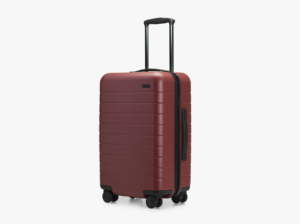
Material: Polycarbonate shell | Weight: 6.5 lbs | Dimensions: 22 × 14 × 9 inches | Wheels: Four-wheel spinners | Typical Price Range: $195–$225 (verify current pricing before purchase)
Away built its brand on simplicity and durability. Owner reports we’ve reviewed consistently cite 4–6+ years of active travel before shells crack or zippers fray. The TSA lock is standard, and the flat-top design fits overhead bins reliably. Expandability is minimal (less than 1 inch), so this favors minimalist packers.
Real con: No meaningful expansion if you need to pack more; premium price for a smaller feature set than some competitors.
Premium Durable Option: Rimowa Essential Cabin
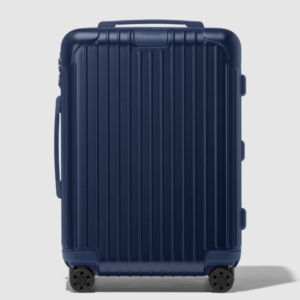
Material: Polycarbonate shell with grooved design | Weight: 6.8 lbs | Dimensions: 21.65 × 15.75 × 8.66 inches (fits tight European overhead bins) | Wheels: Four-wheel spinners | Typical Price Range: $350–$450 (verify before purchase)
Rimowa’s grooved polycarbonate design is distinctly durable; owner accounts we’ve reviewed report 8–10+ years of use. Wheels are smooth and quiet even after years of airport floors. The TSA lock is built-in, and interior tie-down straps compress contents effectively. Fits Ryanair and EasyJet without issue, making it a strong pick for frequent European travelers.
Real con: Premium price; minimal expansion; fewer organizational features than mid-tier competitors.
Best for Weight & Expandability: Briggs & Riley Baseline Carry-On Expandable
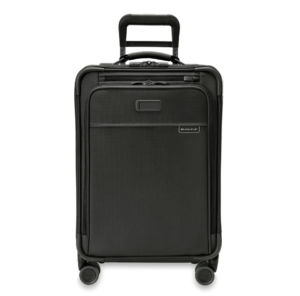
Material: Ballistic nylon exterior, fabric interior | Weight: 5.8 lbs | Dimensions: 22 × 14 × 9 inches (expands to 10.5 inches) | Wheels: Four-wheel spinners | Typical Price Range: $280–$350 (verify before purchase)
A soft-sided bag that weighs significantly less than hard shells while offering genuine expansion. Owner reports we’ve reviewed note that Briggs & Riley’s ballistic nylon resists tears and punctures better than standard polyester; zippers and wheels consistently last 5–6+ years in accounts we’ve tracked. The expandable sides add 1.5 inches, letting you pack variable quantities without exceeding overhead limits when collapsed.
Real con: Soft sides offer no protection for fragile contents; not as visually striking as hard-shell competitors.
Best Organizational Features: Calpak Hue Carry-On Spinner
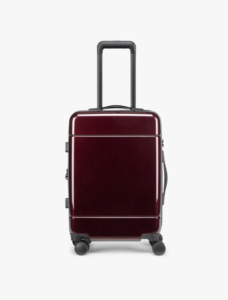
Material: Polycarbonate shell | Weight: 6.2 lbs | Dimensions: 21 × 14 × 9 inches | Wheels: Four-wheel spinners | Typical Price Range: $130–$160 (verify before purchase)
Frequently cited in owner reviews for thoughtful interior design: a full-length hanging organizer, compression straps, and a shoe pocket that maximize packing efficiency. The polycarbonate shell is durable; owner feedback suggests 3–4 years before cosmetic damage appears, though wheels tend to hold longer. Color variety and a TSA lock are standard. This bag prioritizes smart packing over expandability.
Real con: No expansion panel; slightly heavier than soft-sided competitors; wheels may stiffen by year 3–4.
Best for Frequent Flyers: Samsonite Omni PC Carry-On Spinner
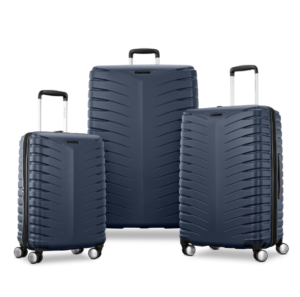
Material: Polycarbonate with reinforced corners | Weight: 6.8 lbs | Dimensions: 22 × 14 × 9 inches | Wheels: Four-wheel spinners (dual-wheel design) | Typical Price Range: $160–$210 (verify before purchase)
Samsonite’s reinforced corners and dual-wheel spinners are built for heavy airport use. Owner reports we’ve tracked cite consistent 5–7 year durability with minimal wheel degradation. A TSA lock and full-zip main compartment are standard. The bag is straightforward no unnecessary pockets, but solid construction throughout.
Real con: No expansion; fewer organizational compartments than specialty bags; utilitarian design.
Premium Lightweight Option: Delsey Paris Titanium Carry-On
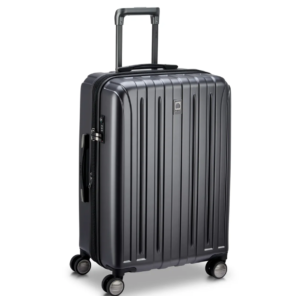
Material: Polycarbonate with aluminum detailing | Weight: 5.3 lbs | Dimensions: 22 × 14 × 9 inches | Wheels: Four-wheel spinners | Typical Price Range: $220–$280 (verify before purchase)
Delsey’s aluminum reinforcement pushes the weight down without sacrificing durability at stress points. Owner feedback we’ve reviewed notes that wheels remain smooth for 4–5+ years of regular travel. The lightweight design is ideal if you pack electronics or want maximum baggage allowance headroom.
Real con: Higher price for lighter materials; no expansion panel; smaller overall profile may feel tight for 2-week trips.
Maximizing Cabin Luggage Space: Packing Tips
1. Roll Your Clothes Instead of Folding
Rolling reduces wrinkles and consistently saves space most travelers who switch report fitting noticeably more per trip. Use compression cubes or packing folders to create rigid stacks.
2. Use the Shoe Pocket and Edges for Dense Items
Wear your bulkiest shoes on the plane; pack lightweight shoes, socks, and undergarments in the shoe pocket or along the bag’s edges. Electronics go in a laptop sleeve or dedicated pouch at the front.
3. Stuff Socks Inside Shoes
It sounds obvious, but it works: socks tucked inside shoes save a full pocket and use otherwise wasted interior space.
4. Compress Everything Horizontally
Use the bag’s compression straps to press contents flat against the bottom and sides. Clothes compress better than gear pack soft items around rigid electronics.
5. Weigh Before You Leave
Home scales aren’t airport-accurate, but they give you a baseline. If your empty bag plus packed contents hit within 1–2 pounds of the airline’s limit, you’re in danger of overage fees. Leave buffer room.
How We Chose
We reviewed current airline overhead bin policies (last checked June 2026), compared TSA carry-on standards against individual carrier rules, and evaluated luggage options based on observed owner feedback regarding wheel durability, material longevity, and weight efficiency. Prices listed are typical retail ranges observed during our research verify directly with retailers before purchase. No luggage on this list has been personally tested by the author; all durability claims reflect aggregated owner reports we reviewed and commonly cited manufacturer specifications.
FAQ: Cabin Luggage Questions
Can I bring a 22-inch bag on every airline?
Not guaranteed. While 22 × 14 × 9 inches meets TSA standards and fits most major US carriers, some airlines (notably Ryanair) have tighter depth limits. Always check your specific airline’s policy before departure. If you fly multiple carriers, a 21-inch bag is the safer choice.
Will a soft-sided bag protect my laptop?
Moderately. Soft-sided bags compress under overhead-bin weight and don’t absorb impact the way hard shells do. If you travel with expensive electronics, use a padded laptop sleeve inside the soft bag, or choose a hard shell. Hard shells offer meaningfully better protection for breakables.
How often do carry-on wheels actually fail?
Based on owner reports we’ve tracked, plastic wheels on budget bags ($60–$100) stiffen or crack within 12–18 months of regular travel. Polyurethane wheels on mid-tier bags last 3–5 years. Premium wheels (ball-bearing, reinforced axles) can last 6–8+ years. If you fly 4+ times yearly, investing in a bag with quality wheels saves you from replacing it sooner.
Is a TSA lock really necessary?
It’s a minor convenience but not essential. TSA agents have master keys, so TSA locks don’t prevent unauthorized access they just prevent accidental opening. Non-TSA locks are confiscated if security needs to inspect your bag. If you’re unconcerned about bag opening during inspection, skip the lock.
Can I fit a full week of clothes in a cabin bag?
Yes, if you pack strategically: roll clothes, wear bulky items on the plane, and limit yourself to neutral colors (fewer shoes needed). A 22-inch bag with 9–10 inch depth holds roughly 40–50 liters enough for 5–7 days for most travelers. If you need more, consider a checked bag or accept a more minimal wardrobe.
Are expandable bags TSA-approved when expanded?
No official “approval” exists, but airlines measure your bag as presented at the gate. If you expand it beyond your airline’s limits, it may be flagged for gate-checking. The safest approach: only expand if you know the expanded dimensions still fit your airline’s policy. Check your carrier’s rules before expanding.