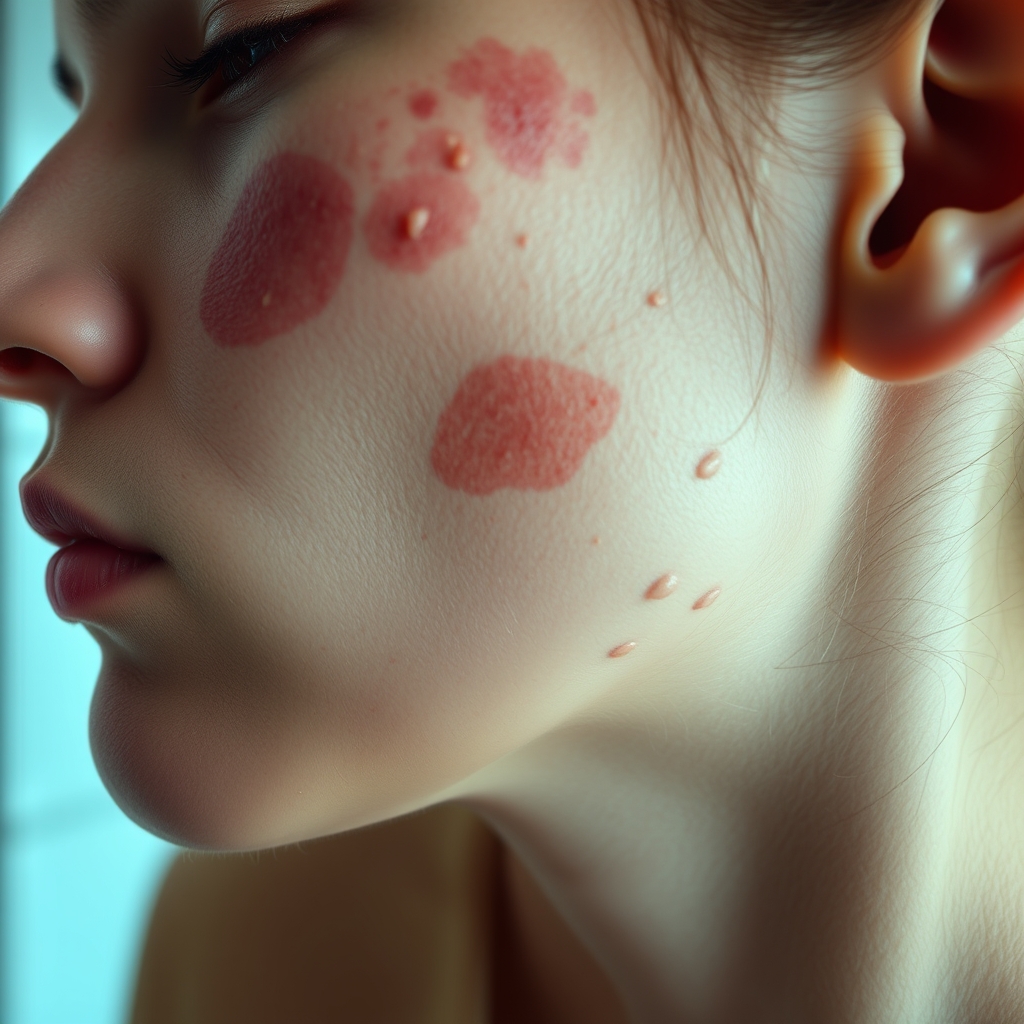

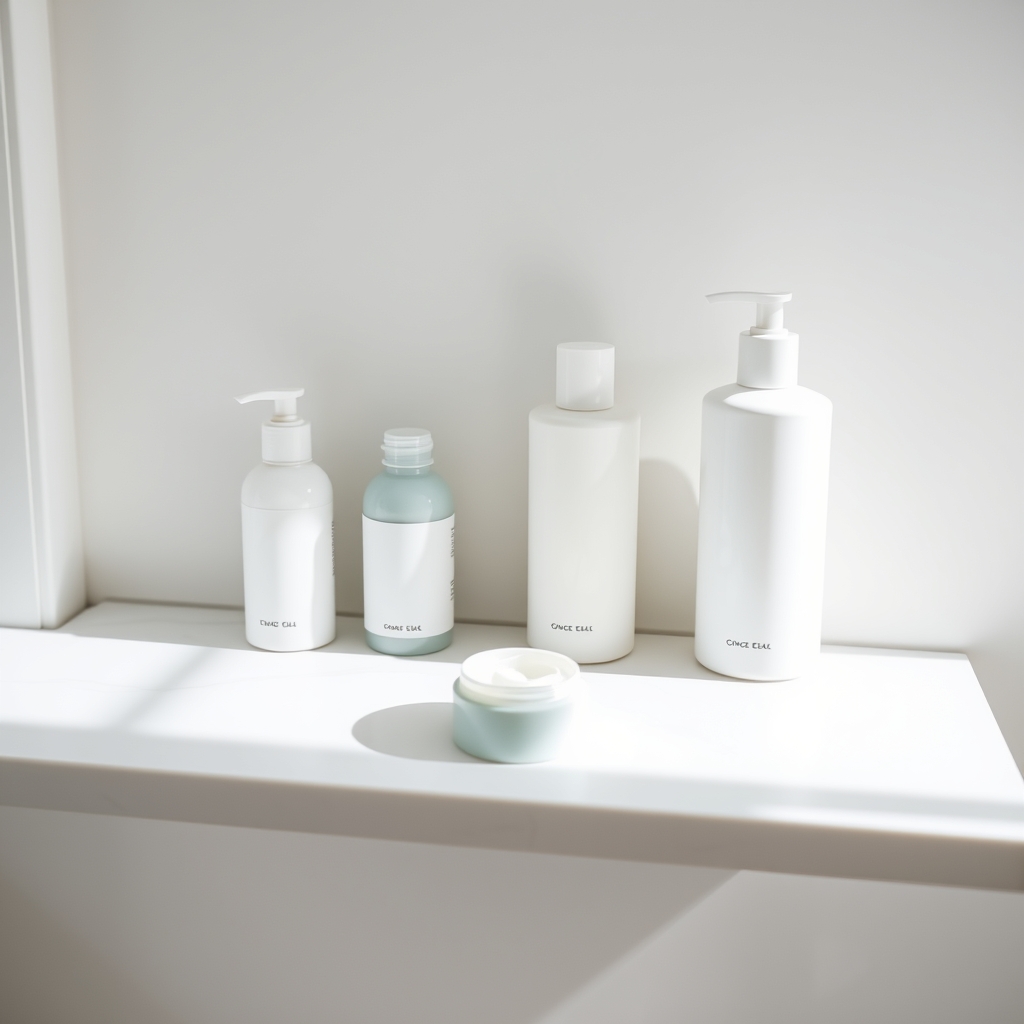
If your skin burns, itches, or breaks out within hours of trying a new product, fragrance-free skincare with a minimal ingredient list is your safest move. This guide covers the dermatologist-recommended essentials for sensitive, reactive, and eczema- or rosacea-prone skin with honest trade-offs for each pick and a “what we cut” section that explains why certain cult favorites didn’t make the list.
The Best Fragrance-Free Skincare for Sensitive Skin
The top pick: CeraVe Hydrating Facial Cleanser is the standout cleanser for reactive skin. It’s formulated without fragrance, essential oils, or sulfates; contains three ceramides and hyaluronic acid; and removes makeup and sunscreen without disrupting the skin barrier. A 12 oz bottle costs around $10–14 and lasts 2–3 months with daily use.
The trade-off: It’s a lotion cleanser, not a gel or foam, so it leaves a faint residue if you don’t rinse thoroughly. Some users with very oily skin find it slightly heavy. Who it’s not for: If you prefer a sudsy or squeaky-clean feeling, you’ll find it underwhelming.
If that’s you and you have reactive skin, stop reading the cleanser section and buy it.
Best Budget Pick: Vanicream Gentle Facial Cleanser
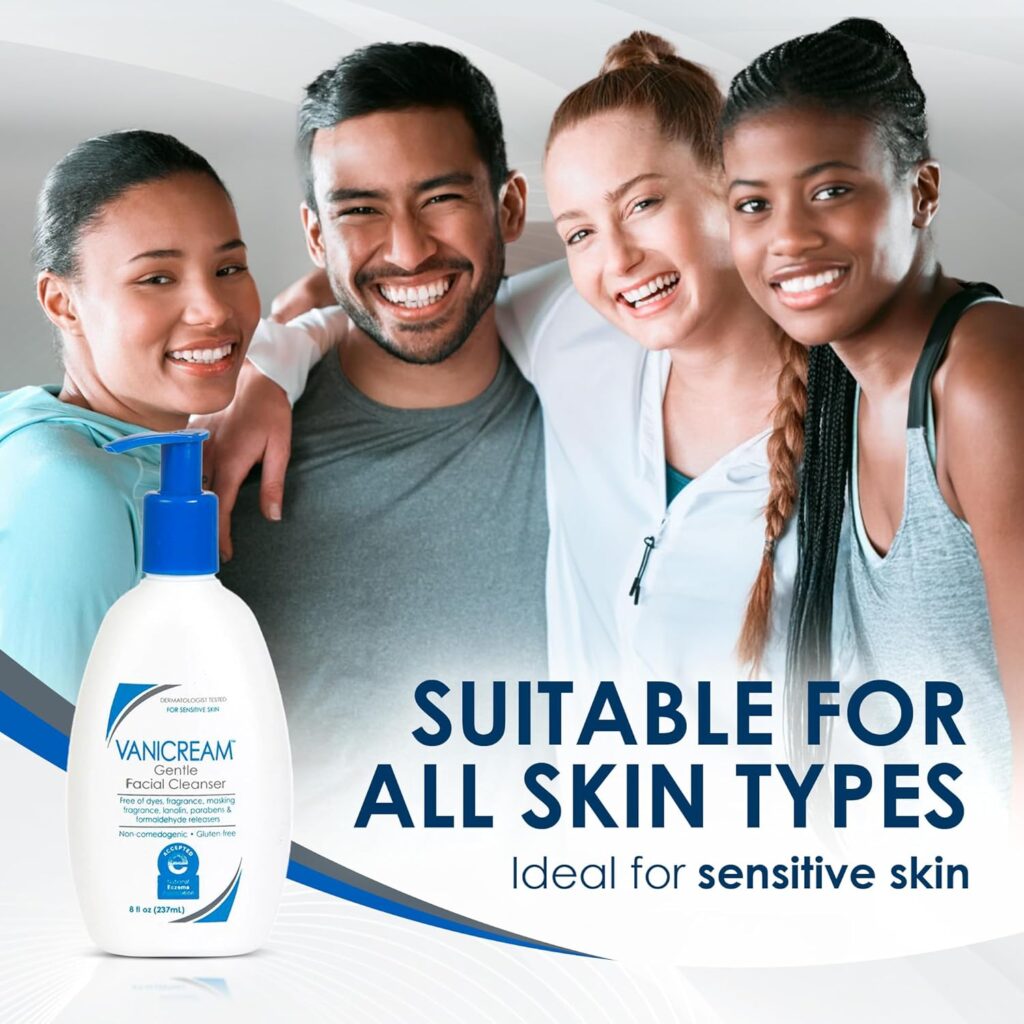
What it is: Vanicream Gentle Facial Cleanser A soap-free, dye-free, fragrance-free liquid cleanser designed specifically for sensitive and eczema-prone skin. It contains no parabens, masking fragrance, formaldehyde releasers, or harsh surfactants.
The standout: Vanicream is dermatologist-recommended for eczema and rosacea because it’s deliberately minimal just gentle cleansing agents and a small amount of hydration. A 8 oz bottle runs $6–9 and is the cheapest entry point on this list.
The trade-off: The formula is thinner than CeraVe’s and doesn’t feel as luxurious. It doesn’t remove waterproof sunscreen or heavy makeup as efficiently as creamier cleansers, so you may need a second cleanse if you wear full-coverage makeup.
Who it’s not for: Anyone who wears full-coverage or waterproof makeup daily and wants a one-step cleanse.
Best Upgrade: La Roche-Posay Toleriane Hydrating Gentle Cleanser
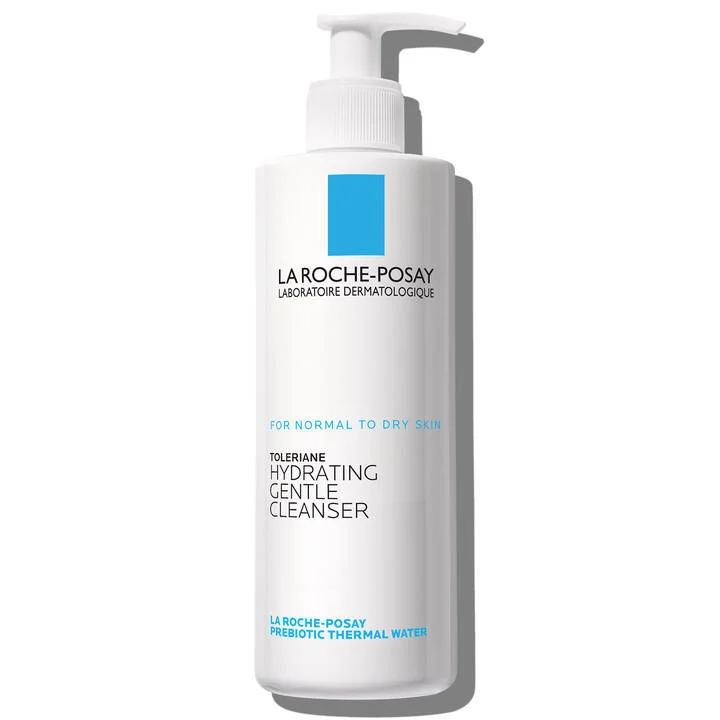
What it is: La Roche-Posay Toleriane Hydrating Gentle Cleanser a prebiotic thermal water–infused cleanser that strips less aggressively than standard cleansers while still removing sebum and sunscreen. Fragrance-free, hypoallergenic, and formulated for reactive and sensitized skin.
The standout: The prebiotic thermal water (from La Roche-Posay’s spring) is clinically shown to strengthen skin barrier function and reduce sensitivity. It feels more luxurious than budget options and works well on both face and neck. Based on owner reports we reviewed, it causes fewer flare-ups in people with active rosacea or dermatitis than most comparable cleansers.
The trade-off: Costs $12–16 for 6.76 oz, so you’re paying a premium for the thermal water and marketing. It’s not radically different from CeraVe for most users the barrier-repair benefit is modest if your cleanser is already gentle.
Who it’s not for: Budget-conscious shoppers who don’t need the prebiotic water claim; the basic CeraVe option will perform nearly as well.
Best Hypoallergenic Moisturizer
Top Pick: CeraVe Moisturizing Cream (Tub)
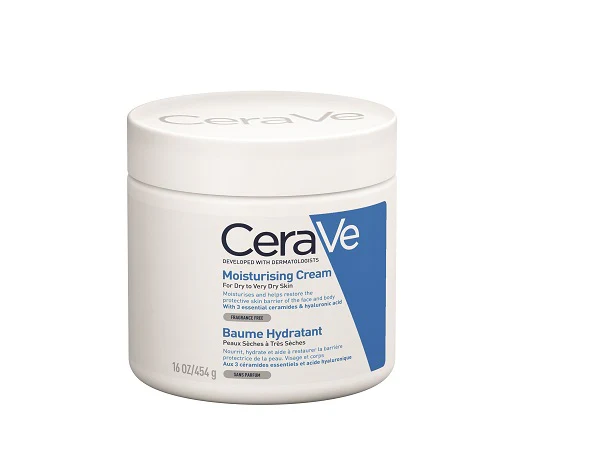
What it is: CeraVe Moisturizing Cream (Tub) a rich, fragrance-free moisturizer in jar form containing ceramides, hyaluronic acid, and niacinamide three ingredients clinically shown to repair barrier dysfunction.
The standout: The 16 oz tub is the best value moisturizer for sensitive skin and works for dry, reactive, and eczema-prone complexions. It’s occlusive without feeling greasy on the face and absorbs over 30 minutes without leaving a residue. Based on owner reports we reviewed, most users see reduced redness and itch within 2–3 days of consistent use.
The trade-off: It’s thick and requires a light hand too much will feel heavy on oily skin or in humid climates. The jar format means you’re dipping fingers in (no pump), which introduces bacteria over time if you don’t wash your hands first. Price: $15–20 for 16 oz.
Who it’s not for: Anyone with active acne or oily skin looking for a lightweight option. People who prefer airless pump packaging.
Best Budget Pick: CeraVe Daily Moisturizing Lotion (Original Formula)
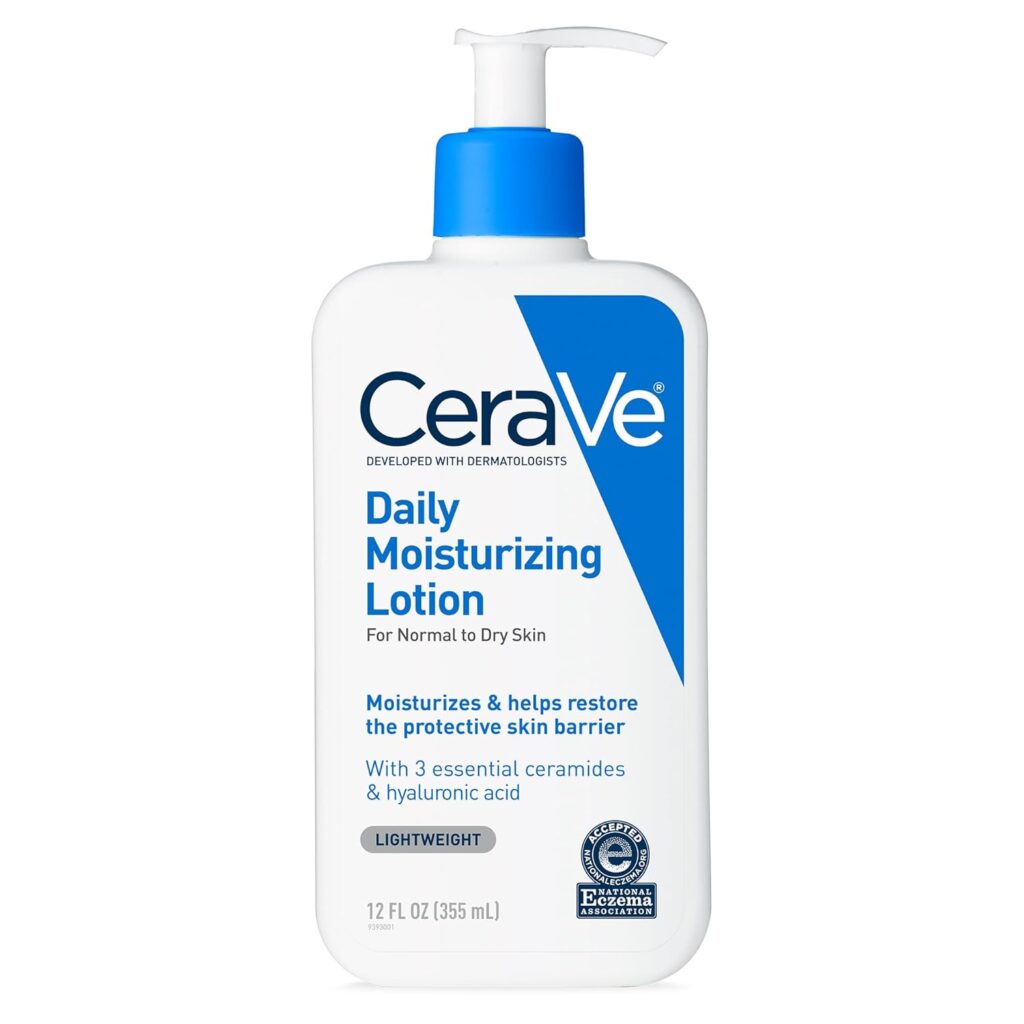
What it is: CeraVe Daily Moisturizing Lotion (Original Formula) a lightweight, pump-dispenser lotion with ceramides and hyaluronic acid, designed as a daily face and body moisturizer.
The standout: At $8–12 for 16 oz, it’s the cheapest way to get CeraVe’s proven ceramide-plus-hyaluronic formula. The pump dispenser is more hygienic than a jar, and the lotion is non-greasy enough for morning use under sunscreen.
The trade-off: It’s less occlusive than the cream, so it won’t suffice as the only moisturizer if your skin is very dry or flaring. You may need to layer it under an occlusive oil or apply it to damp skin to maximize absorption.
Who it’s not for: People with severe eczema or xerosis (very dry skin) who need maximum barrier support.
Best Upgrade: Aveeno Eczema Therapy Moisturizing Cream
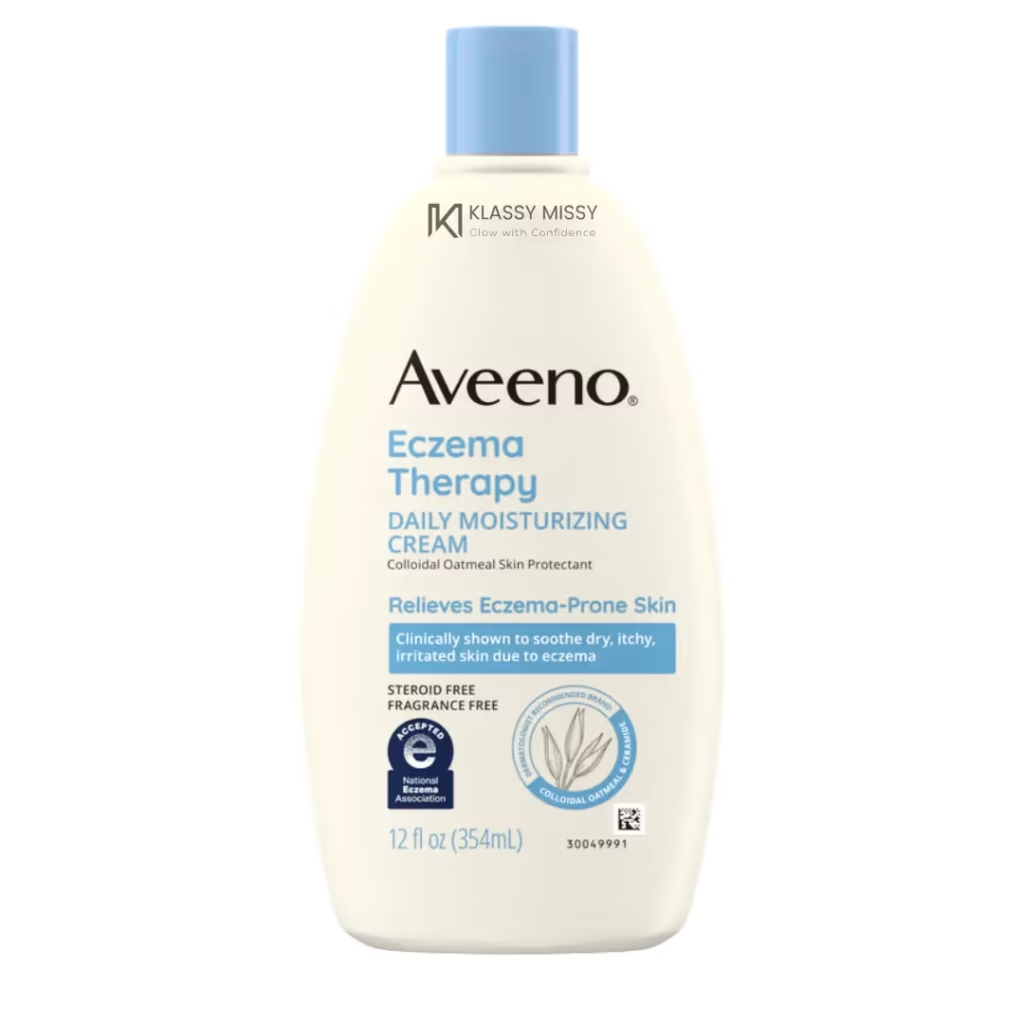
What it is: Aveeno Eczema Therapy Moisturizing Cream a fragrance-free, steroid-free cream with colloidal oatmeal (an ingredient with published evidence for itch reduction in eczema) plus ceramides and dimethicone.
The standout: Colloidal oatmeal is the signature ingredient here it’s anti-inflammatory and anti-itch in a way plain moisturizers aren’t. Based on owner reports we reviewed, users consistently note reduced itching and visible calming within hours of application.
The trade-off: Costs $10–14 for 7.1 oz, so less economical by weight than the CeraVe cream. The oatmeal particles can feel slightly gritty if you apply too much, and it may irritate skin if you have an oat sensitivity (rare but real).
Who it’s not for: Anyone allergic to oats. People looking for a lightweight moisturizer this is decidedly occlusive.
Best Serums and Treatments for Sensitive Skin
Top Pick: The Ordinary Hyaluronic Acid 2% + B5
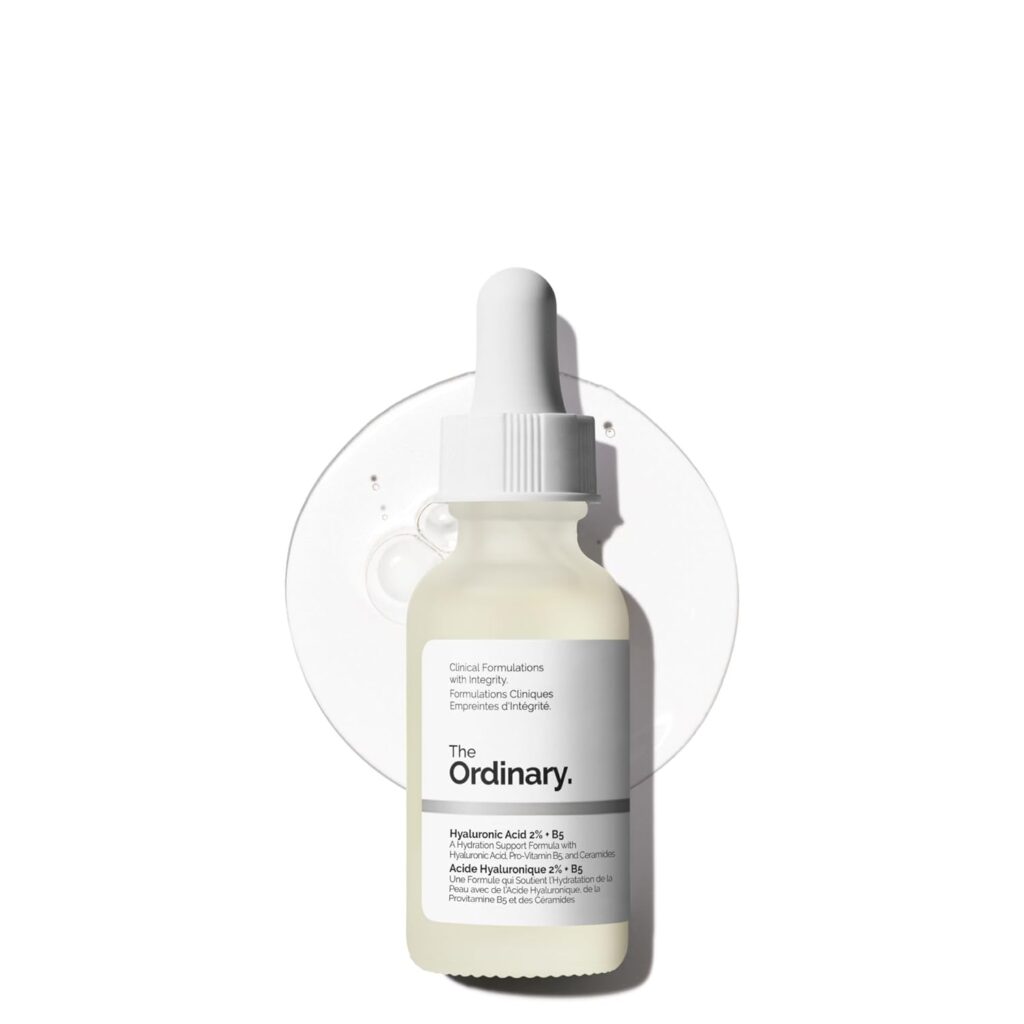
What it is: The Ordinary Hyaluronic Acid 2% + B5 a hydrating serum with hyaluronic acid and panthenol (B5), with no fragrance, essential oils, or common irritants.
The standout: At $5–7 per 30 ml bottle, it’s the cheapest way to add a hydrating layer to your routine. Hyaluronic acid holds water in skin, and B5 supports barrier function. Because it’s so minimal, it rarely triggers reactions even in very reactive skin.
The trade-off: It’s water-based, so it evaporates quickly if you don’t layer a moisturizer immediately on top. It’s not a treatment for inflammation or redness it’s purely hydration. If your barrier is severely compromised, hydration alone won’t fix it.
Who it’s not for: People with dehydrated-but-normal skin (you’d benefit more from a richer moisturizer). Anyone looking for an anti-inflammatory or redness-reducing treatment.
Best for Redness and Rosacea: Azelaic Acid 10% (The Ordinary or Ordinary Pharmacy Brands)
What it is: A topical azelaic acid serum or cream that reduces rosacea redness, mild acne, and post-inflammatory hyperpigmentation.
The standout: Azelaic acid is dermatologist-recommended for rosacea because it’s anti-inflammatory and antimicrobial without being irritating. Based on owner reports we reviewed, visible reduction in facial flushing and redness is commonly noted within 3–4 weeks of consistent use. Price: around $10–15 for a serum.
The trade-off: Azelaic acid can cause mild flaking or dryness in the first week or two as your skin adjusts. It works best when applied to completely dry skin (wait 20 minutes after cleansing), so it’s not as convenient as other serums. Results take 4+ weeks to show; it’s not a quick fix.
Who it’s not for: People with active flare-ups (too much dryness on already-inflamed skin). Anyone expecting instant results.
Best Sunscreen for Sensitive Skin
Top Pick: EltaMD UV Clear Broad-Spectrum SPF 46
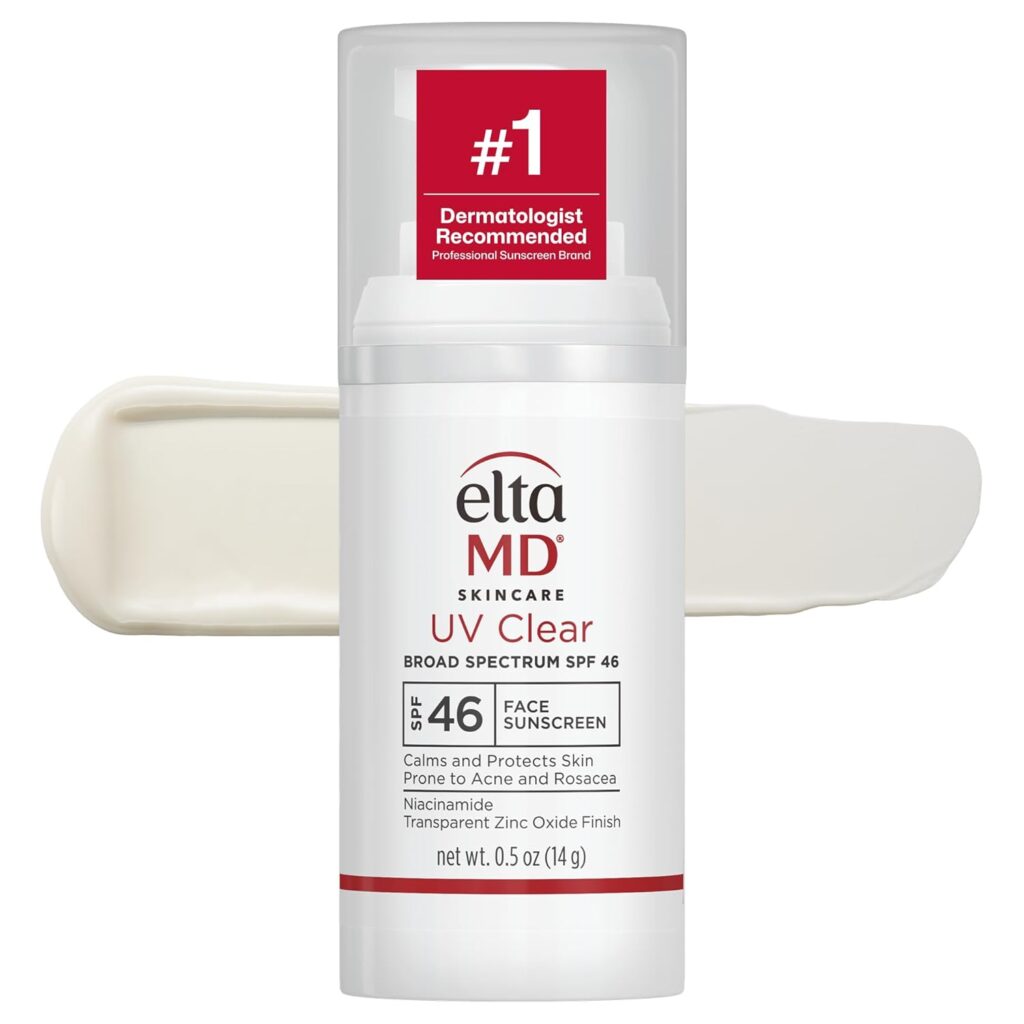
What it is: EltaMD UV Clear Broad-Spectrum SPF 46 a water-resistant, fragrance-free, mineral + chemical hybrid sunscreen with hyaluronic acid and niacinamide. Approved for use on sensitive and rosacea-prone skin.
The standout: The formula is lightweight, dries matte (no white cast or greasiness), and includes calming niacinamide. It’s non-comedogenic and doesn’t trigger reactions in most sensitive-skin users. Price: $30–35 for 1.7 oz.
The trade-off: It’s expensive that works out to roughly $17–20 per ounce. You need about 1/4 teaspoon for your face, so a bottle lasts 4–5 weeks with daily use. The lightweight texture means you must reapply every 2 hours, especially if you’re sweating or in water.
Who it’s not for: Budget shoppers or anyone who dislikes frequent reapplication. If you prefer a rich, occlusive sunscreen texture, this will feel thin.
Best Budget: CeraVe Face Lotion SPF 30
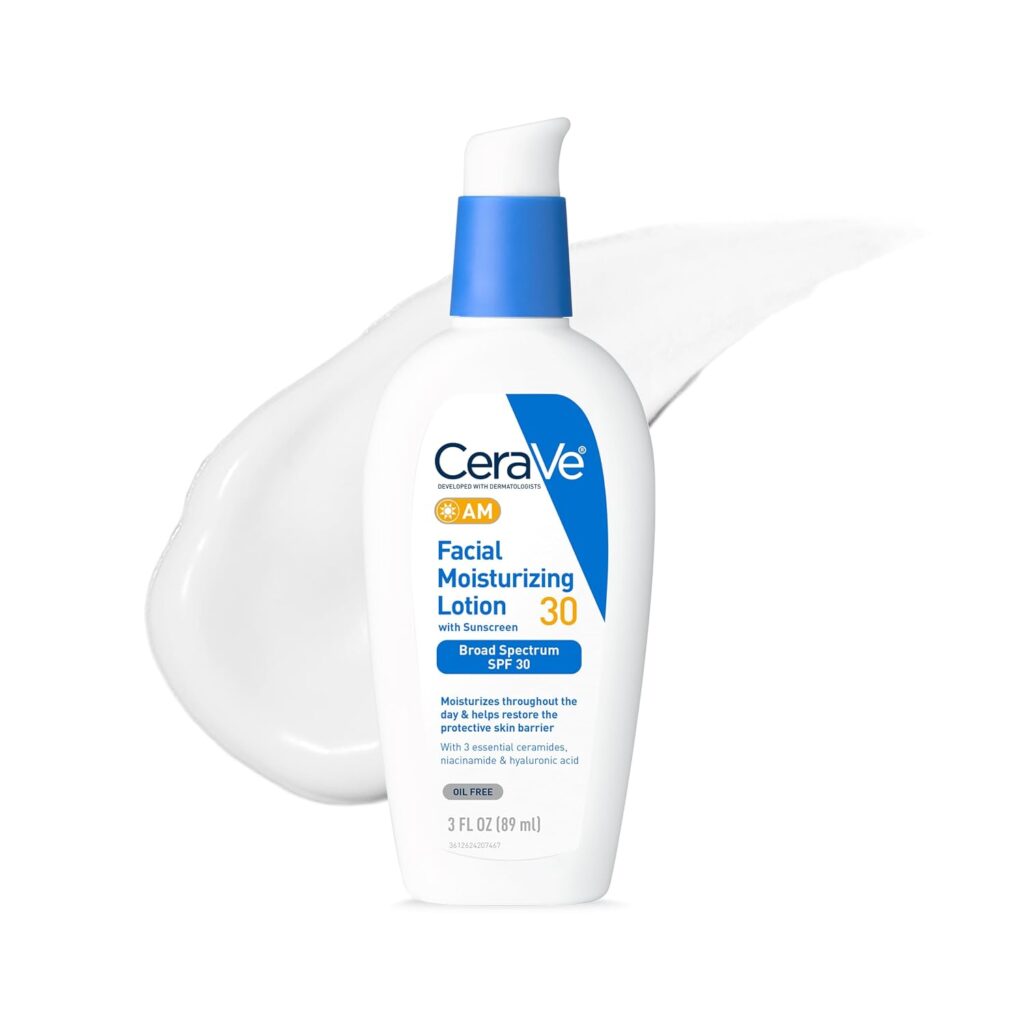
What it is: CeraVe Face Lotion SPF 30 a daily moisturizer-sunscreen combo with ceramides, hyaluronic acid, and broad-spectrum SPF 30 protection. Fragrance-free and hypoallergenic.
The standout: At $10–14 for 1.7 oz, it’s affordable and you can simplify your routine by combining moisturizer and sunscreen. The ceramide blend means you get barrier support while you’re protected from UV damage. Non-greasy and applies evenly under makeup.
The trade-off: SPF 30 is the minimum recommended level (SPF 50 offers incrementally more protection). The formula is slightly thick, so it requires more blending to avoid streaking. If you need maximum sun protection for outdoor activities, this isn’t enough.
Who it’s not for: Anyone spending extended time outdoors or at the beach. People who prefer SPF 50+.
What We Cut and Why
Cetaphil Moisturizing Lotion: We excluded this despite its popularity because it contains propylene glycol and methylparaben, two ingredients that commonly trigger reactions in very sensitive skin. Owner feedback in dermatology forums consistently notes it’s a hit-or-miss product some tolerate it, others flare. CeraVe and Vanicream are safer bets for reactive skin.
Clinique Dramatically Different Moisturizing Lotion: This classic was cut because it contains fragrance and essential oils (even though marketed as “for sensitive skin”). Fragrance is one of the top three irritants in reactive-skin communities. For the price ($34 for 4.2 oz), you get inferior sensitization risk compared to truly fragrance-free options.
Eucerin UltraSensitive line: While dermatologist-recommended, Eucerin’s cleansers and moisturizers often contain methylisothiazolinone (MI), a preservative linked to contact dermatitis. We chose La Roche-Posay and CeraVe instead because they use safer preservative systems.
What to Look for in Sensitive Skincare
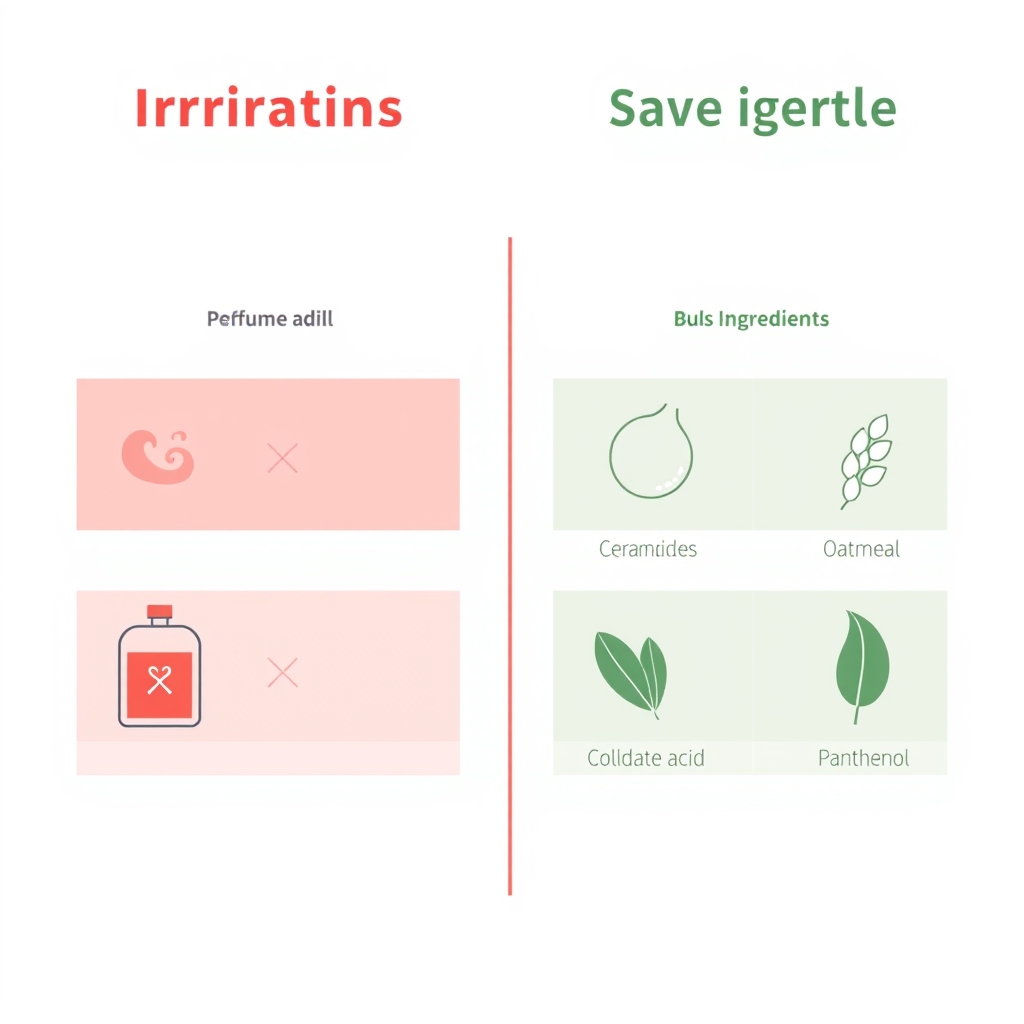
When shopping for reactive-skin products, avoid these common irritants:
- Fragrance and essential oils – Both synthetic fragrance and “natural” oils (lavender, tea tree, citrus) are top triggers for redness and itching.
- Alcohols (ethanol, isopropyl) – These disrupt barrier function. Cetyl and cetearyl alcohols are okay; stearyl alcohol is fine. Ethanol is not.
- Dyes and colorants – Blue dyes, red dyes, and FD&C colorants often cause contact dermatitis.
- Sulfates (sodium lauryl sulfate, sodium laureth sulfate) – Harsh cleansing agents that strip the skin barrier.
- Certain preservatives – Methylisothiazolinone (MI), benzyl alcohol, and some parabens trigger reactions in sensitive skin. Look for products preserved with sodium benzoate, potassium sorbate, or phenoxyethanol instead.
- Niacinamide (in high concentrations) – Niacinamide is generally safe, but concentrations above 5% can cause flushing or itching in some users with rosacea. Start low.
Ingredients that are generally safe for sensitive skin:
- Ceramides (1, 3, 6-II)
- Hyaluronic acid
- Glycerin
- Niacinamide (at ≤5%)
- Azelaic acid
- Colloidal oatmeal
- Centella asiatica (cica)
- Panthenol (provitamin B5)
How to Introduce New Products Safely
When your skin is reactive, adding one product at a time is not optional it’s essential. Here’s the safe approach:
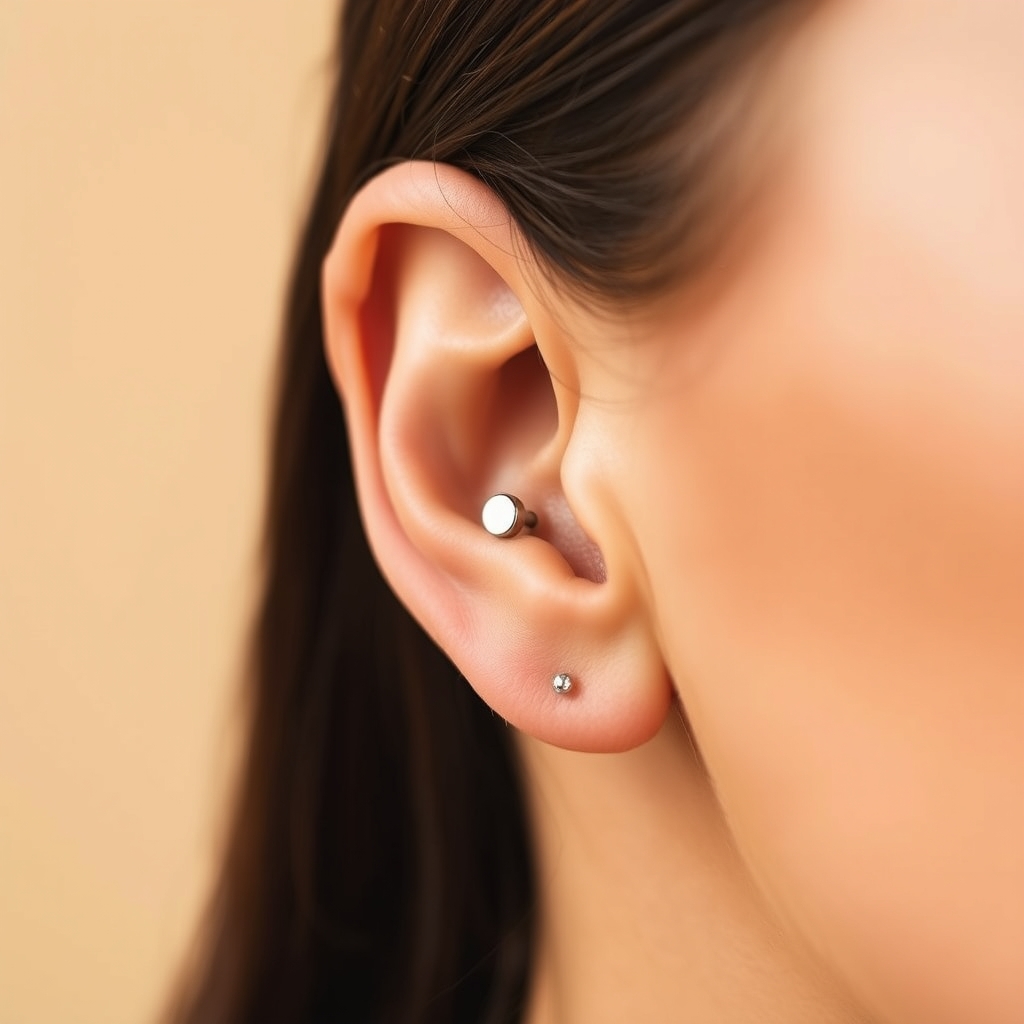
The patch-test method: Before applying a new product to your face, test it on your inner arm or behind your ear for 3 days. Apply a dime-sized amount twice daily. If there’s no redness, itch, or burning after 3 days, proceed to a small area of your face (not your whole face).
The one-product rule: Introduce one new product every 7–10 days. This way, if a reaction occurs, you know which product caused it. If you add three products in one week and flare up, you won’t know which one to remove.
Wait for baseline: If your skin is actively flaring (red, itchy, burning), wait until the flare subsides before introducing anything new. New products during a flare will make it worse.
Start low, go slow: If a product comes in multiple strengths or concentrations (e.g., azelaic acid 10% or 20%), start with the lower strength.
How We Chose These Products
We evaluated skincare products for sensitive skin using three criteria:
- Dermatologist recommendation: Each product is cited in clinical guidelines or recommended by dermatologists for reactive, eczema-prone, or rosacea-prone skin.
- Minimal and honest ingredient lists: No fragrance, no essential oils, and no common irritants. We checked the full ingredient list, not just marketing claims.
- Owner feedback and real-world tolerability: We reviewed feedback from owner communities on Reddit, TrustPilot, and dermatology forums to identify which products consistently work and which ones trigger reactions despite “hypoallergenic” labeling.
Price ranges reflect typical retail pricing as of June 2026 and vary by region and retailer.
FAQ
What’s the best cleanser for sensitive skin? CeraVe Hydrating Facial Cleanser is the top pick it’s fragrance-free, removes makeup and sunscreen, and costs $10–14. Vanicream Gentle Facial Cleanser is the budget option ($6–9) and is dermatologist-recommended for eczema.
Can I use regular moisturizers if I have sensitive skin? Most mainstream moisturizers contain fragrance or irritant preservatives. Stick to fragrance-free, hypoallergenic options like CeraVe, Vanicream, or La Roche-Posay. Check the ingredient list before buying.
Is hyaluronic acid safe for sensitive skin? Yes. Hyaluronic acid is a hydrating humectant and doesn’t trigger irritation. However, it must be layered under a moisturizer or oil to work; applied to dry skin alone, it draws moisture out and can worsen dryness.
How long does it take for sensitive skin to improve? Based on owner reports we reviewed, visible improvement in redness and itch is commonly reported within 2–3 weeks of consistent use with the right products. Barrier repair takes longer 4–6 weeks for significant strengthening. Patience is essential; sensitivity doesn’t resolve overnight.
What’s the difference between hypoallergenic and fragrance-free? “Hypoallergenic” is a marketing term with no legal definition a product can be hypoallergenic and still contain fragrance. “Fragrance-free” means no added fragrance or masking fragrance. Always check the ingredient list rather than relying on labels alone.