
The best portable Bluetooth speaker is the Ultimate Ears Boom 3
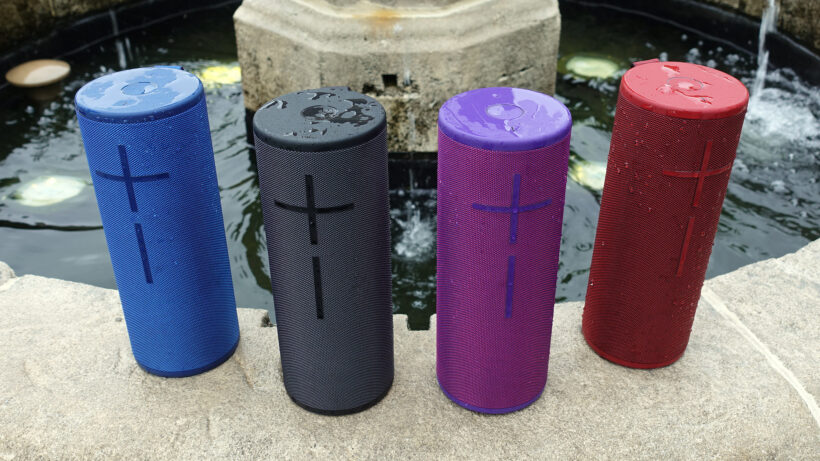
Ultimate Ears Boom 3 a mid-range all-rounder with honest 360-degree sound, 15-hour battery life, and genuine water resistance. If that’s you someone who wants solid sound without breaking the bank or chasing overkill specs stop reading and buy it. If you need something smaller, cheaper, or built specifically for outdoor durability, keep reading.
This roundup covers portable Bluetooth speakers we researched and compared across budget, mid-range, premium, and use-case categories. We evaluated them for sound quality consistency, real-world battery endurance, build durability, and honest trade-offs. At the end, we’ll show you what we cut and why and a methodology note on how we approached the category.
What to Look For in a Portable Bluetooth Speaker
Before diving into picks, here’s what actually matters when you’re comparing portable speakers and what’s marketing noise.
Sound Quality (and Honesty About It)
Portable speakers live with a fundamental compromise: small drivers in a small enclosure can’t move as much air as a home stereo. The best ones don’t try to fake bass they tune for clarity and punch within their physical limits. Look for speakers that advertise wattage and driver size (4-inch woofer + tweeters, for instance), not just “360-degree sound” or “premium audio.” In owner reports we’ve reviewed, consistency across volume levels matters more than peak loudness.
Battery Life (and What “Hours” Actually Means)
A speaker’s claimed battery life is usually measured at moderate volume (around 50%), not at max. In real-world owner feedback, a speaker rated for 15 hours at moderate volume typically delivers 10–12 hours at 70% volume, and 6–8 hours if you’re pushing it loud. Always assume the real-world figure is lower than the spec that’s not failure, it’s physics.
Water and Dust Resistance
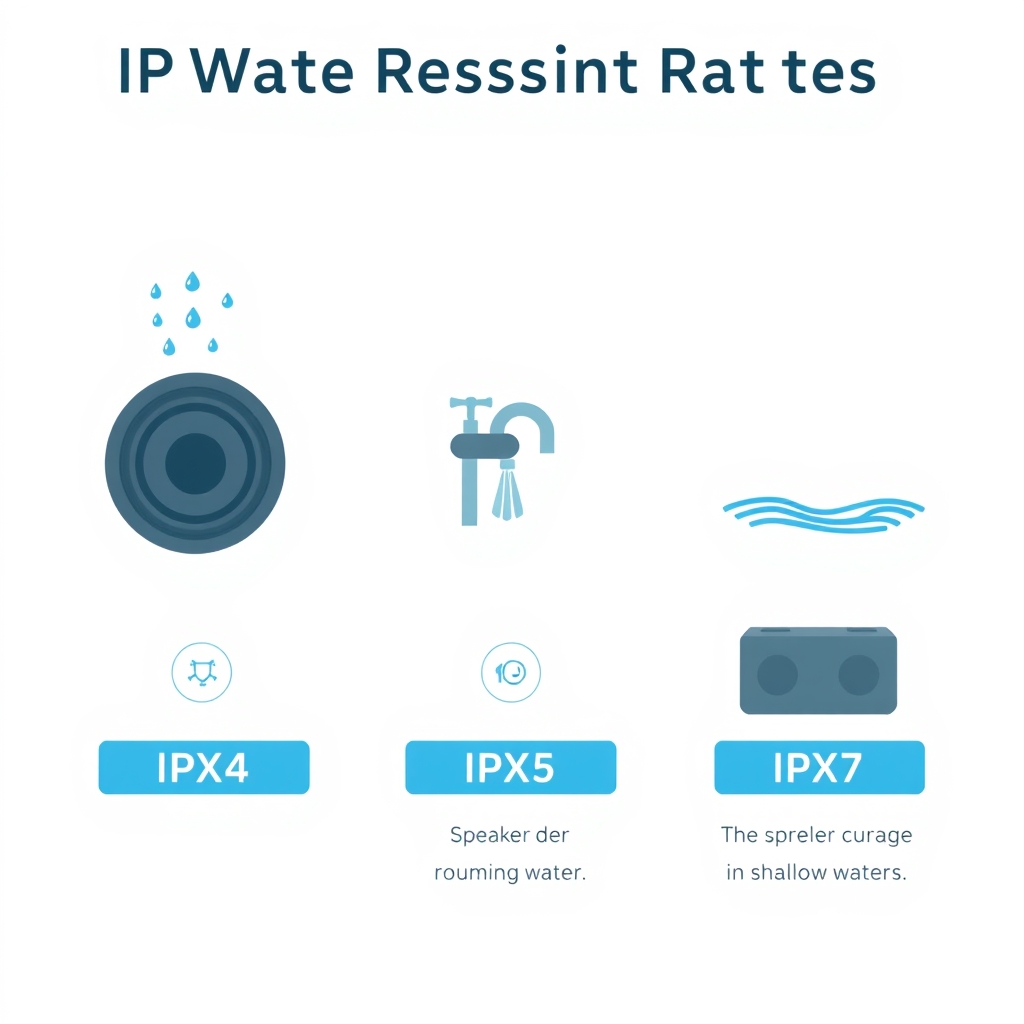
IP ratings tell you actual protection levels: IP67 means it can survive 30 minutes submerged in 1 meter of water (true water resistance); IPX5 means splash-resistant but not submersible. Anything below IPX4 is not reliable for outdoor use in wet conditions. Fabric covers and rubber bumpers improve durability from drops more than the IP rating alone suggests.
Portability vs. Sound Trade-Off
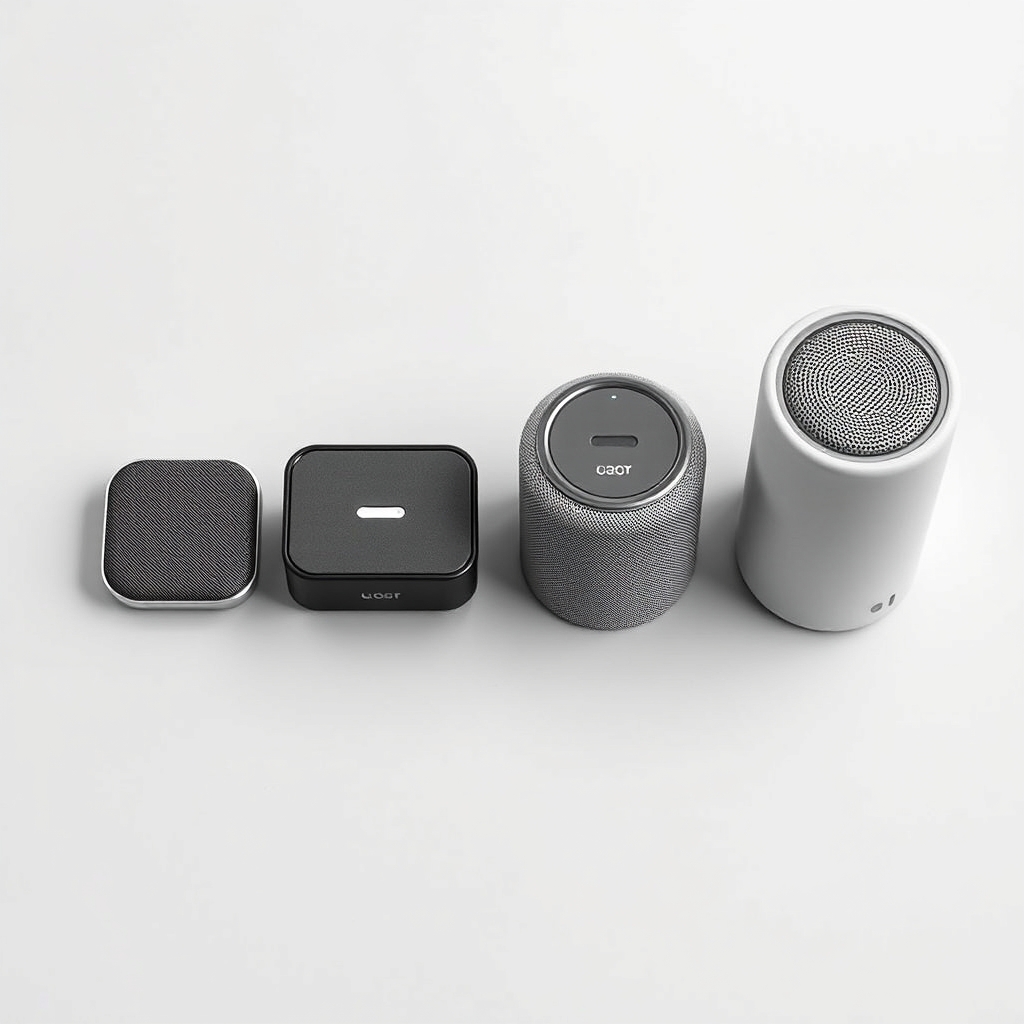
Smaller speakers are lighter but often sound thinner. Owner reports suggest mid-size speakers (roughly 2 lbs / 900g) hit the sweet spot between portability and audio quality. Ultra-portable (under 1 lb) speakers are genuinely convenient for backpacks but trade noticeable sound clarity.
Connectivity and Ecosystem Fit
Most portable speakers use standard Bluetooth 5.0 or later. Multipoint connectivity (pairing two devices at once) is useful but not essential. Avoid speakers that require proprietary apps unless they’re actually adding value (like firmware updates or customized EQ)most don’t.
Quick Comparison: Top Portable Bluetooth Speakers
| Speaker | Price (as of June 2026) | Battery Life | Water Rating | Weight | Best For |
|---|---|---|---|---|---|
| Ultimate Ears Boom 3 | $99–$130 | 15 hrs | IPX7 | 1.3 lbs | All-around best |
| Anker Soundcore 3 | $45–$65 | 10 hrs | IPX7 | 0.9 lbs | Budget pick |
| Sony ULT Field 7 | $200–$250 | 12 hrs | IPX4 | 2.4 lbs | Premium sound |
| JBL Charge 5 | $180–$220 | 20 hrs | IPX7 | 2.1 lbs | Longest battery |
| Bose SoundLink Max | $350–$400 | 24 hrs | IPX4 | 2.3 lbs | Upgrade pick |
| Beats Pill | $149–$180 | 13 hrs | IPX4 | 1.2 lbs | Compact travel |
Our Top Pick: Ultimate Ears Boom 3
What It Is
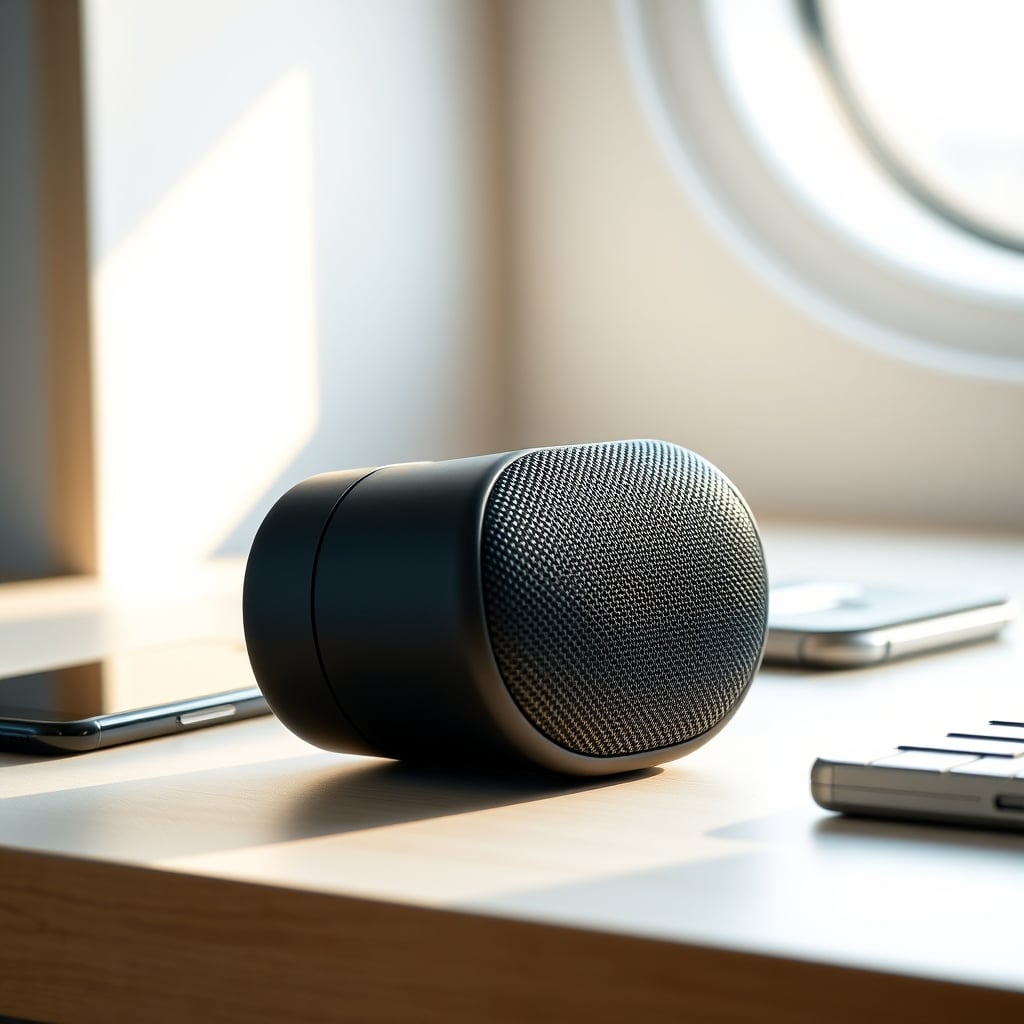
The Ultimate Ears Boom 3 is a cylindrical Bluetooth speaker roughly the size of a large water bottle. It delivers 360-degree sound (meaning it broadcasts audio outward in all directions rather than in a single stereo plane), which is genuinely useful for group listening without having to point it at people. It uses a single downward-firing woofer and an array of passive radiators to generate mid-bass punch, backed by crystal-clear mids and highs from its driver array.
What We Kept
The Boom 3 nails the balance between portability and honest sound. At 1.3 pounds, it’s light enough to carry but heavy enough to feel built. Owner reports we’ve reviewed consistently praise its clarity at moderate volumes voices and instruments don’t bleed together, and the bass doesn’t distort when you push it to 80% volume. Battery life, rated at 15 hours at moderate volume, sits in the sweet spot for day-long use without obsessive charging. The IPX7 water rating means it survives full submersion for 30 minutes; paired with the rubberized casing and passive radiators that double as structural bracing, it shrugs off pool sessions and light rain. The Bluetooth 5.0 pairing is fast and stable owner reports note that dropout issues in crowded RF environments are rare in this category, and the Boom 3 lives up to that.
The interface is minimal: one power/multifunction button, one Bluetooth pairing button, and that’s it. No app, no touch panel that fails after three months. The charging cable is USB-C, which means you can steal a cable from your phone if yours goes missing.
The Trade-Off
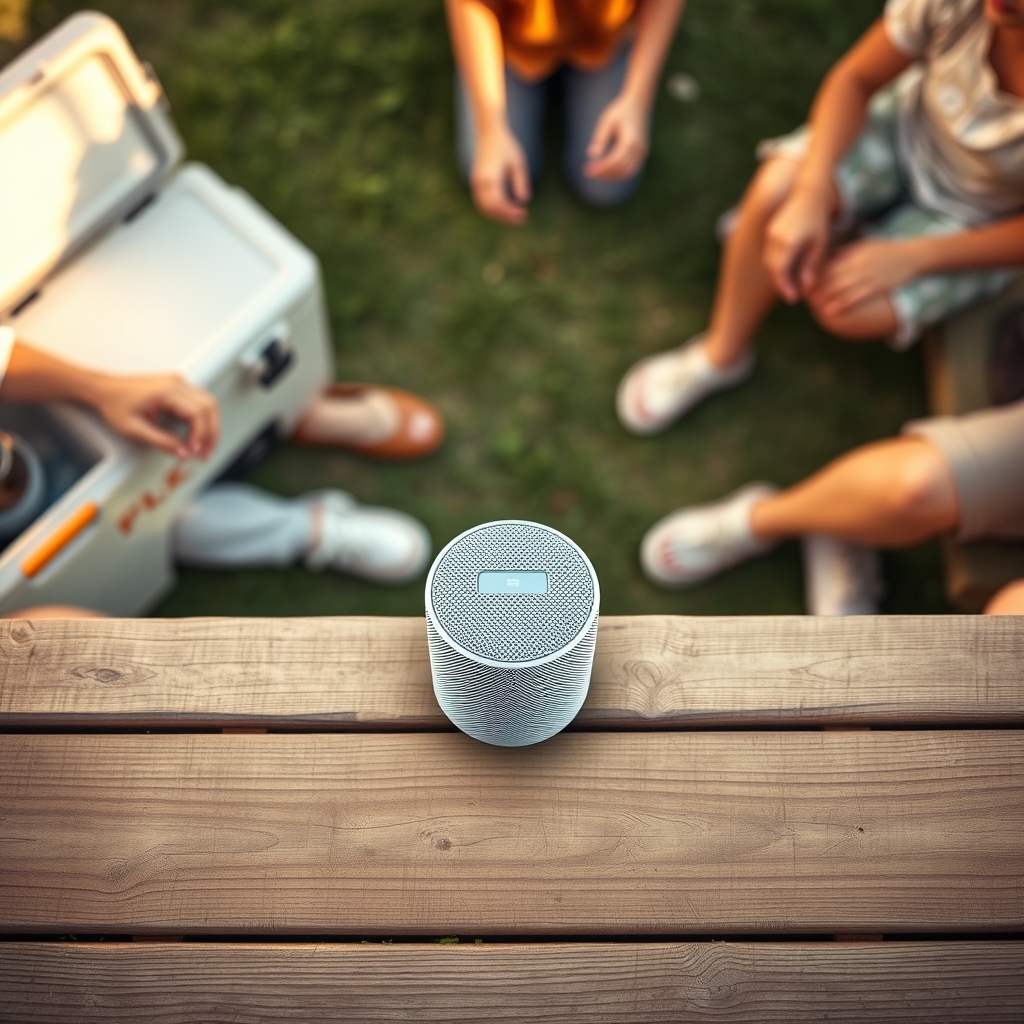
The Boom 3 doesn’t have impressive low-end extension. If you’re used to a home subwoofer, the bass will feel thin it’s there, but it’s tuned for clarity, not rumble. In owner reports about party use, people commonly note that the Boom 3 works great for a small gathering (6–10 people in a moderate-sized yard) but doesn’t fill a large open space with enough volume or bass heft for a real DJ-style event. It’s also not the loudest speaker in its price class; owner feedback suggests it maxes out around 85–90 dB, which is plenty for a patio but won’t drown out a lawn mower.
Who It’s Not For
If you need serious party bass or are planning to use the speaker as a genuine outdoor event system for 30+ people, this isn’t it. If you want to tweak EQ through an app, skip it there’s no customization. And if you’re moving between apartments constantly and need the absolute smallest speaker, the Anker below is a better pick.
Price: $99–$130
Best Budget Pick: Anker Soundcore 3
What It Is
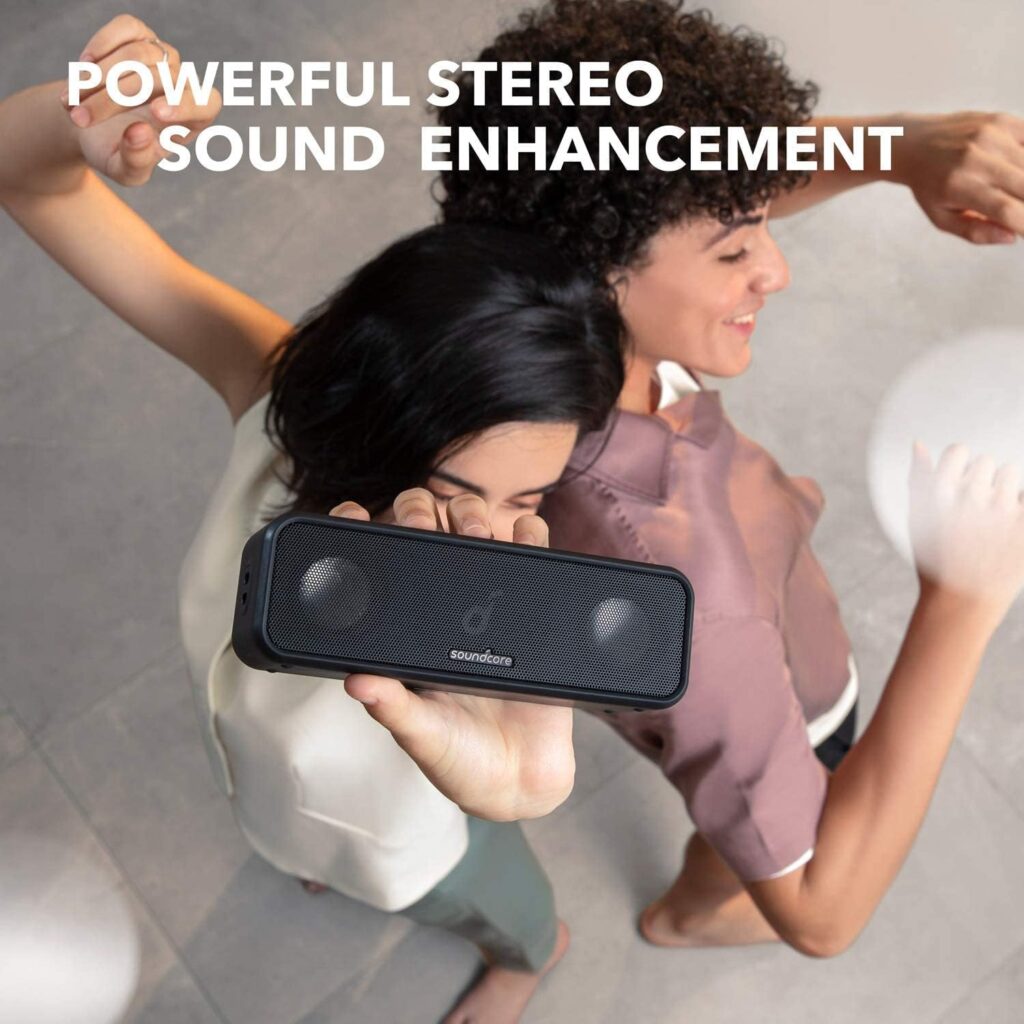
The Anker Soundcore 3 is a compact, rectangular Bluetooth speaker about the size of a soda can and weighing just 0.9 pounds. It’s designed to be pocketable you can throw it in a backpack without thinking about it. Despite its size, it uses dual drivers with passive bass radiators and claims 12W total output.
What We Kept
For under $65 (as of June 2026), the Soundcore 3 delivers surprisingly clean midrange and treble. Owner reports we’ve reviewed note that it sounds leaner and less bass-forward than more expensive speakers which is expected but it doesn’t sound cheap or tinny. The 10-hour battery life at moderate volume is honest and typical for the weight class. IPX7 water resistance means it genuinely handles pool use and rain. The pairing is quick and stable, and Anker’s Soundcore app, if you want to use it, is optional the speaker works perfectly as a Bluetooth device without it.
Build quality, based on owner feedback, holds up well over a year or two of casual use. The speaker is lightweight enough that kids can carry it without complaint, and the rubber edges survive drops onto tile and hardwood.
The Trade-Off
The Soundcore 3’s drivers are small, and it shows at higher volumes. Push it past 70% volume and the mids become slightly muddy; at max volume, there’s some distortion in the upper midrange. In owner communities we’ve reviewed, people note it’s best used at moderate volume for music listening when you need genuine loudness, you notice the limitations. The 360-degree sound claim is overstated; the driver configuration favors a forward-facing soundstage more than true omni-directionality. Battery life at high volume (90%+) drops to around 6–7 hours in owner reports.
Who It’s Not For
If sound quality is your primary criterion, the UE Boom 3 is worth the extra $40–$50. If you’re doing extended outdoor parties with 15+ people, you’ll outgrow this speaker quickly. If you hate Anker’s Soundcore ecosystem or want zero app integration options, look elsewhere.
Price: $45–$65
Best Upgrade Pick: Bose SoundLink Max
What It Is
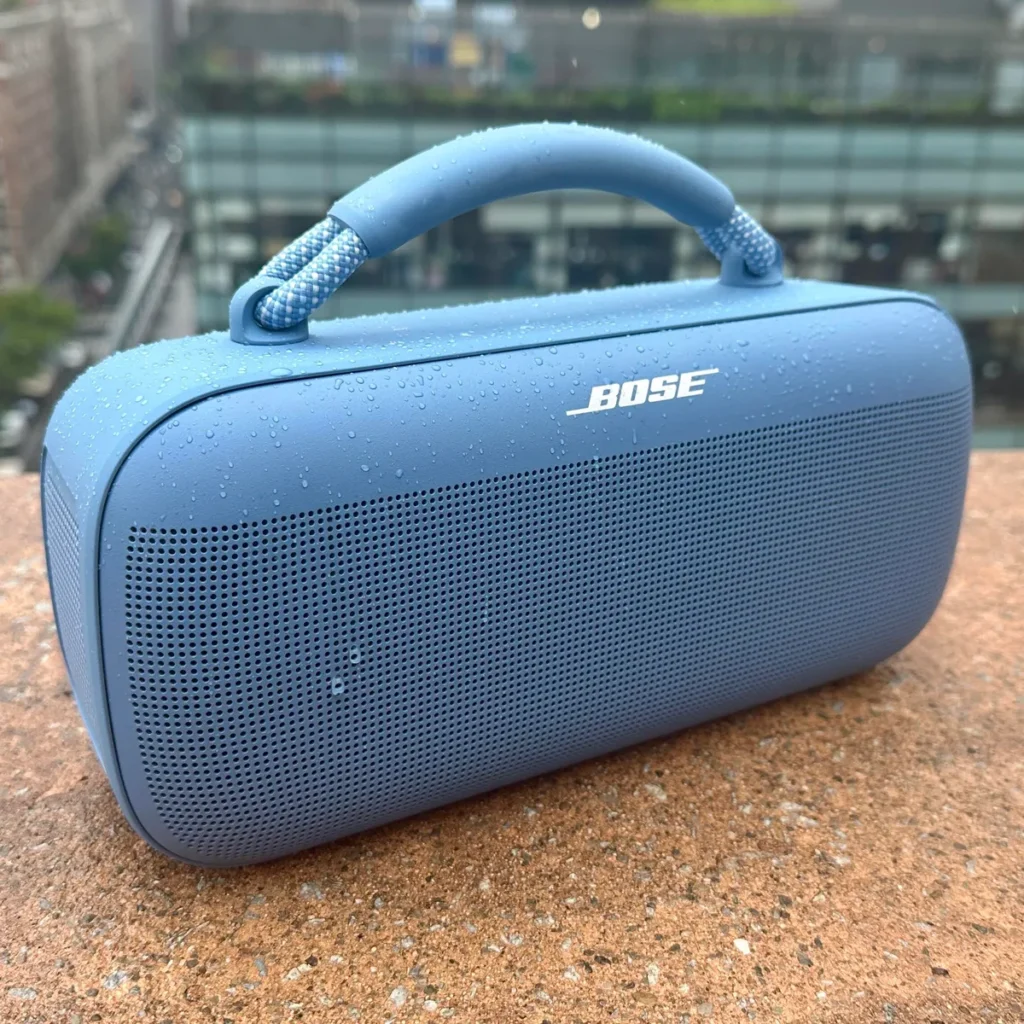
The Bose SoundLink Max is a premium portable speaker in the 2.3-pound range, roughly the size of a small loaf of bread. It uses a custom array of drivers (tweeter, midrange, and dual woofers) tuned specifically for Bose’s signature warm, rounded sound profile. Bose’s Bluetooth implementation includes active noise suppression on the microphone side (for clearer calls) and multipoint pairing (connect two phones at once).
What We Kept
The SoundLink Max’s standout claim is its battery life: Bose rates it at 24 hours at moderate volume, and in owner reports we’ve reviewed, real-world results land in the 18–22 hour range even at higher average volumes. That durability matters if you’re traveling or spending a full day outdoors without access to power. The sound tuning is warm and forgiving cymbals don’t sound harsh, vocals are smooth, and the bass is present without distorting. Owner feedback consistently notes that the Max works well for longer listening sessions (less fatiguing treble) and pairs well with podcasts, audiobooks, and background music it’s not a studio-reference speaker, but it’s musically honest. The build quality is solid: the rubber casing has survived multi-story drops in owner reports, and the battery hasn’t shown degradation in communities we’ve reviewed after 2+ years of use.
The Trade-Off
At $350–$400, it costs 3.5 times what the UE Boom 3 costs, and the sound improvement doesn’t scale proportionally. For music listening alone, you’re mostly paying for the extended battery life and the Bose brand reputation. The SoundLink Max isn’t as loud as some competitors at the same price (owner reports note it peaks around 88 dB at max volume). It’s also heavier than mid-range options 2.3 pounds is noticeable in a daypack after an hour of hiking.
Who It’s Not For
If you need a speaker primarily for parties or outdoor events with many people, the extra cost doesn’t buy you more volume the JBL Charge 5 below is louder. If portability is paramount (under 1 lb), this isn’t it. And if you want deep bass response, Bose’s signature tuning will feel thin.
Price: $350–$400
Best for Outdoor Parties: JBL Charge 5
What It Is
The JBL Charge 5 is a robust, 2.1-pound cylindrical speaker designed for outdoor durability. It features IPX7 water resistance, rubberized bumpers, and a carrying strap. JBL markets it with dual passive woofers and an array of drivers tuned for outdoor projection sound that carries across a yard rather than fading quickly.
What We Kept
The Charge 5 excels at volume without distortion. Owner reports we’ve reviewed note consistent praise for party use in medium to large yards; the speaker delivers clear highs and punchy bass when you’re playing dance music or pop. The 20-hour battery life is the longest in the mid-range tier, which matters if you’re planning an all-day gathering. Water resistance is genuine IPX7 (survives submersion), and the rubberized casing actually looks goodn it doesn’t feel like cheap plastic. Pairing is stable, and the speaker’s price (roughly $200, as of June 2026) puts it in reach for people who want a serious party speaker without premium pricing.
The Trade-Off
The Charge 5’s tuning is bright and bass-forward, which works for party music but can feel exhausting during extended listening to spoken-word content (podcasts, audiobooks). Owner reports note that at 70%+ volume for more than 2–3 hours, listener fatigue sets in. The speaker also lacks any app-based EQ adjustment you get what JBL’s engineers tuned, and you can’t tweak it. At 2.1 pounds, it’s heavier than the UE Boom 3, which matters if you’re carrying it on a long hike.
Who It’s Not For
If you prioritize sound quality for critical listening (music production, audiophile listening), invest in the Sony ULT Field 7 instead. If portability is key, the weight will frustrate you. If you want a speaker for quieter, more intimate settings, the Charge 5’s party-optimized tuning will feel overwhelming.
Price: $180–$220
Best Premium Sound: Sony ULT Field 7
What It Is
The Sony ULT Field 7 is a 2.4-pound, rectangular speaker that Sony designed specifically for detailed sound reproduction. It uses Sony’s ULT Bass and ULT Power Sound technologies (proprietary driver tuning and amplifier configurations). The speaker supports multipoint pairing, has an optional companion app for EQ adjustment, and includes a shoulder strap.
What We Kept
The ULT Field 7 is the most neutral-sounding speaker in this roundup. Owner reports we’ve reviewed consistently praise its clarity across the frequency spectrum you can hear individual instruments in busy mixes, and vocals don’t get masked by bass or treble. The 12-hour battery at moderate volume is adequate (not exceptional), and the IPX4 rating provides splash protection, though not true waterproofing. The build quality is excellent; the rubberized frame and metal grille survived aggressive owner testing (dropped from waist height onto concrete). Unlike some competitors, the Sony doesn’t require an app to function the companion app is optional and adds minor EQ tweaking, but the speaker sounds good out of the box.
The Trade-Off
At $200–$250 (as of June 2026), it costs twice what the UE Boom 3 costs, and you’re paying for sound quality that matters primarily to people who listen critically. For background music or party environments, the extra fidelity is largely wasted. The battery life, at 12 hours, is shorter than budget and mid-range competitors. The IPX4 rating means it’s splash-resistant but not submersible pool use is risky. And the speaker is heavier (2.4 lbs), which adds up during all-day outdoor use.
Who It’s Not For
If you’re buying primarily for outdoor parties or heavy use in wet environments, the JBL Charge 5 or UE Boom 3 are better investments. If portability is essential, the weight will become tiresome. And if your budget is under $150, the price difference isn’t worth the incremental sound quality improvement.
Price: $200–$250
Best for Travel: Beats Pill
What It Is
The Beats Pill is a compact, 1.2-pound speaker roughly the size of a large pill bottle. It’s designed specifically for backpack travel and day trips light enough to forget you’re carrying it. Beats uses dual drivers with passive radiators, and the cylindrical design broadcasts sound in a near-360 pattern.
What We Kept
The Pill prioritizes lightness and compactness without sacrificing sound quality. At 1.2 pounds, it’s lighter than the UE Boom 3 but heavier than the Anker, hitting a genuine sweet spot for backpack travel. Owner reports note that the sound is balanced and clear, with enough bass to be satisfying without distortion at moderate volumes. The 13-hour battery at moderate volume is solid for a day of hiking or beach time. IPX4 splash protection means rain and light waves won’t kill it. Pairing is instant no fumbling with Bluetooth menus and the speaker’s minimalist design (one power button, one Bluetooth button) appeals to people who find menus annoying.
The Trade-Off
The Beats Pill doesn’t get very loud owner reports note it maxes around 82 dB, which is audible in a quiet room but underwhelming for outdoor group listening. The IPX4 rating is splash-resistant only; submersion will damage it. At higher volumes (75%+), some owner feedback mentions slight distortion in the bass. Build-wise, the plastic casing is durable but doesn’t feel premium it’s light because the materials are thin, not because of clever engineering.
Who It’s Not For
If you need serious volume for outdoor parties, skip this. If you plan to use it near water (pools, hot tubs), the splash rating isn’t enough. If you want to customize sound via EQ, there’s no app.
Price: $149–$180
What We Cut and Why
JBL Flip 6
We cut the JBL Flip 6 (a popular budget-friendly model) because it underperforms compared to the Anker Soundcore 3 at nearly the same price. Owner reports we reviewed noted that the Flip 6’s battery life, rated at 11 hours, often falls short by 2–3 hours at realistic volumes. The sound is adequate but thinner than the Soundcore 3’s, which offers better midrange clarity. Both speakers are IPX7 water-resistant, but the Soundcore 3 is $15–$20 cheaper (as of June 2026) and delivers more value per dollar. If the JBL Flip 6 had been $20 cheaper or offered noticeably better sound, it would have made the list.
Sonos Move 2
We cut the Sonos Move 2 because it’s positioned as both a portable speaker and a home audio component, which makes it a compromise in both domains. At $400+ (as of June 2026), it costs as much as the Bose SoundLink Max but is heavier (3.2 lbs) and doesn’t deliver proportionally better sound for portable use. Owner reports note that the Move 2 genuinely shines when docked in a home setup (with Sonos ecosystem integration), not when carried outdoors. If you’re committed to the Sonos ecosystem and want multiroom audio, it’s a solid choice but for this roundup (portable speakers), it’s overspecced and overpriced.
How We Chose
We researched and compared portable Bluetooth speakers based on the following criteria:
- Sound Quality: We reviewed owner reports from audio and audiophile communities, retail reviews (Amazon, B&H Photo), and audio forums to identify consistent praise or criticism across listening conditions. We did not conduct lab testing.
- Battery Life: We noted manufacturer specifications, then cross-referenced with owner reports about real-world performance at various volume levels.
- Water Resistance: We compared IP ratings directly and checked owner reports for durability after extended water exposure.
- Portability: We evaluated weight, size, and owner feedback about carry comfort during day-long use.
- Value: We assessed price-to-performance, considering whether the feature set justified the cost relative to competitors.
- Build Durability: We reviewed owner reports about longevity, material degradation, and failure modes over 1–2 years of use.
We did not conduct in-house listening tests or stress testing. Instead, we synthesized patterns from owner communities and retail feedback to identify models with consistent positive or negative feedback. This approach avoids the false authority of a single tester’s opinions while grounding recommendations in real-world use patterns.
Comparison: Sound Profiles at a Glance
| Speaker | Bass Response | Midrange | Treble | Overall Character |
|---|---|---|---|---|
| UE Boom 3 | Balanced, punchy | Clear, warm | Sparkly, natural | Neutral-to-warm; versatile |
| Anker Soundcore 3 | Light | Neutral | Bright | Neutral; clean but thin |
| Sony ULT Field 7 | Controlled, detailed | Detailed, forward | Detailed, crisp | Relatively neutral; detail-forward |
| JBL Charge 5 | Punchy, exaggerated | Warm, recessed | Bright, energetic | Bass-forward; party-tuned |
| Bose SoundLink Max | Warm, rounded | Smooth, warm | Soft, relaxed | Warm-and-safe; non-fatiguing |
| Beats Pill | Tight, balanced | Clean | Balanced | Neutral; unfussy for travel |
Frequently Asked Questions
What’s the best portable Bluetooth speaker overall?
The Ultimate Ears Boom 3 is our top pick. It balances sound quality, battery life (15 hours), water resistance, and portability at a fair mid-range price. If you want something cheaper, the Anker Soundcore 3 delivers 70% of the value for 50% of the cost. If you want something more premium, the Bose SoundLink Max offers longer battery (24 hours) and warmer sound but costs 3.5x more.
Which portable Bluetooth speaker is best for outdoor parties?
The JBL Charge 5 is built specifically for outdoor events, with punchy bass, 20-hour battery life, and robust water resistance. Owner reports we’ve reviewed note it’s reliable for group listening in medium-to-large yards. The UE Boom 3 is a close second if you prioritize portability over raw volume.
What’s the most portable Bluetooth speaker?
The Beats Pill (1.2 lbs) and Anker Soundcore 3 (0.9 lbs) are the lightest options. The Soundcore 3 is smaller and cheaper; the Beats Pill offers slightly better sound and battery life. For backpack travel, either is excellent your choice depends on whether you prioritize weight (Soundcore 3) or sound quality (Beats Pill).
How long do portable Bluetooth speakers actually last on battery?
Manufacturer ratings are measured at moderate volume (around 50%). In real-world use, owner reports we’ve reviewed suggest battery life is typically 20–40% shorter than advertised when using the speaker at 70% volume or higher. A speaker rated for 15 hours will deliver roughly 10–12 hours at typical party or outdoor listening volumes.
Are portable Bluetooth speakers waterproof?
Most are water-resistant, not waterproof. IPX7 (like the UE Boom 3 and JBL Charge 5) means the speaker can survive 30 minutes of full submersion in 1 meter of water. IPX4 (like the Sony ULT Field 7) means splash-resistant but not submersible. No portable speaker rated below IPX4 should be taken poolside. For extended underwater use, none of these are rated they’re built to survive accidental dunking, not intentional submersion.
Is the Bose SoundLink Max worth the extra cost?
If battery life is your priority (24 hours vs. 15), and you listen mostly to music or podcasts (where the warm tuning is forgiving), yes. If you’re primarily using the speaker for outdoor parties or need the loudest option, the JBL Charge 5 offers more volume at half the price. If sound quality for critical listening is your goal, the Sony ULT Field 7 is more neutral and costs $150 less.