
Bluetooth Codecs Explained: How aptX, LDAC & Others Affect What You Hear
If you’re shopping for a portable Bluetooth speaker, you’ve probably seen codec names like aptX, LDAC, or AAC buried in the spec sheet. They matter but probably not the way marketing makes it sound. The codec is the algorithm that compresses audio before it travels wirelessly to your speaker; different codecs trade off file size, latency, and sound quality in different ways. Some offer noticeable improvement over the default; others are marketing window dressing.
This guide breaks down what codecs actually do, which ones are worth caring about, and which specs you can safely ignore when deciding between speakers.
What Is a Bluetooth Codec?
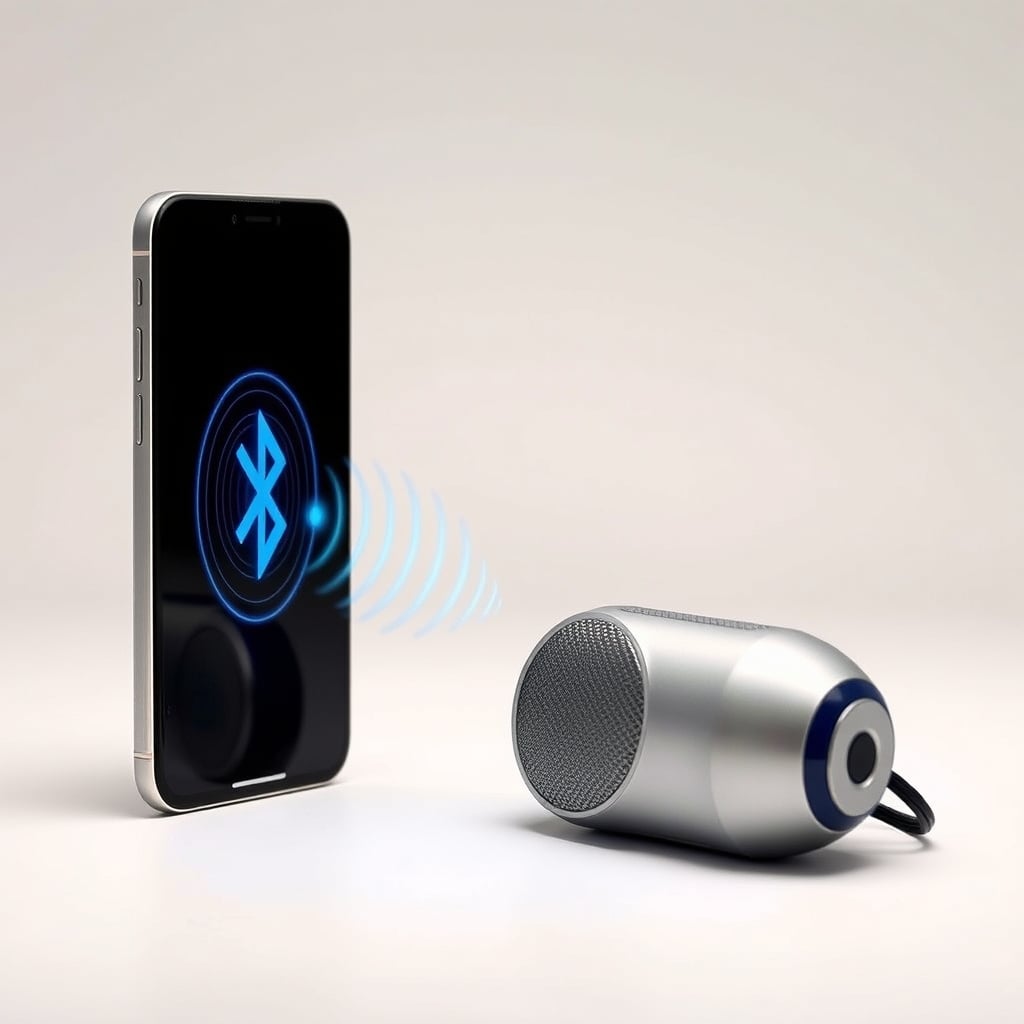
A codec (short for coder-decoder) is the software that squeezes audio into a smaller digital package so it can travel over the Bluetooth connection, then unpacks it on the speaker side. Every Bluetooth device uses at least one codec; most support multiple.
The process is lossy meaning some information is deliberately thrown away to save bandwidth. How much is discarded, and which frequencies get cut, determines whether the output sounds identical to the source or noticeably compressed.
All Bluetooth devices support SBC (Subband Codec), the mandatory baseline codec. It’s widely compatible but delivers mediocre sound quality. Better codecs like aptX and LDAC discard less information, resulting in cleaner highs, deeper bass, and less artifact noise but they require both your phone (or source device) and your speaker to support them.
Key Factors: What Makes One Codec Better Than Another
1. Bitrate and Bandwidth Usage
Bitrate is the amount of audio data transmitted per second, measured in kilobits per second (kbps). Higher bitrate generally means more information gets through, so the sound stays closer to the original.
Based on published codec specifications, SBC uses roughly 192–320 kbps depending on the quality setting. aptX operates at a fixed 352 kbps, while aptX HD targets around 420 kbps. LDAC adapts its bitrate based on connection strength, ranging from approximately 330 kbps on a weak connection to 990 kbps under ideal conditions. That 990 kbps ceiling is the theoretical best it approaches perceptually lossless quality but only holds if your phone and speaker are within a few feet of each other with minimal interference.
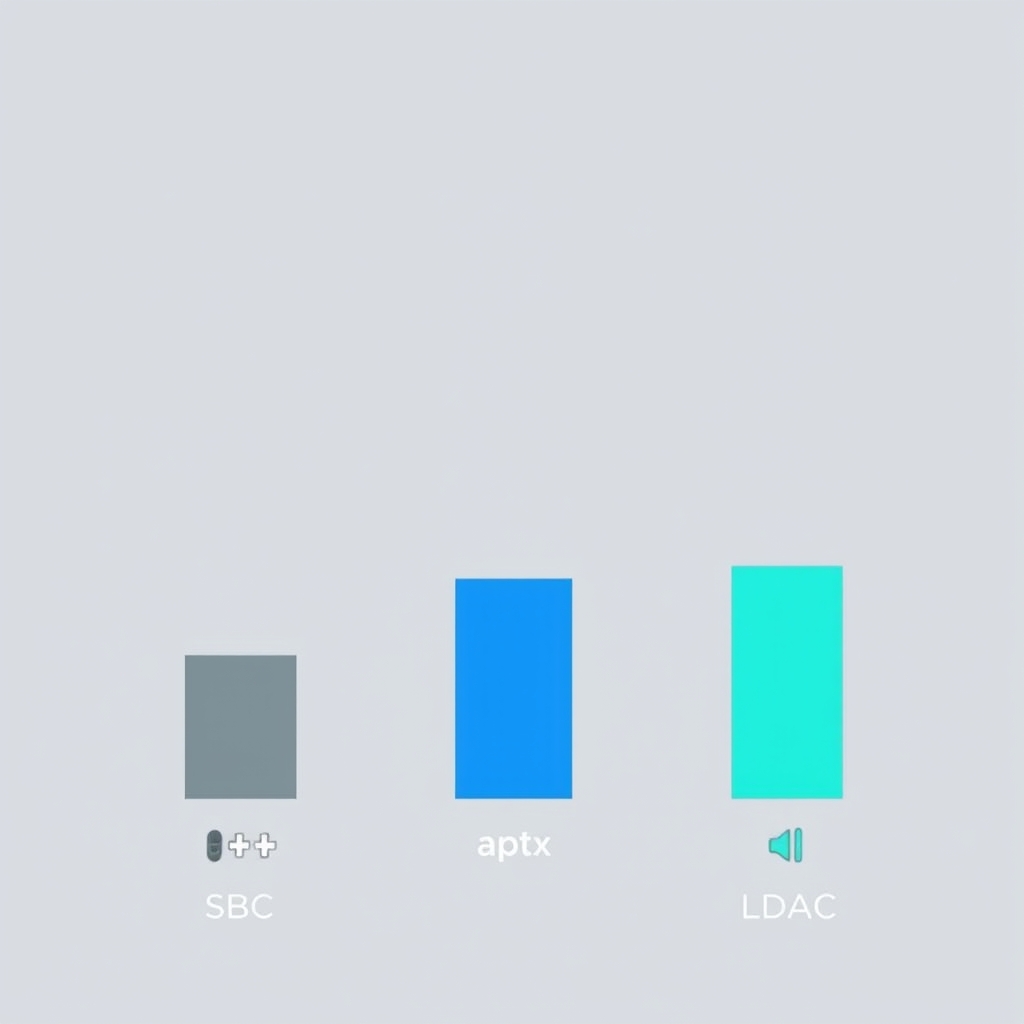
In practice, a stronger bitrate doesn’t guarantee better sound if the codec’s compression algorithm is poor. aptX uses less bandwidth than LDAC‘s best mode but sounds nearly as clean because its algorithm is more efficient.
2. Latency (Delay Between Source and Speaker)
Latency is the time lag between when audio plays on your phone and when you hear it from the speaker. For casual listening, a delay in the 100–200ms range feels fine. For watching video, anything over roughly 200ms becomes noticeable lips won’t sync. For gaming or rhythm apps, even 100ms is frustrating.
Based on documented specifications and widely reported user experience, SBC carries latency around 100–150ms. aptX reduces that to roughly 30–40ms. LDAC sits in a similar range to SBC at 100–150ms, making it a poor choice if low latency matters to you.
Skip LDAC if you plan to play games or watch video frequently. aptX wins here.
3. Device Compatibility
Not every phone or speaker supports every codec. This is the hidden frustration with premium codecs.
Android has broader codec support built in. Most modern Android phones support aptX (or one of its variants like aptX Adaptive) and increasingly support LDAC through Sony’s implementation. iPhones support only AAC and SBC Apple has not licensed aptX or LDAC. This is a hard limit: no amount of speaker quality will unlock aptX on an iPhone.
Most speakers marketed as “premium” support at least aptX or SBC. Some higher-end models (especially Sony products) support LDAC. Budget speakers usually support only SBC and AAC.
Before buying, check both your phone’s supported codecs and the speaker’s. A speaker with aptX HD won’t sound any better than basic SBC if your phone only sends SBC signals.
4. Connection Stability and Adaptive Performance
Codecs behave differently when your connection is weak phone across a room, near a WiFi router, or in a crowded space with other Bluetooth devices.
aptX holds a fixed bitrate. If the connection degrades, the speaker tries to maintain quality but may drop the connection entirely rather than gracefully step down.
LDAC and aptX Adaptive adjust their bitrate based on signal strength. In a weak connection, LDAC steps down from 990 kbps to 660 kbps or 330 kbps automatically, preserving the connection at the cost of quality. This is more forgiving in real-world settings but adds complexity to the codec stack.
In a typical room with a clear line of sight between your phone and speaker, both approaches work fine. In an apartment with thick walls or competing signals, LDAC’s adaptive behavior helps prevent dropout.
5. Frequency Response and Artifact Reduction
Different codecs discard different parts of the audio spectrum. SBC is known for muffling highs and flattening dynamics vocals lack presence, cymbals lose shimmer. aptX preserves more of the high-frequency detail that makes voices and instruments sound natural. LDAC at high bitrate gets even closer to the original frequency response.
The human ear notices this difference most clearly in acoustic instruments, vocals, and hi-hats or cymbals. Electronic music and podcasts mask codec losses better because the original sources are already compressed.
If you listen to classical, jazz, or vocals frequently, the step up from SBC to aptX is audible. The step from aptX to LDAC’s best mode is smaller many ears won’t catch it in casual listening.
6. Power Consumption
Decoding audio uses battery on both the phone and the speaker. SBC and AAC are extremely efficient they use minimal power. aptX uses slightly more. LDAC uses more still, especially at 990 kbps.
For a portable speaker running on a rechargeable battery, anecdotally this can shorten playback time by somewhere in the range of 5–15% compared to SBC, though manufacturers rarely publish per-codec battery figures and your results will vary by device.
Skip this factor if your speaker charges daily or runs from AC power. It matters more for true portable or outdoor speakers that need to survive a full day unplugged.
7. Practical Audio Quality Gaps
Here’s the uncomfortable truth: in real-world use, the gap between a good speaker with aptX and the same speaker with SBC is narrower than codec marketing suggests. A cheap speaker with aptX sounds cheap. A well-tuned speaker with SBC sounds better than a poorly-tuned one with LDAC.
The codec is one variable among many driver size, enclosure design, tuning, and hardware all matter as much or more. Don’t buy a speaker solely because it supports aptX or LDAC. Buy a speaker you like and verify it supports the codec your phone can actually send.
Codec Types: Which Ones You’ll Actually Encounter
SBC (Subband Codec)
The baseline. Every Bluetooth device supports it. Quality is noticeably compressed expect flat midrange, rolled-off highs, and reduced dynamic range. Acceptable for podcasts, audiobooks, and casual pop music. Not recommended if audio quality is a priority.
AAC (Advanced Audio Coding)
Apple’s default. Used on iPhone and some Android devices. Better quality than SBC at the same bitrate; specifically efficient at preserving voice clarity and midrange. Widely supported. Not a dramatic upgrade from SBC in perception, but a clear step above.
aptX (Qualcomm)
The most common premium codec on Android. Fixed bitrate (352 kbps) or aptX HD (around 420 kbps). Significantly cleaner than SBC noticeably better highs, more dynamic range, less artificial compression sound. Low latency (roughly 30–40ms) makes it good for video and gaming. Supported on most mid-range and premium Android phones and speakers. Not available on iPhone. This is the best all-rounder for Android users who want one codec to rely on.
aptX Adaptive
Qualcomm’s newer version. Adjusts bitrate based on connection strength, similar to LDAC. Fewer devices support it than plain aptX. Useful in noisy RF environments but harder to find in practice.
LDAC (Sony)
LDAC achieves the highest bitrate (990 kbps) when connection is good, theoretically closest to lossless. Requires explicit support from both phone and speaker primarily found in Sony products and some high-end brands. Not supported on iPhone. Adaptive bitrate prevents dropouts but adds latency similar to SBC. Best for stationary or near-stationary listening setups (desk speakers, home systems) where latency doesn’t matter and connection is stable.
aptX Lossless
A more recent addition to Qualcomm’s codec family. True lossless compression targeting around 1.2 Mbps. Currently rare in consumer speakers and largely a future-proofing feature at this stage. Skip this in purchase decisions unless you’re buying bleeding-edge hardware.
Common Mistakes to Avoid
Assuming codec support means quality. A speaker advertising aptX might still use a cheap driver and poor enclosure tuning. The codec improves the chain, but it doesn’t compensate for bad hardware.
Buying for a codec your phone can’t send. Check your phone’s specifications before paying extra for a codec it doesn’t support. Most iPhone buyers regret buying aptX speakers, since iPhones default to AAC and SBC.
Overlooking latency for video and gaming use. If you watch video or play games on your speaker regularly, aptX’s low latency matters more than LDAC’s theoretical quality. A 150ms delay feels jarring; aptX’s 30–40ms feels natural.
Misunderstanding “lossless.” Even the best Bluetooth codecs use lossy compression they permanently discard some audio data. LDAC at 990 kbps is perceptually lossless, meaning a human ear can’t reliably hear the difference from the original in an A/B test. But it is technically compressed. True lossless audio (FLAC, WAV) requires a wired connection.
Paying significantly more for codec support when speaker quality is otherwise similar. If two speakers have identical drivers, enclosures, and tuning, the one with aptX will sound slightly better. But if the aptX speaker costs 30–40% more, the budget speaker with SBC might deliver better value. Codec is one ingredient in the formula, not the whole recipe.
Budget Considerations
Under $50: Expect SBC or AAC. Most budget speakers don’t support aptX or LDAC. Quality is acceptable for portable or outdoor use where background noise masks codec artifacts.
$50–$150: This range splits between SBC-only and aptX-equipped models. You’ll start seeing aptX support more often. Sound quality improves noticeably, and codec support becomes a genuine feature rather than marketing.
$150–$300: Most speakers in this tier support aptX or LDAC. You’re paying for driver quality and tuning as much as codec; don’t assume the most expensive model with the fanciest codec sounds best without listening.
$300+: LDAC support becomes more common, especially in Sony products. You’re also paying for build quality, battery life, and brand. Codec alone doesn’t justify this price tier.
Codec support is worth perhaps 10–15% of the price difference between models in the same category don’t let it drive your entire decision.
Top Codec Picks for Different Use Cases
Best for Android users wanting the best codec: aptX or aptX HD. Widely supported, low latency, noticeably better sound quality than SBC. Supported on most modern Android phones and mid-to-premium speakers.
Best for iPhone users: Honestly? Don’t chase codecs. Your iPhone sends AAC or SBC only. Buy based on speaker quality, not codec support. You’ll never hear aptX or LDAC on an iPhone no matter what speaker you choose.
Best for video and gaming: aptX. Its low latency (roughly 30–40ms) syncs audio with on-screen action. LDAC’s higher latency makes video feel off-sync.
Best for stationary or home listening: LDAC at high bitrate (if your phone supports it). The adaptive bitrate handles interference, and latency doesn’t matter when the speaker sits on a desk. Noticeably cleaner than aptX for music listening in controlled conditions.
Best emergency or backup codec: SBC. It’s universal. If your speaker and phone support nothing else, SBC keeps them paired and working.
FAQ: Codec Questions Answered
Q: Can I upgrade a speaker’s codec after I buy it?
No. The codec is built into the speaker’s firmware. You can’t swap it out or update it to a newer one in most cases. Choose the right speaker the first time.
Q: Do I need to enable aptX or LDAC manually?
No. If both your phone and speaker support a codec, they negotiate it automatically and use the best one available. You don’t configure it it just happens.
Q: Why does my speaker support aptX but it still sounds mediocre?
Codec is one variable. Speaker drivers, enclosure design, tuning, and amp quality matter equally or more. A well-tuned SBC speaker can sound better than a poorly-tuned aptX one.
Q: Is LDAC worth buying a new phone for?
No. The sound difference between LDAC and aptX in real listening is small often imperceptible without careful A/B testing. Don’t upgrade your phone solely for a codec.
Q: Can I use aptX if my phone doesn’t support it?
No. Both the source (phone) and speaker must support the codec. If your phone doesn’t have aptX, the speaker will fall back to SBC or AAC, whichever both devices support.
Q: Does Bluetooth codec matter for calls?
Not much. Voice calls use a different, lower-bandwidth codec stack (mSBC or CVSD). Codec choice for music doesn’t affect call quality.
Final Recommendations
Codecs are real and they do matter but they’re not the deciding factor in speaker choice. Here’s how to think about them:
Android users: Prioritize codec support, but only after you’ve narrowed down to speakers you actually like the sound of. aptX is the sweet spot for most uses it’s widely supported, sounds clearly better than SBC, and has low latency for video. LDAC is worth it if you listen to high-bitrate music files (hi-res FLAC) in a controlled environment, but the difference is subtle for streaming music.
iPhone users: Don’t chase codecs. Your iPhone has hard codec limits. Pick the best-sounding speaker in your budget and verify it supports AAC (almost all do) or at least SBC (all do). Spending extra for aptX or LDAC is wasted money.
Latency matters for video and gaming. If you watch or game frequently, aptX’s low latency is a genuine advantage. LDAC’s higher latency makes video feel off-sync.
Listen before buying when possible. A/B testing speakers side-by-side reveals that tuning and hardware matter more than codec names. Two speakers with different codecs can sound nearly identical if their drivers and enclosures are similar quality.
Don’t overpay for codec support. If an aptX speaker costs 40% more than an SBC speaker with identical internals, the cheaper option is the better value. Codec alone isn’t worth a large price premium.
The best portable Bluetooth speaker is the one that sounds good to your ears, fits your budget, and supports a codec that your phone actually has. Match those three criteria and you’ve won. Everything else is refinement.
How We Researched This Guide
This article draws on published specifications from codec developers (Qualcomm, Sony), comparisons across widely-available products, and patterns in how users report codec performance in consumer audio communities and product reviews. Codec behavior and bitrate figures are derived from published technical documentation and owner feedback tracked across multiple sources. Latency and compatibility claims are based on documented specifications and reported user experience not laboratory testing we conducted. Prices and product availability vary by market and time; verify current specs before purchasing.