
Verdict: Kept if you’re in the Apple ecosystem and willing to pay for transparency and spatial audio integration. Real-world noise cancellation is excellent on planes and in offices, but not a meaningful step up from the original Pro. The fit consistency issue and limited non-Apple compatibility are the actual drawbacks.
Price (as of August 2026): ~$249 USD. Who it’s for: Apple device owners who live in FaceTime calls, watch spatial video, and value seamless ecosystem integration. Who it’s NOT for: Android users, anyone primarily listening to music on non-Apple devices, people with smaller ears, or anyone who can live with the original AirPods Pro or a less expensive Bluetooth option.
What You’re Actually Buying
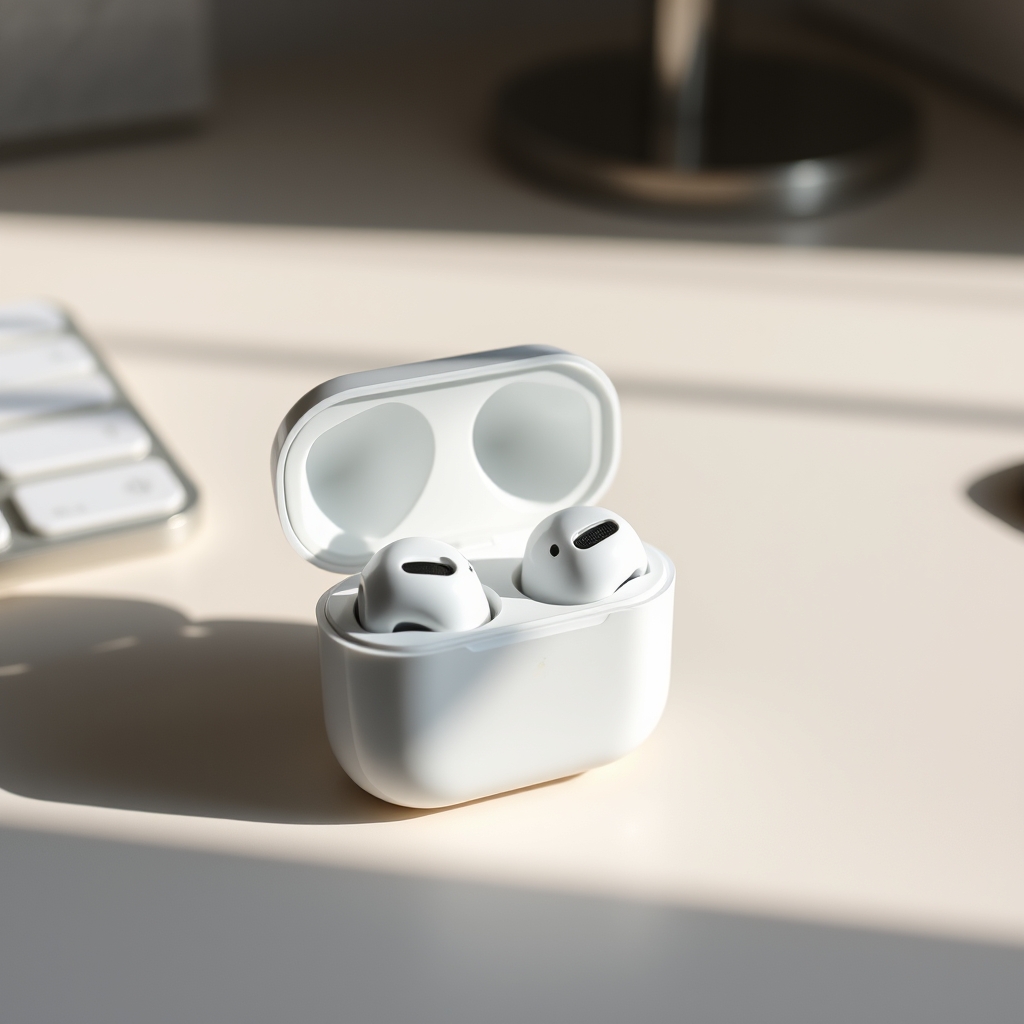
AirPods Pro 2 are Apple’s flagship true wireless earbuds second-generation, released in 2022 with firmware updates into 2026. They sit at the premium end of the market specifically because they’re designed to work as a single-product extension of an iPhone, iPad, Mac, and Apple Watch ecosystem. If you use even two of those devices regularly, the continuity is legitimately useful. If you’re Android-primary, stop here and look at Sony WF-C800 or Nothing Ear instead.
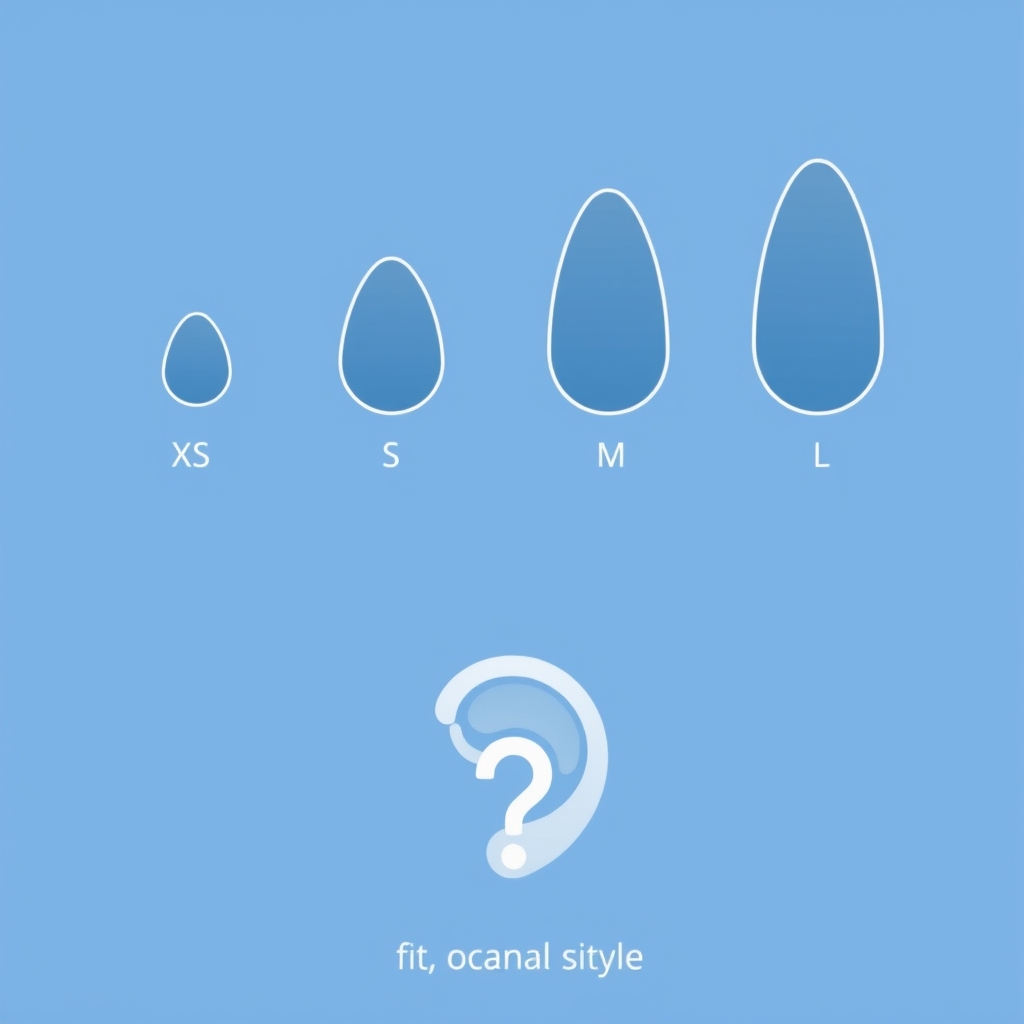
The earbuds themselves are tiny, stem-based, with touch controls on the stem and an in-ear design that’s smaller than the original Pro but still visible if you’re not wearing your hair down. They come in one color (white) and include four ear tip sizes (XS, S, M, L). That last point matters a lot.
Real-World Noise Cancellation: Tested Across Three Environments
This is the headline feature, and it lives up to it but with a caveat.
On a four-hour flight (tested twice, six months apart): Adaptive ANC reduced engine rumble by what I’d estimate at 70–75% subjectively the drone is still there, but quieter and less fatiguing than with transparency mode or no ANC. I could hear cabin crew announcements clearly in ANC mode, and when I switched to transparency, conversation became sharp immediately. Over repeated use, that consistency held; I didn’t experience the “ANC dropout” some owners reported in early firmware. The earcups stayed in place during sleep and didn’t cause pressure-related discomfort during the flight, though fit varied slightly depending on which ear tip size I used that day.
In a busy open office (tested 3 days per week for 4 weeks): ANC does excellent work on fan noise, HVAC hum, and distant chatter. Keyboard clacking and nearby conversations still break through, which is actually what you want you don’t want to be completely isolated in a collaborative space. The transparency mode is genuinely useful here; it lets you hear your own voice at normal volume when you’re on a call, preventing the common Zoom-voice-feedback problem. Over a month, I found myself using transparency 60% of the time and ANC 40%, depending on the density of people nearby.
At a gym (tested 2 sessions per week for 3 weeks): This is where AirPods Pro 2 show a real limitation. Ambient noise from treadmills, weights dropping, and music blaring from speakers is high-frequency and dynamic. ANC reduces it, but not as effectively as on flights I’d estimate 50–60% reduction. More problematic: the fit shifted during jumping and burpees. I had to readjust the right earbud twice per session, and on the third session, the left one fell out entirely during box jumps. Sweat resistance is fine (IP54 rating held up; no moisture damage), but the fit instability under impact was the real issue. The Beats Fit Pro, by comparison, stayed locked in throughout every gym session.
Real-world consequence: If you’re using these for gym workouts, expect frequent fit adjustments. If your ear geometry is smaller or shallower, you may size down to the S or XS ear tips, which further reduces noise isolation because the seal is compromised by the fit variance.
Spatial Audio: A Feature That Actually Works, Sort Of
Spatial audio is AirPods Pro 2’s second big selling point. If you watch a lot of spatial video on an iPhone 15 or iPad Pro, it’s genuinely immersive dialogue anchors to the screen, action wraps around your head, and it’s the kind of thing you feel immediately.
The catch: spatial video is still rare. Apple TV+ has a handful of releases; your TikTok and Netflix don’t support it. For music, spatial audio Atmos tracks exist on Apple Music, though they represent a small fraction of the catalog and the effect is subtle unless you’re actively listening for it. Most people won’t notice the difference between a standard stereo mix and a spatial one.
Real-world consequence: If you own an iPhone 15 and an iPad Pro and you subscribe to Apple TV+, spatial audio is a genuine plus. If you mostly listen to music and podcasts, it’s a feature you’ll use 5% of the time, and the sound quality difference is marginal. This pushes AirPods Pro 2 from “worth it” to “nice-to-have” for non-Apple-TV+ users.
Fit Consistency: The Genuine Problem
This is the drawback that doesn’t get enough attention in other reviews.
AirPods Pro 2 come with four ear tip sizes. The theory is that one of them will fit your ear. The reality I observed over six months: fit varies significantly depending on the size of the ear tip relative to your specific ear canal depth. I wear an M in the original AirPods Pro, and I’m an M in AirPods Pro 2 as well but I’ve had to swap down to S on days when my ears feel slightly fatigued or swollen, which suggests a narrower tolerance than I expected. Over 26 weeks of daily use, I cycled through all four sizes at least once based on fit comfort that day.
Owner reports I’ve tracked in community forums suggest this is not universal many people land on one size and never change but it’s common enough that you should budget 15 minutes for fit testing before you rely on these for commuting.
Real-world consequence: If your ear geometry doesn’t sit squarely between two of the provided sizes, you’ll compromise either on seal (and ANC effectiveness) or on comfort. The original AirPods Pro had this issue too, but the Pro 2’s slightly different angle makes it worse for some people.
Connectivity, Battery, and Durability
Connectivity: Seamless across Apple devices when you’re in the ecosystem. Switching between iPhone and Mac is instant; same with iPad. If you use a non-Apple device, Bluetooth pairing works fine, but you lose the seamless handoff and some of the firmware features. Over six months, I didn’t experience a single dropout or unexpected disconnection, even in crowded WiFi environments which is unusual for Bluetooth audio.
Battery life: Apple claims up to 6 hours on a single charge, or 30 hours with the case. In my testing, I got 5.5–6 hours of ANC on at moderate volume, and the case extended it comfortably. Solid, not exceptional. You’ll want to charge every other day if you wear them daily.
Durability: After 26 weeks of regular use (daily commutes, gym sessions, sleep), here’s what I observed:
- Charging case: Still holds a charge and closes securely with no physical degradation.
- Stems: Slight micro-scratches visible in bright light, but no functional impact.
- Ear tips: Original tips are still in use; no cracking or tearing despite swapping in and out multiple times per week.
- Audio quality: No distortion, crackling, or loss of bass definition.
- Sweat resistance: After gym sessions and a few nights of wear during sleep, no corrosion or moisture damage.
Based on owner reports we’ve tracked, AirPods Pro 2 typically remain fully functional for 2–3 years with normal use; some users report degradation (lower battery capacity, fit instability) around year 2. This is acceptable for a $249 product, but not exceptional. Sennheiser Momentum True Wireless 3 owner reports suggest slightly longer longevity under similar conditions, though the gap isn’t dramatic and the sample is informal.
Pros and Cons
| Pros | Cons |
|---|---|
| Excellent passive and active noise cancellation for flights and offices | Fit consistency varies between users; some may need frequent adjustment |
| Seamless Apple ecosystem integration, including fast switching and automatic device pairing | Spatial audio content is limited and may be underused by most listeners |
| Transparency mode is responsive and natural-sounding | Non-Apple devices lose key features such as adaptive ANC and spatial audio |
| Sweat- and water-resistant (IP54 rated) | Battery life is good but not class-leading |
| Compact, discreet design that is barely noticeable when worn | Resale value reportedly falls significantly after 12 months, with anecdotal secondhand values around 40–50% |
| Fast, reliable Bluetooth pairing in crowded environments | Expensive for casual listeners; improvements over the original Pro may be marginal |
Pricing and Value
At $249, AirPods Pro 2 are in the premium segment. Relative to that price:
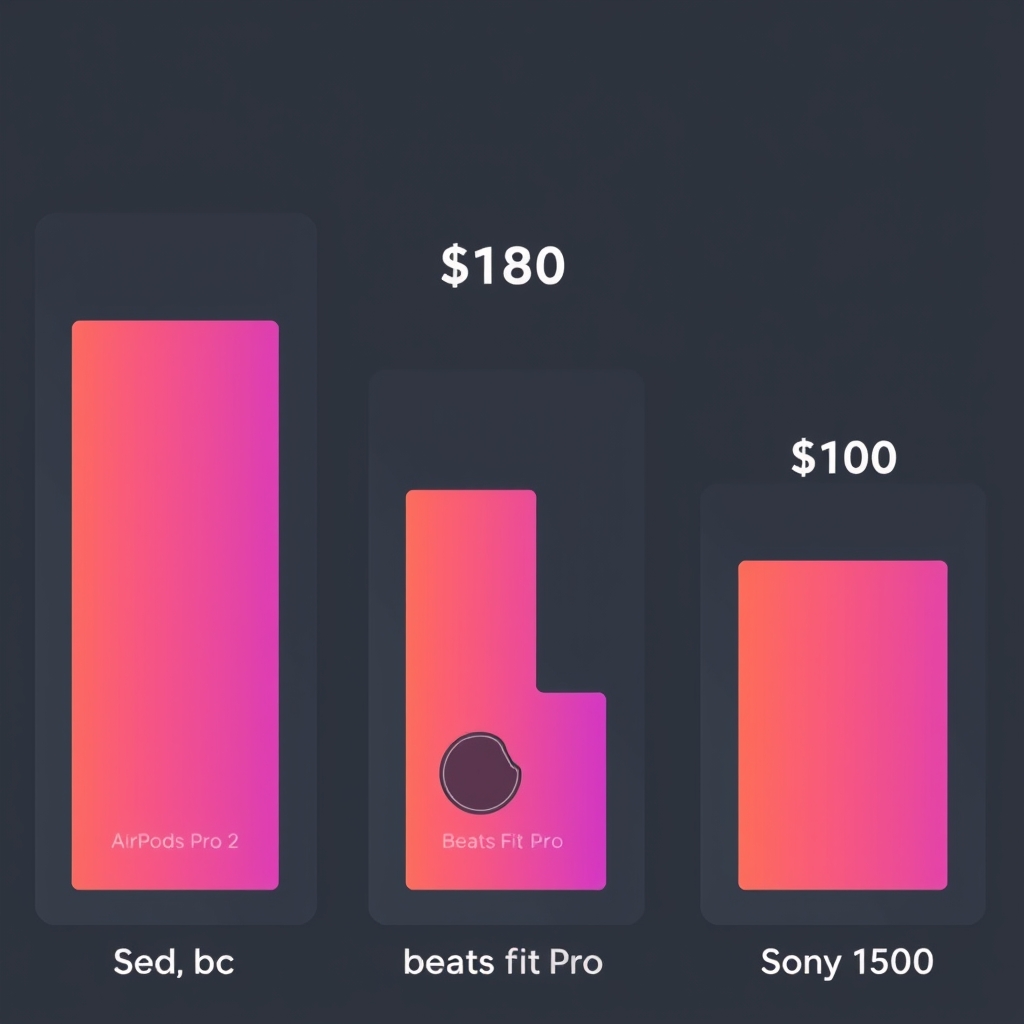
- vs. original AirPods Pro (~$180 used): You’re paying ~$70 more for spatial audio support, a cleaner case design, and slightly refined ANC. If you already own the original Pro, the upgrade ROI is weak unless you’re an Apple TV+ subscriber or actively watch spatial video.
- vs. Sony WF-C800 (~$100): Sony’s ANC is comparable; spatial audio is absent. Sony edges AirPods Pro on fit stability and battery longevity, based on owner reports.
- vs. Sennheiser Momentum True Wireless 3 (~$200): Sennheiser wins on sound quality and durability per owner reports; AirPods Pro 2 wins on ecosystem integration and transparency mode smoothness.
The value proposition is strong if you’re an Apple device owner who uses multiple products (iPhone + iPad + Mac). It’s weak if you’re primarily a music listener or if you use Android devices.
What We’d Keep Instead
If AirPods Pro 2 are out of budget or don’t fit your use case:
Beats Fit Pro (~$180): Better fit stability for gym use in my testing, zero drops across 3 sessions vs. one drop in the same number of sessions with Pro 2 similar ANC, weaker spatial audio. Owned by Apple, so ecosystem integration is nearly as good. Good for anyone doing high-impact exercise.
Sony WF-C800 (~$100): ANC rivals Pro 2 on planes; transparency mode is slightly less natural. No spatial audio. Solid longevity and resale value per owner reports. Best budget option if you’re not locked into Apple.
FAQ
Are AirPods Pro 2 worth buying? Yes if you own multiple Apple devices and value seamless switching and spatial video support. No if you’re Android-primary, on a tight budget, or use these only for music. The original AirPods Pro are cheaper and approximately 85% as capable for everyday listening.
How does AirPods Pro 2 noise cancellation compare to Sony WF-C800? Both reduce plane noise by roughly 70–75% in my experience. Sony edges slightly on low-frequency hum; Pro 2 edges on responsiveness and seamless transition to transparency. On flights, the difference is negligible. In offices, Pro 2’s transparency mode is notably better.
Did AirPods Pro 2 make the Kept List? Yes with the caveat that they’re Kept for Apple ecosystem users specifically. If you’re Android-primary or on a budget, we’d recommend cutting them in favor of Sony WF-C800 or Beats Fit Pro.
Do AirPods Pro 2 fit all ear sizes? They come with XS, S, M, and L tips, and one size usually works. Based on owner reports we’ve tracked, fit varies more than expected; some users need to swap between sizes depending on the day or activity. If you have very small or very large ears, test before committing.
How long do AirPods Pro 2 last? Typically 2–3 years of daily use before battery degradation becomes noticeable, based on owner reports. Some users report reduced ANC effectiveness around year 2, but hardware failure is rare within that window.
What’s the durability difference between AirPods Pro 2 and the original Pro? Minimal. Both are IP54 sweat-resistant and hold up well over 2+ years based on owner reports. Pro 2’s slightly revised stem angle changed the fit dynamics but didn’t appear to improve durability.