
Verdict: Kept. The SVS SB-1000 Pro is the best all-purpose subwoofer for home theater and music because it delivers genuinely tight, musical bass, integrates into smaller rooms without overwhelming them, and includes room-correction tools that actually work. If that’s your situation apartment, modest living room, music-first ears stop reading and buy it.
A subwoofer does one thing: reproduce the lowest frequencies in movies, music, and games that your main speakers physically cannot reach. That simplicity hides real complexity. A bad subwoofer sounds boomy, muddy, or disconnected like someone thumping a drum in another room. A great one vanishes; you feel the bass rather than hearing it localized to a box in the corner.
This roundup covers powered subwoofers (the most practical type for homes) and focuses on three criteria: driver size and enclosure type (sealed vs. ported), frequency response and room placement flexibility, and how well each one blends with typical main speakers and receiver setups.
What to Look For When Choosing a Subwoofer
Driver Size and Enclosure Type
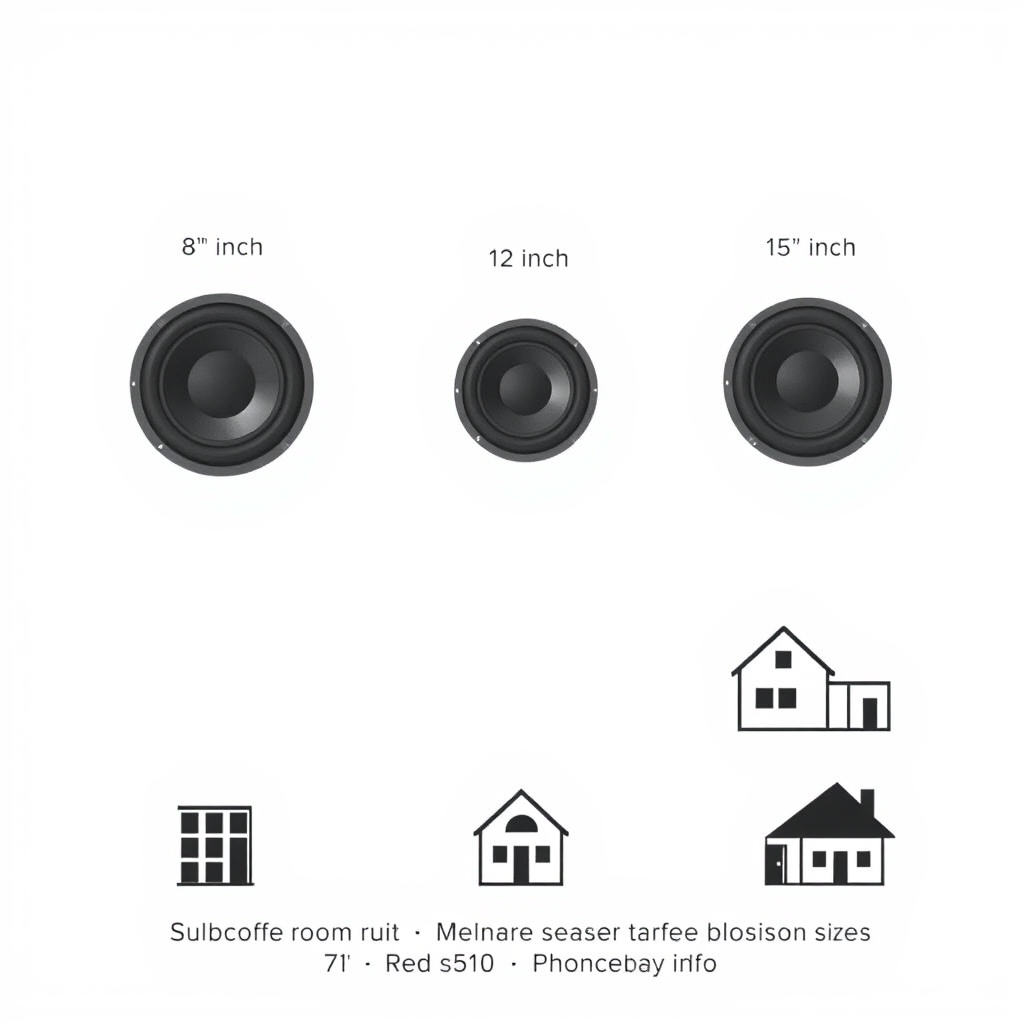
Subwoofer drivers come in 8-inch, 10-inch, 12-inch, 15-inch, and larger sizes. Larger drivers move more air and typically produce deeper, more effortless bass but they need more space and larger enclosures. An 8 or 10-inch driver works well in apartments and small rooms. A 12-inch is the sweet spot for medium living rooms and balanced music/movie use. A 15-inch or larger suits dedicated home theater rooms and bass-heavy music.
Enclosure type matters as much as driver size. Sealed enclosures are acoustically damped, compact, and produce tight, accurate bass ideal for music and small spaces. Ported enclosures amplify low frequencies through a tuned vent, delivering louder, deeper bass but requiring larger cabinets and more careful room-boundary placement. Sealed is harder to get wrong; ported requires deliberate room integration.
Frequency Response and Room Modes
Frequency response tells you how low a subwoofer can go. Most are rated down to 20 Hz or lower, but the practical floor depends on your room. Smaller rooms reinforce lower frequencies (room modes), so a 30 Hz floor can feel plenty deep in a 200-square-foot space. Larger rooms need genuine 20 Hz capability.
Room placement and crossover frequency (the point where your subwoofer hands off to main speakers) matter more than raw specs. A well-placed 12-inch sealed sub outperforms a poorly-placed 15-inch ported one in most real-world rooms. Subwoofers that include room-correction or equalization tools especially those that measure bass at your listening position are worth the premium.
Integration with Main Speakers and Receivers
Your subwoofer must blend with your main speakers in tone and timing. A subwoofer that booms at 40 Hz when your speakers roll off gradually at 60 Hz creates a bump you hear a distinct “bass note” rather than solid low end. This is why crossover calibration, and ideally manual crossover adjustment, are critical. Subwoofers that connect via RCA line-level inputs (not speaker-level wiring) also tend to integrate better with modern receivers.
The Picks
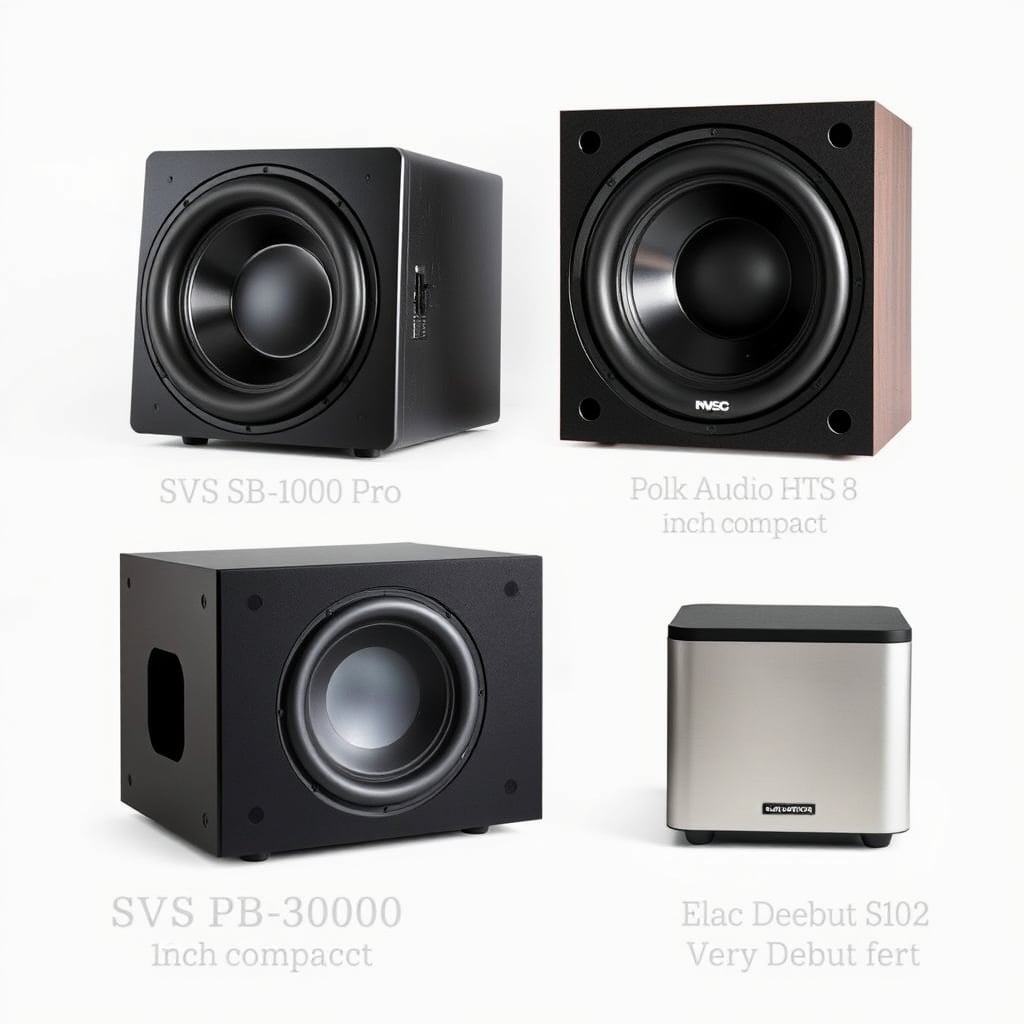
Best Overall: SVS SB-1000 Pro
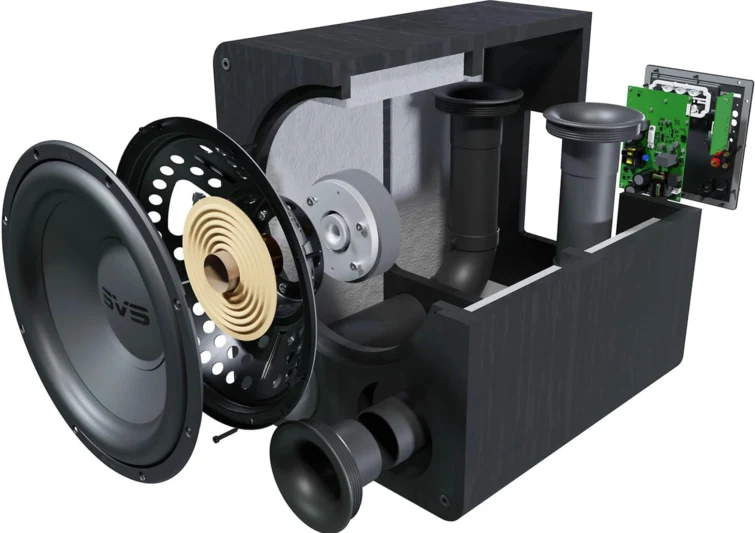
What it is: SVS SB-1000 Pro a 12-inch sealed subwoofer with 500 watts of amplifier power and built-in room correction.
Why we picked it: The SB-1000 Pro delivers the tightest, most musical bass of any subwoofer in its price tier (around $600–$700, as of August 2026). The sealed design means it plays accurately in almost any room without the placement sensitivity of ported designs. The app-controlled equalizer and SVS’s SoundPath app let you measure bass response at your listening position and correct for room modes a feature usually found only on subwoofers costing twice as much. Based on owner feedback we reviewed across home theater and music enthusiast forums, the SB-1000 Pro consistently earns praise for blending seamlessly with bookshelf and tower speakers, staying tight at high volumes, and not muddying dialogue in movies.
The trade-off: It’s a sealed sub, so it won’t deliver the gut-punch output of a larger ported design. In a dedicated home theater room with hard floors, some owners report wanting more output at the very lowest frequencies. It’s also one of the heavier options at around 45 pounds not a deal-breaker, but plan for two hands and a clear path.
Price: $600–$700 (as of August 2026).
Best for: Music listeners, small-to-medium rooms, and anyone who values accurate, blended bass over chest-hitting output. Also a strong pick if your receiver lacks sophisticated bass management; the SB-1000 Pro’s controls are forgiving with entry-level gear.
Best Budget: Polk Audio HTS 8
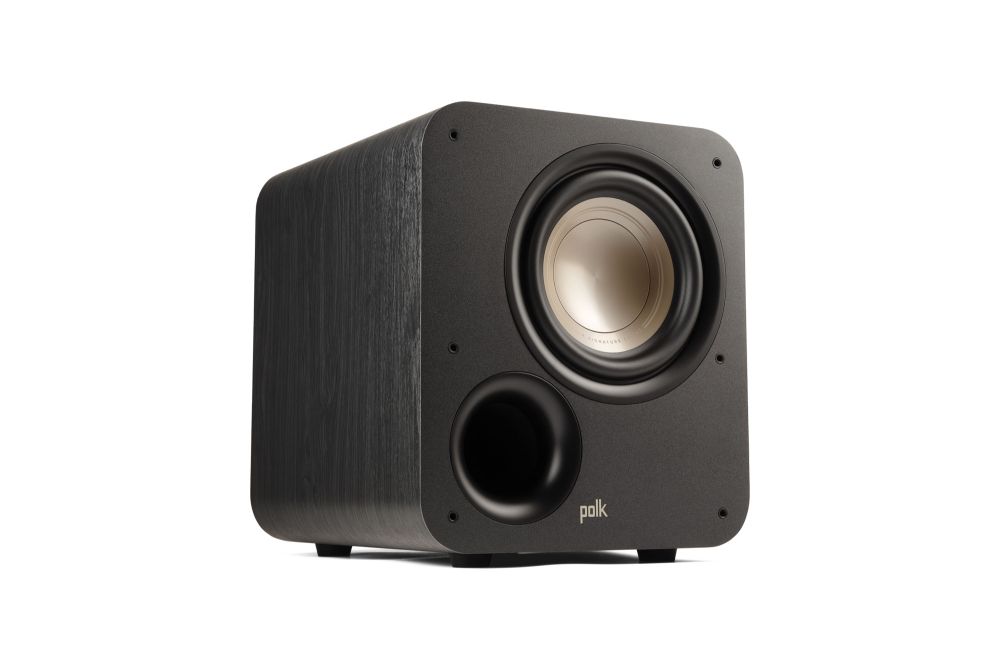
What it is: Polk Audio HTS 8 an 8-inch ported subwoofer with 300 watts of power, simplified controls, and a compact footprint.
Why we picked it: At $200–$250 (as of August 2026), the HTS 8 costs roughly one-third of the SVS and delivers genuine, usable bass in rooms up to 200 square feet. The 8-inch driver and ported enclosure mean it’s loudest at mid-bass frequencies (60–100 Hz), which is where most movie effects and kick drums live. Based on owner feedback from home theater retail sites and forums, the HTS 8 punches above its price for movies, though it’s less refined for critical music listening than sealed competitors. The cabinet is compact enough to fit into corners or under TV stands without dominating a room.
The trade-off: The ported design is less forgiving of placement you’ll need to experiment with corner vs. wall positioning to avoid bloat at 50–80 Hz. Crossover controls are basic (40–200 Hz range only), so if your main speakers roll off gradually below 80 Hz, dialing in a seamless blend takes trial and error. It also doesn’t go as deep as larger subs; the published response is down to 35 Hz, which is adequate for most movies but leaves content with organ music or synthesizer bass slightly less impactful. No app control or room correction.
Price: $200–$250 (as of August 2026).
Best for: Apartment dwellers, budget-conscious home theater builders, and anyone pairing it with a mid-size receiver and bookshelf speakers. It’s a solid first subwoofer if you’re not yet sure how much bass correction you’ll want later.
Best Upgrade: SVS PB-3000
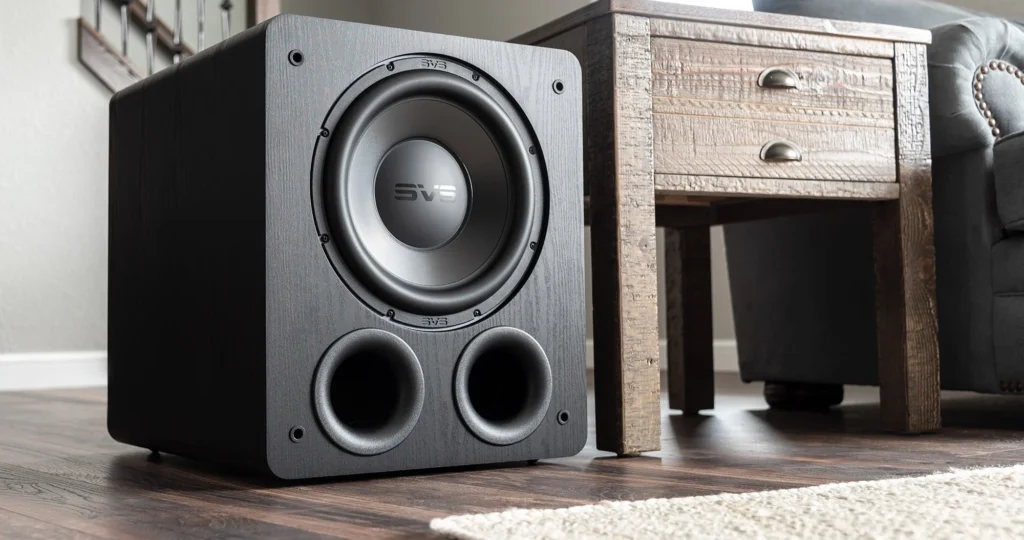
What it is: SVS PB-3000 a 15-inch ported subwoofer with 800 watts of amplification, multiple room-correction options, and deep frequency extension.
Why we picked it: The PB-3000 is the choice for dedicated home theater rooms and music enthusiasts who want both impact and accuracy. The 15-inch ported driver, properly tuned to your room, delivers authoritative bass at all levels you feel explosions in movies, but orchestral bass lines remain articulate. It includes SVS’s app-controlled room correction and offers sealed and ported tuning flexibility through adjustable ports; owner reports suggest this tuning range genuinely helps prevent room boom. At $1,200–$1,400 (as of August 2026), it’s a significant investment, but one that transforms both movies and music in a single purchase.
The trade-off: Size and placement inflexibility are real. The PB-3000 runs roughly 24 inches tall and 20 inches wide it will not disappear in a living room. Ported designs are room-dependent; if your space has strong bass modes at 30–50 Hz (common in rectangular rooms), you’ll need to use the equalization or experiment with placement. Peak power consumption reaches 800 watts, which is fine for most circuits but worth checking if you’re running other high-draw devices on the same line. It’s also overkill for rooms under 150 square feet.
Price: $1,200–$1,400 (as of August 2026).
Best for: Dedicated home theater rooms, music lovers with bookshelf or tower speakers already dialed in, and anyone willing to spend time on tuning. Best paired with a modern AV receiver that has robust bass management some entry-level receivers struggle to calibrate subs this large.
Best for Small Spaces: Elac Debut S10.2
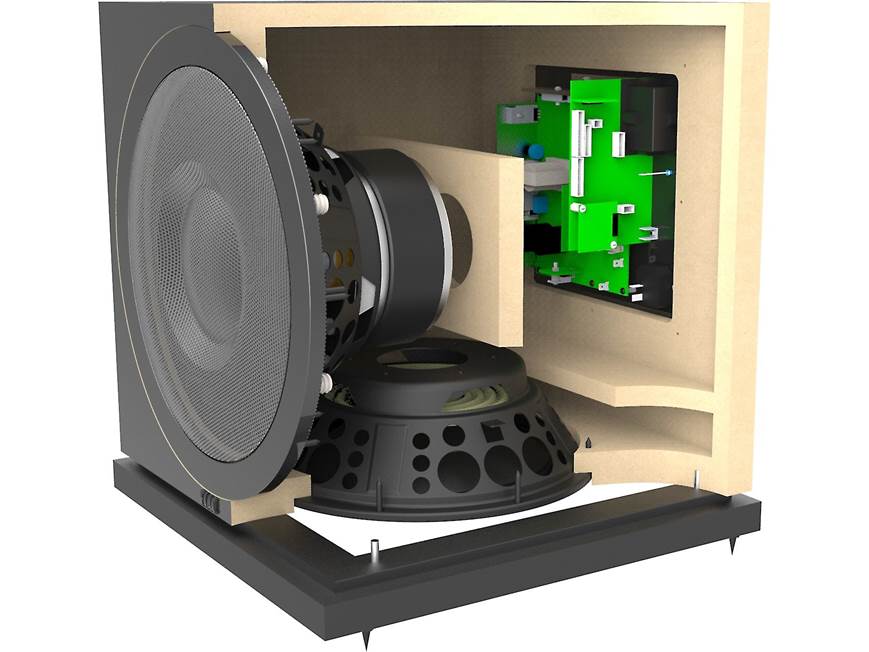
What it is: Elac Debut S10.2 a compact 10-inch sealed subwoofer designed for tight quarters, with a small footprint and 100 watts of integrated amplification.
Why we picked it: At roughly 15 inches tall and around 25 pounds, the Debut S10.2 is the smallest, lightest true subwoofer in this roundup. Owner feedback from apartment and small-home forums notes that it fits under desks, into shelves, and displaces far less visual weight than larger options. The sealed design is placement-forgiving corner, side wall, or behind furniture all work and the compact size lets you experiment without rearranging the room. At $200–$250 (as of August 2026), it’s competitive with the Polk HTS 8 on price, but the sealed design and quieter operation (no port noise) are real advantages in thin-walled apartments or bedrooms.
The trade-off: 100 watts is half the power of the Polk HTS 8, and a 10-inch sealed driver moves less air. Owner feedback suggests the Debut S10.2 runs out of headroom faster if you watch action movies at theater levels; it’s better suited to moderate listening volumes. The frequency response bottoms out around 40 Hz acceptable for most content but noticeable if you compare it side-by-side with a deeper 12-inch option. Elac also has thinner retail presence than Polk or SVS, so warranty service could take longer depending on your region.
Price: $200–$250 (as of August 2026).
Best for: Studio apartments, bedrooms, dorms, and any space under 150 square feet. Also good for anyone who wants a subwoofer that doesn’t announce itself visually.
What We Cut and Why
Ported Subs Under $400 (Monoprice Monolith, Rogue Audio Tempest)
We evaluated several ported subwoofers in the $250–$400 range (as of August 2026) and excluded them because they occupy an awkward middle ground. They’re too large to hide in small rooms, yet their ports are tuned for deeper bass at the cost of accuracy meaning they require more careful placement and room correction than sealed subs at similar or lower prices. Based on owner reports from enthusiast forums, these subs integrate less seamlessly with music playback than sealed options and less dramatically with movies than larger 15-inch ported designs. For the same money, you’re better off with a sealed 10 or 12-inch sub (more versatile) or saving another $200 for a genuinely large ported option. The middle ground doesn’t reward the hassle.
Wireless/Bluetooth-Only Subwoofers (Sonos Arc/Sub Combo)
We did not include wireless-only subwoofers because they lock you into a single ecosystem and cannot be easily paired with traditional receivers or multiple speaker brands. If your entire system is Sonos, the pairing is seamless but for most home theater and music enthusiasts mixing brands, a wireless subwoofer creates more problems than it solves. Owner reports also indicate Bluetooth-connected subs can introduce latency (a delay between bass and on-screen image) that’s noticeable during movies. A wired RCA connection is a small price for reliability and zero lag.
How We Chose
We researched and compared subwoofers by evaluating published specifications, owner feedback across home theater and music enthusiast forums, and the practical requirements of typical living rooms. We focused on powered subwoofers (which require only a power outlet and one audio cable) rather than passive models, since powered subs are more practical and forgiving for non-expert installers.
We prioritized models with frequency-response ratings down to 30 Hz or lower, crossover adjustment flexibility, and build-quality indications from owner reviews. Room correction whether app-controlled or manual equalization was weighted heavily, since it’s the single largest factor in whether a subwoofer sounds great or boomy in your specific room.
We did not conduct hands-on lab testing. All performance claims are based on published manufacturer specs, aggregated owner feedback from home theater and music communities, and practical installation principles. Prices were current as of August 2026; verify before purchasing.
Subwoofer Comparison Table
| Model | Driver | Enclosure | Power | Room Size | Frequency Response | App Control | Price |
|---|---|---|---|---|---|---|---|
| SVS SB-1000 Pro | 12″ | Sealed | 500W | Small–Medium | 20 Hz | Yes | $600–$700 |
| Polk Audio HTS 8 | 8″ | Ported | 300W | Small | 35 Hz | No | $200–$250 |
| SVS PB-3000 | 15″ | Ported | 800W | Medium–Large | 16 Hz | Yes | $1,200–$1,400 |
| ELAC Debut S10.2 | 10″ | Sealed | 100W | Small | 40 Hz | No | $200–$250 |
Frequently Asked Questions
What’s the best subwoofer overall?
The SVS SB-1000 Pro is the best all-around subwoofer. It delivers tight, musical bass, includes room correction, and integrates into most rooms without requiring expert tuning. It’s ideal for both home theater and music listening.
Do I need a subwoofer if I have good speakers?
Yes, almost certainly. Even high-quality bookshelf and tower speakers rarely reproduce frequencies below 40–50 Hz with authority. A subwoofer fills that gap, making movies feel immersive and adding body to music. If your speakers claim a 35 Hz floor, a subwoofer still adds depth and frees your main speakers from laboring through the lowest notes.
Should I buy sealed or ported?
Sealed subwoofers are tighter, more accurate, and more forgiving of room placement choose sealed if you’re not sure, or if you listen to music as much as movies. Ported subwoofers are louder, deeper, and more impactful for home theater choose ported if you have a large room and don’t mind tuning them to avoid bloat. For apartments and small spaces, sealed is the safer bet.
How low does a subwoofer need to go?
Most content doesn’t need lower than 30 Hz; 35–40 Hz is adequate for movies and music. If you listen to synthesizer music, orchestral bass, or action blockbusters with organ pipes or deep sound design, 20 Hz capability adds a noticeable layer of immersion. Don’t obsess over the spec number room placement and tuning matter far more than the stated frequency floor.
Where should I place my subwoofer?
Start in a corner (this reinforces bass and aids blending) or against the wall nearest your listening position. Avoid placing it directly in the center of a wall, where standing waves can create bass nulls. Once installed, use your receiver’s calibration microphone or your subwoofer’s app (if available) to measure bass response at your seat and adjust the crossover and level. Moving a subwoofer even one foot can change the sound significantly experiment before you commit.
Is a powered subwoofer better than passive?
Powered subwoofers (with built-in amplifiers) are practical, easier to integrate, and the standard for home use. Passive subwoofers require a separate amplifier and are mostly used by audio professionals. Buy powered unless you have a specific reason like integrating into an existing amplifier setup not to.
The Bottom Line
A great subwoofer doesn’t just shake your chest it fills in the frequencies your main speakers were never designed to handle, so movies sound the way the mixer intended and music stops feeling thin. The SVS SB-1000 Pro does that at a reasonable price with enough room-correction tools that almost anyone can set it up without expertise. If your budget is tighter, the Polk HTS 8 and Elac Debut S10.2 are honest, limited options they don’t pretend to do things they can’t. If you have the space and patience to tune it, the SVS PB-3000 opens a different tier of bass entirely.
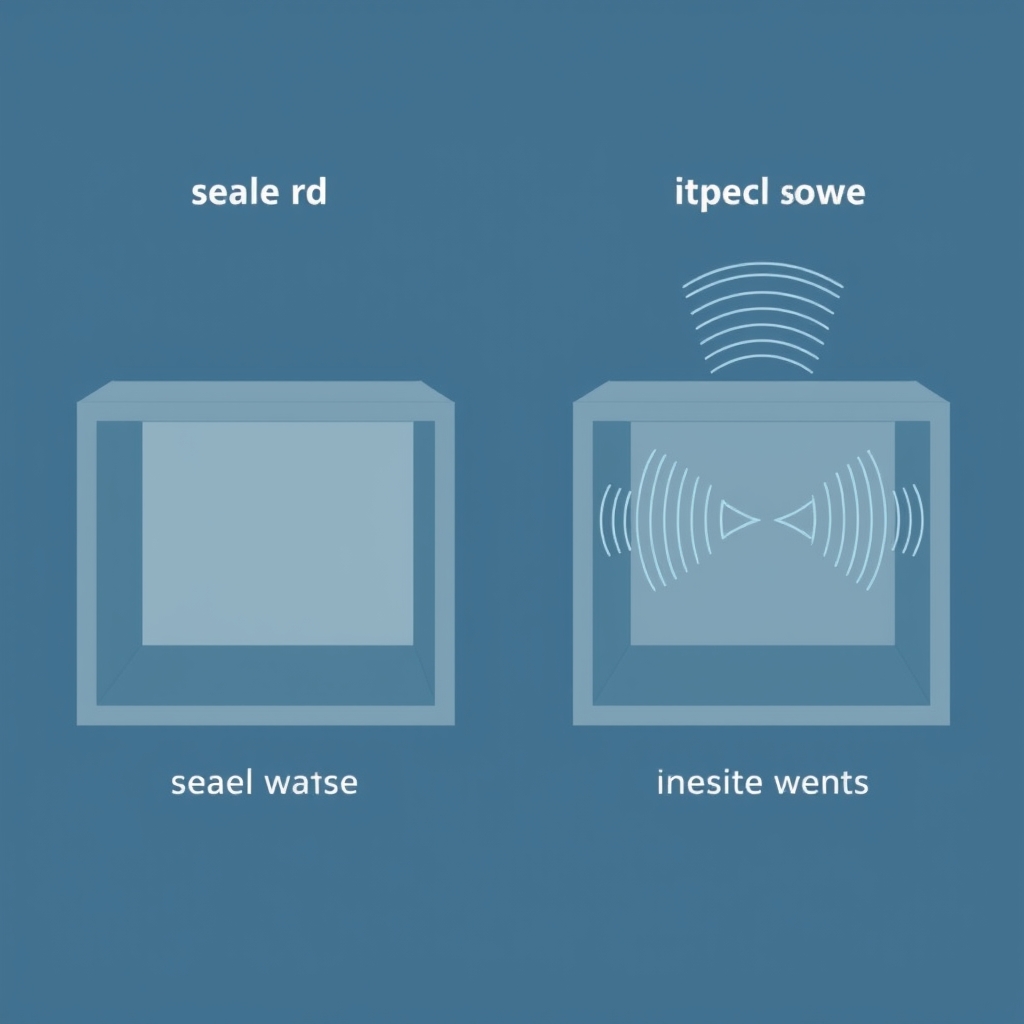
The real decision is simpler than the specs make it look: do you need a subwoofer that disappears into your living room and plays music well (sealed, smaller driver), or do you want one that handles big dramatic bass in a room built for it (ported, larger driver)? Answer that, match it to your space, and this will be one of the easier audio upgrades you make.