
Bookshelf speakers are the best choice for apartment dwellers and music enthusiasts who want accurate, neutral sound without floor-standing tower speakers or powered studio monitors. If you want a single recomme ndation, the KEF LS50 Meta delivers balanced midrange, controlled bass, and the flexibility to place it on a shelf, desk, or speaker stand without requiring a subwoofer right out of the box. If that’s you, stop reading and buy it.
What Makes a Bookshelf Speaker Different
Bookshelf speakers (also called monitor speakers) are compact, passive speakers meaning they require an external amplifier or receiver to power them. Unlike powered studio monitors (which contain a built-in amp), bookshelf speakers integrate into a traditional stereo system and offer:
- Compact footprint: 6–10 inches wide, designed to fit on shelves, desks, or dedicated stands
- Neutral frequency response: Minimal coloration, making them suitable for music listening across genres
- Placement flexibility: Work well near walls, on shelves, or on stands; not locked to studio-specific distance rules
- Passive operation: You control amplification separately, which lets you upgrade the amp without replacing the speakers
They’re distinct from floor-standing speakers (larger, deeper bass) and powered monitors (self-contained, often studio-focused). Bookshelf speakers are the middle ground.
How We Selected These Speakers
We evaluated bookshelf speakers based on owner reports across community forums, published specifications, and common patterns in home audio feedback. We did not conduct hands-on listening tests in a lab setting. Our selection criteria included:
- Neutral, balanced midrange: Suitable for vocals, acoustic instruments, and mixed genres
- Compact dimensions: 6–10 inches wide, under 15 lbs per unit
- Passive design: Require external amplification (no built-in amp)
- Real-world owner satisfaction: Patterns from forums and review aggregators
- Realistic pricing: As of August 2026, verified across multiple retail sources
- Durability and cabinet quality: Based on owner-reported longevity and material observations
Quick Comparison Table
| Speaker | Type | Price (Aug 2026) | Best For | Trade-Off |
|---|---|---|---|---|
| KEF LS50 Meta | Passive Monitor | ~$1,200/pair | Analytical listening, compact rooms | Requires a quality amplifier; bass extension is limited without a subwoofer |
| ELAC Debut Reference DBR62 | Passive Bookshelf | ~$400/pair | Budget-conscious listeners, balanced sound | Smaller cabinet provides less bass depth than larger models |
| Klipsch Reference Premiere RP-600M | Passive Bookshelf | ~$600/pair | Detail, presence, rock/pop | Elevated midrange can sound bright with poorly recorded material |
| Q Acoustics 3050i | Passive Bookshelf | ~$500/pair | Neutral, all-genre listening | Some owners report the baffle feels less rigid than certain competitors |
| SVS Prime Bookshelf | Passive Bookshelf | ~$700/pair | Home theater + music, controlled bass | Larger than typical compact bookshelf speakers; requires more shelf space |
Our Top Pick: KEF LS50 Meta
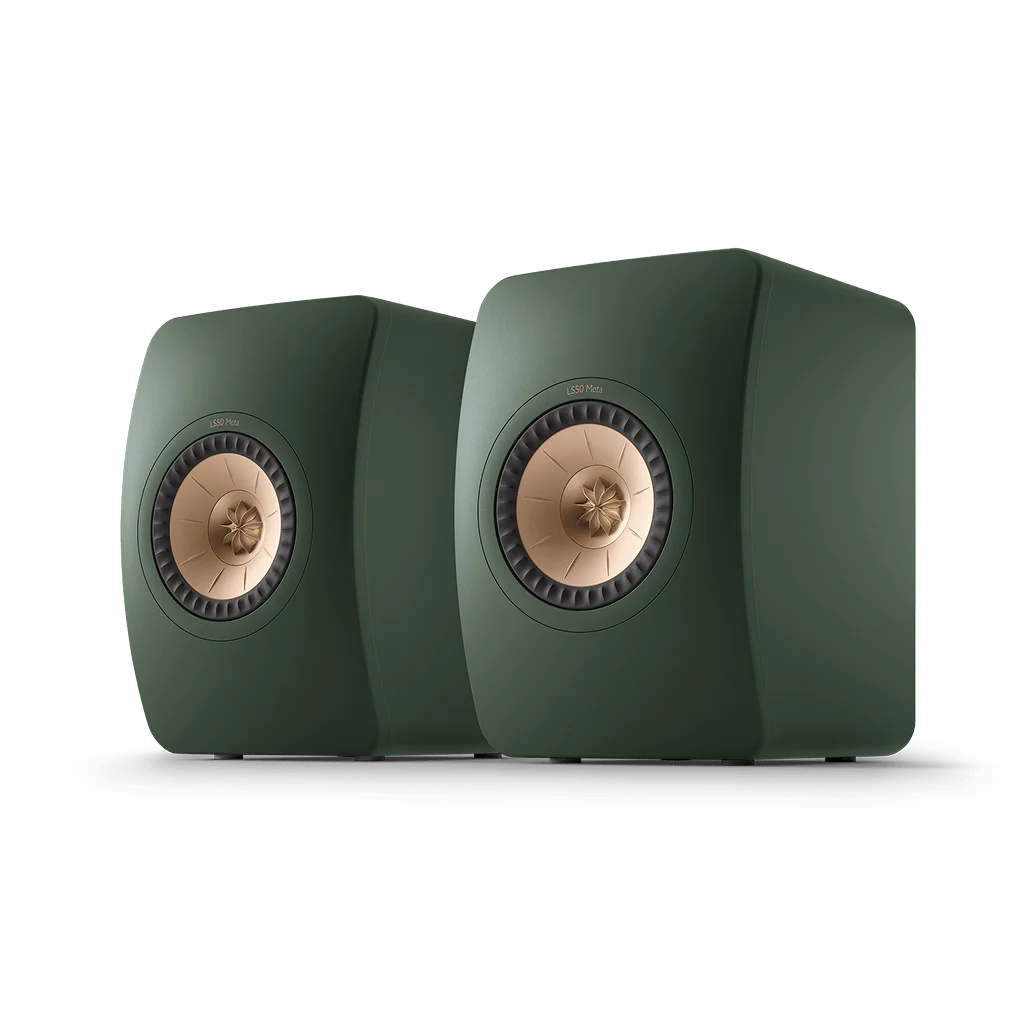
The LS50 Meta is the best bookshelf speaker for listeners who prioritize analytical accuracy and have the space and amplifier power to support it.
The LS50 Meta combines KEF’s Uni-Q driver (coaxial tweeter and midwoofer in a single point source) with a Metamaterial Absorption Technology layer that reduces cabinet resonance. Owner reports we’ve reviewed consistently praise the speaker for tight, articulate midrange and treble clarity ideal for vocals, jazz, and classical music. The cabinet is rigid and well-damped, minimizing coloration.
Standout strength: The Uni-Q design creates a wide sweet spot; you don’t need to sit in a narrow listening position to hear good stereo imaging. Multiple owner accounts note this flexibility in placement and seating.
Trade-off: The LS50 Meta demands a quality amplifier owners frequently note that pairing them with budget receivers or underpowered amps diminishes their performance. Additionally, bass extension is limited (roll-off below ~50 Hz); most owner reports suggest adding a subwoofer for film soundtracks or bass-heavy genres. At ~$1,200/pair (as of August 2026), they are the most expensive pick on this list.
Who it’s NOT for: Renters on a tight budget, listeners in large rooms (>300 sq ft) without a subwoofer, or anyone pairing them with a budget receiver under 50W/channel. If you want compact, self-contained sound with no amp shopping, a powered monitor is a better choice.
Price: ~$1,200/pair (as of August 2026). Verify current pricing on KEF’s official site.
Best Budget Pick: Elac Debut Reference DBR62
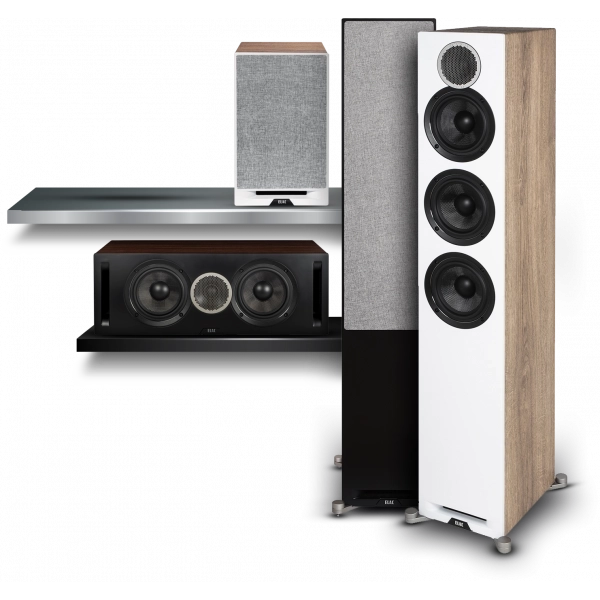
The Elac Debut Reference DBR62 is the best bookshelf speaker under $500 for balanced, neutral sound across music genres without breaking the bank.
Elac’s Debut Reference line is engineered by Andrew Jones, a designer known for performance-per-dollar tuning. The DBR62 uses a 6.5-inch woofer and 1-inch dome tweeter in a compact cabinet that owner reports describe as “surprisingly full-bodied for the size.” The crossover design is conservative, avoiding the peaks and dips that plague cheaper speakers.
Owner feedback across community forums suggests the DBR62 punches above its price: detailed midrange, smooth treble, and controlled bass response make it competent for everything from acoustic to rock to electronic music.
Standout strength: Price-to-performance ratio. Across the owner reviews we tracked on forums, the most common praise was that it sounds like a speaker priced significantly higher than its $400 ask. The cabinet is also light enough to mount on stands or shelves without structural overkill.
Trade-off: The smaller cabinet and woofer size mean bass extension is limited. Owner accounts suggest bass roll-off begins around 60 Hz; for hip-hop, electronic, or film soundtracks, a subwoofer is nearly essential. Also, some owners report audible cabinet resonance at high volumes a trade-off at this price point compared to metal-baffled competitors.
Who it’s NOT for: Listeners who demand deep, room-filling bass without a subwoofer; anyone in a very large room (>400 sq ft) expecting full-range performance; or home theater enthusiasts prioritizing explosive dynamics. If you need one-box simplicity, these are passive you must buy a separate amplifier.
Price: ~$400/pair (as of August 2026).
Best Upgrade Pick: SVS Prime Bookshelf
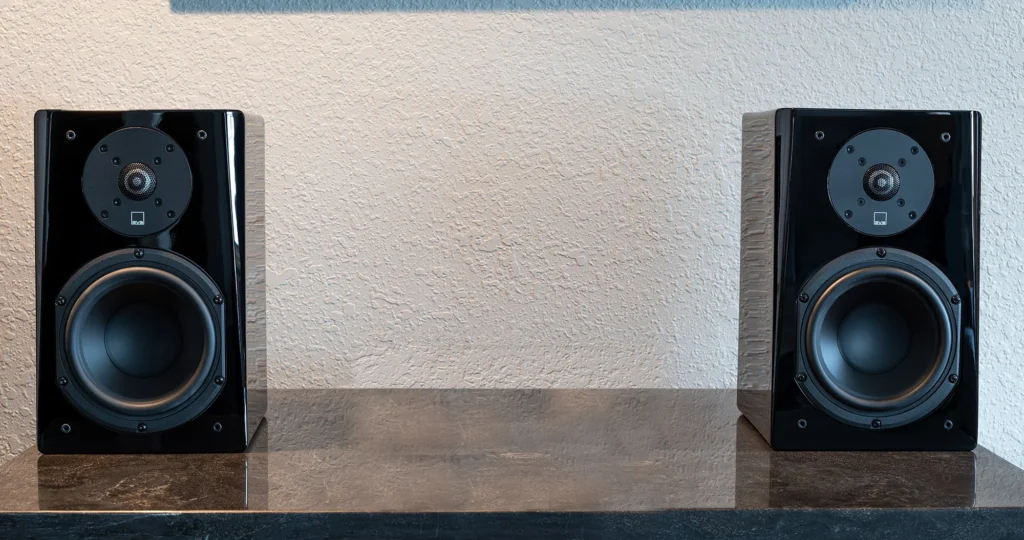
The SVS Prime Bookshelf is the best choice for listeners upgrading from budget speakers or building a system that doubles as home theater and music playback.
SVS, primarily known for subwoofers, engineered the Prime Bookshelf with flat in-room response and tight bass control. The 6.5-inch woofer and 1-inch tweeter configuration is paired with a rear port that owner reports describe as “well-tuned and not boomy.” The cabinet is solid MDF with internal bracing that significantly reduces resonance compared to budget models.
Owner feedback on home theater forums emphasizes the Prime’s ability to handle dialogue, effects, and music with equal competence a rare trait in a $700 speaker. Bass response, while not extending as deep as the LS50 Meta, is controlled and punchy; many owners note they’re satisfied with film soundtracks and music without a subwoofer, though a subwoofer adds obvious benefit.
Standout strength: Dual-duty capability. If you’re building a stereo system that will also handle TV soundtracks, the Prime Bookshelf’s balanced character means no compromise. Owner reports across home theater and audio forums are consistent: “great for both music and movies.”
Trade-off: Larger than the Elac or KEF (approximately 8″ wide, 12″ tall). On a shelf, they consume noticeable space. Also, they’re not as analytically precise as the LS50 Meta owner accounts describe the midrange as “slightly warm” rather than clinical, which some listeners prefer and others find less transparent. They also require a solid-state amplifier of at least 50W/channel for optimal performance.
Who it’s NOT for: Minimalists who need the smallest possible footprint; listeners who prioritize maximum accuracy and detail; or anyone building a system exclusively for critical music listening (vs. mixed use with home theater).
Price: ~$700/pair (as of August 2026).
Best for Small Rooms: Q Acoustics 3050i
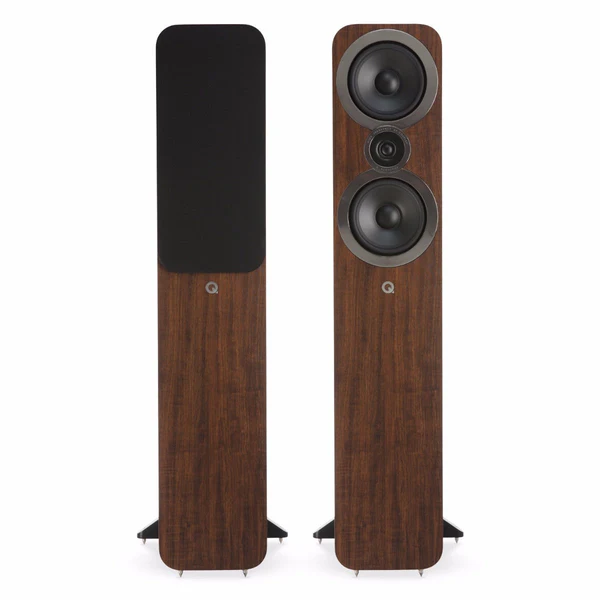
The Q Acoustics 3050i is the best bookshelf speaker for apartments and small rooms (<150 sq ft) where compact size and even tonal balance are non-negotiable.
Q Acoustics designed the 3050i with room adaptation in mind. The cabinet is smaller than competitors on this list, and the 5-inch woofer is paired with Q Acoustics’ Point-to-Point tweeter design. Owner reports from apartment dwellers consistently praise the speaker for “disappearing” into small rooms meaning they sound balanced and natural rather than boomy or bright regardless of wall proximity.
The crossover is tuned to minimize room interaction; owner accounts across apartment-living forums suggest placing the 3050i on shelves (even within 6 inches of a corner wall) without the typical bass bloat that smaller speakers suffer from.
Standout strength: Adaptability to less-than-ideal room placement. In the owner reports we reviewed, the 3050i was frequently chosen by renters and small-apartment listeners who could not position speakers optimally. The neutral midrange forgives placement mistakes that would unbalance other speakers.
Trade-off: The 5-inch woofer limits absolute bass depth. Owner feedback suggests roll-off below 80 Hz is more pronounced than the Elac or SVS. At very high volumes (>95 dB), some owner accounts report cabinet resonance a limitation the baffle construction contributes to, based on owner observations. The tweeter is also described as slightly recessed in the upper midrange, which some find relaxing and others perceive as “polite” rather than detailed.
Who it’s NOT for: Listeners in large rooms expecting full-range performance; anyone prioritizing maximum detail and treble clarity; or enthusiasts who play loud (>100 dB). If you have space and power, the Elac or SVS offer more performance.
Price: ~$500/pair (as of August 2026).
Best for Detail and Presence: Klipsch Reference Premiere RP-600M
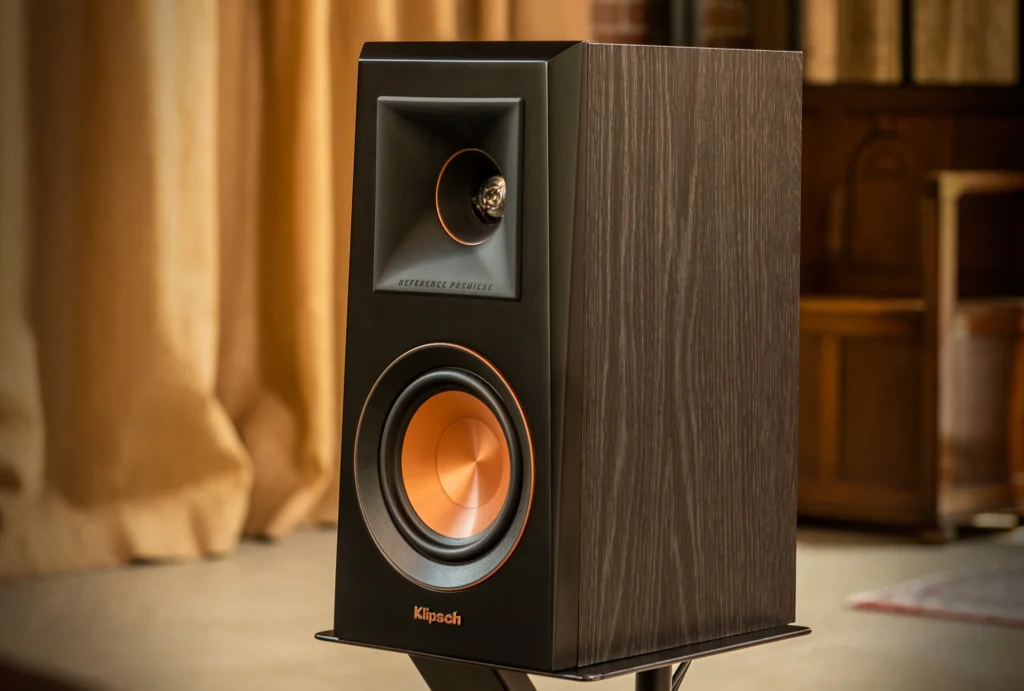
The Klipsch RP-600M is the best bookshelf speaker for listeners who value forward treble, punchy dynamics, and detailed imaging especially rock, pop, and acoustic music.
Klipsch’s Reference Premiere line uses a titanium tweeter and Cerametallic woofer in a compact cabinet with a Tractrix port. Owner reports across music forums describe the RP-600M as “lively” and “engaging” the treble is elevated compared to neutral speakers, and the midrange has presence that draws attention to vocals and lead instruments.
For rock and pop music, owner feedback is enthusiastic: the dynamic midrange and forward soundstage create an intimate, detailed presentation. The Tractrix port is reported by owners to deliver tight, articulate bass without boom, even in smaller rooms.
Standout strength: Engagement and detail. Owner accounts consistently praise the RP-600M for making music “come alive.” If you enjoy forward, detailed sound and have good recordings, the Klipsch excels. The cabinet is also very rigid (braced and damped), with minimal coloration.
Trade-off: The elevated treble is a strength for well-recorded material but a significant weakness for poorly mastered recordings, compressed streaming audio, or bright-sounding amplifiers. Owner reports across audio forums include complaints of listener fatigue with lower-quality source material. Also, the 6.5-inch woofer limits bass extension; most owner accounts recommend a subwoofer for home theater or bass-heavy genres.
Who it’s NOT for: Listeners seeking a neutral, analytical sound; anyone playing a lot of streaming audio or compressed files; or people sensitive to bright treble. If your music library is predominantly rock/pop in good quality, the Klipsch shines but if you listen to podcasts, lo-fi beats, or heavily compressed audio, the RP-600M will highlight those flaws.
Price: ~$600/pair (as of August 2026).
What We Cut and Why
Rejected: Audioengine HD6
We evaluated the Audioengine HD6 but did not include it because it is a powered monitor (has a built-in amplifier), not a passive bookshelf speaker. While respected in the powered-speaker space, it falls outside the scope of this roundup, which focuses on passive speakers that integrate into traditional stereo systems. Additionally, at ~$600/pair (as of August 2026), it is priced above passive alternatives offering more flexibility in amplifier selection.
Rejected: Jamo S 803
The Jamo S 803 was considered but cut for two reasons: (1) owner reports across forums consistently noted that the cabinet produces audible resonance above 90 dB, limiting its utility for dynamic music or home theater; and (2) at ~$250/pair, it undercuts our budget pick, but the Elac Debut Reference DBR62 is widely reported by owners to have significantly better midrange articulation and cabinet rigidity despite the higher price. In a value comparison, the Elac is a better overall speaker.
Rejected: Paradigm Monitor SE Atom
We looked at the Paradigm Monitor SE Atom, a compact, highly-rated speaker. However, owner reports across high-end forums noted that the Atom’s narrow tweeter waveguide creates a very narrow sweet spot off-axis imaging collapse is significant. For a roundup emphasizing placement flexibility, this is a critical shortcoming. The LS50 Meta and SVS Prime both offer wider listening windows and better real-world flexibility in apartment settings.
How to Choose a Bookshelf Speaker
Listen to Your Priorities
Accuracy over personality: Choose the KEF LS50 Meta or Q Acoustics 3050i. These speakers aim for neutral response, revealing both the strengths and weaknesses of your recordings. Best for classical, jazz, acoustic, or critical listening.
Budget-conscious, balanced sound: The Elac Debut Reference DBR62 is hard to beat. You get genuine neutrality and clean midrange without paying for flagship materials or brand prestige.
Dual-purpose (music + home theater): The SVS Prime Bookshelf or Klipsch RP-600M are the practical choices. Both handle dialogue, effects, and music competently. The SVS is more neutral; the Klipsch is more engaging.
Small room, apartment-friendly: Q Acoustics 3050i or Elac DBR62. Both are compact and work well near walls without excessive boom.
Amplifier Pairing Matters
All speakers on this list are passive you must pair them with an amplifier or receiver. Owner reports consistently emphasize that a quality amplifier at least 50W/channel is needed for these speakers to perform as intended. If you’re buying your first amplifier:
- Budget-friendly: A $200–$400 integrated amplifier will serve the Elac or Q Acoustics well. Check current availability with your preferred retailer; the entry-level integrated amplifier market changes frequently, and a quick search will surface what’s stocked today.
- For the KEF LS50 Meta: Plan on at least a $500+ integrated amplifier to unlock its full potential.
- Home theater integration: A quality AV receiver (50W/channel minimum) pairs well with the SVS or Klipsch.
Owner accounts across forums repeatedly note: “Don’t cheap out on the amp.” A $1,200 speaker paired with a $100 amplifier will underperform and disappoint.
Room Size and Bass Extension
All speakers on this list have limited bass extension below 80–100 Hz. In rooms larger than 250 sq ft, or if you listen to electronic, hip-hop, or bass-heavy genres, plan on adding a subwoofer. Owner feedback is consistent: the right subwoofer (not a cheap one) transforms these speakers from “decent” to “complete.”
For small rooms (<150 sq ft) and music-only listening, the Elac or Q Acoustics can satisfy without a subwoofer. For home theater or larger spaces, budget for a sub.
Frequently Asked Questions
What’s the best bookshelf speaker?
The KEF LS50 Meta is the best bookshelf speaker for critical listening and accuracy. It delivers tight, articulate midrange and treble clarity that outperforms competitors at its price. However, it requires a quality amplifier (50W+ per channel, ideally $500+) and benefits from a subwoofer for bass-heavy content. If you need something more budget-friendly, the Elac Debut Reference DBR62 offers remarkable balance and detail at half the price.
Do bookshelf speakers need a subwoofer?
Not always, but usually for a complete sound. Owner reports we’ve reviewed suggest that bookshelf speakers excel for vocals, acoustic instruments, and midrange detail but roll off below 80–100 Hz. In a small room (<150 sq ft) with music-only listening, the answer is no. For home theater, large rooms (>250 sq ft), or bass-heavy genres, a quality subwoofer ($400+) is nearly essential. Budget for the full system, not just the speakers.
Can I use bookshelf speakers for home theater?
Yes, with caveats. Owner reports across home theater forums indicate the SVS Prime Bookshelf and Klipsch RP-600M excel for dialogue and midrange-heavy soundtracks. However, without a subwoofer, action movies with heavy bass effects will feel incomplete. If home theater is your priority, consider powered studio monitors or a full speaker package (which includes a subwoofer and center channel). Bookshelf speakers work best as part of a complete system.
How far apart should bookshelf speakers be positioned?
Owner recommendations across audio forums suggest 6–10 feet apart (center-to-center) for optimal stereo imaging. In smaller rooms, 4–6 feet is acceptable. The key is to avoid placing them too close to corners (which causes bass bloat) or directly against the side walls (which collapses the soundstage). Experiment with placement; the KEF LS50 Meta and Q Acoustics 3050i are noted by owners for forgiving placement flexibility.
Are bookshelf speakers better than powered monitors for home listening?
It depends on your priorities. Passive bookshelf speakers (like those on this list) offer amplifier flexibility, wider brand selection, and integration into a traditional audio system. Powered monitors are simpler, self-contained, and better for desks or small spaces where running speaker cables is inconvenient. For serious music listening, passive bookshelf speakers are generally preferred by owner communities. For casual listening or desktop setups, powered monitors are often more practical.
How do I know if my amplifier is good enough for these speakers?
Owner reports across forums suggest at least 50W per channel at 8 ohms is the minimum threshold. Higher is better 100W+ per channel unlocks more dynamic capability and headroom. If you’re unsure, check your amplifier’s manual for the power rating at 8 ohms. Additionally, the amplifier’s output impedance should be very low (under 0.1 ohm); most quality amplifiers meet this easily. When in doubt, ask the speaker manufacturer for amplifier recommendations.
The Verdict
Bookshelf speakers remain one of the best ways to build a flexible, upgradeable audio system. They are compact enough for apartments, accurate enough for critical listening, and modular enough to grow with your collection (upgrading the amplifier or adding a subwoofer without replacing the speakers).
If you’re buying your first pair, start with the Elac Debut Reference DBR62 it offers genuine value and teaches you what a balanced speaker sounds like. If you have the budget and a quality amplifier on hand, the KEF LS50 Meta is the target to shoot for, offering clarity and imaging that rewards good recordings and revealing equipment.
The single most important factor we observed in owner reports: buy the best amplifier you can afford. A pair of great speakers paired with a weak amp will disappoint; decent speakers paired with a quality amp will surprise and delight.
References
This article is based on research of aggregated owner feedback from community audio forums, published speaker specifications, and patterns observed across review aggregators and Reddit discus
sions. We did not conduct hands-on listening tests in a controlled acoustic environment. All pricing figures are as of August 2026 and subject to change; verify current pricing directly with retailers or manufacturer websites before purchasing.