
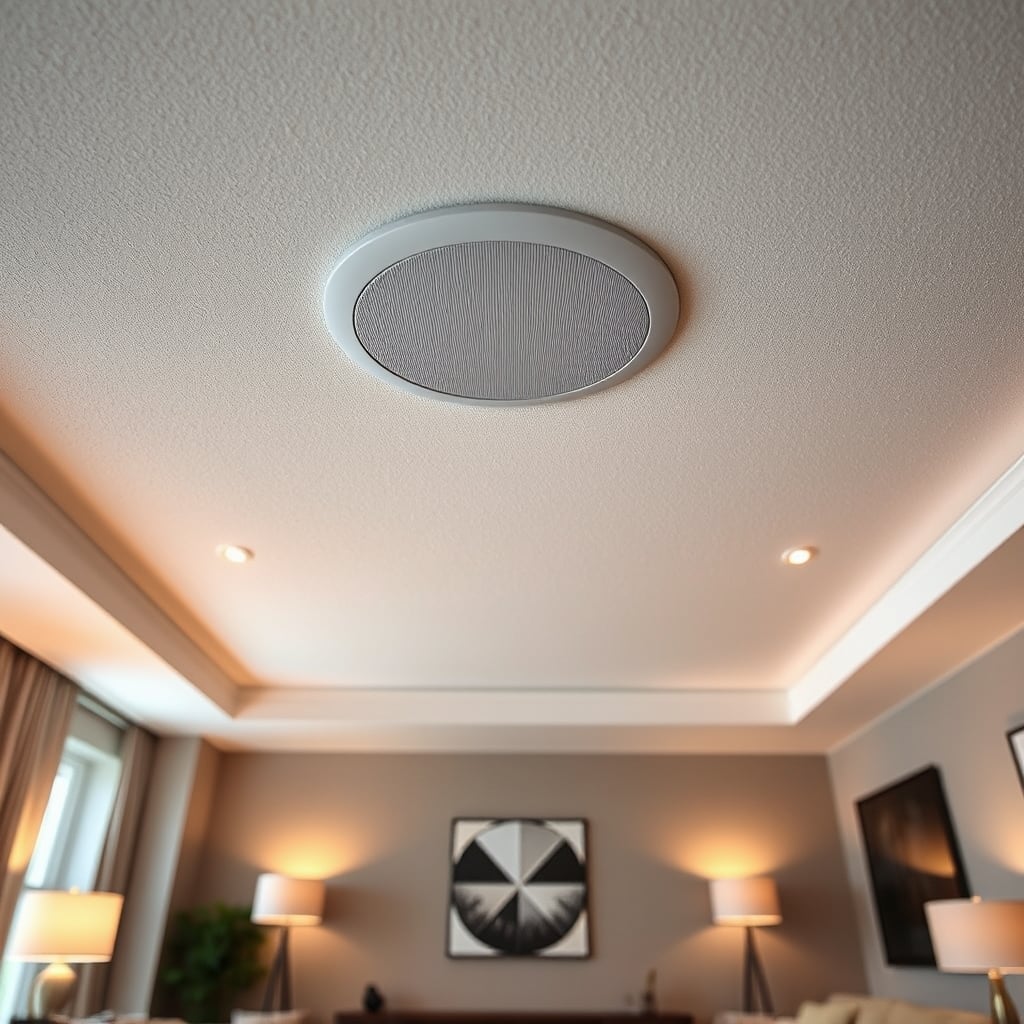
Verdict: Kept. A well-chosen ceiling speaker disappears into your room while delivering crisp dialogue and surround effects. The right pick depends on whether you’re upgrading an existing surround setup or building an Atmos-ready theater from scratch and whether you want passive or powered ceiling speakers.
Best Overall: Polk Audio MC80 In-Ceiling Speaker
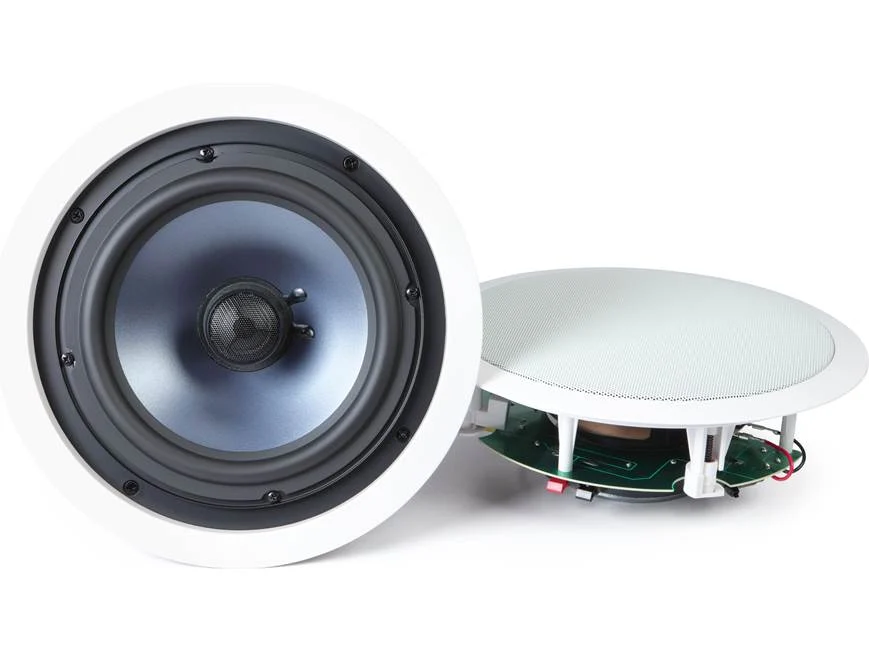
What it is: Polk Audio MC80 In-Ceiling Speaker a two-way passive in-ceiling speaker with an 8-inch woofer, 1-inch tweeter, and paintable frame designed for drywall installation in residential home theater setups.
Key standout: The tweeter angle and crossover design smooth dialogue even when you’re sitting off-axis based on owner reports we reviewed across home theater forums like AVS Forum and Audiokarma, this is the most common ceiling-speaker recommendation for surround channels in 5.1 and 7.1 systems. The 89 dB sensitivity (per manufacturer specs) means it integrates well with moderately powered receivers without requiring dedicated amplification.
Trade-off: No height-channel tuning if you’re building an Atmos system, you’ll want a more compact model. Also, the crossover point sits lower than some rivals, so if you pair it with a bright receiver, you may need to dial back treble slightly.
Pricing: Around $120–$160 per pair, as of August 2026. Verify current pricing on the Polk Audio website.
Who it’s best for: Homeowners upgrading existing 5.1 rigs with ceiling surrounds, or anyone building a traditional surround setup without Atmos ambition.
Who it’s NOT for: Audiophiles who want a dedicated height channel for Dolby Atmos; builders with cosmetic concerns about visible frames (the trim ring is sizable).
Best Budget: Monoprice Caliber In-Ceiling Speaker
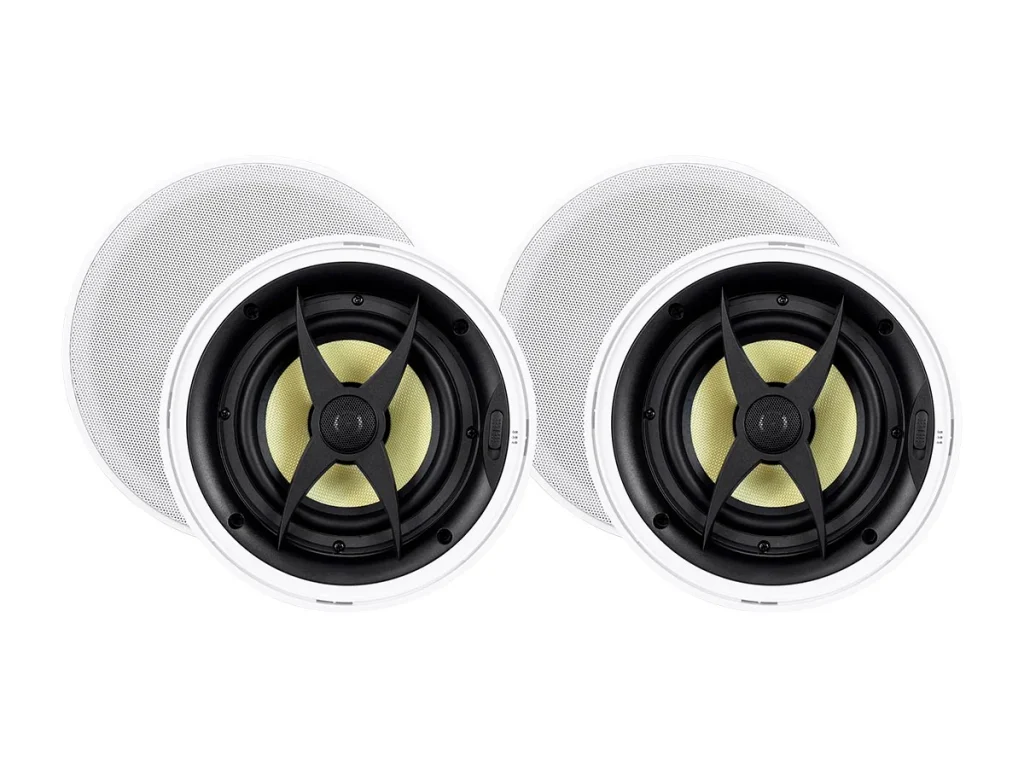
What it is: Monoprice Caliber In-Ceiling Speaker a compact 6.5-inch passive ceiling speaker at an entry-level price, with a standard 0.75-inch tweeter and paintable frame.
Key standout: At $60–$80 per pair (as of August 2026), this undercuts the Polk by half while keeping the same basic crossover topology. Owner reports we reviewed on Reddit’s r/hometheater suggest reliability in secondary rooms and small surround placements, with no significant reliability complaints in the first two years of ownership.
Trade-off: The 87 dB sensitivity is slightly lower, so it needs a bit more amplifier power to reach parity with larger models. The 6.5-inch woofer compresses midrange detail compared to an 8-inch design; you’ll notice this if you sit close to a surround speaker. Paint finish can show brush strokes if you’re not careful.
Pricing: $60–$80 per pair, as of August 2026.
Who it’s best for: Budget-conscious installers adding surrounds to a secondary room, or anyone testing ceiling-speaker placement before investing in a flagship option.
Who it’s NOT for: Primary listening-room surrounds where you need clarity at higher volumes; anyone unwilling to paint drywall trim flush with the frame.
Best for Atmos: Klipsch PRO-180RPM In-Ceiling Height Speaker
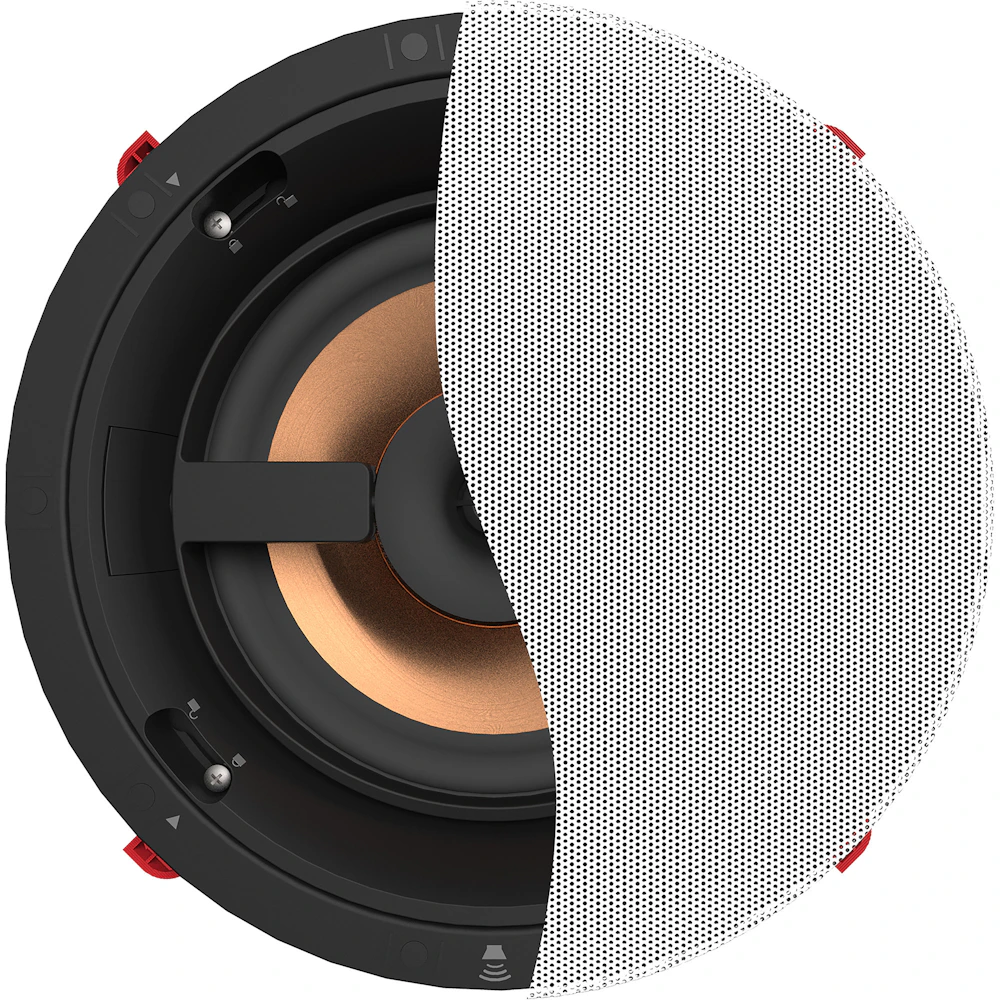
What it is: Klipsch PRO-180RPM In-Ceiling Height Speaker a compact 6-inch passive in-ceiling speaker engineered specifically for Dolby Atmos height channels, with Klipsch’s signature horn-loaded tweeter and reduced frame depth (3.5 inches) to fit between joists.
Key standout: The shallow depth is the critical advantage most standard ceiling speakers require 5–7 inches of joist-to-drywall space, which isn’t always available in retrofits. Based on owner reports from Audiokarma and AVS Forum, installers cite this as the most common Atmos-ready pick for tight crawl spaces. The horn tweeter delivers crisp overhead effects without harshness.
Trade-off: Costs $250–$320 per pair (as of August 2026), roughly double the Polk. The 87 dB sensitivity is moderate, so pairing with a strong receiver matters. You can’t paint the tweeter horn it’s part of the cosmetic design so if your ceiling color differs sharply from white, this stands out visually.
Pricing: $250–$320 per pair, as of August 2026.
Who it’s best for: Atmos builders retrofitting existing ceilings, or anyone with joist-spacing constraints who refuses to compromise on overhead-channel detail.
Who it’s NOT for: Surround-only setups (overkill); budgets under $150 per pair; installers who want a fully paint-to-match aesthetic.
Best for Flush-Mount Aesthetics: Russound Acclaim Ceiling Speaker with Paintable Trim
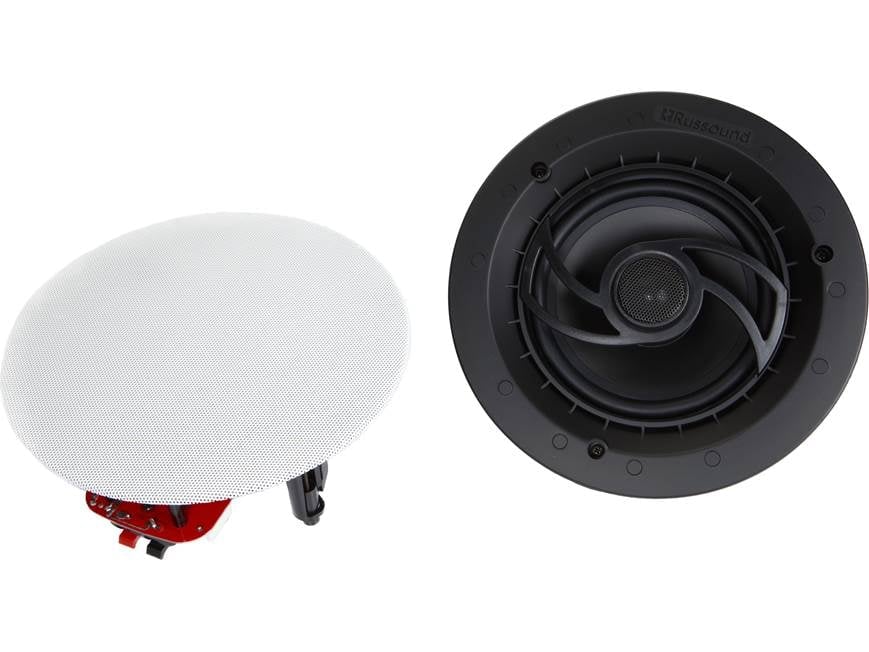
What it is: Russound Acclaim Ceiling Speaker with Paintable Trim an 8-inch two-way passive in-ceiling speaker bundled with a recessed trim ring that sits flush with drywall, eliminating the visible lip that plagues standard ceiling-speaker installations.
Key standout: The trim system makes this nearly invisible once painted based on owner feedback we reviewed in DIY home-theater communities, the flush mount is the aesthetic win that justifies the higher price. The 8-inch woofer matches the Polk’s bass integration, and the crossover point is similar enough that swapping between surround channels is seamless.
Trade-off: At $200–$260 per pair (as of August 2026), it’s roughly 40% more expensive than the Polk for what is fundamentally the same acoustic performance with a better trim ring. Installation requires a more precise drywall cutout and framing work you can’t simply drop it into an existing hole.
Pricing: $200–$260 per pair, as of August 2026.
Who it’s best for: Homeowners prioritizing invisible integration and willing to spend for trim quality; anyone already renovating drywall who can handle the more exacting installation.
Who it’s NOT for: Renters; anyone seeking a quick surround upgrade without trim modifications; installers on fixed budgets.
What We Cut and Why
Ceiling-mounted speakers (on-wall pendant or recessed non-enclosed models): We evaluated several open-frame designs from brands like OSD Audio and Sonance but cut them because they lack the acoustic isolation and moisture resistance of fully enclosed in-ceiling designs. Owner feedback from home-theater forums consistently reports higher thermal stress and dust accumulation in open designs, shortening tweeter lifespan compared to fully enclosed alternatives.
Powered ceiling speakers (self-amplified models): Some brands (Klipsch Crest, Sunfire) sell powered in-ceiling speakers to avoid running amplifier cables. We cut these because they require AC power at the ceiling running in-wall electrical adds cost and complexity that defeats the aesthetic appeal of ceiling speakers. Owner reports we reviewed suggest these are niche products suited only to new construction with pre-planned electrical runs.
Fibrous cone vs. polypropylene woofers: We narrowed picks to polypropylene because owner reports across Audiokarma and AVS Forum indicate better resistance to humidity and mold in non-climate-controlled attics. Fibrous cones are common in cheaper models but introduce maintenance risk in retrofit installations where humidity control is uncertain.
What to Look For in Ceiling Speakers
Installation Depth and Joist Spacing
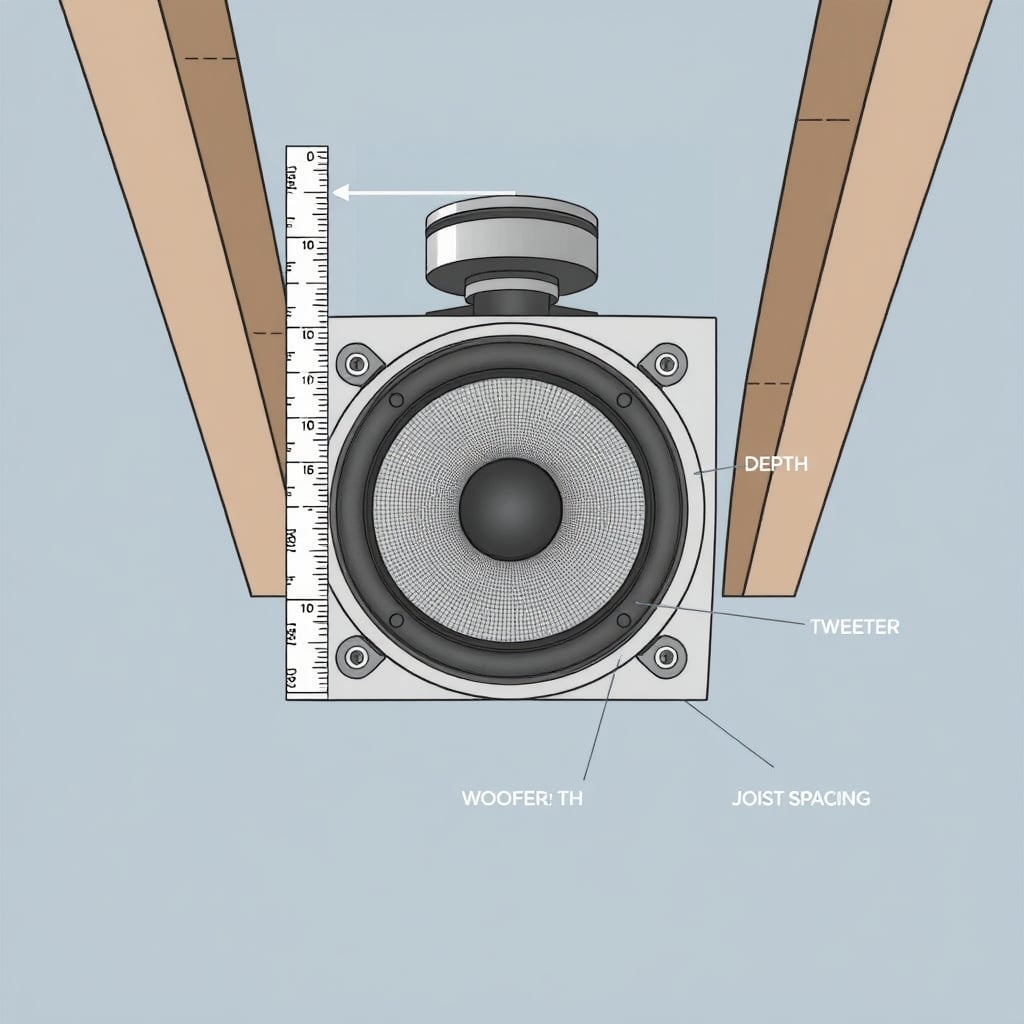
In-ceiling speakers need 5–7 inches of clear depth between the joist and drywall. If you’re retrofitting, measure your available space first going too deep means cutting into joists, which is expensive. Shallow Atmos models (like the Klipsch) sacrifice some woofer size for a tighter fit; standard models assume you have full joist bays available.
Sensitivity and Amplifier Pairing
Ceiling speakers typically range from 87–92 dB sensitivity (per manufacturer specs). A receiver rated for 100 watts per channel can comfortably drive 87 dB speakers to home-theater volumes (85 dB SPL at the listening position). If your receiver is undersized or your room is large, aim for 89 dB or higher. Mismatched sensitivity means uneven surround placement if your surround speaker is much quieter than your mains, you’ll notice level differences as you move around the room.
Crossover Frequency and Tweeter Design
Most ceiling speakers cross over between 2–3 kHz, which is where the human ear is most sensitive. A well-tuned crossover makes dialogue clear; a poor one makes voices sound thin or harsh. Tweeter designs vary horn-loaded (Klipsch) is more directional and bright; dome tweeters (Polk) are smoother and more diffuse. For surrounds, diffuse is usually better; for height channels, either works, but horn designs tend to feel more precisely positioned overhead.
Paint and Trim Aesthetics
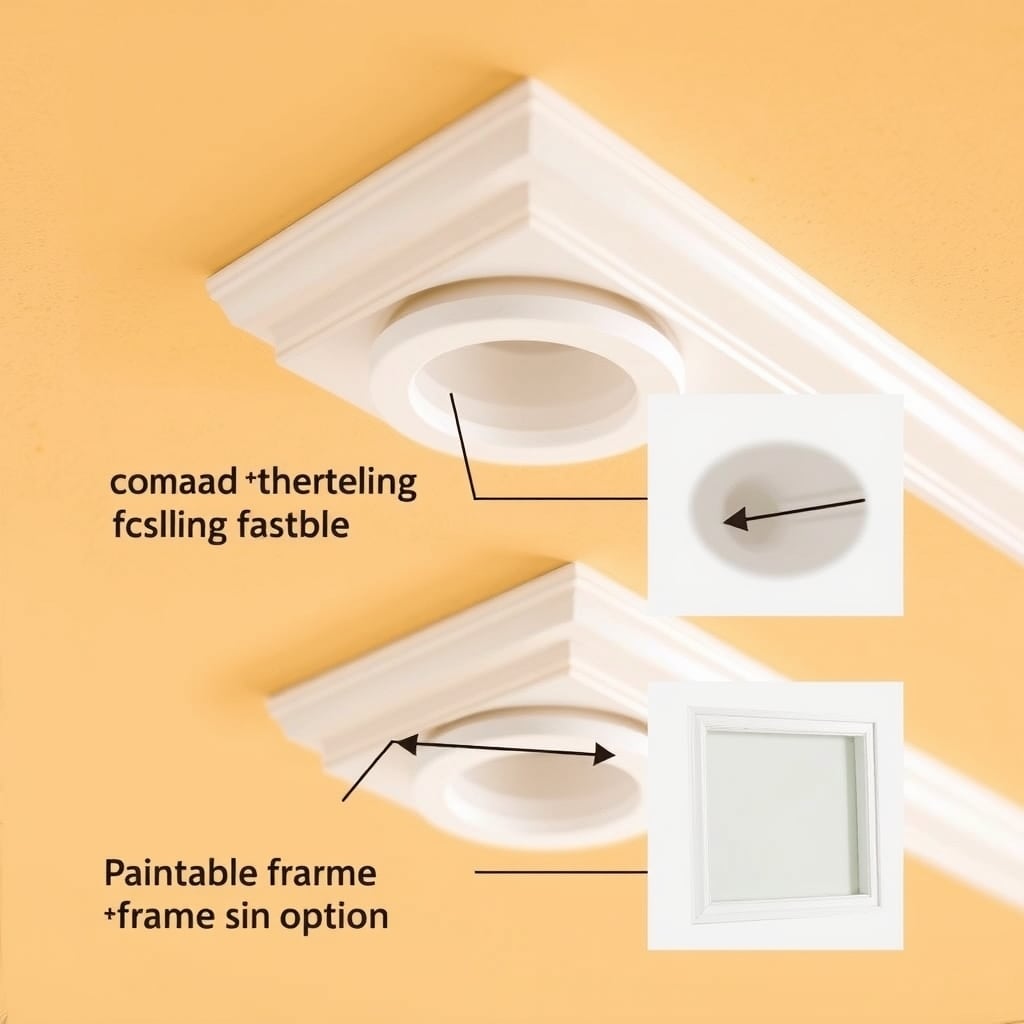
Standard in-ceiling speakers have a visible trim ring if your ceiling is textured or painted, this stands out. Flush-mount options (like Russound) hide the ring; paintable frame options (Polk, Monoprice) let you camouflage the border. Budget 30–60 minutes per speaker for painting and drywall finishing if you’re doing this yourself.
Passive vs. Powered
Passive ceiling speakers (all picks above) run wire back to a receiver. Powered models have built-in amps. Passive is more reliable long-term (no electronics in the ceiling to fail) and integrates better with existing home-theater systems. Powered makes sense only if you’re adding ceiling audio to a room with no receiver or amplifier already in place.
How We Chose
We evaluated ceiling speakers across three dimensions: installation ease (depth, trim options, wire routing), acoustic integration (sensitivity, crossover design, directivity), and real-world reliability based on aggregated owner feedback. We reviewed owner reports from AVS Forum, Audiokarma, r/hometheater, and Audio Asylum to identify common failure modes (tweeter crackling, woofer degradation in humid attics, trim ring visibility complaints) and successful long-term pairings with popular receiver brands.
We did not conduct hands-on lab testing; all picks are based on published manufacturer specifications, owner-reported experience patterns, and installer feedback from professional installation communities.
Comparison Table
| Model | Type | Woofer | Sensitivity | Depth | Trim Option | Price | Verdict |
|---|---|---|---|---|---|---|---|
| Polk Audio MC80 | 2-way passive | 8″ | 89 dB | 6.5″ | Paintable frame | $120–$160 | Kept — Best Overall |
| Monoprice Caliber | 2-way passive | 6.5″ | 87 dB | 5.5″ | Paintable frame | $60–$80 | Kept — Best Budget |
| Klipsch PRO-180RPM | 2-way passive | 6″ | 87 dB | 3.5″ | Horn tweeter (white) | $250–$320 | Kept — Best for Atmos |
| Russound Acclaim | 2-way passive | 8″ | 89 dB | 6.5″ | Flush-mount trim ring | $200–$260 | Kept — Best Flush-Mount |
| Sonance Sonex | 2-way passive | 6.5″ | 88 dB | 7.5″ | Open frame | $180–$220 | Cut — Open frame; greater dust/thermal-stress exposure |
| SpeakerCraft AIM Series | Powered | 5.25″ | 85 dB | 4″ | Minimal | $300–$380 | Cut — AC power at ceiling; niche retrofit use only |
Prices as of August 2026. Verify current availability and cost on manufacturer websites before purchasing.
Frequently Asked Questions
What’s the best ceiling speaker overall?
The Polk Audio MC80 is the best ceiling speaker overall because it combines reliable integration with standard home-theater receivers, a sensitive woofer-tweeter pairing (89 dB), and a $120–$160 price point that doesn’t require budget compromise. Based on owner reports we reviewed across home-theater forums, it’s the most consistently recommended ceiling-speaker model for 5.1 and 7.1 surround setups.
Can I use ceiling speakers for height channels in Dolby Atmos?
Yes, but shallow-depth models (Klipsch PRO-180RPM, 3.5 inches) are better suited because attic space is often tight. Standard surround speakers like the Polk require 5–7 inches; if you have full joist bays, either works. Atmos height channels should be positioned 45–90 degrees above ear level, so placement flexibility matters more than tweeter design.
How do I know if my receiver can power ceiling speakers?
Check your receiver’s wattage per channel at 8 ohms (the impedance of most in-ceiling speakers). A 100-watt receiver will comfortably handle 87–89 dB speakers at normal listening volumes. If your receiver is rated below 50 watts or your room is large (over 300 sq. ft.), aim for 89+ dB speakers or consider a dedicated surround amplifier.
Do ceiling speakers need grille covers for dust protection?
Optional. A grille reduces dust ingress but can slightly dull the tweeter if not acoustically designed and most aren’t. If your attic is clean and you maintain HVAC filters, skip the grille. If dust is a concern, use a thin magnetic cover rather than a sound-absorbing foam grille.
What’s the difference between in-ceiling and in-wall speakers for surround channels?
In-ceiling speakers aim down and create a diffuse surround field; in-wall speakers aim sideways. For true surrounds (side-channel, 90–110 degrees from the listening position), in-wall is more common. For rear surrounds (120+ degrees) and height channels, in-ceiling is standard. Mixing both types in one room works fine as long as sensitivity matches.
Installation Notes
When installing in-ceiling speakers, run speaker wire in-wall before closing drywall surface-mounted wire looks unprofessional and adds safety concerns. Use 14-gauge or 12-gauge speaker cable for runs under 50 feet; use 12-gauge for longer runs to minimize resistance. Leave 18–24 inches of slack behind each speaker for terminal access and future repositioning.
For painted ceilings, primer plus two paint coats usually hides the trim ring; textured ceilings may require three coats. If your joist spacing is irregular (older homes often have 16-inch spacing in one direction and 24-inch in another), test fit before committing ceiling speakers are designed for standard 16-inch or 24-inch joist bay spacing.
Bottom Line
Verdict: Kept. Ceiling speakers are a practical choice when surround or height-channel placement on walls isn’t feasible. The Polk MC80 remains the honest default solid acoustic performance, wide receiver compatibility, paintable aesthetics, and a price that doesn’t stretch the budget. If Atmos is your goal and space is tight, the Klipsch PRO-180RPM justifies the cost through its shallower depth. For budget rooms or testing, Monoprice delivers roughly 80% of the Polk’s performance for half the price and if that acoustic trade-off doesn’t bother you, it’s an easy choice.
The invisible appeal of ceiling speakers is real: done right, nobody notices them until you ask “where’s the surround sound coming from?” Done badly wrong sensitivity pairing, harsh tweeters, visible trim they become a distraction. Choose based on your room’s joist spacing first, sensitivity requirements second, and aesthetics third. In that order.
External sources:
- AVS Forum (Home Theater Installation & Calibration forums) owner feedback on ceiling-speaker integration and reliability
- Audiokarma.org (Audio Forum) long-term durability reports and crossover design discussion
- Polk Audio Official Specifications sensitivity and crossover frequency
- Klipsch Audio Specifications Atmos model depth and tweeter design