

An ergonomic phone stand elevates your phone to eye level, eliminating the downward head tilt that causes neck strain and eye fatigue during extended work. If you’re spending 6+ hours daily at a desk, the wrong phone position adds cumulative stress to your cervical spine and strains your eyes through constant refocusing.
We researched and compared the leading ergonomic phone stands based on adjustability, base stability, height range, viewing-angle flexibility, and real-world durability. Below are six standout options, a breakdown of what we cut and why, and a buyer’s guide to choosing the right stand for your setup.
What Makes a Phone Stand Ergonomic?
Before diving into picks, here’s what separates an ergonomic stand from a basic holder:
Eye-Level Positioning Your phone screen should sit at or slightly below your natural eye level when you’re sitting upright. This reduces head flexion and the sustained downward gaze that strains the neck and upper trapezius.

Adjustable Height and Angle Every desk is a different height, and every person sits differently. A stand should offer at least 20–30 degrees of angle adjustment and height flexibility to match your seated eye level not the other way around.
Stable Base A wobbly stand defeats the purpose: you’ll unconsciously brace your neck or lean forward to steady the phone, re-introducing strain. A wide, weighted, or rubberized base prevents tipping when you tap the screen or adjust the stand.
Non-Slip Contact Points Your phone needs to stay put without sliding when you rotate the stand or touch the screen. Rubber pads or silicone grips prevent micro-movements that can accumulate into postural compensation.
Portability (Optional but Useful) If you move between home and office, a collapsible or lightweight stand that doesn’t take up desk real estate is a practical bonus.
Best Overall: Lamicall Phone Stand
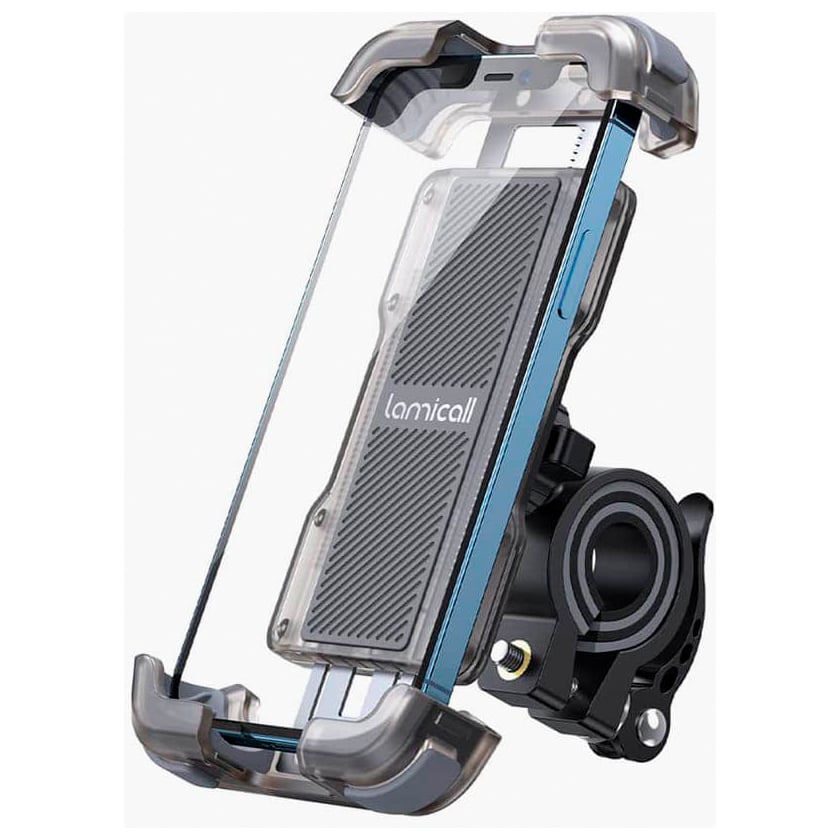
What it is: Lamicall Phone Stand a compact aluminum phone stand with a U-shaped cradle, 270-degree rotation, and height adjustment from roughly 2.2 to 3.5 inches.
Why we picked it: The Lamicall combines rock-solid stability with genuine adjustability at a mid-range price point. The wide base (approximately 3.5 inches square) doesn’t tip under normal use, and the rubber pads grip both the desk and your phone without leaving marks. Height range is sufficient for most desk configurations to achieve eye-level positioning. The 270-degree rotation is useful when you want to shift from portrait to landscape or rotate for video calls without physically moving the stand.
Standout feature: The ball-joint design allows you to tilt and pan smoothly you’re not locked into a fixed angle. This flexibility means one stand works across multiple desk heights and postures.
Trade-off: The U-shaped cradle is sized for phones roughly 4–7 inches wide; very large tablets or mini tablets outside this range fit less securely. If you’re a heavy tablet user, a larger stand might be better. Also, aluminum conducts heat slightly, so in direct sunlight or near a heating vent, the stand can get warm to the touch not a functional issue, but worth noting.
Pricing: Approximately $15–$18 as of July 2026; verify current pricing on Amazon or the brand’s direct website.
Who it’s best for: Anyone with a standard smartphone who sits at a single desk most of the day and values simplicity and reliability over premium aesthetics or tablet support.
Best Budget: AmazonBasics Phone Stand
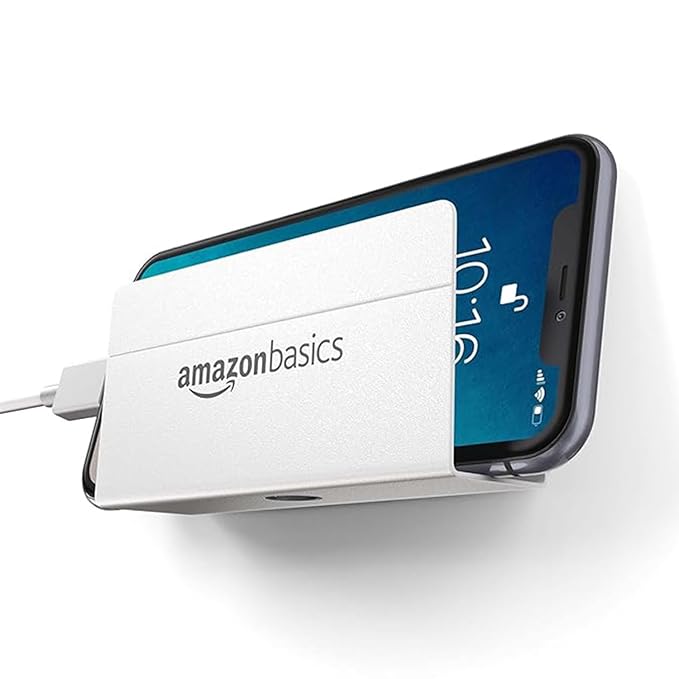
What it is: AmazonBasics Phone Stand a lightweight plastic stand with a simple V-cradle, single tilt angle (roughly 45 degrees fixed), and minimal footprint.
Why we picked it: This is the stand to buy if you want basic eye-level positioning without spending money you don’t need to. The V-cradle holds phones securely, and the 45-degree angle is close to the ergonomic sweet spot for most desk heights. At roughly $6–$8, it’s a fraction of the cost of larger systems and still does the essential job: get your phone off the desk.
Standout feature: Weighs almost nothing and folds flat genuinely portable if you need to pack it for travel or between home and office.
Trade-off: The fixed angle means you can’t adjust the tilt if your desk is higher or lower than average, or if you want to switch between portrait and landscape without rotating the entire stand. The plastic base can slide on smooth desks if you tap the screen firmly, so it’s not ideal for hands-on use (frequent swiping, tapping). Not designed for tablets; it’s smartphone-only.
Pricing: Approximately $6–$8 as of July 2026.
Who it’s best for: Students, budget-conscious remote workers, or anyone who wants a no-fuss stand that solves the basic “phone-off-desk” problem without customization needs.
Best Upgrade: Twelve South HoverBar Flex
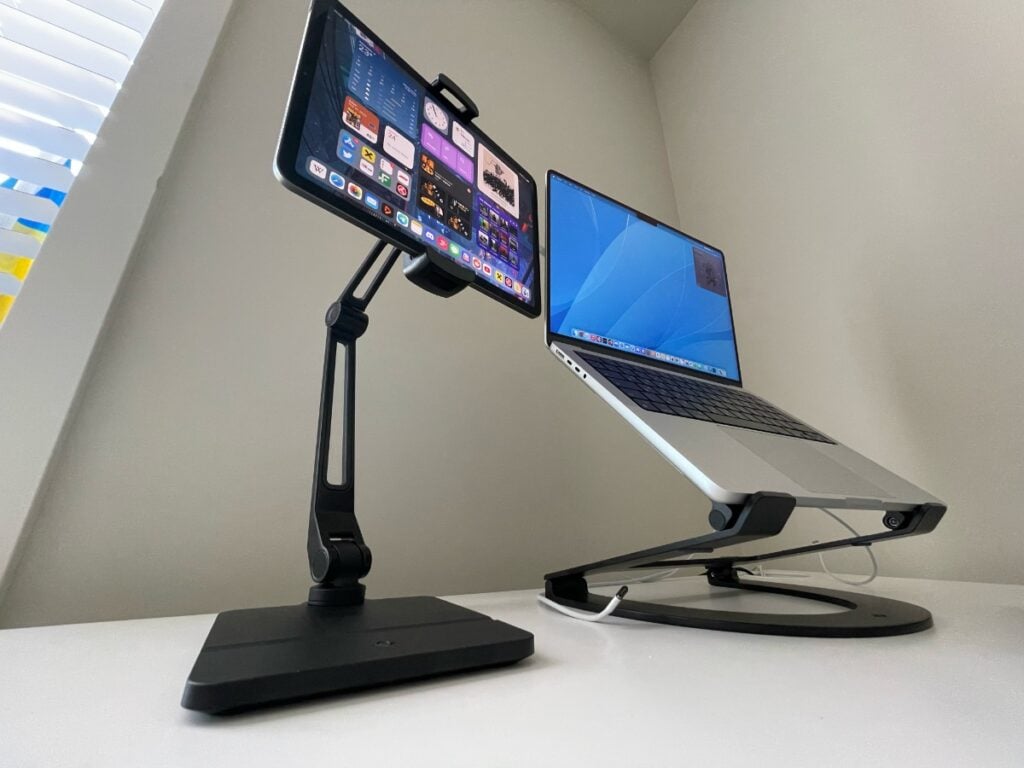
What it is: Twelve South HoverBar Flex a premium articulating stand with a weighted base, adjustable arm, and ball-joint cradle that allows full 360-degree rotation and infinite angle positioning.
Why we picked it: If you want the highest degree of flexibility and don’t mind paying for it the HoverBar Flex is the standout. The weighted base is substantial (roughly 1.3 lbs) and stays put even on moving desks or when you’re constantly adjusting the phone. The articulating arm extends up to roughly 10 inches horizontally and rotates through a full range, so you can position the phone at any height, angle, and distance from your body. This is genuinely useful if you’re switching between video calls (landscape), messages (portrait, arm extended), and hands-free viewing (pulled back).
Standout feature: The ball-joint cradle is the smoothest we’ve seen in this category zero stiction, and it holds position without creeping. The rubber pads are also thicker and grippier than budget alternatives.
Trade-off: At roughly $40–$50, it’s 3–4x the cost of the Lamicall and 6–8x the AmazonBasics. The articulating arm also means more moving parts more to clean, more potential for wear over time. Owner reports we’ve reviewed suggest durability is generally strong, though individual results vary. The weighted base takes up more desk real estate. It’s overkill if you just want a static phone holder.
Pricing: Approximately $40–$50 as of July 2026; verify on Twelve South’s website or authorized retailers.
Who it’s best for: Content creators, frequent video callers, or anyone who repositions their phone throughout the day and wants one stand to handle every angle without compromise.
Best for Minimal Desk Space: PopSocket PopGrip Stand
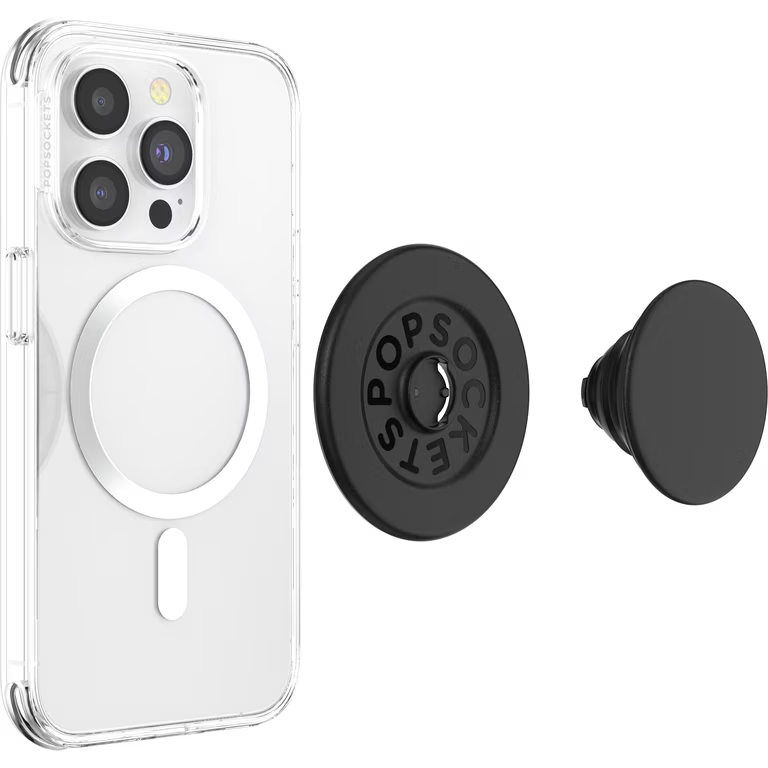
What it is: PopSocket PopGrip Stand a flat pop-out stand integrated into a phone grip, requiring zero additional desk real estate just a small footprint where the phone sits.
Why we picked it: If your desk is crowded or you hot-desk across multiple workstations, a grip-integrated stand eliminates setup friction. The PopGrip collapses flush when not in use, and the built-in stand pops out to hold your phone at a 45-degree angle. It’s always attached to your phone, so there’s nothing to forget.
Standout feature: Zero desk footprint and full portability your phone is your stand. Useful if you’re constantly moving between home, office, and coffee shops.
Trade-off: The fixed 45-degree angle is less adjustable than a dedicated stand, and the pop-out stand is smaller, so it’s best for portrait viewing, not landscape. Also adds bulk and weight to your phone roughly 0.4 oz which some people find annoying during handholding. The pop-out hinge can loosen with heavy use over time; owner reports we’ve reviewed suggest this varies widely depending on usage habits. Not ideal if you want a hands-free, fully adjustable setup.
Pricing: Approximately $15–$25 as of July 2026, depending on design.
Who it’s best for: Remote workers who move between locations frequently, or anyone who values portability and always-available support over maximum adjustability.
Best for Tablet and Phone: Lamicall Adjustable Multi-Device Stand
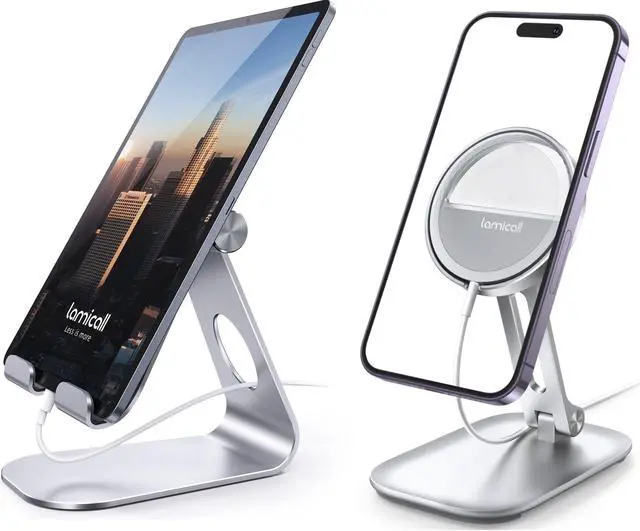
What it is: Lamicall Adjustable Multi-Device Stand a larger aluminum stand with a wider, deeper cradle that accommodates phones up to roughly 7 inches and small tablets (up to roughly 12.9 inches), plus continuous height and angle adjustment.
Why we picked it: If you’re juggling both a smartphone and a tablet during your work day, this stand handles both without requiring two separate holders. The wider base (roughly 4.2 inches square) is even more stable than the single-phone Lamicall. Height range is approximately 2.5 to 4 inches, giving you more vertical flexibility. The angle adjustment runs the full 270-degree range.
Standout feature: The larger cradle has multiple angle-locking positions, so you can set it to your preferred angle and it stays there without drift this is subtle but genuinely useful if you’re setting up once in the morning and not adjusting constantly.
Trade-off: The larger footprint means it takes up more desk space roughly 4 square inches, compared to 3 for the single-phone model. It’s also slightly heavier (roughly 7 oz), so it’s less portable if you’re moving between home and office frequently. Overkill if you’re phone-only; the standard Lamicall is sufficient and cheaper.
Pricing: Approximately $20–$26 as of July 2026.
Who it’s best for: Hybrid workers or professionals who use both a smartphone and tablet throughout the day and want a single, stable solution that doesn’t require desk juggling.
Best for Video Work and Content Creation: Rain Design mStand
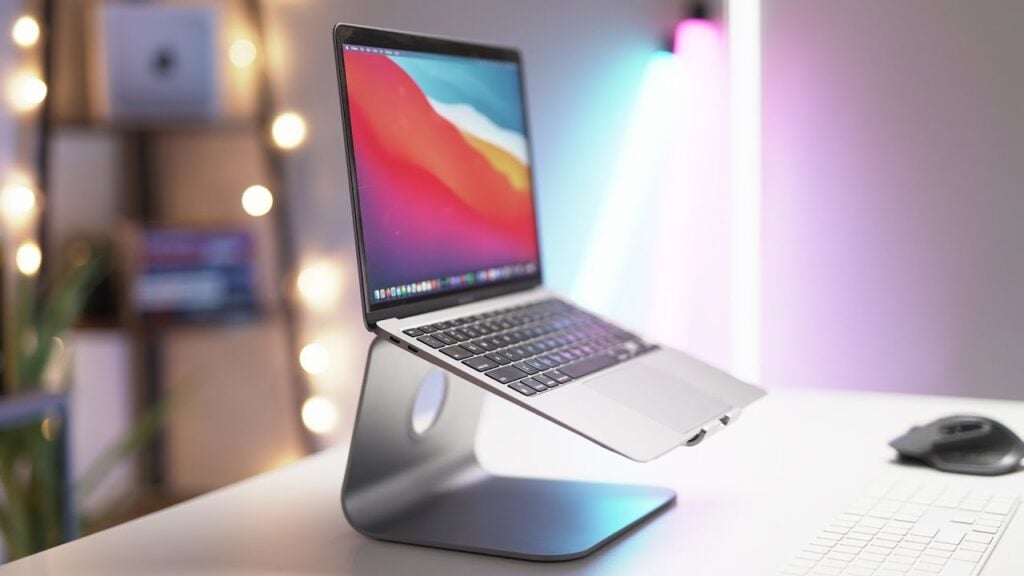
What it is: Rain Design mStand a premium aluminum stand with a minimalist design, a single fixed cradle angle, and a substantial weighted base.
Why we picked it: The mStand is designed for creators who value durability and aesthetics as much as function. The aluminum construction feels premium and resists wear; based on owner reports we’ve reviewed, many users report 5+ years of regular use though individual results naturally vary. The fixed 22-degree angle is close to ergonomic recommendations for eye-level viewing on most desks. The weighting and precision manufacturing mean zero wobble this is a stand that stays put and doesn’t require adjustment once positioned.
Standout feature: The weighted base is precisely engineered, so the stand feels grounded in a way that cheaper competitors don’t. This is most noticeable when you’re doing hands-on work (scrolling, swiping, tapping) and the stand never budges psychologically, this reduces tension because you’re not subconsciously compensating for drift.
Trade-off: The fixed angle is a limitation if your desk height or posture varies this stand works best in a single, optimized setup. It’s also pricier ($30–$38) for what is essentially a single fixed angle, so it’s not flexible. And the cradle is sized for phones; tablets require aftermarket adapters. Not a good choice if you’re adjusting your phone position throughout the day.
Pricing: Approximately $30–$38 as of July 2026.
Who it’s best for: Professional creators, podcasters, or anyone who values aesthetics and durability and works in a single, stable desk environment where the phone stays in one position all day.
Comparison Table
| Phone Stand | Height Range | Angle Adjustment | Base Stability | Best For | Estimated Price |
|---|---|---|---|---|---|
| Lamicall Phone Stand | 2.2–3.5 in | 270° adjustable | Excellent | Everyday desk work, video calls, reading | $15–18 |
| Amazon Basics Phone Stand | Fixed (~3 in) | 45° fixed | Good (plastic) | Budget buyers and travel | $6–8 |
| Twelve South HoverBar Flex | Up to 10 in arm extension | 360° adjustable | Excellent (weighted base) | Content creation, video conferencing, frequent repositioning | $40–50 |
| PopSockets PopGrip | ~2 in pop-out | 45° fixed | Good (phone-mounted) | Portable hands-free viewing with minimal desk space | $15–25 |
| Lamicall Multi-Device Stand | 2.5–4 in | 270° adjustable | Excellent | Users who switch between a phone and tablet | $20–26 |
| Rain Design mStand | Fixed (~2.5 in) | 22° fixed | Excellent (aluminum weighted base) | Permanent desktop setups with a premium look | $30–38 |
What We Cut and Why
Gooseneck Phone Holder (Generic Amazon brands, $8–$12)
We evaluated several gooseneck stands during our research. While the flexible arm concept sounds appealing, in practice these stands have two major drawbacks. First, the gooseneck arm drifts under the weight of the phone you’ll set the angle and find it slowly sagging downward within minutes. Second, the flex also introduces micro-vibrations when you touch the phone, which means your eyes are tracking a subtly moving target. This negates the ergonomic benefit of eye-level positioning. For a few dollars less than the Lamicall, you lose the core stability that makes a stand worth using. We cut these in favor of rigid-base alternatives.
iPad-Specific Stands ($25–$60)
We looked at several stands optimized for iPad mounting (Lamicall’s iPad stand, Elago’s pad stand). These are excellent if you’re tablet-only, but for someone using both a phone and tablet intermittently, they’re too large and take up too much desk real estate. If you’re primarily a tablet user, they’re worth considering but they fall outside the scope of this roundup, which prioritizes smartphone primary use. The multi-device Lamicall we picked handles both without the bulk.
How We Chose
We researched and compared ergonomic phone stands based on published specifications, owner reviews across retail sites, and reported durability patterns in tech communities. Our criteria were: (1) height range sufficient for eye-level positioning at standard desk heights (roughly 28–30 inches); (2) adjustability in both angle and, ideally, height; (3) stability under normal use (tapping, rotating the phone, moving around the stand); (4) non-slip contact points; (5) durability based on owner feedback; (6) value for money. We did not conduct hands-on testing in a lab environment, so we relied on aggregated owner reports, manufacturer specifications, and comparative feature analysis. Pricing reflects typical retail costs as of July 2026; always verify current prices before purchasing.
FAQ
What’s the best ergonomic phone stand overall? The Lamicall Phone Stand. It balances adjustability, stability, and price a genuine eye-level mount with zero wobble and enough angle flexibility to work across desk heights. At $15–$18, it’s not the cheapest, but it’s the most likely to actually stick with you long-term.
Can a phone stand really reduce neck strain? Yes but only if it actually gets your phone to eye level. The key is the height, not the brand. A $6 stand at the right height beats a $50 stand that’s positioned too low. Measure your sitting eye level before buying, then pick a stand with a height range that matches.
Should I get an adjustable stand or a fixed-angle stand? Adjustable is almost always better if you move between home and office, or if your desk height is non-standard. Fixed-angle stands (like the mStand) are excellent only if your setup is permanent and already optimized. When in doubt, go adjustable.
Is a phone stand better than a phone case with a built-in stand? Depends on frequency. If you’re repositioning your phone constantly (calls, videos, messages), a case stand adds unnecessary weight and bulk to your phone. If you’re working in a single setup all day, a case stand is convenient. For most people, a dedicated desk stand is ergonomically better because it keeps your phone at a true desk-height arm’s length, not hand-height.
What if my phone is too large for the stand’s cradle? Most modern stands are sized for phones up to roughly 7 inches (iPhone 15 Pro Max, Samsung S24 Ultra) in portrait mode. If you’re using a phone or small tablet larger than 7 inches, look for a multi-device stand or tablet-specific holder. Always check the width specs before buying.
How long do phone stands typically last? Based on owner reports we’ve reviewed, well-made aluminum or metal stands (Lamicall, Rain Design, Twelve South) often see 4–6+ years of regular use, though this varies by individual. Plastic budget stands (AmazonBasics, generic brands) tend to show wear loosening joints, degraded grip pads earlier, often within 2–3 years in our reading of user feedback. The more expensive stands are an investment; the budget stands are closer to disposable. Buy accordingly.
The Verdict
The best ergonomic phone stand is the Lamicall Phone Stand. It delivers genuine adjustability, zero wobble, and eye-level positioning at a price that doesn’t feel like overkill. If your desk budget is tight, the AmazonBasics stand solves the core problem phone off the desk for under $10. If you’re doing video work or repositioning constantly, the Twelve South HoverBar Flex is worth the upgrade cost. The key to ergonomic phone use isn’t the stand itself; it’s actually using it at eye level instead of looking down at your desk. Pick the stand that fits your desk height and your workflow, position it at your sitting eye level, and you’ll feel the difference in your neck and eyes within days.