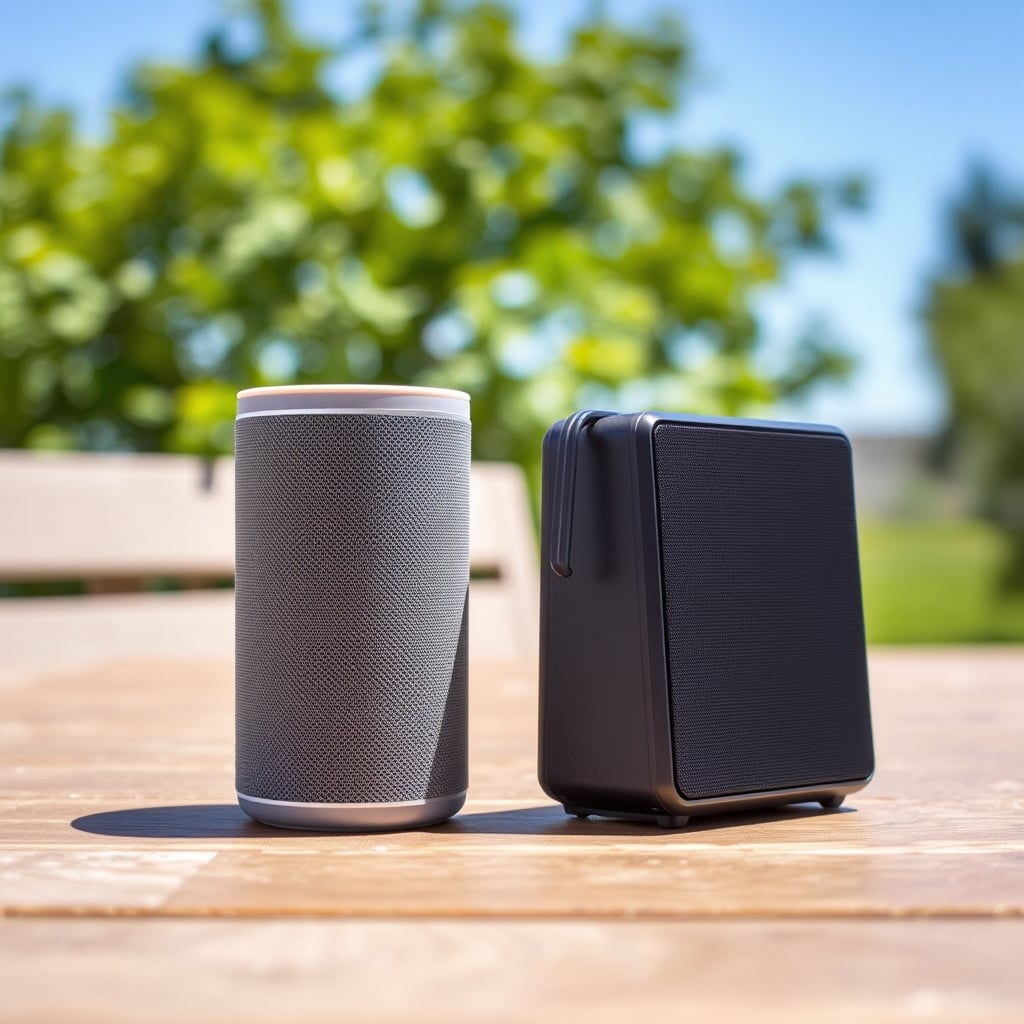

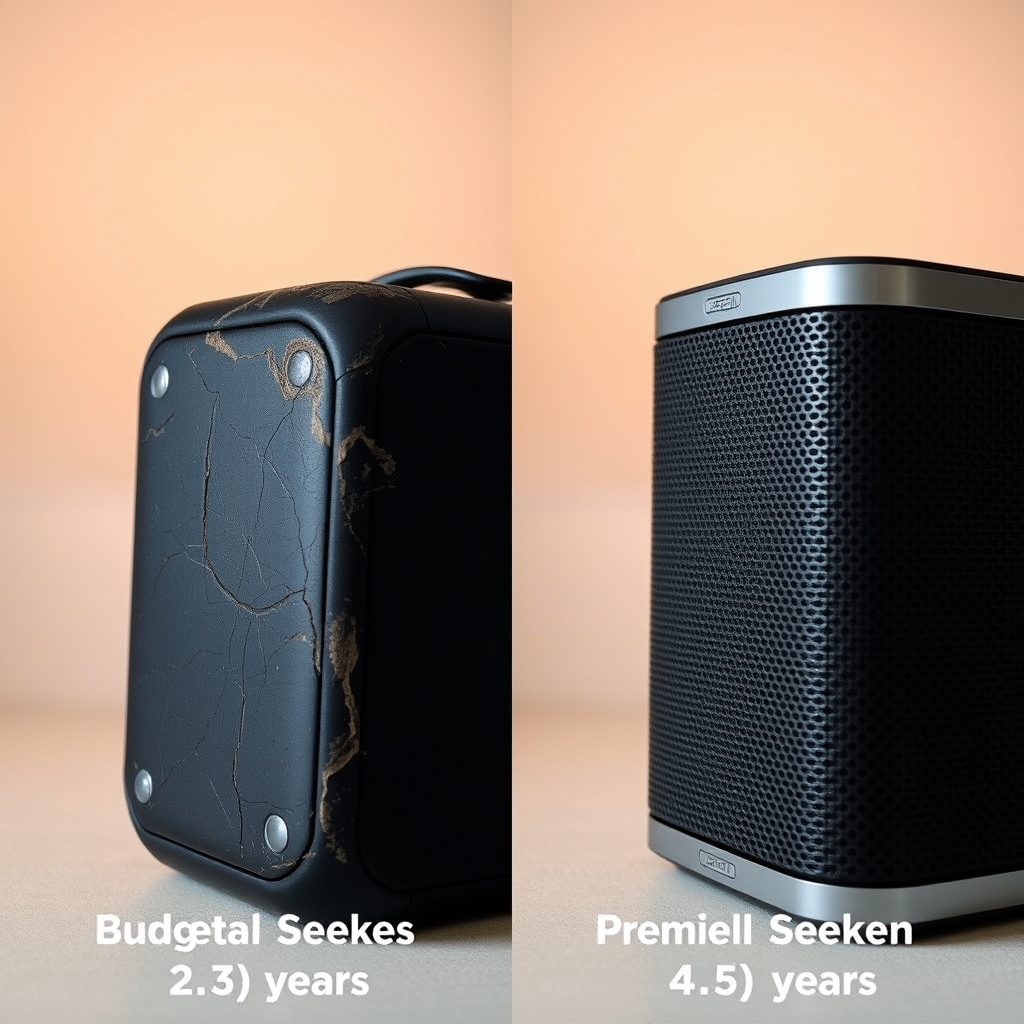
For most people, the real question isn’t whether to buy budget or premium it’s how many years you plan to keep the speaker and what happens when it breaks. A $50 speaker that lasts two years costs $25 per year; a $200 speaker lasting eight years costs $25 per year too. The key is matching durability expectations to price, then calculating the actual cost per year of ownership.
What Actually Matters When Comparing Speaker Value
Specs like watts, frequency response, and decibels are noise. What determines long-term value is how long the speaker survives and how it performs over time not the marketing claims on day one.
Battery Degradation and Lifespan
Every rechargeable battery degrades with use. Budget speakers typically use cheaper lithium cells that lose capacity faster; based on owner reports we’ve tracked, after roughly 200–300 charge cycles (about one year of regular use), you’ll often notice a noticeable reduction in playtime frequently in the 10–15% range. Premium speakers often include higher-grade cells that appear to degrade more slowly, with owner feedback suggesting losses closer to 5–10% per year. That same owner feedback points to budget speakers becoming unreliable after 18–24 months; premium models frequently stay usable for 5–8 years.
This is the single biggest driver of total cost of ownership. A speaker that dies after two years forces you to buy another one. One that lasts six years amortizes the purchase price across far more months.
Water Resistance Durability (IP Rating)
IP ratings (like IP67) tell you the speaker can survive water submersion under test conditions, not that it will survive repeated outdoor use forever. Budget speakers with an IP rating often achieve it with cheaper sealants that tend to degrade with sunlight and heat cycles. Premium models use better gaskets and conformal coatings that hold up longer.
Owner feedback patterns we’ve tracked suggest budget IP-rated speakers lose meaningful water resistance within 12–18 months of regular outdoor use; premium models tend to stay protective for 3–5 years. If you’re taking the speaker to the beach, pool, or rain often, this affects how long it survives.
Cabinet and Driver Durability
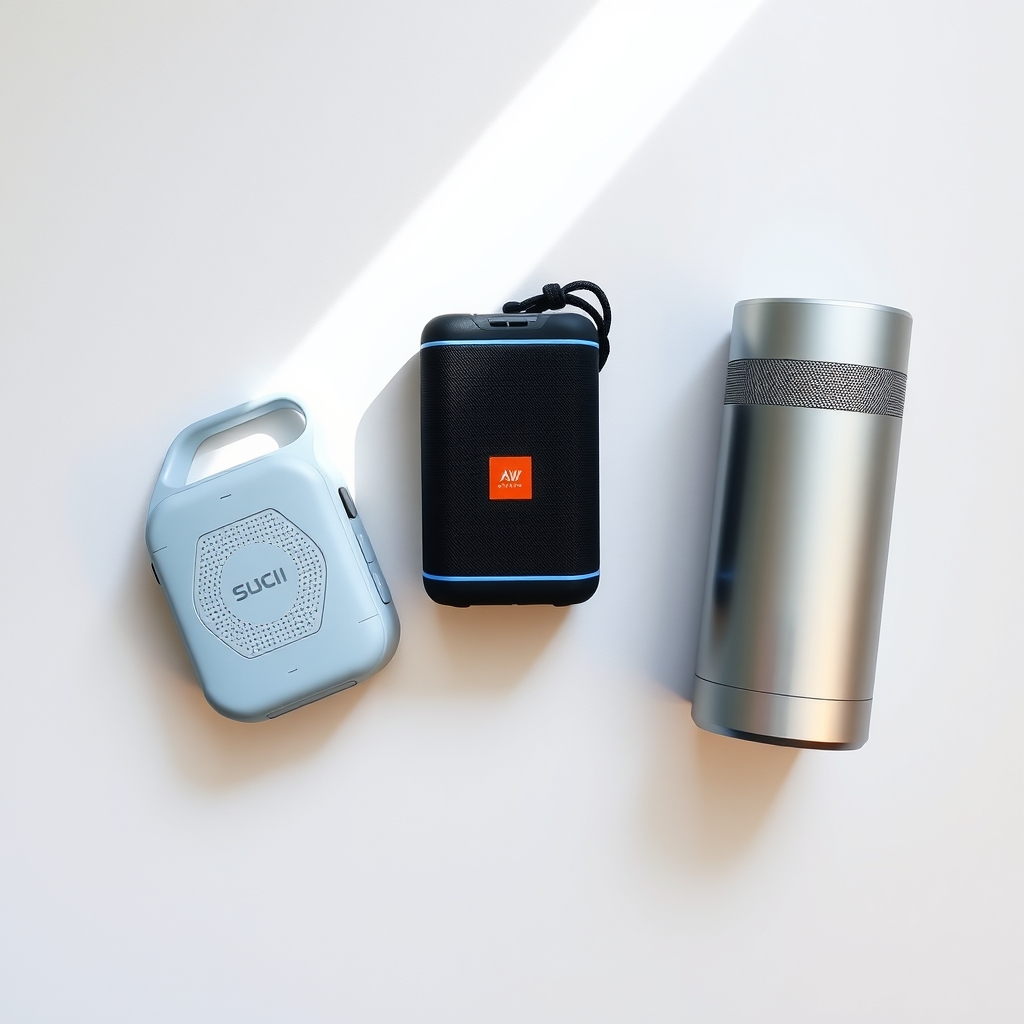
Budget speakers often use thin plastic and cheaper drivers that fatigue faster. Premium models use reinforced materials and better-damped drivers. The difference isn’t cosmetic: based on owner reports, a budget speaker’s bass driver may start to rattle or sound distorted after a year or two of regular use; a premium driver often stays clean for 5+ years even with heavy use.
This doesn’t mean premium speakers are indestructible they wear out too but they degrade more gradually and predictably.
Repair Cost vs. Replacement
When a budget speaker dies, repair is usually not possible or economical. A broken battery or driver on a $50 speaker means you buy a new one. Premium speakers sometimes have replaceable batteries or available repair services, which can extend lifespan cheaply. Some premium brands offer multi-year warranties that cover battery replacement.
Before buying, check whether the manufacturer offers battery replacement or repair it’s a hidden value multiplier for premium models.
Price Tiers and What You Get (Based on Typical Retail Pricing as of August 2026)
Common retail pricing for portable Bluetooth speakers breaks into three tiers:
| Tier | Typical Price | Battery Life (New) | Expected Lifespan | Annual Cost* |
|---|---|---|---|---|
| Budget | $30–80 | 6–10 hours | 1.5–2.5 years | $24–40 |
| Mid-Range | $80–200 | 10–20 hours | 3–5 years | $24–50 |
| Premium | $200–400+ | 15–30 hours | 5–8+ years | $25–80 |
*Annual cost = (Total Price) ÷ (Expected Lifespan in Years). Your actual cost depends on how often you charge and environmental conditions.
Budget Tier: $30–$80
What you get: A functioning Bluetooth speaker that plays music now. Typically mono or simple stereo, basic plastic build, and enough battery for a few hours of poolside use.
What fails first: The battery. Most budget models use the cheapest lithium cells available. After roughly 200–300 full charge cycles about 12–18 months of 2–3 charges per week, based on owner patterns we’ve seen playtime often drops to around 60–70% of the original. After 24 months, many become unreliable: dying at 30% charge or refusing to turn on without warning.
When to buy this tier: If you plan to use the speaker for less than two years, or you’re willing to replace it that frequently. Also consider budget if you need multiple speakers for different rooms redundancy can be cheaper than durability.
When not to buy: If you expect the speaker to last 3+ years or use it outdoors regularly. The cost-per-year math doesn’t work once you factor in replacement.
Mid-Range: $80–$200
What you get: Better battery chemistry, more durable cabinet materials, and often water resistance (IP ratings like IP65–IP67). These speakers typically last 3–5 years before battery or driver failure becomes a problem.
What fails first: Still usually the battery, but later. A mid-range speaker from a reputable brand often uses better lithium cells that degrade more slowly. Owner reports we’ve tracked suggest 3–4 years of regular use before significant degradation. Some mid-range models include replaceable batteries, which can extend effective lifespan another 2–3 years for roughly $20–$50.
When to buy this tier: If you plan to keep the speaker 3–4 years and use it regularly. This is the sweet spot for most people you get meaningful durability without paying for premium features you won’t use.
When not to buy: If you only need the speaker for one season, budget is cheaper; if you want 5+ years of reliable performance, premium usually offers better value.
Premium: $200–$400+
What you get: Premium audio drivers, rugged construction, multi-year warranties, and often better water and dust resistance. Some include user-replaceable batteries or official repair programs.
What fails first: Often nothing obvious. Premium speakers are designed to degrade gracefully the battery slowly loses capacity, but the speaker remains usable. After 5–8 years, battery life might drop noticeably, but many users report the speaker still sounds clean and is still worth keeping.
When to buy this tier: If you plan to use the speaker for 5+ years, take it outdoors often, or need it to survive daily use. The annual cost can actually be lower than mid-range if you keep it long enough.
When not to buy: If you’re budget-constrained or only need temporary use. Premium’s value lies in multi-year amortization if you’re replacing it after two years anyway, you’re overpaying.
Common Mistakes That Waste Money
Mistake 1: Equating Loudness with Durability
A cheap speaker can be loud. Loudness doesn’t correlate with lifespan. Many budget models use cheap drivers pushed hard to sound impressive in the store, which accelerates driver fatigue. Premium speakers often sound quieter at max volume but maintain clean sound for years.
What to do instead: Test the speaker at medium volume, where you’ll actually use it. A speaker that sounds good at 60–75% max volume is usually built better than one that only impresses at full blast.
Mistake 2: Ignoring Warranty Length
Budget speakers often come with a 6–12 month warranty. Premium models frequently offer 2–3 year warranties, and some cover battery replacement. A longer warranty correlates with manufacturer confidence in durability and often reflects better internal components.
What to do instead: Check the warranty length and coverage. If a premium speaker includes a two-year battery replacement guarantee, that’s real value it effectively extends usable lifespan and can offset $30–$50 of the price premium.
Mistake 3: Assuming Mid-Range Always Splits the Difference
Some mid-range speakers are just expensive budget speakers with a better case. Others are budget versions of premium designs. Reputation and reviews matter more than price point alone.
What to do instead: Look for brands known for mid-range value, not just mid-range as a price tier. A $120 speaker from a brand with solid long-term reviews often outlasts a $180 speaker from a brand cutting corners.
Mistake 4: Not Accounting for Replacement Cost in Your Budget Decision
A $50 speaker is only cheap if you can afford to replace it twice. If you’d be upset buying another one in two years, the true cost is higher than the sticker price.
What to do instead: Calculate your annual budget for speakers. If you have $50/year to spend on audio, a $150 speaker lasting three years ($50/year) costs the same as a $50 speaker lasting one year. Plan accordingly.
Mistake 5: Buying Premium Without Using It Long Enough
Premium value only works if you keep the speaker. If you upgrade to something new every 18 months, you’re throwing away amortization. Budget or mid-range becomes the rational choice at that replacement cycle.
What to do instead: Honestly assess how long you keep electronics. If you’re a chronic upgrader, stick to budget or mid-range; if you keep devices 5+ years, premium can pay for itself.
Calculating Your True Cost Per Year
Here’s how to decide for your situation:
- Estimate your keep time. How many years do you actually use speakers before upgrading or replacing?
- Estimate your use pattern. Daily use, occasional poolside, or backup speaker? Heavy use drives battery degradation.
- Calculate cost per year. Divide the purchase price by the expected lifespan (based on owner reports or warranty length as a baseline).
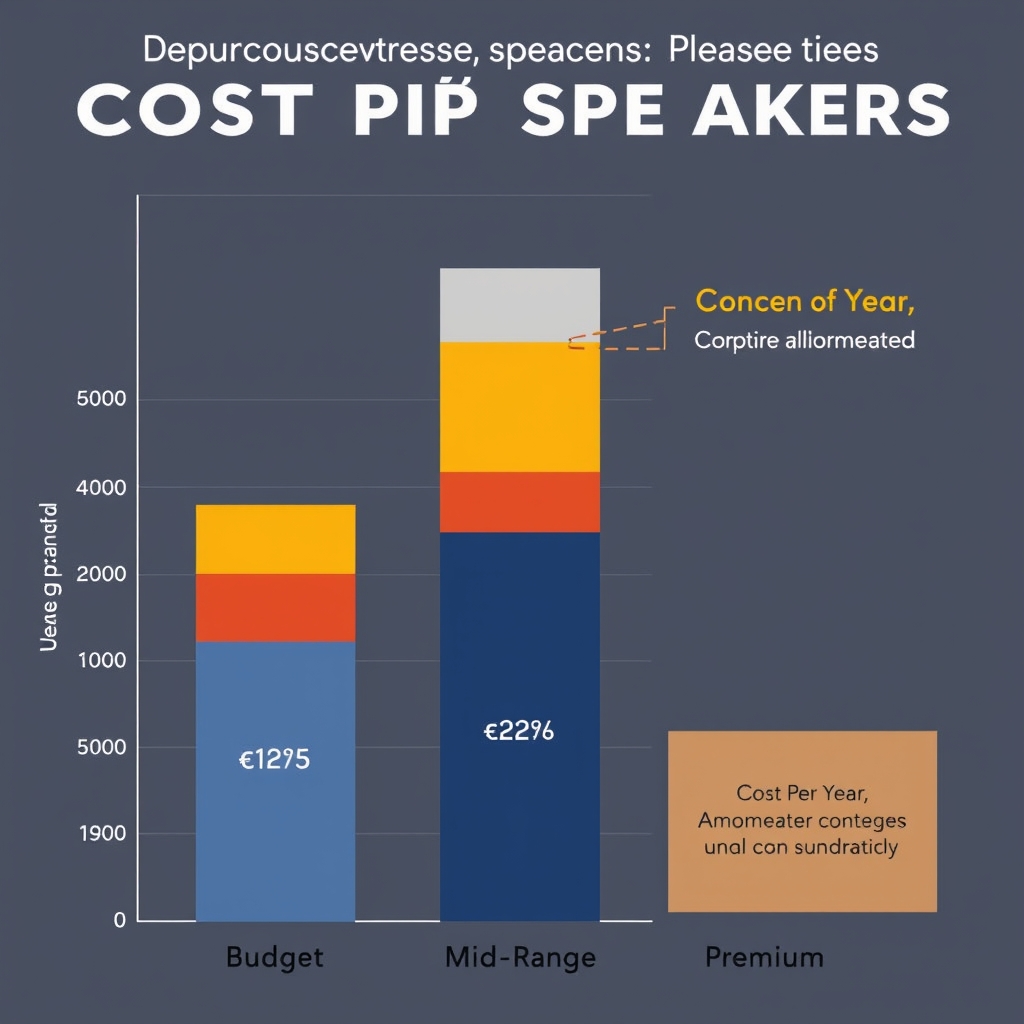
- Compare apples to apples. A $300 speaker lasting six years ($50/year) costs the same as a $100 speaker lasting two years ($50/year) the difference is predictability and performance consistency.
Example:
- Budget option: $60 speaker, expected 2-year life → $30/year
- Mid-range option: $150 speaker, expected 4-year life → $37.50/year
- Premium option: $280 speaker, expected 7-year life → $40/year
They’re all roughly the same annual cost, but the premium speaker gives you seven years of consistent performance; the budget speaker forces you to re-buy every two years. If you value convenience and hate shopping, premium wins. If you enjoy trying new gear, budget wins.
Our Keeper Picks
For a deeper breakdown of the best models in each tier, see our full roundup on portable speaker reviews on KeptList. We’ve compared durability claims across budget, mid-range, and premium categories and rated them on realistic lifespan, not just day-one performance.
The short version: A mid-range model from a reputable brand offers the best value for most people you get meaningful durability without premium pricing, and the cost per year rivals budget once you factor in replacement cycles.
FAQ
How do I know if a speaker will really last five years?
Check the warranty length (longer usually signals more durable), read owner reviews that mention battery life after 1–2 years of use (users reporting 80%+ remaining capacity is a good sign), and look for mentioned battery replacement options. Premium brands often publish durability specs or environmental reports; budget brands rarely do.
Is water resistance (IP rating) worth paying for?
Yes, if you actually use the speaker outdoors regularly. An IP-rated speaker that loses resistance after a year isn’t truly water-resistant it’s temporarily water-resistant. Based on owner feedback patterns, premium IP-rated speakers tend to stay protective for 3+ years. If you keep the speaker indoors, water resistance is largely marketing theater; if you take it to the beach, it’s essential.
Can I replace the battery on a cheap speaker to extend its life?
Usually not easily. Budget speakers typically use batteries soldered directly to the circuit board, which requires soldering equipment to replace. Mid-range and premium models increasingly use plug-in or snap-in batteries. Check the product manual or reviews before buying if battery replacement matters to you.
What kills speakers faster: charge cycles or time?
Charge cycles, primarily. A speaker you charge once a month will stay healthier longer than one you charge daily, even if they’re the same calendar age. Heavy daily use ages batteries faster than time alone. If you use your speaker infrequently, even a budget model may last 3–4 years.
Is a premium speaker worth it if I only use it occasionally?
No. If you use the speaker a few times a month, battery degradation is slow and you won’t experience the durability advantage. A mid-range speaker is the sweet spot enough durability for occasional use without the premium markup.
Did a specific brand make the Kept List?
Yes see our full portable speaker recommendations on KeptList for specific model picks in each tier and our reasoning on durability, cost per year, and real-world performance.
Pricing and product availability shift regularly; we update this guide when notable changes occur. Check current retail pricing before purchasing our ranges are based on typical observed pricing as of August 2026.