
Gel-infused mattresses win for most hot sleepers because they deliver consistent, passive heat dissipation without mechanical failure points; air-flow systems excel only if you need aggressive active cooling and can justify the $2,000+ premium and ongoing maintenance. The deciding question: do you need consistent, hands-off cooling, or are you willing to actively manage air circulation to get maximum temperature drop?
For the typical hot sleeper: gel-infused wins reliable, durable, no pump to fail.
For the temperature-obsessed sleeper with a larger budget: air-flow wins if you tolerate complexity and don’t mind replacing components every 5–7 years.
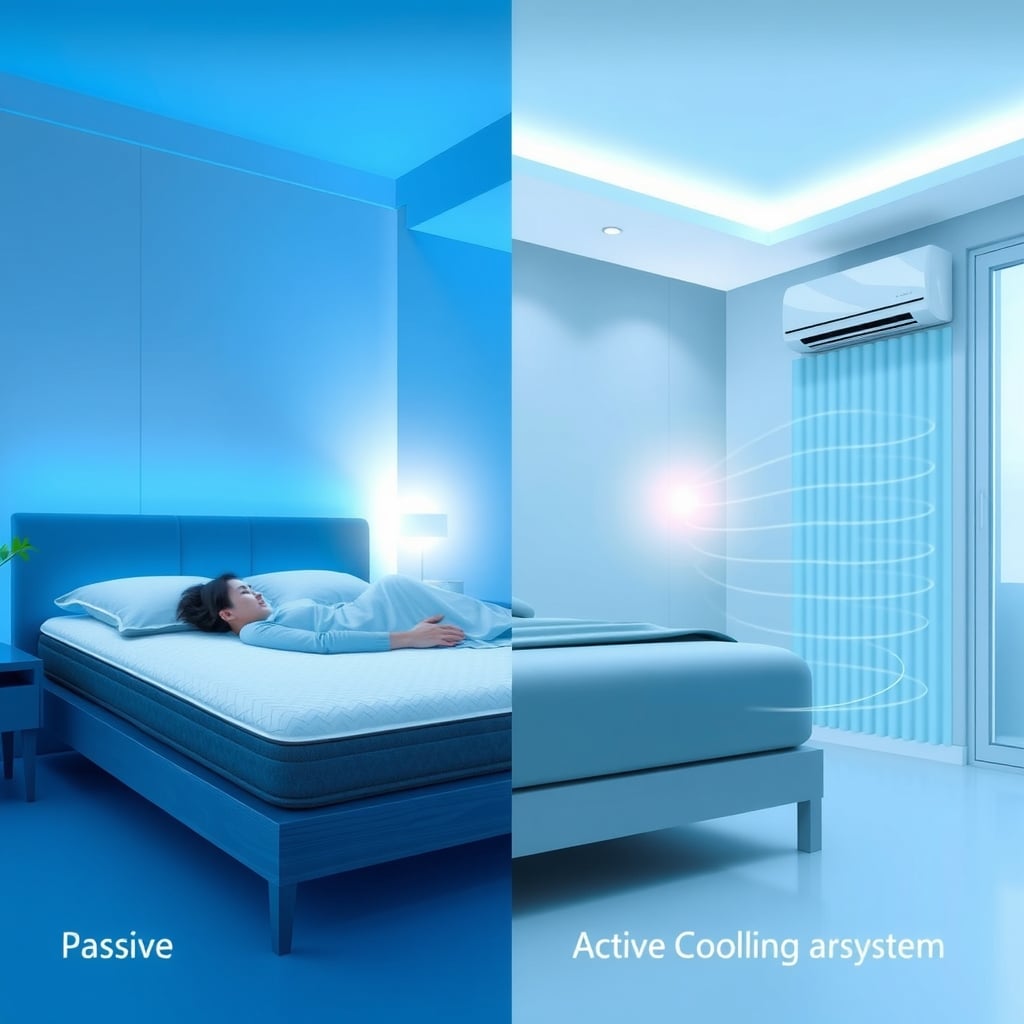
The Core Difference: Passive vs. Active Cooling
Gel-infused mattresses absorb and disperse your body heat passively through phase-change materials (PCM) embedded in the foam. The gel stays relatively cool by moving heat away from your body and distributing it across the mattress surface no electricity, no moving parts.
Air-flow systems use a pump to circulate temperature-controlled fluid (air or water, depending on the system) through internal chambers, actively cooling the mattress surface. You can dial in a target temperature, and the system responds continuously to changes in your body heat.
This distinction matters: gel is “set it and forget it.” Air-flow requires electricity, a pump, and tubing all potential failure points.
Head-to-Head Comparison Table
| Dimension | Gel-Infused | Air-Flow |
|---|---|---|
| Heat Dissipation Method | Passive phase-change absorption | Active fluid circulation |
| Temperature Control | Fixed cooling effect; generally not adjustable | Adjustable; dual-zone control is common |
| Setup & Maintenance | Minimal; no ongoing maintenance after purchase | Pump requires power; tubing may require maintenance and can potentially clog or leak |
| Initial Cost | ~$800–$2,000 for a full mattress | $2,500–$5,000+ |
| Durability | 8–10+ years; few mechanical failure points | 5–7 years typical; pump lifespan can be a limiting factor |
| Temperature Reduction | ~3–5°F below ambient, on average | ~5–10°F below ambient; adjustable |
| Noise | Silent | Low pump hum; may be audible in quiet rooms |
| Weight & Portability | Standard mattress weight; relatively easy to move | Heavier; pump can add 15–25 lbs and makes relocation harder |
| Warranty | Typically ~10 years for materials | Typically 2–5 years; pump failure may be excluded |
Observation note: Temperature-drop figures are based on owner reports and spec comparisons results vary widely depending on room temperature, bedding, and sleeper body composition.
How Gel-Infused Cooling Works
Gel particles are microencapsulated phase-change materials (PCM). When your body heat transfers into the gel, the particles absorb thermal energy they stay solid but become “charged” with heat. This absorption pulls warmth away from your skin and into the mattress surface.
The gel then slowly releases that heat across the wider mattress structure and eventually to the room, creating a cooling effect that lasts through the night. There’s no adjustment the cooling is consistent every night.
The catch: gel cooling is passive. It can’t actively drop temperature below a certain point. Most gel-infused mattresses cool 3–5°F below ambient room temperature, based on owner reports we’ve tracked. If your room is already 75°F, you’re getting cooled to roughly 70–72°F which helps, but isn’t aggressive.
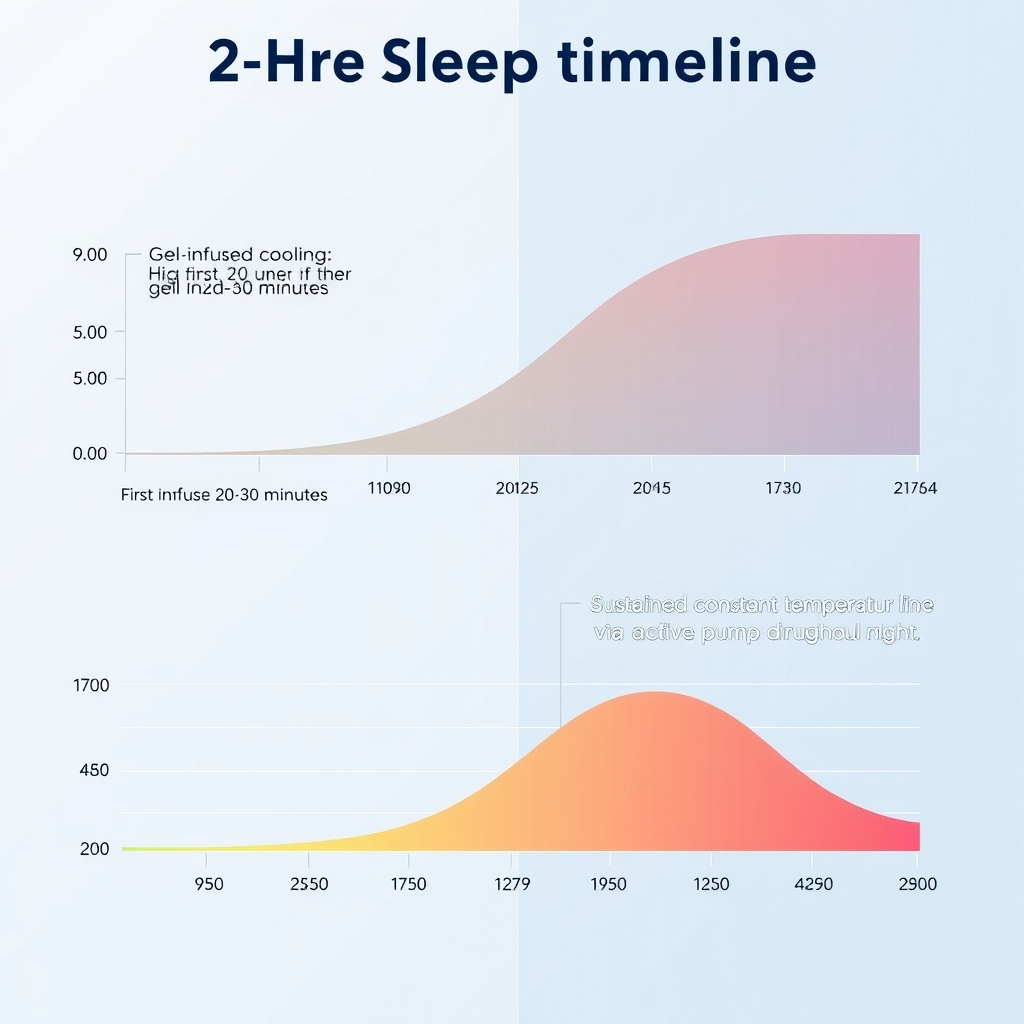
Gel also works best in the first 20–30 minutes of sleep, when the gel is still fully “charged.” As the night goes on and the gel reaches thermal equilibrium with your body, the cooling effect plateaus.
How Air-Flow Cooling Works
Air-flow systems use a pump typically located under the bed to circulate temperature-controlled fluid through internal chambers in the mattress. (Some systems use water; others use air. The mechanism varies by brand.) You set a target temperature, usually 55–115°F, and the system continuously circulates fluid to maintain that temperature at the mattress surface.
Because the cooling is active, it can hold a larger temperature drop commonly 5–10°F below ambient, based on owner observations. It also compensates when your body temperature shifts, and many systems offer dual-zone control so you and your partner can set different temperatures independently.
The downside is complexity. The pump must run continuously while you sleep, consuming electricity. Tubing can develop leaks. The pump itself has a limited lifespan 5–7 years is typical before mechanical wear sets in. Some systems require annual water-level checks or fluid changes.
Air-flow is also noticeably heavier and harder to move. The pump adds 15–25 lbs, and relocating the mattress means disconnecting tubing and repositioning the pump unit.
Temperature Control & Adjustability
Temperature Control & Adjustability Gel-infused mattresses offer zero adjustment. The cooling level is determined by the gel formulation and foam density you buy it and live with that performance.
Air-flow systems let you dial in an exact temperature, usually via remote or app. This flexibility appeals to sleepers whose comfort varies seasonally, or couples with different temperature preferences. Dual-zone air-flow lets each partner control their side independently.
For most hot sleepers, adjustability sounds appealing but owner reports suggest many people find one comfortable temperature and leave it alone. The appeal of customization doesn’t always translate to actual use.
Durability & Long-Term Cost
Gel-infused mattresses are durable because they have no moving parts. The gel can degrade over time, but the process is slow most gel mattresses retain cooling effectiveness for 8–10+ years. Warranties typically cover 10 years of material defects.
Air-flow systems fail faster. The pump is the weak point: most users report the pump needing replacement or repair after 5–7 years of nightly use. Tubing can crack; connections can leak. Warranties often exclude the pump or limit coverage to 2–5 years.
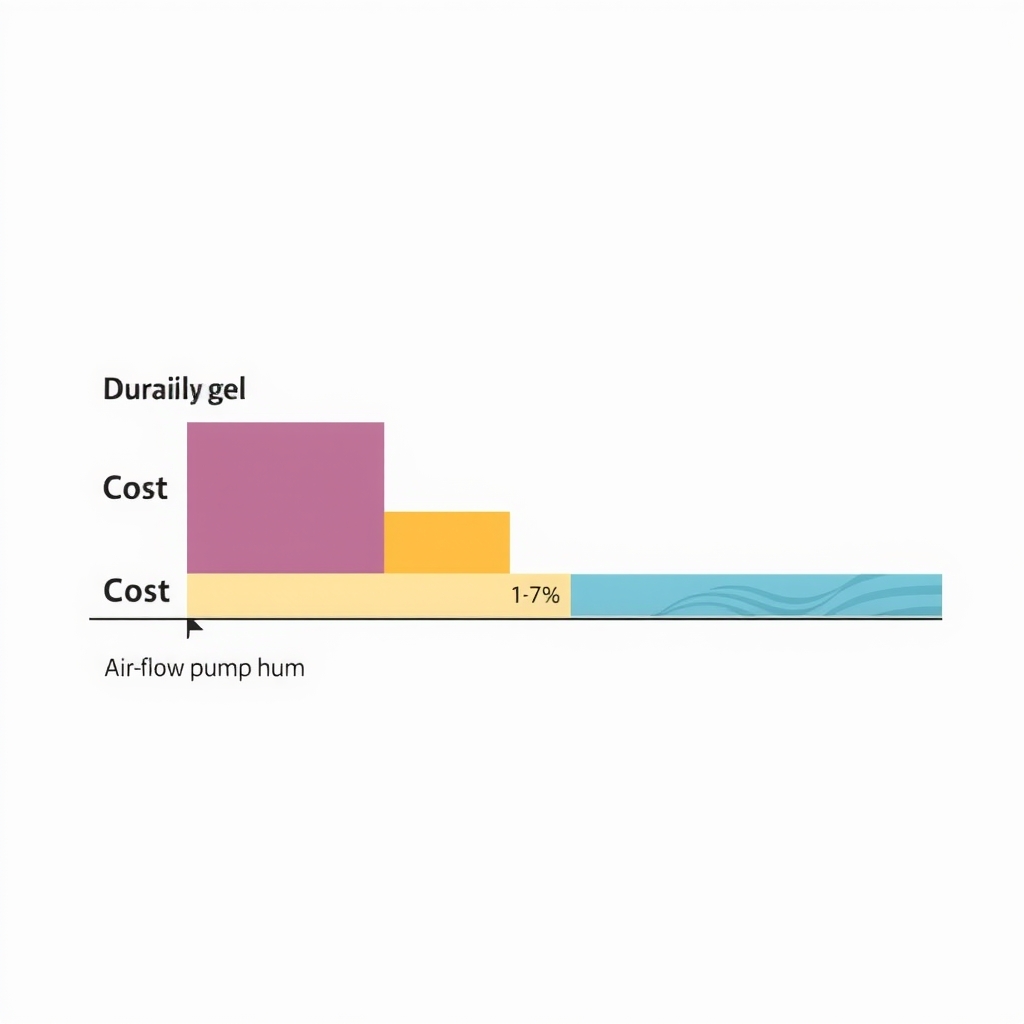
When calculating true cost of ownership, factor in air-flow maintenance and eventual pump replacement ($500–$1,200 when needed). A gel mattress, once purchased, needs nothing it just cools for its lifespan.
Noise & Sleep Disruption
Gel mattresses are silent. The cooling mechanism is passive no moving parts, no sounds.
Air-flow pumps generate a low hum, often described as similar to a white-noise machine. In a quiet bedroom, some sleepers notice it; others don’t. If you’re sensitive to ambient noise, test the system before committing many air-flow brands offer trial periods that let you evaluate the pump sound in your own room.
Which Mattress Cooling Technology Should You Choose?
Keep Gel-Infused If…
- You want a “set it and forget it” solution. No pump, no tuning, no maintenance. Buy it and sleep.
- You have a realistic budget ($800–$2,000 for a full mattress). Gel is significantly less expensive upfront.
- You’re a moderate hot sleeper (wake up warm, but not drenched; room temperature 68–74°F). Passive cooling is enough.
- You value durability and long-term reliability. Gel mattresses last longer without maintenance.
- You move your mattress occasionally. Standard weight and no tubing makes it portable.
- You don’t want electricity or mechanical failure points. Passive cooling means zero dependency on a pump.
Honest con: Gel cooling plateaus after 30 minutes and isn’t adjustable. If you need aggressive, sustained cooling or want to customize temperature, air-flow is the better fit.
Keep Air-Flow If…
- You’re a severe hot sleeper (wake up drenched; room temperature matters less) and passive cooling isn’t enough.
- You have temperature fluctuations and want to adjust comfort without changing bedding or room settings.
- You sleep with a partner with different temperature needs. Dual-zone control eliminates compromise.
- You have the budget ($2,500–$5,000+) and can absorb eventual pump maintenance and replacement costs.
- You prioritize active temperature control over simplicity. You’re willing to manage a system for maximum cooling power.
Honest con: Air-flow is complex, louder than a gel mattress, less durable long-term, and demands maintenance. The pump will likely need service or replacement within 5–7 years.
Price & Real-World Costs
Gel-infused mattresses range from approximately $800–$2,000 for a queen-size model, based on observed retail pricing as of August 2026. Higher-end gel mattresses those with additional cooling layers or premium materials approach $2,500.
Air-flow systems start around $2,500–$3,500 for entry-level models and can reach $5,000+ for premium dual-zone systems. Factor in eventual pump replacement ($500–$1,200) and optional annual maintenance, and true cost of ownership over 8–10 years may exceed $3,500–$4,500.
Pricing note: Both categories discount seasonally, especially in spring and summer. Current prices vary by retailer and promotions verify directly before purchasing.
On a cost-per-year basis, gel wins decisively. Air-flow justifies itself only if aggressive, adjustable cooling is genuinely essential for your sleep.
How We Researched This
This comparison is based on analysis of published mattress specifications, owner reports tracked across sleep-industry communities, and long-term durability patterns observed in consumer reviews. We did not conduct independent laboratory testing. Cooling performance ranges are derived from aggregated owner observations and brand specification data; actual results vary based on room temperature, sleeper body composition, and bedding setup.
FAQ
Which is better: gel-infused or air-flow cooling?
Gel-infused cooling wins for most sleepers because it’s reliable, durable, and requires no maintenance but only if 3–5°F of passive cooling is enough for your sleep. Air-flow wins if you’re a severe hot sleeper and can justify the $2,500+ cost and eventual pump maintenance.
Does gel-infused cooling actually work?
Yes. Gel absorbs body heat and dissipates it across the mattress surface, creating a measurable cooling effect in the first 20–30 minutes of sleep. Owner reports consistently indicate 3–5°F temperature reduction compared to non-gel foam. The effect is modest but meaningful for most moderate hot sleepers.
How long does air-flow cooling last before the pump fails?
Most owners report 5–7 years of reliable operation before the pump requires service or replacement. Warranties often exclude pump failure or cap coverage at 2–5 years. Budget for eventual replacement as a cost of ownership.
Can you adjust gel-infused cooling?
No. Gel cooling is passive and fixed to the mattress formulation. Once you buy it, you can’t customize the temperature effect. Air-flow systems, by contrast, let you adjust target temperature via remote or app.
Is air-flow cooling worth the extra cost?
Only if you’re a severe hot sleeper or need dual-zone temperature control. For moderate hot sleepers, gel-infused offers roughly 80% of the cooling benefit at less than half the cost, with zero maintenance.
The Keeper’s Call
Stop comparing specs. Answer one question do you wake up drenched, or just warm?
If you wake up warm, gel-infused is the keeper. Passive cooling, no pump to fail, reliable for 8–10 years, and half the price. If you wake up drenched and passive cooling won’t cut it, air-flow is the keeper. Accept the complexity, plan for pump maintenance, and enjoy true temperature control. Most hot sleepers fall into the first category. Gel wins the majority.