


The right pillow keeps your neck and spine in neutral alignment while you sleep but the perfect pillow is different for every sleep position. Back sleepers, side sleepers, and stomach sleepers have completely different needs, and picking the wrong one creates morning stiffness, shoulder pain, and disrupted sleep. The good news: once you understand your sleep position and what “loft” and “firmness” actually mean, choosing the right pillow takes about 10 minutes.
The core factors that separate a good pillow from one that leaves you sore come down to two measurements: loft and firmness. Here’s what those actually mean.
What Does “Loft” Mean, and Why Does It Matter?
Loft is the height of your pillow when it’s lying flat on your bed measured in inches from the base to the top. It’s the single most important measurement when matching a pillow to your sleep position.
Your goal is to keep your head and neck in line with your spine. If your pillow is too high, your neck bends forward unnaturally. If it’s too low, your head tilts backward. Neither feels good in the morning.
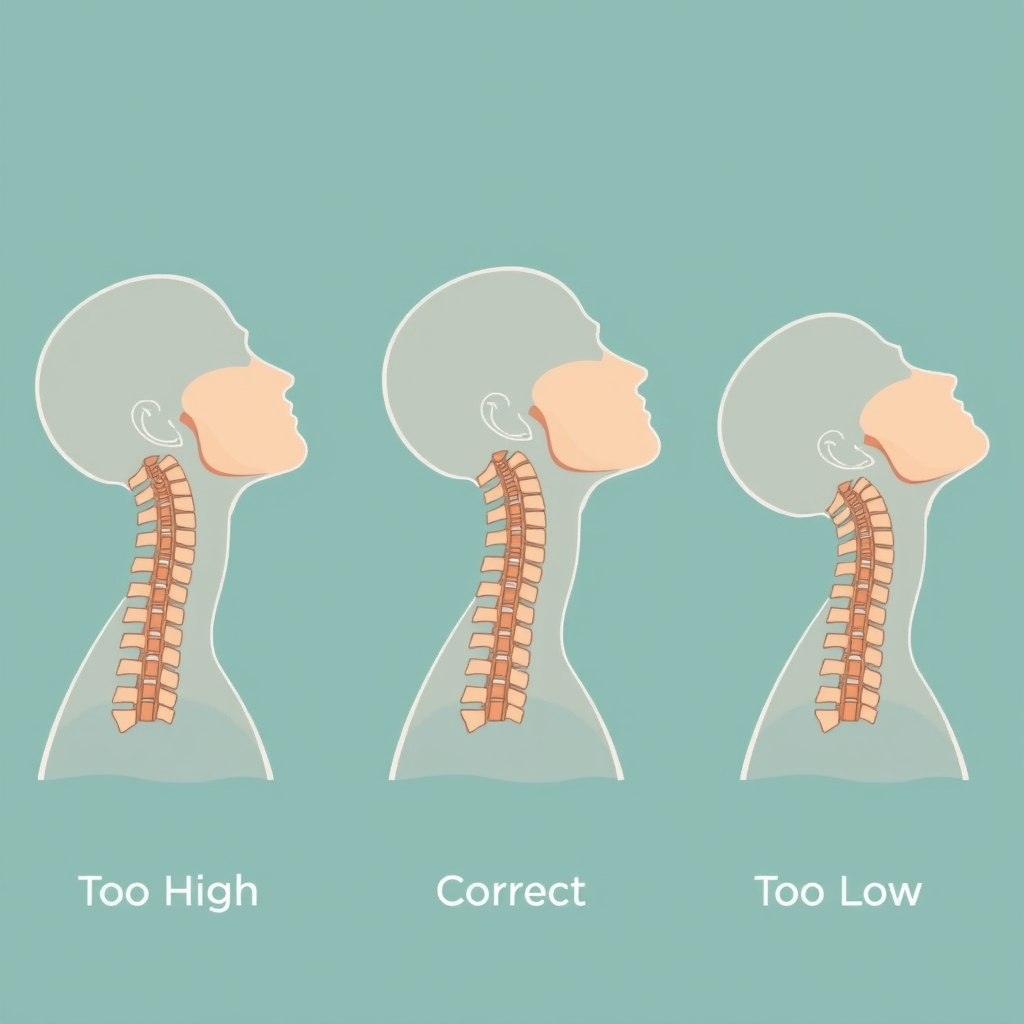
- Back sleepers typically need 4–5 inches of loft. Your head should rest so that your gaze points straight up, not down at your chest or up toward the ceiling.
- Side sleepers typically need 5–7 inches of loft. You need enough height to fill the gap between your shoulder and your ear so your neck stays straight.
- Stomach sleepers typically need 2–3 inches of loft (or sometimes no pillow at all). Stomach sleeping naturally rotates your neck, so a thick pillow makes it worse.
These ranges are heuristics drawn from owner reports and common fitting guidance your actual need may shift if you have a particularly soft or firm mattress, or if you’re broader or narrower than average.
Firmness vs. Loft: Why Both Matter
Firmness describes how much the pillow compresses when you press on it how quickly it bounces back, and whether it holds its shape throughout the night.
Loft and firmness work together. A pillow can be tall but very soft (it’ll compress as your head sinks in, lowering your effective loft). It can also be short but very firm (it won’t compress much, so it stays at its set height).
In practice:
- Soft, plush pillows feel luxurious but often compress noticeably, dropping your effective loft by 1–2 inches over the night. This works if you like sinking into your pillow and don’t mind adjusting the amount of support.
- Medium-firm pillows compress slightly and then stabilize, offering a balance of comfort and support. Most sleepers find this predictable over an eight-hour night.
- Firm pillows resist compression and maintain consistent support but can feel hard on your head if you’re sensitive to pressure.
For neck alignment, medium-firm is the safest starting point because it won’t collapse and drop your support halfway through the night.
The Four Main Pillow Fill Materials Explained
Each material has different compression, durability, and cooling properties. Here’s what you’re actually paying for.
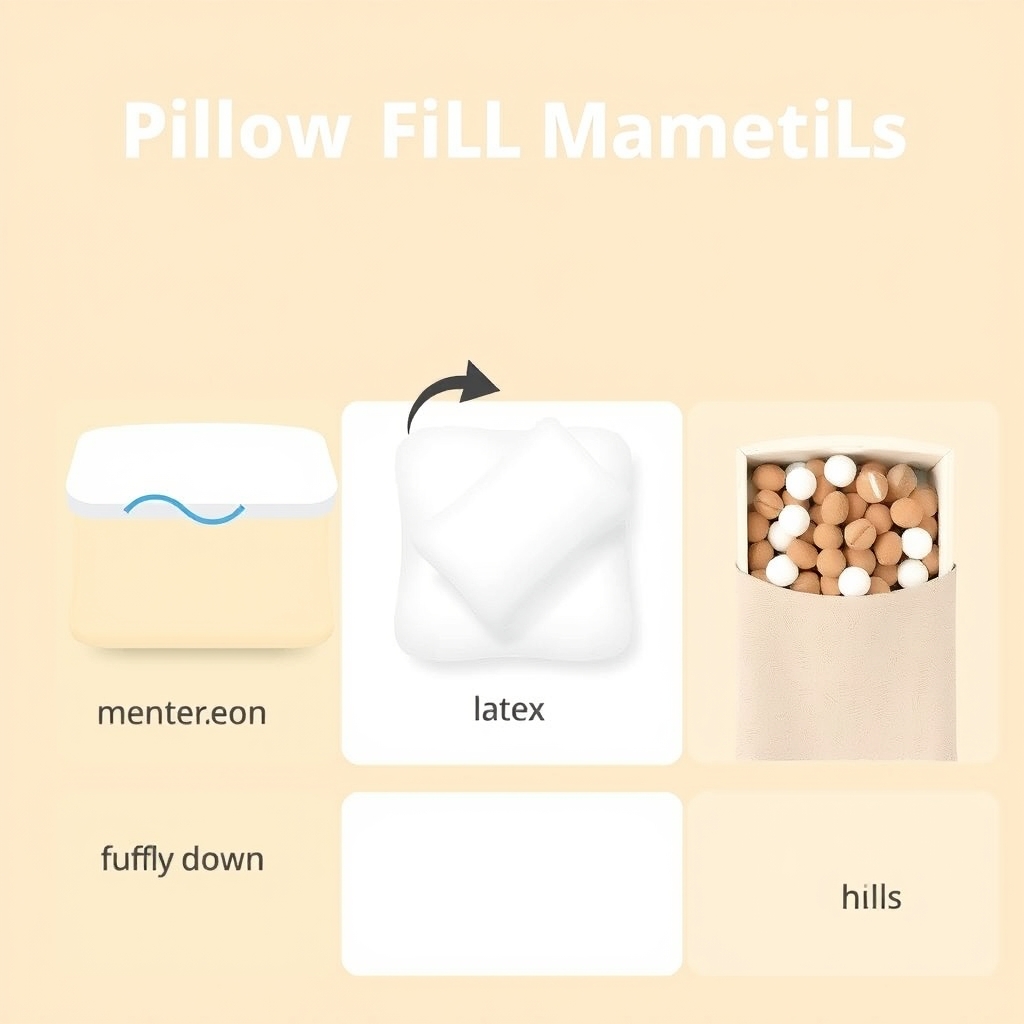
Memory Foam
Memory foam is polyurethane that softens with body heat and molds to your head shape, then slowly returns to its original form when you move.
Memory foam is forgiving it adapts to slight imperfections in your mattress and unique head shape. The downside: it traps heat and can feel hot by 3 a.m. It also compresses over time; based on owner reports, noticeable softening tends to appear in the 2–3 year range. Memory foam pillows are usually affordable and widely available, making them a reliable choice if you don’t run hot.
Latex
Latex is a rubber-based material that’s bouncy and responsive it compresses quickly and bounces back immediately when you move. Unlike memory foam, latex doesn’t mold to your head; it supports underneath.
Latex stays cooler than memory foam and resists compression longer; owner reports suggest minimal change over 5+ years, though individual results vary with use and care. The trade-off: latex feels less cradling if you like that slow-compression hug, and it costs more. Latex is a strong pick for side sleepers and anyone who sleeps hot.
Down and Down Alternative
Down is the soft, fluffy plumage from duck or goose; down alternative is polyester batting designed to feel similar but without the animal product.
Down is incredibly soft and compresses heavily the pillow will feel luxurious but loses shape relatively quickly. Based on owner reports, noticeable flatness often appears within 1–2 years. It’s also harder to dial in the right loft because the fill can shift around. Down alternative behaves similarly but is usually cheaper and hypoallergenic. Both work best for back sleepers who like a plush, sinking feel and can accept more frequent replacement.
Buckwheat Hull
Buckwheat hulls are the outer shells of buckwheat seeds, sewn into a pillowcase, allowing individual hulls to shift and conform to your head.
Buckwheat is firm, stays cool, and doesn’t compress over time. The downside: it’s loud (hull-on-hull noise as you shift), not portable, and takes time to adjust to. Buckwheat is best for side sleepers who want zero compression and don’t mind the texture and sound.
Pillow Firmness Guide: Which Level for Your Sleep Position?
Here’s how firmness choices break down by position:
| Sleep Position | Recommended Firmness | Why | Recommended Fill Materials |
|---|---|---|---|
| Back Sleeper | Medium to Medium-Firm | Provides consistent neck support without allowing the head to sink too deeply | Memory Foam, Latex, Down Blend |
| Side Sleeper | Medium-Firm to Firm | Maintains proper loft and spinal alignment by supporting the head above the shoulders | Latex, Buckwheat Hulls, Memory Foam |
| Stomach Sleeper | Soft to Medium | Keeps the head at a lower angle to reduce strain on the neck | Down, Down Alternative, Soft Memory Foam |
| Combination Sleeper | Medium | Offers a balance of support and adaptability for changing sleep positions throughout the night | Latex, Hybrid Foam Blends |
The Alignment Check: How to Test if Your Pillow Is Right
Don’t rely only on loft specs. Here’s how to know if your pillow actually aligns your spine.
For back sleepers: Lie on your back and look straight up at the ceiling. Your chin should be parallel to the ceiling (not tucked, not tilted back). Ask a partner to check from the side: your ear, shoulder, hip, and ankle should form a straight line.
For side sleepers: Lie on your side and have a partner check from behind. Your ear, shoulder, hip, and ankle should form one straight line not your head tilted down toward the mattress, and not tilted up away from it.
For stomach sleepers: This position inherently rotates your neck, so alignment is harder to achieve. Use a very thin pillow or no pillow, and rotate your head halfway through the night if you can manage it. If you do use a pillow, it should be barely thick enough to take the edge off your face roughly 2 inches.
If you wake up with neck stiffness or shoulder pain in the same spot every morning, your alignment is off. Try adjusting loft (add a pillow pad, or remove it) for one week and reassess.
Common Mistakes When Choosing a Pillow
Myth 1: “Higher loft is always better for support.”
Nope. Too much loft is as bad as too little. A pillow that’s too high pushes your head forward, creating forward head posture and neck strain. This is one of the most common regrets people buy a thick, “supportive” pillow and wake up with new shoulder pain.
Myth 2: “Memory foam is the best for everyone.”
Memory foam works well for many people, but it traps heat and compresses over time. If you sleep hot or want long-term consistency, latex or buckwheat might suit you better. The best material depends on your sleep temperature, sensitivity to firmness changes, and budget.
Myth 3: “You should replace your pillow every six months.”
Manufacturers say this to drive sales. In practice, a good pillow typically lasts 1–3 years depending on fill material memory foam and down on the shorter end; latex and buckwheat holding up longer, based on owner reports. You’ll know it’s time to replace when you wake up with neck pain that a fluffing doesn’t fix, or when the loft no longer matches your original specs.
How to Get the Most Out of the Pillow You Already Own
If you have a pillow that’s almost right but not quite, you can adjust it before replacing it.
If your pillow is too flat: Add a thin pillow pad (usually $15–30 as of mid-2026; prices vary by region) underneath to raise the overall loft by 1–2 inches. Pillow pads are removable and washable, so you can dial in the exact height you need.
If your pillow is too thick: You can remove some fill if it has a removable inner core (common with memory foam and buckwheat), but this isn’t reversible. A better move: sleep on it for a week to see if your body adjusts. Many people report that a pillow that felt too firm on day one feels right by day five.
If your pillow is losing shape: Fluff it daily by punching it gently and reshaping it. For memory foam, a light hand-wash followed by complete air-drying can sometimes restore some responsiveness. For down or down alternative, a dryer on low heat with a few wool dryer balls helps re-fluff do this sparingly to avoid heat damage.
If your pillow gets hot: If it’s memory foam, try a cooling pillowcase (often marketed as “gel-infused” or “phase-change” material). These typically run $30–60 as of mid-2026 and don’t require replacing the pillow. If heat is a chronic issue, it’s a signal that memory foam may not be your best material long-term.
Position-Specific Pillow Recommendations
Back Sleepers
You need 4–5 inches of loft, medium firmness, and a material that won’t compress overnight. Memory foam blends or latex work well. Look for a contoured shape a gentle dip in the center supports the back of your head while the raised sides support your neck.
Test: Can you slide your hand under your neck? If yes, your loft is likely right. If your hand doesn’t fit, your loft is too low.
Side Sleepers
You need 5–7 inches of loft (higher than back sleepers), medium-firm to firm support, and a stable material that won’t compress under shoulder weight. Latex, memory foam, or buckwheat are your strongest options. Avoid soft down unless you’re willing to fluff it multiple times a night.
Test: When you lie on your side, can you see the mattress across the gap between your shoulder and your head? If yes, your loft is too low. The gap should be filled by the pillow.
Stomach Sleepers
You need minimal height 2–3 inches or less because any pillow tilts your head backward and compounds neck rotation. Many stomach sleepers do best with a very thin pillow or no pillow at all, just a folded towel. If you want a pillow, choose a soft, compressible one like down or a thin memory foam.

Test: Can you sleep all night without waking to rotate your head to the other side? If not, your loft is too high. Stomach sleeping is inherently hard on your neck, so minimizing pillow height is your best defense.
A Note on Combination Sleepers
If you switch positions throughout the night (back to side to stomach), you need a compromise pillow that’s not ideal for any single position but tolerable for all three. Medium loft (4.5–5 inches) and medium firmness is the safest starting point. You may also consider a pillow with adjustable fill remove or add stuffing based on how you tend to sleep which costs more but gives you flexibility.
Frequently Asked Questions
Should I buy a pillow online, or should I try one in a store first?
Stores let you feel the material and loft instantly, which is valuable. Online shopping offers return windows (usually 30–60 days) and often better prices. The smart move: test pillows in a store to understand what loft and firmness feel like, then order online and return anything that doesn’t work at home. Comfort stabilizes after 3–5 nights, so give any new pillow at least a week before deciding.
Can I wash my pillow to restore it?
Depends on the fill. Memory foam and latex should never be machine-washed they’ll degrade quickly. Down and down alternative usually tolerate gentle machine washing on cold, delicate cycles (check the care tag first). Buckwheat hulls cannot be washed only the pillowcase can. Most pillows last longer if you use a washable pillowcase and spot-clean stains rather than fully washing the pillow itself.
What’s the best pillow for side sleepers with shoulder pain?
If your shoulder hurts on the side you sleep on, your loft is likely too low your head is sinking, tilting your neck out of alignment. Before buying a new pillow, try adding a pillow pad to raise the loft by 1–2 inches and sleep that way for a week. If the pain improves, a higher-loft pillow is your answer. If it persists, the issue may be your mattress or your shoulder health a pillow alone can’t fix those.
How often should I replace my pillow?
Replace when you notice consistent morning neck pain or when the loft no longer holds. Based on owner reports, this typically happens in the 1–3 year range, with memory foam and down on the shorter end and latex and buckwheat lasting longer. If your pillow feels fine, don’t replace it just because a box told you to.
Is a more expensive pillow always better?
No. Price correlates loosely with material quality and durability, but the most expensive pillow is only better if it matches your sleep position, firmness preference, and heat tolerance. A $40 latex pillow that aligns your spine beats a $200 memory foam one that doesn’t. Start with the loft and firmness that match your position, then choose a material you can afford.
The Bottom Line
Choosing the right pillow comes down to three decisions: your sleep position, your ideal loft, and your preferred firmness and material. Back sleepers need moderate loft (4–5 inches) and medium support; side sleepers need higher loft (5–7 inches) and firmer support; stomach sleepers need minimal loft (2–3 inches or less). Once you understand these parameters, you can filter out 90% of wrong choices and focus on the few that might actually work.
Test any new pillow for at least a week before deciding it’s wrong comfort stabilizes after the first few nights. And remember: the goal isn’t the fanciest pillow; it’s one that keeps your spine neutral and lets you sleep eight hours without morning pain.