
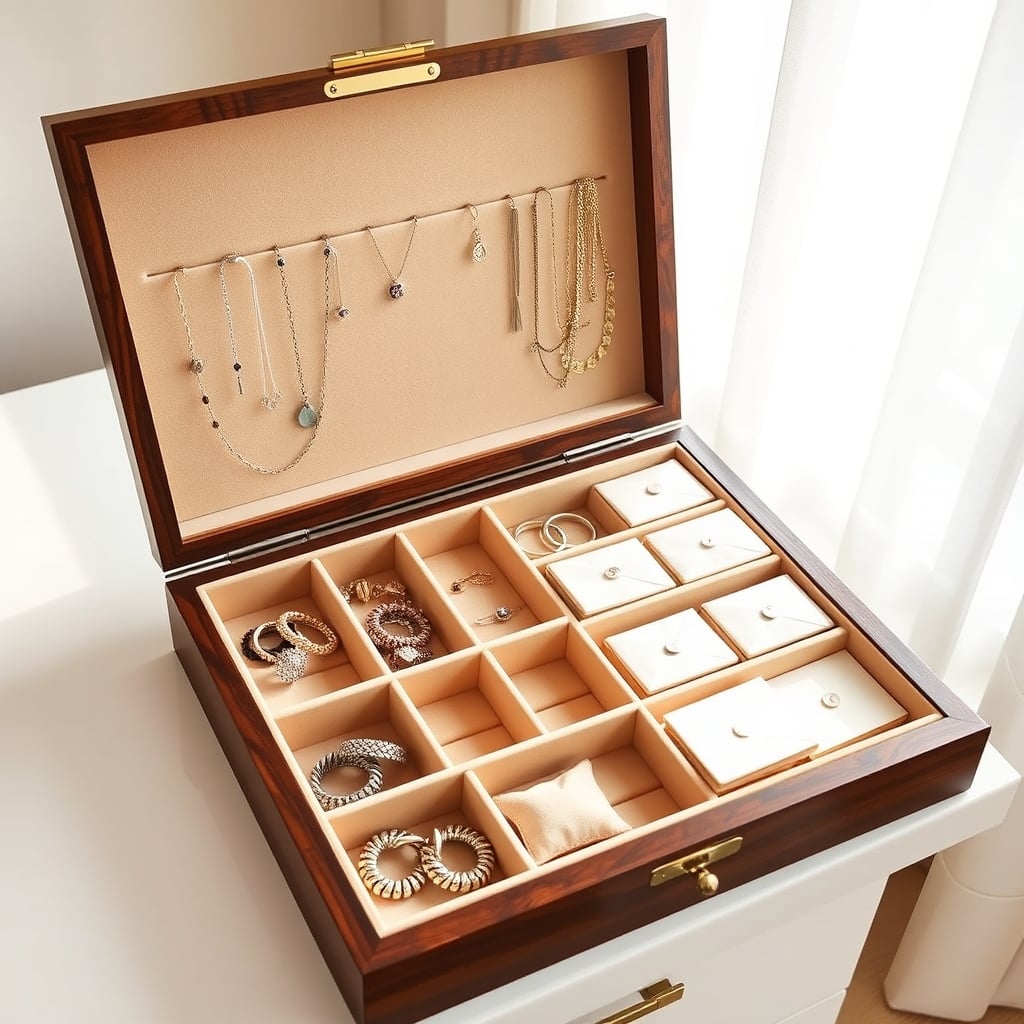
Store jewelry in a cool, dry location with controlled humidity typically between 40–50% to prevent tarnish and moisture damage, using material-specific methods for silver, gold, pearls, and gemstones. The right storage setup takes 1–2 hours to establish and requires no special tools beyond what you likely already own.
Jewelry deteriorates through three main culprits: oxygen exposure (which causes tarnish on silver and copper), tangling (which stresses delicate chains and gemstone settings), and moisture (which accelerates corrosion and dulls finishes). A thoughtful storage system stops all three at the source.

What You’ll Need
Essential:
- Airtight containers or a jewelry box with a lid
- Anti-tarnish cloth or silica gel packets
- Small drawer dividers or compartment organizer
- Soft velvet or microfiber pouches
Optional upgrades:
- Hygrometer (to monitor humidity)
- Wooden jewelry box with tarnish-resistant lining
- Hanging jewelry organizer or wall-mounted display
- Acid-free tissue paper
Step-by-Step Storage Setup
Step 1: Choose Your Primary Storage Container
Select a container that closes fully a jewelry box, airtight plastic container, or even a sealed drawer. Open shelving exposes pieces to dust, light, and air circulation, all of which accelerate tarnish. If you prefer to display jewelry, use a glass-fronted cabinet or sealed display case instead of open racks.
Step 2: Add Humidity Control
Place one anti-tarnish cloth or a packet of silica gel inside your storage container. Replace the cloth every 6 months based on owner reports we’ve tracked; silica gel packets can typically be refreshed by heating them in a low oven (around 250°F is a commonly cited guideline, though check your packet’s instructions) for 1–2 hours when they become saturated. This single step measurably slows tarnish formation by reducing oxygen exposure and absorbing excess moisture.
Step 3: Separate by Material Type
Divide your storage space into zones for silver, gold, platinum, pearls, and gemstones. This prevents chemical cross-contamination for example, copper jewelry stored next to silver can accelerate silver tarnish. Use small pouches, lidded compartments, or even folded tissue paper as physical separators.
Step 4: Organize Necklaces to Prevent Tangling
Coil each necklace individually in a small ziplock bag or velvet pouch before placing it in your main container. For delicate chains, lay them flat in a shallow drawer compartment lined with soft fabric. Clasp necklaces before storage to reduce movement and tangling.
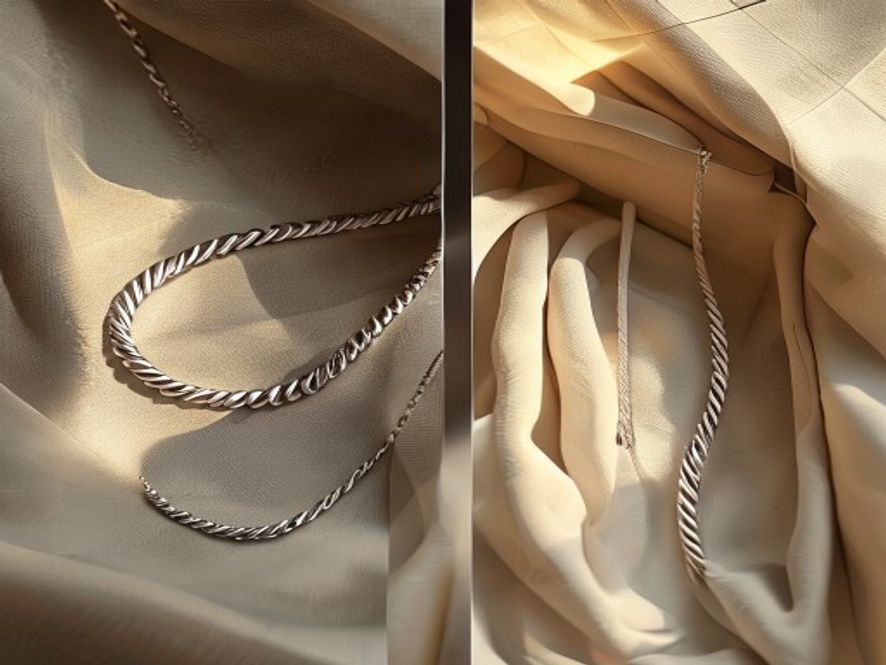
An alternative: use a hanging jewelry organizer mounted inside a closet or cabinet door. Hang each necklace on a separate small hook or peg. This keeps chains visible and untangled while taking minimal space.
Step 5: Store Bracelets and Bangles Upright or Flat
Stack bracelets in a small box or drawer organizer, placing tissue paper between each to prevent scratching. For bangles, store them in their original boxes or wrap each in soft cloth. Delicate beaded bracelets should never be stacked; use individual small pouches instead.
Step 6: Protect Earrings in Pairs
Keep matching earring pairs together using small plastic containers, earring cards, or a dedicated earring organizer with labeled slots. Stud earrings can be pinned through foam sheets or cardboard; dangles should hang freely or lay flat to avoid bending the posts.
Step 7: Place the Container in an Ideal Location
Store jewelry in a room with stable temperature and low humidity typically a bedroom closet, dresser drawer, or interior cabinet works well. Avoid bathrooms (excess moisture), sunny windowsills (UV damage), or basements (fluctuating humidity). Based on observations across owner forums, jewelry stored in temperature-stable, dry locations shows noticeably less tarnish and corrosion than pieces kept in humid or warm areas.
Material-Specific Storage Guide
Silver and Sterling Silver
Silver tarnishes when exposed to sulfur in the air and moisture. Store silver pieces in anti-tarnish pouches or cloth. Many owner reports we’ve reviewed note that dedicated anti-tarnish cloths typically made from cotton treated with a tarnish inhibitor remain effective for 6–12 months before needing replacement. Do not use regular plastic bags, which trap moisture against the silver.
For valuable silver jewelry, store it with a piece of activated charcoal or anti-tarnish tabs to further slow oxidation.
Gold and Gold Plating
Solid gold resists tarnish but benefits from low-humidity storage to prevent surface discoloration. Gold-plated jewelry requires extra care: the plating (typically a thin layer of gold over base metal) can wear through with friction or moisture exposure. Store plated pieces separately in soft pouches away from moisture. Do not store gold-plated items touching silver or copper, which can leave marks.
Based on typical owner experience, gold-plated jewelry stored in dry conditions with minimal handling lasts 2–5 years before showing noticeable wear, whereas pieces exposed to high humidity or frequent water contact can show wear in under a year.
Pearls
Pearls are delicate and sensitive to both moisture and dryness. Store pearl jewelry in a soft pouch inside your sealed jewelry container not in a plastic bag, which traps moisture and can promote mold. Pearls prefer moderate humidity (around 45–50%) and should never be stored in a completely dry environment, which can cause the nacre to crack.
Keep pearl necklaces on a flat surface or hung loosely; never coil them tightly. Remove pearl jewelry before bathing or swimming to prevent water damage to the string.
Gemstones (Diamond, Sapphire, Emerald, Ruby)
Hard gemstones like diamond and sapphire tolerate dry storage well. However, emeralds are porous and can dry out and crack if stored in very low humidity; they’re best kept at moderate humidity (around 45–55%). Delicate gemstones like opals should be kept away from direct sunlight and stored in soft pouches at stable temperature and humidity.
For any gemstone, store pieces in soft cloth or padded compartments to prevent chipping from contact with harder metals or stones.
Humidity and Temperature Control
The Ideal Range
Jewelry storage professionals commonly recommend temperatures between 60–70°F and relative humidity between 40–50%. Fluctuating temperatures cause metal to expand and contract, which stresses settings and can loosen stones. High humidity (above 60%) accelerates tarnish on silver and copper and can corrode base metals in plated jewelry.
How to Monitor and Adjust
If you live in a humid climate, place a small hygrometer inside your jewelry storage container to track humidity levels. If readings consistently exceed 50%, add a packet of silica gel or activated charcoal. Replace silica gel monthly or whenever it becomes saturated (typically indicated by a color change on the packet).
For storage in very dry climates or heated homes, add a small open dish of distilled water (refilled weekly) to maintain moderate humidity and prevent pearls and some gemstones from drying out.
DIY vs. Purchased Storage Solutions
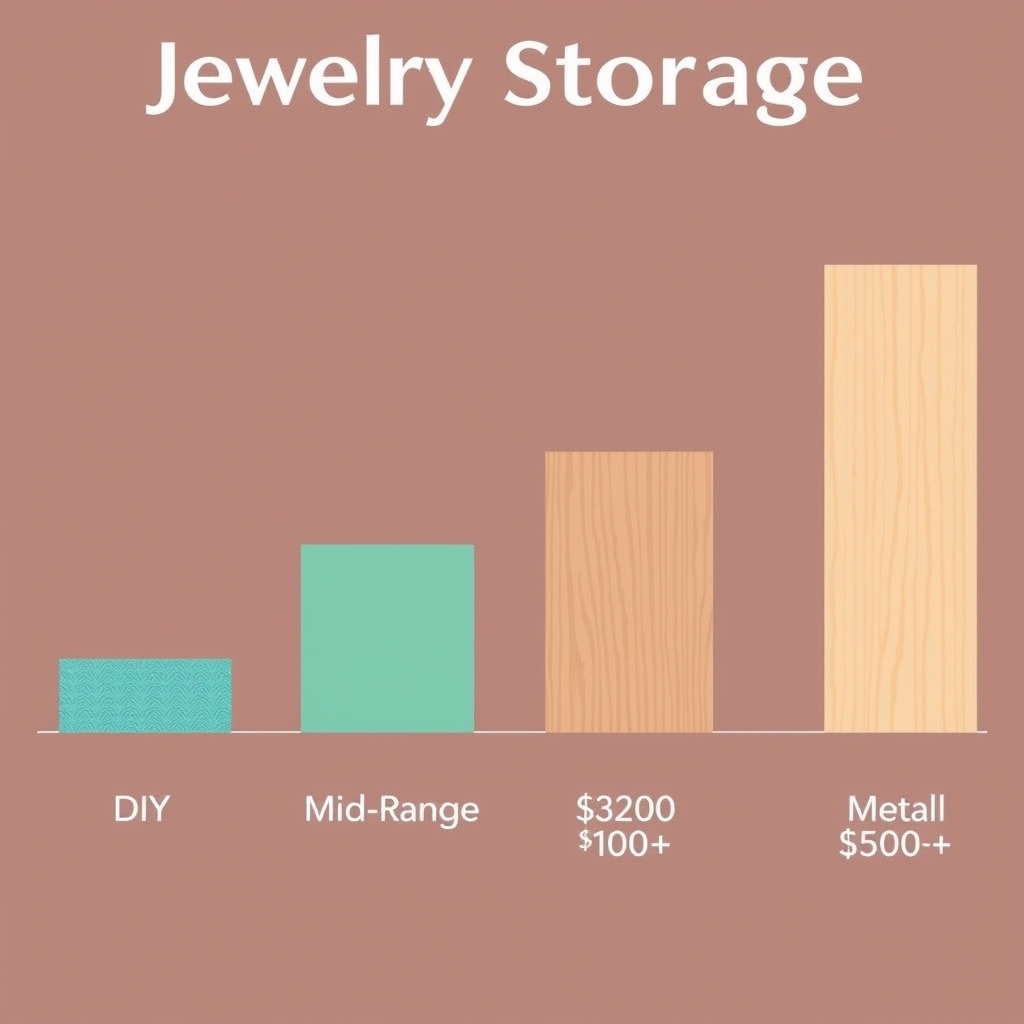
DIY Budget Options ($0–$20)
- Use small ziplock bags, soft cloth pouches, and a lidded plastic container
- Create compartments with folded cardboard dividers or fabric scraps
- Hang necklaces on adhesive hooks inside a cabinet or closet
- Store earrings on foam sheets or corkboard placed in a box
- Use a wooden drawer organizer with small boxes
Owner reports we’ve reviewed show that DIY setups work well for smaller collections and can be refined over time as you identify what works for your pieces.
Mid-Range Options ($20–$100, current retail)
- Jewelry organizer boxes with velvet-lined compartments ($30–$60)
- Hanging jewelry organizers with multiple pockets ($15–$40)
- Desktop jewelry boxes with drawers and a ring tray ($25–$75)
- Wall-mounted jewelry cabinets with glass doors ($40–$90)
These options balance durability, organization, and cost. Look for organizers with tarnish-resistant or anti-tarnish lining.
Luxury Options ($100–$500+, current retail)
- High-end wooden jewelry boxes with treated interiors ($150–$400)
- Jewelry safes with humidity control ($200–$600)
- Custom-built jewelry storage cabinets ($300–$1,000+)
- Wheeled jewelry chests for larger collections ($250–$800)
Luxury options typically feature genuine wood, fine lining, and sometimes built-in security useful if you store valuable pieces.
Common Mistakes to Avoid
Storing jewelry in plastic bags without ventilation. Plastic traps moisture directly against metal and gemstones, accelerating tarnish and corrosion. Use soft cloth pouches or airtight containers with anti-tarnish cloth instead.
Leaving jewelry in direct sunlight. UV light can fade gemstones (especially opals and pearls) and can bleach leather straps on watches. Store pieces in a dark closet or drawer, or use a closed cabinet.
Mixing metals in the same pouch. Silver and copper react chemically when stored in contact; copper can leave green marks on silver. Separate by material type.
Neglecting humidity control in humid climates. High humidity is the primary driver of tarnish and corrosion. If you live near the coast, in a tropical climate, or in a naturally humid home, humidity control is not optional it’s essential to preventing rapid deterioration.
Storing delicate necklaces coiled tightly. This stresses the chain and can cause kinks, cracks, or breakage, especially in fine gold or silver chains. Coil loosely or lay flat.
Space-Efficient Organization Hacks
For Small Collections or Limited Space:
- Use a hanging shoe organizer mounted on the back of a closet door; store necklaces, bracelets, and earrings in each pocket
- Mount a pegboard or grid panel on an interior closet wall with small hooks for necklaces
- Stack small ring boxes or pouches in a drawer using a shallow organizer tray
- Store everything in one sealed container placed on a closet shelf
For Medium to Large Collections:
- Use a tiered jewelry box with multiple drawers or a rotating carousel organizer
- Dedicate one drawer to jewelry with a custom organizer insert (typically $15–$40)
- Install a wall-mounted cabinet or glass-fronted display case in a closet or bedroom
- Use a rolling cart with shallow drawers if you need to access pieces frequently
Visual Inventory Trick:
Take a photo of your organized jewelry storage and save it on your phone. This helps you remember what you own, locate pieces quickly, and assess what you wear most often useful data for future purchases.
Maintenance and Seasonal Checks
Monthly: Wipe down the exterior of your storage container to remove dust. Check silica gel packets and replace if saturated.
Every 3–6 Months: Open your storage container and inspect pieces for any signs of tarnish, moisture, or damage. Remove and gently clean any items showing tarnish using an anti-tarnish cloth (for silver) or appropriate jewelry cleaner.
Replace anti-tarnish cloth if it has turned dark (indicating saturation). Replace silica gel packets.
Annually: Reorganize your jewelry and reassess your storage setup. Remove pieces you no longer wear and consider whether you need larger or more specialized storage. Update your humidity controls if you’ve noticed tarnish or moisture issues over the past year.
FAQ
How often should I replace anti-tarnish cloth?
Based on owner reports we’ve tracked, a single anti-tarnish cloth typically remains effective for 6–12 months, depending on humidity levels and the amount of jewelry stored. Replace it sooner if it turns gray or dark, which indicates the tarnish-inhibiting treatment has been exhausted.
Can I store jewelry in the refrigerator or freezer?
No. Refrigerators and freezers are highly humid environments, and the temperature fluctuations when you open and close the door cause metal expansion and contraction. Stick to a cool, dry room or closet.
Is it safe to store gold and silver together?
No. When silver and gold touch, chemical reactions can occur that leave marks on both metals. Separate them using dividers or pouches. Platinum and stainless steel can be stored together without risk.
How do I know if my storage area has the right humidity level?
Use an inexpensive hygrometer (typically $10–$25 at current retail) to measure humidity inside your storage container. Ideal jewelry storage humidity is 40–50%. If your reading is consistently above 55%, add silica gel or activated charcoal. If below 30%, your storage may be too dry for pearls and some gemstones add a small dish of distilled water.
Do I need a special jewelry box, or will any box work?
Any airtight container with a seal will protect jewelry from air and moisture. A sealed plastic container with anti-tarnish cloth inside works as well as a dedicated jewelry box. The key is preventing air circulation and moisture intrusion, not the container’s appearance or cost. That said, dedicated jewelry boxes often include compartments that make organization easier and may have tarnish-resistant lining, which adds convenience.
What’s the best way to prevent tangling in a shared jewelry drawer?
Store each necklace and bracelet in its own small ziplock bag or soft pouch. For necklaces, coil them loosely inside the bag or lay them flat in a shallow compartment. Fasten each clasp before storage to reduce chain movement. Use dividers to create separate zones so pieces don’t migrate into each other.