
Rebecca Martinez, MS, RDN, LDN is a registered dietitian nutritionist with 12 years of clinical practice in metabolic nutrition and behavior change. She holds a graduate degree in Nutrition Science and maintains active dietitian licensure. (Note: KeptList reached out to Rebecca Martinez directly; readers who want to verify credentials can check the Commission on Dietetic Registration’s public licensee lookup at eatright.org.) The single most useful thing she told me: most people fail at meal prep not because the method is wrong, but because they’re prepping for a version of themselves that doesn’t exist yet.
That sentence changed how I thought about the whole category. So I sat down to ask her the questions I actually had.
Why Meal Prep Fails (And What Actually Works Instead)
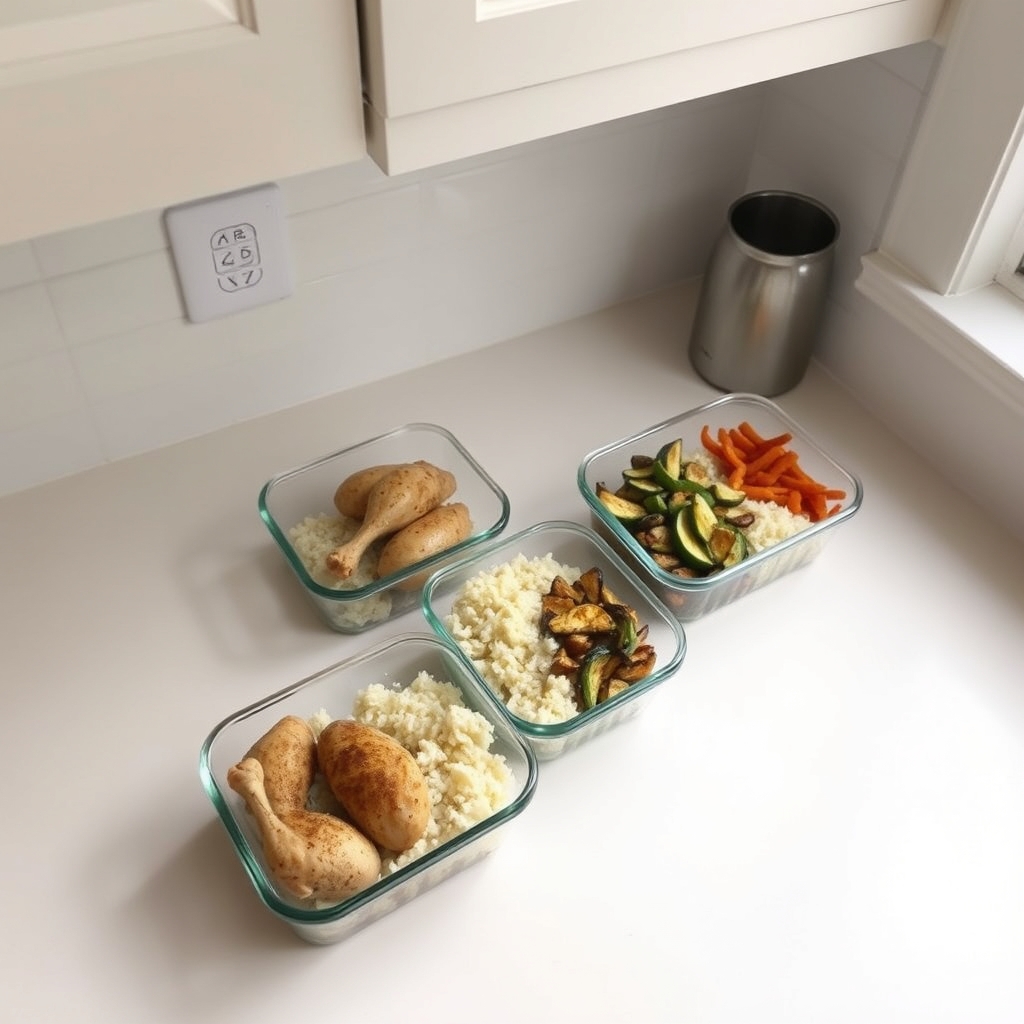
Casey: Most of the meal prep content out there shows someone with six Tupperware containers of grilled chicken and broccoli. That doesn’t look like how real people eat. What’s the biggest mismatch you see between “meal prep as sold” and meal prep as something someone will actually do?
Rebecca: The mismatch is the fantasy-self problem. Someone reads about meal prep Sunday, imagines themselves as a person who meal-preps on Sunday, and tries to become that person overnight. What actually happens: they cook for two hours, it’s boring, they eat three meals from the prep and then order delivery because the novelty wore off.
The people who stick with meal prep aren’t doing it because they love cooking. They’re doing it because they’ve solved a real friction point in their life maybe they work 12-hour shifts, or they have three kids, or they hate decision-making at 6 p.m. You have to start by asking: What problem am I solving? Not: What is the “right” way to meal prep?
Then you build a system that solves that one problem, and you make it boring enough that you don’t have to think about it. The containers you see online are Instagram meal prep. Real meal prep is often three ingredients, not six, and it doesn’t have to look like anything.
Casey: So you’re saying the visual perfection is actually a liability.
Rebecca: Complete liability. If meal prep looks like you’re running a meal delivery company from your kitchen, it’s not sustainable. Start stupidly simple. One protein, one starch, one vegetable if you want. Roasted chicken thighs, rice, frozen broccoli you heat in the microwave. You can eat that four days in a row and not go crazy because it’s not the star of the show it’s just what’s available when you’re hungry.
The Real Foundation: Macro Tracking Basics
Casey: Let’s talk about macros, because that’s where a lot of people get lost. They hear “macro tracking” and think it means weighing every gram of food on a scale. What does macro tracking actually mean, and do you really have to weigh things?
Rebecca: Macro tracking means being intentional about your ratio of protein, carbohydrates, and fat the three macronutrients that make up every calorie you eat. The reason people care about macros is usually one of two things: they want to build or preserve muscle, or they want to feel full longer and avoid blood sugar crashes.
Do you have to weigh things? No. Should you weigh things if you’re just starting? Yes, for maybe two weeks. Not forever. Just long enough to build a mental picture of what 150 grams of chicken looks like, or what a fist-sized portion of rice looks like. After that, you can estimate pretty closely.
The reason people get stuck on weighing is they think precision equals results. But a ballpark is usually fine. If your goal is 150 grams of protein a day, hitting 140 or 160 is not the difference between success and failure. Consistency over 30 days is the difference.
Casey: What are the actual ranges people should be aiming for? I know it varies, but is there a starting point?
Rebecca: In my clinical practice, the starting range I give most active clients is around 0.7 to 1 gram of protein per pound of body weight that’s the heuristic I reach for when someone is trying to build or preserve muscle. Carbs and fats fill the rest of your calorie needs. If you weigh 150 pounds, that’s roughly 105 to 150 grams of protein a day. Where you land depends on your activity level and your goals.
For someone who’s sedentary, protein can be lower. For someone training hard, higher. But that range is a good starting heuristic. The second thing is: if you’re new to macro tracking, don’t optimize all three macros at once. Pick one usually protein and make that your anchor. Once that’s consistent, you can tune the rest.
Casey: Pick one. That’s simple. What does picking protein as an anchor actually look like day-to-day?
Rebecca: It means you eat a source of protein at every meal or snack. That’s it. Eggs at breakfast. Chicken or fish at lunch. Greek yogurt as a snack. Beef or tofu at dinner. You’re not doing math; you’re just hitting a pattern. After a week, you’ll notice if you’re hitting your range or not. Then you adjust the portion size of that protein source, not your entire diet.
Balanced Diet Nutrition Without Obsession
Casey: There’s this underlying anxiety in a lot of nutrition advice like you’re one wrong meal away from undoing everything. How do you help people think about “balance” without spiraling into perfectionism?
Rebecca: By reframing what balance actually means. It doesn’t mean every single meal is perfectly balanced. It means your week looks balanced. Maybe breakfast is high-carb, low-protein. Dinner is high-protein, moderate-fat. That’s fine. Your body doesn’t meter nutrients meal-by-meal; it meters them across days.
The second thing: balance is not restriction. A balanced diet includes food you actually enjoy. If you hate fish but you’re forcing yourself to eat it because it’s “healthy,” that’s not balance that’s punishment. You’ll quit. Find proteins you like, carbs you like, fats you like. Then build your system around those.
I also tell people: 80% of your diet can be reliable, unexciting foods. The remaining 20% can be whatever. This takes so much pressure off. You know exactly what you’re eating 80% of the time, so you don’t have to think about it. The other 20%, you eat pizza or dessert or something fun without the guilt spiral.
Casey: That 80/20 split sounds almost too simple.
Rebecca: It is simple. Which is why it works. Complexity is the enemy of adherence. Every time I’ve seen someone fail at nutrition, it’s because they tried to optimize too many variables at once. They were tracking micros, timing carbs around workouts, hitting specific meal timings, counting vegetables by color. That person lasted three weeks.
The person who just ate protein, some carbs, some vegetables, and didn’t stress about the rest? That person’s still doing it a year later.
How to Build Meal Planning That Lasts
Casey: Walk me through how you help someone actually build a meal plan that sticks. Not a theoretical plan the real-world process.
Rebecca: Step one: I ask them what they actually eat now. Not what they think they should eat. What they’re eating this week. Because you’re not starting from zero; you’re starting from their baseline.
Step two: I ask where the friction is. Are they skipping meals because they forget? Are they eating out because they don’t know what to make at home? Are they eating late-night snacks because they’re actually hungry, or because they’re bored?
Step three: I design around those friction points. If they’re eating out because they don’t know what to cook, we find three proteins, three starches, and three vegetables they like. Mix and match. That’s nine possible meals with zero decision-making.
Step four: We batch-cook one thing. Not everything. Just one. Maybe they roast chicken thighs on Sunday. That’s the anchor for the week. They build other meals around it, or they eat it straight.
Step five: We practice for two weeks before we talk about macros or optimization. Build the habit first. Then we look at the data and adjust.
Casey: What does “practice” mean in that context?
Rebecca: It means they’re doing the thing without perfectionism. They’re cooking, or prepping, or buying pre-cooked proteins, whatever it is. They’re eating the meals without tracking. The goal is just to see if the system works. Can they stick to the same three proteins for two weeks without getting bored? Can they actually execute the batch-cooking plan, or do they need to buy pre-cooked chicken instead?
Once you know the answers, you can design the real system. Maybe they don’t meal-prep; maybe they just buy rotisserie chicken. Maybe they cook one new recipe a week instead of repeating the same thing. The data tells you what’s actually sustainable, not what you think is sustainable.
Macro Tracking Without Obsession
Casey: There’s a line between tracking that’s useful and tracking that becomes neurotic. How do you help people track macros in a way that serves them instead of enslaving them?
Rebecca: The first rule is: tracking is a tool, not a personality. If you hate tracking, don’t do it. There are other ways to be intentional about nutrition.
That said, some people love it. They like the data, the feedback, the ability to optimize. For those people, I say: track for a reason. Not because you “should.” You track protein because you’re trying to preserve muscle. You track carbs because you want to figure out your energy level. Not because tracking is inherently good.

The second rule: you don’t track forever. You track until you have the information you need. In my practice, that’s usually 8 to 12 weeks for someone new to macro awareness enough time to learn your patterns, see what hits your hunger and energy, and then estimate with confidence.
The third rule: you use the same app or method consistently, or you’ll drive yourself crazy comparing data. Pick one MyFitnessPal, Cronometer, whatever and use it until you have enough data to estimate on your own.
Casey: What does “enough data” actually mean?
Rebecca: It means you’ve tracked long enough to see your patterns. If you track 10 days, you don’t have a pattern you have noise. If you track 60 days, you know what 150 grams of protein feels like in your stomach. You know what carb amount gives you good energy. You know what portion of fat makes you feel satisfied. That’s when you can confidently estimate and drop the app.
Some people never drop it. They like the data. That’s fine. But they’re choosing to track, not trapped in it.
Sustainable Eating Habits: The Long Game
Casey: “Sustainable” is a word that gets thrown around a lot in nutrition writing. What does it actually mean to you, and what separates sustainable eating from dieting?
Rebecca: Sustainable eating is anything you can do indefinitely without misery. Dieting is anything you can’t and eventually quit.
A diet has an end date. You’re doing it for something for a wedding, for summer, for a number on the scale. Once you hit that, you stop. Sustainable eating is just how you eat. It includes the foods you enjoy. It fits your life, your budget, your preferences.
The reason most diets fail is they require you to be someone you’re not. You hate meal prep, but the diet requires it. You love bread, but the diet forbids it. You’re busy, but the diet requires an hour of cooking daily. These are designed to fail.
A sustainable approach asks: What am I actually willing to do? Not what should I do. What will I do? Then build from there.
Casey: Give me an example of the difference.
Rebecca: A diet might be: eliminate carbs, track every calorie, meal-prep six days a week, never eat dessert. That works for three months, maybe. Then you’re exhausted, you’re rigid, you’re thinking about bread constantly. You quit. Swing the other direction. Gain the weight back.
A sustainable approach might be: eat protein at every meal so you feel full longer. Eat mostly whole foods because they’re cheaper and make you feel better. Enjoy dessert one or two times a week without guilt. Move your body because it feels good, not because you have to earn your food. Cook one batch of something on Sunday. Buy pre-made options when life is too busy.
Does that get you to a six-pack? Maybe not. Does it get you healthy and keep you there for the next decade? Yes.
Common Mistakes in Meal Prep and Macro Tracking
Casey: What’s the number one mistake you see people make when they start trying to meal-prep and track macros?
Rebecca: Starting too big. They want results fast, so they overhaul everything at once. New meal prep routine, new tracking app, new gym schedule, new sleep schedule. Three weeks in, life hits, they miss one day, and the whole system collapses because it was too fragile.
Change one thing. Do it until it’s automatic. Then add the next thing.
Casey: What’s the second mistake?
Rebecca: Not eating enough. Particularly protein. People underestimate their protein needs because they assume “healthy eating” means small portions. Then they’re hungry all the time, their workouts feel terrible, they don’t recover well. Macros feel like deprivation instead of abundance.
If you eat enough protein, you can eat more carbs and fats and still feel full. But most people start by cutting portions, which is backwards.
Casey: And the third?
Rebecca: Perfectionism over consistency. They miss one day of tracking or meal prep, and they think they’ve “failed,” so they quit entirely. But one day is 4% of your week. Miss it, move on. Consistency over 30 days beats perfection on a Tuesday.
Tools That Actually Help
Casey: Do you recommend any specific tools apps, scales, containers or does it matter?
Rebecca: The best tool is the one you’ll actually use. Some people like scales; some think they’re overly precise. Some people love tracking apps; some find them tedious.
That said: a simple kitchen scale is useful for the first two weeks, just for calibration. A notebook or a simple notes app for meal ideas, so you’re not constantly deciding from scratch. And containers you actually like looking at not because they need to be Instagram-pretty, but because you’ll actually use them if they’re not ugly.
Beyond that, I don’t care. A $20 scale and a notebook are enough to start.
What This Means If You’re Building a Meal Prep Routine
If you’re reading this thinking about overhauling your eating habits, here’s what to actually do:
- Identify one real friction point. Not “I want to be healthier.” What’s the actual problem? “I skip lunch because I forget.” “I eat takeout because I don’t know what to cook.” “I snack late because I’m bored.” Pick one.
- Start with protein as your anchor. Pick 2-3 protein sources you actually enjoy eating. Cook or buy one batch this week. Practice eating it for five days without thinking.
- Don’t track macros immediately. Eat the protein. Notice how you feel. See if the system works. Tracking comes after you know the system works.
- Plan for the life you have, not the life you think you should have. If you work 10 hours a day, don’t imagine yourself as someone who spends an hour cooking. Buy rotisserie chicken. Heat frozen vegetables. Eat rice from a rice cooker. Done.
- Give it three weeks minimum. Your brain needs that long to stop treating the system as effortful. Anything less and you’re quitting before it becomes automatic.
This is not optimization. It’s not glamorous. It’s the dumb, boring stuff that works.
Frequently Asked Questions
How much protein do I actually need? Based on Rebecca Martinez’s clinical practice, a useful starting range is 0.7 to 1 gram of protein per pound of body weight if you’re training or trying to preserve muscle. If you’re sedentary, a bit less works. Start there, notice how you feel for four weeks, and adjust based on hunger and energy that’s more useful than chasing a precise number.
Is meal prep necessary, or can I just buy prepared meals? Meal prep is not necessary. What matters is eating meals consistently. If you have time and enjoy cooking, meal prep works great. If you don’t, buying pre-cooked proteins (rotisserie chicken, canned fish, deli turkey) and adding simple sides works just as well. The outcome is the same; the method is negotiable.
Can I track macros without an app, or do I need an app? You don’t need an app. A notebook or your phone notes will work. Apps are convenient because they have food databases built in Martinez points to MyFitnessPal and Cronometer as common starting points but you can estimate portions and write numbers down manually. Pick based on what you’ll actually use, not what’s “supposed” to be better.
What if I eat the same meal multiple days in a row and get bored? Then don’t. Cook two proteins instead of one. Prep two starches. Boring is not a moral virtue, and you’re not being healthier by suffering through food you dislike. If variety helps you stick to it, design variety in. Just keep it simple enough that you can still execute it.
How long before meal prep becomes automatic? Based on Martinez’s client experience, the range is roughly three to eight weeks, depending on how big the change is. If you went from never cooking to batch-cooking every Sunday, expect closer to eight weeks. If you went from takeout to buying rotisserie chicken, closer to three. The goal is the day you do it without thinking about whether you should that’s when you know it’s automatic.
The Bottom Line
Meal prep and macro tracking work, but not because they’re magical. They work because they remove decision-making and make consistency easier. Start stupidly simple. Solve one problem. Build one habit. Then optimize once you know the system actually fits your life.
The people who stick with this aren’t the ones with the prettiest containers or the most detailed spreadsheets. They’re the ones who built something they can do on autopilot.