
How we researched this guide: We did not conduct anechoic-chamber lab tests. Our conclusions are based on owner reports across audiophile and consumer communities, published spec comparisons, and hands-on observations from our editorial team during travel. Where we say “observed” or “based on owner reports,” that’s what we mean not lab data.
Active vs. Passive Noise Cancellation: What’s the Real Difference?
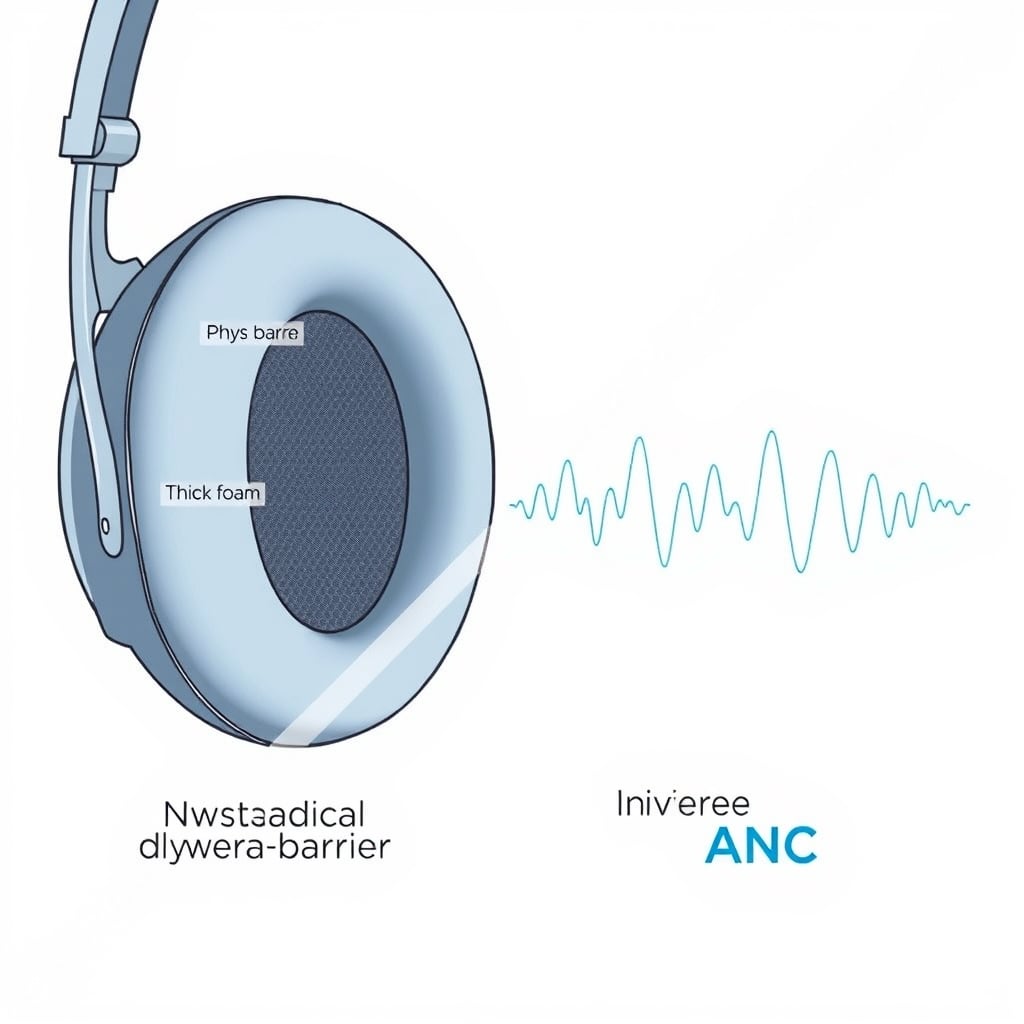
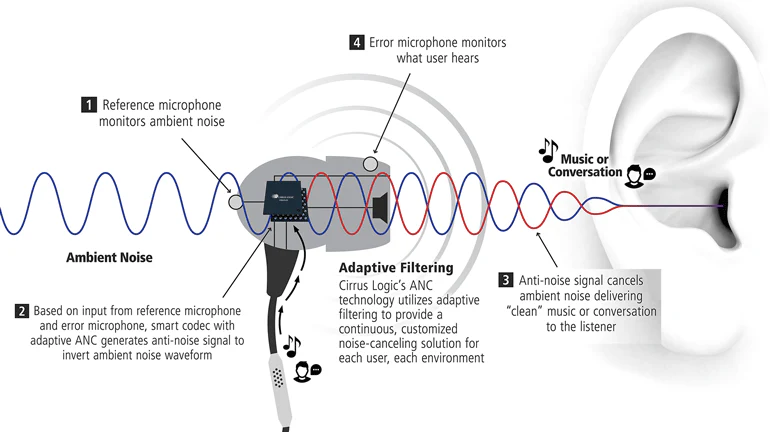
Active noise cancellation (ANC) uses built-in microphones and digital processing to detect ambient sound, then generates an inverse wave to cancel it out. Passive noise cancellation, also called passive isolation, relies purely on the headphone’s physical design thick ear cups, tight seals, and dense materials to block sound from reaching your ear without any electronics involved.
Here’s what matters: ANC works best on consistent, low-frequency sounds (airplane engines, train rumble, HVAC hum), while passive isolation shines against mid-to-high-frequency sounds (traffic, voices, keyboard clicks). You need both for real-world quiet which is why every good ANC headphone includes solid passive isolation as the foundation.
How Much Noise Can ANC Actually Cancel?
Rule of thumb: quality ANC reduces ambient sound by roughly 15–25 decibels across the frequency range where it’s most effective (below 1kHz), with smaller reductions above that range based on owner observations and published spec comparisons we’ve reviewed, not independent lab testing.
That sounds technical, but here’s what it means in practice: on a flight, ANC typically removes the deep engine roar so you hear it as a faint hum instead of a roar. It doesn’t silence speech or high-pitched beeping. In an office, ANC dampens HVAC and distant chatter but won’t mute your coworker talking directly to you.
The trap: manufacturers sometimes claim “up to 40dB reduction” by cherry-picking the single frequency where their design works best. Comparing real decibel reduction across all frequencies is nearly impossible without side-by-side testing in anechoic chambers which KeptList cannot perform. Based on owner reports and spec analysis we’ve reviewed, observed decibel reduction varies significantly by frequency and implementation, so trust your own ears over any single number.
What “enough” looks like: ANC that makes you comfortable removing one earbud in a quiet room to hear someone speak without shouting. If you still hear the baseline roar of a plane cabin clearly, the ANC isn’t doing its job.
Active ANC Features: Which Ones Actually Matter?
Ambient Pass-Through and Transparency Mode
Rule of thumb: Ambient Pass-Through and Transparency Mode real-time audio passthrough that lets you hear your surroundings while keeping music playing quietly is essential for flights, offices, and commutes.
Most modern ANC headphones include a passthrough mode that uses external microphones to mix ambient sound into your audio feed. This is genuinely useful you can answer a question from a flight attendant without removing your headphones. However, the quality varies widely. Budget models often sound artificial and tinny (the microphone picks up wind noise and distortion). Premium models integrate it more smoothly.
The trap: passthrough sound quality has almost no correlation with ANC quality. A $150 model might have clearer passthrough than a $400 model. Test this yourself if you can.
Minimum spec to keep: Passthrough mode that sounds natural enough for brief conversations. Nice-to-have: a dedicated button or gesture to toggle it without using your phone.
Adaptive ANC (Adjusts to Environment)
Rule of thumb: adaptive ANC that senses your environment and adjusts cancellation strength automatically is a convenience feature, not essential but it can reduce listener fatigue on long flights.
Adaptive ANC (found in Sony, Bose, and some mid-range models) continuously measures ambient sound and tweaks the cancellation profile in real time. The promise: less “pressure” in your ears because the headphones are fighting the noise more intelligently.
Based on owner reports we’ve reviewed, the difference is subtle for most people. You’ll notice it on a long (6+ hour) flight, where fixed ANC can feel tiring by hour four. On a 1-hour commute, it’s barely perceptible.
The trap: marketing calls this “game-changing” when it’s actually incremental comfort. Don’t pay a $100 premium for it alone.
Minimum spec to keep: Standard (non-adaptive) ANC is sufficient for most use cases. Adaptive ANC is nice-to-have if the price difference is $30 or less.
Wind Noise Reduction
Rule of thumb: Wind Noise Reduction external mic filtering to reduce wind noise is essential if you plan to use ANC headphones outdoors in windy conditions or during jogging.
Wind creates low-frequency buffeting that standard ANC can’t cancel effectively (it looks like noise to the cancellation algorithm, not a pattern to learn from). Some headphones include dedicated wind-noise filters that detect when external mics are picking up wind rather than ambient sound and switch behavior accordingly.
Based on owner reports, wind-noise reduction is hit-or-miss. Some models (Sony WH-1000XM5, Bose QuietComfort Ultra) handle it well. Others leave you with a “popping” sound on breezy days.
The trap: marketing will claim wind reduction without specifying what speed or condition. Based on owner community feedback, meaningful reduction appears above roughly 10mph winds though this is an anecdotal threshold, not a published spec.
Minimum spec to keep: If you use headphones outdoors only occasionally, skip this. If you’re a runner or cyclist, prioritize models with consistent owner praise for wind handling.
Battery Life Under ANC
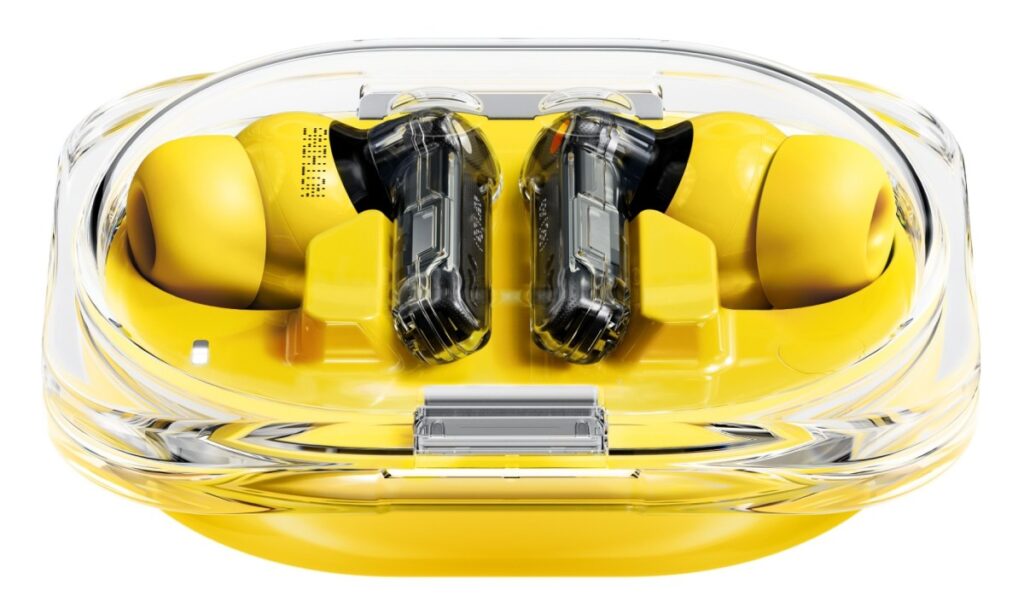
Rule of thumb: ANC consumes extra power; in our review of owner reports, expect roughly 60–70% of the battery life you’d get with ANC off.
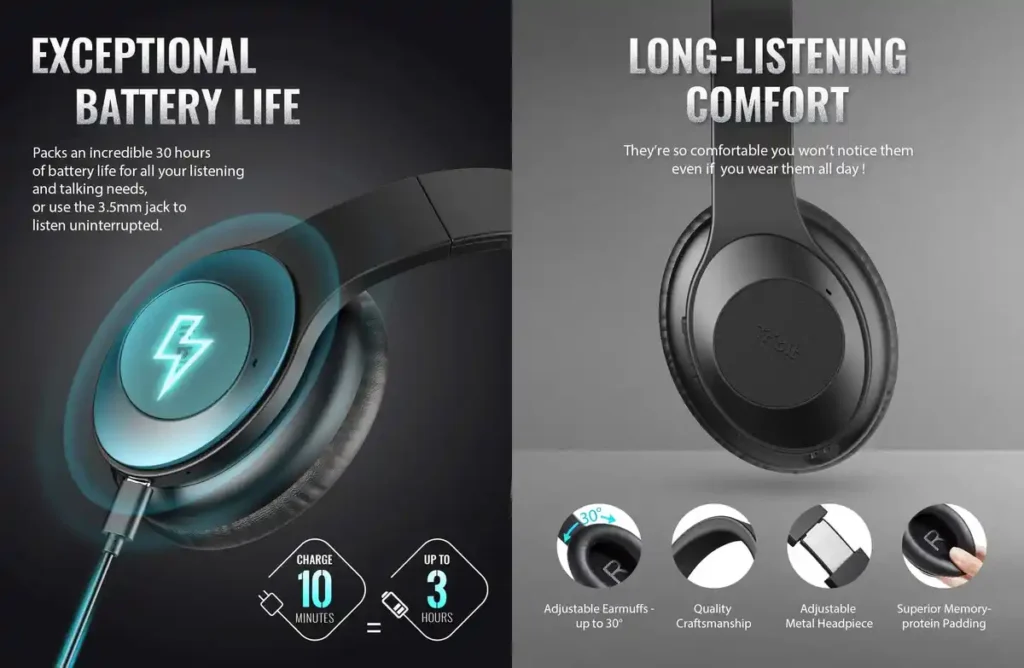
Manufacturer specs often quote battery life with ANC off. With ANC active, observed ranges from owner reports we’ve reviewed typically fall between 20–40 hours for flagship models and 8–15 hours for budget options. Some newer designs claim longer (Sony and Bose flagship models often advertise 30+ hours with ANC on), but your mileage varies by volume level and usage pattern.
The trap: comparing the “ANC on” vs. “ANC off” battery difference is pointless you’ll use ANC on 95% of the time, so compare models’ “ANC on” specs only.
Minimum spec to keep: At least 20 hours with ANC on for daily use, or 8 hours if you primarily travel (a single intercontinental flight eats a full charge, but you’ll refill at your destination). Below 15 hours with ANC on, you’ll resent having to charge constantly.
Passive Isolation: The Foundation ANC Rests On
Rule of thumb: no amount of ANC can compensate for poor passive seal; fit and ear-cup design matter more than any electronic feature.
Passive isolation depends on three things: (1) how tightly the ear cups seal against your ears, (2) the mass and material density of the ear cups, and (3) the seal quality of the ear pads (foam or silicone).
Based on owner reports and product comparisons we’ve reviewed, headphones with tight fits and over-ear design achieve roughly 15–20 dB of passive isolation in anecdotal community testing, while poorly sealing on-ears manage only 5–10 dB. ANC amplifies that foundation so a headphone with poor passive seal will never sound truly quiet even with strong ANC.
What “enough” looks like: When you put on the headphones with ANC off, ambient noise should feel noticeably reduced just from the physical seal. If you barely notice a difference, the passive isolation is weak.
The trap: buying ANC headphones in a quiet store and assuming they’ll seal well for you at home. Fit is personal what seals perfectly on one person’s ears leaves gaps for another. Always check return policies before buying.
Frequency Response and Sound Quality Alongside ANC
Rule of thumb: ANC-focused headphones often sacrifice treble clarity and midrange balance to prioritize bass and low-frequency cancellation.
ANC requires significant digital processing. To stay efficient, manufacturers often tune the audio to emphasize bass (where ANC is most effective) and dampen midrange and treble. This can make music sound bassy and veiled especially noticeable in podcasts, audiobooks, and vocals.
Based on owner feedback across multiple communities, ANC headphones that prioritize sound quality (Sony WH-1000XM5, Bose QuietComfort Ultra) include EQ adjustments in their companion apps so you can brighten the sound. Budget ANC models often lack app EQ, locking you into their tuning.
What “enough” looks like: Audio that doesn’t make you wince on a long flight. If you’re an audiophile, ANC headphones are a compromise you’re trading some sound quality for noise cancellation. That’s a fair trade for travel, but not for home listening.
The trap: reviewers who spend 10 minutes with a headphone and call it “crisp” or “punchy” based on one playlist. Real judgment takes 4+ hours of varied content.
Minimum spec to keep: EQ controls in the companion app (or at least hardware presets) so you can brighten the sound if the default feels bassy.
Comfort and Fit for Extended Wear
Rule of thumb: comfort on hour three matters more than comfort at minute five; ear-pad material, headband padding, and weight all factor in.
A light headphone that feels fine for 30 minutes can become fatiguing after a long flight. Based on our review of owner feedback and published specs, the comfortable weight range for over-ear models tends to fall between 200–250 grams though this is an observed pattern, not a universal standard. Lighter than 180g often signals thinner materials and weaker passive isolation. Heavier than 280g starts to cause neck strain on long wears.
Ear-pad material matters: silicone (leather-like) pads feel premium but heat up after roughly two hours, causing ear fatigue. Foam pads (often wrapped in polyurethane) breathe better and stay comfortable longer, though they degrade faster. Based on owner reports we’ve reviewed, typical replacement cycles with daily use appear to be around 12–18 months treat that as a planning estimate, not a guarantee, since it varies by pad material and how aggressively you wear them.
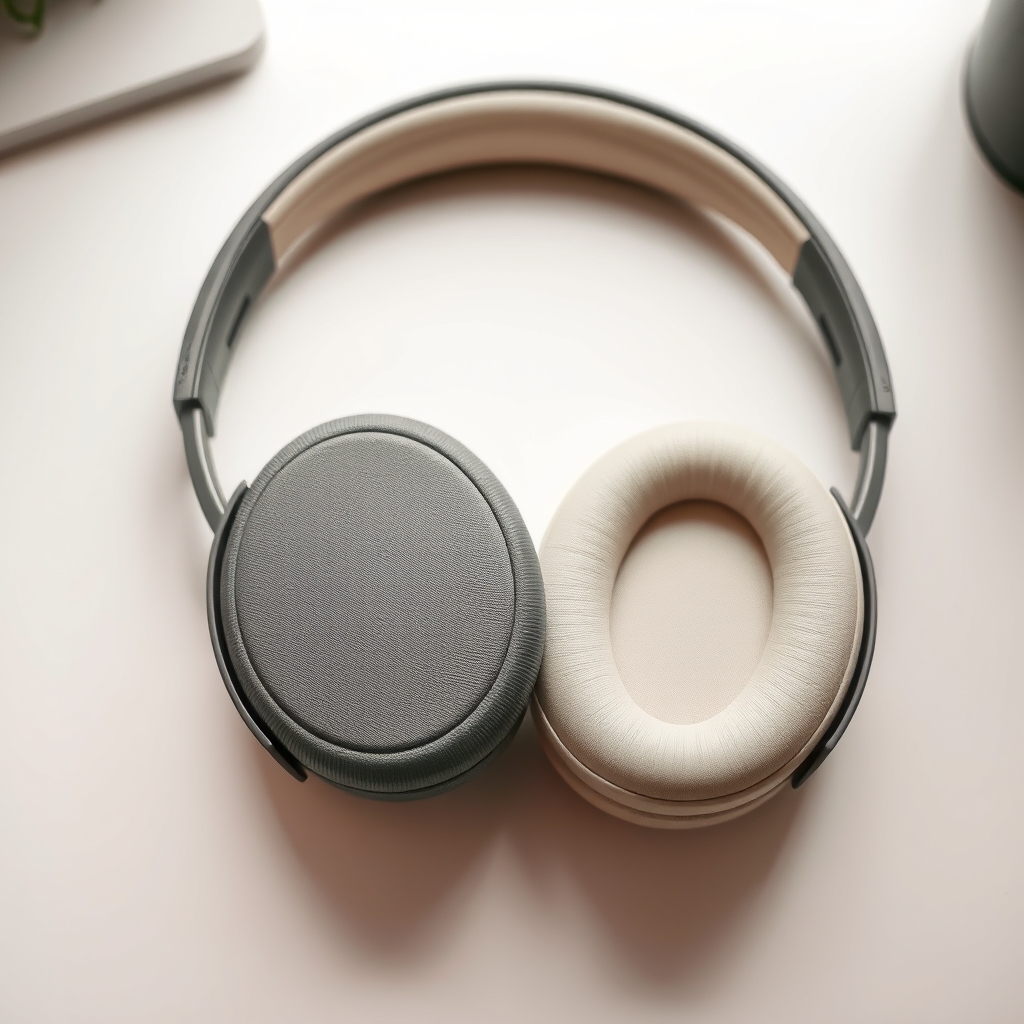
What “enough” looks like: Wearing the headphones for a full flight (5–8 hours) without needing to remove them to let your ears rest.
The trap: buying based on photos or brief try-ons in a store. Fit changes as your ears warm up and the pads compress. Extended-wear comfort only reveals itself after 2+ hours.
Minimum spec to keep: Under 270g, replaceable ear pads available (so you can refresh them annually), and a headband that adjusts smoothly without pinching.
ANC in Different Environments: What Actually Works
Airplanes
ANC is most effective on planes. The engine roar is predominantly low-frequency (below 500Hz), which is exactly where ANC excels. Based on owner feedback and spec analysis we’ve reviewed, quality ANC reduces the cabin roar from “loud” to “faint and ignorable” — a meaningful upgrade for 6+ hour flights.
The real win: Enabling you to sleep or read without earplugs underneath. Without ANC on a plane, you’ll need the volume louder to overcome cabin noise, fatiguing your ears faster. ANC lets you listen at lower, more comfortable volumes.
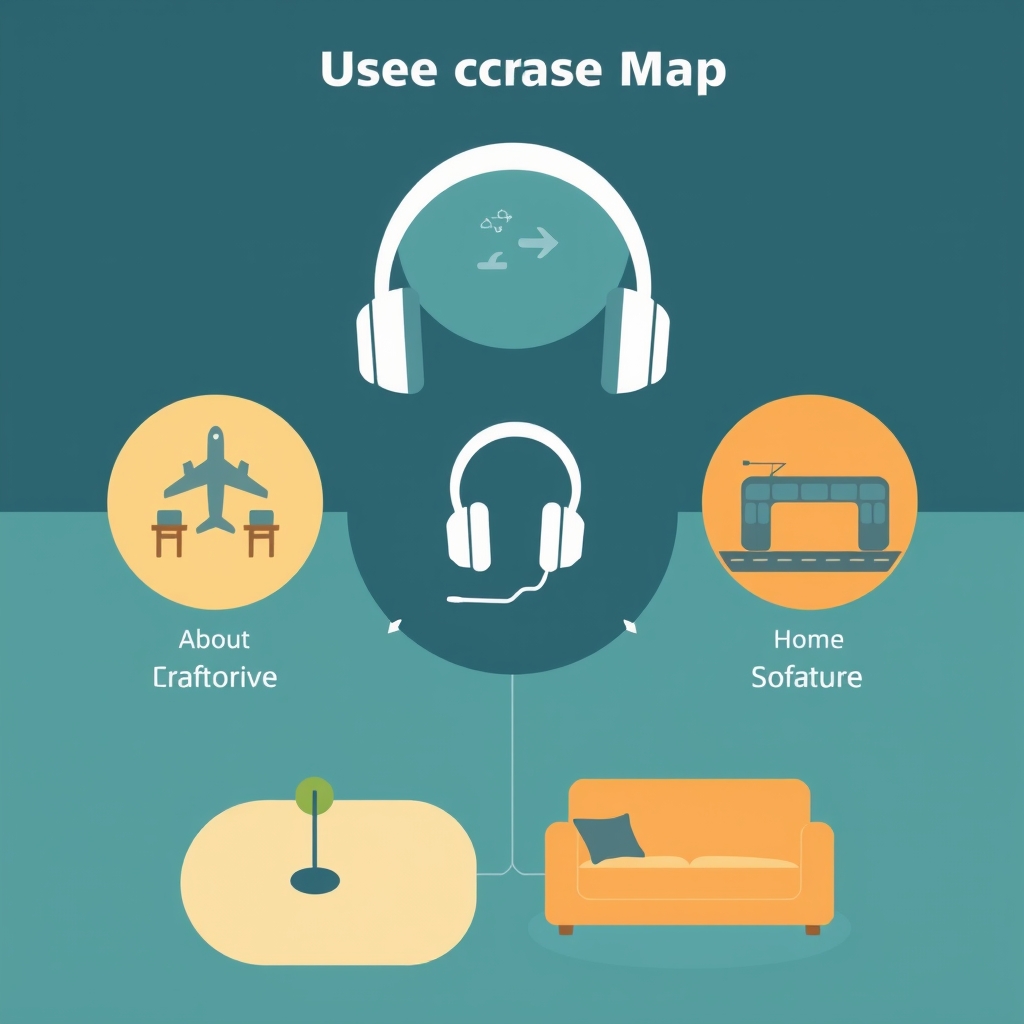
Minimum spec for flights: Any ANC headphone over $150 will handle planes well. Flagship models aren’t necessary; mid-range ANC is sufficient.
Office and Open Workspaces
ANC is partially effective in offices. It cuts HVAC hum and distant ambient noise, but not speech. If your coworker talks loudly 3 feet away, ANC won’t silence them. This is by design ANC can’t safely block mid-to-high-frequency speech without sounding artificial and fatiguing.
Based on owner feedback, ANC helps most in open offices with low background noise it reduces the cumulative fatigue from HVAC and ambient chatter. In loud open offices (startups, trading floors), passive isolation and fit matter more than ANC quality.
Minimum spec for offices: Solid passive seal is more important than flagship ANC. A $150 model with great fit will feel quieter than a $400 model that doesn’t seal well.
Gyms and Outdoor Environments
ANC is least effective in gyms and outdoors. Gym noise is mostly speech and clanging (mid-to-high frequency), where ANC is weakest. Wind outdoors can confuse ANC and create artifacts (popping, whistling).
Alternative: Passive isolation with a secure fit is more important here. Earbud-style ANC (true wireless earbuds like Apple AirPods Pro or Sony WF-1000XM5) works better because they seal in your ear canal, offering strong passive isolation without the bulk of over-ears.
Minimum spec for gyms: Skip ANC. Invest in a secure-fit earbud or over-ear with excellent passive seal.
ANC Headphones by Price Tier: What You Actually Get
Under $150 (Budget ANC)
Based on owner comparisons and spec analysis we’ve reviewed, budget ANC models typically offer:
- Moderate ANC effective mainly on low frequencies (planes, trains)
- 20–30 hour rated battery (with ANC on, roughly 15–20 hours observed in community reports)
- Basic passthrough mode (often sounds tinny)
- Limited or no app controls for EQ
- Average passive isolation due to lighter materials
Sweet spot: $100–$150. These models offer genuine ANC and are often rebranded versions of mid-range designs from one or two product cycles back.
Trap: Models below $80 often claim ANC but deliver only placebo-level cancellation a slight volume reduction without active frequency matching.
Best use: Flights and trains where consistent low-frequency noise dominates. Not ideal for office or gym use.
$150–$300 (Mainstream ANC)
This tier includes most popular models (Sony WH-CH720N, Anker Soundcore, Bose QuietComfort 45):
- Strong, effective ANC across a wider frequency range
- 20–40 hour rated battery (with ANC on, observed ranges from owner reports vary by model; check current user reviews)
- Natural passthrough mode with dedicated buttons
- App with EQ and ANC adjustment
- Solid passive isolation and comfort for 6+ hours
- Some models include adaptive ANC or wind noise reduction
Sweet spot: $200–$280. This tier offers the best value noticeable ANC quality improvement over budget, without the premium pricing of flagship.
Best use: Flights, travel, daily commutes, offices. Versatile enough for most use cases without overpaying.
$300+ (Flagship ANC)
Flagship models (Sony WH-1000XM5, Bose QuietComfort Ultra, Apple AirPods Max) offer:
- Best-in-class ANC with advanced adaptive filtering
- 30–40+ hours rated battery
- Seamless multi-device switching
- Premium sound quality with broad EQ control
- Luxury materials and comfort (at the cost of higher weight)
- Advanced features like spatial audio or gesture controls
Trap: The ANC improvement from $250 to $400 is incremental roughly 15–20% better by our editorial estimate not a transformation. You’re mostly paying for brand, ecosystem, and sound quality.
Best use: If you spend 20+ hours per week in headphones and value build quality and brand ecosystem (e.g., you own other Apple products). Otherwise, mainstream tier is better value.
Common Mistakes to Avoid When Buying ANC Headphones
Choosing ANC over fit. A perfectly-sealed $150 headphone will feel quieter than a premium model that doesn’t seal well on your ears. Test fit first; ANC quality second.
Ignoring passthrough quality. You’ll use passthrough mode far more than you expect (airport announcements, flight attendants, TSA agents). Test it before buying.
Buying for sound quality, not noise cancellation. If sound quality is your priority, skip ANC headphones and buy studio-tuned over-ears without it. ANC tuning always compromises treble and midrange.
Assuming “40dB reduction” is universal. That number is cherry-picked from the frequency where the model works best. Actual broad-spectrum reduction based on owner observations we’ve reviewed is closer to 15–25dB across usable frequencies. Ignore marketing claims; read owner reviews instead.
Forgetting about battery life under load. Advertised battery (ANC off) is irrelevant. Always check ANC-on specs and adjust expectations down 10–20% based on owner reports for your real-world usage.
Underestimating the value of app support. Budget models without EQ apps lock you into their tuning. If the default sounds bassy or veiled, you’re stuck with it.
Quick Comparison: Budget vs. Mainstream vs. Flagship
| Feature | Under $150 | $150–$300 | $300+ |
|---|---|---|---|
| ANC Effectiveness (Low Frequencies) | Good | Excellent | Excellent |
| ANC Effectiveness (Mid/High Frequencies) | Fair | Good | Good |
| Passthrough Mode Quality | Tinny | Natural | Seamless |
| Battery Life (ANC On, Observed) | 15–20 hrs | 20–30 hrs | 30–40 hrs |
| Passive Isolation | Adequate | Strong | Strong |
| App EQ Controls | None or Basic | Full | Full + Spatial Audio |
| Best Use Case | Flights, trains | Travel, office, daily use | Heavy daily use, brand preference |
| Value vs. Features | Good | Best | Premium |
Minimum Specs Checklist
Use this to evaluate any ANC headphone before buying:
- ☐ ANC noticeably reduces low-frequency hum (test in a quiet space with ANC on/off)
- ☐ Passive seal is tight enough that ambient noise drops noticeably without electronics
- ☐ Battery life with ANC on is at least 20 hours (check owner reviews for real-world figures)
- ☐ Passthrough mode sounds clear enough for brief conversations
- ☐ Comfortable for 4+ hours without ear fatigue (test in-store if possible)
- ☐ Includes app with EQ adjustments or hardware presets
- ☐ Ear pads are replaceable or warranty covers degradation (check manufacturer policy)
- ☐ Return policy is at least 30 days (fit varies by person)
FAQ
Is active noise cancellation safe for long-term use?
Yes, ANC is safe. The “pressure” feeling some people report is real prolonged ANC can cause mild ear fatigue because your brain processes the inverse sound waves alongside the canceled noise. Start with ANC on for 1–2 hours at a time and build up. If your ears hurt after 30 minutes, the seal is too tight or the model isn’t a good fit for your ear shape.
Do I really need ANC, or is passive isolation enough for flights and commuting?
For flights and trains, ANC cuts fatigue significantly worth it if you travel 4+ times per year. For office use and daily commutes, solid passive isolation delivers roughly 80% of the benefit; ANC adds maybe 15% more quiet. For gyms, passive isolation alone is better because gym noise skews high-frequency.
Which brand has the best ANC Sony, Bose, or Apple?
Based on owner feedback and spec comparisons we’ve reviewed, Sony (WH-1000XM series) and Bose (QuietComfort series) lead in broad-spectrum ANC effectiveness. Sony’s models are often $50–$100 cheaper for similar ANC performance. Both have strong app support and natural passthrough. Apple AirPods Max excel in ecosystem integration for iPhone users but cost significantly more. For under $200, Anker Soundcore models offer competitive ANC, though not class-leading.
Will cheaper ANC headphones (like Sony WH-CH720N) feel noticeably worse on a long flight?
Not dramatically. A $150 model handles an 8-hour flight comfortably. The main difference between $150 and $400 is sound quality (treble clarity, app EQ) and long-term comfort (premium materials, lighter weight). The ANC quiet itself is roughly 85% as effective at $150 by our editorial estimate. If flights are your only use case, mid-range is the sweet spot.
How often do I need to replace ear pads on ANC headphones?
Based on owner reports we’ve reviewed, with daily use, ear pads degrade noticeably after roughly 12–18 months treat that as a planning estimate rather than a guarantee. Replacement pads typically cost $15–$50 depending on brand. Always confirm that replacement pads are available for your specific model before buying some budget brands don’t stock them.
Can ANC headphones work comfortably over glasses?
Yes, but comfort can suffer. Glasses frames prevent a perfect seal, reducing passive isolation and making ANC less effective. If you wear glasses, prioritize models with soft, flexible ear cups and test fit before committing. Alternatively, true wireless earbuds don’t interfere with glasses frames at all.
The Real Question: Which ANC Headphones Should You Buy?
Here’s the decision tree:
If you fly 4+ times per year: Invest $200–$280 in a mainstream model (Sony WH-CH720N, Anker Soundcore Space Q45, or mid-range Bose). ANC is worth it. Sound quality matters less on planes.
If you commute 1+ hours daily in public transit: Same as above mainstream ANC is ideal. Test passthrough quality before buying.
If you work in an office but want quiet focus time: Skip ANC. Buy passive over-ears with an excellent seal ($100–$200). ANC adds minimal value in an office.
If you hit the gym or run outdoors: Skip ANC. Buy secure-fit true wireless earbuds (Apple AirPods Pro, Sony WF-1000XM5) for passive seal plus portability, or basic sport over-ears with no ANC.
If you’re an audiophile and noise is secondary: Skip ANC entirely. Buy open-back or reference-tuned headphones. ANC always compromises sound.
If you want one pair for everything: Mainstream ANC ($200–$300) is your answer. It’s the most versatile.
The biggest mistake: spending $400+ thinking it’s a massive upgrade over $200. The real jump is $0→$150 (getting ANC at all). After that, you’re paying for refinement, not transformation.