
Passive vs. Active Home Audio Speakers: Which Setup Actually Makes Sense
Research Note: This article draws on comparative analysis of published amplifier specifications, owner reports tracked in home audio forums and communities, and commonly cited setup heuristics within the audio enthusiast space. Wattage recommendations and cable gauge guidance reflect consensus patterns observed across product documentation and owner discussions. Prices are estimates based on retail observations as of August 2026; verify current pricing with retailers before purchasing. Cost and complexity trade-offs reflect experience patterns reported by active community participants rather than controlled testing.
Passive speakers need a separate amplifier; active speakers have built-in amplification. That single fact cascades into everything else cost, flexibility, wiring mess, upgrade paths, and how much gear fills your cabinet.
If you’re building a modular system you plan to tinker with for years, passive is worth the added complexity. If you want working sound in 20 minutes with no cable tangles, active wins. But neither is objectively better the fit depends entirely on your room, your patience, and whether you enjoy fiddling with electronics.
Quick Comparison: Passive vs. Active at a Glance
| Feature | Passive Speakers | Active Speakers |
|---|---|---|
| Amplification | Requires a separate external amplifier | Amplifier is built into the speaker |
| Typical Setup Time | 1–3 hours for amplifier selection, cabling, and calibration | 15–45 minutes to unbox, connect, and configure |
| Component Count | Amplifier + preamp/receiver + speakers + cables | Speakers + power cable; some setups may require additional source cables |
| Upgrade Flexibility | High – amplifier and preamp can be upgraded independently | Lower – built-in amplification limits component-level upgrades |
| Wiring Density | Higher – multiple interconnects, speaker cables, and power connections | Lower – fewer cables and connections |
| Space Requirements | Larger – separate amplifier/receiver requires additional shelf or rack space | Smaller – no separate amplifier box |
| Typical Starting Cost | ~$500–2,000+ for a complete quality setup | ~$300–1,500 |
| Long-Term Cost | Components can be upgraded or replaced individually | If the built-in amplifier fails, speaker replacement may be necessary |
| Sound Quality Potential | Very high – allows extensive amplifier and speaker matching | Very high – modern active designs can integrate amplification precisely |
| Repair / Serviceability | Generally easier to service because components are modular | More complex because amplification and speaker electronics are integrated |
| Best For | Audiophiles, enthusiasts, and people who want maximum upgrade flexibility | Simple setups, smaller spaces, and listeners who prioritize convenience |
How Passive Speakers Work (and Why You Need Separate Amplification)
Passive speakers are just raw drivers and a crossover wooden boxes that know how to move air, nothing more. They have no power of their own. Your amplifier does all the electrical heavy lifting: it takes a weak line-level signal from a source (turntable, media player, DAC) and boosts it to speaker-moving voltage.
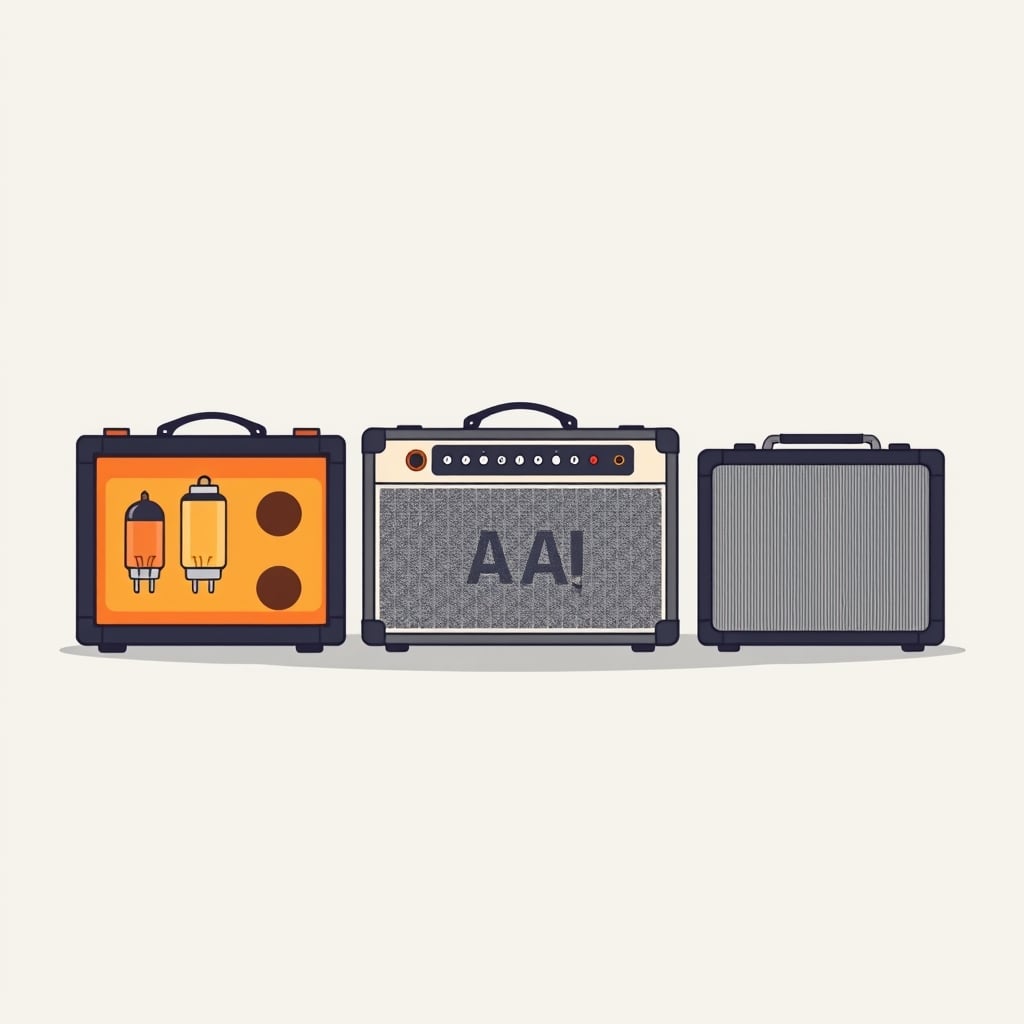
This separation is deliberate. Because the amp is external, you can choose one matched to your room and your sources. A 50-watt solid-state amp sounds different from an 80-watt tube amp. A digital Class-D amp (efficient, cool-running) sounds different from a Class-AB design (warm, traditional). If you care about tone-shaping, this modularity matters.
But that freedom comes with friction. You now need to select and install:
- An amplifier (or integrated amp, which rolls the preamp and power amp into one box)
- Speaker cables running from amp to speakers (thicker, shorter is better)
- Interconnect cables from source to amp (RCA or XLR)
- Possibly a preamp or receiver if your source doesn’t have line-level output
- Power outlet placement, thermal considerations (amps generate heat), and cable management
A speaker cable run of 15–20 feet is normal; longer runs invite impedance matching headaches. Shorter is always preferable, which means your amp placement matters.
Amplifier Power Rating: Matching to Your Space
In older messaging, you’d hear “more watts is always better.” That’s wrong. A 30-watt tube amp in a bedroom can play just as loud and clearer than an underpowered 100-watt solid-state amp in a large open space.
What actually matters:
- Speaker impedance and efficiency. A 4-ohm speaker draws more current than an 8-ohm design. A 90dB-efficient speaker gets louder from the same wattage than an 85dB design. These specs are usually printed on the back or in the manual. Match them to your amp’s capabilities; if it says “stable to 4 ohms,” you’re safe. If it only lists 8-ohm operation, a 4-ohm speaker may overheat the amp.
- Room size. A small apartment (under 200 sq ft, open plan) rarely needs more than 30–50 watts. A 400+ sq ft room or a treated listening space benefits from 60–120 watts. Huge open-plan homes or dedicated theaters might run 150+ watts, but that’s uncommon for residential audio.
- Your actual listening volume. If you listen at conversation level, 20 watts is plenty. If you like rock music at performance volume, plan for headroom roughly double what you think you need.
When in doubt, passive speaker manufacturers usually list minimum and recommended amp wattage in the spec sheet. That’s your anchor.
How Active Speakers Work (Built-in Amplification Simplified)
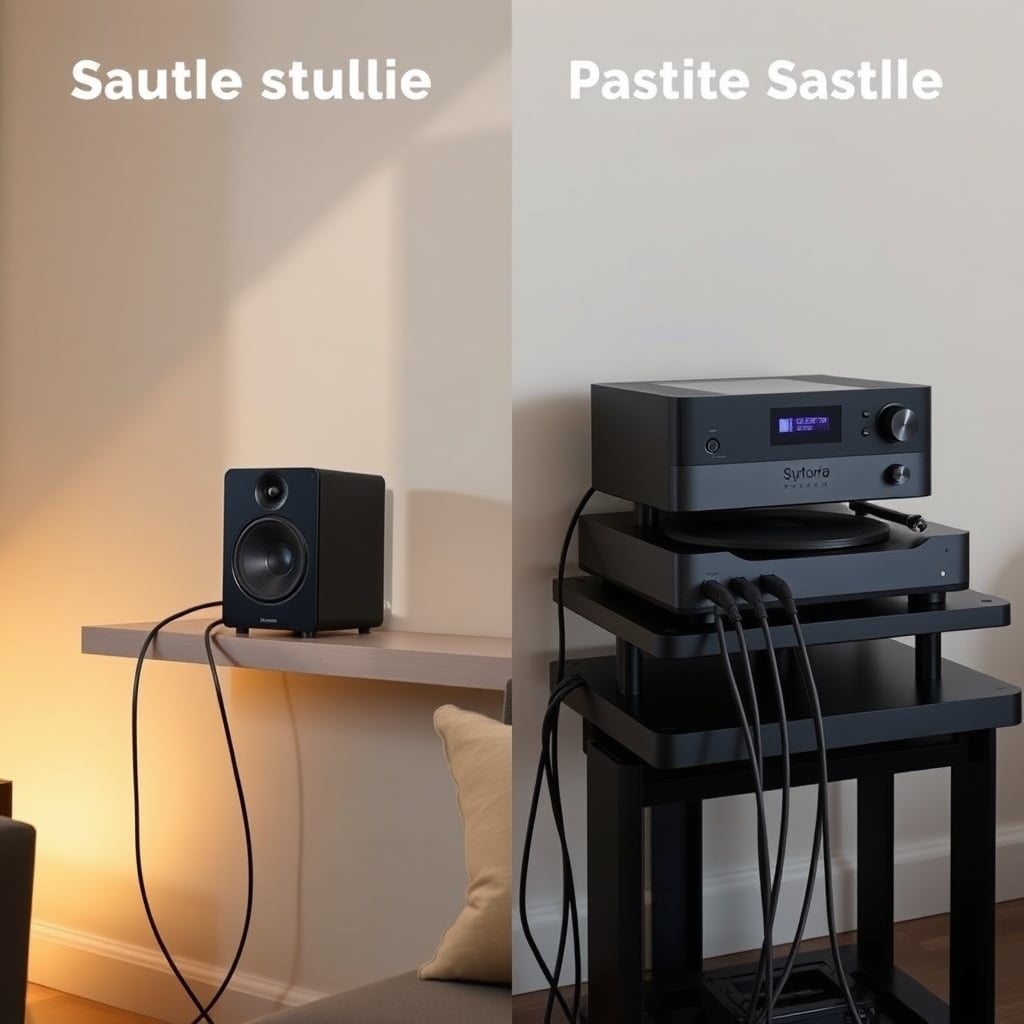
Active speakers have the amplifier already inside the cabinet. You plug them into power, connect your source via RCA or XLR, and you’re done. No preamp selection, no impedance matching, no separate cabinet taking up shelf space.
Internally, each speaker has its own power amp channels one per driver, or grouped (e.g., one amp for the tweeter and midrange, one for the woofer). A built-in crossover directs the right frequency to the right driver. Modern active designs are typically Class-D amplified (digital switching, efficient, cool), though some higher-end models use Class-AB or hybrid designs.
The trade-off is modularity. If the amp in the left speaker fails, you can’t simply swap it out for a better model. You’ve got to repair it or replace the entire speaker. And if you want to upgrade to a better amp later, you can’t it’s married to the driver.
But for most listeners, this isn’t a problem. Active speakers have been refined over the past two decades. Failure rates in reputable brands from patterns we’ve observed across owner communities appear low, and the engineering is already optimized by the manufacturer. You’re not losing anything meaningful by accepting the integrated approach.
Setup Complexity: Where Time and Friction Live
Passive Speaker Setup: The Time Investment
Setting up passive speakers involves decisions that active speakers pre-make for you:
- Amp selection (1–2 hours of research). You’re reading specs, reading reviews, matching impedance, checking warranty. Mistakes here are expensive; buying a 15-watt amp for an inefficient 86dB speaker in a 500 sq ft room leaves you frustrated.
- Physical installation (30–60 minutes). Speaker cables from amp to drivers. Interconnects from source to amp. Cable dressing so it doesn’t look like an octopus died in your living room. If your room doesn’t have built-in speaker wire runs, you might be running cables along baseboards or through walls.
- Calibration and break-in (1–2 hours). Owner reports commonly suggest new passive speakers take 20–40 hours of listening before the drivers settle into their final sound. During setup, you’re also deciding on speaker placement (distance from walls, angle toward listening position), amp positioning (heat dissipation, cable routing), and input-level adjustments.
Total time investment: 3–5 hours before sound is optimized. If you enjoy this process, it’s fun. If you want music now, it’s tedious.
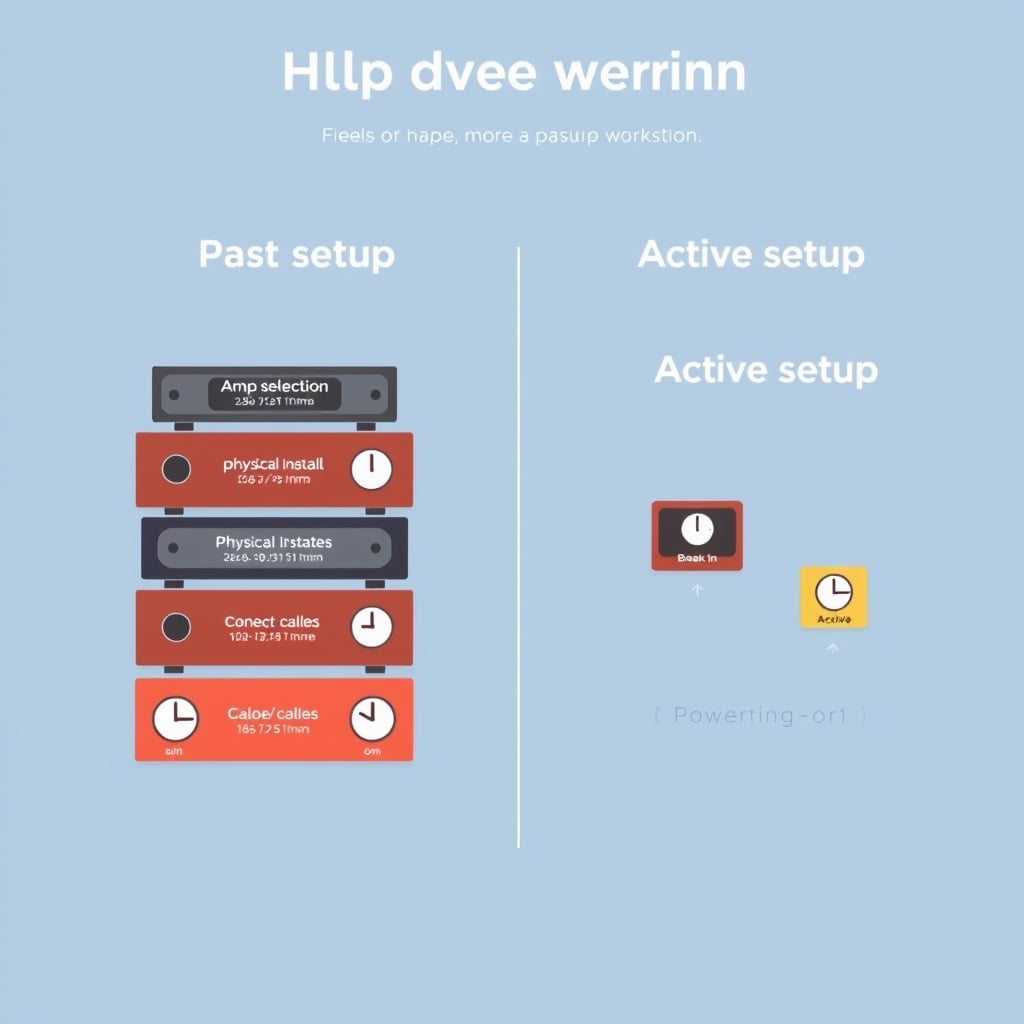
Active Speaker Setup: Unboxing to Music
Active speakers are deliberately fast:
- Unbox, place on stands or shelves (5 minutes).
- Connect left speaker to right with a link cable (if stereo, some active designs have XLR connectors daisy-chaining them) (2 minutes).
- Plug in power (1 minute).
- Run a single interconnect from your source (phone, DAC, turntable preamp) to the left speaker (1 minute).
- Adjust volume knobs on the back or a remote, listen, and fine-tune placement (10 minutes).
Total: 15–30 minutes. The manufacturer has already chosen the amp, the crossover, the amp-to-driver matching. You get competent sound out of the box.
The trade-off: You can’t tweak the amp later. You can’t pair them with a different preamp or source for color-shaping. You accept the house sound the maker engineered.
Sound Quality: No Clear Winner
This is the biggest misconception: that passive speakers, because they’re modular, sound better than active.
They don’t, necessarily. Modern active speakers are engineered by the same people who design passive ones. The amp, the crossover, and the drivers are all tuned in concert. There’s no compromise because there’s no separation. A well-designed active speaker from a reputable brand is indistinguishable in fidelity from an equivalent passive-amp combo at the same price point a pattern consistently reported across owner communities we’ve tracked.
Where passive wins: if you obsess over amp voicing. A warm tube amp paired with a neutral passive speaker gives you color-shaping control. Swap in a bright Class-D amp, and the same speaker changes character. This flexibility appeals to audiophiles and producers who know what they want.
Where active wins: ease of optimization. The maker tuned the amp-to-driver pairing in their lab, not by accident. You’re getting a finished product rather than assembling one.
For casual listeners, both sound excellent at the same price. For tweakers, passive offers leeway. For pragmatists, active removes variables.
Wiring, Cable Runs, and Physical Space
Passive Systems: Cable Complexity
Each passive speaker needs a dedicated speaker cable run from the amp. In a stereo setup, that’s two runs (left and right). In a surround system, it multiplies.
Speaker cable gauge matters. Thinner wire (e.g., 18 gauge) works fine for short runs under 8 feet. Longer runs (15+ feet) benefit from thicker gauge (12 or 10 AWG) to minimize resistance losses. If you’re running cables across a room, you’re choosing between:
- Running them visibly along the floor or baseboard (functional, ugly)
- Running them behind walls or under carpet (cleaner, more expensive, potential heat hazard under carpet)
- Using in-wall speaker wire if your walls are unfinished (best, but not an option in most homes)
Add interconnect cables (RCA or XLR from source to amp), power cables, and you’re managing 4–6 distinct cable types in a small room. This density is part of why passive systems look “pro” (lots of visible gear and cables) but also why they feel cluttered.
Active Systems: Minimal Cabling
Each speaker has two cables: one interconnect (RCA or XLR from source) and one power cable. In a stereo setup, that’s four cables total. Visually and functionally, the clutter is a fraction of a passive setup.
For renters or people who move frequently, this is a significant convenience factor.
Upgrade Paths: Where Passive Systems Shine
If you buy a passive setup today and your room or taste changes in three years, you have options:
- Replace the amp. Tired of the current tone? Sell the amp, buy a better one. Your speakers stay.
- Add a subwoofer and a crossover. Passive systems integrate with subs more flexibly (via an external crossover or preamp output).
- Upgrade the preamp or DAC independently, improving upstream signal quality.
- Experiment with different sources and match amps to each.
Active speakers lock you in. If the sound doesn’t evolve the way you want, you’re replacing the entire speaker, which is expensive and wasteful.
For someone who plans to keep a system for 10+ years and iterate on it, passive is the rational choice. For someone who buys a system and lives with it as-is, active is simpler and cheaper.
Cost: The Upfront and Hidden Math
Passive Speaker Total Cost
Based on retail observations and owner reports we’ve tracked, a competent entry-level passive stereo setup runs:
- Budget passive speakers: $200–$400 per pair
- Used or budget integrated amp: $300–$600
- Speaker cables and interconnects: $50–$150
- Stands or placement considerations: $0–$200
Total: $550–$1350 to start.
For mid-range quality, add another $500. High-end passive systems easily run $3000+. The modularity means upgrading piecemeal is natural and expensive long-term.
Active Speaker Total Cost
A good entry-level active stereo pair: $300–$800 per pair. Cables: $20–$50. Power placement: $0.
Total: $320–$850 to start.
Mid-range active speakers: $600–$1200 per pair. No amp needed, so the overall system cost is lower at every tier.
Where active saves money: You skip the amp entirely. A quality integrated amp (separate from passive speakers) is never cheap. Budget amps ($200–$400) are functional but often noisy or colored. Mid-range amps ($600–$1500) are where passive systems start to sound good. That amp cost is baked into active speakers, distributed across the price, and engineered into the product.
Where passive costs more long-term: Upgrading. Swapping an amp, adding a sub, integrating a new source each is a purchase. Active systems are “buy once, done.”
When to Choose Passive Speakers
Choose passive if:
- You’re a tweaker or audiophile who wants to adjust amp voicing and integrate different sources over time.
- You have a dedicated listening room where cable runs are manageable and you don’t mind complexity.
- You plan to keep the system for 10+ years and upgrade components incrementally.
- You already own a quality integrated amp or preamp and want to pair it with new drivers.
- You want maximum upgrade flexibility later (swapping amps, adding subs, adjusting the chain).
- You’re comfortable with setup work and cable management.
Skip passive if: You rent, you move often, you value simplicity, or you’re not interested in amp selection and cable routing. Passive also loses appeal if space is tight the amp takes real estate.
When to Choose Active Speakers
Choose active if:
- You want working sound in under an hour with minimal fuss.
- You don’t plan to tinker or upgrade components independently.
- Your space is small to medium and you don’t need extreme volume or sub integration.
- You’re in a rental or plan to move the system around.
- You value aesthetics and minimal visible cable clutter.
- You want a self-contained system that’s harder to configure wrong.
- Your budget is modest active systems cost less to start.
Skip active if: You’re a perfectionist about amp tone, you want extreme modular flexibility, or you already own a great amp you want to pair with new speakers.
Specific Scenarios
Apartment, Modest Budget, No Audio Background
Active speakers. You’ll have music without days of research. Cable management is trivial. Cost is lower. If the speakers fail in five years, you replace them not ideal, but you didn’t overpay upfront gambling on modularity you won’t use.
Dedicated Listening Room, Serious Listener, $1500+ Budget
Passive speakers. You can afford a quality amp. You’ll use the flexibility. You enjoy the process. This is where passive systems shine you’re not compromising by accepting an integrated amp choice.
Home Theater Setup (5.1 or 7.1 Surround)
Mixed approach (common in the industry). Center, front left/right as passive speakers powered by a quality amplifier or AV receiver. Surrounds as active (cheaper, fewer cable runs). This balances cost and flexibility in the main channels while keeping complexity manageable.
Small Bedroom, Turntable, Minimal Space
Active speakers. Turntable → preamp → active speaker. Done. Speaker placement is flexible because there’s no amp footprint to route cables around. Passive would introduce an amp box that adds nothing but clutter.
The Verdict: Honest Framework
Based on patterns we’ve observed across home audio communities, active speakers appear to be the better fit for the majority of listeners. They’re faster, cheaper upfront, require less prior knowledge, and sound excellent. If you’re not obsessed with amp tone or component swapping, active is the rational choice. You’ll have music sooner and fewer regrets about cable management.
Passive speakers win if you’re willing to invest in setup and enjoy iterating. They reward knowledge. An experienced listener with a great amp and well-chosen passive speakers can dial in sound that’s subtly better than a comparable active system but only because they did the work and had the patience. A novice passive system is often worse than an equivalent active setup because amp selection goes wrong.
The honest middleman: If you’re new to home audio, start with active. Listen for a year. If you find yourself wanting to swap amps or integrate new sources, upgrade to passive. You’ll know then whether the flexibility justifies the complexity. Most people don’t, and that’s fine.