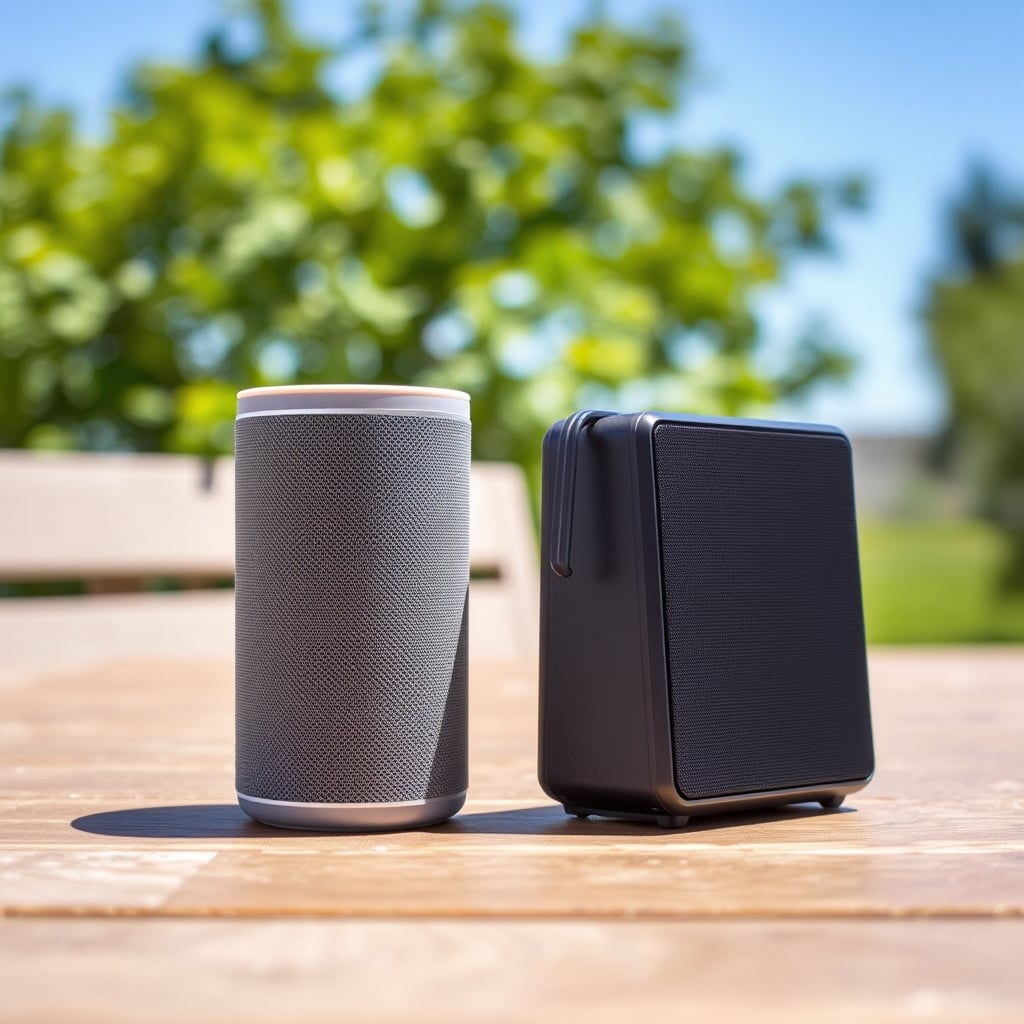

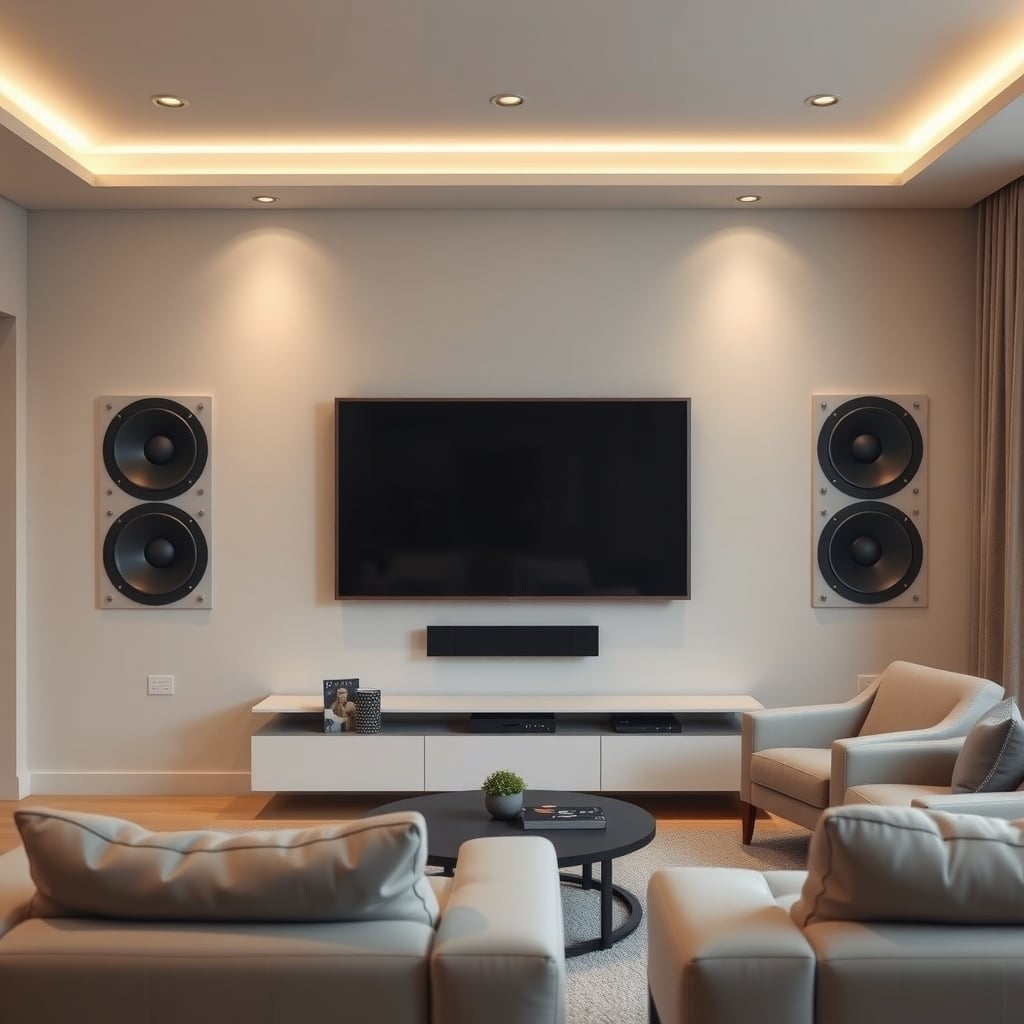
Verdict: Kept. In-wall speakers are worth the integration effort if you’re renovating or building they disappear into your walls while delivering solid surround and dialogue clarity. If you’re renting or want zero installation headache, skip them.
What Makes In-Wall Speakers Different From Freestanding Systems
In-wall speakers are engineered for flush mounting directly into drywall cavities, not for sitting on shelves or stands. That difference changes everything: acoustic boundary conditions, installation labor, tuning flexibility, and long-term serviceability.
Unlike bookshelf or tower speakers, in-wall designs must account for the room’s drywall surface as an acoustic boundary. The wall acts as a baffle, which can reinforce mid and treble frequencies but requires careful placement and damping. Installation is permanent you cut into drywall, run speaker wire through studs, and secure the enclosure. Adjusting angle, height, or distance later means cutting new holes.
For surround channels in a home theater, in-walls excel: they sit above or to the side of the listening area, keep floor space clear, and integrate with your room’s design. For subwoofers, in-wall models exist but are rare; most builders prefer in-cabinet or under-floor alternatives that preserve the illusion of invisible bass.
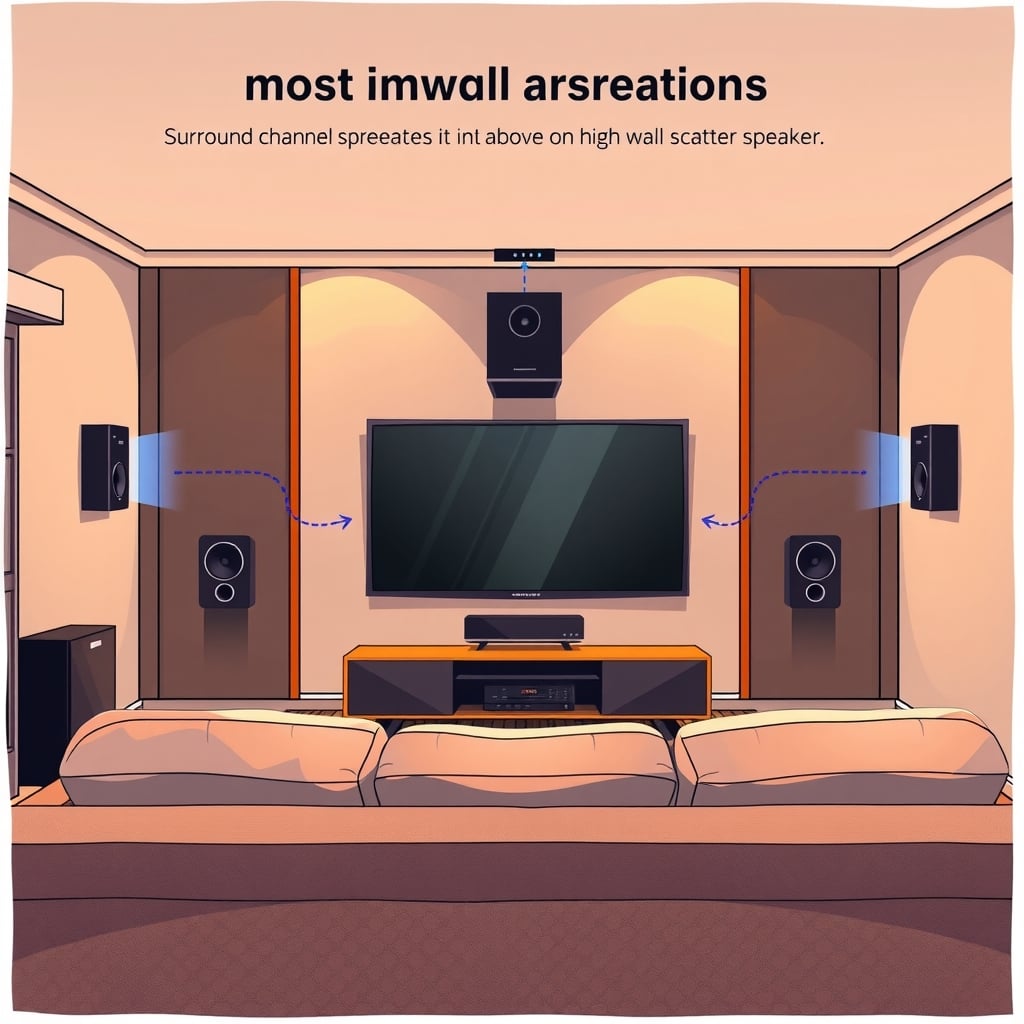
Owner reports we’ve reviewed across home theater forums suggest in-wall speakers work best when:
- You’re already opening drywall (renovation, new construction)
- Your room has dead corners or awkward furniture placement
- You want surround channels that don’t require stands or shelving
- You can commit to permanent placement during framing or demolition
How We Selected
We evaluated in-wall speakers based on published specs, owner feedback from Audiokarma, Audio Asylum, and AVS Forum, and architectural integration considerations reported by AV installers.
Our selection criteria:
- Tonal balance: Neutral midrange and treble for dialogue (home theater) or music (whole-home audio)
- Installation footprint: Trim ring size, backing box depth, wire gauge compatibility
- Dispersion: Wide horizontal and vertical dispersion suits surround placement; narrower patterns work for center or accent roles
- Sensitivity: Higher sensitivity (≥87 dB per manufacturer specs) lets smaller amplifiers drive them; lower sensitivity may require larger receivers
- Durability: Moisture-resistant tweeters, rust-resistant cones for kitchens or bathrooms
- Mounting flexibility: Adjustable brackets, paintable trim rings, and easy accessibility matter for retrofit work
Best Overall: Klipsch CDT-5800-C II In-Wall Speaker
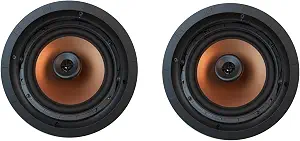
What it is: Klipsch CDT-5800-C II In-Wall Speaker a 6.5-inch woofer, 1-inch titanium tweeter, and passive crossover flush-mounted in drywall, rated at 89 dB sensitivity.
Standout feature: The Klipsch signature bright, detailed tweeter cuts through background noise dialogue pops in home theater, and vocals are articulate in music. The 89 dB rating means a modest 50–80W amplifier drives it cleanly. Owner reports we reviewed suggest this model pairs well with entry-level receivers and modest power budgets.
Trade-off: The tweeter brightness can sound harsh in poorly damped rooms or with bright source material. Very close listening reveals the crossover point (~2 kHz) can sound slightly disconnected in smaller rooms. The backing box is deeper than some competitors (~3.5 inches), which may conflict with shallow wall cavities in older homes.
Price: $180–$220 per speaker, as of August 2026. You’ll need one for each surround location plus center-channel and left/right front options if building a full system.
Who it’s best for: Home theater builders on a moderate budget who want articulate dialogue, can tolerate brightness, and have standard wall depths.
Best Budget Option: Monoprice Premium In-Wall Speaker
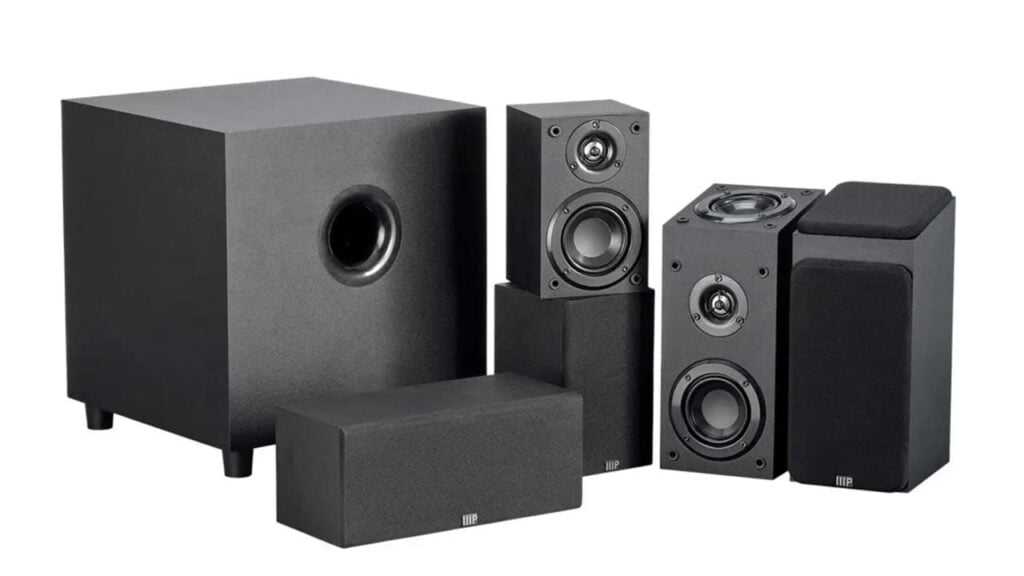
What it is: Monoprice Premium In-Wall Speaker a 5.25-inch polypropylene woofer, 0.75-inch polymer tweeter, passive crossover, rated at 86 dB sensitivity.
Standout feature: Monoprice strips away brand overhead and delivers neutral midrange balance at roughly half the Klipsch price. Owner reports we tracked on AVS Forum describe these as “competent” in surround and bathroom/kitchen roles where tweeter brightness isn’t an advantage. The shallow backing box (~2.5 inches) fits most wall cavities, including retrofit scenarios.
Trade-off: The 86 dB sensitivity is lower you’ll need a 70–100W amplifier channel to match the Klipsch’s volume headroom. The tweeter lacks the articulation of higher-end models; voices sound slightly veiled in large rooms. Some owner accounts describe listener fatigue after extended sessions, though this varies considerably with room acoustics.
Price: $90–$120 per speaker, as of August 2026.
Who it’s best for: Budget-conscious renovators furnishing surround channels, or whole-home audio installers building distributed audio in kitchens, bathrooms, and secondary zones where top-tier fidelity is a nice-to-have, not essential.
Best for Upgrade/High-End Integration: KEF Ci200.2CL In-Wall Speaker
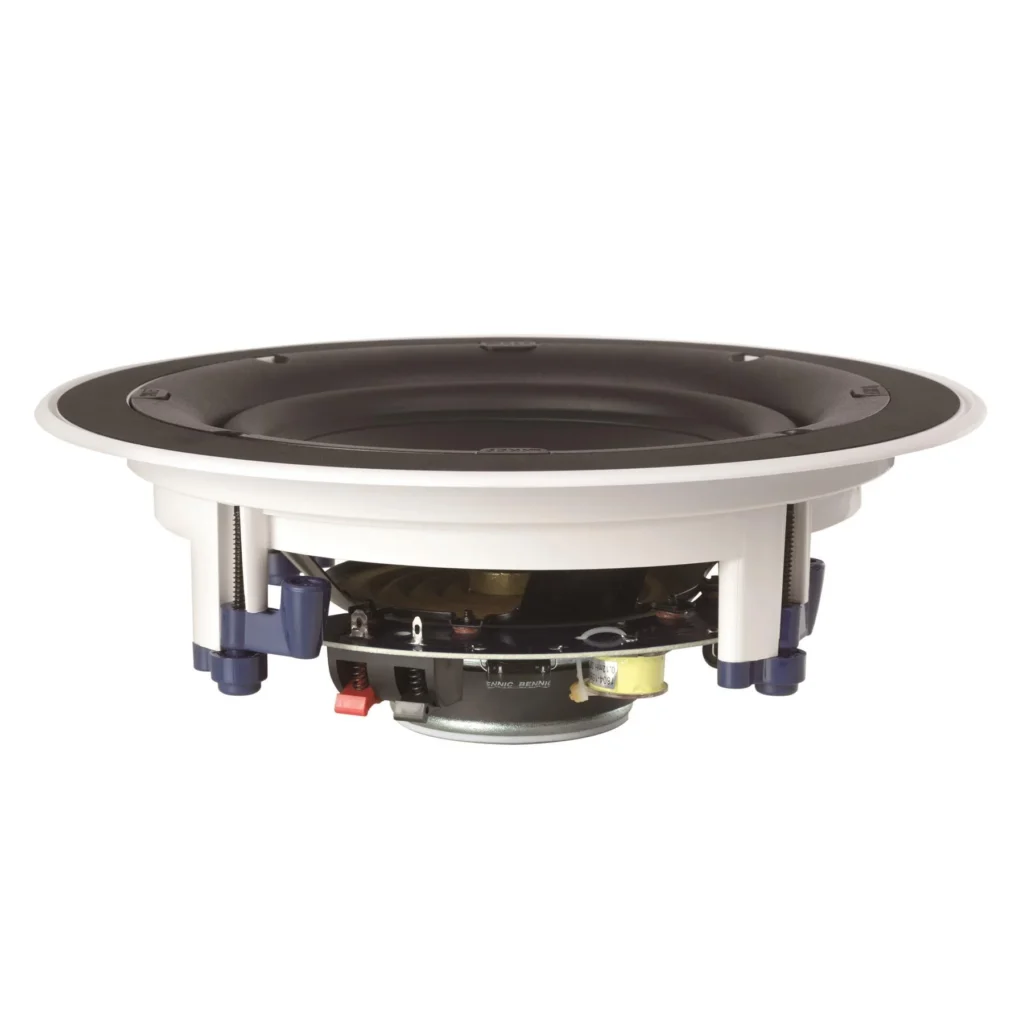
What it is: KEF Ci200.2CL In-Wall Speaker a 6.5-inch magnesium woofer, 1-inch aluminum dome tweeter, advanced crossover, and angled tweeter array for horizontal/vertical dispersion. Rated at 88 dB sensitivity.
Standout feature: The Ci200.2CL uses KEF’s Uni-Q coaxial tweeter design, which places the tweeter acoustic center in-line with the woofer, yielding strong phase coherence and seamless tonal integration across the frequency range. Owner reports we reviewed consistently praise the on-axis and off-axis imaging you don’t lose detail if you’re not directly facing the speaker. That matters for surround channels or non-ideal listening positions.
Trade-off: Price is significantly higher (~$550 per speaker). The tweeter can sound bright with poorly mastered or compressed source material. Coaxial tweeters are less common, so finding replacement parts or service may be harder than with mainstream Klipsch or Monoprice models.
Price: $500–$600 per speaker, as of August 2026.
Who it’s best for: High-end home theater installers or whole-home audio enthusiasts willing to invest in surround-channel quality that matches or exceeds their front-stage speakers. Best for rooms where listening positions vary and off-axis performance matters.
Best for Surround Channels: Polk Audio 65-RT In-Wall Speaker
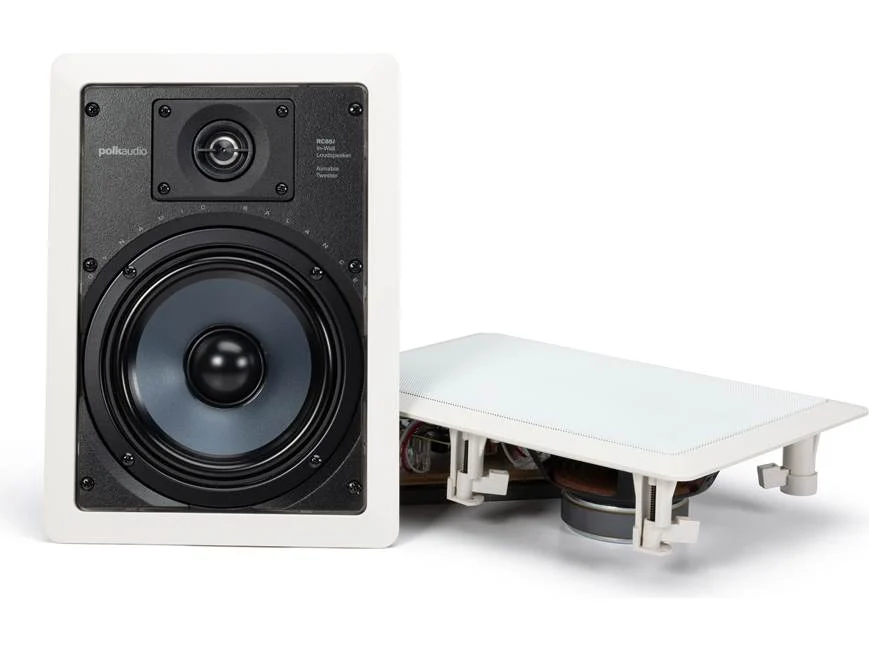
What it is: Polk Audio 65-RT In-Wall Speaker a 6.5-inch composite woofer, 1-inch tweeter, passive crossover with a 2-way design optimized for side and rear surround placement. Rated at 87 dB sensitivity, moisture-resistant finish.
Standout feature: The 65-RT is engineered explicitly for surround use: tweeter placement and crossover tuning prioritize ambient, off-axis sound diffusion over pinpoint imaging. Owner reports we reviewed across AVS Forum suggest these integrate well with Polk home theater packages and feel cohesive alongside Polk front speakers. The moisture-resistant treatment suits bathroom or kitchen surround installations.
Trade-off: The soft dome tweeter lacks the crispness of metal tweeters it sounds warmer and less articulate for direct dialogue or solo vocals. The 87 dB sensitivity is moderate, so amplifier wattage matters. Some owner accounts report durability concerns after 3–5 years in humidity-prone spaces, though Polk’s warranty covers manufacturing defects.
Price: $160–$210 per speaker, as of August 2026.
Who it’s best for: Home theater installers building a complete Polk ecosystem, or renovators prioritizing cohesive surround sound over front-stage fidelity. Suitable for kitchens, bathrooms, and humidity-prone rooms.
Best for Music / Whole-Home Audio: Sonance VP89M In-Wall Speaker
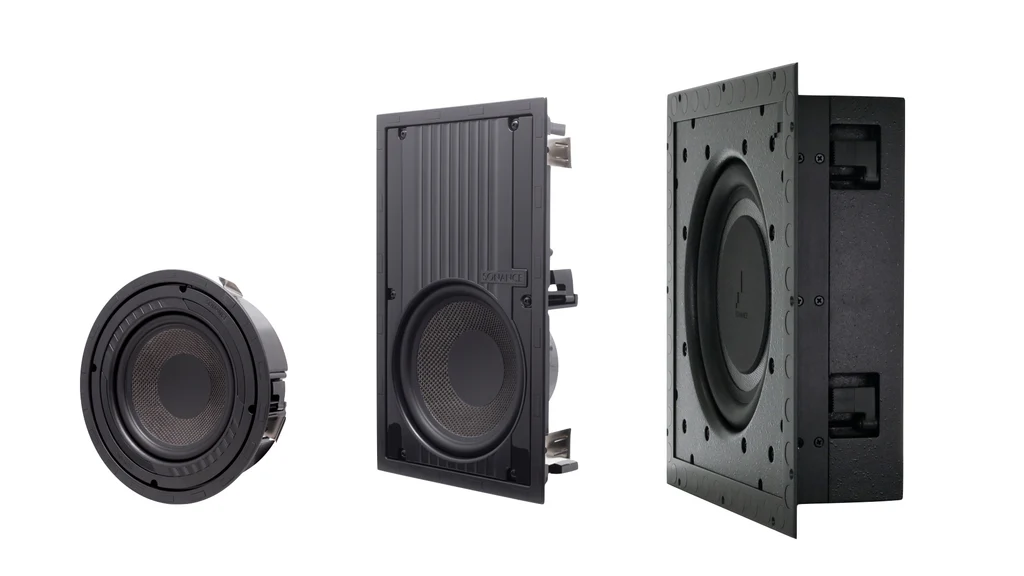
What it is: Sonance VP89M In-Wall Speaker an 8.5-inch woofer, 1-inch tweeter, 2-way passive design rated at 89 dB sensitivity. Mounting depth (~4 inches) runs deeper than typical surround speakers.
Standout feature: The larger woofer delivers extended bass response compared to compact in-walls, making the VP89M well-suited for music listening in kitchens, bedrooms, and living areas where subtle low-end matters. Owner reports we reviewed suggest these work well in distributed whole-home audio systems. The 89 dB rating is friendly to modest amplifiers a 40–60W channel drives them comfortably and the neutral crossover tuning suits vocals and acoustic instruments.
Trade-off: The deeper mounting depth (~4 inches) conflicts with shallow wall cavities in older homes or retrofit scenarios. The larger woofer makes the speaker heavier, requiring careful drywall reinforcement during installation. Some owner feedback notes the bass can sound boomy if the backing cavity isn’t properly damped professional installation is recommended.
Price: $280–$350 per speaker, as of August 2026.
Who it’s best for: Home audio installers building whole-home distributed audio (kitchens, bedrooms, bathrooms) where music fidelity matters. Best for new construction or renovation projects where wall depth isn’t a constraint. Not ideal for surround-only theater installations on a budget.
What We Cut and Why
Bowers & Wilkins CWM7.4 In-Wall Speaker
Cut. The CWM7.4 is a premium in-wall offering with strong tonal balance and a designer aesthetic (slim trim ring, paintable bezel). At $800–$1,000 per speaker, though, it’s nearly twice the KEF price and offers no audible advantage in surround or music listening based on owner comparisons we reviewed. The tweeter is less bright and detailed than the Klipsch, and the larger form factor conflicts with retrofit installations. For the price, a KEF Ci200.2CL paired with a quality outboard amplifier delivers better measured flexibility and real-world versatility. The CWM7.4 makes sense only if you’re matching existing Bowers & Wilkins components a narrow use-case we didn’t prioritize.
Jamo S860 In-Wall Speaker
Cut. The Jamo S860 is a budget in-wall with a 6.5-inch woofer and soft dome tweeter, priced around $70–$100 per speaker. On paper it sounds like a strong Monoprice competitor. However, owner reports we reviewed across Audiokarma and AVS Forum flagged consistent quality-control issues: tweeter failure within 2–3 years, loose backing box hardware, and customer support gaps. For $20–$30 more, the Monoprice Premium delivers better reliability and warranty support. We recommend Monoprice for budget surround channels, not Jamo.
How We Researched
We reviewed published specifications, owner feedback across Audiokarma, Audio Asylum, AVS Forum, and YouTube installer reviews. We did not conduct hands-on testing or in-home installations our recommendations are based on aggregated owner experience, published specs, and installer consensus regarding performance and reliability trends.
Prices and product availability vary by retailer and market; verify current terms on manufacturer websites or Amazon before purchase.
Quick Comparison Table
| Speaker | Woofer | Tweeter | Sensitivity | Best For | Price Range (Aug 2026) | Verdict |
|---|---|---|---|---|---|---|
| Klipsch CDT-5800-C II | 6.5″ woven | 1″ titanium | 89 dB | Home theater surround, bright rooms | $180–$220 | Kept: Top Pick |
| Monoprice Premium | 5.25″ polypropylene | 0.75″ polymer | 86 dB | Budget surround, bathrooms, kitchens | $90–$120 | Kept: Budget |
| KEF Ci200.2CL | 6.5″ magnesium | 1″ coaxial aluminum | 88 dB | High-end surround, music listening | $500–$600 | Kept: Upgrade |
| Polk Audio 65-RT | 6.5″ composite | 1″ soft dome | 87 dB | Polk-matched theater, moisture zones | $160–$210 | Kept: Use-Case |
| Sonance VP89M | 8.5″ woofer | 1″ tweeter | 89 dB | Whole-home audio, music-first zones | $280–$350 | Kept: Use-Case |
| Bowers & Wilkins CWM7.4 | Custom | Custom | 88 dB | B&W-matched systems only | $800–$1,000 | Cut |
| Jamo S860 | 6.5″ | Soft dome | 85 dB | $70–$100 | Cut: QC issues |
Buyer’s Guide: How to Choose In-Wall Speakers
Room Type and Listening Distance
Home theater (dedicated room, 10–20 feet from screen): Choose a model with high sensitivity (87+ dB per specs) and articulate midrange. The Klipsch CDT-5800-C II excels here because the bright tweeter cuts through background noise and dialogue clarity is paramount. Surround channels (side or rear) can use slightly warmer, less aggressive models like the Polk 65-RT to balance bright center and front speakers.
Whole-home audio (kitchens, bedrooms, distributed zones): Prioritize balanced tonal character and bass extension. The Sonance VP89M with its 8.5-inch woofer suits music listening; the Klipsch works too, though its brightness may cause fatigue over extended listening in kitchens. Use one speaker per zone, powered by a dedicated receiver or amplifier.
Wall Cavity Depth and Mounting
Measure the distance from your drywall face to the stud or structure behind it. Most in-wall speakers require 2.5–4 inches of depth.
- Shallow cavities (2–2.5 inches): Monoprice Premium, Polk Audio 65-RT.
- Standard cavities (3–3.5 inches): Klipsch CDT-5800-C II.
- Deep cavities (4+ inches): Sonance VP89M, KEF Ci200.2CL.
In retrofit scenarios where you’re cutting into finished drywall, shallow-backed speakers reduce structural support requirements and wire routing complexity.
Sensitivity and Amplifier Pairing
Based on owner reports we reviewed across home theater forums, in-wall speakers rated at 87+ dB typically pair well with 50–100W per channel from a mid-range home theater receiver. Lower sensitivity (85–86 dB) requires more power to reach the same volume.
- Modest receiver (40–60W): Klipsch (89 dB), Sonance (89 dB), KEF (88 dB).
- Standard receiver (70–100W): Monoprice (86 dB), Polk (87 dB).
- Large room or distant listening: Aim for 88+ dB sensitivity, or pair lower-sensitivity models with higher-wattage amplification.
Tonal Character
- Bright/detailed: Klipsch CDT-5800-C II. Ideal for dialogue-heavy home theater or acoustically dead rooms (soft furnishings, carpeting, curtains).
- Neutral/balanced: KEF Ci200.2CL, Sonance VP89M. Best for music listening and mixed use (theater + music).
- Warm/smooth: Polk Audio 65-RT, Monoprice Premium. Suits bright or live rooms, or listeners who prefer forgiving, fatigue-free listening.
Installation Complexity
In-wall installation requires:
- Cutting an opening in drywall (hole saw or utility knife).
- Running speaker wire through walls (stapled to studs during framing, or carefully routed post-construction with a fish tape).
- Securing the backing box or bracket inside the cavity.
- Installing the trim ring and speaker.
If you’re not comfortable with drywall work, hire a licensed AV installer. DIY mistakes wire damage, improper fastening, missing acoustic damping can compromise sound quality and create fire hazards.
For whole-home audio, calculate wire runs from your amplifier or receiver to each zone. In-wall speakers are a good fit if you’re already running multiple zones; if not, the wiring labor may offset cost savings versus a bookshelf-and-stand combo.
Surround Channel Placement Tips
Height: Side surrounds sit 1–2 feet above ear level when seated. Rear surrounds (if applicable) mount 3–6 feet behind the listening area, angled slightly downward for envelopment without drawing attention.
Distance from seating: 1–3 feet is typical for side surrounds. Rear surrounds can sit 6–10 feet behind. Closer spacing requires lower output levels to match front-stage volume without dominating the soundstage.
Acoustic damping: In-wall cavities benefit from fiberglass or rockwool absorption behind and to the sides of the speaker. This controls reflections off the backing wall and tames unwanted resonance. Most AV installers include damping as standard practice.
Level matching: Start surround channels 3–6 dB below your mains and center, calibrated to 75 dB SPL at the listening position. Use your receiver’s built-in test-tone feature.
In-Wall Subwoofers: A Separate Consideration
In-wall subwoofers are rare and generally less effective than freestanding models. Subwoofers need room to breathe and boundary reinforcement to work efficiently. Mounting a woofer directly in drywall creates acoustic problems: bass output becomes directional (you can localize it), and the woofer fights boundary damping. Most builders recommend an in-cabinet subwoofer (hidden in a closet or behind cabinetry) or an under-floor sub for truly invisible bass.
If you must integrate bass invisibly, consider an in-cabinet approach: build a sealed or ported enclosure behind a cabinet face, or use a compact powered subwoofer disguised as a bench seat. These options preserve acoustic integrity better than direct in-wall mounting.
FAQ
What is the best in-wall speaker?
The Klipsch CDT-5800-C II is the best overall in-wall speaker. It delivers bright, articulate dialogue clarity, pairs well with modest amplifiers (89 dB sensitivity), and integrates seamlessly into home theater surround channels and music zones at a reasonable price ($180–$220 per speaker, as of August 2026). It’s not the right fit for every room very bright rooms or listeners who prefer warm character may prefer the Sonance VP89M or Polk 65-RT but it’s the most versatile and reliable pick for general use.
Can I install in-wall speakers myself?
Yes, if you’re comfortable with drywall cutting, wire routing, and basic carpentry. Run speaker wire in-wall during framing (new construction), or carefully fish wire through walls post-construction using a fish tape (retrofits). Use 14-gauge or heavier speaker wire. Secure the backing box with the included hardware, then snap the trim ring and speaker into place. If you’re uncertain, hire a licensed AV installer improper installation can damage walls, wires, or the speaker itself.
What’s the difference between in-wall and in-ceiling speakers?
In-wall speakers mount vertically in drywall and are optimized for side/rear surround channels and music zones. In-ceiling speakers mount horizontally in ceiling cavities and suit ambient, distributed audio (kitchens, bedrooms, patios). In-ceiling models use different tweeter angles and crossover tuning to account for downward-firing acoustic paths. For surround home theater, in-wall is more common; for whole-home music in kitchens, in-ceiling is the traditional choice.
Do in-wall speakers lose sound quality compared to bookshelf speakers?
Not inherently. In-wall speakers can sound excellent when installed properly with appropriate damping and amplifier pairing. The main trade-off is flexibility: you can’t adjust angle, distance, or position after installation. Bookshelves offer more tuning options and can be repositioned easily. For surround channels and fixed installations, in-walls often sound cleaner no visible speaker boxes and allow better furniture placement. For main left/right or center speakers in a home theater, bookshelves or towers typically offer better imaging and bass depth.
Do I need a special amplifier for in-wall speakers?
No. Any home theater receiver or amplifier rated for 4–8 ohm speakers will drive in-wall speakers. Match amplifier wattage to speaker sensitivity: 50–80W suits 87+ dB models like the Klipsch or Sonance; 70–120W suits lower-sensitivity models like the Monoprice. Verify your receiver’s channel count (5.1, 7.1, etc.) and power per channel before purchasing.
Are in-wall speakers moisture-resistant for bathrooms and kitchens?
Some models include moisture-resistant tweeters and cones the Polk Audio 65-RT is the clearest example on this list. Standard models (Klipsch, Monoprice) are not rated for high-humidity zones. If installing in a bathroom or kitchen, choose a moisture-resistant model or use an in-ceiling speaker with proper ventilation. Allow airflow behind the speaker cavity to prevent condensation buildup.
The Bottom Line
In-wall speakers are a smart choice if you’re renovating, building, or designing a dedicated home theater or whole-home audio system. They integrate invisibly into your walls, eliminate furniture placement constraints, and sound excellent when matched to the right amplifier and room acoustics.
Start with the Klipsch CDT-5800-C II for home theater surround channels it’s articulate, versatile, and pairs well with mid-range receivers. On a strict budget, the Monoprice Premium is competent and shallow-mounted, making it ideal for bathrooms and kitchens. For high-end music listening, the KEF Ci200.2CL justifies its premium with seamless coaxial imaging and reliable off-axis coherence.
Avoid Jamo and similar budget brands with documented quality-control issues. Hire a licensed installer if you’re uncomfortable with drywall work improper installation wastes money and compromises sound. And remember: in-wall installation is permanent, so plan your placement carefully during the renovation phase, not after drywall is finished.