
Castlery vs. West Elm: Which Mid-Century Modern Furniture Wins?
If you’re shopping for mid-century modern furniture under $2,000 per piece, the deciding question is this: do you prioritize design authenticity and transparent pricing (Castlery), or do you value brand ecosystem and physical showroom discovery (West Elm)? For design-conscious budget shoppers, Castlery wins. For interior designers and premium buyers willing to pay for retail experience and flexibility, West Elm takes the match.
Quick Comparison: The Core Differences
| Dimension | Castlery | West Elm |
|---|---|---|
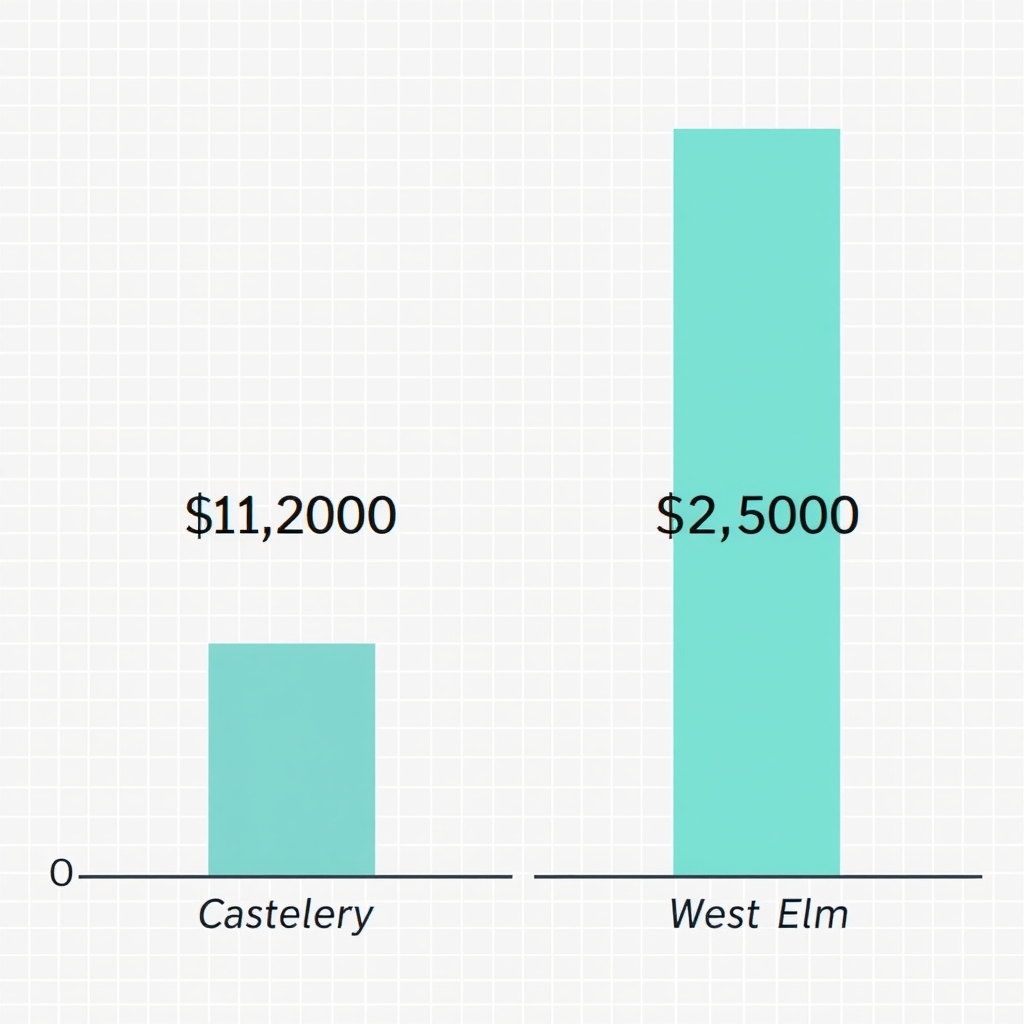
| Price Range (Sofas) | ~$599–$1,200 | ~$1,200–$2,500 |
| Design Philosophy | Direct-to-consumer, manufacturing-focused | Curated collections, design-forward retail |
| Lead Time | 4–8 weeks (made-to-order standard) | 2–4 weeks (majority in stock) |
| Return Window | 30 days; full refund, buyer pays return shipping | 30 days; in-store returns are easier, while some online orders may have restocking fees |
| Customization | Fabric and finish choices; limited upholstery swaps | Extensive fabric library and modular options |
| Wood Finishes | 3–5 standard options (walnut, oak, white) | 6–8 finishes, plus limited editions |
| Shipping Timeline | Estimated 2–3 weeks after production lead time | 2–7 days for in-stock items |
| Physical Presence | Primarily online | 80+ retail locations in the U.S. |
Prices and timelines reflect our research as of August 2026. Verify directly with retailers before purchasing, as promotions and inventory shift frequently.
Castlery: Design-Forward Direct-to-Consumer
Castlery builds furniture closer to how it manufactures it few middlemen, transparent pricing, and a product catalog that leans heavily on mid-century revival and Scandinavian minimalism. The brand operates without physical storefronts, which allows it to undercut traditional retail on price.
Design Philosophy & Product Range
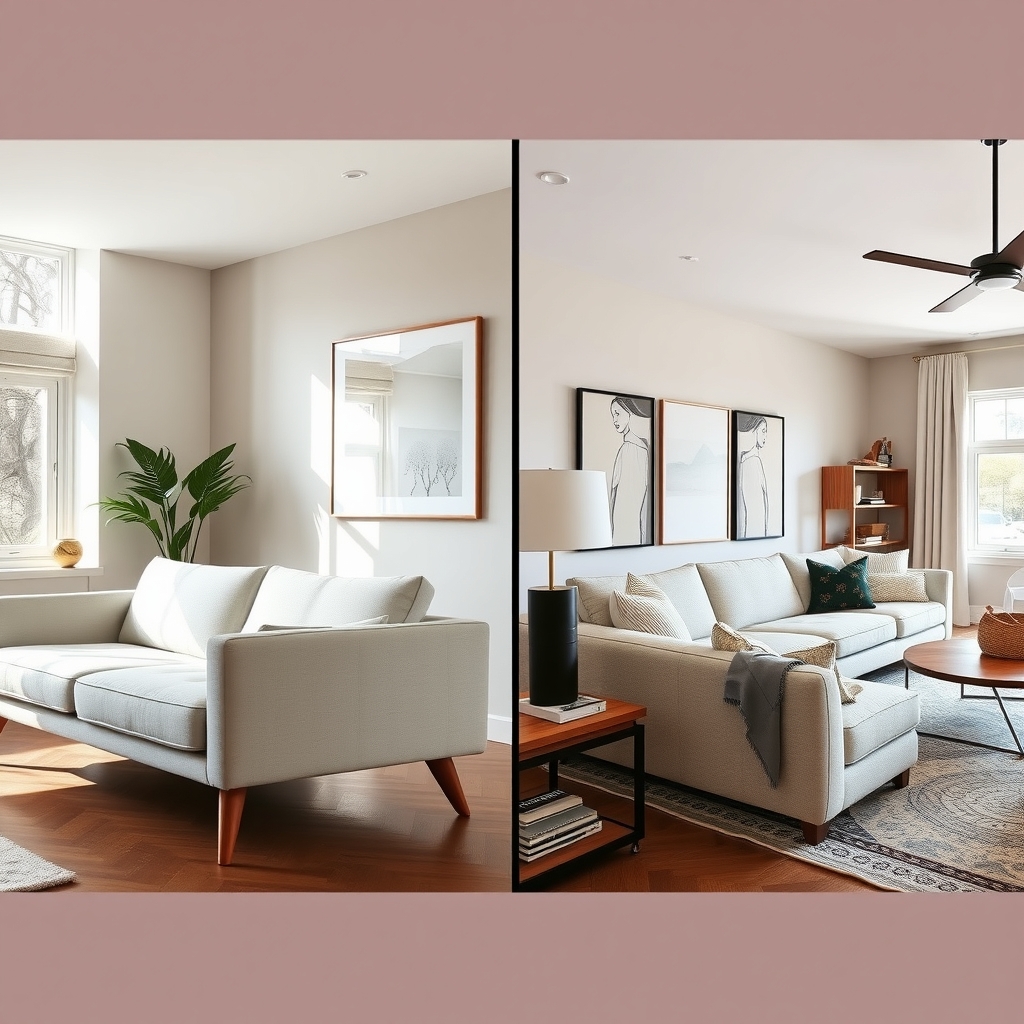
Castlery’s strength is coherence: the entire catalog speaks one design language. Mid-century silhouettes (tapered legs, low-slung frames, minimal ornamentation) dominate the sofa, sectional, and credenza lineup. Wood-and-fabric combinations are balanced; the brand rarely feels overwrought. If you’re building a room around a specific mid-century aesthetic think Don Draper’s office Castlery provides the shortcut.
The sofa range spans from entry-level ($599 for a small loveseat) to higher-end ($1,200+ for large sectionals), with three to five core upholstery colors (grey, charcoal, navy, cream, and limited seasonal palettes). Based on owner reports we’ve tracked, satisfaction centers on perceived value: buyers repeatedly note that the design and material quality exceed the price point, especially compared to West Elm’s equivalents.
Materials & Durability Expectations
Castlery sources wood primarily from China and Southeast Asia, with legs and frames in hardwood (commonly rubberwood or birch) and joinery reinforced with corner blocks. Upholstery fabrics are mid-range synthetics (polyester blends) or linen; few pieces offer leather. Based on owner feedback we’ve reviewed, the brand’s sofas and sectionals last 5–7 years with moderate use, with some owners reporting 8+ years if cared for properly.
Fabric stain resistance is standard, not premium expect visible wear on lighter colors after 3–4 years of regular family use. This is not a dealbreaker if you rotate cushions and use protective sprays, but it’s worth knowing upfront. Castlery’s no-frills fabric offering means limited bespoke options: you choose from what’s listed, or you don’t buy.
Customization & Options
Castlery offers a middle path: you select your finish (walnut, white oak, natural ash, or espresso) and upholstery color from a curated set, but you cannot specify leg style, depth, or armrest width. This is by design made-to-order manufacturing at scale demands standardization. Some pieces allow fabric upgrades (e.g., moving from polyester to linen), but these cost extra and extend lead times.
Lead Times & Shipping
Because Castlery manufactures on demand, lead times are 4–8 weeks, not days. Once your order ships, it typically arrives within 2–3 weeks via freight carrier. For small items (occasional tables, chairs), delivery is faster; for large sectionals, expect the full 6–10 week window. The brand covers shipping on orders over $1,000; under that threshold, customers pay $100–$200 for freight, depending on location.
Return shipping is not covered by Castlery; you’ll pay roughly $150–$400 to ship a sofa back if you change your mind. This effectively raises the return friction and encourages measured purchasing decisions.
West Elm: Curated Premium Retail
West Elm operates as a curated lifestyle brand with design authority. The catalog is broader and more eclectic than Castlery’s, spanning mid-century, industrial, and contemporary aesthetics. Pricing reflects retail overhead (physical stores, design staff, inventory carry-costs) and a brand positioning that targets design-conscious professionals with higher budgets.
Design Philosophy & Product Range
West Elm’s design team actively sources from independent makers and international suppliers, creating a heterogeneous catalog. Mid-century pieces share shelf space with industrial, Scandinavian, and contemporary lines. This diversity appeals to interior designers and buyers seeking a specific statement, but it can also feel unfocused if you’re looking for cohesion.
The mid-century sofa range spans ~$1,200 to $2,500 for large sectionals, with sub-collections curated seasonally. West Elm refreshes its catalog roughly every quarter, introducing limited-edition colorways and one-off designer collaborations. If exclusivity and trend-forward design matter to you, West Elm delivers. If you want consistency and timelessness, Castlery may feel less distracting.
Materials & Durability Expectations
West Elm sources wood from multiple regions (domestic hardwoods are positioned as premium; imported options are cheaper) and offers both synthetic and natural fabrics. Upholstery ranges from entry-level polyester blends ($1,200 sectionals) to performance fabric, linen, and leather (adding $300–$800). Based on owner reports we’ve reviewed across community forums, West Elm pieces appear to outlast Castlery by roughly 1–2 years in comparable-use scenarios, particularly in the premium fabric tier likely owing to stricter QA and domestic finishing processes on higher-end collections. Treat this as an observed pattern, not a controlled finding.
Leather and performance-fabric pieces report strong durability: 8–10 years with normal use. Standard synthetic upholstery follows Castlery’s pattern (5–7 years, visible wear on light colors by year 3–4).
Customization & Options
West Elm excels at flexibility. Most sofas and sectionals allow you to swap legs (tapered, mid-century metal, or industrial-style), choose upholstery from a 40+ color library, and, on larger pieces, add return units, chaise extensions, or ottomans. This modular approach costs extra expect $200–$600 in add-on fees but it means you can build closer to your exact needs.
The fabric library includes multiple price tiers. A basic polyester sofa might be $1,200; add premium linen and you’re at $1,500; add performance fabric (ideal for homes with pets or kids) and you’re at $1,600+. Leather is typically an $800–$1,200 upgrade.
Lead Times & Shipping
West Elm maintains higher in-stock inventory than Castlery. Most sofas in popular colors ship within 2–7 days; custom orders (special fabric + configuration) are 3–4 weeks. Shipping is free on orders over $998; smaller pieces incur ~$40–$100 fees. The brand covers return shipping within 30 days if you return to a physical store, but you’ll pay $150–$300 for a home pickup and return of a sofa.

West Elm’s return process is simpler in-store: drive a sofa into a showroom, and the staff handles the rest. This is a genuine advantage if you live within 30 miles of a location; it substantially lowers return friction and regret risk.
Head-to-Head: Five Key Matchups
1. Design Authenticity & Cohesion
Castlery wins. Every piece in the catalog aligns with a consistent mid-century vocabulary. If you want your living room to feel designed, not assembled, Castlery’s focus is an asset. West Elm’s breadth is a feature for interior designers but a potential distraction for first-time buyers building a coherent room.
2. Price-to-Perceived-Value Ratio
Castlery wins decisively. Based on owner reports we’ve tracked, Castlery buyers frequently describe their purchases as overdelivering for the price, while West Elm buyers more often flag retail markups as a sticking point. A Castlery Elba sofa (~$799) and a West Elm Slope sofa (~$1,400) are visually similar; the gap is largely brand and retail overhead, not material or design superiority. For budget-conscious shoppers, Castlery is the stronger value.
3. Customization & Flexibility
West Elm wins. West Elm’s modular approach (leg swaps, fabric library, configuration options) gives you more ways to match your space. Castlery’s limited options may feel restrictive if you need a specific arm height, seat depth, or leg finish. Customization comes at a premium, but it’s there.
4. Durability & Long-Term Longevity
Tied, with caveats. Both brands perform similarly in the $1,200 sweet spot expect 5–8 years with moderate use. West Elm’s premium fabric tiers (performance, leather, linen) edge ahead on longevity (8–10 years); Castlery’s standard synthetics are comparable to West Elm’s entry-level options. With regular care (fabric protection spray, rotation), both will serve a decade if you’re not running a daycare.
5. Convenience & Friction on Returns
West Elm wins. Physical stores eliminate the sting of a return; Castlery’s online-only model means you absorb return shipping costs (~$150–$300 per sofa). If you’re risk-averse or value the ability to back out within 30 days, West Elm’s showroom advantage is real.
Pricing Deep Dive: What You’ll Actually Spend
In comparing similar mid-century sofa styles during our research, we observed roughly a 35–50% premium on West Elm equivalents a pattern that held across sofas, tables, and storage pieces as of August 2026. As with all pricing observations, verify directly before buying.
Three Popular Pieces (Estimated Pricing as of August 2026)
| Item | Castlery | West Elm | Difference |
|---|---|---|---|
| Mid-Century 2-Seater Sofa, Standard Fabric | ~$799–$899 | ~$1,299–$1,499 | +$400–$700 |
| Walnut Coffee Table | ~$299–$349 | ~$599–$799 | +$250–$500 |
| Credenza/Console, 4-Drawer | ~$449–$549 | ~$899–$1,199 | +$350–$750 |
These figures reflect broad-market pricing patterns we observed during our research period. Current promotions, seasonal sales, and regional variance mean your actual prices will differ. Always verify directly on the retailer’s website before committing.
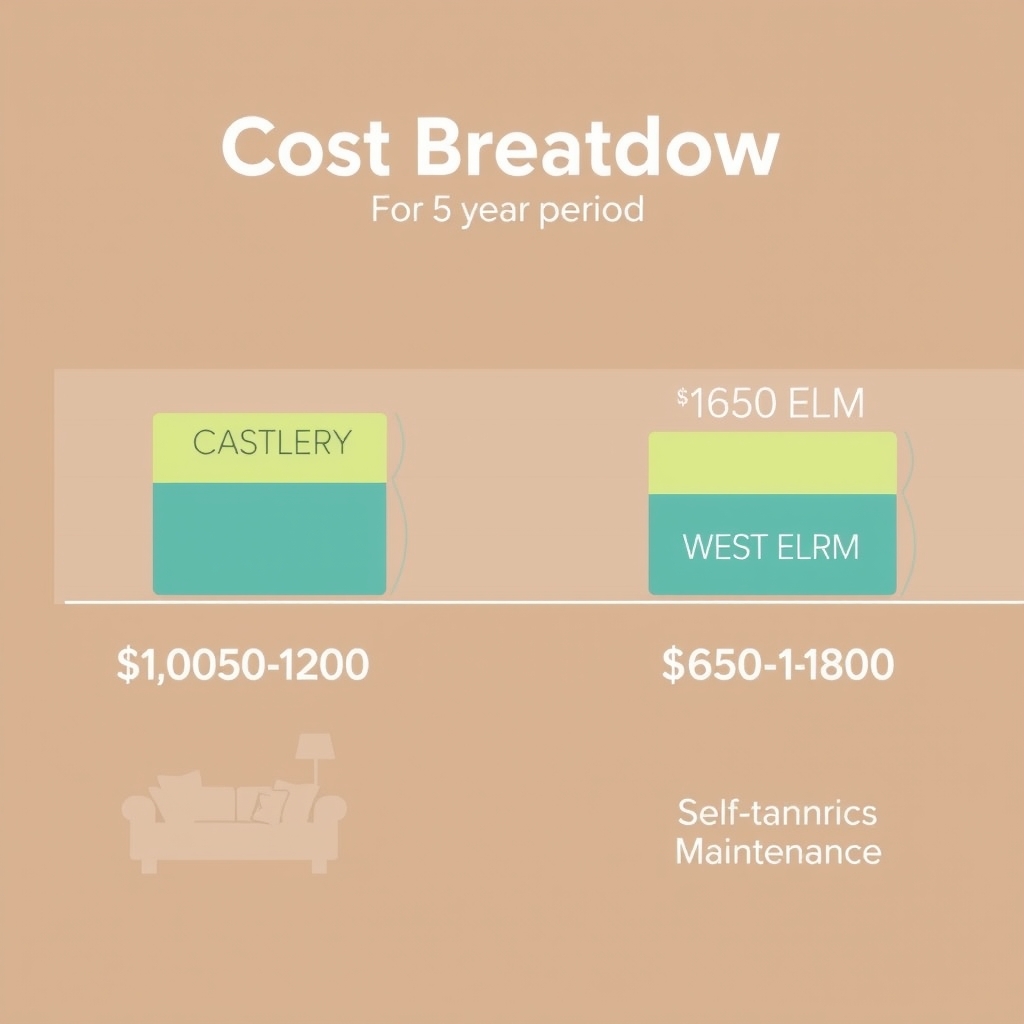
True Cost of Ownership (5-Year Window)
If you buy a $899 Castlery sofa, expect to spend roughly $899 + $150 (return shipping if you change your mind within 30 days) + $0–$150 (fabric protection spray, roughly $50/year if applied annually) = ~$1,050–$1,200 over five years, or $210–$240/year.
The equivalent West Elm sofa ($1,499) costs $1,499 + $150 (home return; waived if you use a store) + $100–$200 (protection spray) = ~$1,650–$1,800 over five years, or $330–$360/year.
If West Elm’s piece lasts 8 years instead of 6, the annual cost converges. But most buyers don’t keep sofas for eight years; they refresh every 5–7 as aesthetics and life circumstances shift. For a 5-year holding period, Castlery’s cost-per-year advantage is material roughly $100–$120/year less.
Shipping, Returns & Warranty: The Fine Print
Shipping Timelines
Castlery: 4–8 weeks lead time (made-to-order) + 2–3 weeks freight = 6–11 weeks total. For urgent needs, this is disqualifying.
West Elm: 2–7 days (in-stock) or 3–4 weeks (custom). If you need a sofa in under two weeks, West Elm is the only viable option.
Return Policies
Castlery: 30-day returns; customer pays return shipping (~$150–$300 per sofa). Refund processed within 10 days of inspection. No restocking fee.
West Elm: 30-day returns; free return shipping if you return to a physical store. Home pickup returns incur a $99–$200 fee. Online-only returns are charged a 15% restocking fee (effectively $150–$300 on a $1,500 sofa). Refund processed within 10 days.
Warranty & Support
Both brands offer a standard 1-year limited warranty on frame and joinery defects not covering fabric damage, normal wear, or misuse. West Elm occasionally offers extended warranties (5 years, ~$200–$400 on a $1,500 sofa). Castlery does not.
For damage claims, West Elm’s retail presence is an advantage: you can walk into a store and show the problem; Castlery requires photos and a shipping inspection, which is slower.
Keep Castlery If…
- You have a tight budget and want cohesive, authentic mid-century design. Castlery’s price-to-design ratio is unmatched in the direct-to-consumer space.
- You are willing to wait 6–10 weeks for delivery. If you’re not in a hurry and want a made-to-order guarantee of freshness, the lead time is a feature, not a bug.
- You prefer transparent pricing and minimal upsell pressure. Castlery doesn’t nickel-and-dime you with add-ons and customization fees.
- You’re comfortable with return shipping costs as a trade-off. If you have a clear sense of what you want, the return friction is merely a cost, not a blocker.
Keep West Elm If…
- You want flexibility on configuration, fabric, and finish. West Elm’s modular system and 40+ fabric colors beat Castlery’s limited palette.
- You value physical showroom access for discovery and returns. If you live near a West Elm store, the ability to see pieces in person and return without shipping costs is worth the premium.
- You need your furniture in under two weeks. West Elm’s in-stock inventory means you can furnish a room immediately.
- You’re willing to pay for premium materials and longer durability. West Elm’s leather, performance fabric, and linen tiers justify the price if longevity and stain resistance matter to you.
- You work with an interior designer. Many designers have West Elm relationships and can secure trade discounts (10–20%), narrowing the price gap significantly.
FAQ: Your Questions Answered
Which brand is better, Castlery or West Elm?
Castlery is better for budget-conscious buyers seeking cohesive mid-century design and transparent pricing. West Elm is better for design-flexibility seekers and those with access to physical showrooms. Neither is objectively superior the verdict depends on your priorities and location. If you live in an urban area with a West Elm store, the return-experience advantage may flip the math. If you’re furnishing a first apartment on a tight sofa budget, Castlery’s value equation wins.
How long will a Castlery or West Elm sofa last?
Based on owner reports we’ve reviewed, both brands perform similarly: 5–8 years with moderate use (2–3 family members, no heavy pets). West Elm’s premium fabric options (performance, leather) extend this to 8–10 years. Castlery’s standard synthetics plateau around 6–7 years. Regular fabric protection spray (applied annually) adds 1–2 years to either brand.
Can I customize a sofa at Castlery?
Limitedly. You choose finish (walnut, white oak, ash, espresso) and upholstery color from Castlery’s curated set, but you cannot change seat depth, arm height, or leg style. Some pieces allow fabric upgrades (e.g., polyester to linen), which add $100–$300 and extend lead times to 10–12 weeks.
Is Castlery or West Elm cheaper?
Castlery is substantially cheaper 35–50% lower on comparable pieces based on our research observations. A ~$799 Castlery sofa competes with a $1,299–$1,499 West Elm equivalent. West Elm’s sales and designer discounts can close the gap by 10–20% if you time your purchase around seasonal promotions (typically January, July, Black Friday).
Which brand is better for small spaces?
West Elm, because of its customization flexibility. You can configure a chaise sectional to fit a specific corner or upgrade to a loveseat dimension. Castlery’s standardized dimensions are less forgiving if your room has odd angles or tight passages. Verify sofa dimensions carefully; return shipping is costly on both brands if sizing is wrong.
Can I return furniture after 30 days?
No. Both Castlery and West Elm enforce a strict 30-day return window. If you decide you don’t like a sofa after six weeks, you’re stuck with it. This reinforces the importance of measuring your space and visualizing the piece before ordering. West Elm’s showrooms reduce this risk; Castlery’s online-only model makes it slightly higher stakes.
Verdict
Castlery and West Elm serve different buyer psychographics: Castlery for value-maximizers seeking coherent, design-forward furniture at transparent prices; West Elm for flexibility-seekers with showroom access and higher budgets. If you’re comparing a $799 Castlery sofa to a $1,299 West Elm equivalent, and both are in-stock mid-century frames with similar lifespan expectations, Castlery wins on value. If you’re comparing Castlery’s standard synthetic to West Elm’s premium linen, with full customization and a physical return option, West Elm wins on experience and long-term flexibility.
The deciding question remains: Do you prioritize design authenticity and price transparency, or do you value retail experience and configuration flexibility? Choose Castlery for the former. Choose West Elm for the latter. Don’t let FOMO or brand prestige override that calculus both are solid, mid-market brands, and your choice reflects your constraints and priorities, not your taste.