
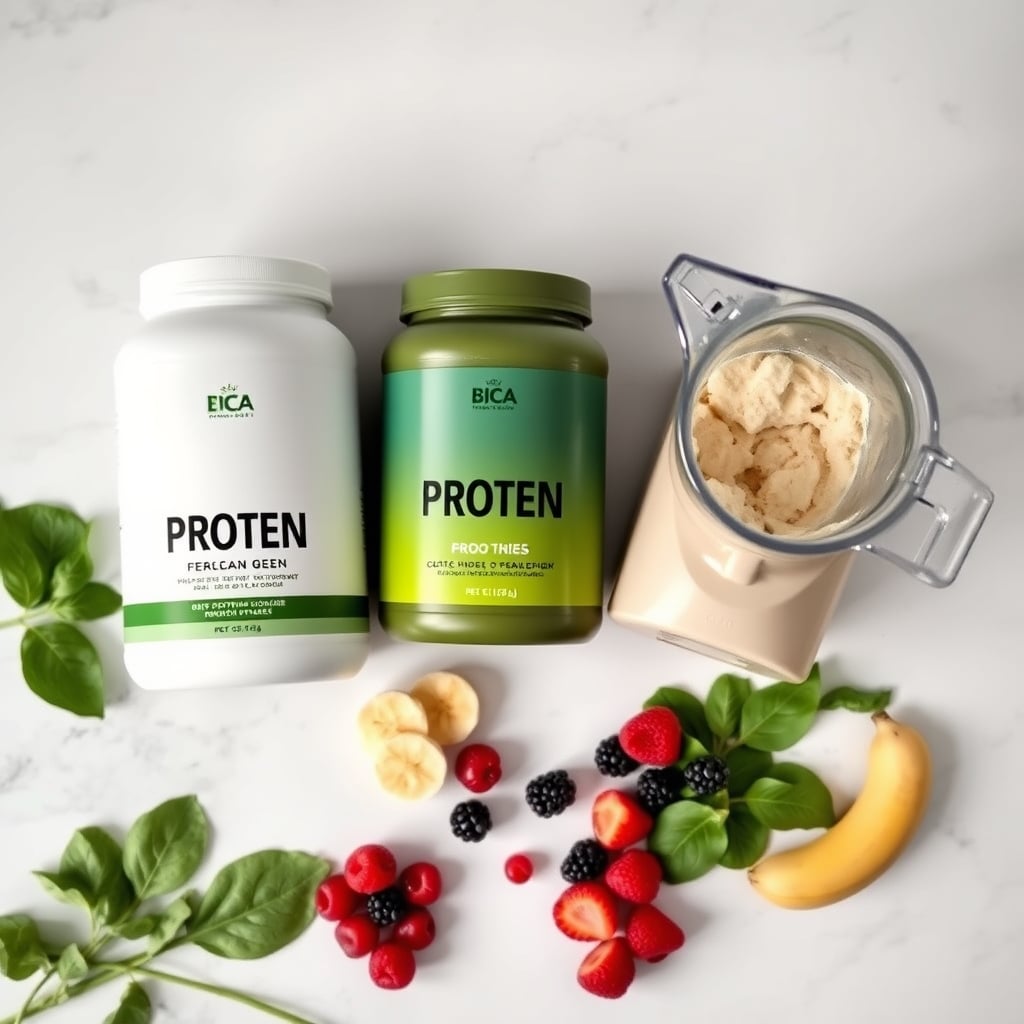
For most people, the choice comes down to three questions: Do you have dietary restrictions (vegan, dairy-free, or allergen concerns)? Can your budget handle premium options, or do you need budget-friendly? And how picky are you about taste and texture? Once you answer those, you’ll know whether to reach for whey, plant-based, or collagen.
How We Researched This Guide
This guide is based on a review of retail product catalogs, owner reports from smoothie and fitness communities, and nutritional spec sheets across major brands (Optimum Nutrition, Garden of Life, Orgain, Isopure, Vital Proteins, and others). We compared formulations by amino acid profile, ingredient transparency, third-party testing certifications, and observed price ranges. All figures are drawn from available product listings and community reports as of June 2026 not lab testing. Prices reflect observed retail ranges and will vary by retailer and sale timing. Last checked: June 2026.
What Actually Matters When Choosing a Protein Powder
1. Protein Source (and What Your Digestive System Actually Tolerates)
This is the biggest decision fork. Each protein type digests differently, tastes different, and costs different.
Whey protein a milk byproduct is the fastest-digesting and most complete amino acid profile. It mixes smoothly, tastes pleasant in most formulations, and is the cheapest per gram of protein. The catch: if you’re lactose-intolerant or vegan, you’re out. Whey also tends to cause bloating in people who are sensitive to lactose or whose gut flora isn’t used to it.
Plant-based protein typically pea, rice, hemp, or a blend is dairy-free and vegan but usually has an incomplete amino acid profile on its own (pea protein is low in methionine; rice is low in lysine). Quality blends mix two or three sources to cover the gaps. Plant-based powders also tend to have a grainier, earthier taste and don’t mix as smoothly. Based on observed retail listings, they’re pricier than whey often 2–3× the cost per serving at comparable quality tiers, though sales can close that gap.
Collagen protein derived from animal connective tissue is incomplete on its own (it’s missing tryptophan) but is absorbed very efficiently and is marketed for joint, skin, and gut health. It’s not a complete meal replacement like whey or plant-based options. It mixes well, tastes neutral, and sits between whey and plant-based in price.
What to ignore: Marketing claims about “bioavailability” and “absorption rates” are mostly spec-sheet noise. Whey absorbs fast; collagen absorbs efficiently; plant-based absorbs fine if you’re not sensitive. The real difference is whether you tolerate it without bloating or digestive upset.
2. Amino Acid Profile (BCAA Content Matters; Everything Else Is Marketing)
All three protein sources contain amino acids, but the completeness varies.
Whey and collagen both have all nine essential amino acids, though in different ratios. Whey is naturally high in branched-chain amino acids (BCAAs: leucine, isoleucine, valine), which are favored for muscle recovery. Collagen is very high in glycine and proline (good for connective tissue) but lower in leucine.

Plant-based blends can hit complete amino acids if mixed properly (pea + rice, or a multi-source blend), but single-source plant proteins are incomplete.
What to ignore: Claims about “optimal BCAA ratios” or “fastest-absorbing amino acids” are vendor-speak. For general fitness, any complete protein works fine. You get these amino acids from food anyway; the powder is just convenient concentration.
3. Mixability and Taste (This Determines If You Actually Use It)
If your smoothie tastes chalky or grainy, you’ll stop using it.
Whey mixes smoothly with just a shaker bottle and tastes naturally pleasant (vanilla, chocolate, strawberry are all widely available and palatable). Most blends dissolve completely in 30 seconds.
Plant-based often has a grainy or earthy taste that some people dislike. It also clumps more easily and may require a blender rather than a shaker bottle. Based on observed retail listings as of June 2026, plant-based powders run roughly $1.50–$3.00 per serving depending on brand and formulation. Quality blends (like Orgain Organic Protein or Garden of Life Raw Organic) are smoother than budget options.
Collagen mixes well and has a neutral, slightly sweet taste. It blends into hot or cold liquids equally well.
What to ignore: Claims that plant-based powders taste “just like” whey are exaggerated. They’ve improved noticeably over the past few years, but they still have a distinct, earthier profile. Try a single-serving packet before committing to a tub.
4. Digestibility and Bloating (The Real-World Factor)
This is where personal tolerance matters more than specs.
Whey causes bloating in people who are lactose-sensitive or have compromised gut flora. If you’ve never used whey and you tend toward bloating or digestive upset, start with a smaller serving (15g instead of 25g) and drink it with plenty of water.
Plant-based can cause bloating if your gut isn’t used to the fiber and resistant starch in plant proteins. Some people adapt within a week; others never do.
Collagen is generally well-tolerated because it’s hydrolyzed (broken down) and has low FODMAP levels. It’s a good choice if other powders upset your stomach.

What to ignore: Marketing about “gentle digestion” or “prebiotic support.” If a powder bloats you, it bloats you. Bloating is not a sign that the powder is doing something special it’s a sign your gut doesn’t like it.
5. Third-Party Testing and Certifications (Non-Negotiable for Quality)
Protein powder is an unregulated supplement category, meaning the FDA does not review formulations before they hit shelves. This is why third-party testing matters.
Look for:
- NSF Certified for Sport– tests for banned substances and label accuracy. Expensive; rare on budget powders.
- Informed Choice– similar to NSF; common in athletic brands.
- USP Verified– verifies label claims (protein content, purity). More common than NSF.
- Third-party heavy-metal testing– less common but important, especially for plant-based powders (some plant sources accumulate cadmium or lead).
Watch out for: “Lab-tested” without naming the lab. “Natural” with no certifications. Generic badges on the label that aren’t linked to a real certifying body.
Based on observed product listings, certified powders typically cost $0.50–$1.00 more per serving than uncertified ones. In our view, that premium is worth it.
6. Price Per Serving and Total Cost
Price varies wildly, and you want to know the true cost per serving, not just the container price.
The following ranges reflect our review of retail listings as of June 2026. They are observations, not guarantees sale pricing, subscription discounts, and retailer variation will affect what you actually pay.
| Protein Type | Budget Tier (Per Serving) | Mid-Tier (Per Serving) | Premium Tier (Per Serving) |
|---|---|---|---|
| Whey Protein | ~$0.40–0.60 | ~$0.80–1.20 | ~$1.50–2.00 |
| Plant-Based Protein | ~$0.90–1.40 | ~$1.50–2.20 | ~$2.50–3.50 |
| Collagen Protein | ~$1.00–1.50 | ~$1.50–2.00 | ~$2.00–3.00 |
What you get at each tier:
- Budget: Basic formulation, fewer certifications, higher likelihood of additives (gums, artificial sweeteners), less palatable taste.
- Mid-tier: Better taste, more likely to be third-party tested, cleaner ingredient list, more flavor options.
- Premium: Organic, grass-fed (whey) or certified non-GMO (plant), multiple certifications, minimal additives, superior mixability.
The value sweet spot is usually mid-tier. Budget powders work if you tolerate them, but you often end up replacing the tub halfway through because it tastes bad.
The Protein Powder Decision Tree
Use this to narrow your choice:
Are you vegan or dairy-free?
- Yes → Plant-based (only option). Go for a multi-source blend to ensure complete amino acids.
- No → Continue.
Do you tolerate dairy well (no bloating, no digestive upset)?
- Yes → Whey is the simplest, cheapest, most palatable choice.
- No → Collagen or plant-based (whichever your gut tolerates).
What’s your budget?
- Under $0.70/serving → Whey budget-tier (Optimum Nutrition Gold Standard is a standard pick).
- $0.80–$1.50/serving → Mid-tier whey or collagen.
- $1.50+/serving → Premium plant-based, grass-fed whey, or collagen.
Do you care about certifications?
- Yes → Mid-tier or premium. Look for NSF, Informed Choice, or USP Verified on the label.
- No → Budget is fine, but check the ingredient list for unnecessary additives.
Common Mistakes to Avoid
1. Buying the largest tub without trying it first. Protein powder is personal. A 5 lb tub of something you hate is a waste. Buy a single-serving packet or the smallest size first.
2. Confusing “complete protein” with “good protein.” Plant-based single-source powders (pea protein alone, rice protein alone) are incomplete. Buy a blend, or combine with another protein source at another meal.
3. Ignoring mixability in store. A powder that mixes beautifully in a controlled setting might clump in your shaker bottle. Check online reviews for actual user experience, not manufacturer claims.
4. Overlooking hidden sugars and additives. Budget powders often hide sweetness with maltodextrin, artificial sweeteners, or added sugar. Check the nutrition label: you want 1–3g of sugar per serving, not 5–10g.
5. Thinking “more protein” is better. You don’t need 40g of protein per shake. 20–30g is plenty for a post-workout smoothie. More just goes to waste if you’re not actively building muscle.
6. Not accounting for your actual daily protein intake. If you eat a diet with other protein sources (meat, eggs, Greek yogurt), a 20g shake is an add-on, not your whole protein. Don’t overdose trying to hit some arbitrary 1g-per-lb-of-bodyweight rule.
Sample Smoothie Recipes by Protein Type
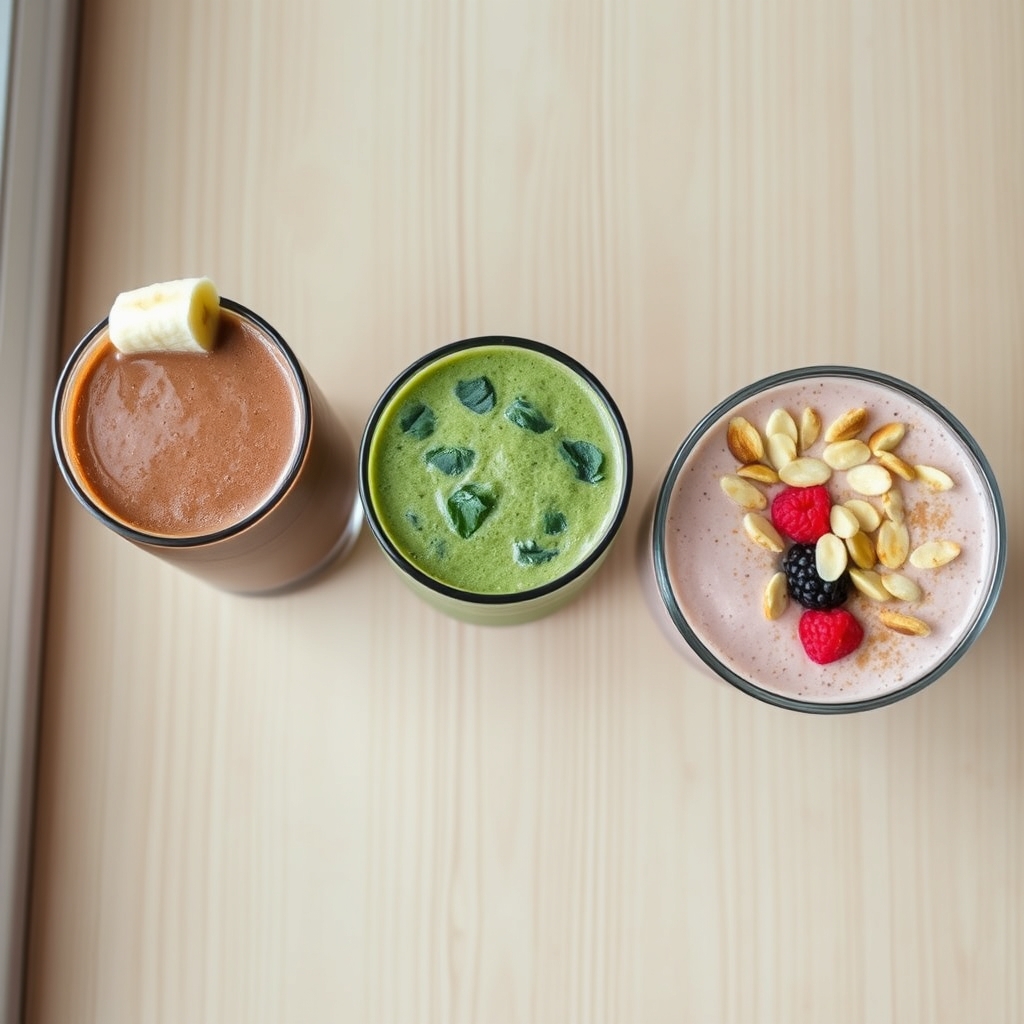
Whey-Based: Classic Recovery Shake
- 1 scoop whey protein (vanilla or chocolate)
- 1 cup whole milk or almond milk
- 1 banana
- 1 tbsp natural peanut butter
- 1 tsp honey
- Ice
Blend 60 seconds. High in protein, creamy, naturally sweet. Total protein: ~30g.
Plant-Based: Green Smoothie
- 1.5 scoops plant-based blend (vanilla or unflavored)
- 1 cup unsweetened almond milk
- 1 cup fresh spinach
- 1/2 frozen mango
- 1 tbsp almond butter
- Ice
Blend 90 seconds (plant powders need a bit longer). The fruit masks earthiness. Total protein: ~25g.
Collagen: Creamy Berry Bowl
- 1 scoop collagen peptides (unflavored or vanilla)
- 1 cup Greek yogurt
- 1/2 cup mixed berries (frozen)
- 1/2 cup coconut milk
- 1 tbsp raw almonds (for crunch)
- Drizzle honey
Blend 45 seconds. Collagen dissolves instantly; yogurt adds creaminess. Total protein: ~35g.
Allergen and Dietary Considerations
Lactose-intolerant or dairy-free:
- Avoid: Regular whey (contains lactose). Choose: Whey isolate (99%+ lactose removed) if you want whey, or plant-based/collagen.
Nut allergies:
- Avoid: Many plant-based blends add almond flour or coconut for taste. Check the ingredient list.
Soy-free:
- Watch out: Some plant-based powders use soy lecithin as an emulsifier. Read labels carefully.
Gluten-free:
- Most protein powders are gluten-free, but check certifications if you have celiac disease. Whey, plant-based, and collagen can all be certified gluten-free.
Vegan:
- Only option: Plant-based. Whey and collagen are animal-derived.
Budget Breakdown: What to Actually Buy
If you’re spending under $20/month: Buy a budget whey powder (Optimum Nutrition Gold Standard, Isopure Zero Carb). You’ll use it. Store brands from Costco are fine too.
If you’re spending $20–$40/month: Buy mid-tier whey (Dymatize ISO-100) or plant-based (Orgain Organic Protein, Garden of Life). You’ll notice better taste and fewer additives.
If you’re spending $40+/month: Buy premium (Isopure for whey, Vega for plant-based, Vital Proteins for collagen). You get certifications, organic ingredients, and superior mixability and you’ll actually enjoy drinking it.
Pro tip: Buy during sales (most retailers discount by 15–25% on rotating brands). One tub a month is the right pace. Faster than that and you’re probably over-supplementing; slower and you’re not being consistent.
Frequently Asked Questions
Q: Do I need to drink protein powder to build muscle? A: No. You can hit your protein goals from food (chicken, eggs, yogurt, beans). Powder is just convenient. If you’re eating 100g of protein daily from real food, you don’t need powder. If you’re struggling to hit that target, powder fills the gap cheaply.
Q: Will protein powder make me bloated? A: It depends on your gut. Whey and plant-based can cause bloating; collagen rarely does. If a powder bloats you, stop using it and try another type. Don’t force it.
Q: How much protein should I actually be using per shake? A: 20–30g is the typical range for most people that’s one scoop of most powders. More is not better; excess protein beyond what your body can use in a given window is simply excreted.
Q: Is plant-based protein as good as whey? A: For muscle recovery, whey has a slight edge because of its BCAA profile and speed of digestion. But a quality plant-based blend (pea + rice, or a multi-source formula) works fine, especially if you’re not an elite athlete. The difference is meaningful at the margins, not transformative.
Q: What’s the difference between whey concentrate, isolate, and hydrolysate? A: Concentrate (~80% protein) is cheap, tastes okay, but has lactose. Isolate (90%+ protein) has most lactose removed and is better if you’re sensitive. Hydrolysate (pre-broken-down amino acids) absorbs fastest but costs the most. For smoothies, concentrate is fine unless you’re lactose-intolerant.
Q: Does the brand matter, or can I buy generic? A: Brand matters for consistency, taste, and certifications not for “results.” Optimum Nutrition, Dymatize, and Isopure have reputations for label accuracy. Store brands (Costco, Target) are often made by the same manufacturers and are fine if you tolerate them. If a brand isn’t third-party tested and tastes off, move on.
Last checked: June 2026. Pricing and product availability subject to change; verify before purchasing.
Our Keeper
For most people, whey protein isolate mid-tier (Dymatize ISO-100, Optimum Nutrition Gold Standard Whey, or Isopure Zero Carb) is the best balance of price, taste, mixability, and digestibility. Based on observed retail listings as of June 2026, it costs roughly $0.80–$1.20 per serving, is third-party tested, mixes smoothly, and tastes good.
If you’re vegan or dairy-free, go for a multi-source plant-based blend (Orgain Organic Protein or Garden of Life Raw Organic).
If you’re sensitive to whey bloating or want collagen’s joint and skin benefits, collagen peptides (Vital Proteins or Orgain Collagen) work well mid-tier.
Don’t overthink it. Buy a single-serving packet, try it, and commit if you like it. Protein powder is a tool, not magic consistency matters more than the brand.