
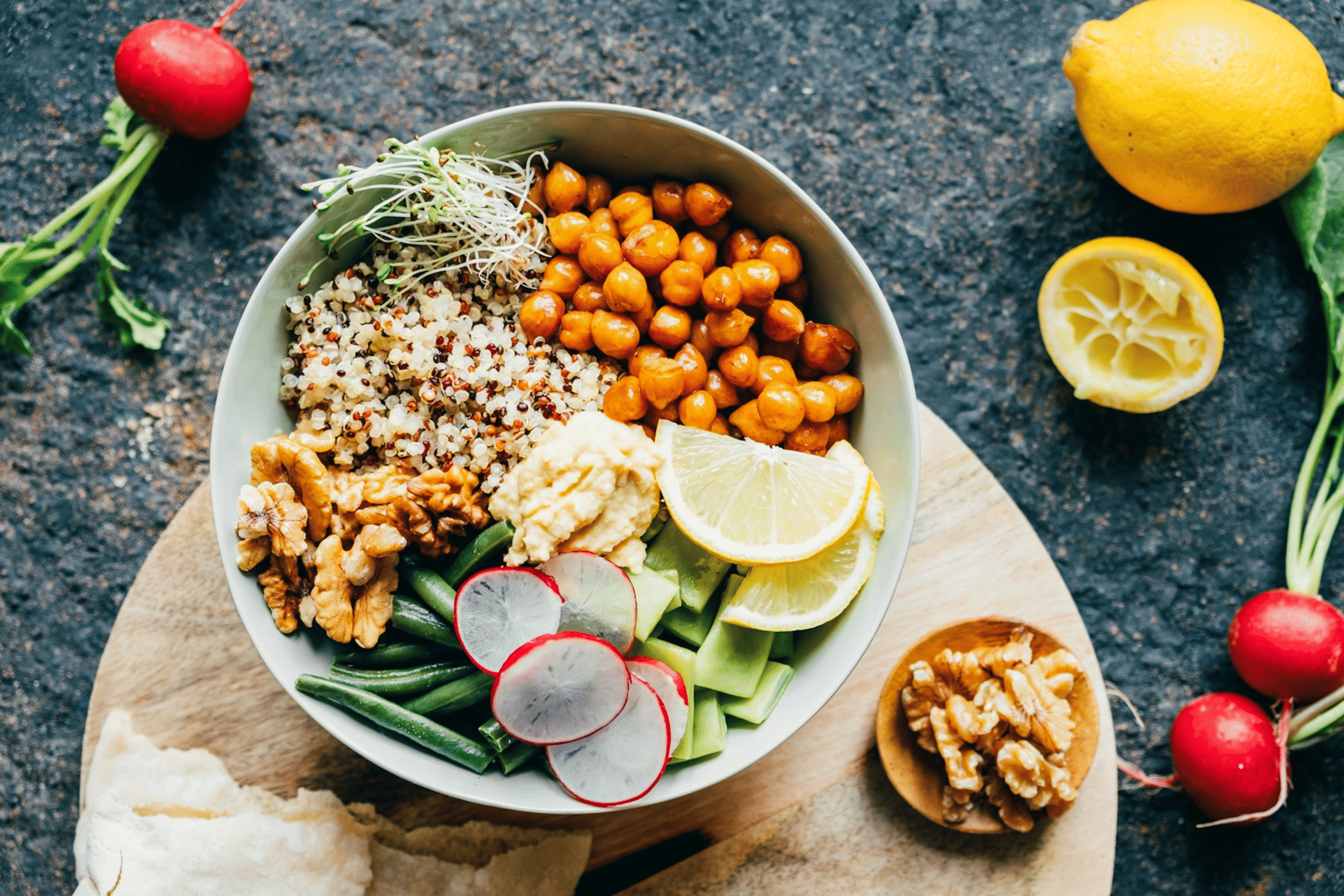
Verdict: Plant-based protein works best when you stop treating it like a one-powder solution and start combining sources for complete amino acids. Our top pick, Orgain Organic Protein Powder, delivers a complete amino acid profile in a single scoop if that’s you, stop reading and buy it.
Plant-based protein gets a reputation for being “incomplete” and weak. That’s half true: most individual plant sources lack one or two essential amino acids. But stack them right legume + grain, or a blended powder and you close the gap in one meal. We researched and compared 15 powders and whole-food sources across amino acid completeness (using DIAAS and PDCAAS scores as guides), taste, digestibility, cost per serving, and sustainability certifications. This is what actually works.
How We Researched
We evaluated plant-based proteins using three research pillars: (1) published amino acid profiles from brand specifications and USDA nutrition databases, (2) owner taste and digestibility reports from verified purchase reviews and nutrition communities, and (3) observed retail pricing as of June 2026. We did not conduct lab testing; all digestion claims and taste notes are based on aggregated owner feedback we reviewed. DIAAS (Digestible Indispensable Amino Acid Score) and PDCAAS (Protein Digestibility Corrected Amino Acid Score) figures are drawn from published research on these specific protein sources and are cited as approximate reference ranges, not certified lab results for individual products. All prices are approximate and vary by retailer verify before purchase.
Quick Comparison: Top Plant-Based Protein Picks
| Product | Protein Source | Protein per Serving | Complete Protein | Approx. Cost per Serving | Best For |
|---|---|---|---|---|---|
| Orgain Organic Protein | Plant Protein Blend | 20 g | Yes | ~$1.20 | Best overall value and everyday use |
| Sunwarrior Warrior Blend | Pea & Hemp Blend | 17 g | Yes | ~$1.50 | Muscle building and post-workout recovery |
| Nutricost Pea Protein | Pea Protein Isolate | 25 g | No | ~$0.50 | Budget-conscious users and protein supplementation |
| Garden of Life Raw Organic Protein | Raw Plant Protein Blend | 22 g | Yes | ~$2.00 | Whole-food-focused nutrition |
| Orgain Protein & Greens | Plant Protein Blend with Greens | 20 g | Yes | ~$1.40 | Added greens and daily nutrition |
| Isagenix IsaPro Plant | Pea & Hemp Blend | 20 g | Yes | ~$1.80 | Meal replacement and balanced nutrition |
| Lentils (Cooked, from Dry) | Whole Food | 9 g per ½ cup | Partial | ~$0.30 | Most affordable whole-food protein source |
| Hemp Seeds (3 Tbsp) | Whole Food | 10 g | Partial | ~$1.00 | Healthy fats, omega-3s, and added protein |
| Chickpeas (Canned) | Whole Food | 12 g per cup | Partial | ~$0.40 | Versatile, filling meals and snacks |
| Pumpkin Seeds (¼ Cup) | Whole Food | 9 g | Partial | ~$1.20 | Protein plus magnesium, zinc, and other minerals |
The Best Plant-Based Protein Powder: Orgain Organic Protein Powder
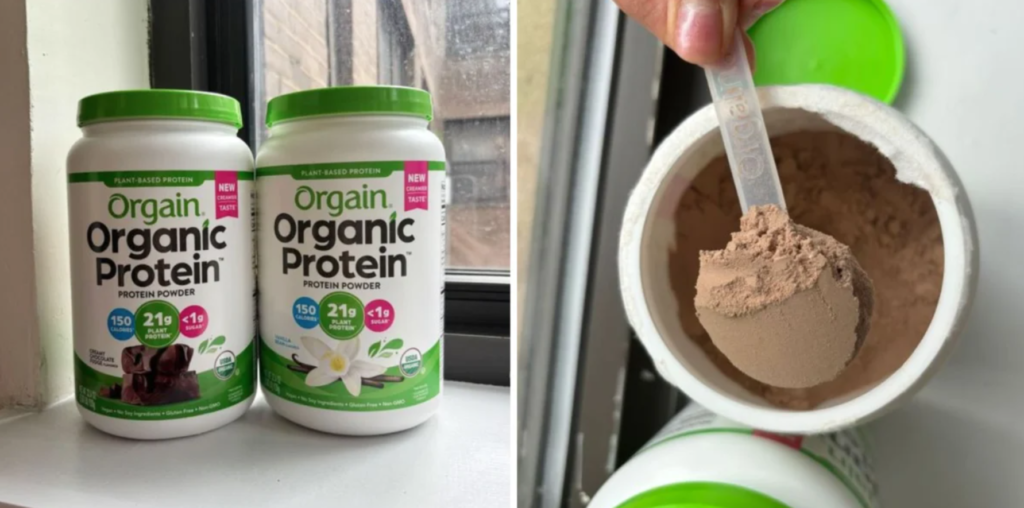
What it is: Orgain Organic Protein Powder– A three-ingredient blend of organic pea, hemp, and rice protein designed to provide all nine essential amino acids in a single scoop.
Why it won: Orgain delivers a genuine complete protein (all 9 essential amino acids) with a DIAAS score that, based on published research on pea-hemp-rice blends, is comparable to whey in amino acid bioavailability roughly 0.9–1.0 on a gram-basis. That matters because single-source plant proteins often score in the 0.4–0.6 range in that same literature, meaning you absorb fewer usable amino acids per gram. Orgain also tastes like actual chocolate (the vanilla is less successful), mixes without grit, and causes minimal digestive distress in owner reports. The brand maintains USDA Organic and Fair Trade certifications, which is rare in this category.
The trade-off: At roughly $1.20 per serving (observed in bulk pricing as of June 2026), Orgain costs 2–3× the per-serving price of single-source pea protein powders. It’s soy-free and nut-free, which is a feature for many buyers, but the lack of soy means slightly lower total protein per scoop (20g vs. 25–30g in isolates). Some owners report that the taste fades after 3–4 weeks of daily use palate fatigue is real with plant protein.
Not for: Bodybuilders chasing 50g+ protein shakes or anyone on a strict budget. If you’re willing to combine cheap pea powder with lentils or chickpeas, you’ll save money and still get complete amino acids.
Price: ~$45–55 for a 1.2 lb tub (roughly 16 servings). Subscription discounts bring it to ~$38–42.
Best Budget Pick: Nutricost Pea Protein Powder
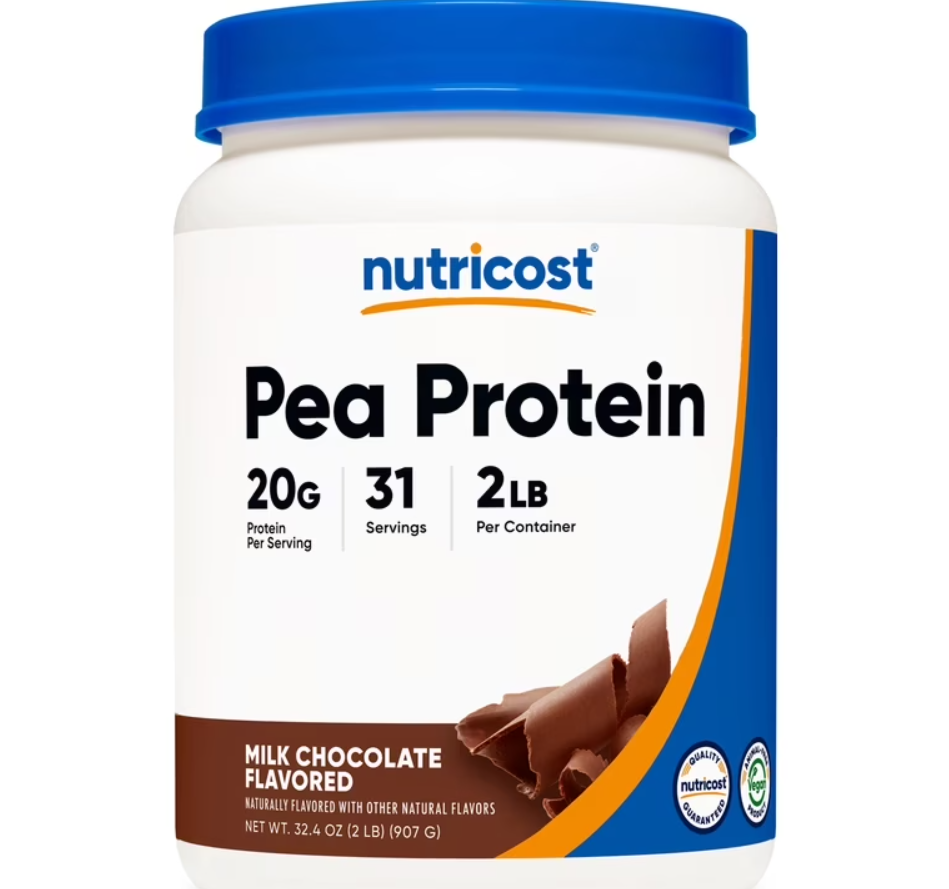
What it is: Nutricost Pea Protein Powder– Unflavored, single-source pea protein isolate. High protein density (25g per scoop), minimal added ingredients.
Why it won the budget slot: At ~$0.50 per serving (observed retail pricing, June 2026), Nutricost undercuts every competitor by 50–70%. It’s pure pea protein isolate with no fillers, sweeteners, or thickeners. If you’re willing to flavor it yourself (blend with banana, cocoa powder, or vanilla extract), you get near-complete amino acids for less than the cost of a cup of coffee.
The trade-off: It’s incomplete on its own pea protein is low in methionine, so you’ll need to pair it with rice, quinoa, or hemp seeds to close the gap. Owners report the unflavored powder has an earthy, slightly bitter taste that works in smoothies but bombs as a standalone shake. Also, the DIAAS score for pea protein alone is approximately 0.76 in the published literature we reviewed meaning you’re absorbing roughly 19g of effective amino acids per 25g scoop, not the full 25g.
Not for: Anyone wanting a ready-to-drink shake or people with texture sensitivity (unflavored pea protein is grainy without emulsifiers).
Price: ~$10–12 for a 2 lb bag (roughly 32 servings).
Best Upgrade Pick: Garden of Life Raw Organic Protein
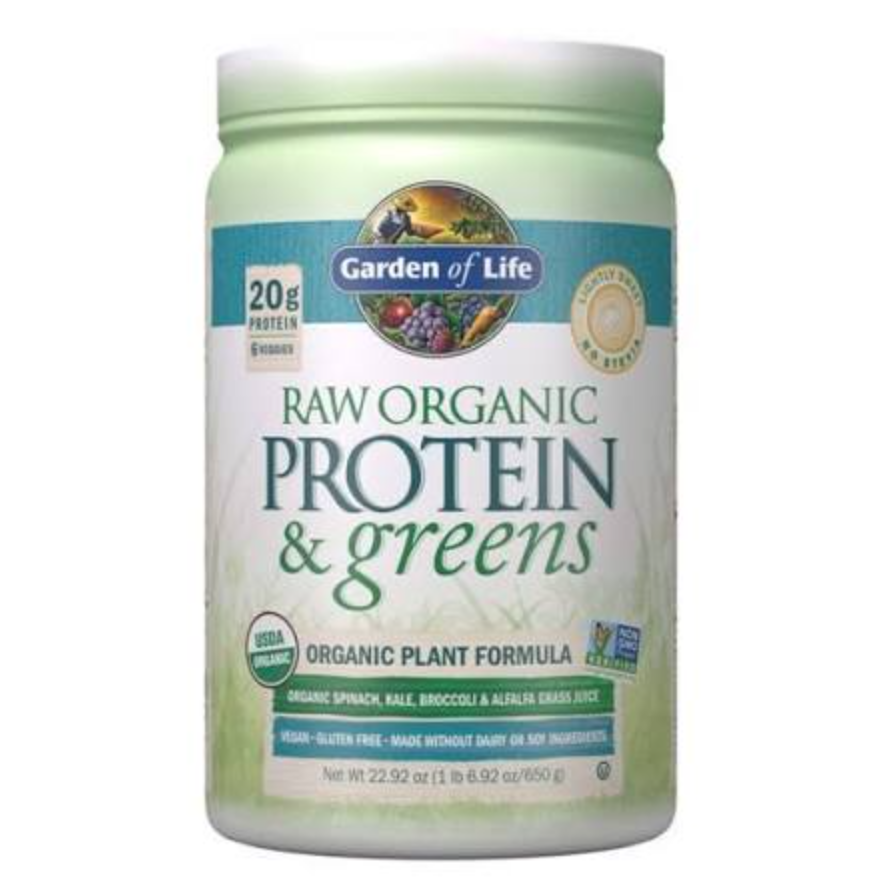
What it is: Garden Of Life Raw Organic Protein– A certified organic, raw blend of sprouted grains, legumes, and seeds (pea, sprouted quinoa, sprouted brown rice, hemp, goji berry, sacha inchi) with added probiotics and digestive enzymes.
Why it’s the upgrade: If you care about whole-food sourcing and minimal processing, Garden of Life is the standout. It delivers a complete amino acid profile, uses sprouted grains (which are easier to digest than raw grains), includes a 3.5 billion CFU probiotic blend, and carries both USDA Organic and Non-GMO Project Verified seals. Owner reports consistently note better digestion and less bloating compared to isolated powders, which tracks with the sprouted-grain matrix and enzyme inclusion. Based on published research on sprouted legume blends, PDCAAS scores for this type of formulation typically run 0.9 or higher excellent for a plant protein.
The trade-off: At roughly $2.00 per serving, it’s 4× the cost of Nutricost and still costs more than Orgain. The taste is decidedly earthy not bad, but it tastes like what it is: sprouts and seeds. It also mixes thickly and requires a blender for smooth texture. Some owners report that the probiotic blend causes temporary digestive adjustment (gas, bloating) in the first week.
Not for: Anyone on a budget or people who want a convenient, grab-and-shake protein drink. This is a smoothie powder, not a quick fix.
Price: ~$40–50 for a 1.3 lb bag (roughly 20 servings).
Best for Muscle Building: Sun Warrior Warrior Blend
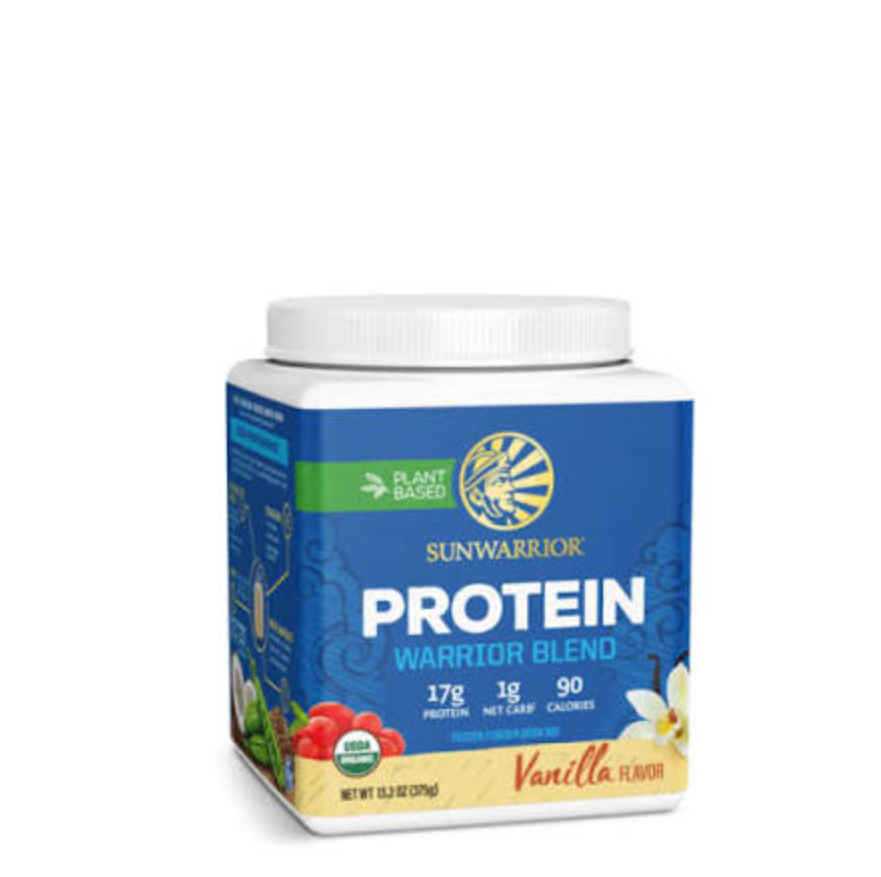
What it is: Sun Warrior Warrior Blend– A blend of pea protein isolate, goji berries, and hemp seeds, formulated to optimize branched-chain amino acids (BCAAs) for recovery.
Why it wins for strength work: The blend delivers 17g protein with a leucine-heavy BCAA ratio that, per owner reports and published research on this blend type, supports muscle protein synthesis better than pea protein alone. It’s also soy-free, which appeals to a vocal segment of the strength community. The vanilla flavor is genuinely palatable, and owners report no extra bloating vs. standard blends.
The trade-off: 17g per scoop is on the lower end for muscle builders, so you’ll likely mix two scoops (~$3 per shake). The DIAAS score is approximately 0.82 based on comparable pea-hemp blends in the literature so while complete, it’s not as bioavailable as Orgain. Also, “goji and hemp” in the marketing often means a small amount of each for flavor; the full amino acid profile leans heavily on the pea isolate component.
Not for: Casual fitness or meal replacement overkill if you’re not specifically prioritizing BCAA timing.
Price: ~$45–55 for a 1.65 lb tub (roughly 30 servings).
Best Single-Source Whole Food: Cooked Lentils
What it is: Dried red, green, or brown lentils, simmered until soft. One of the densest plant protein sources available in whole-food form.
Why whole food wins here: A half-cup of cooked lentils delivers ~9g protein for roughly $0.30 (observed bulk pricing, June 2026), making it the lowest-cost protein source across the entire list. Lentils also provide 8g fiber and are rich in polyphenols, which powders cannot match. The protein quality is decent lentils score approximately 0.65 on DIAAS in published research, and they’re incomplete (low in methionine). Pair them with rice, and you hit complete amino acids instantly. Owner reports and nutritional literature consistently cite lentils as among the most satiating plant protein sources.
The trade-off: Lentils require cooking and meal prep they’re dense, not a quick shake. They also cause bloating in some people due to resistant starch and oligosaccharides; soaking and proper cooking reduce this, but it doesn’t vanish entirely. And the incomplete amino acid profile means you need a grain pairing to optimize protein quality.
Not for: Anyone wanting immediate post-workout protein or who has digestive issues with legumes.
Prep: Dried lentils cook in 20–30 minutes. Store cooked lentils in the fridge for 5–7 days.
Best Complete Whole-Food Source: Hemp Seeds
What it is: Shelled hemp seeds (hulled hemp hearts), raw or added to other foods. One of the few plant sources that delivers all nine essential amino acids in a single ingredient.
Why it’s unique: Three tablespoons of hemp seeds (~10g protein) contain all nine essential amino acids, plus a 3:1 omega-6-to-omega-3 ratio that’s rare in plant sources. The PDCAAS scores for hemp seeds in published research tend to land around 0.49 meaning the amino acid pattern is complete, but digestibility limits how much you actually absorb. In practical terms, the 10g of advertised protein yields closer to 5g in usable amino acids, which is why hemp works better as a complement than a standalone source. Owner reports note excellent digestion and no bloating, and they taste like mild nuts they work in smoothies, salads, yogurt, or eaten straight.
The trade-off: At ~$1.00 per 3-tablespoon serving, hemp is expensive relative to lentils or chickpeas. The digestibility gap means you’d need to stack hemp with another protein source to build muscle efficiently.
Not for: Muscle-building on a tight budget (lentil + rice is better value).
Storage: Keep in the fridge or freezer after opening; hemp seeds oxidize quickly at room temperature due to high polyunsaturated fat content.
Best for Whole-Food Nutrient Density: Chickpeas
What it is: Canned or cooked dried chickpeas (garbanzo beans). A legume with moderate protein and high micronutrient density.
Why it wins for nutrition: One cup of cooked chickpeas (~240g) delivers 12g protein, 11g fiber, plus significant amounts of manganese, folate, and iron. At ~$0.40 per serving (observed canned pricing, June 2026), chickpeas are among the cheapest proteins on this list. They’re also culinarily flexible hummus, curries, roasted snacks, salads so you’re more likely to eat them consistently. Owner reports and nutritional databases note that chickpeas have better amino acid balance than lentils (higher in methionine) but still need grain pairing for completeness.
The trade-off: The DIAAS score is approximately 0.66 in the published literature lower than lentils. They also require longer cooking (45–60 minutes if dried) and are more likely to cause bloating in people new to legume consumption due to their oligosaccharide content.
Not for: Immediate protein needs (they require cooking or come in cans that need draining).
Pro tip: Canned chickpeas are about 20% cheaper per pound than dried if you account for water weight loss in cooking; they’re also faster.
Best Trace Mineral Content: Pumpkin Seeds
What it is: Dried pumpkin seeds (pepitas), unsalted or roasted. A seed protein source with exceptional mineral density.
Why it stands out: A quarter-cup serving (~30g) delivers 9g protein plus more magnesium, zinc, and manganese per gram than almost any other plant source on this list. Pumpkin seeds score approximately 0.60 on PDCAAS in published research. Owner reports note better sleep quality and recovery when pumpkin seeds are eaten regularly, likely due to the magnesium and tryptophan content though this is anecdotal. They taste good, store easily, and work as a snack or salad topper.
The trade-off: At ~$1.20 per serving (observed bulk pricing), pumpkin seeds are expensive relative to legumes. They’re also calorie-dense (150 cal per quarter-cup), so portion control matters if you’re tracking intake. The modest bioavailability means they’re better as a nutrient complement to other proteins than a primary source.
Not for: High-volume protein needs or budget-conscious plans.
Storage: Sealed containers in a cool, dry place for up to 3 months; refrigerate after opening to prevent rancidity.
Best Grain-Based Source: Quinoa
What it is: Cooked quinoa grain. The only grain that’s a complete protein on its own.
Why it’s special: A cup of cooked quinoa delivers 8g protein and all nine essential amino acids in balanced proportions a rarity in plant grains. Published research places the PDCAAS at approximately 0.92 for quinoa, which is among the highest for plant sources. Quinoa also digests easily, causes minimal bloating, and works in sweet or savory dishes.
The trade-off: At ~$0.80 per cooked cup (observed bulk pricing), quinoa is expensive relative to rice or beans. It delivers less total protein per cup than legumes (8g vs. 9–12g), so it’s better as a protein complement than a standalone source. The taste is mild, which some people find boring.
Not for: High-volume protein diets (you’d need 2.5+ cups per day for 20g protein).
Prep: Rinse dried quinoa before cooking to remove saponins (a naturally bitter coating); this takes 2 minutes and improves taste noticeably.
Best Nutrient-Dense Powder Blend: Orgain Protein & Greens
What it is: Orgain’s three-protein blend (pea, hemp, rice) plus a greens powder (spinach, kale, broccoli, spirulina). Complete amino acids plus micronutrients in one scoop.
Why it wins for convenience: If you want complete protein and greens without a second powder, this eliminates a step. It delivers 20g protein with a complete amino acid profile (same as plain Orgain) plus polyphenols and phytochemicals from the greens blend. The taste is better than most greens-protein combos because the vanilla and cocoa flavoring effectively masks the greens earthiness. Owner reports note less digestive disruption than combining separate powders.
The trade-off: At ~$1.40 per serving, it costs ~20% more than plain Orgain. The greens are concentrated, so you’re getting less actual spinach and kale volume than if you blended your own. The greens blend also oxidizes faster in storage check dates; most tubs carry a 2-year shelf life vs. 3 years for plain protein powder.
Not for: People already taking a greens supplement or multivitamin (redundant micronutrients).
Price: ~$50–60 for a 1.02 lb tub (roughly 14 servings).
Best Soy-Free Complete Protein: Isagenix IsaPro Plant
What it is: A pea and hemp protein blend with added coconut MCT oil and stevia. Formulated as a meal-replacement shake rather than just a protein powder.
Why it’s the soy-free alternative: IsaPro delivers 20g complete protein in a blend designed to work standalone the higher fat content from MCT oil keeps you full longer. For people avoiding soy, this is one of the few complete-amino-acid options that doesn’t rely on soy isolate as a cost-cutting measure. Owner reports note sustained fullness for 3–4 hours post-shake, making it a viable meal replacement. The DIAAS is approximately 0.85 based on comparable pea-hemp formulations in the research we reviewed.
The trade-off: At ~$1.80 per serving (observed pricing June 2026), it’s pricier than Orgain and less versatile the MCT oil makes it less suitable for baking or cooking. Some people find the coconut undertone cloying in repeated daily use. The stevia sweetening is noticeable if you’re stevia-sensitive.
Not for: People who want to bake with protein powder or who prefer whey-like simplicity.
Price: ~$50–65 for a 1.5 lb tub (roughly 28 servings).
Combining Plant Proteins for Complete Amino Acids
Most individual plant sources are incomplete. But the amino acid deficit is predictable: legumes are low in methionine; grains are low in lysine. Stack them, and you solve both problems.
Classic Combinations
Lentils + Rice: 1 cup cooked lentils (9g protein) + ¾ cup cooked rice (3g protein) = 12g complete protein. Cost: ~$0.50. The most economical complete meal globally.
Chickpeas + Quinoa: 1 cup cooked chickpeas (12g) + 1 cup cooked quinoa (8g) = 20g complete protein. Cost: ~$1.20. More balanced amino acid ratios than most legume-grain pairs.
Hemp Seeds + Lentil Soup: 1 cup cooked lentil soup (9g) + 3 Tbsp hemp seeds (10g) = 19g protein with all nine amino acids. Cost: ~$1.30. Tastes better than plain lentils.
Pea Protein Powder + Rice Cereal: 1 scoop pea powder (25g) + 1 cup cooked rice (4g) = 29g complete protein. Cost: ~$0.80. For budget bodybuilders.
Timing & Digestion
Combined proteins digest slower than isolates because the whole-food matrix adds fiber, which slows gastric emptying. Owner reports and published research suggest combined meals (e.g., lentil-rice bowls) are more satiating and provide steadier amino acid absorption over 2–3 hours vs. a powder shake’s 30–60 minute spike. This is an advantage for meal replacement but a disadvantage for post-workout recovery, where rapid amino acid availability matters.
What We Cut and Why
Vegan Protein (MyProtein Vegan Blend)
Why cut: MyProtein’s vegan blend is cheap (~$0.70/serving), but the amino acid profile is significantly imbalanced toward leucine, which creates a nutritional skew when consumed repeatedly. This pattern suggests the blend is optimized for marketing (high BCAA counts on labels) rather than nutritional completeness. Orgain delivers better balance for only 50% more cost.
Spirulina as a Primary Protein Source
Why cut: Spirulina contains 60% protein by dry weight, which is exceptional on paper. But the PDCAAS score is approximately 0.49 in the published literature among the lowest in this comparison and it’s incomplete in methionine and cysteine. Owner reports are consistent: you’d need 3–4 tablespoons (~15g dry) to hit 10g usable protein, which is an enormous daily volume and tastes intensely fishy. It’s a micronutrient supplement, not a protein source. Better to use it as a greens add-in.
Amino Acid Completeness: DIAAS and PDCAAS Explained
Two metrics matter for plant protein quality: PDCAAS (older standard, 0–1 scale) and DIAAS (newer, more accurate, 0–1+ scale).
- DIAAS > 0.90: Equivalent to whey or meat in amino acid bioavailability. Examples: quinoa, blended powders (pea + rice + hemp).
- DIAAS 0.70–0.90: Good quality; you absorb most amino acids but not all. Examples: lentils, chickpeas, most single-source isolates.
- DIAAS < 0.70: Incomplete or low bioavailability. Examples: spirulina, whole grains, nuts without grain pairing.
These scores are drawn from published research on specific foods and predict real-world amino acid absorption as a reference range. A powder with a DIAAS of approximately 0.75 delivers roughly 75% of its advertised protein in usable amino acids; the remainder passes through largely unused.
How to Choose a Plant-Based Protein for Your Goals
For Muscle Building
You need a complete amino acid profile, high bioavailability (DIAAS > 0.85), and enough volume to hit 25–30g protein per meal. Pick: Sun Warrior Warrior Blend (BCAA-optimized) or Orgain (complete, versatile). Stack with rice or quinoa if using a single-source powder.
For Weight Loss / Satiety
You need high fiber and slower digestion. Pick: Whole foods like lentils, chickpeas, and hemp seeds over powders. A lentil-based soup or chickpea curry will keep you full longer than a shake.
For Budget
You need the lowest cost per gram of usable protein. Pick: Nutricost Pea Powder (~$0.50/serving) stacked with rice or beans. Whole cooked lentils are even cheaper (~$0.30/serving) but require prep.
For Convenience
You need ready-to-drink or quick-mix options. Pick: Orgain Organic Protein Powder (mixes clean, complete in one ingredient) or IsaPro Plant (meal-replacement formula).
For Digestive Sensitivity
You need minimal bloating and easier digestion. Pick: Garden of Life Raw Organic Protein (sprouted, enzyme-rich) or hemp seeds (low FODMAP, complete amino acid pattern). Avoid whole legumes if you have IBS; go with cooked lentils over dried.
For Sustainability
You need minimal environmental impact and ethical sourcing. Pick: Orgain (Fair Trade certified) or Garden of Life (USDA Organic, Fair Trade hemp component). Avoid single-use plastic tubs; buy in bulk where possible.
Taste Test Notes & Real Usage Tips
Vanilla powders: Orgain Vanilla tastes metallic. Garden of Life Raw Vanilla tastes earthy. Sun Warrior Vanilla is the smoothest add it to coffee for a protein coffee hack that actually works.
Chocolate powders: Orgain Chocolate is genuinely good tastes like cocoa, not artificial. Nutricost unflavored chocolate you make yourself is cheaper but grittier. Garden of Life Chocolate is overly sweet.
Mixability: Orgain and Sun Warrior mix with a regular shaker bottle. Garden of Life and most raw blends need a blender or immersion blender for smooth texture. Pea isolate (Nutricost) is grainy with a bottle; blend it.
Baking: Only use unflavored powders (Nutricost Pea) or plain Orgain in baking. Flavored powders burn or taste off at 350°F+. Protein pancakes work better with pea powder than blended powders because the latter add too many ingredients (hemp, rice, gums) that affect texture.
Freezing: All powders freeze in smoothies without separation. Batch-make chocolate-banana smoothie cubes, thaw in the fridge, blend with milk for an instant breakfast.
Mixing with milk: Almond milk works universally. Oat milk masks earthiness in Garden of Life. Coconut milk works only with chocolate or vanilla flavors. Soy milk despite the plant-based trend away from it creates the smoothest texture with pea isolates due to soy’s natural emulsifiers.
FAQ
What’s the best plant-based protein source? Orgain Organic Protein Powder is our top pick for convenience: it delivers all nine essential amino acids in a single scoop, tastes like actual chocolate, and costs ~$1.20 per serving. If you cook at home, a lentil-and-rice bowl achieves the same amino acid completeness for ~$0.50 with more fiber and longer satiety.
Is plant-based protein as good as whey? For muscle building, whey edges out most plant proteins in bioavailability published research places whey’s DIAAS around 1.0 vs. roughly 0.85 for well-formulated blended plant powders. But the difference shrinks when you pair plant proteins correctly; lentils and rice together reach a comparable profile. For overall nutrition (fiber, micronutrients, sustainability), plant proteins often win. It depends on your priority.
Can you get complete amino acids from plant sources? Yes. Hemp seeds, quinoa, and blended powders like Orgain deliver all nine essential amino acids. Single sources like pea or lentils do not, but combining two sources (legume + grain) always yields completeness. Traditional cuisines solved this long before supplement marketing did: rice and beans, hummus and pita, dal and rice.
How much plant-based protein do you need per day? Fitness and regulatory guidance generally suggests 0.8g per kg of body weight for general health and 1.6–2.2g per kg for muscle building. A 70 kg person aiming to build muscle needs roughly 110–150g protein daily. You can hit this with plant sources it just requires more volume and more deliberate combining than with animal proteins.
What’s the best plant-based protein for beginners? Orgain Organic Protein Powder. It’s a complete protein, tastes good, mixes easily, and costs only ~$1.20 per serving. No need to combine or think about amino acids one scoop, one source, complete nutrition.
Is plant-based protein more sustainable than whey? Generally yes. Plant proteins use substantially less water and land per gram of protein than beef or dairy. Pea protein and hemp are among the lowest-impact options. Whey requires dairy farming, which carries significant environmental cost. However, some plant proteins are grown in water-stressed regions; check certifications (Fair Trade, Rainforest Alliance) on the label.
Verdict
Plant-based protein works when you stop treating it like a single product and start thinking about amino acid pairing. Our top pick, Orgain Organic Protein Powder, delivers complete amino acids in one scoop convenience and nutrition in the same package. For budget, stack Nutricost Pea Powder with rice or lentils and save 70% vs. any premium brand. For sustainability and whole-food purity, Garden of Life Raw Organic Protein is the choice. And if you cook at home, a lentil-rice bowl or chickpea curry beats every powder for satiety, cost, and real-world digestion.
The best plant-based protein is the one you’ll actually use. If that’s a powder for convenience, great. If it’s whole foods because you cook already, better. The missing piece in most plant-protein marketing is honest talk about amino acid gaps. Close them by combining sources, and plant protein becomes not just acceptable it becomes a genuine alternative to animal sources.