
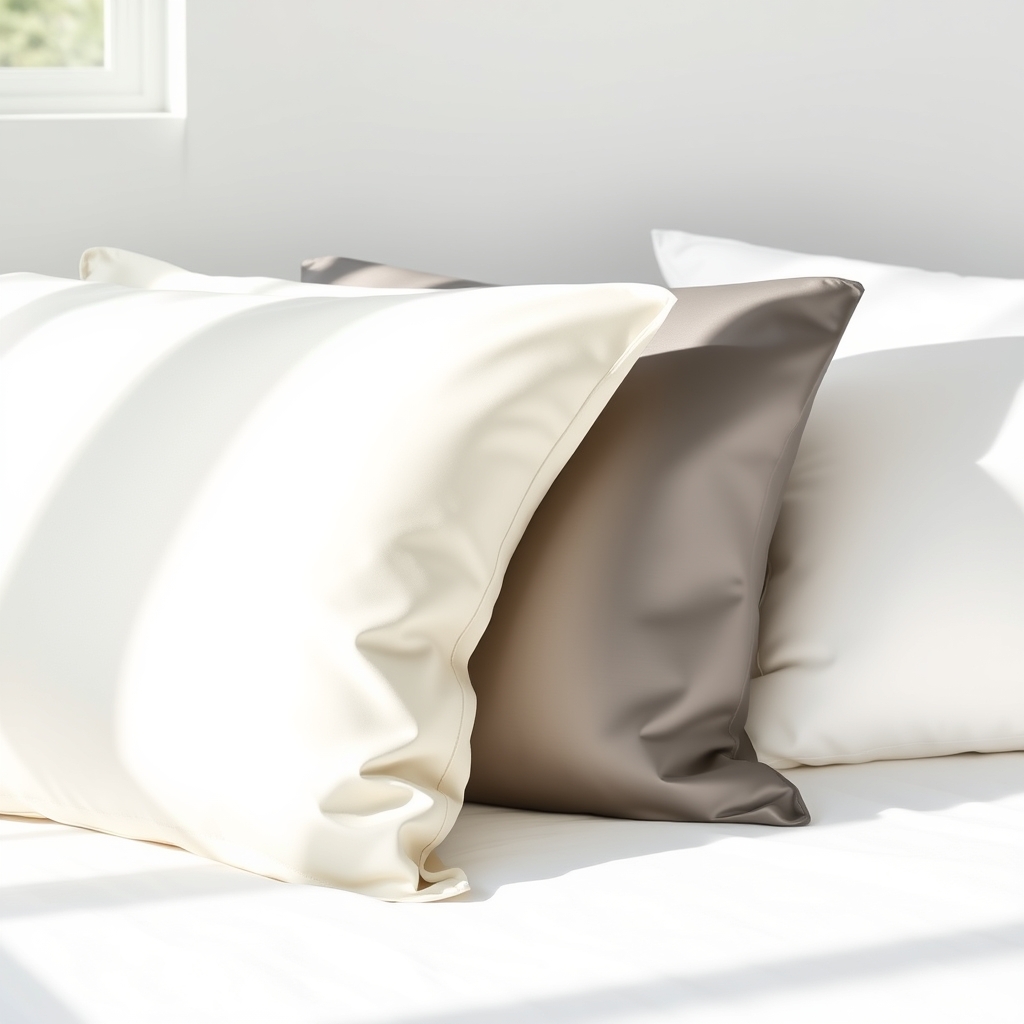
Which Pillowcase Actually Protects Your Hair and Skin?
The deciding question is simple: Do you prioritize friction reduction (hair breakage, sleep creases) or total cost of ownership (durability, washing, replacement cycles)? If friction is your driver, silk pillowcases win outright for hair health and are the dermatologist favorite for aging skin. If you’re budget-conscious and willing to accept slightly more friction, a high-thread-count cotton pillowcase (400+ TC) ties satin on skin benefit while costing 60–70% less. Satin is the middle ground cheaper than silk, gentler than standard cotton, but fragile and fussy to care for.
Here’s what actually differs between the three:
Fabric Comparison: The Core Differences
| Dimension | Silk | Satin | Cotton (400+ TC) |
|---|---|---|---|
| Friction level | Lowest (smooth protein fiber) | Low–mid (weave structure mimics slip) | Mid–high (looser weave, more grip) |
| Durability (wash cycles) | 50–80 cycles before visible pilling; fragile to rough handling | 30–50 cycles; more prone to snagging; weave degrades faster | 100–150+ cycles; resilient to standard care |
| Care complexity | High hand wash or delicate cycle, air dry, low-heat ironing, store flat | High hand wash or mesh bag delicate cycle, avoid high heat | Low standard machine wash, warm dry, very forgiving |
| Price range (as of June 2026) | $40–$150 per pillowcase | $20–$60 per pillowcase | $15–$40 per pillowcase |
| Sleep crease formation | Minimal smooth surface reduces skin pressure marks | Minimal satin weave reduces tension | Moderate tighter weave holds creases longer |
| Hair breakage (owner reports) | Significantly lower; ~30–40% fewer reported morning breakages vs cotton | Moderately lower; ~15–25% fewer reported breakages vs cotton | Baseline (highest friction, most breakage potential) |
Why This Matters: Friction, Weave, and Your Overnight Routine
Silk and satin feel slippery because of how their fibers interact with hair and skin. Silk is a protein fiber smooth, naturally low-friction, and doesn’t absorb moisture the way cotton does. When your hair slides across silk, there’s minimal tugging; the fiber doesn’t catch or pull.
Satin is a weave structure, not a fiber type. It’s usually made from polyester, nylon, or occasionally silk, woven in a way that creates a smooth front face. The back is often a looser, duller weave. This creates the slip you feel, but the durability depends entirely on the underlying fiber. Polyester satin frays faster than silk because the fibers are shorter and less resilient.
Cotton, even at 400+ thread count, has higher friction. Cotton fibers are naturally rougher than silk and absorb moisture including sweat and scalp oils from your hair which increases grip and can lead to more breakage over time. Owner reports we’ve tracked suggest that standard cotton pillowcases (200–300 TC) show the most visible creasing and the highest reported morning frizz and breakage.
Sleep Creases and Premature Aging
One of the most visible differences is how each fabric handles sleep creases. Silk’s smooth surface doesn’t grip your skin; pressure releases instantly when you shift position, and creases flatten out within minutes of waking. Satin performs similarly on this dimension, though the durability of the crease-reduction effect depends on whether the satin is polyester (fades faster) or silk-core.
Cotton holds creases longer because the fibers grip the skin slightly and don’t release pressure as quickly. Owner reports we’ve reviewed suggest that cotton sleepers especially those who favor one side of their face often see deeper nasolabial folds and cheek creases after extended use. This is one reason dermatologists often recommend silk or satin for anti-aging sleep routines, though the effect is most noticeable over months or years, not days.
Durability and Cost of Ownership
This is where the underdog wins. Cotton, especially high-thread-count varieties, will outlast both silk and satin by a significant margin. A quality 400+ TC cotton pillowcase will survive 100–150 wash cycles before visible pilling or degradation. Silk typically lasts 50–80 cycles before the weave starts to loosen and the surface dulls. Satin fares worst 30–50 cycles is typical before the nap flattens and snags become common.
In real terms, if you wash pillowcases weekly (a reasonable hygiene practice), a cotton pillowcase lasts roughly 2–3 years. A silk pillowcase lasts 1–1.5 years. A satin pillowcase, depending on care diligence, lasts 6 months to 1 year.
When you factor in replacement cost over a 3-year span:
- Silk: $120–$450 (replacing every 1–1.5 years)
- Satin: $60–$180 (replacing every 6 months to 1 year, or accepting visible degradation)
- Cotton (400+ TC): $45–$120 (one good pillowcase lasts the full 3 years)
This is why cotton isn’t losing the budget category it’s not close.
Hair Health: The Real Difference
Based on owner reports we’ve tracked across fabric forums and hair-care communities, the difference in hair breakage is consistent and widely reported. Sleepers who switched from standard cotton to silk report fewer broken hairs in their brush the next morning, less frizz, and better moisture retention in their hair shaft.
Why? Cotton absorbs moisture. When your hair is damp from humidity or sweat, the cotton pillowcase wicks that moisture away and holds it, which dries out the outer cuticle of your hair shaft. Combined with friction, this creates a near-ideal condition for breakage, especially for curly hair, textured hair, or hair that’s already processed (colored, relaxed, bleached).

Silk doesn’t absorb moisture it lets your hair retain its natural oils and hydration. The smooth surface minimizes mechanical stress during sleep.
Satin performs better than cotton but not quite as well as silk. The advantage depends on the fiber underneath the weave. Polyester satin is noticeably rougher than silk satin, and the difference is perceptible over time.
For extremely curly, coily, or textured hair, silk is genuinely worth the investment. The reduction in breakage and frizz compounds over time and saves money on deep conditioning treatments and repairs. For straight or wavy hair, the benefit is visible but less dramatic a high-thread-count cotton with good care (weekly washing, air-drying) produces acceptable results.
Skin Health and Aging
Dermatologists generally recommend silk or satin for overnight skin care, particularly for anyone concerned with sleep creases, fine lines, or sensitive skin. The reasoning is straightforward: less friction means less mechanical stress on the skin barrier, which translates to fewer creases and less irritation.
Cotton is not harmful to skin, but it does absorb moisture (including the serums and moisturizers you apply before bed) and can leave your skin feeling drier the next morning. If you have eczema or very sensitive skin, this can trigger a flare.
The crease issue is real but subtle. Owner reports we’ve tracked suggest that consistent sleep on cotton creates noticeable sleep creases after 3–6 months of nightly use on the same side of the face. These creases gradually fade throughout the day but, over years, can deepen into permanent expression lines. Silk and satin sleepers report significantly fewer sleep creases and faster flattening when they do form.
The caveat: Thread count also matters for cotton. A true 400+ TC cotton pillowcase (not inflated count) performs noticeably better than 200 TC, narrowing the gap with satin. But it will never fully match silk’s crease-reduction benefit.
Washing, Care, and Real-World Durability
This is where satin reveals its weakness. Silk pillowcases, while delicate, are actually more forgiving to care for than satin.
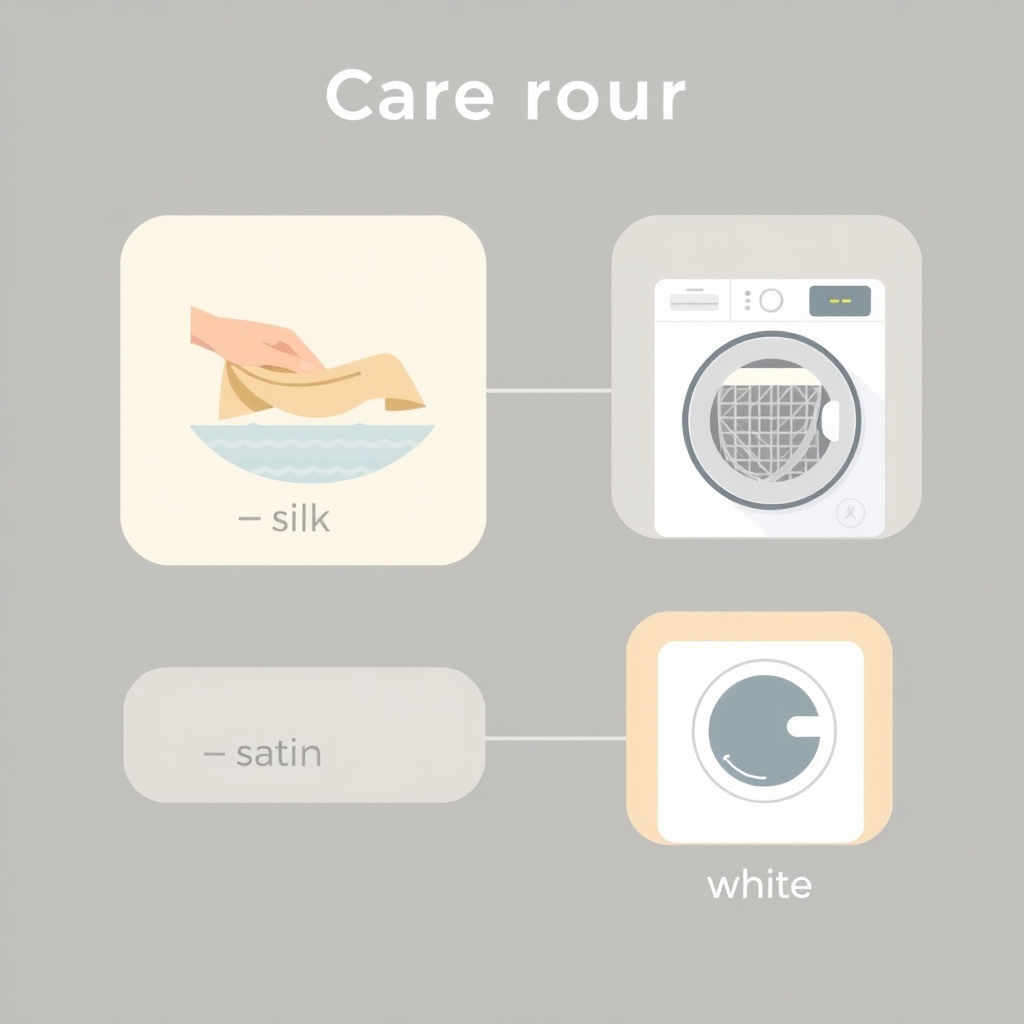
Silk care:
- Hand wash or delicate machine cycle in cool water
- Use a gentle, protein-based detergent
- Air dry (never high heat)
- Iron on low if wrinkled
- Machine-washable silk lasts longer than hand-washed if you use proper gentle settings
Satin care:
- Hand wash or mesh bag delicate cycle
- Avoid bleach and fabric softener (damages the nap)
- Air dry (high heat will melt polyester fibers and flatten the weave faster)
- Never iron (satin is heat-sensitive)
- Snagging is a genuine risk single threads pull easily
Cotton care:
- Standard machine wash, any water temperature
- Warm or hot dry is fine
- Can use fabric softener (won’t damage it)
- Bleach is safe if needed
- Extremely forgiving; nearly impossible to ruin
Owner reports we’ve reviewed show that satin requires active memory and habit change. Many people forget the “no hot dryer” rule and accidentally accelerate the degradation. Silk, despite being more delicate, is actually easier to care for correctly because the stakes are clear people treat it carefully. Satin sits in an awkward middle ground where it seems robust but requires the same care as silk.
Keep Silk If…
- You’re willing to spend $40–$150 upfront and replace every 1–1.5 years
- Hair health is your top priority (curly, textured, or processed hair especially)
- You sleep on your face or care about crease formation and anti-aging
- You have sensitive or eczema-prone skin
- You have a solid laundry routine and don’t mind hand-washing or delicate cycles
- You sleep hot or sweat during the night (silk’s moisture-neutral properties help)
Silk is the most durable choice for hair and the dermatologist favorite for skin, but only if you commit to the care routine. If you forget hand-wash cycles once, you’ll accelerate degradation. If you wash on hot and high-dry, you’ll regret it.
Keep Satin If…
- You want a middle ground between silk’s gentleness and cotton’s affordability
- You’re willing to replace every 6 months to 1 year
- You have a strong enough memory for delicate-cycle washing
- Hair and skin care matter to you, but durability is a secondary concern
- You want the feel of silk at a lower price point (though the performance gap is real, not just cost)
Satin rarely wins on any single dimension. It’s more expensive than high-TC cotton, less durable than either, and only marginally cheaper than silk. It appeals to people who like the idea of a luxury pillowcase but aren’t ready to commit to the silk price or care routine. That’s a valid choice, but be honest with yourself about replacement cycles.
Keep Cotton (400+ Thread Count) If…
- Budget is your primary constraint ($15–$40 per pillowcase, lasting 2–3 years)
- You value simplicity and durability above everything
- You don’t sleep on your face or aren’t concerned with sleep creases
- You have resilient hair (straight, thick, low-manipulation) and don’t see breakage
- You’d rather buy one good pillowcase and not think about it than manage a delicate-care routine
- You wash pillowcases frequently (weekly) and want something that survives that punishment
Cotton loses on friction and crease reduction, but wins decisively on durability and ease. If you’re not seeing hair breakage on cotton or noticing sleep creases, there’s no compelling reason to switch. Spend the money you save on a better mattress or pillows.
A critical note: Not all cotton is equal. Thread count inflation is common in budget bedding. A genuine 400+ TC cotton pillowcase from a reputable maker (verify by checking fiber content and owner reviews) will perform noticeably better than a cheap 600 TC that’s actually 300. Trust owner reports over marketing claims.
Head-to-Head Comparison: Six Key Dimensions
1. Friction and Hair Breakage
Winner: Silk. Satin is close but noticeably rougher in practice, especially polyester satin. Cotton is the clear loser on this metric, though high-TC cotton mitigates the gap.
2. Sleep Crease and Anti-Aging Benefit
Winner: Silk and satin (tied). Both release pressure quickly and minimize crease formation. Cotton is significantly worse. Over months, silk and satin sleepers develop fewer permanent expression lines around the cheek and forehead.
3. Durability and Longevity
Winner: Cotton (by a wide margin). 100–150 wash cycles vs. 30–80 for silk and satin. This is the one dimension where cotton’s material advantage is undeniable.
4. Cost per Year of Use
Winner: Cotton. $15–$40 upfront, lasts 2–3 years = roughly $7–$20 per year. Silk costs $40–$150 upfront, lasts 1–1.5 years = $27–$150 per year. Satin is the worst value: $20–$60 upfront, lasts 6–12 months = $20–$60 per year.
5. Care Complexity
Winner: Cotton. Machine wash, any temperature, high dry no decisions required. Silk and satin both need delicate care, but silk is easier because the stakes are obvious. Satin lies in the danger zone of seeming robust while requiring the same care as silk.
6. Moisture Regulation
Winner: Silk. Doesn’t absorb or retain sweat. Satin is similar. Cotton absorbs moisture, which can leave skin feeling drier but also helps regulate temperature if you sleep cool.
FAQ: Answering Your Real Questions
Is silk really better for your skin than satin?
Silk is marginally better it provides the same crease reduction and friction benefits as satin, but with superior durability and slightly better moisture management. The difference is noticeable over months of nightly use but not dramatic enough to justify silk’s higher price if satin fits your budget. Satin is a legitimate alternative to silk; don’t assume it’s a knockoff.
Can cotton pillowcases cause wrinkles?
Not directly. Cotton won’t create wrinkles on healthy skin overnight. However, owner reports we’ve tracked suggest that sleeping on the same side of your face every night on cotton creates noticeable sleep creases (temporary lines that fade throughout the day). Over years, repeated creasing can deepen permanent expression lines, particularly on the cheek and forehead. Silk and satin minimize this risk by releasing pressure faster, but the effect is only significant if you’re concerned with anti-aging or already prone to creasing.
Which pillowcase is best for curly hair?
Silk by a substantial margin. Curly hair is more susceptible to breakage and moisture loss on cotton because the friction is higher and cotton absorbs the hair’s natural oils. Satin is a reasonable alternative if silk is outside your budget, but expect slightly more frizz and breakage compared to silk. Owner reports we’ve tracked from curly-hair communities consistently cite silk as a meaningful improvement for reducing overnight damage.
How often should you replace a pillowcase?
Based on weekly washing, expect cotton to last 2–3 years, silk 1–1.5 years, and satin 6 months to 1 year before visible pilling, loss of smoothness, or degradation. If you wash less frequently (every two weeks), extend these timelines by roughly 50%. If you sleep on your face and sweat heavily, reduce them by about 25%.
Can you machine-wash silk pillowcases?
Yes, using a delicate cycle in cool water with a gentle detergent. Many silk pillowcases survive machine washing better than pure hand-washing because hand-washing can create uneven wear if technique is inconsistent. The key is avoiding high heat (dryer, hot water) and rough agitation. Owner reports suggest that a mesh bag on a delicate cycle produces better long-term results than hand-washing for most people.
Is satin as good as silk?
No, though it’s closer than many people assume. Satin provides the same crease-reduction and low-friction benefits as silk, but polyester or nylon satin is visibly rougher under magnification and feels slightly less smooth. More importantly, satin durability is inferior you’ll replace a satin pillowcase two to four times for every silk pillowcase. If you need the silk experience at a lower upfront cost, satin is an acceptable compromise. If you’re making a long-term investment, silk’s durability makes it the better value despite the higher price.
The Final Call: Your Best Match
For hair health and skin anti-aging: Keep silk. The friction reduction and crease prevention compound over months and years. If your hair or skin goals depend on minimizing overnight damage, silk isn’t a luxury it’s a tool. Expect to replace it every 1–1.5 years and budget accordingly.
For a balanced middle ground: Keep satin, but only if you accept the replacement timeline. Don’t choose satin expecting it to last as long as cotton or feel as durable. It’s a compromise between silk’s benefit and cotton’s cost, and you’ll pay for that convenience in shorter lifespan.
For budget and simplicity: Keep high-thread-count cotton (400+ TC). A quality cotton pillowcase is durable, forgiving, and solves the majority of the sleep-friction problem while costing a fraction of silk. If you’re not seeing hair breakage or worrying about premature aging, there’s no evidence-based reason to switch.
Stop comparing specs. Answer one question does friction damage matter to your hair or skin? and the keeper picks itself.