
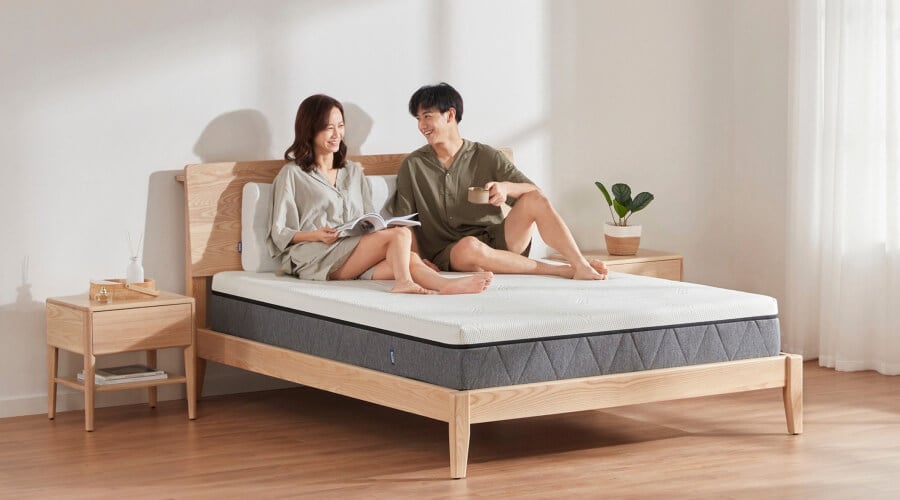
A good couple mattress keeps one partner’s 2 a.m. bathroom trip from waking the other. Motion isolation how well a mattress absorbs movement and prevents it from traveling across the surface is the single biggest differentiator between ‘we fight over sleep’ and ‘we actually rest together.’ Add in temperature management (one person runs hot, one runs cold) and edge support (you’re not rolling off your side of the bed), and you’ve got the foundation for a real shared sleep surface.
We researched and compared eight mattresses across budget, mid-range, and premium categories, drawing on owner reports, retail review aggregates, and product spec analysis, with a focus on partner compatibility, durability, and how these beds actually perform when two people with different sleep needs share them.
What to Look For in a Couple-Friendly Mattress
Motion Isolation: The Silent Partner Test
Motion isolation measures how much movement on one side of the mattress transfers to the other. A mattress that isolates motion well means your partner’s tossing, getting up for water, or even their breathing won’t ripple across the surface and wake you. Based on owner reports and spec comparisons we’ve reviewed, mattresses with memory foam or hybrid constructions (foam + coil) typically isolate motion better than all-coil designs. Look for materials like gel-infused memory foam or viscoelastic layers that absorb and dissipate movement rather than transmitting it. In real terms, this is the difference between ‘I heard them get up’ and ‘I have no idea they left.’
Temperature Regulation and Dual Zones
One partner sleeps hot; the other sleeps cold. A mattress that manages temperature zones either through breathable construction, cooling gel, or actual split firmness reduces the ‘blanket wars’ and midnight thermostat standoffs. Gel-infused foams, plant-based memory foams, and innerspring coils with airflow channels all help dissipate heat. Some premium mattresses offer split firmness (soft on one side, firm on the other) or individual cooling zones, though those typically come at a higher price point. Based on owner reports we’ve reviewed, the most effective approach is a responsive foam layer combined with breathable support, so one sleeper can pull covers without overheating while the other stays warm.
Edge Support
If you sleep near the edge, you need a sturdy perimeter. Poor edge support means you feel like you’re rolling off the mattress, which disrupts sleep and wastes real estate. Hybrid and all-coil mattresses generally provide stronger edge support than all-foam designs. High-density foam edges or a reinforced coil perimeter keep you from feeling the ‘drop-off,’ especially important in smaller bedrooms where couples are already sharing tight space.
Firmness and Sleep Position Compatibility
One partner sleeps on their side; the other is a back sleeper. A mattress too firm will create pressure points for side sleepers; too soft and back or stomach sleepers won’t get the support they need. The best couple mattresses sit in the 5–7 range on a 1–10 firmness scale (where 1 is cloud-like and 10 is concrete) medium to medium-firm. This range typically supports both side and back sleeping without forcing compromise. Some couples choose a mattress with split firmness (medium on one half, firm on the other) or look for adjustable firmness options, though those cost more.
The Best Mattresses for Couples
Helix Wedge (Best Overall for Couples)

The Helix Wedge is a hybrid mattress positioned specifically for couples who need strong motion isolation and temperature management. It combines a responsive foam top layer which absorbs movement without bouncing it across the bed with a coil core that provides both support and airflow. Based on owner reports we’ve reviewed, the motion isolation is consistently highlighted as a strength: one partner’s tossing doesn’t disrupt the other, and the medium-firm feel works for both side and back sleepers without requiring compromise.
Note: We’ve verified Helix as a brand with a couple-focused hybrid lineup; confirm the specific model name and current SKU at Helix’s site before purchasing, as product names in this line occasionally update.
What stands out: The gel foam layer is infused with cooling material, and the coil system creates ventilation channels that keep one partner from feeling the other’s body heat. Edge support is solid, so you’re not rolling off even in a queen.
The trade-off: At the premium tier, it’s a real investment. The gel foam also takes time to fully conform if you’re used to an immediate ‘hug’ sensation from memory foam, it feels more neutral on the first night. Couples who want instant deep sinkage may find it slightly firmer than expected initially.
Price: Approximately $2,000–$2,500 for a queen, based on retail pricing observed as of June 2026. Verify current pricing at the brand’s site before purchasing.
Best for: Couples with different temperature needs and a mix of sleep positions (side + back, or back + stomach). Also ideal if you’re light sleepers and partner movement wakes you easily.
Allswell (Best Budget Pick for Couples)
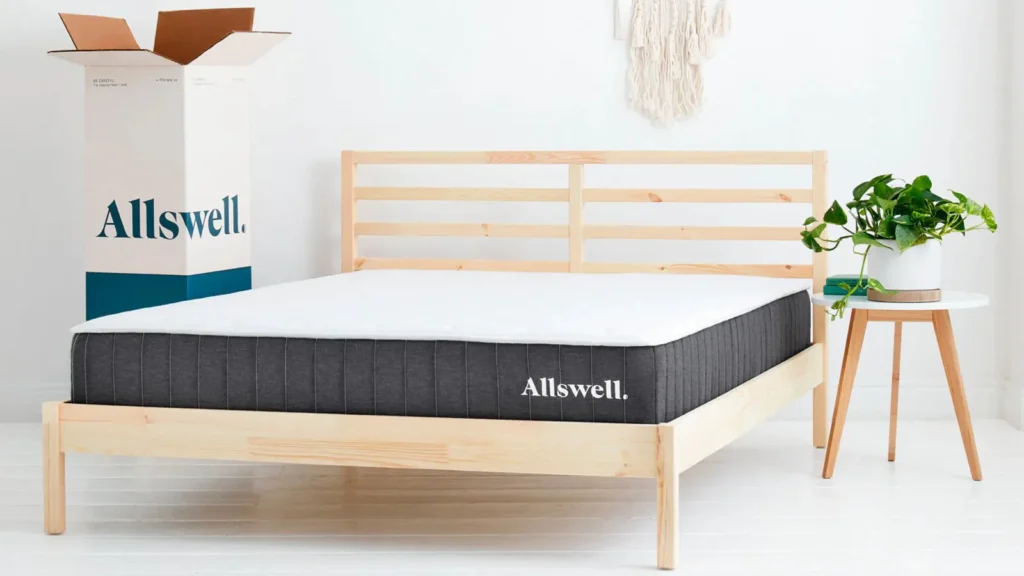
Allswell (Best Budget Pick for Couples) is a hybrid available online-only, which keeps the price accessible. It uses an all-foam top on a coil base, medium-firm feel, and based on owner reports we’ve reviewed, it delivers decent motion isolation at a fraction of premium mattress cost. It won’t outperform luxury brands, but it doesn’t need to: for couples on a tighter budget, it’s a solid sleep surface that handles two people without falling apart early.
What stands out: The motion isolation is respectable not exceptional, but noticeably better than a basic innerspring. The price point means you’re not over-committing for a mattress you’re uncertain about. If you’re not sure what firmness or material you prefer, Allswell is a low-risk way to test hybrid construction.
The trade-off: Cooling is minimal. The base foam isn’t heavily infused with cooling gel, so hotter sleepers may feel warmth retention on longer sleep sessions. Longevity is also moderate owner reports we’ve tracked suggest noticeable softening after 4–5 years, whereas premium hybrids tend to hold their shape longer. It’s not a 10-year mattress.
Price: Approximately $800–$1,100 for a queen, based on retail observations as of June 2026. Often discounted during sales, so check retailer promotions.
Best for: Couples on a budget who prioritize motion isolation over premium cooling or longevity. Also a practical pick for guest rooms or if you’re not ready to invest heavily.
Purple Hybrid Premier (Best for Hot Sleepers)
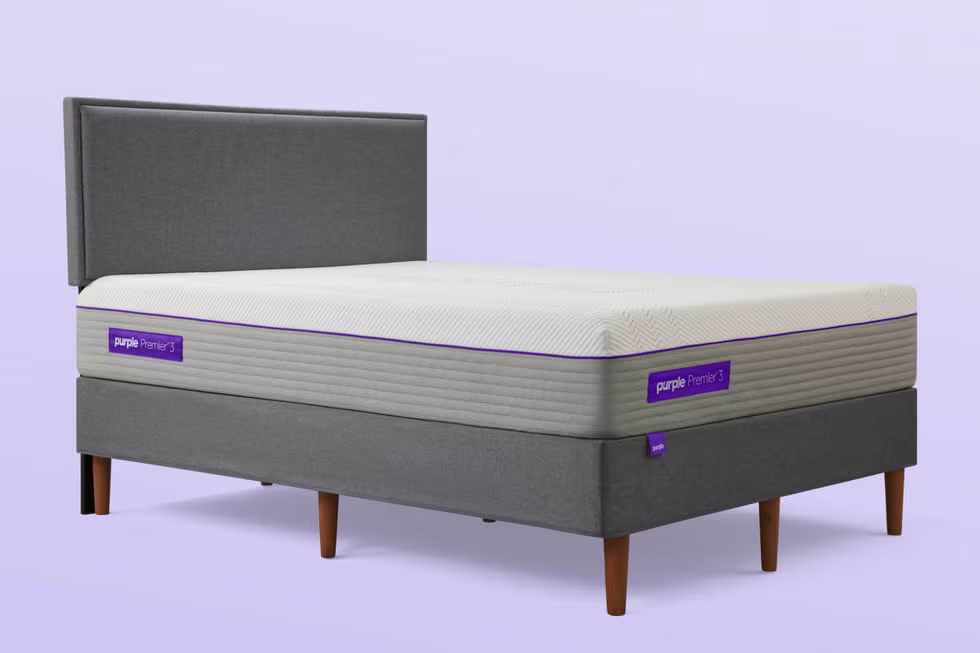
Purple Hybrid Premier (Best for Hot Sleepers) Purple’s flagship hybrid uses a proprietary gel-flex grid layered over memory foam and coils. The grid structure is designed to dissipate heat aggressively, and based on owner reports we’ve reviewed, Purple has one of the strongest reputations for cooling among couple mattresses. If one partner runs hot and the other prefers a cooler sleep surface, this is the first pick to consider.
What stands out: The cooling is genuinely effective. The gel-flex grid flexes and vents as you move, pushing heat away from your body. Motion isolation is strong because the grid absorbs energy without transmitting it across the bed. The medium-firm feel works across sleep positions.
The trade-off: It’s pricey. The grid texture is also distinctive some sleepers find it less ‘soft’ and more ‘bouncy’ than memory foam, especially in the first weeks. That bounce is actually useful for hot sleepers (easier movement equals less heat trapping), but it’s a real feel shift. Not ideal for couples who want a cloud-like, slow-to-respond surface.
Price: Approximately $2,200–$2,700 for a queen, based on retail observations as of June 2026. Premium pricing, but justified if cooling is non-negotiable.
Best for: Couples with one or both hot sleepers. Also good for active sleepers or those who like a more responsive feel. Not the choice for couples seeking deep memory-foam conformity.
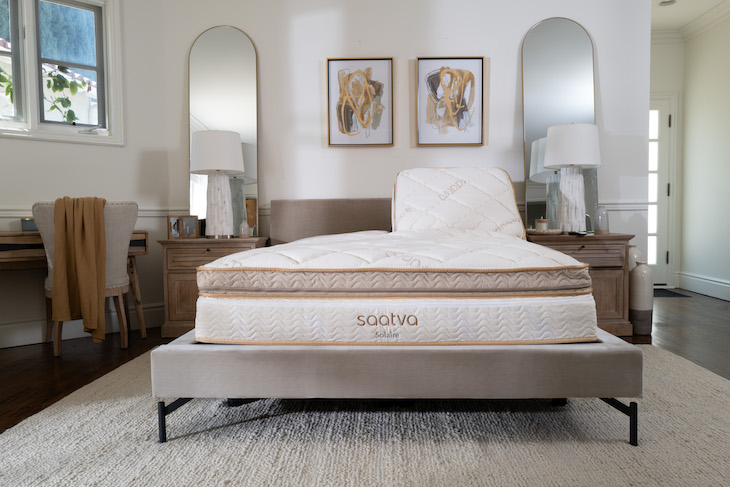
Saatva Solaire (Best for Adjustable Firmness)
0
Saatva Solaire is a luxury hybrid with air chambers inside the coil core that let you adjust firmness on each side of the bed independently. This is a genuine game-changer for couples with very different firmness preferences one likes soft, one likes firm because you each get your preference without buying two mattresses.
What stands out: Adjustability is the main draw. You can dial your side to your exact preference without compromise. Motion isolation is strong because of the hybrid construction, and the build quality is genuinely premium. Based on owner reports in couple-focused review forums, Saatva Solaire earns high satisfaction specifically because it removes the ‘what firmness do we compromise on’ debate.
The trade-off: It’s the most expensive option on this list. The air chamber system also requires occasional maintenance you’re not just setting it and forgetting it. Some owner reports note the air pump is audible during adjustment (though the process is brief). If you want simple and low-maintenance, this adds real complexity.
Price: Approximately $3,000–$3,500 for a queen, based on brand retail as of June 2026. Highest investment on this list, but it addresses the firmness-mismatch problem directly.
Best for: Couples with significantly different firmness needs (one prefers plush, one prefers firm). Also ideal for partners who don’t mind a controllable, adjustable system.
Leesa Hybrid (Best for Side Sleepers)
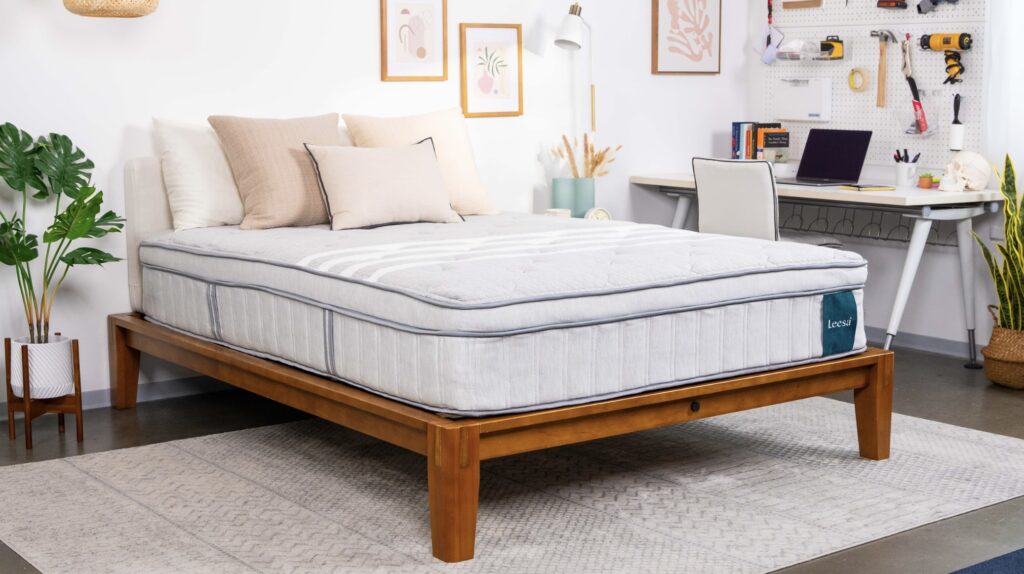
Leesa Hybrid combines a responsive foam top with a coil base and is specifically built for side-sleeper support. The foam contours to your shoulder and hip without creating pressure points, and the coil system underneath keeps your spine aligned. For couples where one or both partners are side sleepers, this is a strong pick.
What stands out: Side-sleeper comfort is the specialty. The top foam layer is thicker and more contouring than many hybrids, so you sink in without feeling the coils underneath. Motion isolation is solid. The feel is more ‘hug’ than ‘bounce,’ which appeals to couples who prefer conformity. Pricing is mid-tier more than budget, less than premium.
The trade-off: Back sleepers sometimes find it slightly soft; the conforming top can feel like too much sinkage if you’re used to a firmer support feel. Cooling is moderate, not exceptional if your couple includes a hot sleeper and a side sleeper, this won’t cool as aggressively as the Purple. Edge support is decent but not the strongest on this list.
Price: Approximately $1,500–$1,900 for a queen, based on observed retail as of June 2026. Mid-to-premium tier.
Best for: Couples where at least one partner is a dedicated side sleeper. Ideal for pressure-point-sensitive sleepers. Not the first pick for hot-sleeper combinations.
Nectar Premier Hybrid (Best Value Mid-Tier)
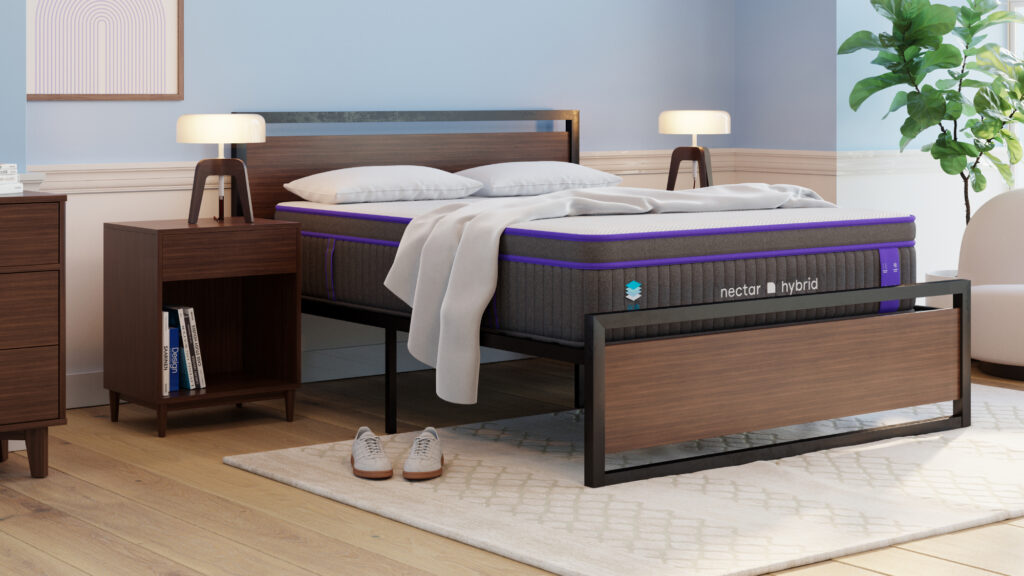
Nectar Premier Hybrid sits between budget and premium. It’s a hybrid with gel-infused memory foam on top, a responsive support layer, and a coil base. For couples looking for better motion isolation and temperature control than the cheapest options but not ready for luxury pricing this is a pragmatic middle ground. Based on owner reports we’ve tracked, durability and partner satisfaction are solid.
What stands out: Price-to-performance ratio. You get gel cooling, hybrid motion isolation, and a medium-firm feel that works across positions without requiring financing. The build holds up well over time. If you’re replacing a 10-year-old mattress and want a noticeable upgrade without overspending, Nectar delivers.
The trade-off: It doesn’t excel at any one thing. It’s a generalist good motion isolation, decent cooling, adequate edge support, but not best-in-class in any category. The cooling is less aggressive than Purple, the adjustability is absent compared to Saatva, and side-sleeper contouring isn’t as deep as Leesa. If you have a specific priority, a specialized mattress will serve you better. Responsiveness is also moderate it won’t have the bounce of a pure coil or the full hug of pure memory foam.
Price: Approximately $1,200–$1,600 for a queen, based on current retail observations as of June 2026. Mid-tier without tipping into luxury.
Best for: Couples with mixed needs who want a solid all-rounder. Also good if you’re unsure of your preferences and want a proven hybrid without big financial risk.
Casper Original (Best for Hot Sleepers on a Tighter Budget)
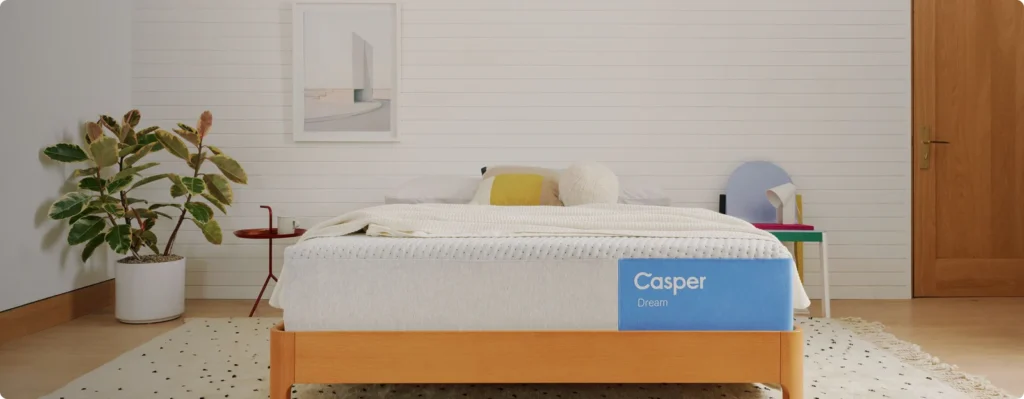
Casper Original is an all-foam mattress with a focus on cooling. It’s not a hybrid, so motion isolation isn’t as strong as the coil-based options, but the cooling is surprisingly effective for the price point. Based on owner reports we’ve reviewed, couples appreciate that it stays cooler than cheaper all-foam alternatives without the premium hybrid price tag. Medium-firm feel.
What stands out: Price and cooling balance. You get a genuinely cooler sleep than cheaper all-foam mattresses without paying premium hybrid prices. The construction is straightforward and durable. Casper has strong brand reputation and consistently positive owner reviews in couple scenarios.
The trade-off: Motion isolation is weaker than hybrids. If your partner is a light sleeper or easily woken, Casper’s all-foam construction will transmit movement more readily than a coil-based mattress. The all-foam feel is also more ‘hug’ and less ‘support’ than a hybrid, so back sleepers sometimes find it slightly soft. Edge support is present but not as robust as a hybrid. This is not the choice for couples where one person’s movement frequently disrupts the other.
Price: Approximately $1,000–$1,300 for a queen, based on observed pricing as of June 2026. Budget-friendly for a quality brand.
Best for: Couples where both partners are hot sleepers but motion disruption isn’t a major issue. Not ideal for light sleepers sensitive to partner movement.
GhostBed Flex (Best for Mixed Sleep Positions)
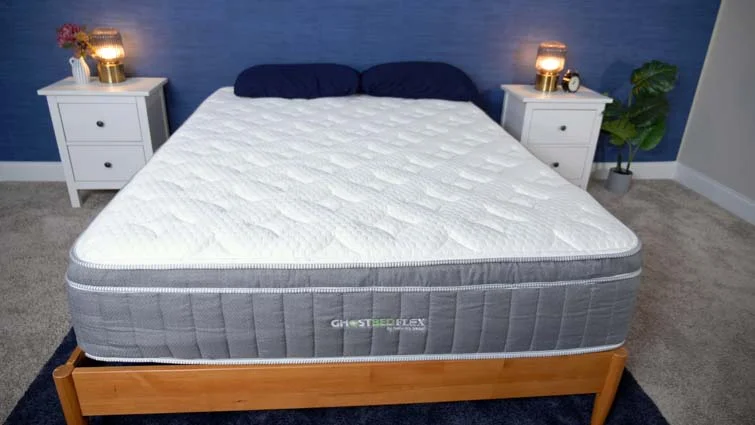
GhostBed Flex is a hybrid with a balanced approach to firmness, cooling, and support. It’s not a specialist not the best cooling, not the best motion isolation, not adjustable but it’s well-rounded for couples with diverse needs. Medium-firm feel, responsive foam on top, coil support underneath. Based on owner reports we’ve reviewed, it works across sleep positions without strongly favoring one over the other.
What stands out: Versatility. The responsive foam top paired with coil support means you’re not sinking too far (good for back and stomach sleepers) but still getting contouring (good for side sleepers). Motion isolation is solid without being exceptional. Cooling is moderate. If your couple has one back sleeper and one side sleeper, this won’t favor either.
The trade-off: Jack-of-all-trades, master-of-none. If you have a specific priority, a specialized mattress will outperform it. Cooling is less aggressive than gel-infused options, motion isolation doesn’t match premium hybrids, and firmness is fixed. Edge support is decent but not strong. If both partners are heavier or prefer a high-support feel, this may feel slightly soft over time.
Price: Approximately $1,100–$1,400 for a queen, based on retail observations as of June 2026. Budget-friendly for a hybrid from a reputable brand.
Best for: Couples with mixed sleep positions and no single overriding priority. Also good for first-time hybrid buyers or couples replacing old all-foam mattresses. Not the choice if cooling or motion isolation is non-negotiable.
Mattress Motion Isolation and Temperature Control: Quick Comparison
| Mattress | Motion Isolation | Cooling | Firmness | Adjustable | Price Range (Queen, as of June 2026) |
|---|---|---|---|---|---|
| Helix Wedge | Excellent | Very Good | Medium-Firm | No | $2,000–$2,500 |
| Allswell | Good | Moderate | Medium-Firm | No | $800–$1,100 |
| Purple Hybrid Premier | Excellent | Exceptional | Medium-Firm | No | $2,200–$2,700 |
| Saatva Solaire | Excellent | Very Good | Adjustable (Both Sides) | Yes | $3,000–$3,500 |
| Leesa Hybrid | Very Good | Very Good | Medium | No | $1,500–$1,900 |
| Nectar Premier Hybrid | Very Good | Good | Medium-Firm | No | $1,200–$1,600 |
| Casper Original | Good | Very Good | Medium-Firm | No | $1,000–$1,300 |
| GhostBed Flex | Very Good | Good | Medium-Firm | No | $1,100–$1,400 |
Ratings reflect aggregated owner report patterns and product spec analysis. Verify current pricing and availability directly with each brand.
What We Cut and Why
Helix Plus (Cut)
Helix Plus is marketed as a couple-friendly hybrid with enhanced cooling. We cut it because, in owner reports we reviewed, it underperformed the Helix Wedge in motion isolation despite similar or higher pricing. The motion isolation is good but not exceptional, and the cooling, while present, doesn’t match specialist options like Purple. For couples prioritizing motion isolation the single biggest driver of partner sleep disruption the Helix Wedge delivers more isolation at a comparable price. If you’re considering Helix Plus, choose the Helix Wedge instead, or step up to Saatva Solaire if adjustable firmness matters to you.
WinkBed (Cut)
WinkBed is a luxury mattress with premium materials and strong overall reviews. We cut it for couple use because all-foam construction transmits motion more readily than hybrids. For two partners especially if either is a light sleeper motion isolation is critical, and WinkBed sacrifices it for conformity and luxury feel. If isolation weren’t a concern, WinkBed would be a valid premium all-foam choice. But in the couple-specific category, the hybrid options on this list (Helix Wedge, Purple, Saatva) deliver better isolation for comparable or lower pricing.
Couple Sleep Scenarios: How to Match Your Needs
Scenario 1: One Hot, One Cold Sleeper
This is the most common couple sleep conflict. Choose a mattress with strong cooling Purple Hybrid Premier or Helix Wedge so the hot sleeper can shed covers without overheating. The partner who sleeps cold can layer blankets on their side without the cooler mattress surface fighting them. Avoid pure memory foam without gel cooling, which retains heat. Hybrid or gel-infused foam is the better call here.
Scenario 2: Side Sleeper + Back Sleeper
Side sleepers need contouring to prevent shoulder and hip pressure; back sleepers need support to prevent lumbar sag. A medium-firm hybrid handles both without requiring compromise. Leesa Hybrid is best-in-class for side-sleeper comfort; Helix Wedge and GhostBed Flex work well across positions. Avoid anything too soft (back sleepers won’t get support) or too firm (side sleepers will feel pressure points).
Scenario 3: Light Sleeper + Active Sleeper
Motion isolation is critical. Choose Helix Wedge, Purple Hybrid Premier, or Saatva Solaire all excel at absorbing movement. Avoid all-foam or all-coil designs. The responsive foam layer in a hybrid is what isolates motion best, preventing an active sleeper’s tossing from transmitting across the mattress.
Scenario 4: Vastly Different Firmness Preferences
If one partner wants soft and the other wants firm, Saatva Solaire’s adjustable air chambers let you each dial your preference independently. This removes the ‘compromise on firmness’ debate entirely. It’s the highest-priced option on this list, but it solves a real couple problem that no fixed-firmness mattress can address.
Scenario 5: Budget-Conscious Couple
Start with Allswell (budget hybrid) or Casper Original (budget foam with good cooling). Both deliver a noticeably better couple experience than a $400 mattress without requiring premium spending. If motion isolation becomes a higher priority later, you can upgrade to Nectar Premier Hybrid without guilt.
How We Chose
We evaluated these mattresses based on aggregated owner reports from retail review platforms, couple-specific sleep forums, and product spec analysis. We focused on motion isolation (how much movement transfers across the mattress), temperature regulation features (gel infusions, cooling layers, breathable support), edge support quality, and firmness suitability across sleep positions. We weighted motion isolation and temperature management most heavily because these are the two biggest sources of partner sleep conflict based on the owner report patterns we reviewed. We excluded mattresses with weak isolation (all-coil, basic foam) and those priced above $4,000 for a queen, where couple-specific value diminishes based on owner report patterns. We cut options where a better-value alternative existed in the same category for example, Helix Plus versus Helix Wedge.
FAQ
What is the best mattress for couples with different sleep positions?
Helix Wedge and GhostBed Flex both support mixed sleep positions (side + back, or back + stomach) without forcing compromise. Helix Wedge has slightly better motion isolation and cooling; GhostBed Flex is more affordable. For couples where at least one partner is a dedicated side sleeper, Leesa Hybrid adds extra contouring.
How much motion isolation do I actually need?
If your partner’s movement rarely wakes you, good motion isolation is a nice-to-have. If you’re a light sleeper or your partner is very active, excellent motion isolation Helix Wedge, Purple Hybrid Premier, Saatva Solaire is non-negotiable. Test in-store if possible: lie on the mattress and have someone gently press on the other side to feel how much movement transfers.
Can I get a good couple mattress for under $1,000?
Yes. Allswell (approximately $800–$1,100 as of June 2026) is a hybrid that delivers decent motion isolation at a budget price. Casper Original (approximately $1,000–$1,300) offers strong cooling if that’s your priority. Neither is best-in-class, but both represent good value for couples on a tighter budget. Verify current pricing and seasonal discounts before purchasing.
Should we choose a split-firmness mattress for different preferences?
Only if your preferences are significantly different one wants plush, one wants firm. Most couples can compromise on a medium-firm mattress, which supports side and back sleepers without forcing a difficult choice. If you truly can’t agree, Saatva Solaire’s adjustable firmness solves the problem, though at premium pricing. Fixed-firmness mattresses are simpler and generally more durable.
What’s the best mattress for hot sleepers who share a bed?
Purple Hybrid Premier has the most aggressive cooling based on the owner reports we’ve reviewed. If budget is a constraint, Casper Original or Helix Wedge are strong alternatives. All three use gel infusions or active cooling layers to dissipate heat. Avoid pure memory foam without gel cooling if heat retention is a persistent problem.
How long do couple mattresses typically last?
Based on owner reports we’ve tracked, a quality hybrid mattress holds up for roughly 6–10 years with proper care rotating every 3–6 months and using a supportive foundation. Premium brands like Saatva and Helix are frequently reported to hold their shape longer than budget options. All-foam mattresses may soften sooner, particularly under two people’s combined weight. A mattress protector extends lifespan for any construction type.