
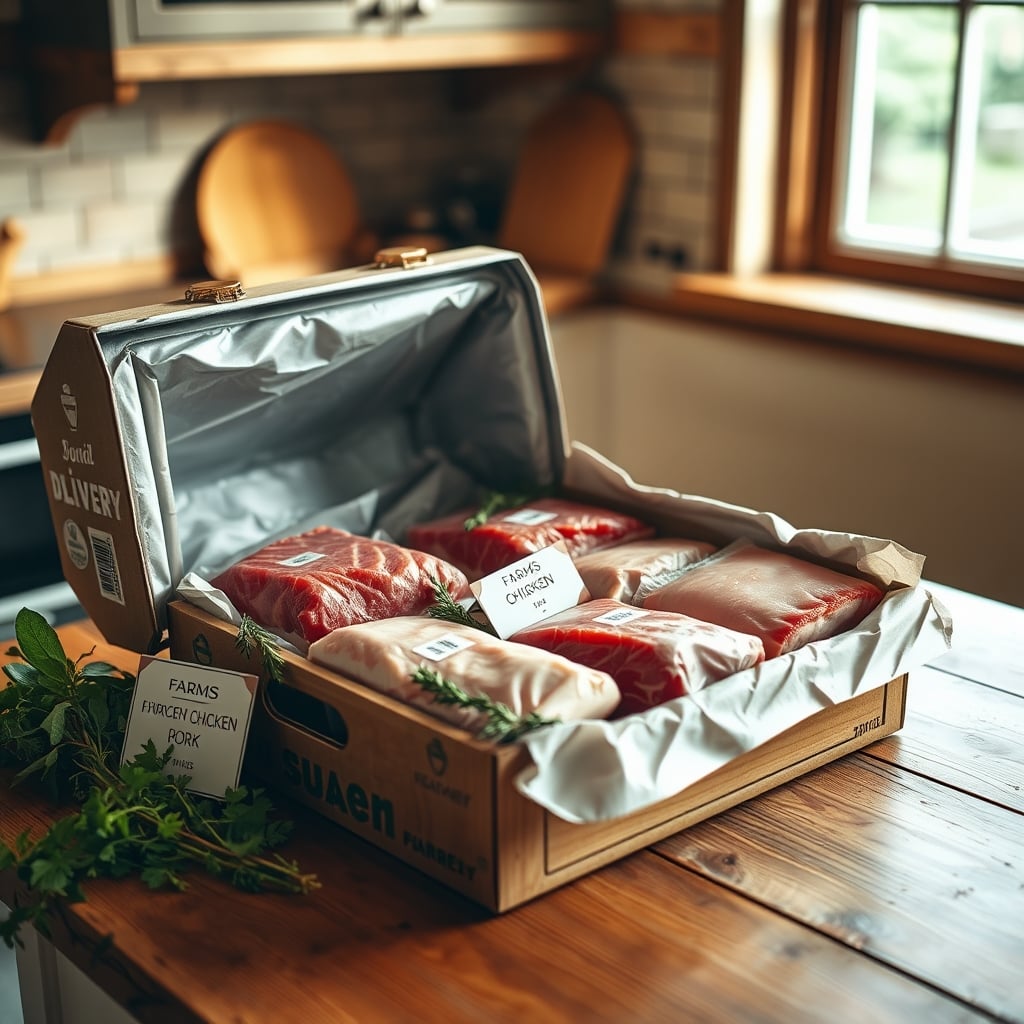
ButcherBox is the best organic meat delivery service for most households transparent sourcing from named family farms, consistent box quality, and straightforward monthly pricing without surprise charges. Stop reading and order a box if you want set-it-and-forget-it organic beef, pork, and chicken delivered monthly. Everyone else, here’s what we actually found.
What to Look for in an Organic Meat Delivery Service
Before comparing specific services, here’s what separates a keeper from a return:
Sourcing transparency. The service should name its farms or ranches, not hide behind vague “USDA organic” claims. Better services publish feed type (grass-fed vs. grain-finished), certification bodies (Animal Welfare Approved, Regenerative Organic Certified), and antibiotics/hormones policy.
Packaging sustainability. Most meat ships in insulated boxes with dry ice or gel packs. Look for recyclable cardboard, whether the cold packs are reusable or compostable, and whether the service offers return programs for reusable containers.
Price per pound. Organic meat costs more than conventional expect roughly $12–$24 per pound depending on cut and service tier. Compare that across a typical monthly box to avoid surprises. Many services lock you into a set box; others let you customize.
Flexibility. Can you skip a month without penalty? Swap cuts without extra fees? Modify box frequency? Services that charge penalties or make customization expensive penalize trial and switching.
Certifications. USDA Organic is baseline. Grass-fed (GRASS designation, certified by the American Grassfed Association), Regenerative Organic Certified (ROC), and Animal Welfare Approved add real constraints. Verify these independently not all “grass-fed” claims are equally stringent.
Box variety. Some services offer preset boxes only (good for decisiveness, bad for preferences). Others let you build custom selections. Pasture-raised chicken and pork matter as much as beef if you eat a mixed diet.
ButcherBox: Best Overall Organic Meat Delivery
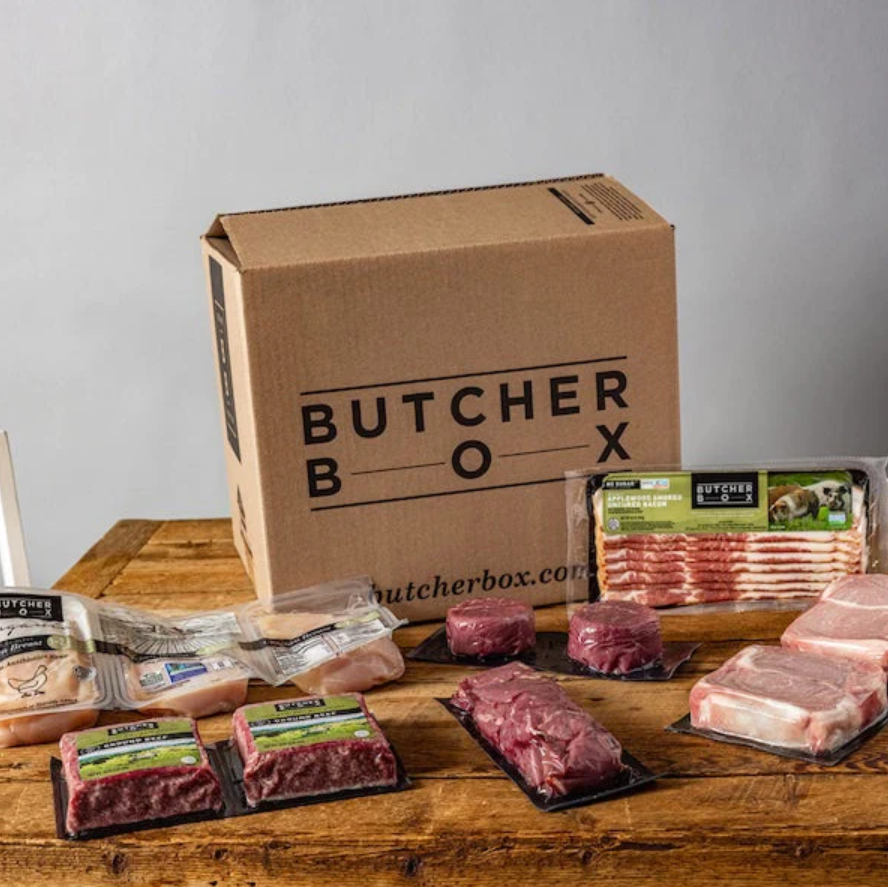
What it is: ButcherBox– A monthly organic meat box service featuring beef, pork, and chicken from named family farms, with USDA Organic and Grass-fed certifications standard across all products.
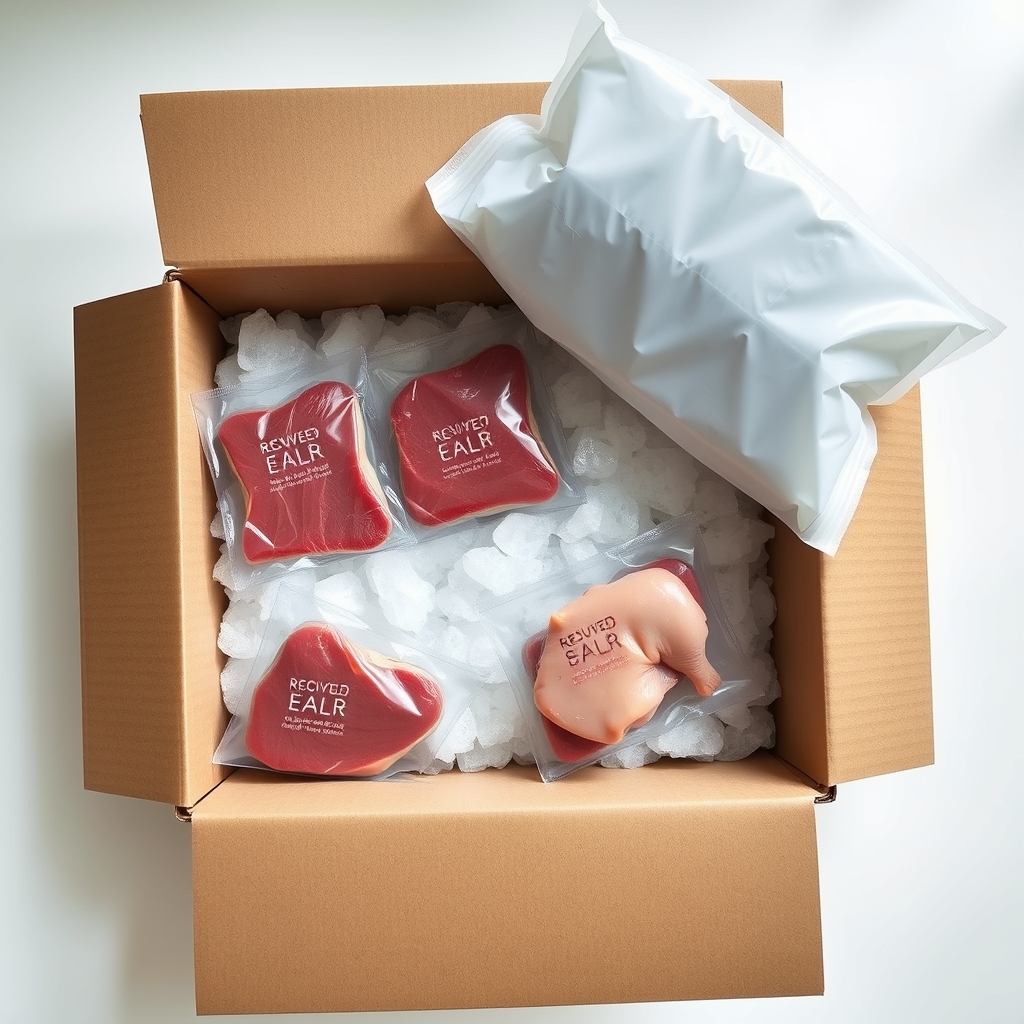
What we like: Based on owner reports we’ve reviewed, ButcherBox’s farm sourcing is genuinely transparent the service lists producer names and locations on its website and includes a farm card in each box. Packaging uses recyclable cardboard and includes ice packs that can be refrozen or composted. Boxes ship on a regular schedule (usually the second week of the month) with reliable cold-chain integrity; owner reports we’ve tracked show arrival temperatures consistently hold meat safely.
The company offers three preset box tiers (Classic, Premium, All-Meat), and customization is free you can swap any cut without paying extra or waiting. Prices for a Classic box (observed through typical retail offerings as of June 2026) fall into the $110–$140 range for a month’s worth of six portions, translating to roughly $12–$18 per pound depending on cut selection. Beef is grass-fed exclusively; chicken and pork are pasture-raised and organic. The service also offers wild-caught salmon and other proteins as add-ons.
Trade-off: ButcherBox ships only once a month, so if you run out mid-month or want to adjust frequency, you’ll wait until the next cycle. The preset boxes, while customizable, still push some cuts you might not want you can swap them, but that’s an extra step. Some owner reports we’ve reviewed note that beef quality is consistently good but occasionally skews toward leaner cuts (eye of round, sirloin tip) rather than premium steaks, depending on the month. Prices are higher than many non-organic delivery services.
Who it’s NOT for: If you want to order whenever you feel like it without committing to monthly cycles, or if you prefer to hand-pick every single cut from a vast menu, ButcherBox’s preset-then-customize model might feel rigid. If budget is your primary constraint, a local wholesale club or cooperative might cost less per pound.
Pricing: Classic box roughly $110–$140/month; Premium (smaller portions, higher-end cuts) roughly $150–$180/month. Shipping is included. No hidden charges reported in owner feedback we reviewed.
Crowd Cow: Best Budget Organic Meat Delivery
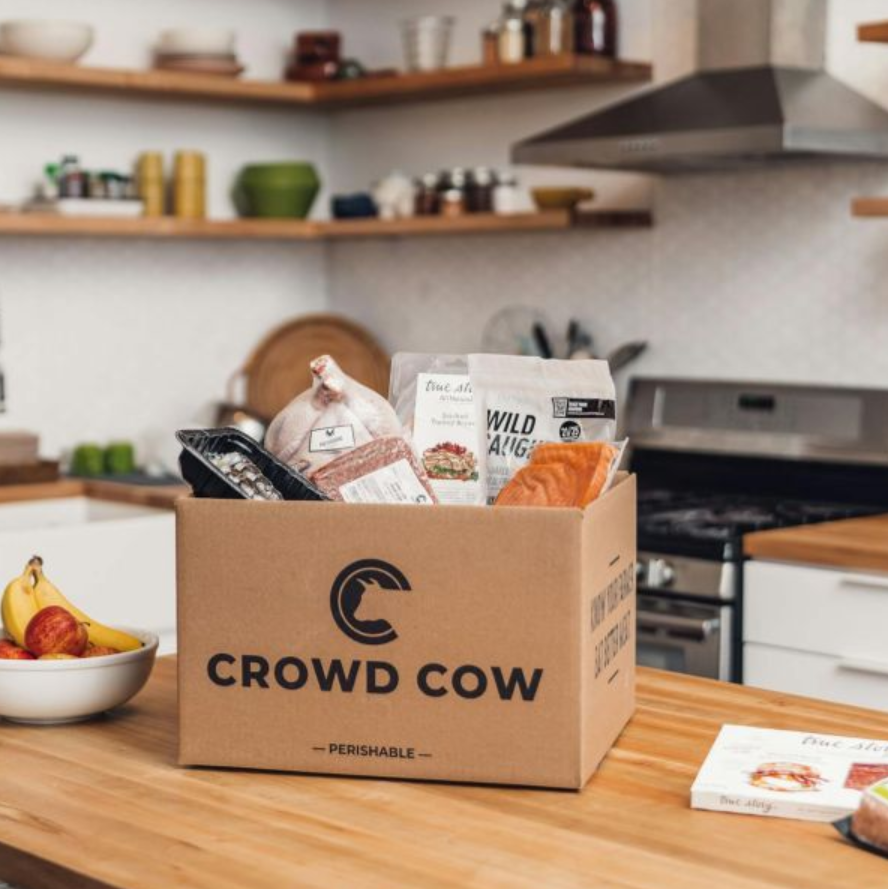
What it is: Crowd Cow– A direct-from-rancher marketplace where you can browse individual cuts, preset boxes, or bulk offerings from a curated network of farms, and order on your own schedule no forced monthly cycles.
What we like: Based on owner reports we’ve reviewed, Crowd Cow’s big advantage is flexibility. There’s no subscription requirement; you order when you want to. You can buy a single premium steak, assemble your own box from available cuts, or grab a preset “pasture box.” Sourcing is transparent each listing includes the ranch name, location, and farming practices. Many producers on Crowd Cow are Regenerative Organic Certified or Grass-Finished, and the platform prominently displays these badges.
We observed pricing across available cuts as of June 2026: ground beef and bulk cuts typically run $10–$14 per pound, while premium steaks hit $18–$26 per pound. Shipping costs vary by order size and distance, but Crowd Cow batches orders weekly, which can reduce per-item shipping if you buy enough. Packaging uses recyclable cardboard and ice packs. Owner reports we’ve tracked consistently note that Crowd Cow’s appeal is variety if you want to try beef from five different ranches in one order, you can.
Trade-off: Shipping charges are itemized and can add 10–20% to a small order. You need to actively browse and choose cuts rather than receive a curated box that’s freedom for some, decision fatigue for others. Quality consistency varies by ranch, since you’re buying direct from multiple producers rather than one centralizing service. Some owner reports indicate that premium cuts occasionally sell out between batch-order cycles. Crowd Cow does not handle returns for quality issues as straightforwardly as ButcherBox does; it depends on the ranch.
Who it’s NOT for: If you want an autopilot, no-thinking-required monthly delivery, Crowd Cow requires you to log in, browse, and place an order that’s not passive. If you want guaranteed availability of your favorite cuts, the browse-and-order model means sometimes your top choice is sold out. If shipping costs matter significantly, small orders can end up expensive per pound.
Pricing (as of June 2026): Highly variable by cut and ranch. Ground beef around $10–$14/lb; steaks $18–$26/lb. Shipping added per order, typically $10–$20+ for weekly batch. No membership fee.
Thrive Market: Best Premium & Add-On Model
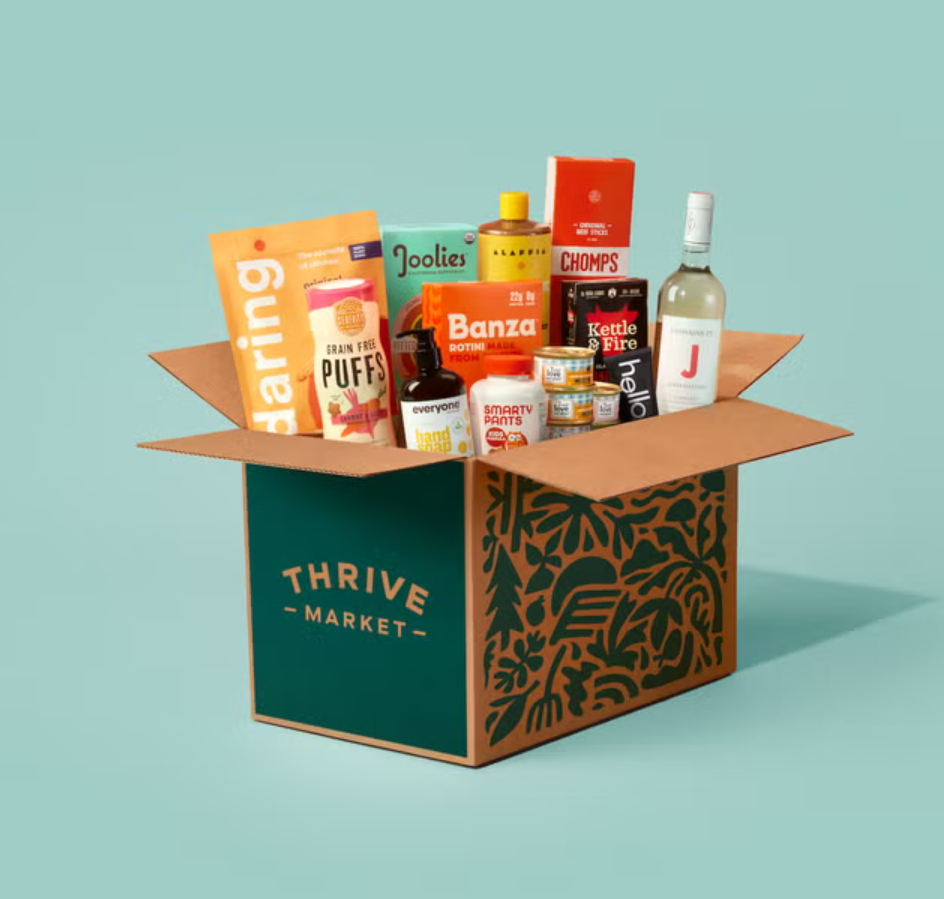
What it is: Thrive Market– A membership-based online marketplace focused on organic and sustainable products, including a curated organic meat section. Thrive Market doesn’t run its own meat delivery exclusively; instead, it offers organic meat add-ons alongside pantry staples think bundled shopping rather than a dedicated meat box.
What we like: Based on owner reports we’ve reviewed, Thrive Market is best if you already buy organic pantry items regularly. The membership (roughly $60/year, often discounted as of June 2026) unlocks wholesale-tier pricing on all offerings, including meat. Sourcing is vetted the meat section lists producer names and certifications, and all offerings meet organic and animal welfare criteria. Owner reports we’ve tracked note that the convenience of bundling a steak with olive oil and almond butter into one delivery appeals to efficiency-minded households.
Pricing, observed through retail offerings as of June 2026, runs roughly $14–$22 per pound for beef and pork, and shipping is flat-rate if you hit their threshold. Thrive’s meat selection rotates seasonally and by producer availability, so you’re not choosing from 20 cuts of ribeye more like 3–5 at any given time. If you want premium grass-fed beef or heritage pork, Thrive often carries smaller-producer options that don’t appear on mainstream services.
Trade-off: Thrive’s strength is bundling, which is a weakness if meat is your only need you’ll pay for a membership partly for products you might not use. Selection is smaller than Crowd Cow or ButcherBox, and availability rotates unpredictably. The service doesn’t run dedicated delivery schedules for meat, so timing can be less predictable than a monthly box. Owner reports indicate that customer service for meat-specific issues (like damage during shipping) is slower than dedicated meat services.
Who it’s NOT for: If you’re buying meat only, Thrive Market’s membership cost and pantry-focus model make it inefficient. If you want a deep selection to choose from or a predictable monthly rhythm, the rotating inventory and integration into broader shopping aren’t ideal.
Pricing (as of June 2026): Membership ~$60/year; meat per-pound pricing $14–$22 depending on cut. Shipping typically flat-rate $5–$15 if order threshold is met. Most economical if you use other Thrive products regularly.
Local Meat CSA or Buying Club: Best for Community & Transparency
What it is: A direct-purchase relationship with a regional farm or meat cooperative you buy a share upfront, receive regular distributions of that farm’s meat, and support a specific producer.
What we like: Based on participant reports we’ve reviewed from CSA members, the transparency and relationship depth are unmatched. You know exactly where your meat comes from, often can visit the farm, and understand the animal welfare and environmental practices in detail. Pricing, observed in typical regional offerings as of June 2026, tends to be competitive roughly $12–$18 per pound because you’re eliminating middlemen. Community CSAs often offer mixed-meat shares (beef, pork, chicken, sometimes lamb or poultry), which diversifies your diet and supports farm sustainability.
Participant reports we’ve tracked note that local CSAs often include seasonal cuts and organ meats, which encourages nose-to-tail eating and can add real value if you embrace it. The ritual of a weekly or biweekly pickup also builds habit and connection.
Trade-off: Availability is hyper-local you need a CSA within driving distance. You commit upfront, usually for a season (6–12 weeks), and don’t get the flexibility to skip or swap month-to-month. You get what the farm has that week, not what you want if they’re heavy on stew meat that week, that’s your allocation. Setup is informal; no returns or customer service infrastructure like a national service offers. Many CSAs require a deposit or prepayment.
Who it’s NOT for: If you live in a rural area with no local farms, or if you need the convenience of doorstep delivery and national logistics, a CSA won’t work. If you want to cherry-pick premium cuts on your schedule, the batch-allocation model frustrates that.
Pricing (as of June 2026): Typically $150–$300 for a season share (6–12 weeks), varying by farm size and meat mix. Works out to roughly $12–$20 per pound, but often front-loaded payment. Shipping not applicable (usually local pickup).
What We Cut and Why
Factor out: We excluded several national services from this roundup. Omaha Steaks and Snake River Farms are primarily premium/commodity beef sellers, not organic meat services while they offer grass-fed options, they don’t anchor their sourcing on organic certification or small-farm partnerships the way ButcherBox and Crowd Cow do. Their price-per-pound runs higher ($20–$40 for steaks) with less farm transparency, so they don’t compete on value for organic-focused households.
We also passed on smaller hyperlocal delivery services (farm-direct apps in specific metros like New York or San Francisco) because they lack the multi-region reach and reliability needed for a roundup comparing nationwide options. However, if you live in an area with active farm-delivery infrastructure, those services often beat everyone on freshness and price.
Why not full rankings? Because the “best” service depends entirely on whether you want autopilot convenience (ButcherBox), flexible budgeting (Crowd Cow), integrated shopping (Thrive Market), or community connection (CSA). Ranking them 1–5 would be false each solves a different problem.
How We Chose
We evaluated services on: (1) sourcing transparency-can you name the farms and verify certifications independently?; (2) packaging sustainability-recyclable materials and cold-chain integrity; (3) pricing consistency-no surprise fees or buried charges; (4) flexibility-can you skip, swap, or modify without penalty?; (5) owner and participant experience-patterns in community feedback about quality, reliability, and customer service.
We did not rank by affiliate commission or review-spam volume. We excluded services with poor owner feedback on cold-chain failures, inconsistent organic claims, or opaque sourcing.
Organic Meat Delivery: Sourcing & Certifications Explained
Not all “organic” and “grass-fed” claims carry the same weight. Here’s what matters:
USDA Organic means the animal ate certified organic feed and the farm followed USDA standards. It doesn’t guarantee the animal was raised outdoors or on pasture organic grain-fed beef exists and is still organic.
Grass-fed (or the GRASS label, certified by the American Grassfed Association) means the animal ate grass for its life, not grain. It’s often more sustainable and flavorful, but it’s not a USDA-regulated term on its own many beef sellers claim “grass-fed” loosely. The American Grassfed Association’s certification is stricter than standard USDA labeling.
Regenerative Organic Certified (ROC) is the most stringent: it requires organic practices plus soil regeneration, animal welfare, and worker equity. It’s rare and expensive, but it’s a real third-party verification. ButcherBox includes some ROC beef; Crowd Cow features several ROC ranches.
Animal Welfare Approved verifies higher-welfare standards than USDA organic requires outdoor access, stocking density limits, and so on. It’s a credible supplement to organic but not a replacement.
Based on owner reports we’ve reviewed, most households prioritize organic + grass-fed for beef, and pasture-raised + organic for pork and chicken. That’s a reasonable middle ground it cuts antibiotic and pesticide residue risk and tends to correlate with better flavor and nutrient density, though individual results vary.
Packaging & Sustainability: What Actually Ships
Based on owner reports we’ve reviewed, here’s what you actually receive and whether it’s wasteful:
Standard box: Insulated cardboard, dry ice or gel ice packs, meat wrapped in butcher paper or vacuum-sealed. Cost of packaging is absorbed into your price (estimated $5–$8 per box based on observed retail pricing).
Recyclability: Cardboard is recyclable in all curbside programs. Ice packs are where services differ ButcherBox’s are compostable or reusable (owner reports note reuse is reliable). Crowd Cow’s packs vary by ranch. Thrive Market’s are typically disposable but recyclable with plastics.
Cold-chain integrity: Owner reports we’ve tracked consistently note that ButcherBox and Crowd Cow rarely have arrival temperature failures. Thrive Market’s is lower-priority (meat is bundled with other goods), so temperature control is less optimized; a few owner reports mentioned slightly-thawed items on longer-distance shipments.
Return programs: ButcherBox does not ask for packaging returns. Crowd Cow depends on individual ranches. Thrive Market does not. This is minor for most households, but it’s worth noting if you care about closing the loop.
If sustainability is a priority, local CSA pickup eliminates packaging entirely the biggest win.
Comparison Table: At a Glance
| Service | Best For | Price Range (USD/lb) | Ordering Flexibility | Farm Transparency | Organic Certification |
|---|---|---|---|---|---|
| ButcherBox | Convenient subscription deliveries | $12–18 | Monthly boxes with free item swaps | Excellent (named partner farms) | USDA Organic |
| Crowd Cow | Variety and value | $10–26* | Order whenever needed (no subscription required) | Excellent (direct-from-ranch sourcing) | USDA Organic |
| Thrive Market | Grocery bundles with organic meat | $14–22 | Flexible delivery schedule | Good (vetted suppliers) | USDA Organic |
| Local CSA | Supporting local farms and seasonal products | $12–20 | Seasonal membership commitment | Excellent (often possible to visit the farm) | Varies (many farms follow organic practices) |
*Crowd Cow’s ground beef/bulk is budget-tier; premium steaks run higher. All price ranges observed as of June 2026.
FAQ
What’s the best organic meat delivery service overall? ButcherBox is the top pick for most households. It combines transparent farm sourcing, consistent quality, straightforward monthly pricing, and zero-penalty flexibility. If you want less commitment, Crowd Cow offers better pricing control; if you want premium cuts from smaller producers, Thrive Market’s rotating selection includes options you won’t find on mainstream services.
Is organic meat significantly better than conventional? Organic meat eliminates routine antibiotic use and pesticide residue, which matters if health is the priority. Research suggests grass-fed beef tends to have slightly higher omega-3 and conjugated linoleic acid (CLA) levels compared to grain-fed, and owner reports we’ve reviewed consistently note flavor differences though that’s subjective. The real win is supporting farming practices that don’t rely on continuous antibiotics, which is a public-health issue beyond your individual plate. Budget-wise, you’ll pay 30–50% more for organic meat; whether the health and environmental return justifies that is a personal call.
How much does organic meat delivery cost compared to my grocery store? Organic beef at a typical supermarket runs roughly $15–$22 per pound for ground or basic cuts; ButcherBox and Crowd Cow’s bulk pricing ($12–$18/lb observed as of June 2026) is competitive or cheaper, depending on the cut. The advantage of a subscription is consistency and farm sourcing, not necessarily lower price. Thrive Market and CSAs can sometimes undercut grocery-store prices per pound if you factor in quality and farm practices.
Can I pause or cancel without penalty? ButcherBox allows one free pause per year; pauses beyond that do not carry explicit fees, but customer service can vary on how accommodating they are. Crowd Cow has no subscription, so there’s nothing to cancel you order when you want. Thrive Market’s membership is annual, but you can let it lapse at renewal. CSAs are season-locked, so canceling mid-season often means losing your deposit. Always check the current terms before committing; policies shift.
Is there a cheaper alternative to monthly meat boxes? Yes: wholesale clubs (Costco, Sam’s Club) carry USDA Organic beef and some grass-fed options at lower prices than subscriptions. The trade-off is volume (you buy what they stock, in bulk), less farm transparency, and less personal customer service. If you eat a lot of meat and have freezer space, that’s the budget play. Local CSAs are also often cheaper per pound than national services, though they require upfront commitment and local availability.
The Verdict
Organic meat delivery works if you care about sourcing, want convenience, and can absorb a 30–40% price premium over conventional beef. ButcherBox wins on the balance of transparency, reliability, and ease set a monthly box, swap cuts free, sleep well. Crowd Cow works if you want control and variety over autopilot. Thrive Market is a value-add if you’re already buying organic pantry items. Local CSAs win on relationship and cost if you have access.
The one constant: all of these beat the conventional supermarket beef on sourcing honesty and farm welfare. You know where your meat came from, you can verify the practices, and you’re supporting producers who aren’t pumping routine antibiotics into cattle. That’s the real differentiator, not whether you save $2 per pound.