


We interviewed Marcus Chen, a Certified Strength and Conditioning Specialist (CSCS) with 11 years of experience training clients in home environments, to talk through the gap between knowing what to do and actually doing it consistently. The single most useful thing he said: “The workout program isn’t your limiting factor. Your ability to show up when you don’t feel like it is. Most people fail because they’re waiting to feel motivated before they start it’s the opposite. The consistency creates the motivation.”
This interview unpacks what that actually means in practice, why home training breaks differently than gym training, and how to program yourself so that quitting becomes harder than continuing.
Why Home Training Fails (and How to Prevent It)
Sam: The first question everyone asks is whether home training actually works. But I think the real question is why people quit. What’s the pattern you see?
Marcus: Home training works fine I’ve built real muscle, strength, and conditioning on clients doing nothing but bodyweight and dumbbells at home. The issue isn’t the equipment or the space. It’s decision fatigue. At the gym, you arrive, you’re already halfway committed. You see other people lifting. The environment pulls you in. At home, you’re surrounded by a bed, a couch, your phone. Every single session is a fresh choice. Most people don’t account for that friction.
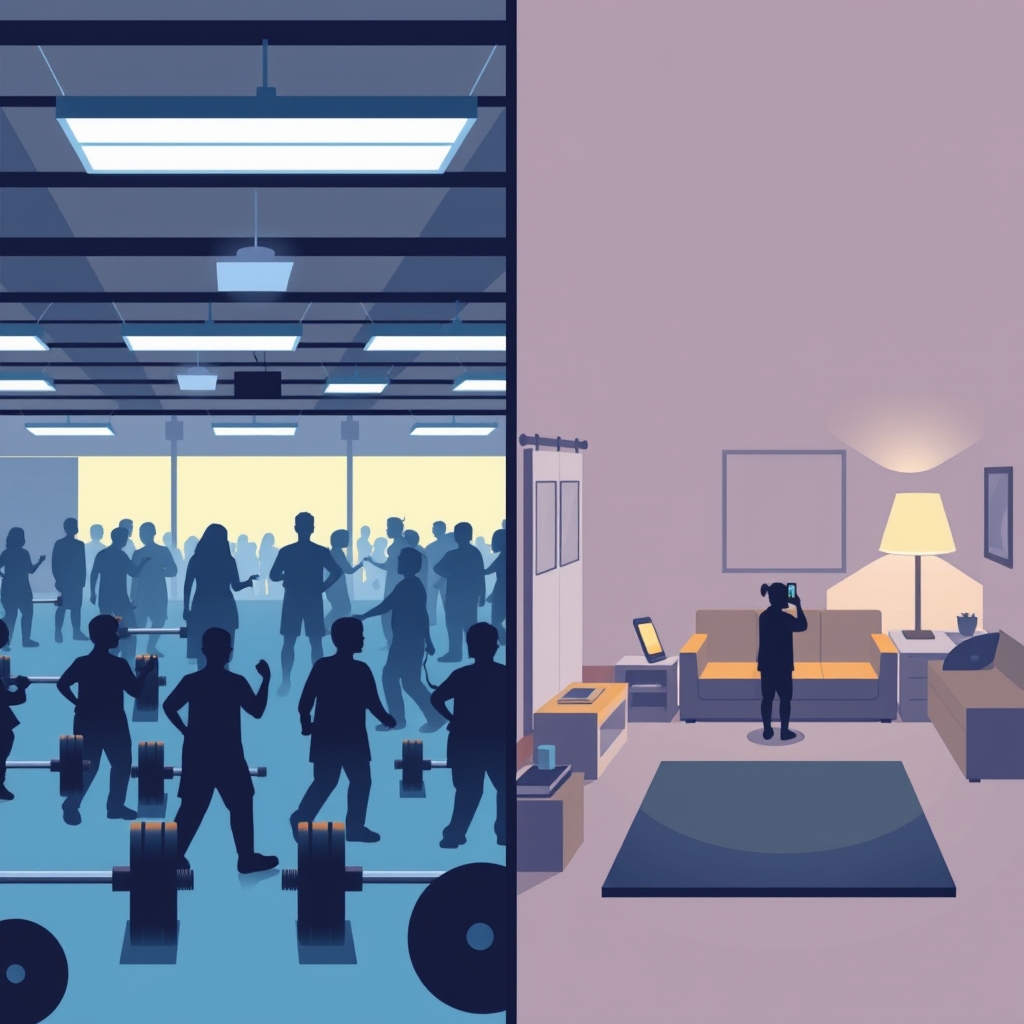
I had a client, Sarah, who’d been doing CrossFit for eight years. Perfectly fit. When she switched to home training during a move, she quit after two weeks not because the workouts didn’t work, but because there was no external structure. She had to become her own gym. The people who succeed at home training are usually the ones who treat it like a non-negotiable appointment, like they’re driving to meet a trainer. They don’t wait for motivation.
Sam: So it’s not about the program it’s about the system around the program.
Marcus: Exactly. The program is maybe 20% of it. The other 80% is what we call adherence design: making it easier to do the workout than to skip it. That means setting a specific time, laying out your space the night before, having your weights in the right place, starting with a ridiculously low barrier on days when resistance is high. I had another client who literally just did one set of push-ups on bad days that was it. But she showed up every day. That consistency compounded. After six months, she was doing full sessions regularly.
How to Program for Home: Progressive Overload Without a Barbell
Sam: Let’s talk structure. What does a realistic home program look like for someone starting from scratch?
Marcus: I recommend starting with three full-body sessions per week. That frequency is enough to drive progress without requiring perfect recovery, and it’s psychologically sustainable you’re not at the gym six days a week, so there’s less burnout.
Each session is 30 to 45 minutes. That’s a warm-up, three to four compound movements, maybe one isolation movement, and a short finisher. You’re using a mixture of:
- Bodyweight (push-ups, pull-ups, lunges, planks)
- Dumbbells (or kettlebells)
- Resistance bands
- Your own body weight for tempo work
The key is progressive overload. People think that only works with a barbell, but it doesn’t. With dumbbells, you can add reps, sets, decrease rest periods, or increase tempo. With bodyweight, you can add reps, add pauses, change leverage (archer push-ups instead of standard), or add a weight vest.
In my experience working with home clients, the most sustainable progression is adding one to two reps per week or increasing time under tension. Avoid chasing huge jumps. Someone doing 10 push-ups might go to 12 the next week, then 15, then add a pause that’s months of progress from one movement. That feels achievable.
Sam: Do you see people stall because they hit a ceiling with their equipment?
Marcus: Yes, but it takes longer than people think. Most home trainees hit a real equipment ceiling around 12 to 18 months in. A dumbbell squat can only go so heavy before your hands give out first. A single-leg pistol squat becomes the move instead. But in the first year maybe the first two years there’s so much progress available with basic equipment that people rarely hit a true ceiling. They just get bored and assume they need more.
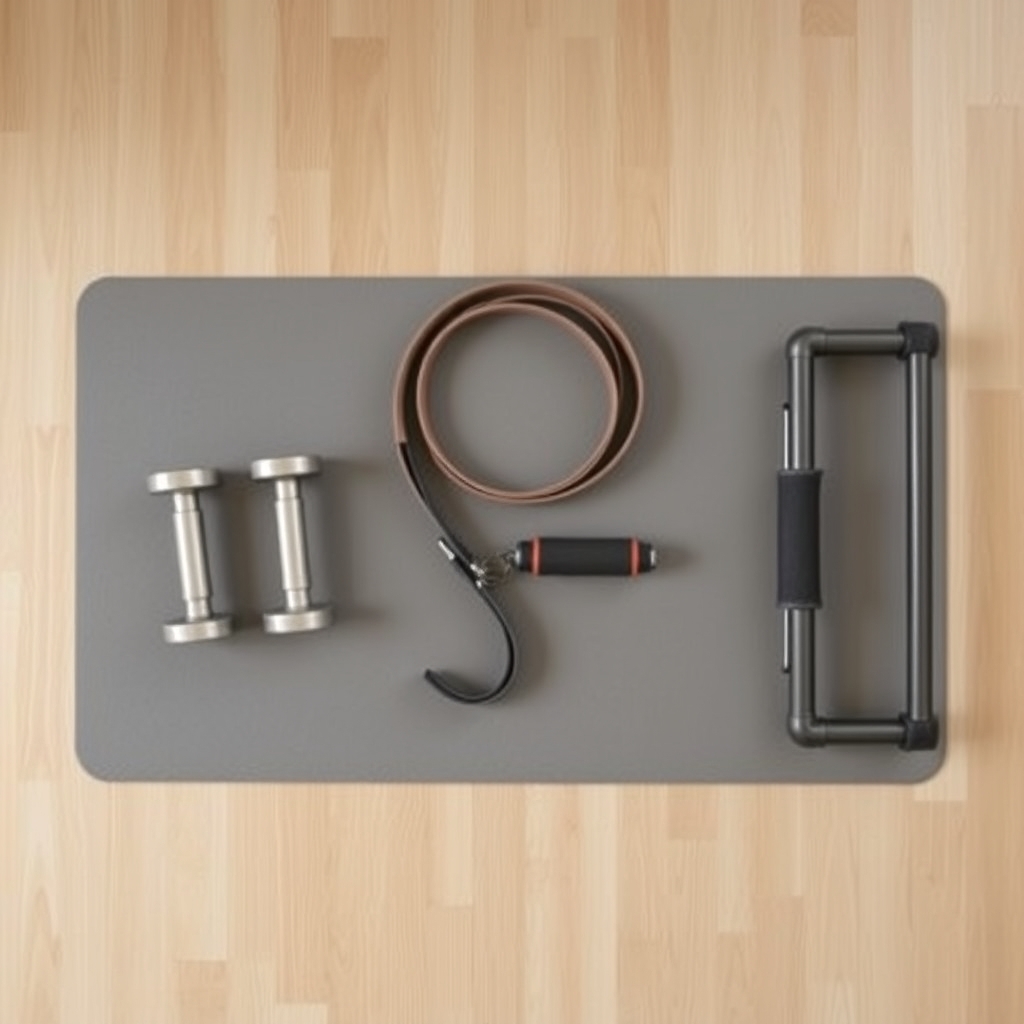
I usually recommend: invest in a good adjustable dumbbell set (say, 5 to 50 pounds), a pull-up bar, and a set of resistance bands. That covers 90% of what you need. If someone’s been consistent for two years and wants to go deeper, then we talk about a barbell, a rack, or a cable machine. But that’s not the limiting factor in the first two years.
The Recovery Piece People Skip
Sam: Recovery seems to be where home training diverges most from gym training. At a gym, you’re tired, you leave, you rest. At home, you finish a set and your couch is ten feet away.
Marcus: Home recovery is worse because of that. You’re not metabolically stimulated by an environment. You don’t have momentum after a session. You walk upstairs and fall into your normal day.
Here’s what I tell clients: the session doesn’t end when the workout ends. It ends 30 minutes after. In that window, you do three things:
- Eat something with protein and carbs. Nothing fancy a banana and some yogurt, a protein shake, a sandwich. Within 30 to 45 minutes. This accelerates recovery and reduces soreness.
- Do ten minutes of mobility work or light stretching. Walk around. Breathe. Let your nervous system settle. This matters more than people think. It’s not about flexibility it’s about telling your body the workout is over.
- Sleep. At least seven hours. I know this sounds obvious, but home training often means you’re working late, training, eating dinner, and going to bed five hours later stressed about work. The consistency breaks because you’re tired. Seven to nine hours of sleep is the single biggest lever you have for recovery and adherence.
One more thing: deload weeks. Every fourth or fifth week, cut volume by 40 to 50%. Easier weights, fewer sets, more rest days. Most home trainees skip this because they think they’re losing progress. You’re not you’re preventing overuse injuries and restocking your nervous system capacity. I’ve seen people train hard for eight weeks, skip a deload, then get injured and stop for a month. A planned deload of 4 to 5 days costs you almost nothing and prevents that.
Motivation Isn’t What You Think It Is
Sam: Let’s address the motivational side directly. Everyone says “just find your why,” and that’s clearly incomplete. What actually moves the needle?
Marcus: “Find your why” is advice for the first two weeks. After that, motivation is a habit. Here’s the honest version: you won’t always feel like training. That’s normal. The people who progress are the ones who’ve decided in advance that they’re training anyway.
I have my clients create what I call a “minimum viable session.” Not a full session a tiny one. One set of an upper-body push, one set of lower-body, one set of a pull, maybe a three-minute core finisher. It takes seven minutes. On days when they don’t feel like the full program, they do the minimum. On 60% of those days, they end up doing the full session anyway because they got started. On the other 40%, they still trained. Either way, they didn’t break the chain.
The motivation boost comes from consistency, not the other way around. Train for three weeks, even badly, and your brain starts expecting it. You feel off on non-training days. That’s when motivation kicks in.
The other thing: track it visibly. A calendar on your wall with an X for each day you train. Don’t break the chain. This is not novel advice, but it works because your brain responds to visible patterns and streaks. One client of mine made a spreadsheet where she logged every session and her mood before and after. After three weeks, she saw a clear correlation: training days had better mood. That was more motivating than any goal.

Sam: Does that mean people are deceiving themselves about their goals?
Marcus: Sometimes, yes. I had a client who said his goal was to build muscle. Great. We set up a program. Three weeks in, he kept skipping sessions because they were early morning and he hated waking up early. The goal wasn’t actually “build muscle” it was “stay in bed.” The real goal was stronger than the stated goal.
So I asked him: when would you actually train? He said after work, but he was tired. I said, then we lower the intensity but keep the frequency. We made it something he could do while tired. Suddenly, he was consistent. The goal didn’t change our assumption about how to reach it did.
A lot of motivation failures are actually logistics failures. You said you’d train at 6 AM, but you’re not a morning person. You thought you’d use your garage, but it’s too cold. Fix the logistics first, then evaluate motivation.
Building a System That Lasts Years
Sam: People often plan for three months and hope it sticks. How do you build for years?
Marcus: Three months is a habit. One year is starting to be part of your identity. Three years, and it’s just what you do. Most people quit in months one to four because they’re still operating on willpower. Once you’re in year two, willpower isn’t the question anymore.
Here’s what I see in clients who make it past the first year:
- They adapt the program, not abandon it. Winter gets hard? Okay, we shift to shorter sessions or a maintenance focus. Busier month? We drop to two sessions instead of three. They’re not going zero they’re adjusting. I had a client who hit a six-week period where she could only do 20 minutes per session. Instead of quitting, she compressed everything. Six weeks later, her schedule opened up and she was back to 45 minutes. Most people would have quit in week two.
- They separate the goal from the process. Your goal is fitness. Your process is the training. Goals change you might want to run a half-marathon, then decide you’d rather be strong, then decide you just want to feel good. But the process of moving consistently stays the same. I shift my client’s goals all the time. One woman trained for strength for two years, then decided she wanted to be lighter and more mobile. We changed the program, kept the consistency.
- They measure what matters. Most people measure body composition or the weight they’re lifting. Important, sure. But I also have them track: How many sessions did you complete? How did you sleep? How’s your mood? Is your back pain better? This gives a fuller picture and keeps motivation high even when weight loss stalls or muscle gain plateaus.
Sam: What about when life genuinely breaks the routine? Injury, a kid is born, job explodes?
Marcus: That’s where the minimum viable session saves you. I had a client who had a baby. Obviously, consistency broke. He went from five days to zero for six weeks. Instead of saying “I’ll pick this up when life settles,” he committed to two sessions a week after week six, whatever that looked like. Some sessions were 15 minutes at 11 PM after the baby slept. He kept going. A year later, he was back to a full program and he’d never truly stopped. The people who restart from zero after a life event usually stay at zero.
Programming Template: A Weekly Overview
Here’s a simple three-day full-body structure Marcus recommends for most home trainees starting out:
| Day | Workout Focus | Sample Exercises | Duration |
|---|---|---|---|
| Day 1 | Upper Push + Lower Body | Dumbbell Bench Press, Goblet Squats, Dumbbell Rows, Bulgarian Split Squats | 40–45 min |
| Day 2 | Active Recovery / Mobility | Yoga, Stretching, Walking | 10–20 min |
| Day 3 | Upper Pull + Lower Body | Pull-Ups or Resistance Band Rows, Deadlifts, Push-Ups, Lunges | 40–45 min |
| Day 4 | Rest Day | Complete Rest or Light Activity | |
| Day 5 | Full-Body Strength | Dumbbell Cleans, Step-Ups, Dumbbell Rows, Push-Up Variations | 40–45 min |
| Day 6 | Recovery | Light Walking, Mobility Work, Gentle Stretching | |
| Day 7 | Rest | Minimal Activity, Prioritize Sleep and Recovery |
Each session includes: 5 min warm-up, 3-4 main movements (3-4 sets each, 6-12 reps), 1-2 finishers (core, conditioning, or isolation), 5 min cool-down.
Progress by adding reps, sets, or decreasing rest periods. Add weight only when you can hit the top of the rep range for all sets with good form.
What This Means If You’re Starting Home Training
The takeaway isn’t that home training is harder it’s that it requires different honesty. At a gym, the environment carries some of the load. At home, you’re 100% responsible for the system. That’s actually an advantage once you accept it.
The people who win at home training are those who:
- Show up consistently before they feel like it (usually takes 3-4 weeks before motivation follows)
- Build a system that makes skipping harder than starting (lay out your space, set a time, commit to a minimum viable session)
- Track progress in multiple ways (not just weight or reps, but consistency, sleep, mood, how you feel)
- Adapt the program when life changes, not abandon it (three sessions becomes two, 45 minutes becomes 20 but you keep showing up)
- Prioritize recovery as part of the program (post-workout nutrition, sleep, mobility, deloads these aren’t optional extras)
Marcus’s core insight holds: consistency creates motivation, not the other way around. The program is the easy part. Your job is to become the kind of person who shows up when it’s inconvenient.
FAQ
Do I need equipment to see results at home?
Not for the first year or two. Bodyweight alone push-ups, pull-ups, squats, lunges, planks is enough to build noticeable strength and muscle if you’re adding volume and reps progressively. A pair of adjustable dumbbells (5-50 lbs) accelerates progress significantly and is worth the investment. Resistance bands are also cheap and effective.
How long before I see results with a home workout program?
Based on Marcus’s experience with home training clients, noticeable changes in strength and endurance typically appear within 4-6 weeks of consistent training (three sessions per week). Body composition changes generally take 8-12 weeks to become visible, depending on diet and sleep. The first two weeks tend to show the strongest psychological benefit that’s when motivation usually peaks.
What’s the most common reason people quit home training?
Missing a session and then quitting entirely instead of restarting. Breaking consistency once creates a second break, then a third. Marcus recommends never missing twice in a row. If you miss one session, commit to the next one even if it’s shorter. The chain matters more than perfection.
Can I build real muscle with only dumbbells and bodyweight?
Yes. Muscle growth depends on progressive overload (doing more volume or intensity over time) and adequate protein and recovery not on the type of equipment. Visible muscle gain is achievable within 6-12 months using dumbbells and bodyweight if you’re eating enough protein and sleeping well. A commonly cited target in strength training guidance is roughly 0.7-1g of protein per pound of bodyweight per day, though individual needs vary.
How do I know if I’m actually progressing?
Track: (1) the weight and reps you’re lifting, (2) total training volume (sets × reps × weight), (3) how you feel physically (energy, soreness, strength), and (4) consistency (sessions completed per week). You don’t need all four to improve, but if three of four are stagnant for more than four weeks, you may need to adjust the program.