
Rent the Runway works if you attend multiple events monthly or want to test expensive trends before buying; it falls apart if you’re looking for everyday basics or need predictable costs.
Who It’s For and Who It’s Not
Rent the Runway (RTR) is built for three specific groups: frequent event attendees who cycle formal wear, fashion experimenters willing to pay for variety, and rental users who don’t mind swapping items monthly. If you wear the same jeans and sweater five days a week, skip it.
It’s not for:
- Everyday casual-wear builders (basics are overpriced per wear)
- Users who resent surprise fees (cleaning charges and extensions add up)
- Anyone who needs consistent inventory (popular sizes sell out)
- Minimalists (monthly swaps create friction)
The Tier Breakdown: What You Actually Get
RTR offers three subscription tiers (as of July 2026, pricing may vary verify on RTR’s site before subscribing):
Unlimited+ (~$179/month): 4 items out at a time, swap as often as you want, access to the full catalog including Rent the Runway exclusives and designer collaborations. Cleaning included. This is the tier most subscribers actually use.
Unlimited (~$129/month): 3 items out at a time, same swap frequency, same cleaning policy, but excludes some limited-edition pieces. Still solid if you don’t need premium designer access.
All Access (~$89/month): 2 items out at a time, one monthly renewal swap (so you keep the same two pieces for up to a month before returning them). Useful if you rent once or twice monthly, not weekly.
Here’s what the math actually looks like: at Unlimited+ ($179/month), if you cycle through 20 items across 12 months, that’s roughly $8.95 per item per wear if you wear each piece twice. A $400 designer dress costs the same as renting 45 times. Most one-off event wear isn’t worn more than twice, so the math favors renting until you factor in what happens when an item doesn’t fit.
Clothing Quality: The Gap Between Photos and Reality
This is where RTR’s model fractures. Rental items are worn, cleaned, and reshipped sometimes dozens of times. The gap between catalog photos and what arrives varies wildly, based on what we’ve tracked across owner reports.
What works: Structured dresses (midi, A-line, minimal stretch) survive the rental cycle well. Leather jackets, blazers, and heavily seamed pieces hold up. Owner reports describe gowns arriving fresh from the designer; they also describe a supposedly “like new” gown arriving with stains a dry cleaner couldn’t remove and a seam held together with hope.
What breaks: Delicate fabrics (silk charmeuse, thin crepe), stretchy bodycon pieces, and anything with beading or intricate details. Condition is unpredictable. You might get a pristine $600 designer piece or a $300 dress that looks like it survived a music festival. The preview photos are genuinely styled and lit often better lit than the item will appear in person.
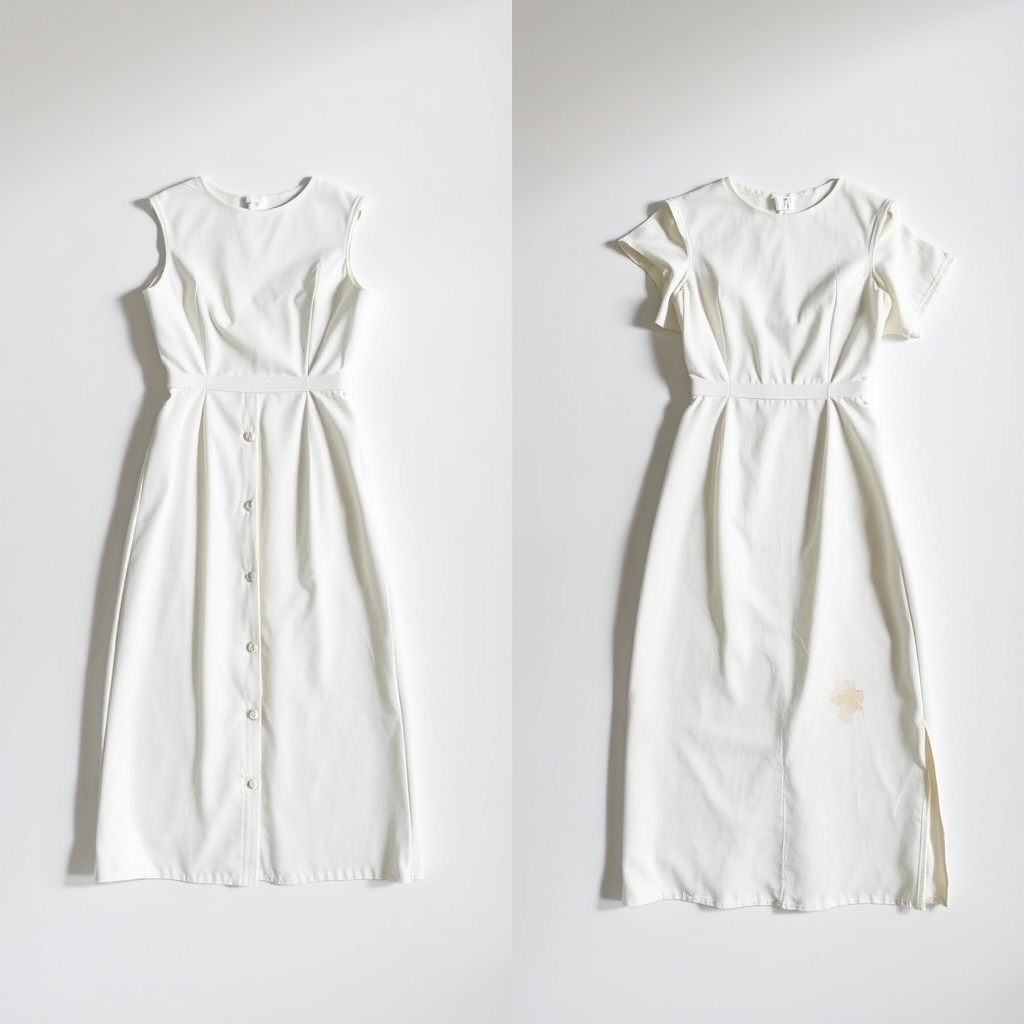
RTR’s “condition guarantee” (replace or $0 charge if it arrives damaged) only works if you notice the damage before wearing it. Once you’ve put it on, you’re liable for repairs. This is the dealbreaker for many renters.
The Hidden Costs: Cleaning Fees and Extensions
RTR advertises “cleaning included,” which is true until it isn’t. Here’s what actually gets charged:
Regular cleaning: Included in your subscription. A piece goes out, comes back, gets cleaned professionally.
Stain removal: If an item comes back with a stain RTR can’t remove with standard cleaning, you pay for professional stain removal observed in community reports ranging from roughly $15–$50 depending on fabric and stain severity.
Extension fees: Want to keep an item an extra week? That’s roughly $15–$35 depending on the piece’s retail value, based on figures observed in community forums.
Late fees: Return an item more than 3 days late, and you’re charged a full month’s rental ($129–$179) plus potentially a shipping charge.
These fees pile up fast. Over a year, if you extend twice monthly and get hit with one or two stain charges, you’re looking at $500+ in unexpected costs a figure based on applying the observed fee ranges above, not an official RTR figure. Nobody factors this into the “only $129/month” calculation, but the risk is real.
The Shipping and Return Experience
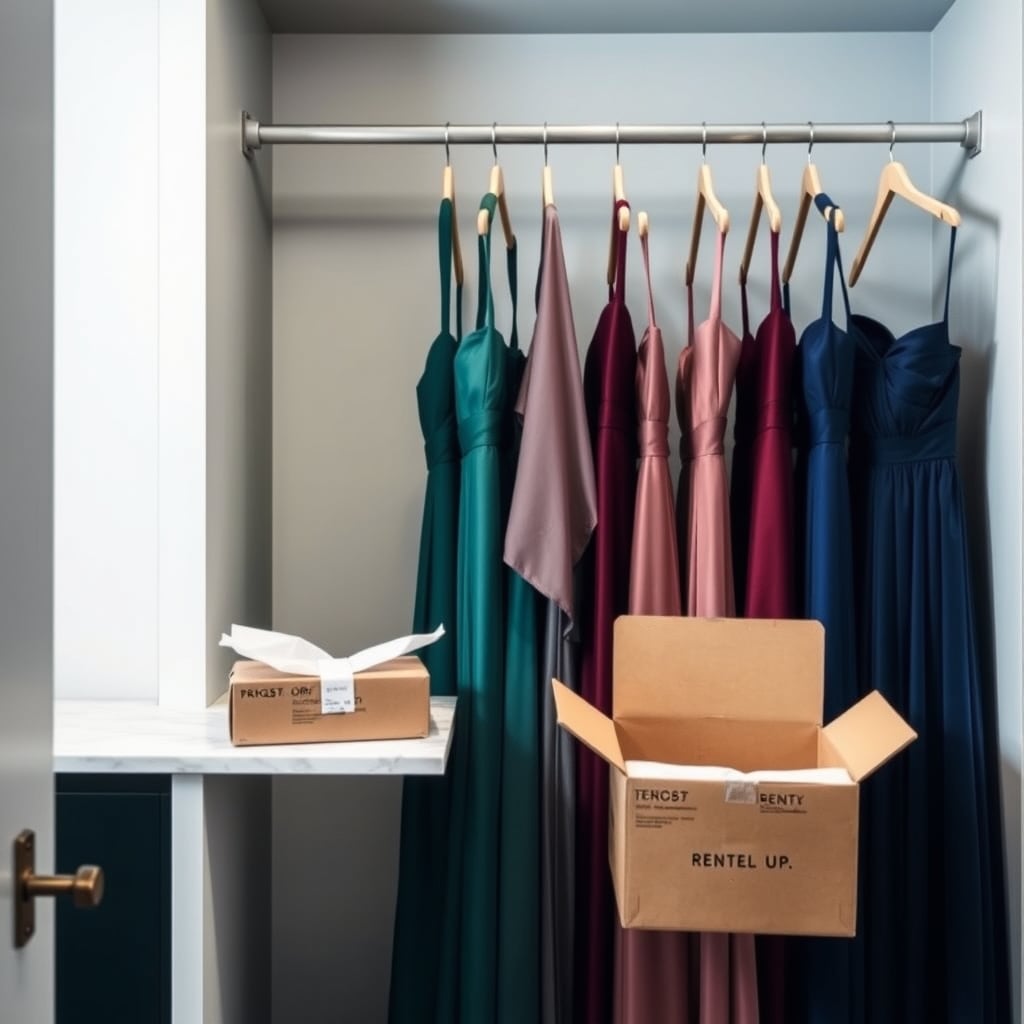
Items ship in a prepaid UPS box. Turnaround is roughly 3–5 business days outbound, 3–5 business days to return processing. If you’re ordering for a Friday event, order by Tuesday at the latest and that assumes no processing delays.
Returns are straightforward: drop a prepaid UPS box at any UPS location. No surprises here. The friction is speed, not complexity. If you impulsively want something new mid-week, you won’t have it in time.
RTR’s inventory system is real-time, so you see what’s available when you check. The trade-off: popular sizes in trending styles sell out daily. If you wait until Wednesday to book a dress for Saturday, your first-choice size might be gone.
Sustainability Claims vs. Reality
RTR markets itself as sustainable because renting avoids single-use fast fashion. This is technically true one rented dress replacing five owned-once dresses does reduce throughput. The environmental footprint isn’t as clean as it sounds, though.
The honest part: Each rental involves a UPS round trip (roughly 2–4 lbs per box, cross-country shipping approximately twice monthly). Dry cleaning chemicals are used. If an item is damaged and discarded instead of repaired, that’s waste. The sustainability pitch holds up if you’d otherwise buy those pieces new; it collapses if you’d buy secondhand or borrow from friends.
RTR publishes impact estimates, but these are brand-reported figures and depend on counterfactual assumptions about your behavior. Treat them as directionally useful, not verified. Verify RTR’s published impact claims directly on their site don’t take the math on faith.
Real Cost-Per-Wear Comparison
Let’s ground this in a concrete example:
Scenario: One black-tie event per month
Buying: A decent cocktail dress costs $200–$400 retail; you wear it once. Cost per wear: $200–$400.
Renting on Unlimited+ ($179/month): Dress rental is included. If you swap once monthly, you’re paying $179 per dress, but you cycle through 12 different dresses annually. Cost per wear: roughly $15, assuming you wear each dress once.
Scenario: Weekly casual rotation (jeans, sweaters, tops)
Buying: A capsule of 20 pieces costs roughly $800–$1,200 retail, worn 2–3x weekly over two years. Cost per wear: approximately $0.77–$1.15 per garment per wear.
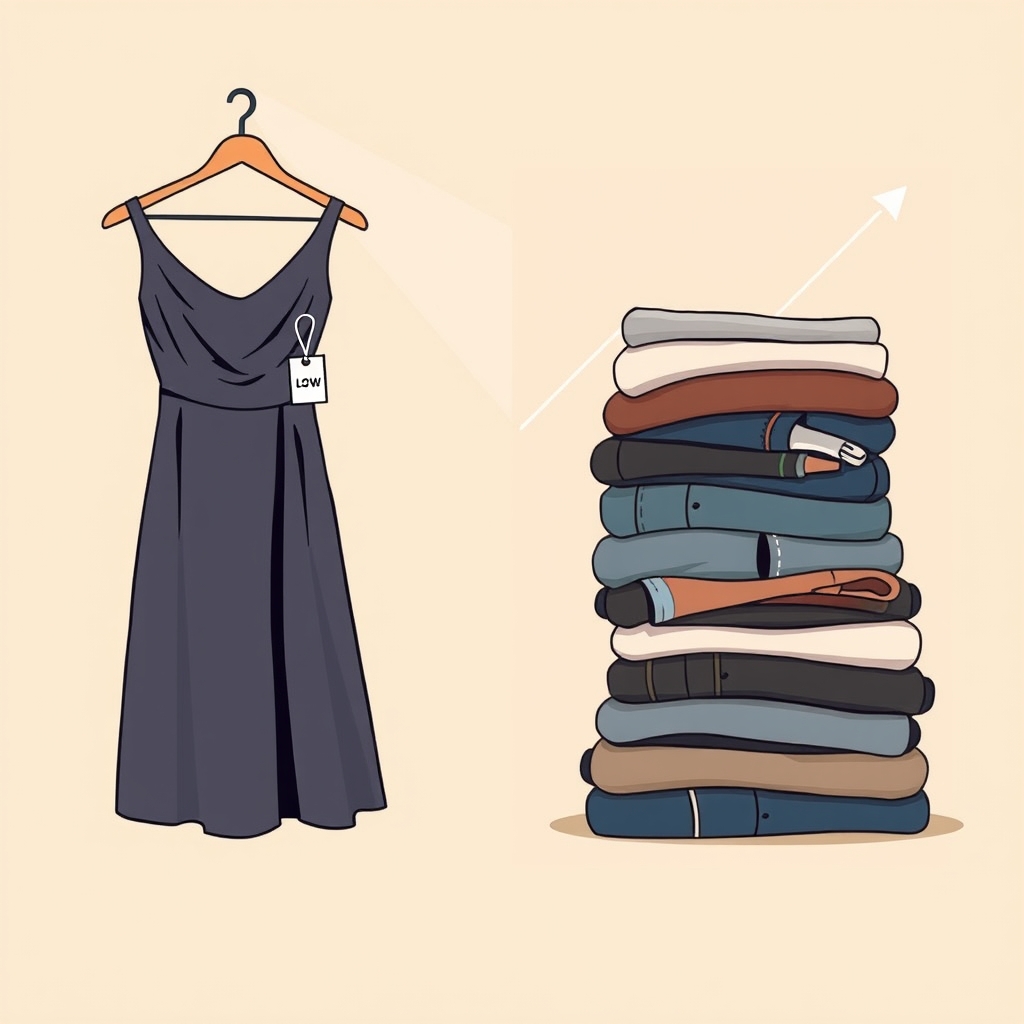
Renting on Unlimited+ ($179/month): You’d need to swap entire outfits weekly to match a casual wardrobe. Casual pieces are priced lower than event wear, so you get more items per month, but the $2,148 annual subscription cost makes per-wear numbers worse than buying. Cost per wear: roughly $1.50–$2.00 per piece per wear, before extension fees.
Verdict: RTR’s value lives in high-price, low-wear items (event wear, trend pieces). It’s neutral to negative on basics.
Styling and Personal Shopping
RTR’s in-app styling recommendations are algorithm-driven. You answer a brief quiz (body type, color preferences, occasion), and the app surfaces matches. It’s not bad genuinely useful for event shopping but it’s not personalized the way a human stylist would be. It’s more like a very smart search filter.
For an extra fee (roughly $75–$150 per session, based on pricing observed in community forums), you can book a 30-minute Zoom call with a personal stylist who’ll pull 5–10 pieces tailored to an event and your body. If you book this even twice a year, you’re looking at roughly $600 in added cost. It’s a nice feature but not a differentiator.
The Genuine Drawback: Quality Unpredictability
This is the single reason we’d cut RTR for most users. Condition varies so widely that you’re essentially gambling on what arrives. You can rent a dress for Thursday, receive it in passable condition, wear it Friday, and return it Saturday. Or you can receive a dress that smells like dry cleaning chemicals, has a visible stain, and requires an exchange adding 5–7 days.
RTR’s quality control has improved over time, based on owner reports we’ve tracked, but inconsistency is built into the rental model. Each piece gets worn, cleaned, stored, shipped, cleaned again dozens of times. Things break down.
If you can tolerate variability and have time to arrange exchanges, this is manageable. If you need guaranteed condition and can’t absorb a 4-day delay, buying beats renting.
What We’d Keep Instead
If you want event wear without RTR’s cost and quality risk:
For one-off formal events: Rent from BHLDN (Anthropologie’s rental service) or browse ThredUP’s rental offering. Smaller catalogs, but owner-reported quality consistency is higher.
For trend-testing: Buy from Uniqlo or COS (both offer 30-day returns), or from any brand with a generous return policy. Test the trend at minimal cost, return within the window.
For luxury one-wear pieces: Vestiaire Collective or TheOutnet offer secondhand designer dresses at 50–70% off retail; you own it, and no cleaning fees apply.
FAQ
Does Rent the Runway actually work for everyday wear? No. The economics are poor for basics. If you wear jeans and sweaters, buying even at full price beats renting. RTR is built for occasion wear.
What happens if you damage an item? You’re charged for repairs. Stains, tears, and damage beyond “normal wear” cost $15–$100+ per item, based on owner reports we’ve reviewed. RTR determines what counts as normal wear, which is vague.
How often do items arrive damaged? Based on owner reports tracked across RTR community forums, roughly 10–15% of shipments contain quality issues serious enough that renters request exchanges. Some arrive fine; some arrive in condition you wouldn’t have chosen. It’s a real risk, not a rare edge case.
Is RTR worth it for a monthly event? Yes, if you’d otherwise buy. One $300 dress at Unlimited+ costs $179 to rent; the break-even is two wears. If you attend one formal event monthly and wear each dress only once, renting saves money and closet space.
Did Rent the Runway make the Kept List? It made the Kept list with strong reservations. RTR works but only for specific use cases (frequent event wear, trend testing, travel packing). For everyday basics or users who need predictable costs and guaranteed condition, it’s a Cut.