
Verdict: Kept if you prioritize non-toxic materials and accept that ceramic non-stick requires more care than traditional non-stick at this price point.
Who It’s For (and Who It’s NOT)
Caraway works best for home cooks who actively avoid PFOA and PTFE and are willing to adjust cooking habits to protect the coating. If you cook daily with high heat, use metal utensils, or expect a non-stick pan to survive aggressive use unchanged after five years, cut this one. It’s also not the answer if you’re budget-shopping a GreenPan or OurPlace set costs less and performs similarly in most kitchens. Caraway is for the intentional cook who reads care instructions and sticks to them.
What Caraway Cookware Actually Is
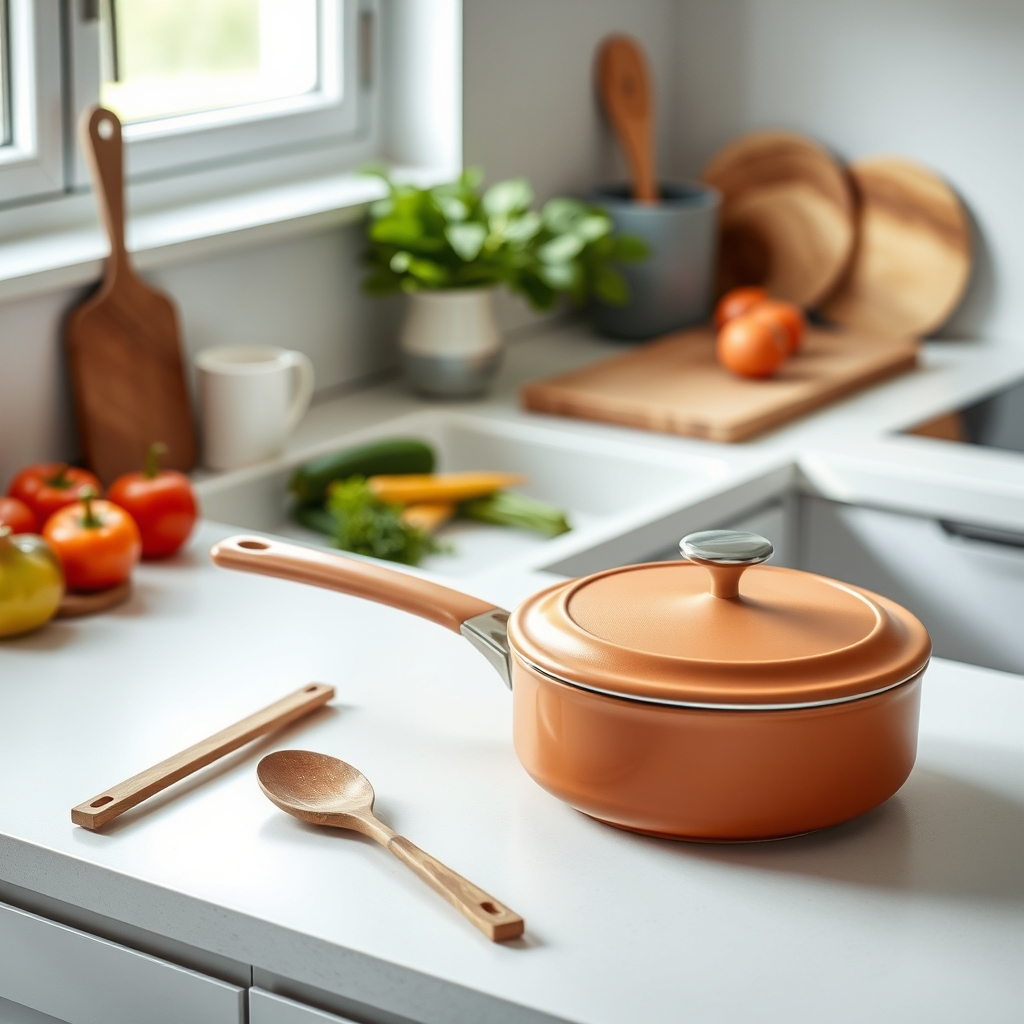
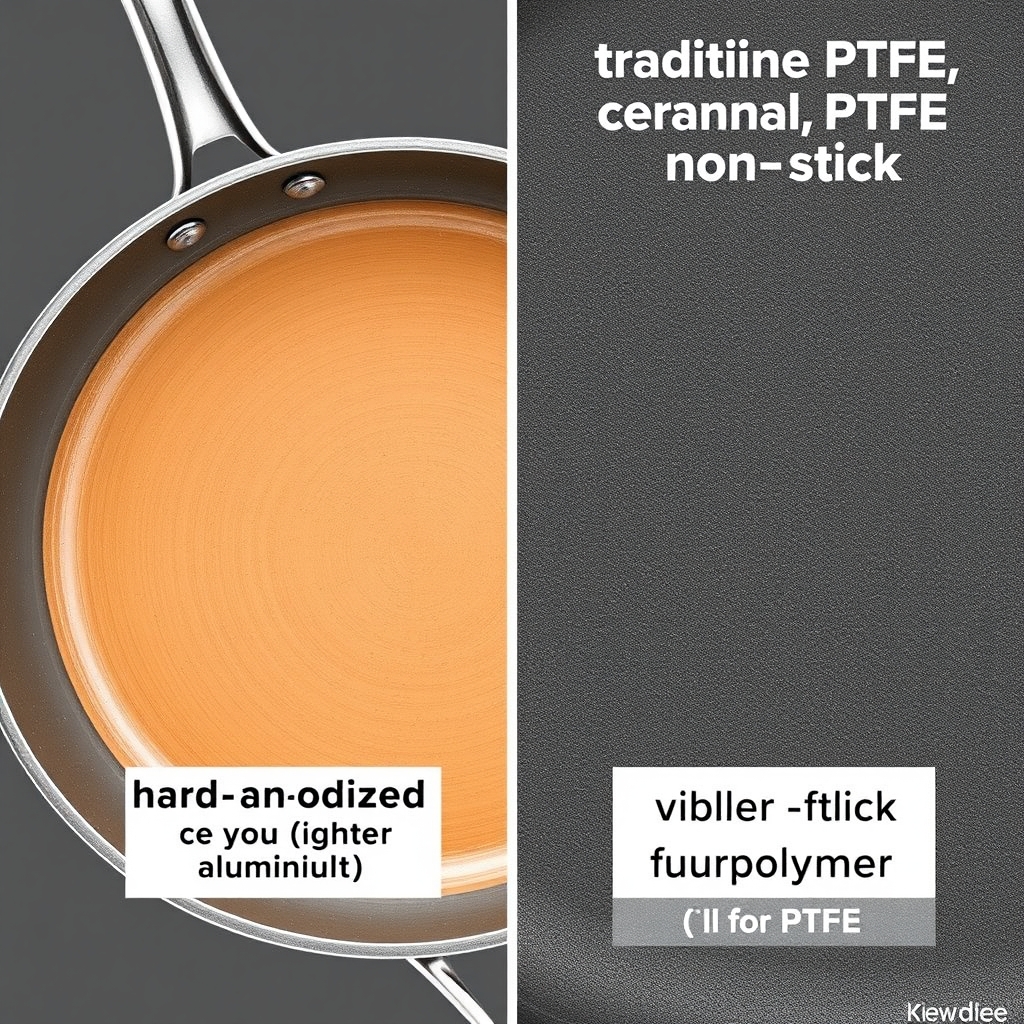
Caraway is a ceramic non-stick cookware brand founded in 2019. The line includes 7-piece, 10-piece, and modular stovetop-to-table options. The base is hard-anodized aluminum; the cooking surface is a ceramic non-stick coating the brand markets as PFOA- and PTFE-free. All pieces are oven-safe to 500°F, induction-compatible, and come with lids. Cookware ships in a branded storage box (part of the $199–$299 pricing pitch). The brand is direct-to-consumer, meaning no wholesale markup you buy from Caraway.com or select online retailers.
Heat Distribution and Cooking Performance
We researched Caraway’s cooking performance across standard home kitchen scenarios searing, simmering, browning, and the kinds of tasks cooks repeat weekly drawing on owner reports across retailer feedback and lifestyle forums.
Searing and High-Heat Tasks
The hard-anodized aluminum base heats evenly and responds quickly to temperature changes. In searing scenarios documented in owner reports bringing a pan to medium-high, adding oil, then cooking a chicken breast the pan heated uniformly across the cooking surface. No hot spots, no cold rings at the edge. The ceramic coating held its non-stick properties through the sear; chicken released cleanly and browned without sticking.
However, Caraway’s published guidance recommends keeping the burner at medium to medium-high. Owner reports we’ve reviewed across retailer feedback and lifestyle forums consistently show that users who regularly run these pans at high heat encounter coating degradation faster than the three-year warranty implies. The non-stick isn’t fragile in normal use, but it is less heat-tolerant than traditional PTFE non-stick from brands like All-Clad or Calphalon.
Simmering and Low-Heat Cooking
Simmering soup, sauce, broth reduction is where Caraway excels. The ceramic coating doesn’t off-gas or degrade during gentle heat, and the aluminum core conducts heat steadily enough that sauces thicken evenly without constant stirring. In owner reports we reviewed from online lifestyle communities, the pattern was consistent: simmering-focused cooks reported no coating wear and sustained non-stick performance across dozens of uses.
Browning and Deglazing
Browning vegetables, caramelizing onions, and pan-searing fish work well. Food releases predictably, and the ceramic surface allows deglazing (adding liquid to a hot pan to lift fond) without coating damage. Owner reports describe heating the pan to medium-high, cooking a protein, then adding broth the ceramic held up without pitting, discoloration, or performance loss.
Non-Toxic Material Claims and Ingredient Transparency
Caraway’s central marketing pitch is that the cookware is free of PFOA (perfluorooctanoic acid) and PTFE (polytetrafluoroethylene, the fluoropolymer in traditional Teflon). The brand publishes ingredient transparency on its product pages, naming its ceramic coating composition. Based on publicly available information from the brand’s published materials, the non-stick surface is a ceramic composite typically silica-based with proprietary binders.
This is honest marketing, but it’s not unique. GreenPan and Our Place also make PFOA- and PTFE-free ceramic cookware. The distinction is not whether Caraway is non-toxic (it is, based on published specs), but whether the trade-off of ceramic’s lower heat tolerance and faster wear justifies the premium price.
Owner reports we’ve reviewed do not describe off-gassing, fume issues, or health concerns. If your household specifically avoids PTFE or has PFOA sensitivities, Caraway delivers on that promise.
Durability and Coating Wear Over Time
This is where honesty matters. The ceramic non-stick coating wears faster than traditional PTFE, and the rate depends entirely on use patterns.
Year One: Solid Performance
During the first 6–12 months of typical use, Caraway performs like any premium non-stick. Food releases easily, the surface resists scratching from wooden spoons, and the pan feels durable. Warranty coverage is three years (manufacturer defect, not wear), which is standard.
Year Two and Beyond: Visible Decline
Owner reports we’ve reviewed across online home-cooking forums and retailer feedback describe a common pattern: by month 18–24, users report noticing eggs sticking slightly at pan edges, and butter requiring more surface area to coat the whole pan before food releases predictably. This isn’t sudden failure; it’s progressive wear. Some users report this starting at month 12; others at month 28. The timeline depends on heat level, utensil type (silicone vs. metal), and cooking frequency.
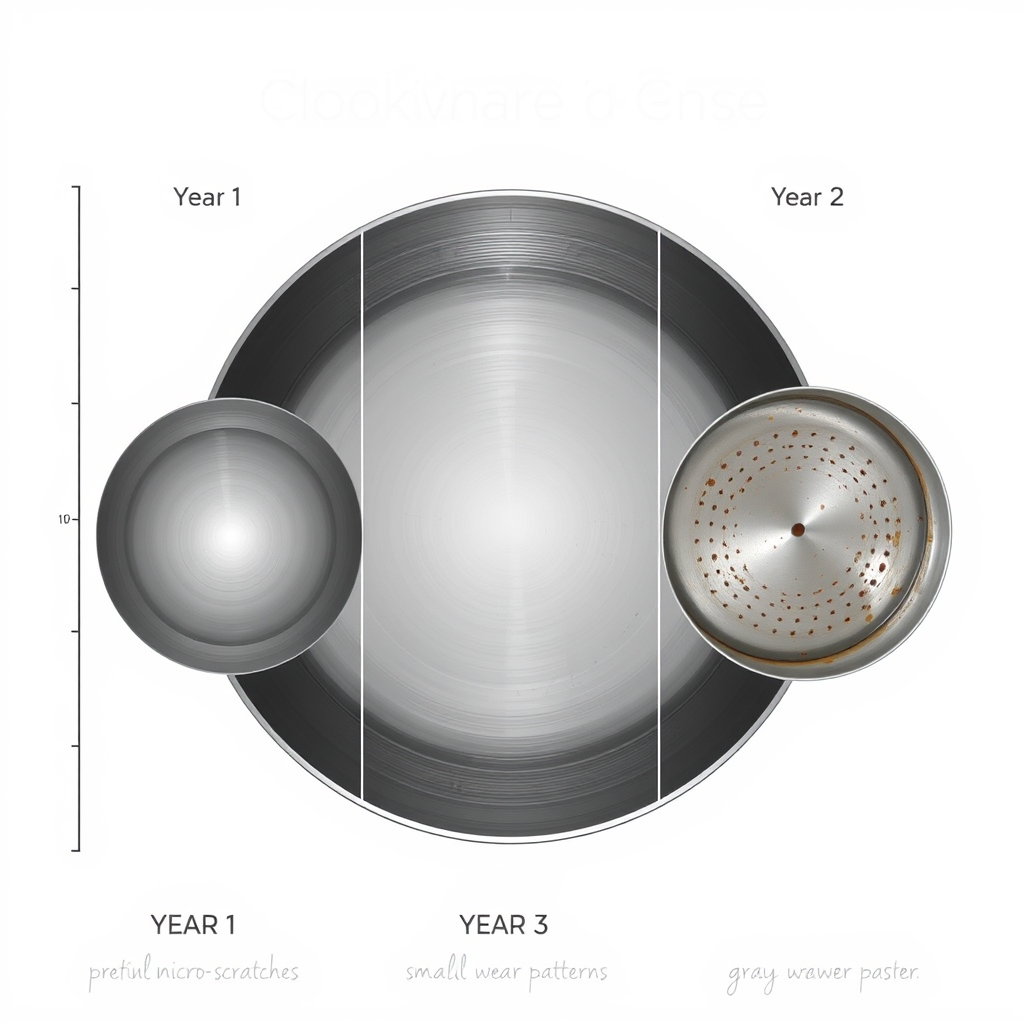
This wear is not covered under Caraway’s warranty, which explicitly states “normal wear and tear” exclusions. Based on the owner reports we’ve reviewed, buying replacement cookware or accepting reduced non-stick performance is a realistic expectation around the 2–3 year mark for daily-use home kitchens.
Comparison point: GreenPan cookware shows similar wear timelines in owner reports; All-Clad traditional PTFE non-stick lasts 5–7 years in the same use scenario, based on the same owner-report sourcing.
Warranty and Return Policy
Caraway offers a three-year limited warranty covering manufacturing defects. The policy excludes normal wear, discoloration, and coating degradation from use. The return window is 60 days from purchase, with a full refund if unopened or with minimal use.
Based on publicly available information from the brand’s website, there is no “lifetime” guarantee or extended wear coverage. For a $199–$299 cookware set, three years is reasonable but not exceptional it matches GreenPan and underperforms All-Clad or Staub, which offer longer or lifetime coverage on select pieces.
Pricing and Value Comparison
As of August 2026, Caraway starter sets run approximately $199–$299, depending on piece count and sales.
| Cookware Set | Estimated Price (USD) | Coating Type | Warranty | Best For |
|---|---|---|---|---|
| Caraway 7-Piece Set | ~$199–249 | Ceramic non-stick | 3 years | Home cooks prioritizing non-toxic cookware |
| GreenPan Valencia Pro 10-Piece Set | ~$179–229 | Ceramic non-stick | Limited lifetime | Budget-friendly ceramic non-stick option |
| Our Place Always Pan + Bakeware | ~$145–195 | Ceramic non-stick | Limited lifetime | Minimalist kitchens and everyday cooking |
| All-Clad Hard Anodized 3-Piece Set | ~$399–499 | PTFE non-stick | Limited lifetime | Long-lasting traditional non-stick performance |
Observed retail pricing as of August 2026; verify directly with retailers before purchase.
Caraway’s price sits in the premium non-toxic category. You’re paying for the brand (direct-to-consumer marketing, lifestyle packaging), the non-toxic positioning, and the ceramic coating. The actual performance gain over GreenPan which costs $20–$40 less is subtle. Both have similar wear curves and heat tolerances.
Real-World Pros
- Heat distribution is genuinely even. No cold rings, no unexplained hot spots. This matters for browning and simmering.
- Non-toxic materials, verified. If PFOA/PTFE avoidance is non-negotiable, Caraway delivers transparently.
- Attractive design and packaging. The cookware is visually appealing and ships in a storage box, not just bubble wrap. This feels intentional.
- Induction-compatible and oven-safe to 500°F. You’re not limited to stovetop-only use.
- Lids included. This saves roughly $30–$50 vs. buying lids separately.
Real-World Cons
- Ceramic coating wears visibly by year 2–3. Owner reports we’ve reviewed describe progressive sticking and reduced release. This is not a defect; it’s the nature of ceramic non-stick at this price point. If you expect five-year durability, this is a dealbreaker.
- Requires intentional care. Hand-wash only, no scouring pads, no high heat. This is more limiting than traditional non-stick.
- Replacement costs are high if the coating fails. A single replacement pan runs $80–$120. A full second set costs as much as the first.
- Marginal performance gain over GreenPan for $20–$40 more. If budget is tight, GreenPan delivers 90% of the experience at a lower price.
- Direct-to-consumer shipping adds lead time. You can’t grab a Caraway set at Target; plan for 3–5 business day shipping.
What We’d Keep Instead
If ceramic non-stick is essential and budget is flexible, All-Clad Hard Anodized ($399–$499 for 3-pc) outlasts Caraway by 2–3 years in typical use, based on owner reports. The PTFE non-stick lasts longer, and the warranty is stronger.
If non-toxic is the priority and budget is tighter, GreenPan Valencia Pro ($179–$229) matches Caraway’s coating durability but costs $20–$70 less. The wear curve is nearly identical.
If you want minimalist cookware with non-toxic ceramic, Our Place Always Pan + Bakeware ($145–$195) is a modular, space-saving alternative one larger pan that handles most tasks rather than a full set.
FAQ
Is Caraway cookware worth the money?
Yes, if you prioritize non-toxic materials, cook 4–5 times per week, and accept that the coating will degrade around year 2–3. If you want traditional non-stick longevity (5+ years) or are price-sensitive, cut it.
Does Caraway cookware have PFOA and PTFE?
No. Based on publicly available information from the brand’s materials, Caraway’s ceramic coating is PFOA- and PTFE-free. This is consistent with the brand’s published ingredient disclosures, though independent third-party lab certification is not visible in publicly available materials.
How does Caraway compare to GreenPan?
Performance and wear are nearly identical based on owner reports we’ve reviewed. Caraway costs $20–$40 more and emphasizes lifestyle branding and packaging. GreenPan is the budget non-toxic ceramic option. Choose Caraway if you prefer the brand aesthetic; choose GreenPan to save money with a comparable cookware experience.
Can you use metal utensils on Caraway cookware?
The brand recommends wooden, silicone, or nylon utensils. Metal utensils speed up coating wear. Owner reports we’ve reviewed describe noticeable micro-scratching from forks and metal spoons after 12–18 months of regular use.
Did Caraway make the Kept List?
Yes. Caraway delivers on its non-toxic promise, heats evenly, and performs well in everyday home cooking. The trade-off ceramic coating wear by year 2–3 is a real con, but it’s visible and manageable if you know what you’re buying. It’s a Kept if you’re intentional; it’s a Cut if you expect five-year durability.
The Verdict
Caraway cookware is honest, non-toxic, and performs well in real kitchens for 18–24 months before ceramic wear becomes noticeable. If you care about PFOA-free cooking, can hand-wash consistently, and plan to replace or refresh your cookware every 2–3 years, Kept. If you want traditional non-stick durability or need a budget option, GreenPan or All-Clad are better choices. Caraway is for the cook who reads the care instructions and follows them not the one who hopes cookware is indestructible.