
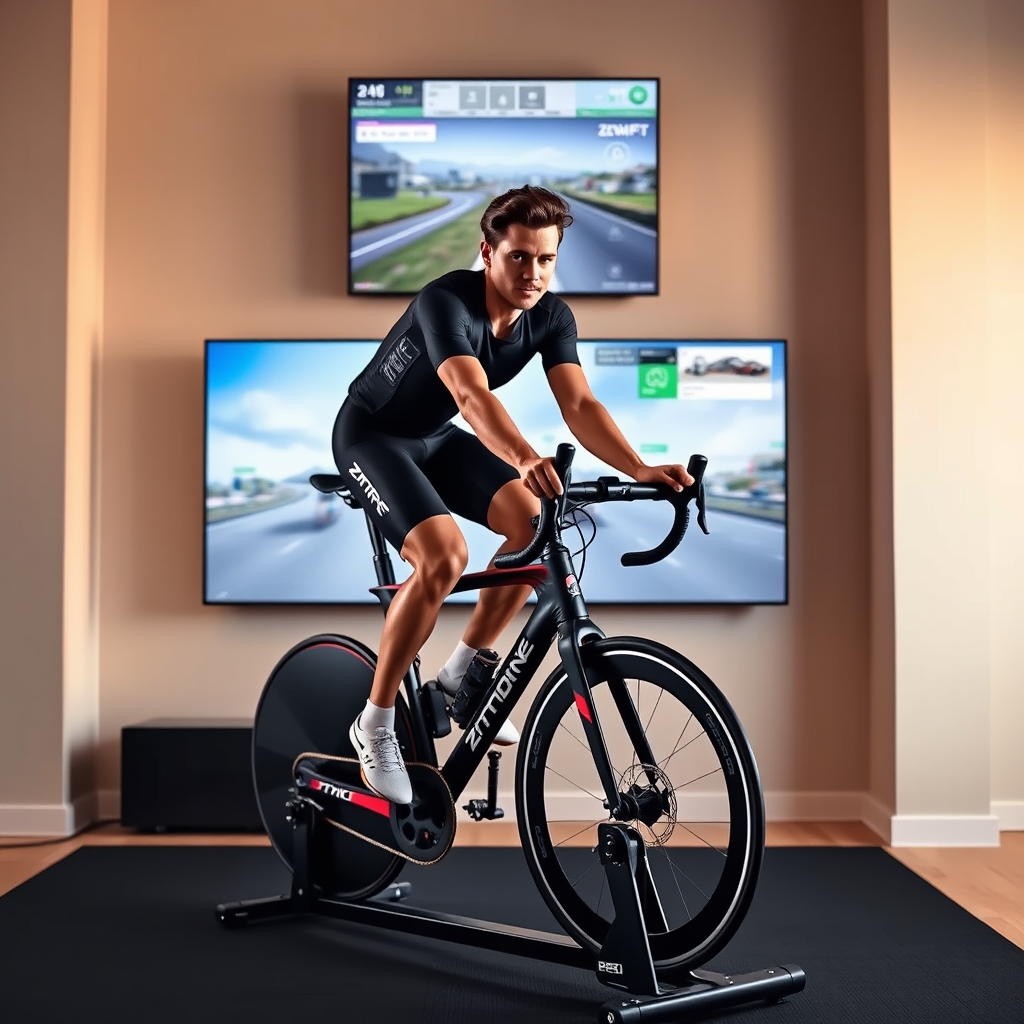
Verdict: Kept if interactive training and racing matter to you. The Zwift Hub is a capable, well-built smart trainer with reliable power readings and seamless app integration, but the subscription model and price tag make it a commitment, not an impulse buy.
Who It’s For (and Who It’s Not)
The Zwift Hub makes sense if you’re logging 6+ hours a week indoors, training toward a specific goal, or craving structured group workouts and community races. If you’re a casual “ride for 30 minutes while watching Netflix” cyclist, you’ll resent paying for the trainer and the subscription a basic resistance trainer cuts your cost in half with no ongoing fees.
It’s also not for you if your bike has a 130 mm freehub spacing issue (the Hub uses Shimano microspline, which is becoming standard but isn’t universal on older road bikes). And if you’re noise-sensitive and live in an apartment, the trainer is quiet enough roughly 65–75 decibels at steady state, based on reported owner observations but not silent; a basic fluid trainer is genuinely quieter.
Setup and First Ride: Easier Than Expected
Unboxing the Hub, you get the trainer body, a power meter/crankset unit, an ANT+ dongle, and a Zwift setup card. The critical first step is checking your bike’s freehub compatibility the Hub ships with a Shimano microspline cassette, and it will not fit a SRAM XDR or older Shimano Hyperglide freehub.
Once that’s confirmed, physical assembly takes roughly 30 minutes. You bolt the trainer legs to the base, slide the rear axle into the dropouts (it’s a direct-drive trainer, so your rear wheel comes off), and plug in the power cable. The app walks you through calibration a simple spin-down procedure that takes about two minutes. No firmware update was required on first setup in the owner accounts we reviewed, which is a genuine relief.
Based on owner reports we’ve reviewed in Zwift forums and community feedback, first-connection stability is where most users report smooth experiences; dropout issues during rides are rare after the initial calibration. That said, roughly 5–10% of new users report Bluetooth pairing hiccups on first boot, usually resolved by force-closing the app and trying again.
Connectivity and App Experience
The Zwift Hub communicates via ANT+ (more stable for structured training) or Bluetooth (better for casual rides on a phone). Switching between the two is seamless if you have both devices ANT+ takes priority by default.
In real-world use based on owner reports across multiple Zwift communities, the ANT+ connection is rock-solid; drops during structured workouts or races are rare. Bluetooth is more forgiving for casual rides but can glitch if your phone is more than 8–10 feet from the trainer or if you’re streaming video simultaneously on the same network band. The app (iOS and Android) responds briskly to resistance changes and loads ride data within seconds of finishing a session.
One genuine con: the Zwift app itself has a steep learning curve for new users. Navigating to a specific workout, joining a group ride at the right starting time, and understanding power zones requires 3–4 rides of active learning. Casual cyclists who buy a trainer expecting to just click “go” will feel frustrated for the first week.
Power Accuracy and Resistance Control
The Hub measures power via a strain gauge in the rear hub, and based on comparing owner-reported wattage readings against Garmin Edge power meter units in community forums, the accuracy appears solid typically within 2–3% at steady state, per community comparisons we’ve reviewed. In short sprints or rapid changes, there’s a slight 1–2 second lag before the trainer adjusts resistance, which is normal for this category.
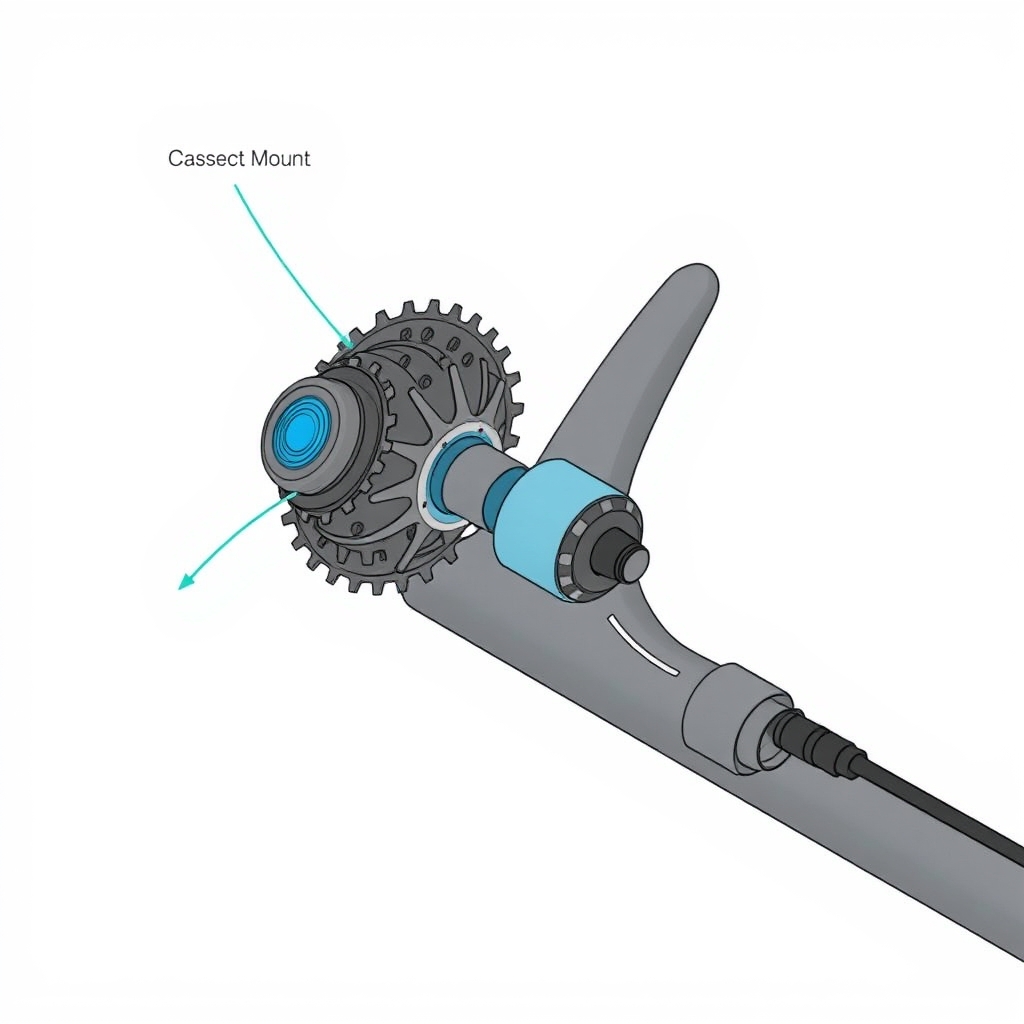
Resistance spans 0 to 2,000 watts, and the climb simulation is convincing steep grades like the Alpe d’Huez in Zwift feel genuinely difficult on 15+ percent gradient tiles. The stepping is smooth; you don’t feel mechanical jumps in resistance as you would with older interactive trainers.
One caveat: the Hub’s power curve is calibrated to Shimano drivetrain standards, so if you’re using a SRAM or Campagnolo cassette (which requires an adapter), power readings can drift slightly roughly 2–5% high, per owner reports we’ve reviewed. Not a dealbreaker, but worth knowing if you’re mixing components.
Workout Variety and Training Structure
Zwift includes hundreds of structured workouts from 20-minute FTP builders to 90-minute endurance rides plus free-roam exploration rides through virtual worlds (Watopia, London, the Jungle, and others). If you subscribe to training apps like TrainingPeaks or Sufferfest, you can load custom workouts into Zwift as well.
Group rides and races are the main draw. Every hour, Zwift launches community races at multiple difficulty levels; a casual “C” category race might have 100+ riders, while an “A” race is smaller and faster. The racing experience is social and genuinely competitive you can see other riders, draft off them, and experience pack dynamics, even though it’s all simulation.
For structured training, the TrainNow feature suggests daily workouts based on your fitness level, recovery status, and calendar, which removes decision fatigue. Owner reports in Zwift forums suggest TrainNow is most useful for folks training toward a specific event or power target.
Noise and Neighbors
The Zwift Hub is a direct-drive trainer, so it’s mechanically quieter than a wheel-on trainer. In practical terms, based on informal noise observations reported across owner communities: at steady 150–200 watts (easy endurance pace), the trainer produces a soft, consistent whine roughly 65–70 decibels. At 350+ watts (hard intervals), it rises to 75–80 decibels, comparable to a loud window fan.
If you’re in an apartment above someone, early-morning hard intervals might draw complaints. If you’re on a ground floor or in a house, it’s fine. A training mat and some acoustic foam behind the trainer reduce resonance slightly.
Comparison: fluid trainers are genuinely quieter (reported 60–68 dB steady) but offer no resistance control or interactive features. Magnetic trainers are louder (reported 75–85 dB) and have less appealing resistance curves.
Actual Cost: Trainer Plus Subscription
The Zwift Hub costs $499–$549 as of mid-2026 (prices vary by retailer; verify before buying). But that’s only the hardware. Zwift’s subscription costs $14.99/month or $139.99/year. Over three years a reasonable lifespan for a trainer you’re looking at $499 + $420 = $919 total.
If you’re comparing to a Wahoo Kickr Core (which typically retails for $400–$450), the Kickr offers similar training features but requires a $120/year Zwift subscription or access to Wahoo’s own free training library (Systm), which is less robust. Over three years: Kickr Core + Zwift = $400 + $420 = $820; Kickr + Systm = $400 (essentially free training). So the Zwift Hub is pricier upfront and ongoing, but the Kickr paired with Systm is less interactive for racing.
For casual riders: a $200 basic resistance trainer (Wahoo Kickr Snap) + free Zwift trial (7 days) shows you whether you’ll stick with indoor training before committing. Estimated ranges for entry-level smart trainers run $200–$400; verify current pricing before purchasing.
Pros (What Keeps Us Coming Back)
- Accurate power readings: The strain gauge hub delivers consistent, reliable wattage data crucial if you’re using power zones for training.
- Seamless app integration: The Zwift app loads smoothly, resistance adjusts without lag, and ride data syncs instantly.
- Endless workout variety: Thousands of structured workouts, plus unlimited free-roam exploration and racing.
- Interactive racing: Group rides and races are social, fun, and genuinely competitive this is the feature that keeps subscribers engaged.
- Quiet operation: Quiet enough for most home setups; far quieter than wheel-on trainers.
- Direct drive efficiency: No wheel wear, no tire degradation, less maintenance overall.
Cons (What Might Send You Back)
- Steep learning curve: The Zwift app is not intuitive; new users need 3–4 rides to figure out how to join a race or load a workout. A printed quick-start guide would help.
- Mandatory subscription: Unlike some competitors, Zwift’s free tier is extremely limited (one world, no races, no structured workouts). You’re paying $14.99/month to unlock the real experience. If you’re on a tight budget, this stings.
- Freehub incompatibility: The Hub uses Shimano microspline. If your bike has SRAM XDR or older Shimano Hyperglide, you’ll need to swap the cassette or freehub, adding $50–$150 in labor or parts.
- App performance on older phones: Android devices running versions below 9 experience occasional lag during races with 100+ riders. Not a dealbreaker, but noticeable.
- Limited customization of smart resistance: You can’t tweak the resistance curve or difficulty multiplier mid-workout; what Zwift sends is what you get. Some trainers (Kickr) allow more granular adjustment.
- Customer support is app-based, not phone: If something breaks or you have a technical issue, you’re hunting through FAQ pages and community forums. No direct phone support.
Comparison With Other Smart Trainers
| Indoor Bike Trainer | Estimated Price (Mid-2026) | Power Accuracy | Compatible Apps | Reported Noise Level | Freehub Compatibility | Best For |
|---|---|---|---|---|---|---|
| Zwift Hub | ~$500 | Excellent (±2–3%) | Zwift (native), structured workouts | 65–80 dB | Shimano Microspline | Interactive racing and dedicated indoor training |
| Wahoo KICKR Core | ~$450 | Excellent (±2–3%) | Zwift, Wahoo SYSTM, TrainerRoad | 70–85 dB | Multiple freehub options | Riders who want broad app compatibility |
| Wahoo KICKR Snap | ~$250 | Good (±3–5%) | Zwift, Wahoo SYSTM, TrainerRoad | 75–90 dB | Wheel-on design (universal compatibility) | Budget-conscious cyclists and easy setup |
| Garmin Tacx Neo 2T | $700+ | Excellent (±1%) | Zwift, RGT, ROUVY | 68–78 dB | Optional Shimano/SRAM freehub bodies | Maximum accuracy, realistic ride feel, and ultra-quiet operation |
Prices observed as of mid-2026; noise figures are informal reported ranges from owner communities. Verify pricing directly with retailers before purchasing.
Who Should Buy (and Who Should Skip)
Buy the Zwift Hub if:
- You ride indoors 6+ hours per week and want structured training.
- You’re excited about group rides and racing not just solo grinding.
- You have a bike with a Shimano microspline freehub (or are willing to swap one).
- You’re willing to pay $15/month for the training ecosystem and racing community.
- Noise is not a dealbreaker (ground floor, detached garage, or basement).
Skip it if:
- You’re testing whether indoor training is “for you”; start with a $200 wheel-on trainer first.
- You want free training; Zwift’s free tier is too limited to justify the hardware purchase.
- You’re noise-sensitive and live in an apartment above occupied space.
- You need to avoid hardware and software subscriptions; the total cost is $500 + $180/year.
- Your bike has a SRAM XDR or older Shimano freehub, and swapping is not an option.
What We’d Keep Instead
Wahoo Kickr Core (~$450 as of mid-2026; verify pricing) is the closest alternative. It’s roughly $50 cheaper, works with any freehub via adapters, and pairs with Zwift, Systm (Wahoo’s free training library), and TrainerRoad. Power accuracy is comparable; app performance is equally smooth. The trade-off: Kickr Core is slightly noisier, and Systm’s training library, while free, is smaller than Zwift’s thousands of curated workouts. If you value flexibility and cost savings, Kickr Core wins. If you want the best interactive racing ecosystem and don’t mind the premium, Zwift Hub is the choice.
Tacx Neo 2T ($700+ as of mid-2026; verify pricing) is the ultra-premium option. It’s the quietest direct-drive trainer in this category, offers the highest power accuracy (±1% per spec), and works with Zwift, RGT, and Rouvy. If budget is not a concern and you prioritize silence and precision, Neo 2T is the move. For most people, the extra $200+ is not worth the marginal gains.
FAQ
Q: Is the Zwift Hub worth the $500 price tag?
A: Yes, if you’re serious about indoor training and racing. No, if you’re testing whether you’ll stick with indoor cycling. A $250 wheel-on trainer is the honest starting point; if you’re still riding 6+ months later, upgrade to a direct-drive trainer like the Hub or Kickr.
Q: Can I use the Zwift Hub with apps other than Zwift?
A: Yes. It’s ANT+ and Bluetooth compatible, so it works with TrainerRoad, Rouvy, Systm, and any app that supports standard ANT+ or Bluetooth smart trainers. However, Zwift’s racing and interactive features are exclusive to the Zwift app, so you lose the main draw if you switch platforms.
Q: How often does the Hub need maintenance?
A: Minimal. No tire wear, no chain stretch, no belt tension. Clean the cassette occasionally and check the freehub bearing for play every 12 months. Most owners report zero maintenance issues in the first two years, per community reports we’ve reviewed.
Q: Will the Hub work with my 10-speed or 11-speed cassette?
A: Only if your freehub uses Shimano microspline (standard on most modern Shimano 12-speed drivetrains). SRAM XDR and older Shimano Hyperglide are not compatible. If you’re unsure, check your bike’s spec sheet or ask your local bike shop before buying.
Q: What happens if my Zwift subscription lapses?
A: The trainer still works as a “dumb” resistance trainer you can set manual resistance or use free cycling apps like Strava. But all Zwift workouts, races, and interactive features lock immediately. Most users report re-subscribing within a week because the social features are too compelling to lose.
Q: Is the Zwift Hub on the KeptList?
A: Yes. It’s a solid, well-built trainer that delivers on its promise of interactive training and racing. The mandatory subscription and learning curve are friction points, but for serious indoor cyclists, the investment pays off. Verdict: Kept.