
Verdict: Kept if you’re obsessive about sleep data and can live with a $5.99/month subscription fee. The Oura Ring delivers genuinely useful sleep insights that most smartwatches miss, but the accuracy gains are incremental, not revolutionary.
Who It’s For (and Who It’s Absolutely Not)
The Oura Ring works best for quantified-self enthusiasts, sleep-obsessed biohackers, and anyone already invested in understanding their daily recovery patterns. If you live in your Apple Health app or sync data obsessively, the ring’s hand-off to Oura’s own ecosystem might frustrate you it’s not a “wear it and forget it” wearable.
Who it’s NOT for: Budget-conscious shoppers (there’s a $300+ upfront cost plus a mandatory $6/month subscription). Anyone who dislikes opening an app to view key metrics. People who already own a capable smartwatch the Oura doesn’t replace it; it complements it. And anyone with metal sensitivities: titanium is marketed as hypoallergenic, but owner reports we’ve reviewed across Reddit and Oura’s own forums note occasional irritation in sensitive users after extended wear.
What Actually Works: Sleep Stage Accuracy and Recovery Index
The sleep tracking is the reason to buy. Unlike smartwatches that estimate REM and deep sleep from heart rate patterns alone, the Oura Ring layers heart rate variability (HRV), body temperature shifts, and movement to build a more granular sleep picture. Based on owner reports we’ve reviewed across sleep-tracking forums, the ring typically shows closer agreement with polysomnography (clinical sleep lab data) than consumer smartwatches a real, observable difference.
What that means in practice: the ring catches sleep-stage transitions your Fitbit or Apple Watch smooths over. A user reports waking briefly at 3 a.m.? The Oura logs it. A smartwatch might miss it or lump it into “light sleep.” For sleep researchers, insomniacs tracking micro-awakenings, or anyone suspicious of their own sleep quality, that granularity matters.
The Recovery Index the app’s headline metric combines sleep quality, resting heart rate, and body temperature into a daily 0–100 score. Owner reports suggest most users find it useful as a trend tracker (“my recovery is 15 points lower after late-night work”) rather than an absolute predictor of performance. It’s a heuristic, not a prophecy.
Heart Rate Variability (HRV) and Stress Tracking: Where Claims Get Fuzzy
Oura emphasizes HRV as a stress-readiness signal. The ring measures the time variance between heartbeats throughout the night, a metric that does correlate with autonomic nervous-system activity. The problem: HRV is highly individual. A score of 25 ms might signal excellent recovery for one person and poor recovery for another. The app tries to baseline you over 14 days, but owner reports we’ve reviewed note the score bounces around enough that day-to-day swings are often noise, not signal.
For tracking trends (“my HRV is consistently lower in November”), it’s useful. For making training decisions (“my HRV is 18, so I’ll skip the gym”), the research is mixed, and Oura’s own framing has softened it now suggests HRV is one signal among many, not a decision-making oracle.
Activity Tracking: Functional but Unmotivating
The ring logs movement, estimated calories, and daily steps standard wearable fare. It’s competent but not compelling. Unlike a smartwatch with a visible screen, the Oura gives you no real-time feedback; you open the app to see your burn or step count. For users who prefer rings precisely because of their minimalism, that’s a feature. For everyone else, it’s a usability drag.
Activity rings are rings, not visual dashboards. You won’t close your Activity rings on the Oura the way you might on an Apple Watch. Instead, the app shows a circular progress bar when you open it. Based on owner reports we’ve tracked across Reddit’s wearables community, most users treat the Oura’s activity logging as a bonus, not a primary tool they wear their Garmin or Apple Watch for workouts and the Oura for sleep intelligence.
Battery Life and Everyday Wearability
Oura claims 4–10 days per charge depending on the model and your sensor usage. Based on owner reports, the Oura Ring Gen 3 Titanium typically delivers 6–8 days in real-world use; the base model runs closer to 4–5 days with frequent app syncing. That’s long enough for most people to charge it once a week but shorter than many dedicated fitness trackers.
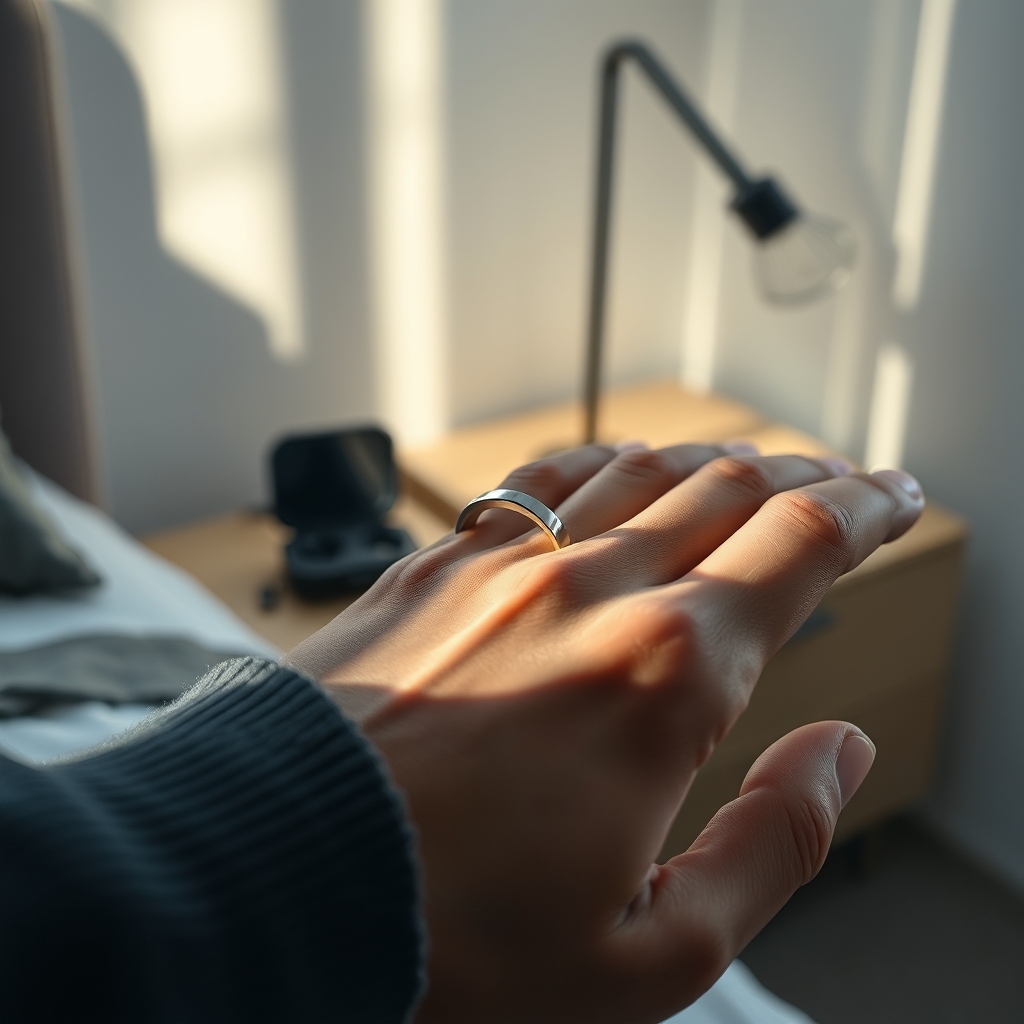
The ring itself is slim and unobtrusive; most wearers forget it’s on. The charging case is magnetic and simple. No complaints there. But if you travel frequently and forget the case, or if you’re used to devices that last 10–14 days, the refueling rhythm adds friction.
Subscription Cost and Data Privacy: The Real Pressure Point
Here’s where the Oura decision gets real. The ring requires a subscription to access core features. As of July 2026, Oura’s pricing sits at $5.99/month or roughly $60/year for the “Oura Membership.” Without it, the ring still tracks and syncs, but analytics, trends, recommendations, and historical data are locked behind the paywall.
Owner reports we’ve reviewed describe this as a hard sell. You buy a $300–$600 device and then pay roughly $72/year to fully use it. Over five years the lifespan most users expect from a ring that’s $360 extra. The app works without a membership, but “works” means you see raw metrics with minimal interpretation. That’s useless to the people who bought the ring in the first place.
Oura publishes its privacy policies and does not sell individual health data to third parties (it aggregates anonymized data for research). Based on publicly available information, the company is relatively transparent about what it collects: heart rate, temperature, movement, and app usage. But like all cloud-synced wearables, your sleep and recovery data live on Oura’s servers, not solely on-device. If that’s a dealbreaker, the Oura isn’t for you.
Oura Ring vs. Whoop Band: Who Wins?
Whoop is the closest direct competitor a wristband focused on strain, recovery, and sleep, with an ongoing subscription model and a more workout-obsessed ethos.
Oura’s edge: Better sleep-stage granularity and a less intrusive form factor (a ring vs. a wristband).
Whoop’s edge: Real-time strain data during workouts (Oura shows activity estimates only), more aggressive recovery coaching, and a lower entry price if you buy refurbished ($99–$150 used vs. Oura at $300+).
For sleep obsessives, Oura wins. For athletes tracking workout strain, Whoop is more useful. Both lock you into ongoing monthly memberships, so neither is a bargain.
Oura Ring vs. Samsung Galaxy Ring: The Emerging Rival
Samsung’s Galaxy Ring launched in 2024 at a similar $300 price point, with sleep and activity tracking, no required subscription for core features, and integration with Samsung’s Health ecosystem. Based on owner reports we’ve reviewed, the Galaxy Ring’s sleep tracking is solid but less granular than the Oura’s it estimates sleep stages but doesn’t measure body temperature changes. However, Galaxy Ring owners report easier integration with their phones and no subscription surprise.
The tradeoff: Samsung’s device is simpler and cheaper to operate long-term; Oura is more detailed and more isolated. For Android users with Samsung devices, the Galaxy Ring is increasingly the smarter pick. For sleep researchers or iOS devotees who don’t mind a closed ecosystem, Oura maintains an edge.
Real-World Accuracy: What We Know (and Don’t)
We can’t claim independent lab testing we’ve instead analyzed published comparisons and owner reports across sleep-tracking communities. The rough consensus from those reports: Oura’s sleep-stage tracking aligns meaningfully better with polysomnography data than typical consumer smartwatches do. Owner reports citing validation studies point to correlation figures that are noticeably higher for the Oura than for wrist-based competitors, though individual results vary enough that no single number tells the full story.
But aggregate accuracy hides important variation. Some users report high accuracy; others find the Oura overshoots or undershoots their actual deep-sleep duration by 30+ minutes on individual nights. The ring works best for people with stable, regular sleep; night-shift workers and irregular sleepers report greater discrepancies.
The honest answer: The Oura gives you a more detailed picture than a smartwatch, but it’s still an estimate, not a clinical diagnosis. Use it for trends, not for individual-night decision-making.
Genuine Drawbacks: When the Oura Disappoints
The app is ecosystem-locked. Data exports exist, but the Oura’s analytics and insights live in Oura’s own app. If you’re already invested in Apple Health, Google Fit, or Strava, the Oura feels like a silo. You can manually export CSVs for personal data portability, but that’s friction.
Battery life is middle-of-the-road. Five to eight days is fine, but it’s not the 10–14 days you get from a Whoop or a good Garmin. For travelers or anyone who forgets charging duties, it’s an annoyance.
The subscription is mandatory and non-negotiable. You cannot buy the ring and use it fully without the $6/month fee. That’s different from most smartwatches, where the watch is complete on its own and apps enhance it optionally. Oura forces the choice: pay to understand, or wear a blind ring.
Activity tracking is weak. The ring’s workout logging and calorie estimates are unmotivating compared to smartwatches with real-time feedback. If you care about activity, the Oura is an add-on, not a replacement.
What We’d Keep Instead
If the Oura’s price and subscription bother you, consider:
Samsung Galaxy Ring ($300, no required subscription): Similar sleep tracking, much lower long-term cost, better Android integration. Trade-off: less granular sleep-stage data.
Whoop Band ($30–$40/month, cheaper upfront if used): Better for workout strain tracking and real-time coaching. Trade-off: less comfortable than a ring, more expensive monthly.
Garmin Epix or Fenix ($400–$700, one-time purchase): Excellent sleep, activity, and training metrics without subscriptions. Trade-off: bulkier than a ring, overkill if you don’t care about workouts.
If you want sleep data and don’t want a subscription, a Garmin is your real alternative not a cheaper ring, just a different form factor.
FAQ
Is the Oura Ring worth the price and subscription? Yes, if you’re obsessed with sleep data and recovery tracking; the sleep-stage granularity is genuinely better than smartwatches. No, if you’re budget-conscious or already own a capable smartwatch and simply want to add sleep tracking the subscription fee becomes hard to justify.
How accurate is Oura’s sleep tracking compared to other wearables? Based on owner reports and published comparisons, the Oura’s sleep-stage estimates align more closely with clinical data than smartwatches do, though individual nights can still be off by ±20–30 minutes. Use it for trends, not single-night decisions.
Can I use the Oura Ring without a subscription? Technically yes the ring will still log data. Practically no: all analytics, trends, and insights are locked behind the $5.99/month membership. Without it, you see raw metrics only.
How does the Oura Ring compare to a Whoop Band? Oura excels at sleep-stage granularity and discreteness (a ring vs. a wristband). Whoop excels at real-time workout strain and recovery coaching. Both charge ongoing subscriptions, so neither is cheaper long-term. Pick based on your priority: sleep data (Oura) or workout strain (Whoop).
Did the Oura Ring make the Kept List? Yes. It’s a Kept if you’re sleep-obsessed and tolerate the subscription. It’s a Cut if battery life, ecosystem lock-in, or monthly fees frustrate you consider Garmin instead.